A Level CIE Geography: Environmental Management
 Studied by 2 people
 Call Kai
 Learn
Learn Practice Test
 Spaced Repetition
 Match
Match Flashcards
 Knowt Play
1/160

Earn XP
Description and Tags
Name | Mastery | Learn | Test | Matching | Spaced | Call with Kai |
|---|
No analytics yet
Send a link to your students to track their progress
161 Terms
as a country uses more energy…
it becomes more productive and it gets richer. as it gets richer, it can afford to use more energy.

is increasing energy use good?
no. it is not environmentally sustainable or economically+sociallysustainable either because we are reliant on fossil fuels which is finite.
how does increased energy = global warming
world energy supply depends heavily on fossil fuels and burning fossil fuels produces extra atmospheric co2
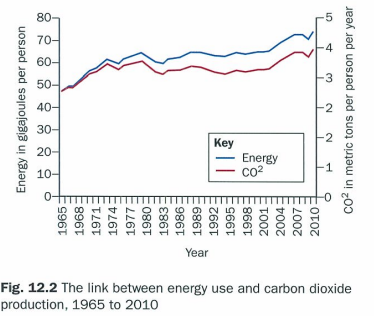
what happens if fossil fuels run out
if no alternative energy supplies available, energy production decreases and economic output falls which will have an enormous impact on peoples quality of life.
resource
any part of the environment that can be used to meet human needs
energy resource
something that can be used to provide people with heat, light, power
uk energy use
transport:34%
domestic:29%
industry:23%
commerce+other:14%
non-renewable energy resources
built up over very long period of time and cannot be used without reducing amount available.
mostly fossil fuels (coal, oil and natural gas) and uranium - main source for nuclear energy
called finite, stock or capital energy resources
renewable energy resources
either unlimited availability e.g. solar or can be replenished relatively quickly e.g. wood.
flow/income resources - yield continuous flow of energy
classified into:
non-critical
critical
non critical:
renewable energy resources have unlimited availability
everlasting and no worry abt rate at which used e.g. solar, tidal, wave
critical:
require careful management as they can be used at faster rate than replaced e.g. biomass, wood, animal waste
what kind of energy resource is wood?
renewable
important in LICS
critical resource
rapid use happens when pop. rises rapidly
can be managed by replanting/coppicing
9 factor affecting the supply of and demand for energy at the national scale
sustainability
levels of development
resource endowment
climate
world energy prices
capital
technology
pollution
energy policy
sustainabiltiy
able to meet our current energy needs w/o compromising ability of future generations to meet their energy needs and we dont do unacceptable daamage to natural environment
kyoto treaty - most national govs aware of need for sustainability, commits signed countries to reduce ghg emissions based on assumptions that global warming exists and man-made co2 emissions have caused it
non renewable shld be used sparingly because theyll eventually run out.
maximise renewable use and invest in new tech to develop it and try reduce environmental impact of energy used to ensure future supplies and reduced environmentqal damange esp problems caused by global warming
levels of development=
HICs use more energy than MICs and LICs. high energy use in HICs and oil rich states as can afftord high levels of it e.g. private cars, air con, central heating
commercial agriculture and manufacturing industry both use high lvls of energy which increases energy use in NICs and HICs and they have tech to exploit domestic energy resources and can afford to import
NICs e.g. china brazil mexico have medium but rapidly growing energy use
poorest countries have minimal use
oil rich states
venezuela, saudi
resource endowment
not evenly distributed as some countries have many energy resources and others few e.g. russia large oil and gas reserves and china coal. aus and canada uraniuma nd HEP best in rainly and high relief countries e.g. norway. solar best in warm sunny - south spain
climate
affects supply of energy and demand
e.g. denmark very windy so have wind powewr. spain sunny so solar. norway rain so HEP.
canada and scandinavnian use more energy than hics bc cold for lighting and heating
world energy prices
vary bc demand for energy growing more than supply so energy prices have tended to increase over time
tech to produce oil from tar sands of canda existed for many but too expensive to trade on world markets
past 15 yrs rise in oil prices made possible to produce crude oil from vast resources in profitable way
capital
most energy resources require investment of large amounts of money before they can be used
finding and then developing oil fields is costly
power stations are expensive to build
infrastructure needed to transport energy from its point of production to its point of use is also expensive to develop e.g. oil and gas pipelines and electricity transmission grids.
HICS usually have the capital available for these developments but MICs and LICs may not
they may have to rely on trans-national corportions TNCs to make investments losing their freedom of action regarding national energy policy
technology
tech involved in production and use of energy changes over time
early coalmines small and shallow because tech to ventilate and drain deep mines not available
massive trucks and draglines used in open cast/strip mining dev in mid 20th but using these machines was much cheaper than using miners to dig out the coal using traditional deep mining methods.
in hics where labour costs are high, coal from strip mines much cheaper to produce than coal from deep mines
science behind nuclear only formulated in mid 20th and related power station tech didnt become available until late 20
demand for energy is also affected by tech devs. invention of internal combustion engine using petrol and diesel led to great changes in transport tech, moving away from railways onto roads.
reduced demand for coal and increased demand for petroleum which is refined to make petrol and diesel.
cheapness and pop of private car in hics is one of the main reasons why demand for oil is high and increasing
increased domestic use of electrical gadgets, central heating and air conditions has also had a big effect
frakcing in usa has increased viable gas reserves and gas supply so lower gas prices.
pollution
energy prod, transportation and use have the potential to pollute
in west virginia usa, whole mountains being destroyed to get a=layers of coal. northern russia oil well sites covered in oil spills. others contaiminated by leaks rfom pipelines
oil tankers leak oil into sea, killing wildlife, destroying wildlife habitats and covering beaches in black tarry oil e.g. deepwater horzion oilrig explosion gulf of mexico 2010.
burning fossil fuels prod co2 is one of the main causes of global warming which could have a significant environmental and economic impact
during early stages of econ dev, mics ignore pollution caused by energy production and use
critical role that energy plays in econ development so important that resulting pollution is a price worht paying for econ growth.
once country becomes rich, quality of life and clean environment becomes more important. uk move from coal fired to gas fired power stations was stimulated by econ factors (electricity from gas cheaper>coal) but environmnetal advs also important; gas power stations produce much less co2 for asme amt of electricity than coal power statoins
energy policy
govs can have big impact on nature of enerrgy production and use through this
in capitalist economy, energy supplies should be dictated by market and decisions of big energy tncs
govs know market in energy is imperfect so policies secure energy supply and price affordable
national energy policies influenced by principiles of supply management and demand management
supply management
depends on gov ensuring that supplies are sufficient to match demand. at first doesn’t sound sustainable but by influencing sources of energy, gov can ensure mroe energy supplied from sustainable and renewable sources.
one way of doing this is by providing grants for companies that are prepared to invest in renewables
demand management
involves decreasing demand to match limited supply
uk kgov estimates that 56% of energy used could be cut. (energy conservation). can be aplied to home, workplace nad transport. by using less energy we save money, reserves last longer and carbon footprint reduced as well as other environmental problems e.g. acid rain and local air polltuion
conservation is big step to ustainably energy use
govs influence the demand for energy by legislation and by tax policy
energy conservation
using energy more carefully and less wastefully
legislation
passing laws - e.g. banning filament light bulbs in uk so only energy-saving light bulb = energy use
tax policies
uk more energy efficient as cars with lower carbon emissions
grants also made available to people who made homes more eneryg efficiect e.g. loft insulation and cavity wall isnulation
energy security
at a national scale is defined as the uninterrupted availability of energy sources at a price that people and industry can afford.
long term energy security
deals with ensuring that future energy supply is in line with future economic devs and enviornmental needs
short term energy security
ability of the national energy system to react promptly to sudden changes in demand
why is access to affordable energy essential
if economy is to function and grow. to provide solid economic growth and to maintain levels of economic performance and to maintain levels fo economic perforamnnce, countrys energy must be readily available, affordable and with capacity in system to overcome potential shortages.
uneven global distribution of energy supplies and the variationn in national energy needs has led to some countries becoming vulnerable to energy shortages.
as a result, even in market economies, natoinal govs prepared to interfere in energy market to ensure future supplies e.g. war japan 1941 and usa 1992
energy mix
sources of energy that a country uses.
why does energy mix exist
most countries cant and dont want to supply all energy needs from one source
fuels suitable for electricity generation not for transport. wind goof renewable where thers wind but not calm day. solar not at night and bad when cloudy.
so countries to use mix in choice of primary energy resources, shown as a %
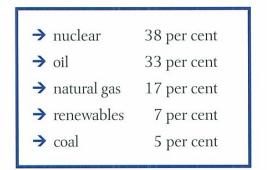
frances primary energy mix in 2010
france has limited coal and oil reserves, most imported. coal mines ended in 2004. large amts imported bc demand for transport fuel
imports natural gas from north africa w increasing usage but much less than other eu states (24% avg other)
bc of limited fossil fuel reserves, big invest in nuclear power after 1970 to secure elec production. 2nd biggest producer of nuclear in the world and biggest in europe
most renewable poewr from HEP in alps e.g. rhone and biomass. france has 1st large scale tidal power station in world
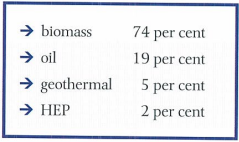
kenyas primary energy mix in 2007
biomass used in form of fuel wood and charcoal
large % of kenyans in rural areas w main source being biomass for cooking and heating
demand for fuelwood increasing bc increasing pop but gov wants to reduce demand for fuelwood bc of deforestation that it causes
use of fuelwood exceeds natural growth of forests making biomass a critical renwable energy source in kenya
oil used in transport sector for elec generation. any increase in world oil prices is a problem and gov wants to reduce dependance but alternatives hard to find
use of geothermal rising since building of first geothermal plant 1980s in rift valley region (tectonicallly active)
hydroelectricity used for elec generation in kenya but depends on kenyas unreliable rainfall. 14 small hydro stations in twotal and 2 planned projects but no. suitable sites quite limited
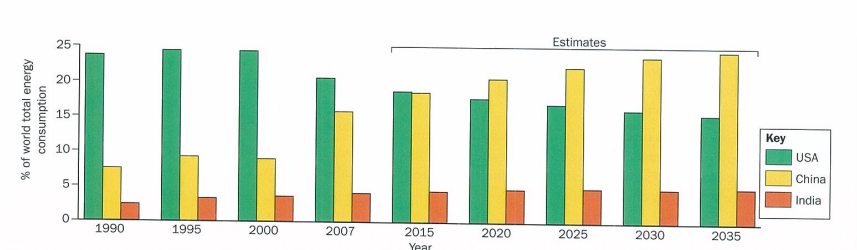
trends in consumption of fossil fules, nuclear power and renewables:
energy consumption increasing rapidly but variations in pattern between diff parts of world
until recently, hics conusmed most of worlds energy (1990 - usa 5% pop but 25% energy) by 2007, mics and nics were equal to hics and predicted to growth due to energy conservation measures in hics and pop growth and econ dev in mics/nics
decline in usas use of energy shown is partly due to energy conservation but also increasing energy use. increase in china = rapid industrial growth and increasing affluence to afford energy e.g. private car.
india slowly increasing, growing eocn but large amt of poor people so cant afford as much.
china and india = 10% of use in 2007 but predicted to rise to 30% by 2035
main points about energy
fossil fuels (oil, coal, gas) dominate world energy consumption and are expected to continue to do so
oil is most improtant of fossilf uels bc moved cheaply by ship and pipeline so practical transport
1990s gas almost > coal bc cleaner and more energy efficient but coal grew bc of chinese conomy in 21st century bc china has huge coal reserves cheap for exploit
use of coal expected to grow more rapidly than any other energy source in next 20 years. world has huge coal reserves nad modern strip mining techniques make it rel cheap to extract
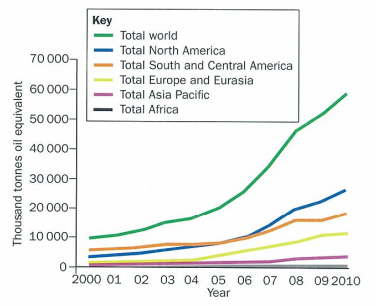
growth of renewables bc new tech e.g. solar cells cheaper and longer lasting. also reflects increasing concern over effects of global warming. likely in hics who can afford expensive tech associate e.g. offshore wind farms but some in small scale appropriate tech renewable energy schemes such as micro-hydro plants in lics
use of nuclear grew slowly in 90s-2010 reflecting growing realisation that decommisisoning old nuclear stations very expensive and disposing waste problematic. predicted to grow in next 20 years as doesnt prod co2 so less global warming and soon maybe tech to dispose safely. very expnsive to build so hics only
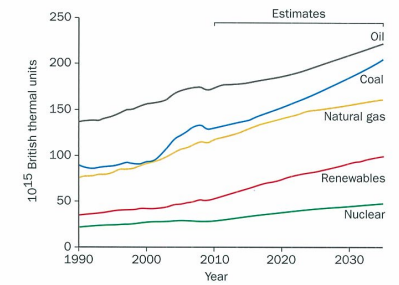
crude oil trends
slower growth than overall increase in world energy consumption bc finite but expected to remian largest source of energy
OPEC (org of petroleum exporting countries) is a cartel (group of 13 oil prod countries most in middle east working to control prod to influence prices). as world demand for oil increase, OPEC countries have increased prod to stop price of oil rising too rapidly
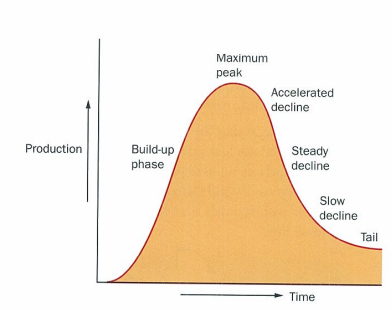
hubbert curve
several other crude oil trends:
wars in middle east have led to reduction of production there
oil companies concerned by current and potential problems in middle east and spurred on by high price o foil have been drilling in more and more extreme envs e.g. mile below sea lvl in gulf of mexico
pushes tech to limits and when things go wrong environmental consequences horrendous as w BP deepwater horizon 2010
oil commodity and traded like other ocmoddities so speculators on world stock markets influecned prices for personal gain
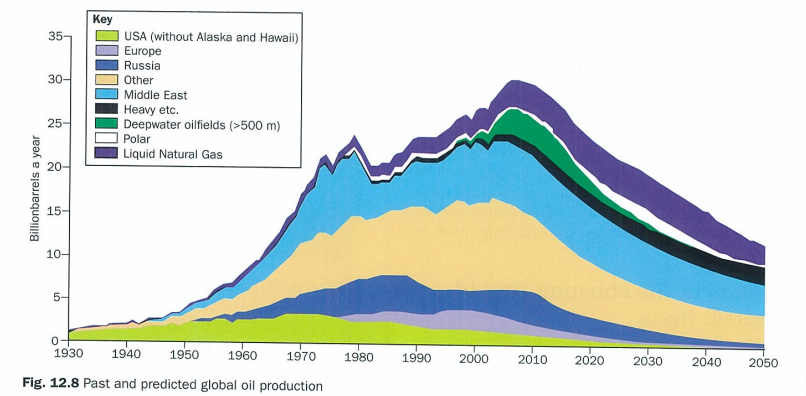
global peak oil production and hubbert curve
predicts rising build up phase as more oil reserves are discovered and exploited. the peak of productin thne occurs as demand drives production up. decline due to reserves running out which will lead to search for alternative fuels but also a search for new oil reserves that are more expensive to exploit. as tech develops to exploit these difficult reserves, decline could tail for years.
global peak oil difficult to predict as until recently it wasnt cost effective to extract oil from canada tar sands. increasing price of oil and dev of new tech meant this vast reserve of oil is now being exploited. other devs may extend peak of oil further
natural gas features
by product of oil prod
difficiult to transport so most flared of finto oil fields in 60s
now major source of energy accounting 25% of worlds consumption
enormous reserves expected to last 70 yrs
russia has a 3rd and middle east another in iran and qatar.
further large deps of natura gas likely to be discovered
cleanest of fossil fuels w no sulphur dioxide and half co2 of oil and coal so greatest demands
tech devs of natural gas
new tech developped to extract gas from shale rocks as most in past from porous e.g. sandstone as flows up boreholes readily. pore spaces smaller and more difficult for gas to escape grip of rock.
in us, borehole tech allows whole series of holes to be drilled into gas-bearing shales. fracturing/fracking leading to 50% reduction in gas prices
mud and liquids pumped into rocks under pressure, cracking rocks and allowing gas to escape.
once liquids removed, gas flows readily.
has lots of environmental impacts

coal features
second most used energy source after oil
large reserves enough for another 150 yrs and widely spread w 70 countries have significant reserves - usa russia china aussie biggest w 60%.
coal is dirty fuel (high sulphur content) and difficult to mine so its use is declining in HICS
fuel of choice in many nics and mics esp china where it supplies almost 2/3 of primary energy mix
power stations easy to build and simple to run and produce large amts of elec in one place (40% of elec from coal)
future difficult but as oil reserves decline, prices rise
coal future
if new tech can be developed e.g. gasification of coal while underground then can become easier to extract
carbon capture at coal-fired power stations cld allow to be used without contributin further to climate change
nuclear features
uranium major fuel for nuclear power industry
fuel rods of urannium undergo radioactive decay producing heat is converted toelectricity
half worlds uranium reserves in usa, canada, aussie.
mostly in hics but nics india china korea and brazil have too
problems w nuclear
accidents at 3 mile island usa. chernobyl ukraine. fukushima japan have lead to release of dangerous radioactive material
nuclear power stations v expensive to build which is one of main reasons only found in hics
take long time to build so must be planned well in advance, not a quick fix
old nuclear power stations difficult and expensive to decommision
used fuel rods contain highly toxic nuclear waste - currently no safe way of disposing
nuclear power stations produce by prods that can be used to make nuclear weapons.
future uncertain but nuclear doesnt contribute to climate change and one station can produce as much elec as wind farm size of luxembourg. also reduces countrys dep on fossil fuels
HEP features
stations located beside source of flowing water and its flowing water that turns turbines
need large head of water so hep stations associated w dams in mountainous regions w high rainfall
can be built into barrages (barriers ubilt across large rivers that river water has to flow through)
pumped storage HEP schemes have low lake and high lake where water falls down high to low, turning turbines. water can then be pumped from low to hgih at times of low demand and reused when demand rises.
no fossil fuels and no global wamring
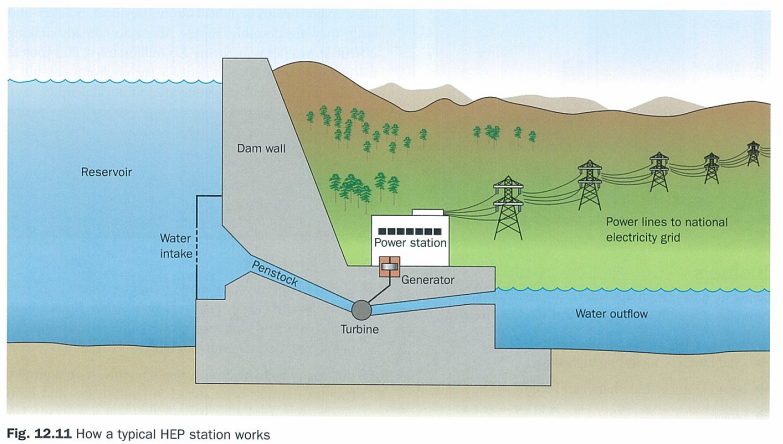
future of HEP
uncertain but large HEP stations can provide huge amts of elec but expensive and take long to build.
can have neg environmetnal impacts and mnya of best sites already used.
small scale microhydro schemes successful in lics but contrib to overall energy supply of country tiny
wind power trends
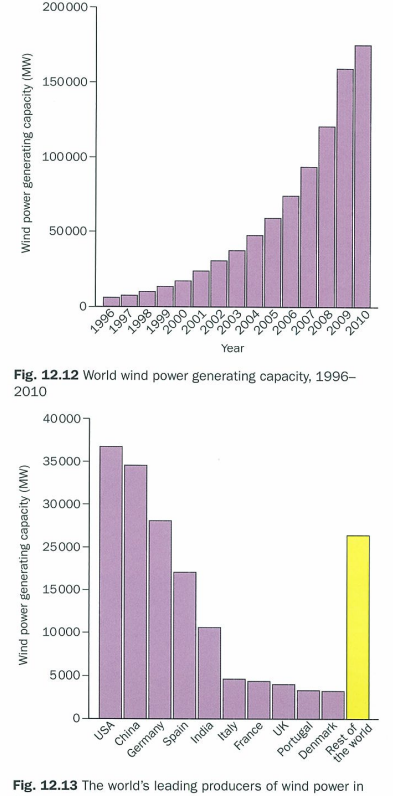
use has increased darmatically over past 15 years. reasons:
growing realisation that use of fossilf uels is causing global warming which will have neg consequences in future. combined w this is desire of ocuntries to reduce carbon footprint
cost of windpower falling making it compeitive with other forms of elec gen. costs only 10% of what in 1994
tehc advances mean modern multi-megawatt wind turbines bigger and more efficient than older
turbine amnufacture is now big bus with large no. firms nad factories involved in their manufacture. despite this, demand outstrips supply.
bigger turbines rotate slower and more aesthetically pleasing.
world leaders = usa, china, india, and hics of western europe. uk new wind farms offshore where stronger winds, but slow growth bc local objections and environmetnalists.
biofuels
any enegy source that comes from organic biomass. renewable and carbon entural including:
solid biofuels - firewood
liquid biofuels - bioethanol and biodiesel
biogas
fuelwood in lics
in lics, esp rural, cooking accounts for 90% of domestic energy use. most households have no access to elec or kerosene and so fuel they use is wood, gathered from surrounding land. 2.5 billion ppl rely on fuelwood for their cooking
wood is renewable resource if gathered sustainably but its use can still have social consequences. wood gathering is often a job for women and young girls. girls often withdrawn from school to do this affecting education. burning wood in poorly ventilated homes = respiratory diseases, reducing l.e.
gathering is unsustainable as irreversible effect on environment e..g burkina faso and other countries of sahel, bc pop pressure = more woodland removed = wind erosion of fertile topsoil during dry season = nothing grow = desertification
solution to fuelwood
encourage ppl to plant trees to replace cut ones
can be educated into more sustianable tree use e.g. coppicing them so regrow branches quickly
kerosene stoves alternative but made from oil and expensive
ripple africa ngo makes fuel efficient wood burning clay stoves. many advs as use 1/3 of wood of open fires reducing annual household usage from 150 to 40 small trees. produce less smoke so health benefit. cook quicker and portable. 20,000 stoves per year saves 1.6 million trees and benefits environment and locals.
other biofuels
liquid biofuels can be made from crops such as maize, oilseeds and sugar cane. provide liquid fuels (bioethanol and biodiesel) which can be used instead of petrol and diesel in cars and lorries
biogas can be made from animal manure, from domestic rubbish that has been stored in landfill sites and from any organic waste in a digester. biogas usually used as domestic fule but can be used to generate electricity
biomass is any bulky crop can be burnt in conventional thermal power station and also includes burning of domestic rubbish in waste to power incinerators
trend of biofuels
biofuel production rising rapidly and is predicted to increase esp in NICs and HICs where there’s money to invest in tech required because:
prices stable
supplies more secure than imported fuels
carbon-neutral bc part of natural carbon cycle (burn to make co2 but not new co2 as asborbed from atmosphere as plants grew so just returned to atmosphere from where it came few weeks earlier)
in hics food supplies are secure and land available to produce biofuels
burning domestic rubbish for prod of enregy is preferred to dumping it in landfill sites esp HICs
main disadv of biofuels is grown on land previoulsy used to grow food so less food supply in increase in food price which is why biofuel use in lics and mics unlikley to grow
environmental impacts of renewable energy sources 4
fuelwood - gathering fuelwood can lead to deforestation, habitat loss, desertification, soil erosion
wind farms - some ppl think noisy, spoil view, object death of birds that fly into them'
HEP stations - if built in rainforest areas and forest not cleared first, rotting uncleared veg can produce huge amt of ghgs. all hep stations have potential to affect fish migration and fihs breeding patterns
for all renewable energy sources, making equipment needed e.g. solar panels, takes energy and releases co2 into atmosphere
emnvironmental impacts of non renewable energy sources 7
coal mining involves disturbing or removing large areas of land and can lead to habitat loss, release of dust, noise, contamination of surface water and building of large waste heaps
transporting oil can lead to oil spills that kill local wildlife and reduce visual attractiveness of beaches
burning oil and coal = acid rain which damages forests and threatens freshwater wildlife
burning all 3 fossil fuels (coal, oil and natural gas) contributes to global warming and climate change
burning coal and oil-based vehicle fuels can cause local air pollution including dust, smog, and photochemical smog (includes ground lvl ozone)
fracking to extract gas from shale can lead to contamination of groundwater supplies
nuclear power prod can lead to escape of radioactive material leading to genetic deformities and deaths of ppl and wildlife
environmental impacts of nuclear power
heat energy released by radioactive decay/nuclear fission of uranium and heat is used to generate electricity
accidents which release radioactive material into env have devasting consequences where humans, animals na dplants are killed/made very ill
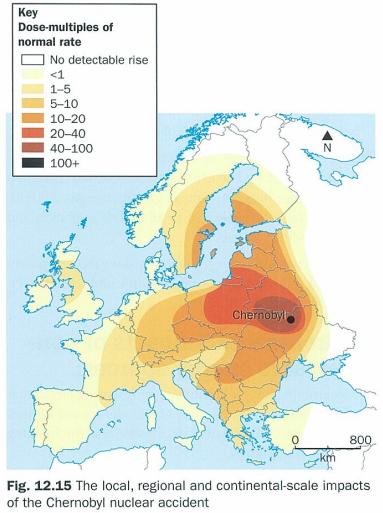
large areas of land around accident site can be contaminated and unusable for years e.g. 1986 explosiona t chernobyl in former ussr was local-scale disaster that affected area close to power station and regional scale problem affecting countries in northern europe. caused 56 dedaths at local area and radiation released contributed to many thousands more in regions around. manyn ppl still very ill w radiation linked illnesses e.g. thyroid cancers and leukaemia
local scale impacts severe but only affected area around chernobyl which is now exclusion zone
regional scale impacts have caused long term illness in ukraine, belarus and poland
continental scale impacts were relatively short lived but affected farm animals as far as british isles
environmental impacts of energy transport
crude oil provides range of vehicle fuels and used as valuable raw material in petro-chemical industry producing plastics and other useful substances
crude oil dirty substance: thick, black, tarry and sticks to anything contact
crude oil transoprted from oil fields to refineries in oil tankers or pipelines which doesnt cause problems unless spillage which is disasterous
oil tankers - extremely large ships caryring over 250,000 tons of oil. major oil spills caused when oil tanker runs around and cargo spills e.g. march 1989 exxon valdez ran aground in prince william sound on coast of alaska. oil slick 10cm thick contaiminated 1700km of coastline making regional scale disaster. cleanup lasted for 10+years and cost exxon more than 1billion GBP
oil piplines - carry huge amts of crude oil, mostly overland. when bursts, local scale impact spilled oil, polluting water sources and killing plants and wildlife
elect transmission lines seen by many ppl as visual pollution. building of new wind farms in mid-wales 2010 meant pylons needed in beautiful rural area of north shropshire. local scale issue and many tried stopping it
environmental impacts of energy prod and use at local and regional scale acid rain
70s-80s scandinavians were aware that forests and marine life was damaged bc acid rain (pH near vinegar) from burning fossil fuels releasing sulphur dioxide and nitrogen oxides (dissolve in clouds = acid rain/wet deposition -regional). suffering form UK pollutants. regional scale. in UK gases corrdoing buildings (dry deposition, local)
main pollutants were sulphur dioxides and nitrogen oxides:
coal contains suplhur. burning coal in power stations releases large amts of sulphur dioxide
cars burn petrol producing range of exhaust gases including nitrogen oxides
impacts:
acid attack statues, gravestones, buildings esp limestone
close to source of pollutants, gases breathed in causing respiratory problems
acid rain damages trees, esp coniferous trees
aluminium leached out of soil. washed into streams, rivers, lakes where it proves to be toxic for marine life.
EU 1988 legislation to tackle problem and by 1999 acid rain down by 30% this was what was done:
catalytic converters were made compulsory, cutting down nitrogen oxides that car exhausts produced
many old coal fired power stations were replaced w new gas fired power stations. gas is much cleaner fuel than coal and produces v little sulphur dioxide
remaining coal fired power stations used ‘sulphur scrubbers’ on their chimneys to remove sulphur dioxide before released into atmopshere
increasing use of renewable energy source sand nuclear power has also helped to reduce problem
environmental impacts of neergy use at global scale - global warming
global warming/human induced climate change produced by enhanced greenhouse effect. in hics and nics, ernergy use increasing esp in fossil fuels making more ghgs
problem recognized at earth summit in rio in 1992 and many nations have now agreed to reduce emissions. not easy but consequences of climate change could include sea level rise, increased atmospheric hazards and reduction in global food supplies
ghgs trap heat radiated by earth stopping it escaping into space and so heating atmosphere. this ghe natural but enhanced in recent decades by human activity esp burning fossil fuels. main gases area co2 produced when fossil fuels burnt (coal, natural gas and oil) and methane (produced by rotting rubbish in landfill sites by rice fields and by cows digestive systems
enhanced ghe has produced global warming - increase of avg global temp which is impacting on global ecosystems. more gales and storms likely. rainfall patterns change; more droughts and floods are likely, again impacting further on ecosystems. ice caps cld melt and sea levels rise. land cld be flooded by sea which severe effect on coastal, sea gets warmer and expands making sea lvl rise more. global scale problem but diff effects in diff places bc money, infrastructure, resources available to cope are diff
managing problem difficult as a lot of damage has alr been done bc we burn fossil fuels since start of industrial revolution. however kyoto agreement signed so desire to reduce future effects of global warming agreed. strats include:
developing energy conservation
using cars less and using more energy efficient cars
using public transport or walking whenever possible
using more nuclear and hydro-electric power stations and developing sustianable energy sources such as wind power and bio-diesel
planting trees and stopping deforestation
having international agreements and cooperation. global problem and hics must help other countries.
some ppl feel its too late and we should try to live w it instead of address causes.
pollution
the introduction of substances into the natural, environment that cause adverse change and which damage the natural environment. pollutants can be introduced by human activity or natural. (light and noise also pollutants)
how can pollution be classed
point source and non point source (spatial) and incidental and sustained (temporal)
point source pollution
point source pollution occurs when the pollutant is issued at one point e.g. pipe pouring untreated sewage into river
non point source pollution
non point source pollution emanates from area e.g. exhaust emissions from all vehicles in city
incidental pollution
one off event e.g. chernobyl radiation leak/exxon valdez oil spill
sustained pollution
long term pollution caused by on-going human activities e.g. release of carbon dioxide into atmosphere from burning of fossil fuels
much worse in long run
what does pollution mean for environment and human
degradation of environment
poor human health
air pollution kills 7 million people a year and is linked to one in eight deaths worldwide
land pollution sources
waste prods and byprods are simply dumped on ground or buried in landfills
mining and quarrying
industry
energy production
dumping of domestic
mining and quarrying
waste tips from coalmines scar landscape in many former mining areas.
visually unsighlty and difficult to landscape and vegetation doesnt grow
quarries and strip mines produce dust and noise while operating and can lead to severe degradation of environment esp in fragile rainforest areas
industry
industries produce solid waste which is dumped onto land
toxic by products drain away ni land around factory
makes reclamation of land very expensive when factory closes and is used for other e.g. housing
energy production
leaks from oil pipelines contaminate land where pipes pass
ash from coal-fired power stations often dumped into large holes in ground and ash is loose and sterile
dumping of domestic waste
domestic waste tends to be burned and ashes together w rubbish that wont burn dumped outside on a midden
unslightly and small scale
in developed urban societies ppl affluent and have more to throw away
domestic waste collection usually organised by local authority and waste often buried outside urban area in landfile sites - holes in ground filled w rubbish containing organic food waste → breaks down to methane which escapes and contributes to air pollution
rainwater draining thru ladnfill pick up toxic chemicals from decay of domestic waste which move down into groundwater aquifers causing water pollution
air pollution sources
major problem locally, regionally and globally
energy production
agriculture
deforestation
industry
traffic
energy production
production and use of energy pollutes air:
burning fuelwood in home
dust from strip mining of coal
acid rain
carbon dioxide from fossil fuels
agriculture
storing and spreading farmyard manure causes bad smell which affects settlements nearby
burning straw after grain harvest produces smoke and soot
deforestation
clearing trees from forested area often achieved by cutting them down and burning them
ash from burnt vegetation helps to fertilise soil
on small scale, smoke quickly dissipates and doesnt have serious impact but on large scale and in mnay place at same time = problem that extends across several countries
burnign rainforesst in SEA has led to seriosu air pollution across whole region which happens every year but 1997 SEA haze was large scale air quality disaster acusing smog and health problem costing US 9 billion due to closure of school, increase need for healthcare and disruption of air travel and business activities
industry
heavy industry often produces range of atmospheric pollutants. iron, steel, chemicals, and oil refining some of the owrst offenders bc factories operate for long times = sustained pollution
industrial accidents contaminate large areas w extremely toxic materials. incidental. explosion at union carbide chemical factory in bhopal india 1984 released methyl isocyanate gas into surrounding city. ppl blinded and choked and long term death toll 20,000 ppl. many permanently disabled
traffic
no. vehicles in big cities growing all the time and exhaust fumes produce also increasing
traffic congestion makes things worse as vehicles still produce fumes when caught in traffic jams.
worst in mics where vehicles poorly maintained
wideg range of pollutants released by road vehicles
7 pollutants released from traffic exhaust fumes, source and problems
carbon monoxide (CO) - exhaust fumes from vehicles that are not burnign fuel efficiently, reduces supply of oxygen to heart
carbon dioxide (CO2) - exhaust fumes from efficient vehicle engines, global warming
nitrous oxides (NOX) - petrol engine exhausts where no catalytic converter has been fitted, irritates throat and lungs. leads to ozone formation and contributes to acid rain
ground-level ozone (O3) - chemicals in vehicle exhausts, especially nitrous oxides react w sunlight to produce ground-level ozone, photochemical smog (brown haze) leads to irritation or eyes, nose, throat, lungs. dangerous for ppl w respiratory problems e.g. asthma
particulates - produced by diesel engine exhausts where no filter fittted, black smoke and soot which leads to smog and respiratory problems. partciles can cause cancer if breathed in lungs over sustained period
hydrocarbons (benzene) - petrol engine exhausts w/o catalytic converter, contribute to formation of groundlevel ozone. benzene = cancer
lead - old petrol vehicles which burn leaded petrol (MICS), lead causes brain damage esp in chidlren, damages kidney, liver and nervous system
water pollution overview
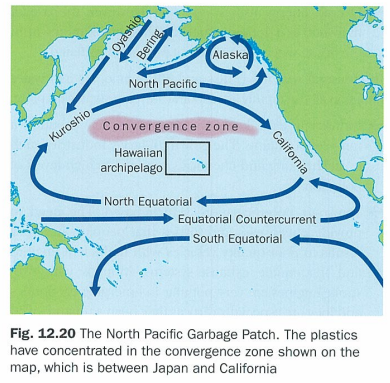
water is fluid and polluted water can spread over long dist. rivers take pollution to sea and ocean currents can take around globe. materials made from plastic dumped into north pacific ocean and washed into ocean by rivers flowing from all desnley populated countries around north pacific
plastic long lived material and floats and plastic concentrated in area known as north pacific garbage patch. long term impacts on marine ecosystem unknown but one of major forms of pollution on planet
wataer pollution sources 4
agriculture
industry
energy production and transport
domestic rubbish
agriculture
water pollution by agriculture bc increasing use of chemicals in farming
chemicals washed down thru soil (leaching) and end up in rivers and streams
increases nitrates from fertilisers leads to growth of algae/algal bloom
when algae die, they rot and use up oxygen in water (eutrophication) killing fish and other orgs living in rivers
industry
liquid wastes from industry often simply dumped into sea or nearby rivers
papermaking has one of worst records
chemicals used to turn wood into wood pulp extremely toxic and kill most wildlife if released into local rivers w/o being treated and made safe first
rivers polluted w organo-chlorine compounds used ot bleach wood pulp
energy prod and transport
main impcats:
pollution from oil spills
air pollution from energy production contributes to acid rain too which when fall on lakes and rivers pollute them
hot water from thermal power stations often dumped back into neraby rivers. hot water clean but contains very low lvls of o2 suffocating fish
low lvl radioactive waste from nuclear power production
domestic rubbsih
often dumped into nearest river
old bikes, shopping trolleys common in hic cities but problem worse in mics and nics where may not be efficient rubbish collection system
norway, onnut costa rica case study
yes
solution and its problem
must be linked to sustainability by using fewer resources, making things in a cleaner way and throwing away less of what we use. the problem is that many people are divorced from the chain of production that provides them with what they buy and are ignorant of what happens to things they throw away
first step to solutions
raise awareness
environmental pressure grps e.g. greenpeace and friends of the earth have been doing this for many years and their efforts have educated many and changed attitudes and behavior
most successful in HICs where ppl can afford to moake informed choices abt environment as poor ppl more focused on immediate survival than environmental protection
second step to solutions
turning raised awareness into political action
more common in HICs as govs in mics focus on needs of rapidly expanding population and policies that will stimulate econ dev. reducing environmental pollution may not be top
when political will exists, pollution tackled by legislation, educaiton and taxation
legislation
passing laws that outlaw polltuion, gov sets up monitoring and inspection system that highlights continuing incidents of pollution and then ensure that the culprits are taken to court and punished in some way e.g. fines
education
advertising in national media, persuading ppl pollution is bad and showing ways to reduce it
taxation
hardest way to tackle pollution as ppl hate taxes and green taxes seem unecessary. taxes on vehicle fuel aim to reduce vehicle use and air pollution caused. tax on plastic bags designed ot reduce domestic waste.
in uk landfill tax has made local councils organise recycling in order to cut down amt of rubbish being thrown away. a suggestion to tax housholders on amt of rubbish produced known as - pay as you throw - wasn’t well received by population used ot having rubbish taken away for free
amt of pollution in country is linked to…
economidc development
environmental kuznets curve
shows pollutions link to development

LICs pollution
large scale pollution usually not a major problem in pre-industrial society LICs
agri is organized on subsistence basis and theres little money to buy chemical fertilisers and pesticides (main agents of agri pollution). over use of land can = env degradation e.g. soil erosion but not linked to pollution
industry poorly dev and is small scale craft industry producing few pollutatnts. mining and quarrying = land degradation and pollution in countries where primary raw mats are being extracted
transport based on muscle power of ppl and animals. use of fossil-fuel powered vehicles not great
v little domstic rubbish in these poor societies where ppl cant afford to throw away anything that might still be useful
ovrelal energy use very low but use of fuelwood as domestic fuel = pollution within house where badly ventilated rooms
MICS and NICS pollution
land air and water pollution rise rapidly as econ dev happens
industrialisation = factories producing range of pollutants. growht of heavy industries e.g. steelmaking and chemicals = high lvls of pollution
transport becomes more vehicle based. need to provide cheap cars and lorries that ppl can afford = poor quality vehicles w inefficient engines and inadequate exhaust systems. mopeds w 2 stroke engines popular in emerging econs but especially dirty as burn mix of oil and petrol
urbanisation = cities grow rapidly. sewage disposal inadequate (based on local rivers and lakes) and ppl burn dirty cheap fuels e.g. coal
as agri more commercial, use of agri chems increases polluting rivers and streams
gov promotes econ dev so that the basic needs of growing pop can be met. to od this, tncs encouraged to set up factories and attracted by absence of anti-pollution laws amongst other factors
as well as leading to environmental deg, increased lvls of pollution cause major health problems
in post industraial econs HICs
pollution decreases
qual of life is as important as standard of living and pressure from pop for reduction in pollution
environmental pressure groups set up and these orgs mobilise public opinion ‘green’ pol;itical parties set up and tak epart in political process.
most hics affluent democracies where govs need to take more notice of ppls wishes and where they pay less regard to demands of tncs. anti-pollutino laws introduced and enforced. designed to improve public health e.g. laws regarding sewage disposal and clean air, but later on alws are introduced to protect wildlife and ecosystems
globalisations = much old heavy polluting industry closes down as production moved to emerging econs where wage rates lower
increased use of private car = air pollution problem but new tech e.g. particulate filters, catalytic converters on vehicle exhausts mean that source of pollution being reduced.
although hics able to reduce local pollution in country, global scale still problem. increased energy use based on fossil fuels = co2 is produced in v large qts by hics. co2 has very little impact locally but global impact thru climate change cld be immense
water
most essential natural resources. reliable water supply is essential for sustained con dev. 40% of world live where lack of watear threats and global demand doubles every 20 years. must be clean and safe as dirty might kill over 4000 kids mostly LICs w waterborne diseases e.g. diarrhoea
2 main sources of water
surface water
ground water
(desalinsation - fresh water rfom sea water)
 Note
Note  Flashcards (22)