global change bio
 Call Kai
 Learn
Learn Practice Test
 Spaced Repetition
 Match
Match Flashcards
 Knowt Play
1/70

There's no tags or description
Looks like no tags are added yet.
Name | Mastery | Learn | Test | Matching | Spaced | Call with Kai |
|---|
No analytics yet
Send a link to your students to track their progress
71 Terms
40% oil used 50% land transformed by direct human action with consequences for biodiversity
fixed synthetically more nitrogen for fertilisers and through fossil fuel
combustion than is fixed naturally in all terrestrial ecosystems
appropriated more than half of all accessible freshwater for human
purposes
Drivers of global change
Human population needs, the amount of people have exploded from 8 billion
Population doubled grain tripled energy quadrupled economy quintupled
North America and Europe consume more energy per person despite smaller population
~280 ppm ,
Temperatures continue rising even if emissions stop due to gas persistence eg CO2 takes more time whereas methane takes shorter amounts of of retention time
Move e.g species want to get cooler they move northward or upward- we have less cold winters which kills less diseases
adapt, or die
Adapt: Phenology definition
Study of timing of life history events
Earlier flowering and butterfly emergence 15 days earlier
Different species respond differently causing ecological disruption e.g butterflies emerge early but does the food they feed on?
can species adapt in time?
Climate change rates exceed evolutionary adaptation rates
no evidence of physiology changes at the rate of climate change
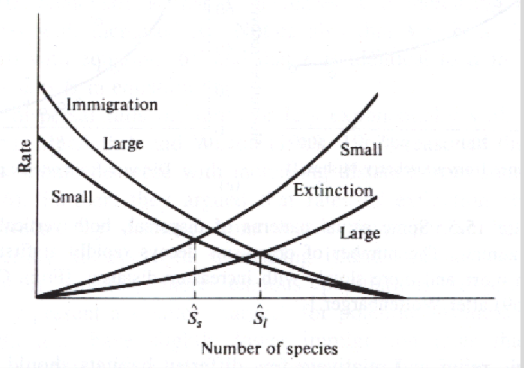
Explains species richness based on area and isolation
expected number of species lies at the intersection of the colonisation and extinction curves\
larger island will have greater rates of immigration as animal will be likely to see it/hit it
large island= more people but less genetic diversity and stochastic events
Species introduced outside native range that establish and spread
A species that arrives (often with human assistance) in a habitat it had not
previously occupied, then establishes a population and spreads autonomously’

