Muscle Contraction
 Call Kai
 Learn
Learn Practice Test
 Spaced Repetition
 Match
Match Flashcards
 Knowt Play
1/14

There's no tags or description
Looks like no tags are added yet.
Name | Mastery | Learn | Test | Matching | Spaced | Call with Kai |
|---|
No analytics yet
Send a link to your students to track their progress
15 Terms
-
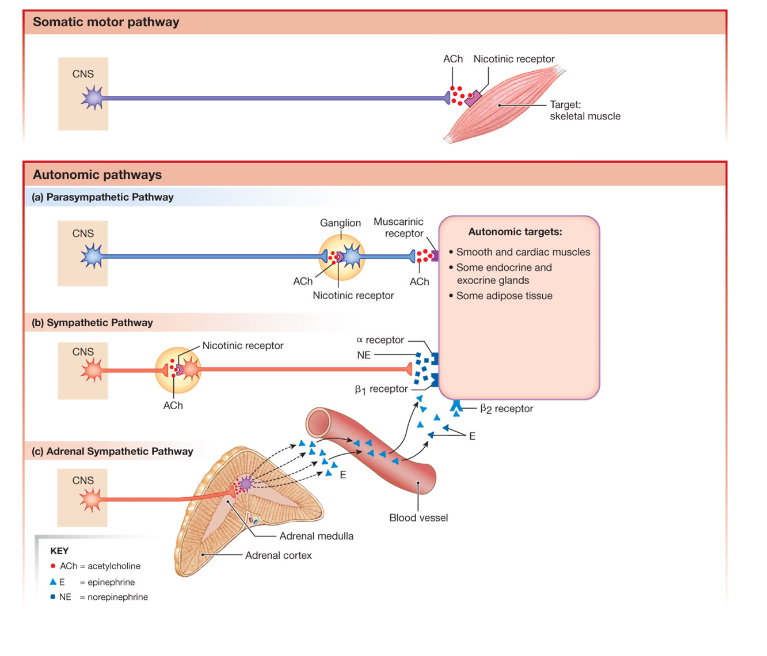
Efferent pathways of the nervous system
There are two neuron circuits
→ the neuron that controls the target organ releases either ACh or NE
Somatic motor output pathways are structured differently
→ only one neuron between spinal cord and target muscle cells
→ always releases ACh onto nicotinic receptors, which always stimulates contraction
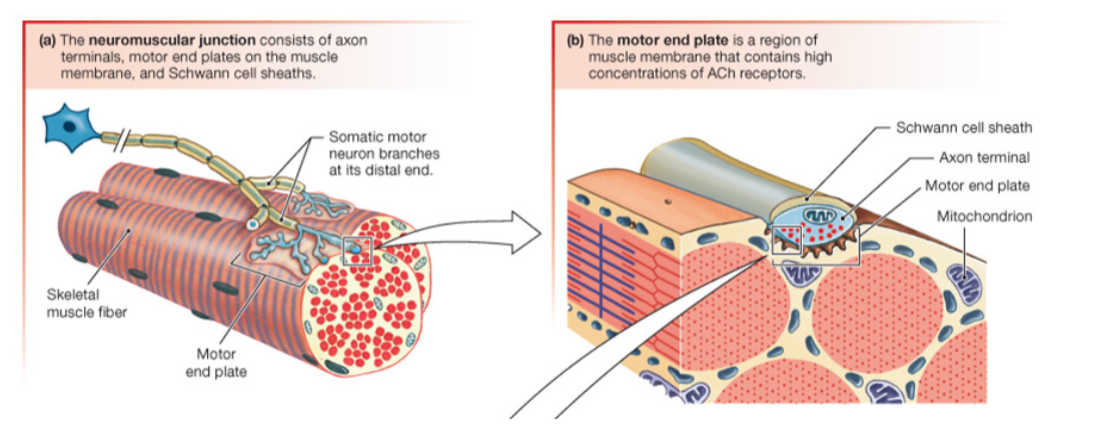
Somatic motor neurons terminate at the neuromuscular junction
that
Somatic motor neurons
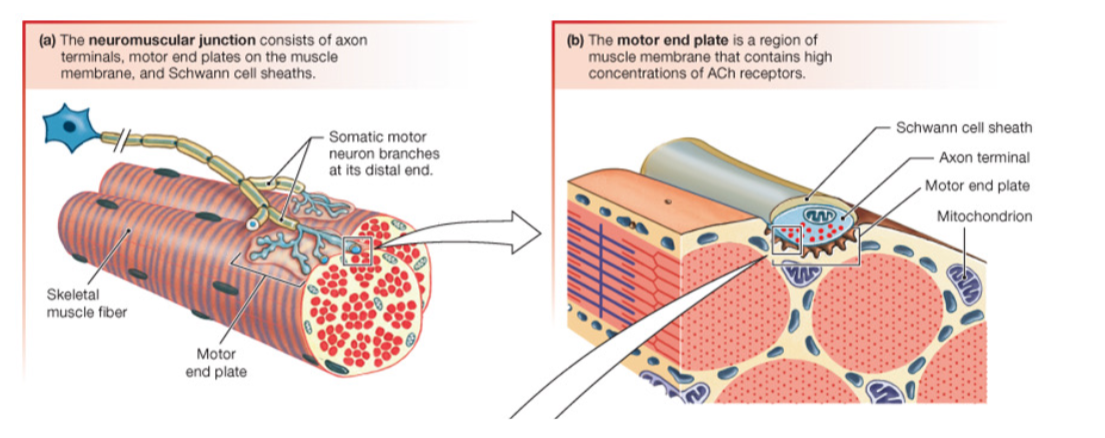
Originate in the CNS (cell bodies are in the spinal cord)
many myelinated axons collect in motor nerves
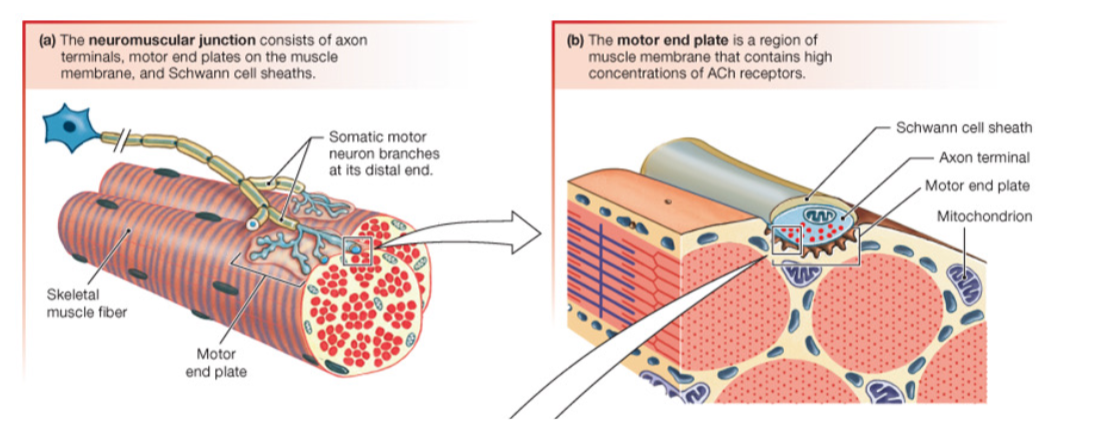
At their terminus…
The axons branch close to target, forming multiple synapses on muscle cell(s)
These terminals, along w/ motor end plate and Schwann cell sheath, form a neuromuscular junction
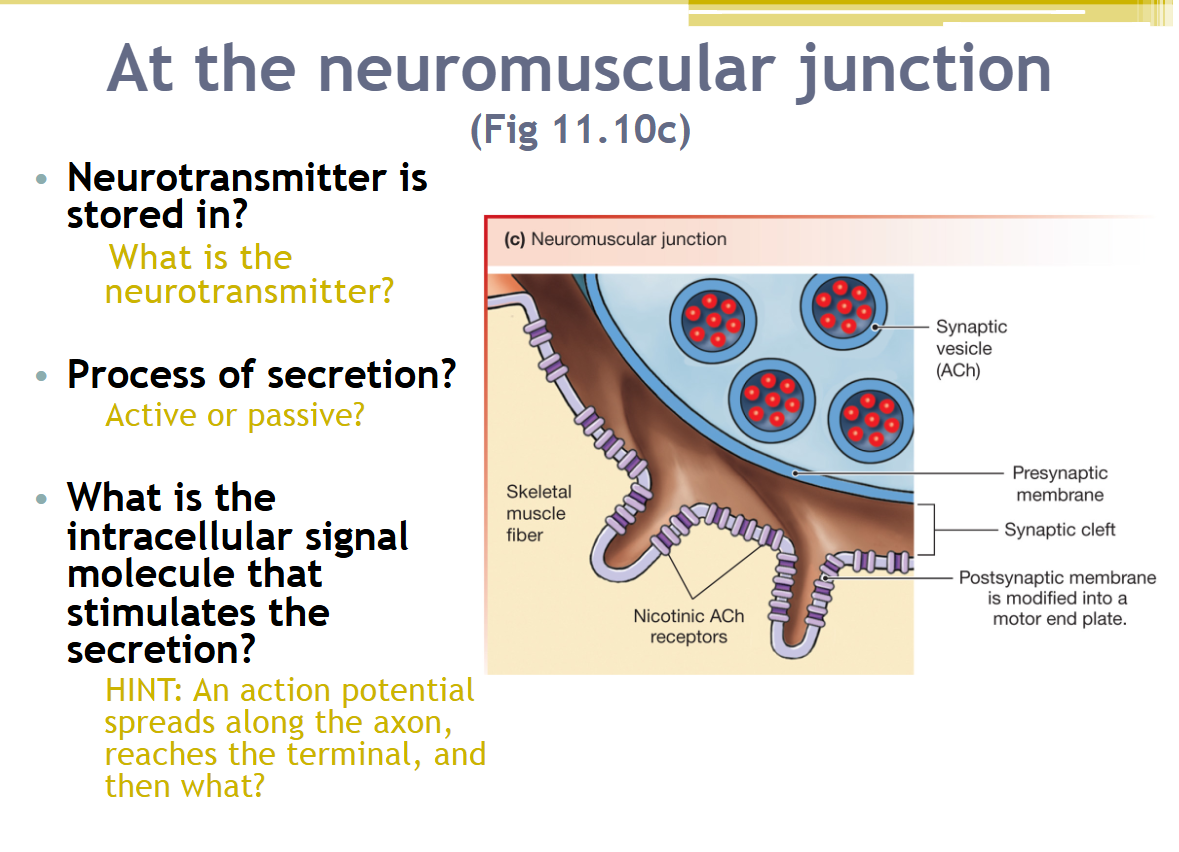
At the neuromuscular junction…
Neurotransmitter
Exocytosis! — Active transport
Saltatory conduction, voltage gated calcium channels
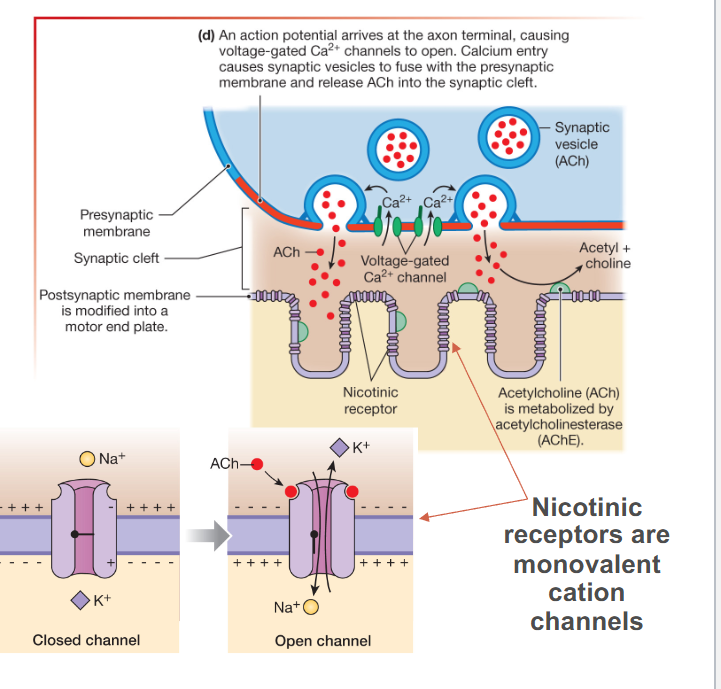
Specific name of receptor on the motor end plate?
generally called a receptor channel
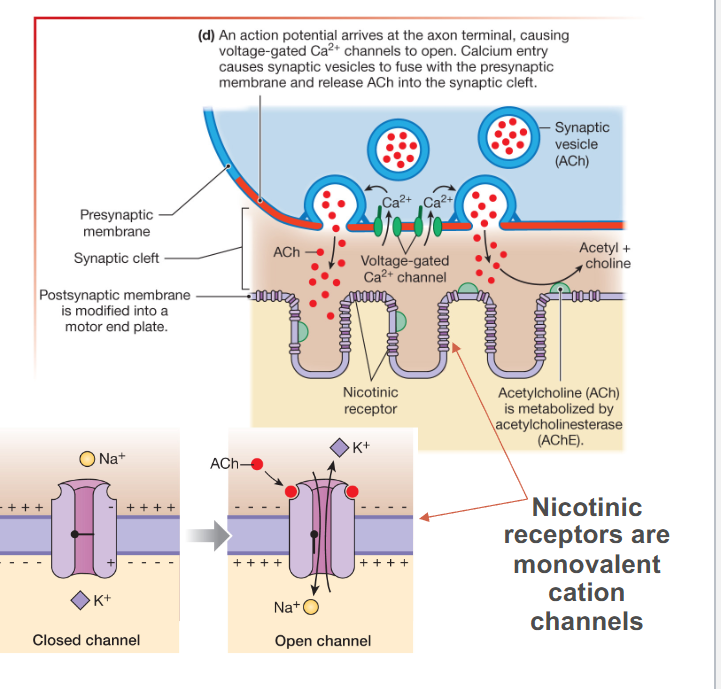
ACh is always excitatory at the NMJ
When it is released and binds to its receptors, the muscle cell will contract fully
The muscle cell will relax once ACh release stops and it is inactivated
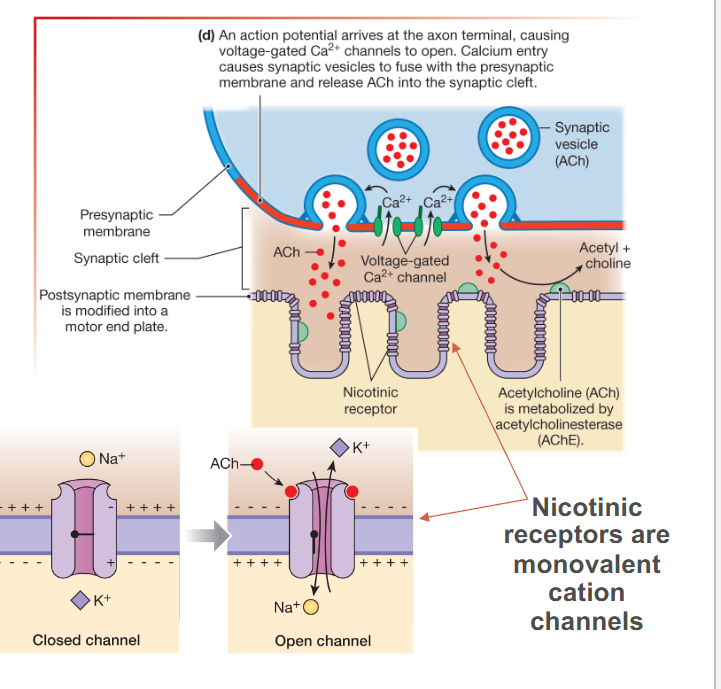
What inactivates ACh?
Acetylcholine (ACh) is inactivated in the neuromuscular junction by the enzyme acetylcholinesterase (AChE), which breaks it down into choline and acetate. This inactivation allows the muscle to relax and prevents continuous spasm. The byproduct choline is taken back into the nerve terminal to synthesize new ACh, while acetate diffuses away
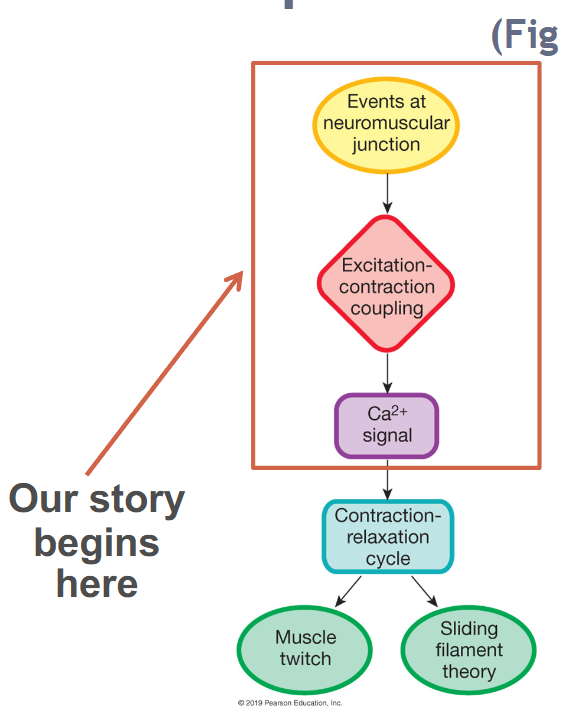
Excitation-contraction coupling
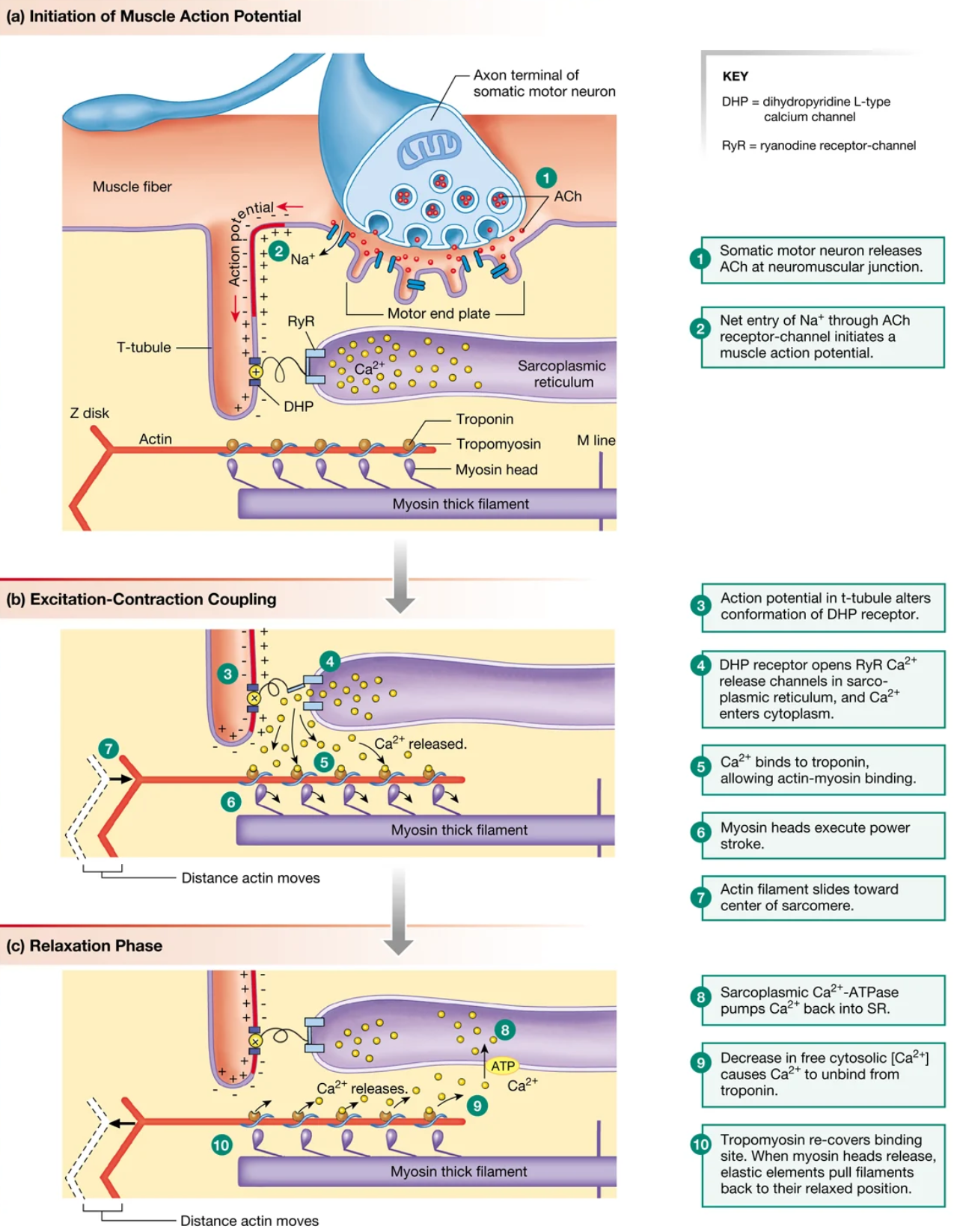
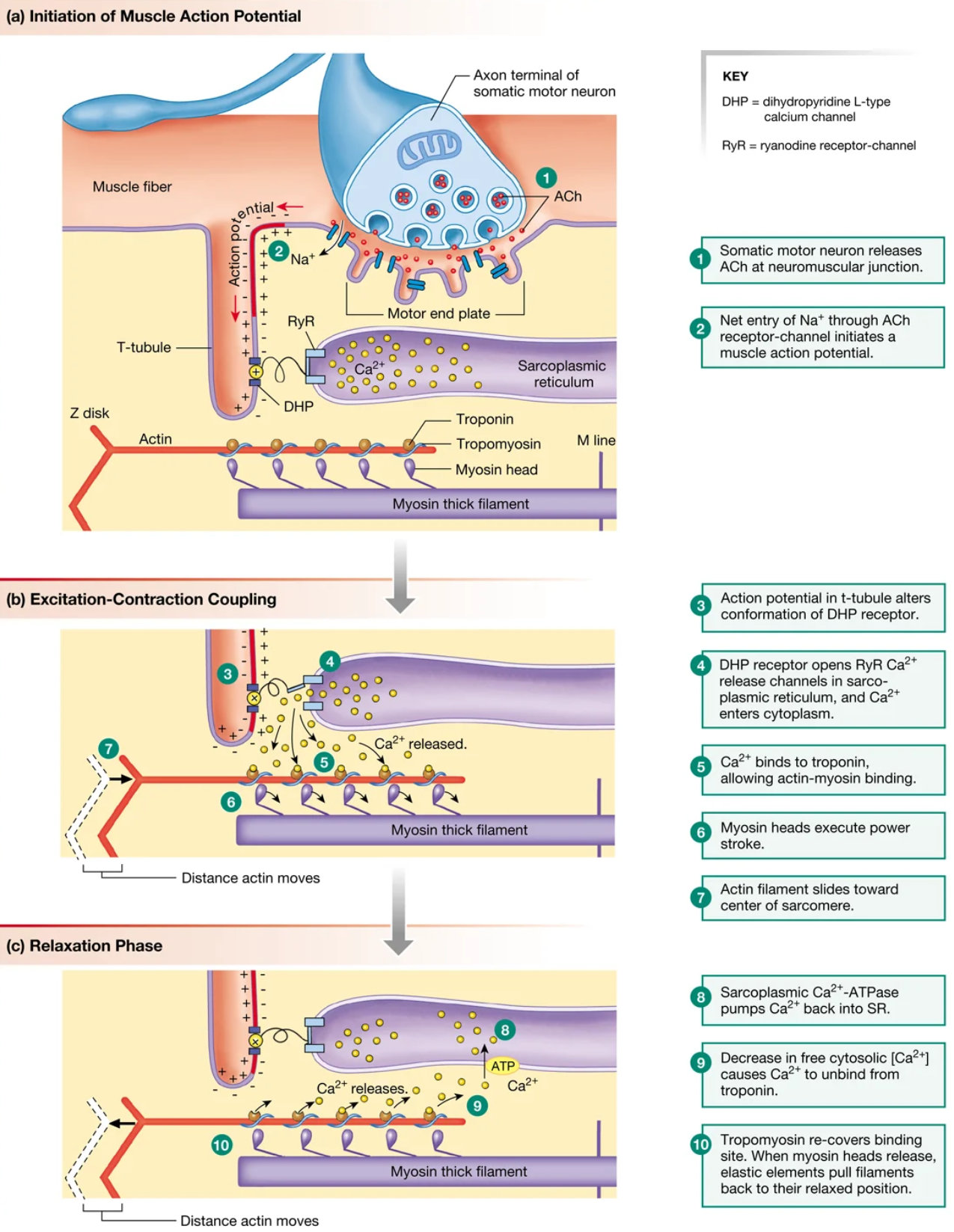
Acetylcholine (ACh) is released from the somatic motor neuron
→ released into the synapse at a neuromuscular junction, binds to ACh receptor-channels (opening) on the motor end plate of the muscle fiber
→ when ACh receptor channels open, they allow both Na+ and K+ to cross the membrane
→ Na+ influx exceeds K+ to efflux bc the electrochemical driving force is greater for Na+
→ the addition of net positive charge to the muscle fiber depolarizes the membrane, creating an end-plate potential (EPP)
The end plate potential always reaches threshold… and ACh initiates an action potential in the muscle fiber
→ voltage gated Na+ and K+ channels open on surrounding sarcolemma
The muscle action potential triggers calcium release from the sarcoplasmic reticulum (trigger zone)
→ just like the axon hillock of a neuron
Calcium combines with troponin to initiate contraction
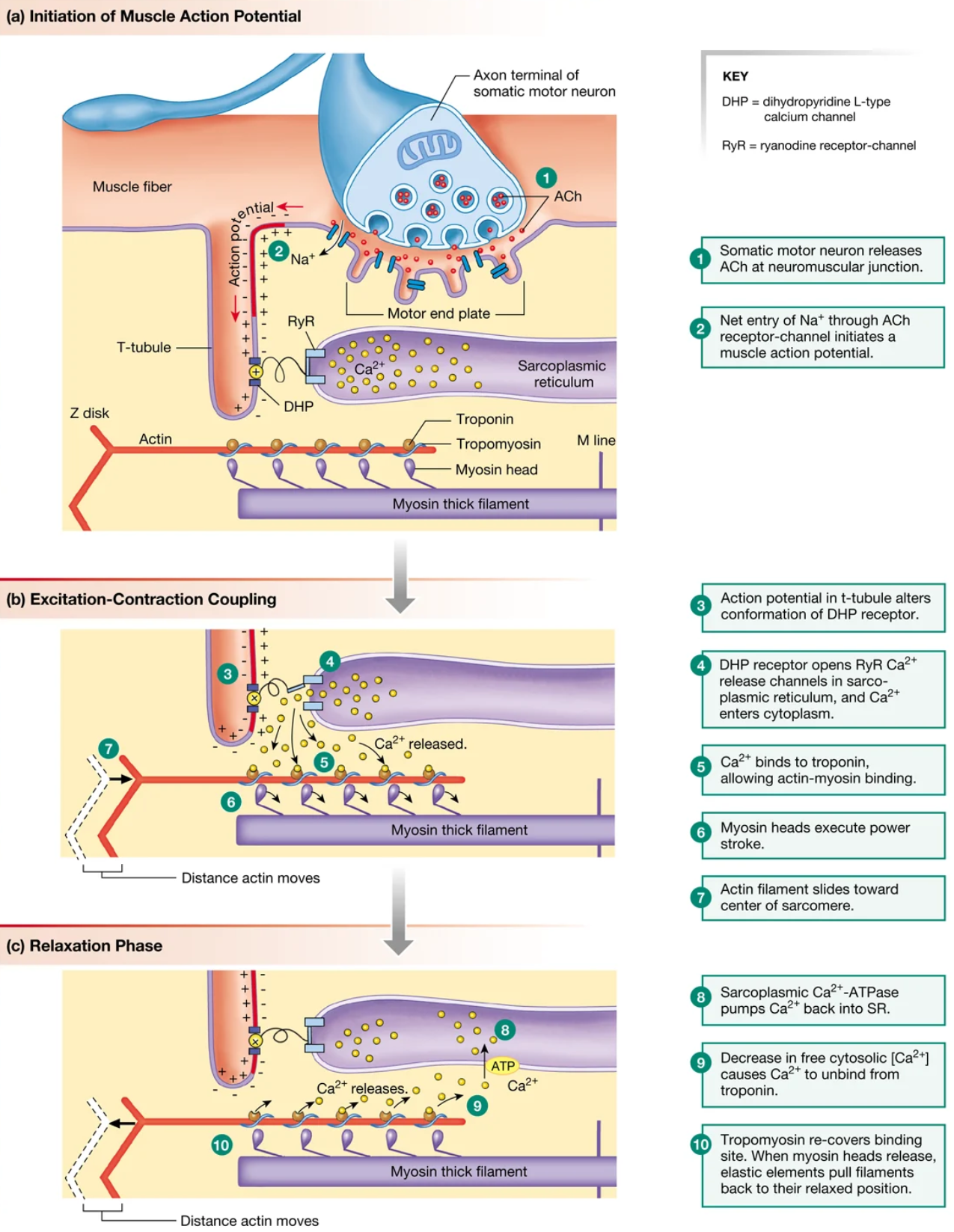
Action potential spreads all along the sarcolemma by propagation…
Just like how it spreads along an unmyelinated axon…
Spreads down into any nearby transverse tubules
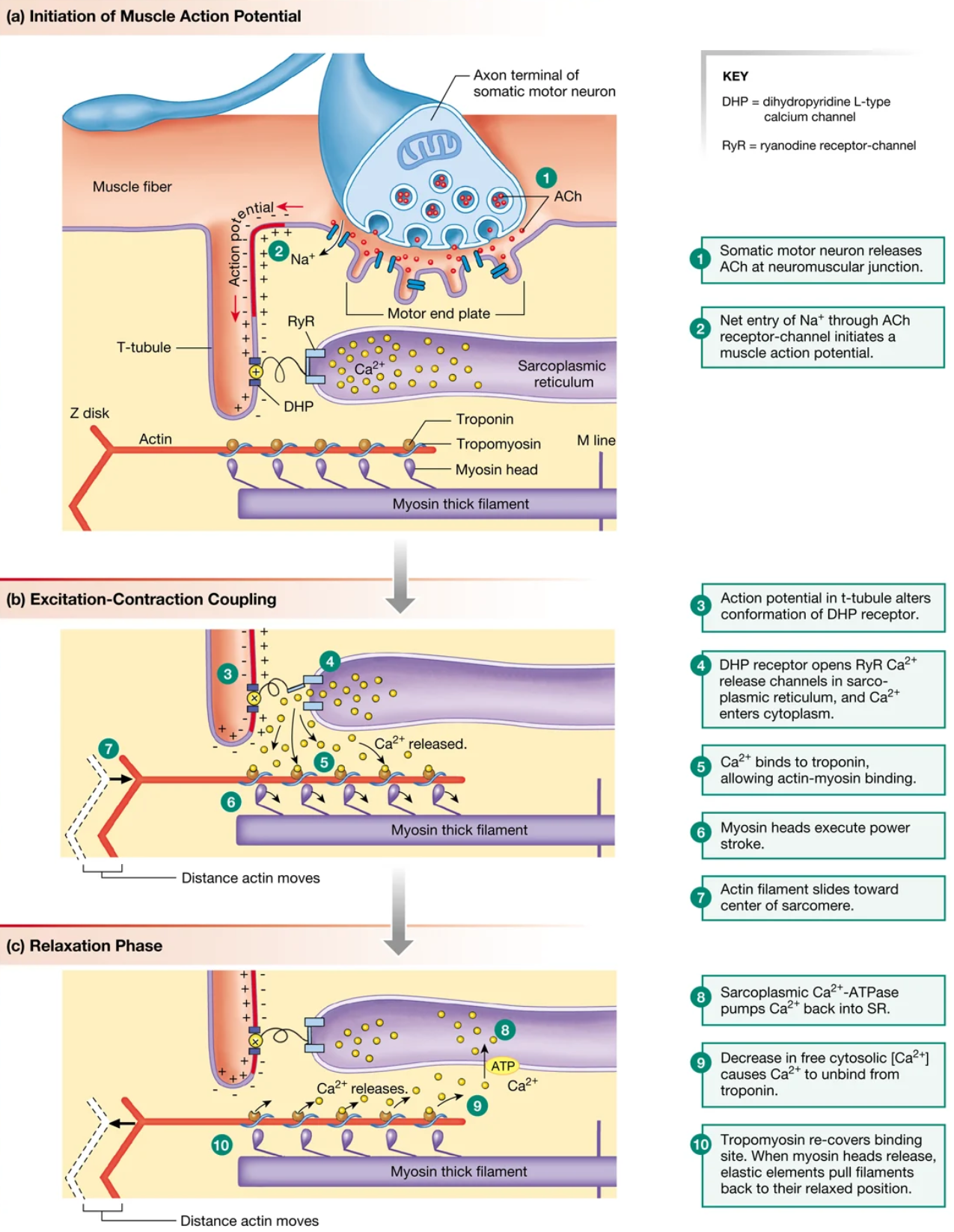
How is the electrical signal then transduced into a chemical signal inside the muscle cells?
DHP = dihydropyridine receptors
A voltage sensitive protein that is mechanically linked to Ca2+ channels in sarcoplasmic reticulum
RyR = ryanodine channels
Channels that release Ca++ from sarcoplasmic reticulum
Where does the calcium bind?
binds to troponin
allows for actin-myosin binding
causes muscle contraction!
When the somatic motor neuron stops releasing ACh…
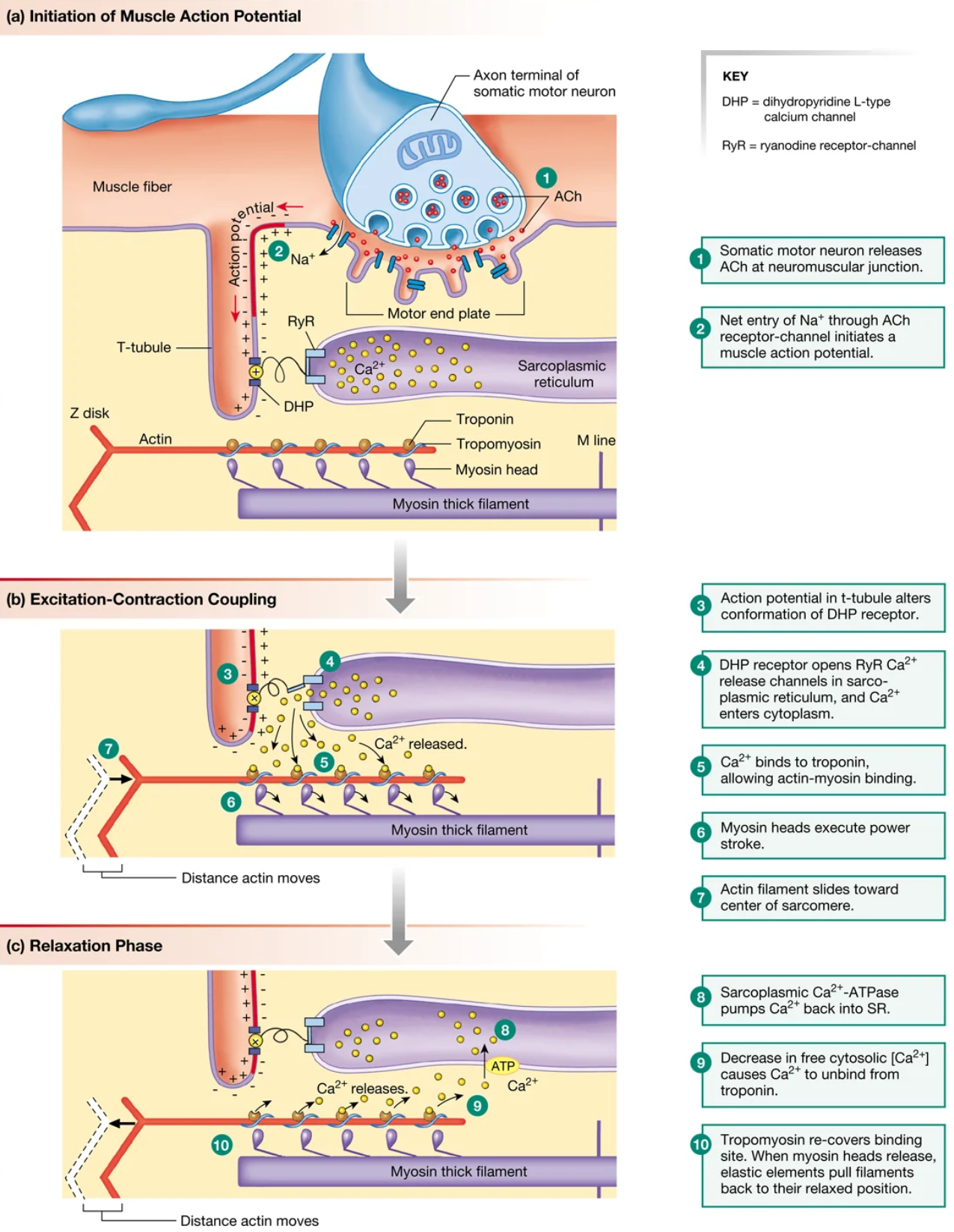
Relaxation occurs by removing Ca++ from the myofilaments
The sarcoplasmic reticulum pumps Ca++ back into its lumen using Ca2+ -ATPase
As free cytosolic Ca2+ concentration decreases, the equilibrium between bound and unbound Ca2+ is disturbed and calcium releases from troponin
Removal of Ca++ allows tropomyosin to slide back and block actin’s myosin-binding site
As the crossbridge release, the muscle fiber relaxes with the help of elastic fibers in the sarcomere and in the connective tissue of the muscle
Concept check

