CH 26 ASSESSMENT AND MANAGEMENT OF PATIENTS WITH VASCULAR DISORDERS AND PROBLEMS OF PERIPHERAL CIRCULATION
 Call Kai
 Learn
Learn Practice Test
 Spaced Repetition
 Match
Match Flashcards
 Knowt Play
1/45

There's no tags or description
Looks like no tags are added yet.
Name | Mastery | Learn | Test | Matching | Spaced | Call with Kai |
|---|
No analytics yet
Send a link to your students to track their progress
46 Terms
What are the two interdependent systems of the vascular system?
Pulmonary circulation (right side of the heart) and systemic circulation (left side of the heart).
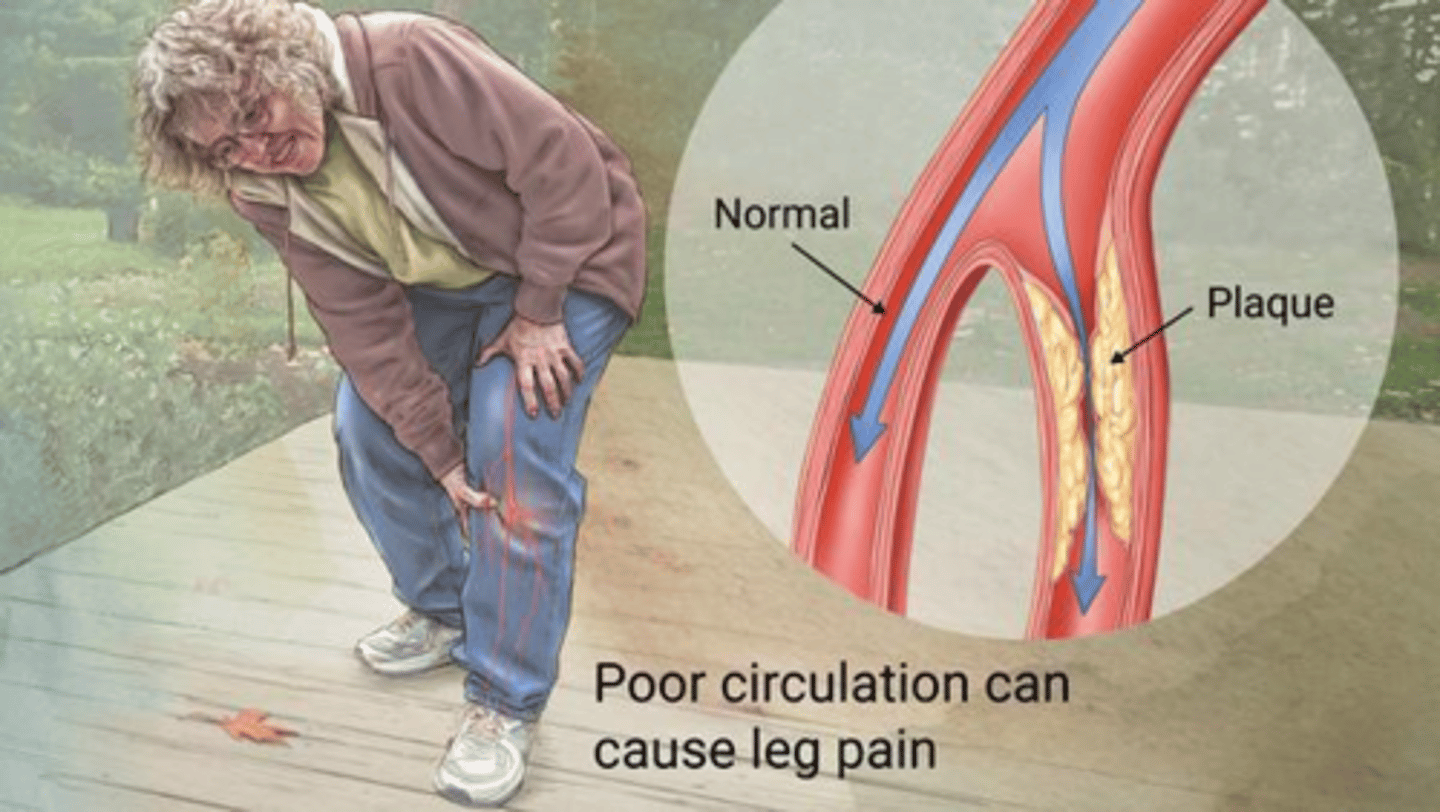
What is the hallmark symptom of Peripheral Artery Disease (PAD)?
Intermittent claudication, described as aching, cramping, or inducing fatigue or weakness during exercise.
What does the assessment of the vascular system include?
Health history, physical assessment of skin, and evaluation of peripheral pulses.
What diagnostic evaluation is used to assess blood flow in the vascular system?
Doppler ultrasound flow studies.
What is the purpose of the Ankle-Brachial Index (ABI)?
To compare blood pressure in the ankle with blood pressure in the arm to assess peripheral artery disease.
What are some positioning strategies to improve peripheral arterial circulation?
Position the affected body part below the level of the heart.
What is arteriosclerosis?
The hardening of the arteries due to thickening of muscle fibers and endothelial lining.
What is atherosclerosis?
A condition affecting the intima of large and medium-sized arteries, characterized by the accumulation of lipids, calcium, and fibrous tissue.
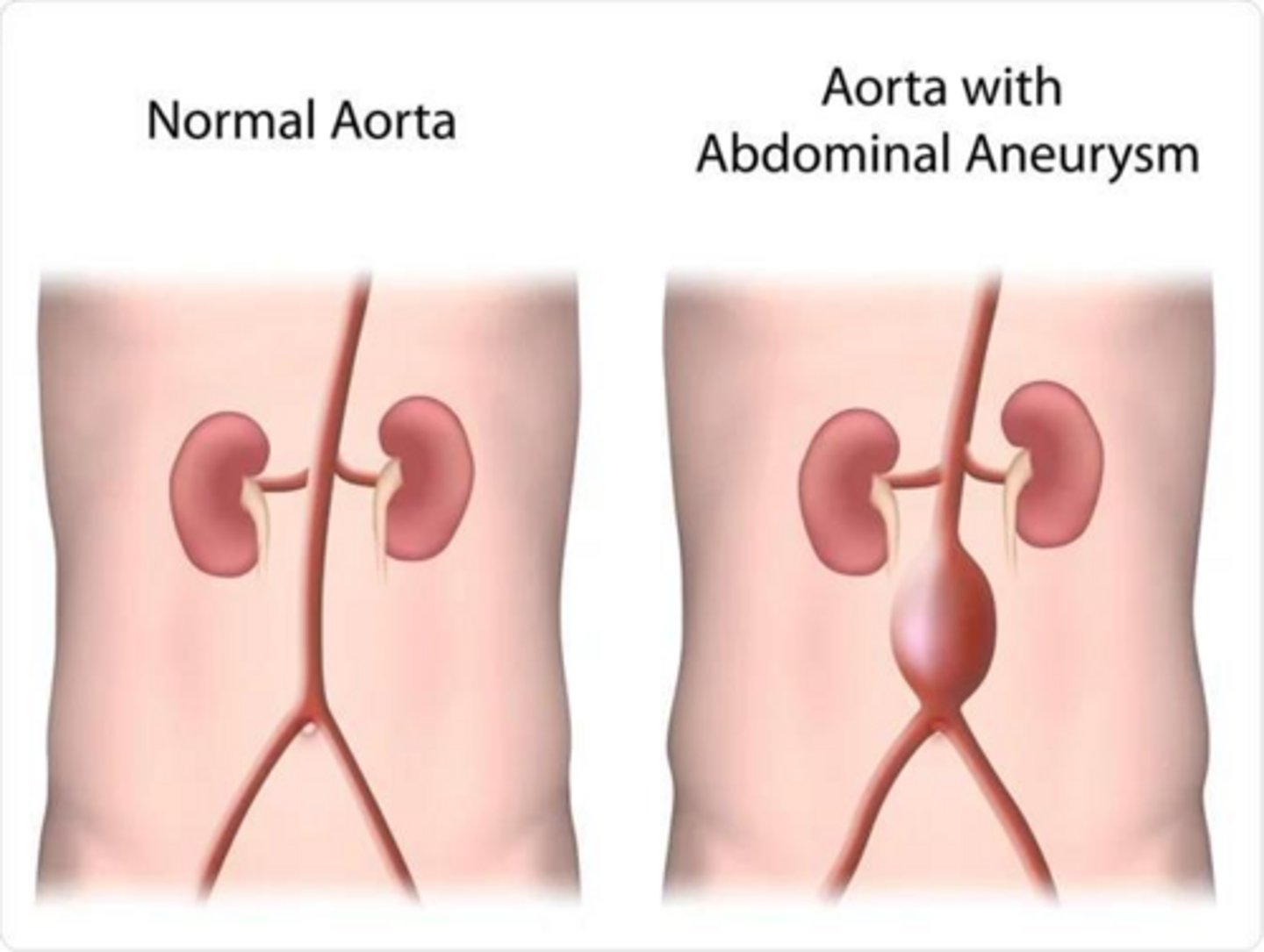
What are the common forms of aneurysms?
Saccular and fusiform aneurysms.
What is a saccular aneurysm?
An aneurysm that projects from only one side of the vessel.
What is the most common type of degenerative aneurysm?
Abdominal aortic aneurysm due to atherosclerotic changes.
What triggers episodes of Raynaud's phenomenon?
Cold or stress.
What are the manifestations of Raynaud's phenomenon?
Color changes, numbness, tingling, and burning pain in the fingertips or toes.
What is venous thromboembolism (VTE)?
A condition that includes deep vein thrombosis (DVT) and pulmonary embolism (PE).
What are some risk factors for venous thromboembolism?
Endothelial damage, venous stasis, and altered coagulation.
What is the primary treatment for leg ulcers?
Treatment depends on the type of ulcer, including assessment for infection and nutrition.
What is cellulitis?
An infection characterized by localized swelling or redness, fever, chills, and sweating.
What is the recommended nursing intervention for cellulitis?
Elevate the affected area 3 to 6 inches above heart level.
What pharmacologic therapy is used for PAD?
Phosphodiesterase III inhibitors like Cilostazol, antiplatelet agents like Aspirin and Clopidogrel, and Statins.
What is the significance of the exercise program for patients with PAD?
Walking and graded isometric exercises can improve peripheral arterial circulation.
What is the role of compression therapy in managing leg ulcers?
To improve venous return and reduce swelling.
What is the purpose of warm, moist packs in treating cellulitis?
To promote comfort and aid in healing.
What lifestyle changes can help prevent venous thromboembolism?
Weight loss, smoking cessation, and regular exercise.
What is the treatment for infection in leg ulcers?
Anti-infective therapy based on the infecting agent, often including oral antibiotics.
What are the two main circulations in the vascular system?
Pulmonary circulation (right heart to lungs) and systemic circulation (left heart to body).
What is the primary function of arteries?
To carry blood away from the heart.
What is the role of capillaries in the vascular system?
To facilitate the exchange of gases, nutrients, and waste.
What do veins do in the vascular system?
Return blood to the heart.
What is the function of lymphatics?
Maintain fluid balance in the body.
What is a key symptom of peripheral vascular disease?
Intermittent claudication (pain with walking).
What skin findings may indicate vascular issues?
Cool, pale skin; hair loss; dry, shiny skin; ulcers.
What does weak or absent pulses indicate?
An arterial problem.
How do you assess peripheral pulses?
Check dorsalis pedis and posterior tibial pulses, comparing bilaterally.
What does ABI stand for and what does it indicate?
Ankle-Brachial Index; a low ABI indicates Peripheral Artery Disease (PAD).
What are some interventions to improve arterial circulation?
Keep legs dependent, walking program, avoid smoking, avoid extreme temperatures, and stress reduction.
What is the hallmark symptom of Peripheral Artery Disease (PAD)?
Intermittent claudication (pain with walking that goes away with rest).
What is an aneurysm?
Ballooning of the artery wall.
What are the two types of aneurysms?
Saccular (one side) and fusiform (entire vessel).
What is Raynaud's phenomenon?
Vasospasm in fingers/toes triggered by cold or stress, causing color changes and numbness.
What are the components of Virchow's Triad?
Endothelial damage, venous stasis, and hypercoagulability.
What are some prevention strategies for DVT?
Early ambulation, compression stockings, SCDs, heparin/LMWH, and lifestyle changes.
What are the symptoms of cellulitis?
Redness, swelling, and fever.
What are the differences between arterial and venous disorders?
Arterial: pale, cool, worse with elevation, weak pulses. Venous: brown, warm, better with elevation, present pulses.
What is a critical emergency related to aneurysms?
Aneurysm rupture.
What does an ABI of less than 0.9 indicate?
Peripheral Artery Disease (PAD).
What is the recommended position for legs in arterial vs venous disorders?
Arterial: keep legs down; Venous: elevate legs.

