LM 15: Oxidative Phosphorylation and Fermentation
 Studied by 0 people
 Call with Kai
 Learn
Learn Practice Test
 Spaced Repetition
 Match
Match Flashcards
 Knowt Play
1/38

There's no tags or description
Looks like no tags are added yet.
Name | Mastery | Learn | Test | Matching | Spaced | Call with Kai |
|---|
No study sessions yet.
39 Terms
Explain why NAD⁺ regeneration is essential for glycolysis.
Predict what happens to ATP production if oxygen is suddenly removed.
Compare lactic acid fermentation and alcohol fermentation.
Why is phosphofructokinase considered a key regulatory enzyme?
Explain how feedback inhibition prevents energy waste.
Final Electron Acceptor
The molecule that accepts electrons at the end of an ETC.
Oxygen in aerobic respiration.
NOT oxygen in anaerobic respiration.
Energy Demand vs Energy Supply
Cells regulate respiration to meet needs — not maximize ATP.
Fermentation
Definition: An anaerobic process that regenerates NAD⁺ by transferring electrons from NADH to an organic molecule, allowing glycolysis to continue.
Example: Muscle cells ferment pyruvate into lactate during intense exercise.
Importance: Fermentation prevents NAD⁺ depletion; without it, glycolysis would stop and ATP production would cease entirely when oxygen is absent.
Anaerobic
Definition: Occurring without oxygen.
Example: Glycolysis and fermentation are anaerobic processes.
Importance: Explains how cells can still produce ATP when oxygen supply is limited or absent.
NAD⁺
Definition: The oxidized form of an electron carrier that accepts electrons during metabolic reactions.
Example: NAD⁺ accepts electrons during glycolysis to become NADH.
Importance: NAD⁺ is required for glycolysis; if it is not regenerated, ATP production halts.
NADH
Definition: The reduced form of NAD⁺ that carries high-energy electrons.
Example: NADH donates electrons to pyruvate during fermentation or to the ETC during aerobic respiration.
Importance: NADH stores energy temporarily; its oxidation back to NAD⁺ is essential for continuous metabolism.
Lactic Acid Fermentation
Definition: A fermentation pathway where pyruvate is reduced to lactate, regenerating NAD⁺.
Example: Human muscle cells during sprinting.
Importance: Allows muscles to keep producing ATP quickly when oxygen delivery is insufficient.
Alcohol Fermentation
Definition: A fermentation pathway where pyruvate is converted to ethanol and CO₂, regenerating NAD⁺.
Example: Yeast used in bread and alcohol production.
Importance: Maintains NAD⁺ levels in organisms that lack oxygen-dependent respiration.
Anaerobic Respiration
Definition: Respiration using an electron transport chain with a final electron acceptor other than oxygen.
Example: Bacteria using sulfate instead of oxygen.
Importance: Shows that oxygen is not the only possible final electron acceptor in metabolism.
Facultative Anaerobe
Definition: An organism or cell that can switch between aerobic respiration and fermentation.
Example: Human muscle cells.
Importance: Provides metabolic flexibility depending on oxygen availability.
Obligate Anaerobe
Definition: An organism that cannot survive in the presence of oxygen.
Example: Certain gut bacteria.
Importance: Demonstrates that oxygen can be toxic to some metabolic systems.
Final Electron Acceptor
Definition: The molecule that accepts electrons at the end of an electron transport chain.
Example: Oxygen in aerobic respiration; sulfate in some anaerobic pathways.
Importance: Without a final electron acceptor, electron flow stops and ATP production collapses.
Regulation
Definition: Control of metabolic pathways so ATP production matches cellular demand.
Example: Respiration slows when ATP levels are high.
Importance: Prevents waste of energy and resources.
Feedback Inhibition
Definition: When the end product of a pathway inhibits an earlier enzyme.
Example: ATP inhibits phosphofructokinase in glycolysis.
Importance: Ensures ATP is not overproduced and energy is conserved.
Allosteric Regulation
Definition: Regulation of enzyme activity by binding at a site other than the active site.
Example: ATP binding allosterically to phosphofructokinase.
Importance: Allows rapid, reversible control of metabolism.
Phosphofructokinase (PFK)
Definition: The main regulatory enzyme of glycolysis.
Example: PFK slows glycolysis when ATP is abundant.
Importance: Acts as the “gatekeeper” of glucose breakdown.
ATP / ADP Ratio
Definition: A measure of cellular energy status.
Example: High ADP activates respiration; high ATP inhibits it.
Importance: Links energy demand directly to metabolic rate.
Glucose Transport & Control
GLUT Transporters
Definition: Membrane proteins that move glucose into cells.
Example: GLUT proteins in muscle cells.
Importance: Control how much glucose enters respiration pathways.
GLUT4
Definition: An insulin-responsive glucose transporter.
Example: Insulin causes GLUT4 to move to the cell membrane after a meal.
Importance: Connects hormonal regulation to cellular respiration.
Hexokinase
Definition: Enzyme that phosphorylates glucose at the start of glycolysis.
Example: Inhibited by glucose-6-phosphate.
Importance: Prevents excessive glucose trapping in the cell.
Pyruvate Dehydrogenase
Definition: Enzyme complex that converts pyruvate to acetyl-CoA.
Example: Inhibited when ATP and NADH are high.
Importance: Controls entry of carbon into the citric acid cycle.
Isocitrate Dehydrogenase
Definition: Regulatory enzyme of the citric acid cycle.
Example: Activated by ADP, inhibited by ATP.
Importance: Adjusts energy extraction based on cellular needs.
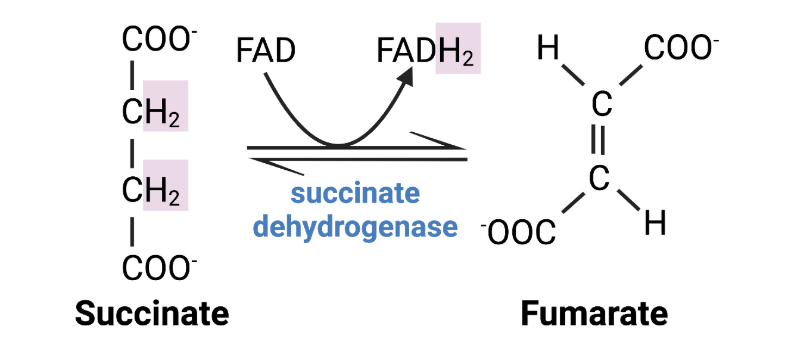
In step 6 of the citric acid cycle when succinate is converted to fumarate, hydrogen atoms are transferred to FAD. The ____________ is catalyzed by a dehydrogenase enzyme.
What are the main end products of glycolysis?
NADH, ATP, and Pyruvates
Which process allows glycolysis to continue in the absence of oxygen?
Fermentation
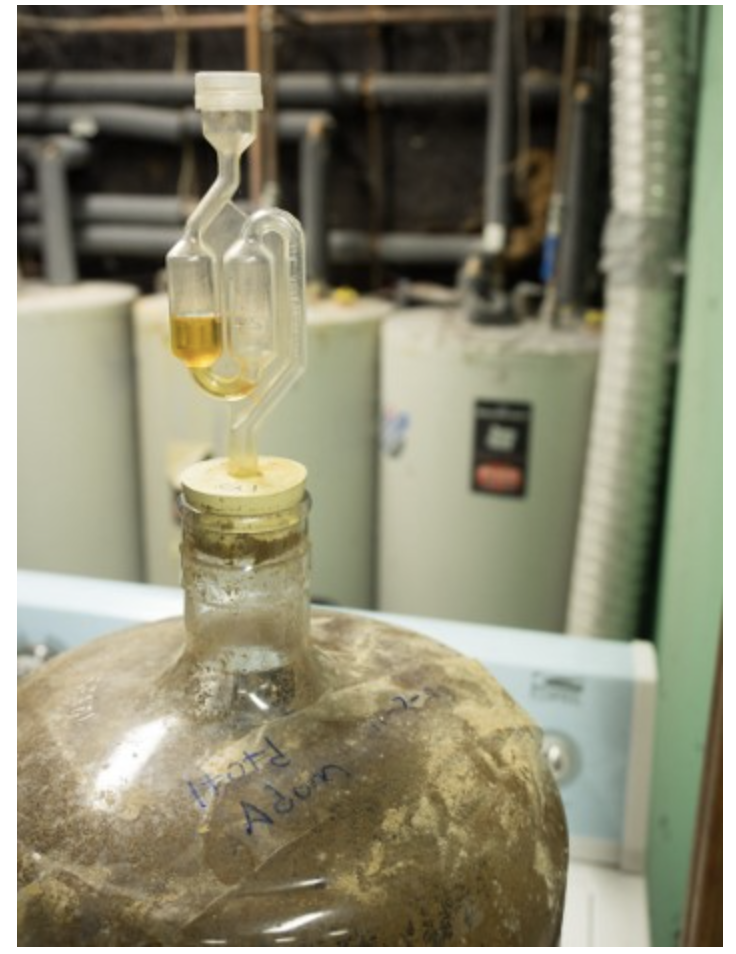
In one form of alcohol fermentation, yeast is allowed to ferment in 5-gallon glass jars with special stoppers that allow gas to escape but not enter. The stopper also prevents contamination.
What is the gas exiting the carboy (the glass fermenter) during fermentation?
carbon dioxide
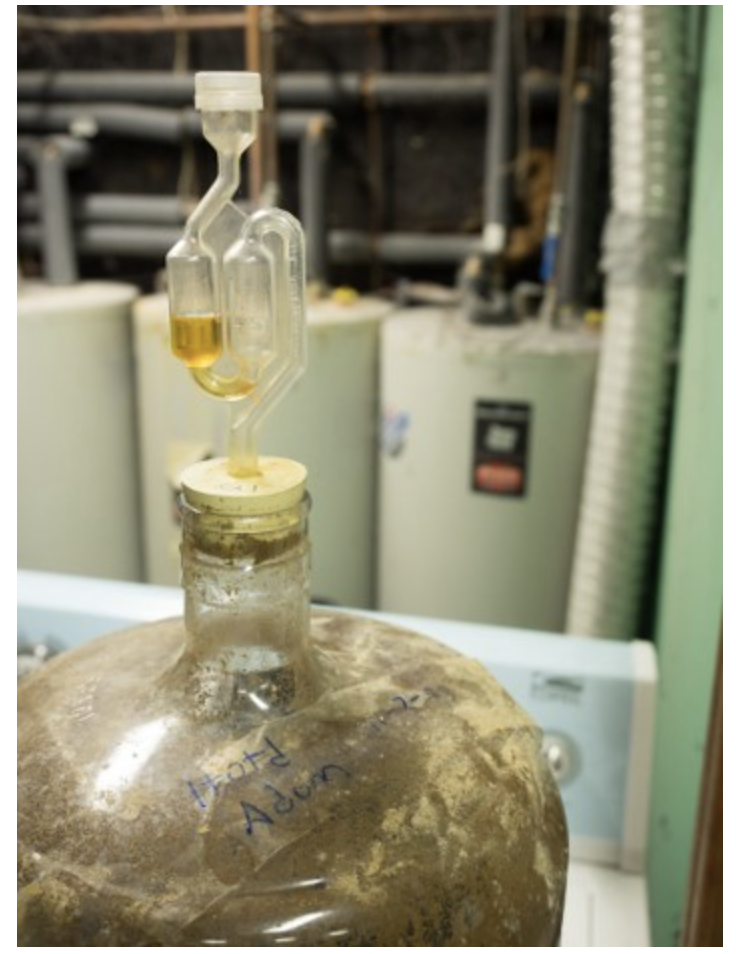
Which gas must NOT enter the carboy in order for fermentation to occur?
oxygen
Yeasts can perform both aerobic respiration and fermentation. In fact, the homebrewer must be careful that oxygen is not introduced into the carboy once the yeast begin fermentation. What would be the products if O2 is allowed to enter the carboy?
carbon dioxide and water
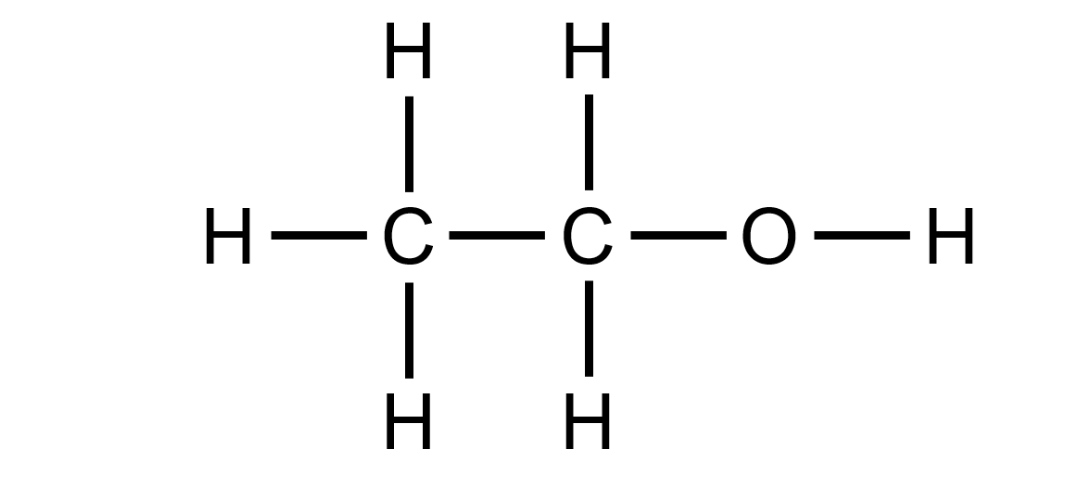
Why is alcohol fattening?
It contains a lot of energy in the C-H bonds and Beer can be metabolized into lipids
Which organisms use alcohol fermentation to regenerate NAD+ for glycolysis to continue in order to generate ATP?
Yeasts
Which organism uses lactate fermentation to regenerate NAD+ for glycolysis to continue in order to generate ATP.
bacteria cells that make yogurt and animal cells
In lactic acid fermentation, the final electron acceptor is:
pyruvate
 Note
Note  Flashcards (53)