CMMB 343 Lab Exam 2 (Lab Presentations)
 Call Kai
 Learn
Learn Practice Test
 Spaced Repetition
 Match
Match Flashcards
 Knowt Play
1/21

There's no tags or description
Looks like no tags are added yet.
Name | Mastery | Learn | Test | Matching | Spaced | Call with Kai |
|---|
No analytics yet
Send a link to your students to track their progress
22 Terms
Role of Bacteriophage in The Human Gut Microbiota
What Are Bacteriophages: Definition & Characteristics (3)
Bacteriophages are viruses that infect bacteria and hijack host machinery for replication
All phages are viruses, but not all viruses are phage; a factor governed by host specificity via receptor recognition
They are classified by genome (dsDNA, ssDNA, dsRNA, ssRNA) and morphology (tailed vs. tailless)
What Are Bacteriophages: Structure (2)
Phages consist of a head (typically icosahedral capsid containing genome) and a tail (injects DNA into host)
Tail structures (e.g. baseplate, fibers) enable attachment to bacterial receptors; infection cannot proceed without successful attachment
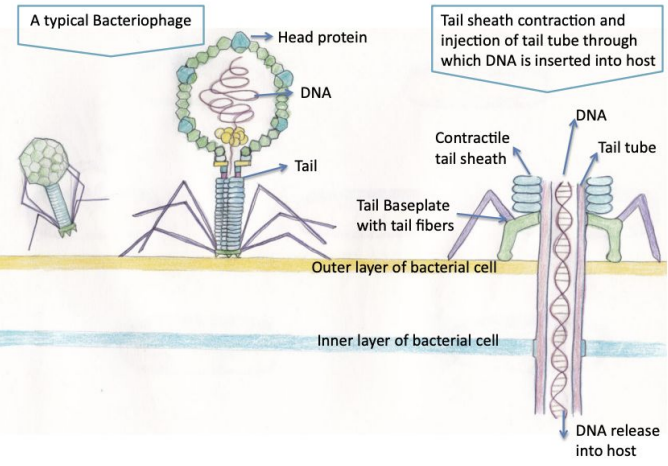
What Are Bacteriophages: Mechanism of Proliferation (3)
Infection begins with host recognition via receptors (e.g. LPS, flagella, etc.,); abundance of receptors reflects host range of the virus
After attachment, genome delivery depends on phage type
Once inside, phages adopt different life cycle strategies (lytic, lysogenic, etc.,)
Phage Life Cycles: Lytic Cycle (2)
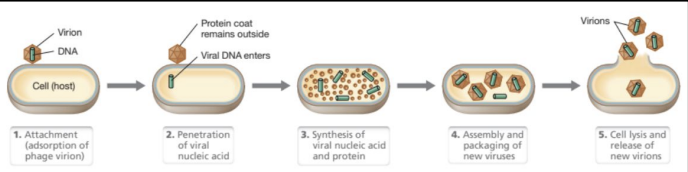
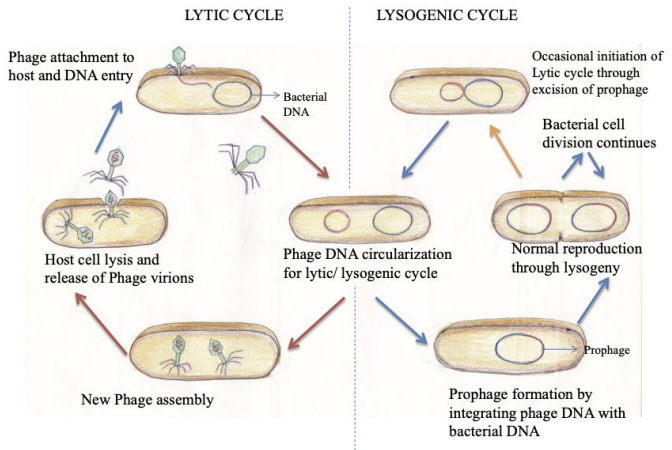
Phage injects DNA → hijacks host metabolism → synthesizes viral components → assembles virions → lyses cell releasing progeny
Can be a mechanism for horizontal gene transfer via transduction
Phage Life Cycles: Lysogenic Cycle (2)
Viral genome integrates into host DNA as a prophage and is replicated during cell division
This alters host phenotype (fitness, pathogenicity, environmental interactions) and persists in populations
The Human Gut Microbiota: Composition & Function (2)
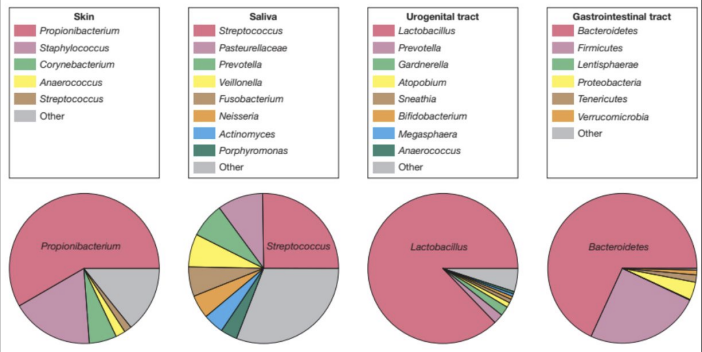
The GI tract contains diverse microbes; dominated by Firmicutes, Bacteroidetes, Proteobacteria, and Actinobacteria
Composition varies among individuals due to diet, age, environment, and lifestyle
The Human Gut Microbiota: Spatial Organization Along The GI Tract (3)
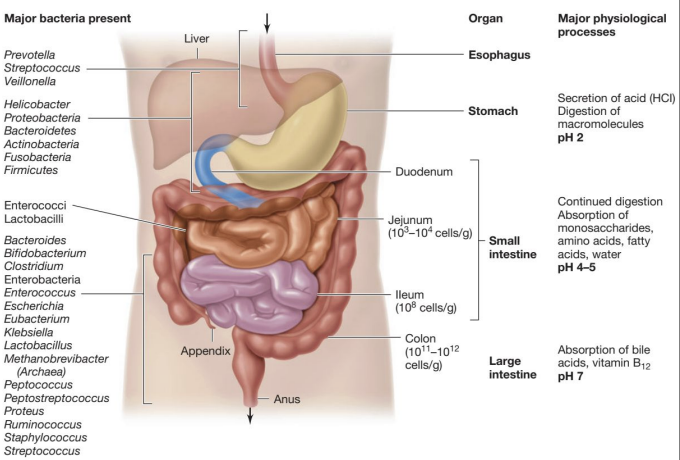
Microbial communities occupy ecological niches along the GI tract and within a single region (lumen vs. mucus layers)
The proximal gut (small intestine) has low microbial densities and more oxygen exposure → favours microaerophilic bacteria
The distal gut (colon) has high microbial densities and anaerobic conditions → favours obligate anaerobes
The Gut Phageome: Definition & Composition (2)
The gut phageome is the collection of bacteriophages in the GI tract; dominated by DNA phages (Caudovirales: dsDNA tailed; Microviridae: ssDNA tailless)
Crassvirales (crAss-like phages) are the most prevalent phage group and infect phylum Bacteroidota
Dynamics & Diversity of The Gut Phageome (2)
Phage populations are highly dynamic and vary between individuals, depending on bacterial hosts
They are influenced by environmental factors (diet, location) and evolutionary pressures (host availability, competition, defenses)
Ecological Dynamics in The Gut: Kill-The-Winner Model
Phages preferentially target dominant bacterial populations, preventing competitive exclusion and maintaining ecosystem balance
How Phages Shape Community Stability & Diversity: Red-Queen Dynamics Model & Piggyback-The-Winner Model (2)
Red-queen dynamics is an evolutionary arms race between bacteria and phages
Piggyback-the-winner is when phages enter lysogeny when hosts are abundant, promoting coexistence and long-term stability
Phages as Gene Transfer Machines: Transduction (3)
Transduction is the transfer of bacterial DNA via phages
There are three types of transduction: generalized (random DNA), specialized (near prophage sites), and lateral (large DNA regions)
Transduction is highly frequent because of dense gut environments
Functional Impacts of Gene Transfer
Spreads antibiotic resistance genes, toxins, and auxiliary metabolic genes that significantly alter bacterial metabolism, virulence, and ecosystem function
E.g. Genes encoding Shiga toxins in pathogenic Escherichia coli are carried on prophages and transferred between bacterial populations through lysogenic conversion
Prevalence of Prophages In The Gut & Their Development (2)
Prophages are widespread and can comprise large portions of bacterial genomes
Common in infants and persist throughout life; contribute to microbial stability
Functional Role of Prophages in The Gut: Positive & Negative Interactions (2)
Positive: Protect against other phages by acting as competitive weapons
Negative: Cell lysis and disruption of host genes/regulation upon integration
Phage Interactions With The Immune System
Phages can be internalized and recognized by immune cells, reduce inflammatory signaling, and decrease ROS; modulating immune responses
Lentiviral Vectors For Gene Editing
Challenges of Treating Biofilm-Associated Infections
Use of Siderophores For Targeted Antibiotic Delivery
Utilization of Gut Microbiota in Cancer Therapy
How Prokaryotes Use The CRISPR Defense System to Defend Against Bacteriophage

