FBLA Insurance & Risk Management
 Studied by 0 people
 Call with Kai
 Learn
Learn Practice Test
 Spaced Repetition
 Match
Match Flashcards
 Knowt Play
1/413

There's no tags or description
Looks like no tags are added yet.
Name | Mastery | Learn | Test | Matching | Spaced | Call with Kai |
|---|
No study sessions yet.
414 Terms
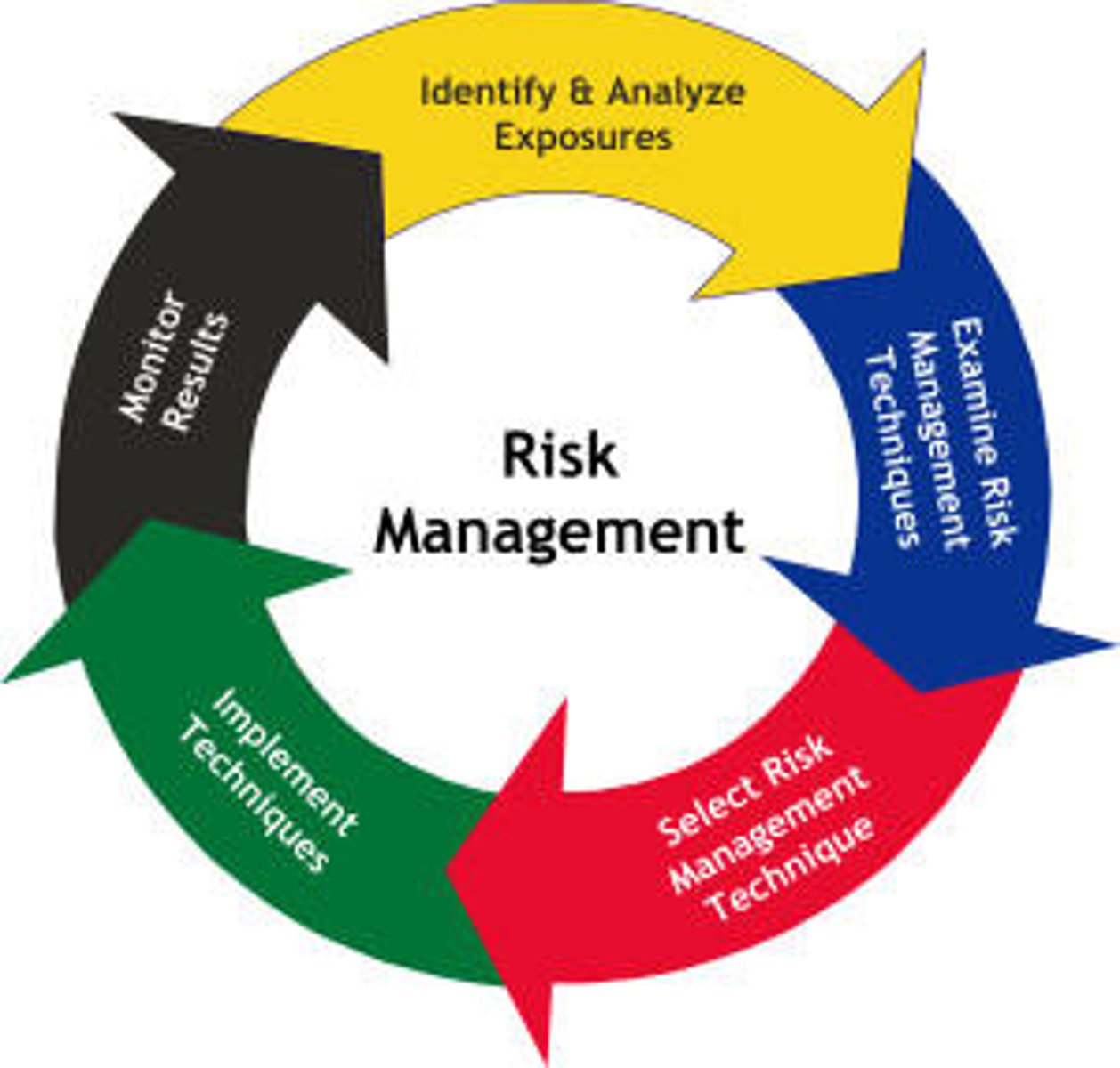
risk management
a systematic process of identifying, analyzing and responding to projected risks
risk management model
1. risk identification
2. qualitative risk analysis
3. quantitative risk assessment
4. risk response planning
5. risk monitoring and control
types of pure risk
1. personal risk
2. property risk
3. liability risk
liability risk
indirect loss
loss that arises because of a prior occurrence of another loss; loss flows directly from an earlier loss suffered, ex. machinery destroyed in fire at factory - factory was covered
extra expenses
expenses that occur because of any loss that would not have been necessary w/o the loss
dynamic risk
risks brought about by changes in the economy, ex. income, tastes of consumers, technology; these are speculative risks
static risk
risks that involve losses brought about by irregular action of nature or by dishonest misdeeds and mistakes of man, ex. bad weather, arson, theft; these are pure risks
enterprise risk management model
1. Identify risks - consider mission, people, physical aspects, financial, reputation and trust
2. Determine probability and impact - impact is either negligible, low, medium, high, probability is either rare, unlikely, possible, likely, certain
3. Identify the risk-mitigating controls that already exist.
4. If unacceptable risks remain, identify additional controls.
goal of enterprise risk management model
It creates a uniform process to evaluate:
(1) the risks that a proposed Directive is intended to address; (2) for each risk, the
probability of that risk occurring and the potential impact if it does; (3) the existing
Directives or other controls that are already in place to mitigate that risk; and (4) if there
are unacceptable risks that are not already controlled, the best way of protecting
against that risk - allows a consistent way to assess risks
actuary
use analysis to predict the risk that an event will occur, they help insurance companies decide how much to charge for coverage of various things
adjuster
work with customers who have experienced a loss, and are making a claim; also known as insurance examiners, appraisers, or investigators, claims adjusters must decide how much the insurance company should pay for the damage or loss.
underwriter
decides whether someone seeking coverage should be provided with the insurance. The underwriter evaluates the application for risk and decides if the applicant meets certain criteria. An underwriter might also help set prices for various insurance policies
loss control specialist
inspects businesses to provide strategies for reducing the risk of loss or damage, also known as risk consultants
claims adjuster
investigate insurance claims by interviewing the claimant and witnesses, consulting police and hospital records, and inspecting property damage to determine the extent of the company's liability
broker
represents the insurance applicant, must be licensed by the state in which they conduct business
skills necessary for working in the insurance industry
- technology
- agility & flexibility
- analytical skills
- empathy and people skills
- economic and statistical skills
- vast insurance, etc. knowledge
- confidence and sound judgement
Risk
Uncertainty of something, concerns a loss
Risk refers to ___ and ___ being injured
Property & Life
Objective Risk
Defined as relative variation of actual loss from expected loss
Objective Risk varies inversely with
square root of # of cases under observation
EX: 10,000 houses were insured
Objective Risk is 10/100 or 10%
The Law of Large Numbers
states that if the # of exposure units increases, the more closely the actual loss experience will approach the expected loss experience
Subjective Risk
defined as uncertainty based on a person's mental condition or state of mind
Chance of Loss
probability that an event will occur
Probability has both ___ and ___ aspects
objective and subjective
Objective Probability
refers to the long-run relative frequency of an event based on the assumptions of an infinite number of observations and of no change in underlying conditions
Peril
defined as the cause of loss
Hazard
condition that creates or increases chance of loss
Four Types of Hazards
physical, legal, moral, morale
Subjective Probability
A probability derived from an individual's personal judgment about whether a specific outcome is likely to occur. Subjective probabilities contain no formal calculations and only reflect the subject's opinions and past experience.
Physical Hazard
a physical condition that increases the chance of loss
EX: icy roads, chance of fire, defective lock on a door
Moral Hazard
dishonesty or character defects in an individual that increases severity of loss
EX: faking an accident to collect money from insurer, fraudulent claims, murdering insured to collect life insurance
Morale Hazard
carelessness or indifference to a loss because of the existence of insurance
EX: leaving doors unlocked, leaving car keys in unlocked car
Legal Hazard
refers to the characteristics of the legal system or regulatory environment that increase the frequency or severity of losses
EX: large jury verdicts, large damage awards in liability lawsuits, coverage for alcoholism, etc.
Risk Categories
Pure and Speculative
Fundamental Risk and Partial Risk
Pure Risk
situation where there are only possiblities of loss or no loss
EX: premature death, job accidents, medical expenses, damage to property from fire, lightning, flood, or earthquake
Speculative Risk
only profit or loss possible
Fundamental Risk
affects entire economy or large numbers of people
EX: war, inflation, terrorist attack
Particular Risk
affects only individuals and not entire community
EX: car theft, bank robbery, house fire
EX: pure risk, speculative risk, strategic risk, operation risk, financial risk
Strategic Risk
uncertainty regarding the firm's financial goals and objectives
Operational Risk
results from firm's business operations
EX: if hackers hack an online bank
Financial Risk
refers to unceratinty of loss because of adverse changes in commoditity prices, interest rates, foreign exhance rates, value of money
EX: if food prices raise, school can lose money in lunch department
Enterprise Risk Management
single treatment program that has all major risks faced by firm
Major Types of Pure Risk
personal risks, property risks, liability risks
Premature Death
death of a family head with unfulfilled financial obligations, surviving members have to deal with
Life Value
present value of the family's share of deceased breadwinner's future earnings
Other things that need tended to after premature death
funeral expenses, medical bills, estate settlement costs, taxes on large estates
Non-Monetary Things that come with Premature Death
grief, loss of role model, counseling and guidance for children
Risk of Insufficient Income During Retirement
major risk associated with old age is not enough money during retirement, US citizens retire before 65 usually
money goes down when someone retires unless people save enough money for retirement
Risk of Poor Health
includes both payment of medical bills and loss of earned income, major surgery, etc.
Health insurance helps, planning for future
Risk of Unemployment
major threat to financial security, comes from business cycle downswings, structural changes in economy, seasonal factos, imperfections in labor market
Downsizing
a way to hold down labor costs, reducing # of workers
Property Risks
risk of having property damaged or lost from numerous cases
EX: tornadoes, windstorms, theft
Direct Loss
financial loss from the physical damage, destruction, theft of property
Indirect Loss
financial loss from the occurrence of direct physical damage or theft loss
Consequential Loss
loss of profits
EX: loss of rents, loss of use of building, loss of a local market
Liability Risks
important type of pure risk that most people face, there is no limit of $ that can be asked for, can be very costly
EX: vehicle accidents
Methods of Handling Risk
avoidance, loss control, retention, non insurance transfers, insurance
Avoidance
avoiding the risk
ex: stay out of high crime areas, avoid driving, etc.
Loss Control
reduces frequency and severity of losses
Loss Prevention
aims to reduce probability of loss
EX: not smoking, safe driving
Loss Reducation
reduce frequency of loss
EX: sprinklers so that business doesn't stay on fire as long
Retention
business firm or individual retains all or part of a given risk
Active Retntion
individual is consciously aware of the risk and plans to retain all or part of it, it can save money
Passive Retention
certain risks are unkowningly retained because of ignorance, indifference, laziness, very dangerous
Negligence
the failure to exercise the required amount of care to prevent injury to others.
Absolute liability (strict liability)
imposed on some parties without regard to fault (refers to legal liability)
Imputed negligence + vicarious liability
the principal is responsible for the acts of his agents
family purpose doctrine
holds parents responsible for the negligent acts of their children
dram shop law
holds the seller of alcoholic beverages liable for drunken patrons
res ipsa loquitur
"the thing speaks for itself" -- some actions so obviously negligent that the law presumes negligence
Legal liability arises from 3 general classes of legal wrongs
crime, tort, and breach of contract
Crime
a wrong in which a person intentionally inflicts injury, or takes something from another
Torts
legal or civil wrongs committed against people or organizations, causing them a loss
Intentional torts
willful acts or the willful failure to act when required to do so that causes injury to someone else
Breach of contract
the lack of performance by a party to another to satisfy a contract that the parties agreed to
proximate cause
a cause that directly caused the loss or suffering so that if the proximate cause didn't happen, then the harm would not have happened. (court cases)
Contributory negligence
negligence that is caused by both plaintiff and defendant --> in some states: no awards to plaintiff
Comparative negligence
allows the plaintiff to collect some damages, but it will be reduced by the amount by which the plaintiff contributed to his own injury
 Note
Note  Flashcards (23)