Cell Cycle, Mitosis, Meiosis, and Cancer Biology
 Call Kai
 Learn
Learn Practice Test
 Spaced Repetition
 Match
Match Flashcards
 Knowt Play
1/103

There's no tags or description
Looks like no tags are added yet.
Name | Mastery | Learn | Test | Matching | Spaced | Call with Kai |
|---|
No analytics yet
Send a link to your students to track their progress
104 Terms
What is binary fission?
A method of asexual reproduction used by single-celled prokaryotes.
What is the role of mitosis in cell reproduction?
Mitosis produces genetically identical cells in eukaryotes.
What are the two basic strategies for reproduction in organisms?
Asexual reproduction and sexual reproduction.
What is the significance of meiosis?
Meiosis halves the nuclear chromosome content and generates genetic diversity.
What are somatic cells?
Body cells not specialized for reproduction, containing two sets of chromosomes.
What is a gamete?
A haploid cell that fuses during fertilization to form a diploid zygote.
What is the diploid number of chromosomes in a zygote?
2n, where n is the number of chromosomes in a haploid gamete.
What initiates cell division in prokaryotes?
Reproductive signals, often related to environmental factors.
What are the four events in cell division?
Reproductive signals, DNA replication, DNA segregation, and cytokinesis.
What is the cell cycle?
The period from one cell division to the next, divided into stages.
What are the phases of interphase?
G1 (Gap 1), S phase (synthesis), and G2 (Gap 2).
What happens during the S phase of interphase?
DNA is replicated.
What is the restriction point in the eukaryotic cell cycle?
The G1-S transition, where passing indicates the cell will divide.
What are Cyclin-Dependent Kinases (CDKs)?
Proteins that regulate the cell cycle by catalyzing phosphorylation of target proteins.
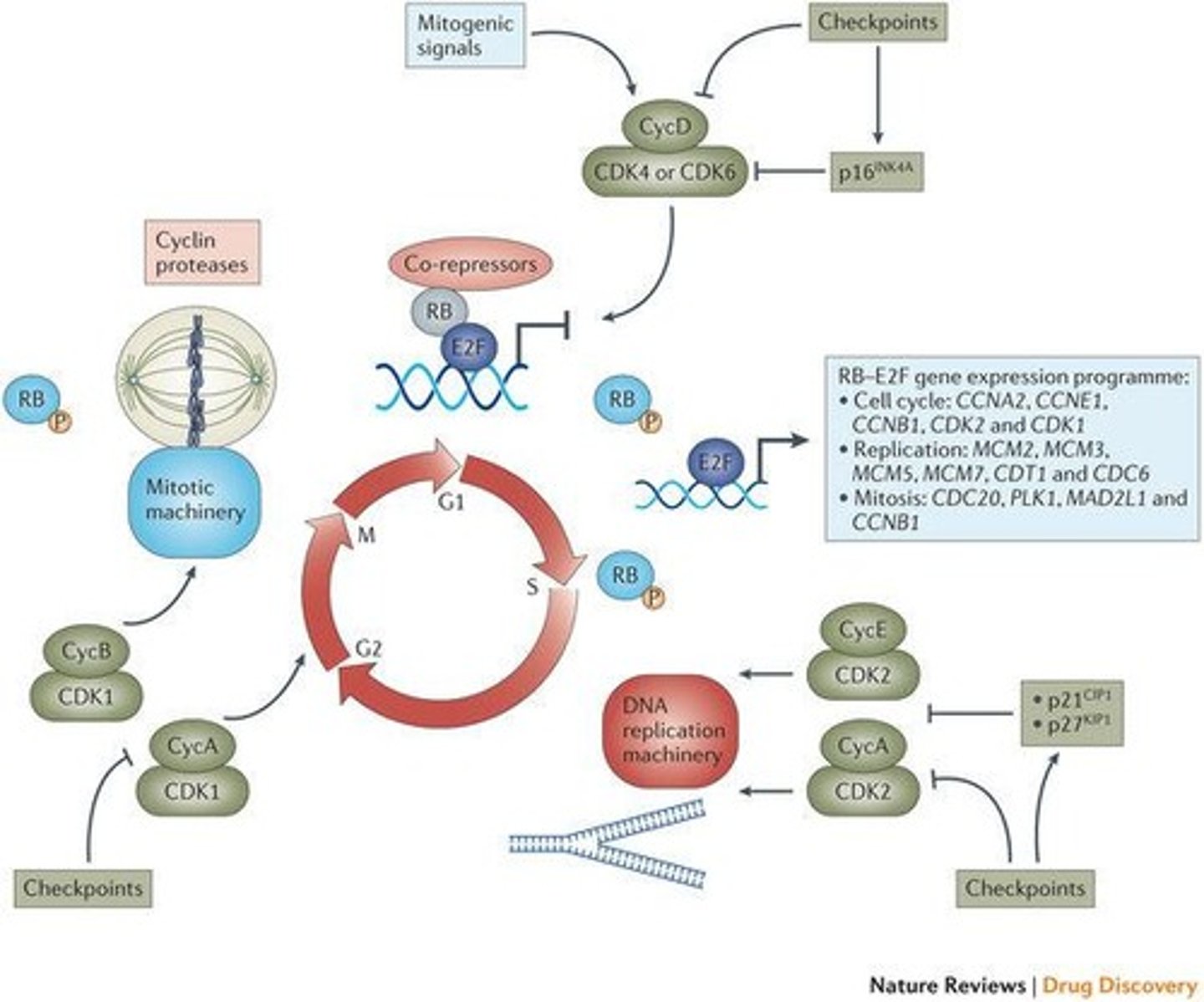
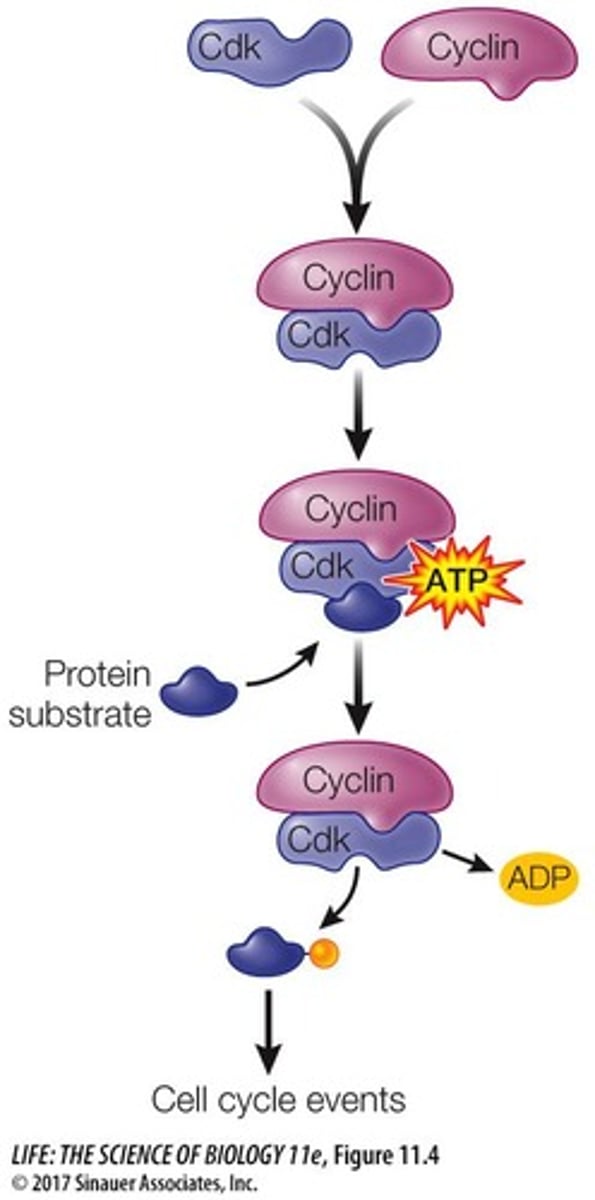
How are CDKs activated?
By binding to cyclin, which exposes their active site.
What is programmed cell death?
A necessary process in living organisms that regulates cell populations.
What is the outcome of fertilization?
The fusion of two haploid gametes to form a diploid zygote.
How does asexual reproduction affect genetic variation?
It produces genetically identical offspring, reducing genetic variation.
What is the role of growth factors in cell division?
They stimulate cell division and differentiation in response to tissue needs.
What is the difference between cytokinesis in plant and animal cells?
Plant cells form a cell plate due to cell walls, while animal cells undergo cleavage furrow formation.
What is the significance of genetic shuffling in sexual reproduction?
It ensures no two individuals have exactly the same genetic makeup.
What is the result of meiosis?
Formation of haploid gametes from diploid cells.
What is the relationship between cell division and organism growth?
Cell division is essential for growth and repair in multicellular organisms.
What triggers the transition from one phase of the cell cycle to another?
Specific signals that regulate the progression of the cell cycle.
What is the primary difference between prokaryotic and eukaryotic cell division?
Prokaryotes divide by binary fission, while eukaryotes divide by mitosis followed by cytokinesis.
What is the role of DNA segregation in cell division?
It ensures that each new cell receives one copy of each chromosome.
What do cyclin-dependent kinases (CDKs) regulate?
They regulate the cell cycle.
What happens to cyclins after CDKs act?
Cyclins are broken down by proteases.
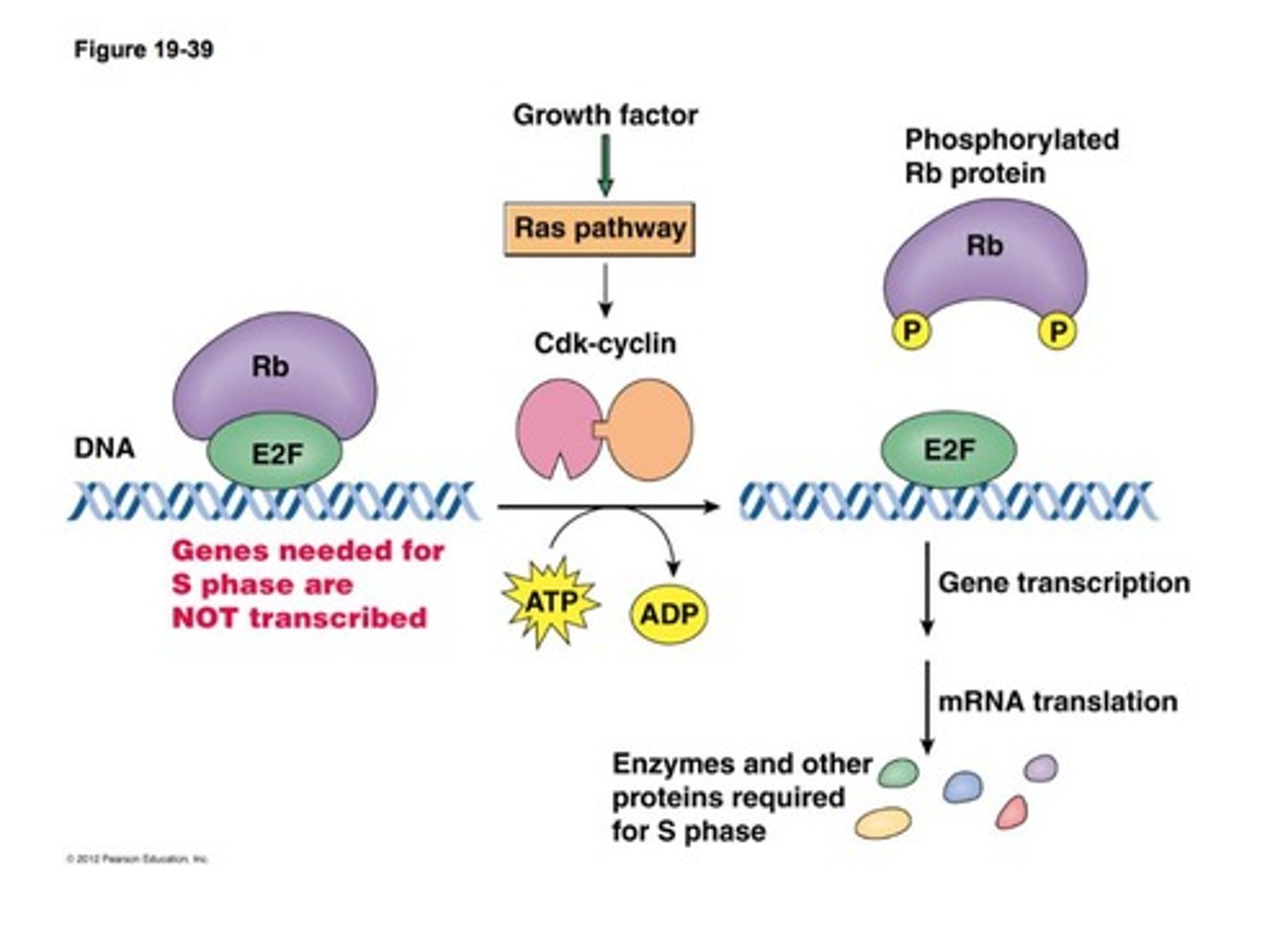
What is the role of retinoblastoma protein (RB) in the cell cycle?
RB inhibits the cell cycle but becomes inactive when phosphorylated by cyclin-CDK.
What triggers the G1 checkpoint in the cell cycle?
DNA damage.
What is the function of the p21 protein?
It binds to G1 CDKs to prevent their activation when DNA is damaged.
What is the significance of BRCA1 and BRCA2 mutations?
They predispose women to breast and ovarian cancer.
What percentage of breast cancer cases are inherited?
Only about 5% to 10% of breast cancer cases are due to inheritance.
What does it mean if a breast cancer is ER positive?
It means the cancer grows in response to estrogen.
What is the role of tamoxifen in breast cancer treatment?
Tamoxifen blocks estrogen receptors on breast cancer cells, preventing estrogen from binding.
What are aromatase inhibitors used for?
They inhibit estrogen production and are used in postmenopausal women for breast cancer treatment.
What is HER2 gene amplification?
It refers to the overproduction of HER2 receptors, leading to uncontrolled growth of breast cells.
What does it mean if a breast cancer is HR negative?
It lacks hormone receptors and won't respond to hormone-blocking treatments.
What is the relationship between body mass, lifespan, and cancer rates according to Richard's Paradox?
There is no direct relationship between cancer risk and the product of body mass and lifespan.
What is the role of estrogen in breast cancer?
Estrogen levels influence breast cancer growth, with ~75% of breast cancers being ER positive.
What can happen if a woman carries one mutant copy of the BRCA1 gene?
She has an 82% chance of developing breast cancer if the other copy mutates.
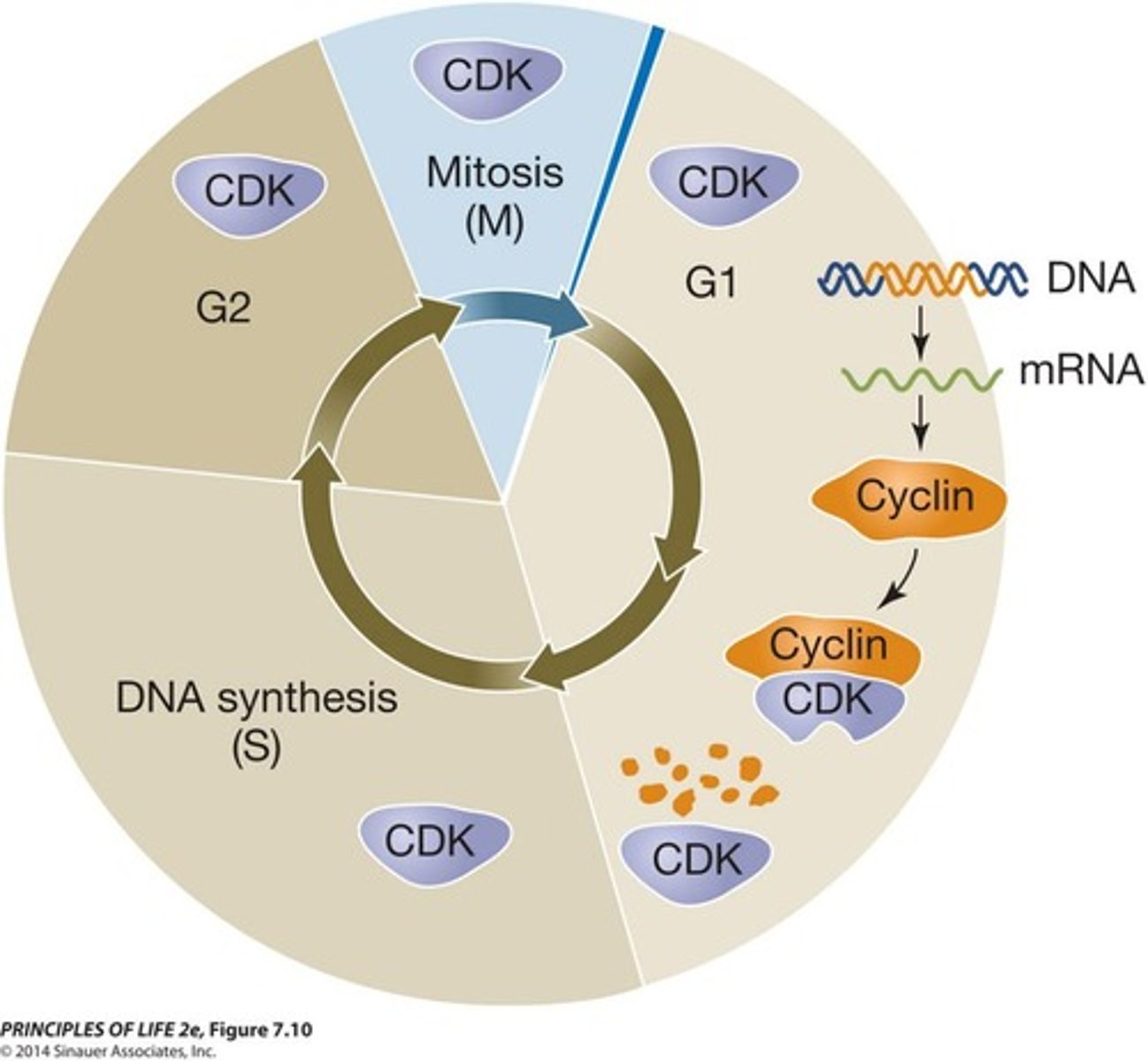
What is the role of cyclins in the cell cycle?
Cyclins are synthesized in response to signals and regulate CDK activity at different stages of the cell cycle.
What is the function of protein kinases in the cell cycle?
They catalyze the transfer of phosphate groups from ATP to proteins, altering their shape and function.
What is the significance of the G2 checkpoint?
It is triggered by DNA damage and ensures the cell does not proceed to mitosis with damaged DNA.
What does it mean if a breast cancer is PR positive?
It means the cancer grows in response to progesterone.
What is the impact of mutations in BRCA2?
Mutations in BRCA2 also cause breast cancer susceptibility.
What is the typical frequency of BRCA1 and BRCA2 mutations in the Ashkenazi Jewish population?
The combined frequency is about 2.5%.
What is the consequence of a single base pair change in BRCA1?
It can make the protein oncogenic, leading to cancer development.
How does the cell cycle pause during DNA repair?
The production of p21 prevents activation of G1 CDKs, pausing the cell cycle.
What is the role of growth factors in cyclin synthesis?
Growth factors signal the synthesis of cyclins at the appropriate times in the cell cycle.
What is the average lifespan of white blood cells?
About thirteen days.
How long do cells in the top layer of skin live?
About 30 days.
What is the lifespan of red blood cells?
About 120 days.
How long do liver cells typically live?
About 18 months.
How many cells are estimated to be in the human body?
Approximately 37.2 trillion cells.
What is the rate of cell loss and replacement per minute in humans?
About 96 million cells.
How many DNA lesions occur per day per cell?
Approximately 10,000 DNA lesions.
What is the first step in treating cancer?
Identify the cancerous cells or tissues through histology or biopsy.
What is the purpose of chemotherapy drugs?
To stop cell division by targeting cell cycle events.
What is a common effect of chemotherapy drugs on normal cells?
They are toxic to rapidly dividing cells in the intestines, skin, and bone marrow.
What is the mechanism of action of Paclitaxel (Taxol) in cancer treatment?
It induces mitotic arrest, leading to cell death in some cancer cells.
What recent evidence suggests about the action of Paclitaxel?
It may cause multipolar divisions instead of mitotic arrest due to low intratumoral concentrations.
What genetic translocation is associated with Chronic Myeloid Leukemia (CML)?
A crossing over between chromosomes 9 and 22.
What role do tumor suppressors play in the cell cycle?
They are negative regulators but are inactive in cancer cells.
How does HPV affect the RB protein in cancer cells?
HPV causes synthesis of E7 protein, which inactivates RB.
What is melittin and its potential use in cancer treatment?
A component of bee venom that shows promise in suppressing cancer cells.
How does BPA affect meiosis?
It prevents chromosomes from separating into four new haploid cells.
What is the result of improper chromosome separation during meiosis?
It can lead to unsuccessful fertilization or abnormal zygote development.
What happens during prophase of mitosis?
Chromosomes condense and kinetochores appear on each side of the centromere.
What is the role of centrosomes during cell division?
They determine the orientation of the spindle and the plane of cell division.
What occurs during prometaphase?
The nuclear envelope breaks down and chromatids attach to kinetochore microtubules.
What happens during anaphase?
The chromatids separate, and daughter chromosomes move toward the poles.
How does cytokinesis occur in animal cells?
The cell membrane pinches in between the nuclei, forming a contractile ring.
What is the outcome of cytokinesis?
Each daughter cell contains all components of a complete cell.
What is the significance of cell cycle checkpoints?
They ensure proper progression through the cell cycle and prevent errors.
What is the difference between binary fission and mitosis?
Both produce genetically identical cells, but binary fission is a simpler process in prokaryotes.
What is the role of kinetochores during mitosis?
They have motor proteins that move chromosomes along microtubules.
What is the primary function of meiosis?
To reduce the chromosome number from diploid to haploid and generate genetic diversity.
What occurs during Meiosis I?
Homologous chromosomes line up and separate, but sister chromatids remain together.
What is the end result of meiosis II?
Four haploid cells that are not genetically identical.
What is crossing over?
The exchange of genetic material between nonsister chromatids at the chiasmata during prophase I.
How does independent assortment contribute to genetic diversity?
It randomly distributes maternal and paternal chromosomes to daughter cells during anaphase I.
What is nondisjunction?
The failure of homologous chromosomes or sister chromatids to separate properly during meiosis.
What is aneuploidy?
An abnormal number of chromosomes resulting from nondisjunction.
What is the most common human aneuploidy?
Trisomy 16, with Trisomy 21 (Down syndrome) being one of the few that allows survival.
What are the consequences of aneuploidy?
Major cause of miscarriages and birth defects; only certain trisomies occur with frequency in live births.
What is polyploidy?
The condition of having more than two complete sets of chromosomes, which can occur naturally in some species.
What is a karyotype?
The condensed chromosomes of an organism that can be distinguished by size and centromere position.
What is apoptosis?
Genetically programmed cell death, which can occur when cells are no longer needed or are damaged.
What are the stages of apoptosis?
Cell detachment, DNA fragmentation, formation of blebs, and ingestion of remains by phagocytosis.
How do plants use apoptosis?
In the hypersensitive response to protect against disease by undergoing cell death at infection sites.
What signals control programmed cell death?
Internal signals related to cell age or DNA damage and external signals that activate caspases.
What is a common cause of miscarriages in human embryos?
Aneuploidy resulting from nondisjunction during meiosis.
What is the role of caspases in apoptosis?
They hydrolyze target proteins leading to cell death.
What is the significance of genetic material exchange during meiosis?
It increases genetic variability among offspring.
What happens during the S phase before meiosis I?
DNA is replicated, resulting in chromosomes consisting of two sister chromatids.
What is the incidence of aneuploidy in live births?
Approximately 1-2%.
What is trisomy 21 commonly known as?
Down syndrome.
What is the frequency of Down syndrome in children?
About 1 in 750 children, higher in older mothers.
What can result from translocation during meiosis?
It can have profound effects on gene expression and may lead to diseases like leukemia.

