UCSB Egyptian religion midterm
 Studied by 0 people
 Call Kai
 Learn
Learn Practice Test
 Spaced Repetition
 Match
Match Flashcards
 Knowt Play
1/59

There's no tags or description
Looks like no tags are added yet.
Name | Mastery | Learn | Test | Matching | Spaced | Call with Kai |
|---|
No analytics yet
Send a link to your students to track their progress
60 Terms
Amun-Re (god)
-Amun-Re is a composite deity combining the attributes of Amun, the god of air and hidden power, with Re (or Ra), the sun god.
-Amun-Re was often depicted as a man with a ram's head or as a falcon-headed man wearing a sun disk and uraeus (cobra) headdress.
-He was considered the king of the gods and a symbol of pharaonic power and authority.
-Amun-Re was worshipped as the chief deity of the Egyptian pantheon during the New Kingdom period.
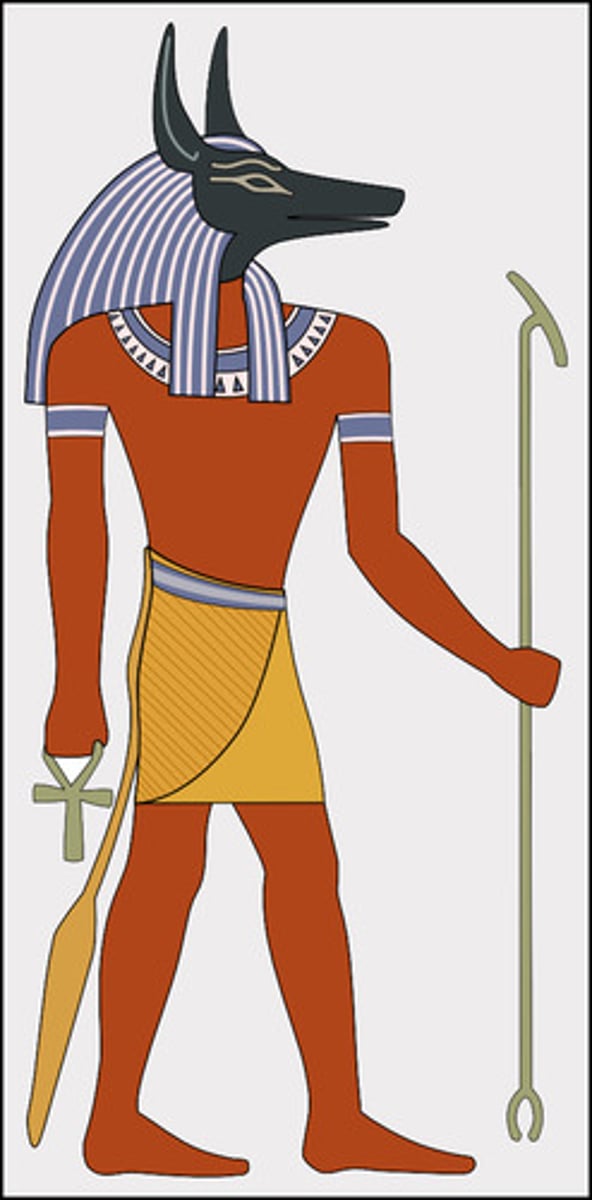
Anubis (god)
-Anubis is the ancient Egyptian god of mummification and the afterlife.
-He is typically depicted as a jackal-headed figure or as a jackal lying down.
-Anubis played a crucial role in the process of mummification and was believed to guide souls to the afterlife and weigh their hearts against the feather of Maat.
-He was also associated with cemeteries and protector of tombs.
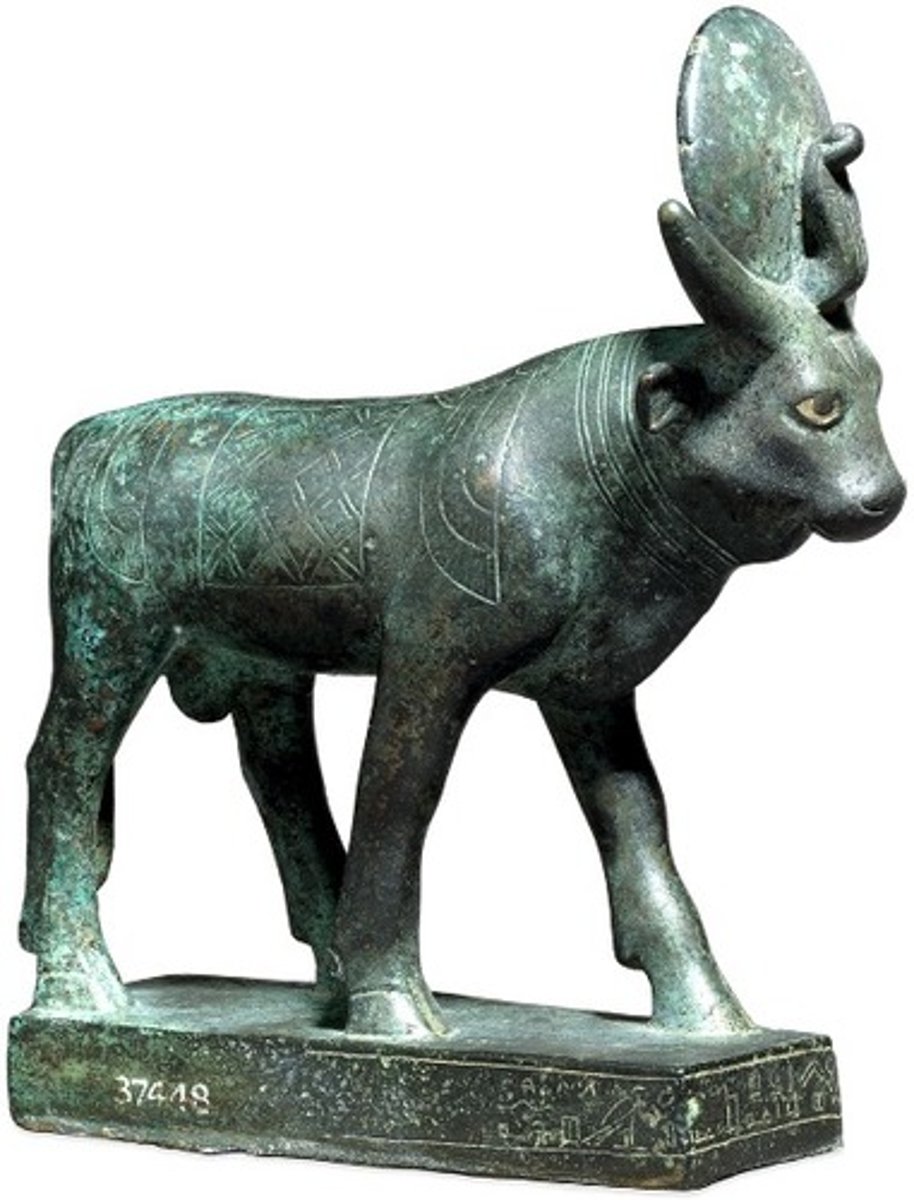
Apis (god)
-Apis is a sacred bull deity worshipped in ancient Egyptian religion, particularly associated with fertility, strength, and kingship.
-Apis was believed to be a manifestation of Ptah, the creator god of Memphis.
-He was usually depicted as a bull with specific markings, including a white diamond-shaped patch on his forehead and a scarab beetle mark on his tongue.
-Apis was housed in a special temple and received elaborate rituals and offerings during his lifetime. Upon death, he was mummified and buried with great ceremony.
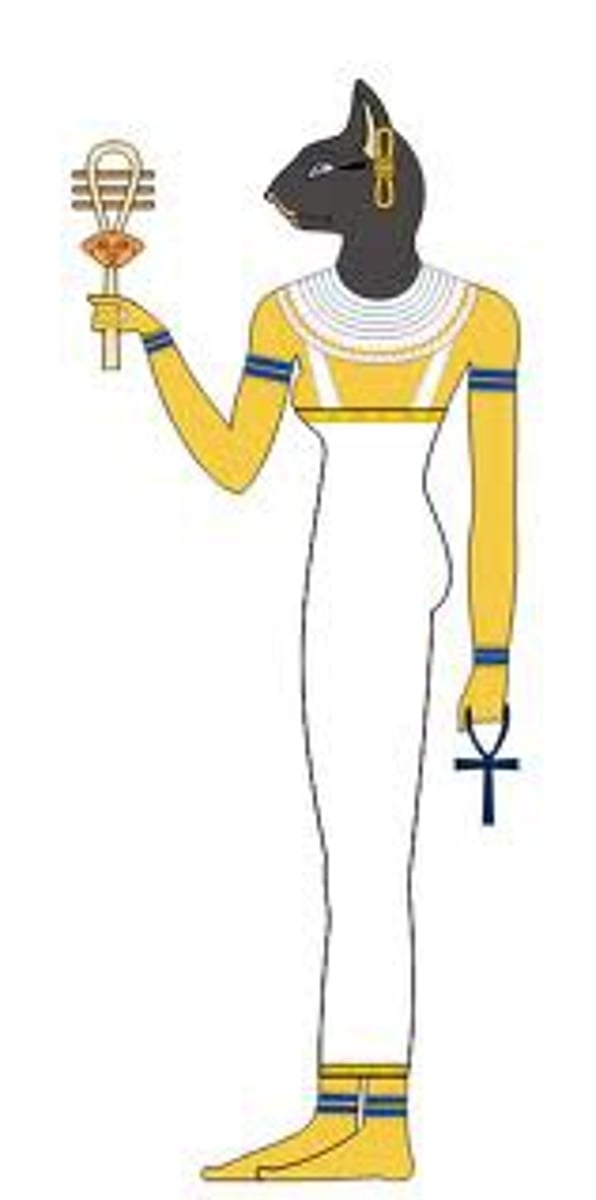
Bastet (goddess)
-Bastet is the ancient Egyptian goddess of home, fertility, and domesticity, often depicted with the head of a lioness or a domestic cat.
-She was revered as a protective deity, particularly against evil spirits and disease.
-Bastet was associated with music, dance, and joy, and her worship was widespread throughout Egypt, especially in the city of Bubastis.
-In her lioness form, Bastet was seen as a fierce warrior goddess, while her cat form symbolized grace and sensuality.
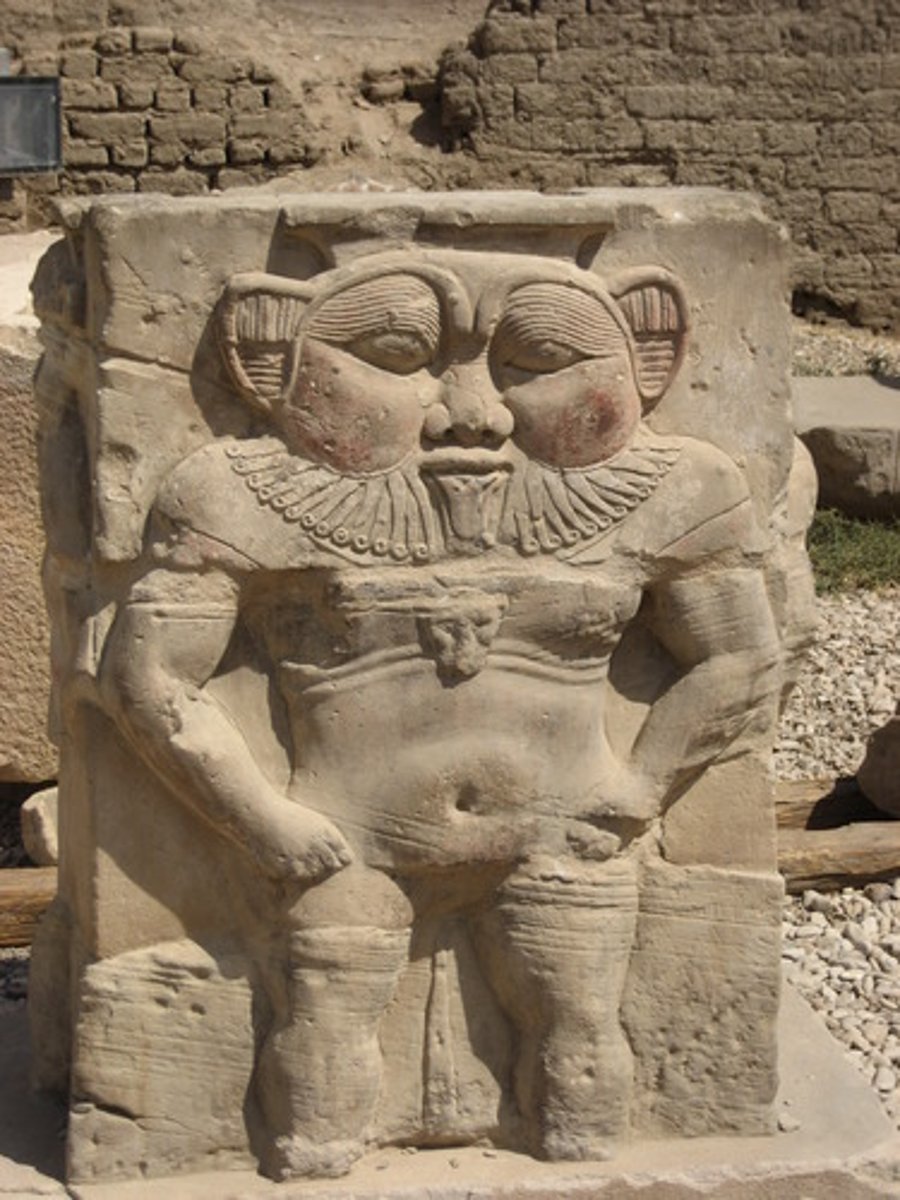
Bes (god)
-ancient Egyptian deity associated with protection, childbirth, and fertility, often depicted as a dwarf with a lion's mane and ears, wearing a feathered headdress and holding a tambourine or knife.
-He was a popular household deity worshipped for his ability to ward off evil spirits and bring good luck and prosperity.
-Bes was often depicted on amulets, household items, and protective charms, and his image was believed to guard against harm and malevolent forces.
-Despite his fearsome appearance, Bes was also considered a playful and jovial deity, bringing joy and laughter to those who invoked his protection.
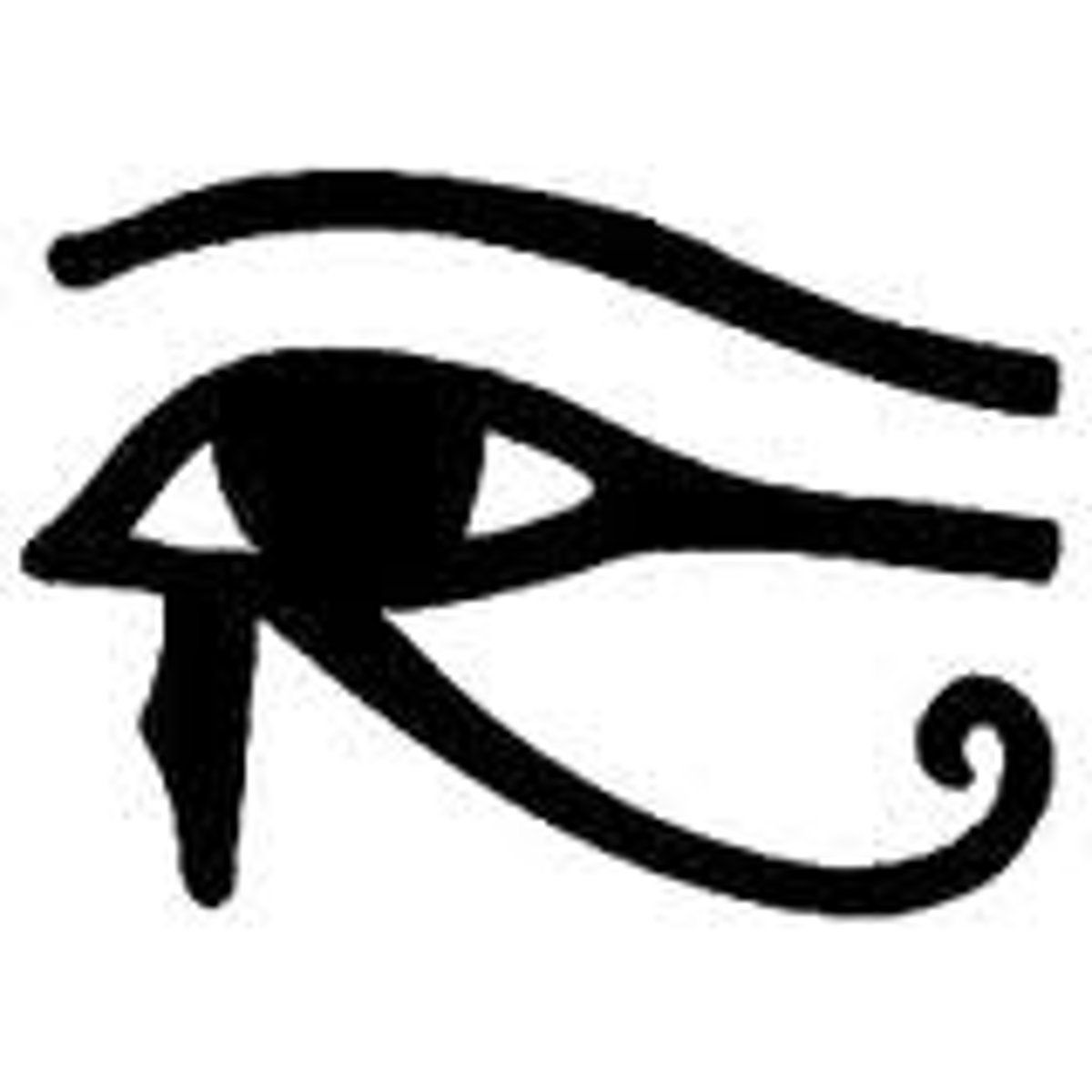
Eye of Horus
A good luck sign of the Sun or Moon that the Egyptians believed protected one from evil.
-also known as the Wedjat or Udjat eye, is an ancient Egyptian symbol representing protection, healing, and royal power.
It is typically depicted as a stylized human eye with markings resembling the facial features of a falcon, symbolizing the eye of the falcon god Horus.
-believed to have protective and healing properties, and it was often worn as an amulet or incorporated into jewelry and funerary equipment.
-In mythology, the Eye of Horus is associated with the myth of the battle between Horus and Set, during which Horus's left eye was injured and later restored by the god Thoth, symbolizing healing and restoration.
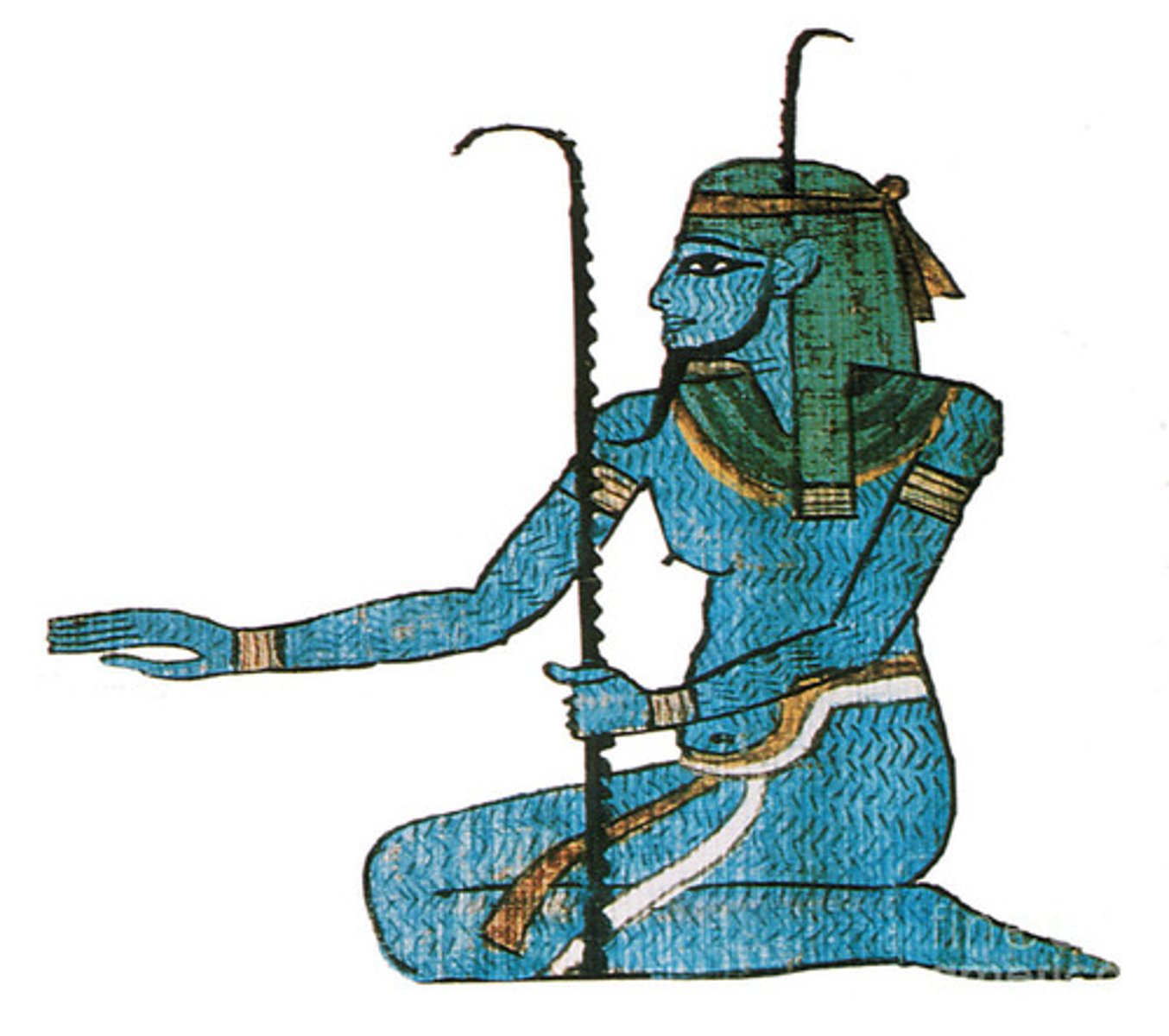
Hapy (god)
Blue skin, plump. God of the Nile and flooding
-He is typically depicted as a masculine figure with a large belly, symbolizing the fertility and abundance brought by the floodwaters of the Nile.
-Hapy was revered as a beneficent deity who brought life-giving waters to Egypt, ensuring the fertility of the soil and the prosperity of the people.
-In Egyptian mythology, Hapy was often depicted as a pair of deities, Hapy of Upper Egypt (depicted with papyrus plants) and Hapy of Lower Egypt (depicted with lotus flowers), symbolizing the union of the two lands and the duality of the Nile's annual inundation.
Heavenly cow (god)
the book of the heavenly cow
- a celestial deity in ancient Egyptian mythology, often associated with the sky goddess Nut and the earth god Geb.
-She is depicted as a cow, sometimes with a solar disk between her horns, symbolizing her connection to the sun and the heavens.
-The Heavenly Cow was believed to embody the nurturing and life-giving aspects of the natural world, providing sustenance and protection to all living beings.
-In some myths, she is credited with giving birth to the sun god Re each morning, symbolizing the cyclical renewal of life and the eternal order of the universe.
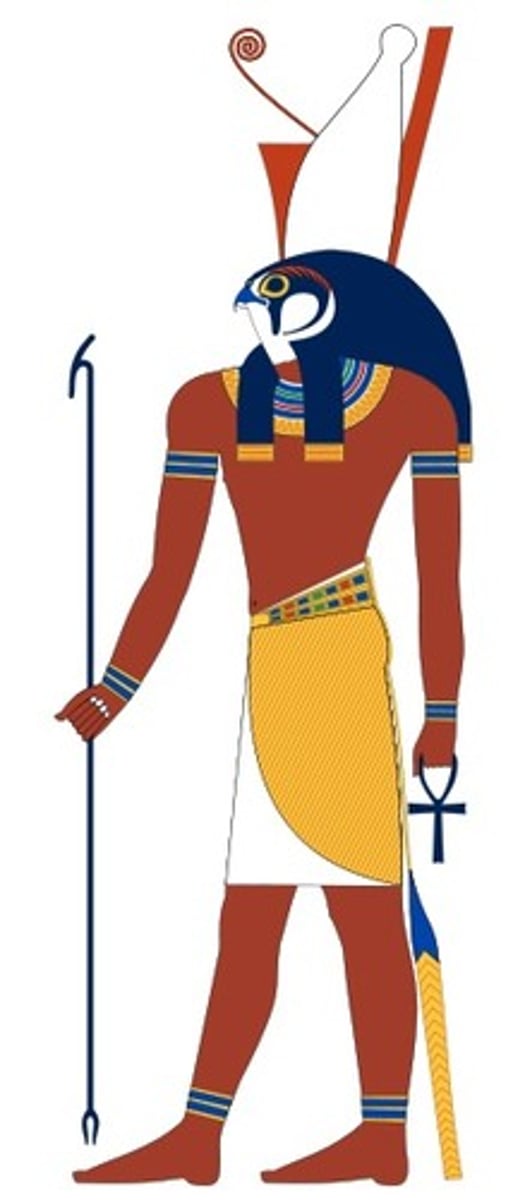
Horus (god)
god that the Egyptians believed that was the son of Osiris and Isis, these 3 gods formed a "model family" that the Egyptians tried to model after, they also believed that the pharaoh was the son of Horus, thus always making a pharaoh also a god
-Horus is one of the most significant ancient Egyptian deities, often depicted as a falcon-headed god or as a falcon with a sun disk and cobra on his head.
-He was associated with kingship, sky, and protection, and was considered the divine protector of the ruling pharaoh, embodying the concept of kingship and divine authority.
Horus was also linked with warfare and the sun, representing the sun's daily journey across the sky and its victory over darkness.
-In mythology, Horus played a central role in the conflict with his uncle Set, who murdered his father Osiris and usurped the throne. Horus eventually avenged his father and became the rightful ruler of Egypt.
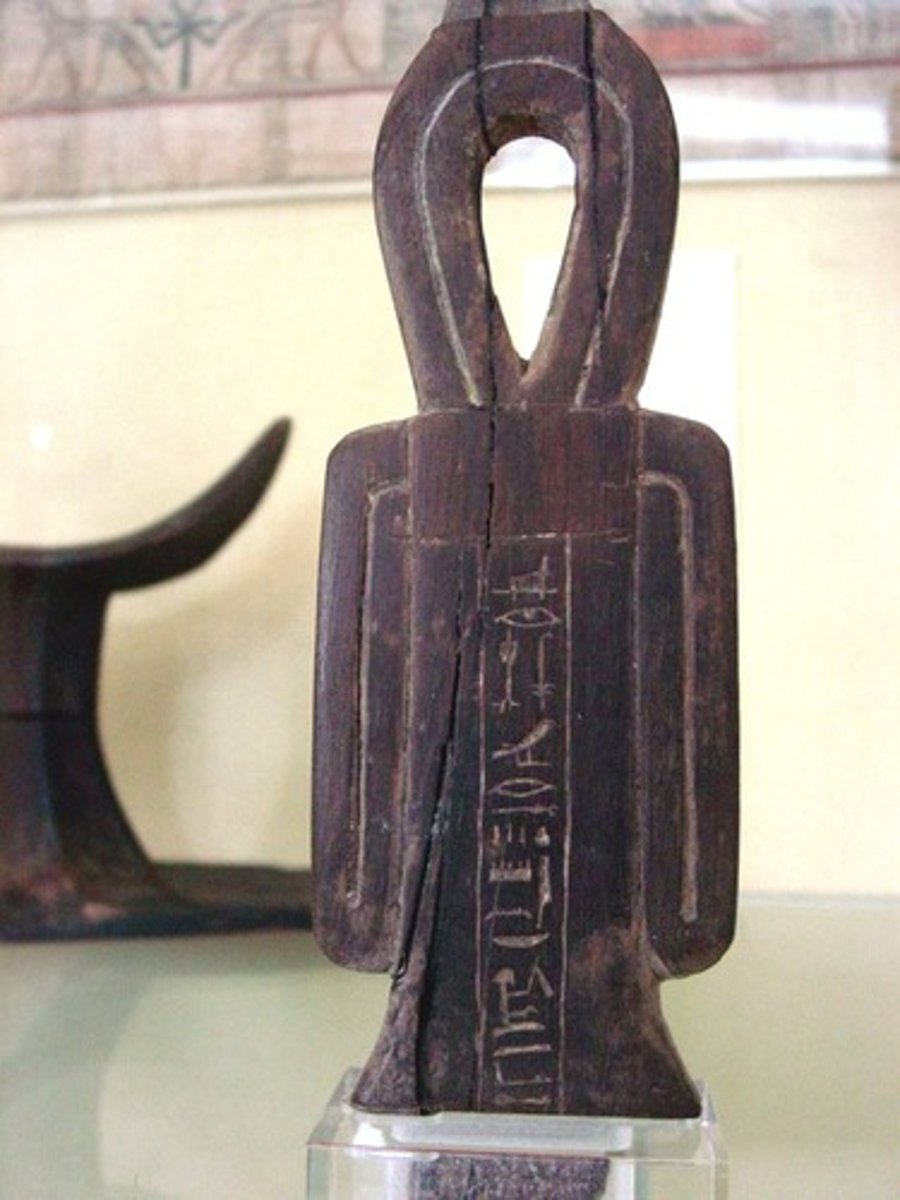
Isis Knot
protects the body
-The Isis knot, also known as the "Blood of Isis" or "Blood Knot," is an ancient Egyptian symbol representing the protective and magical powers of the goddess Isis.
-It consists of a looped cord or ribbon tied in a specific knot, often depicted in ancient Egyptian art as an amulet worn around the neck or wrist.
-The Isis knot symbolized the eternal bond between Isis and her husband Osiris, as well as the protective and nurturing qualities of the goddess.
-It was believed to offer protection, healing, and magical aid to the wearer, serving as a powerful talisman against evil forces and misfortune.
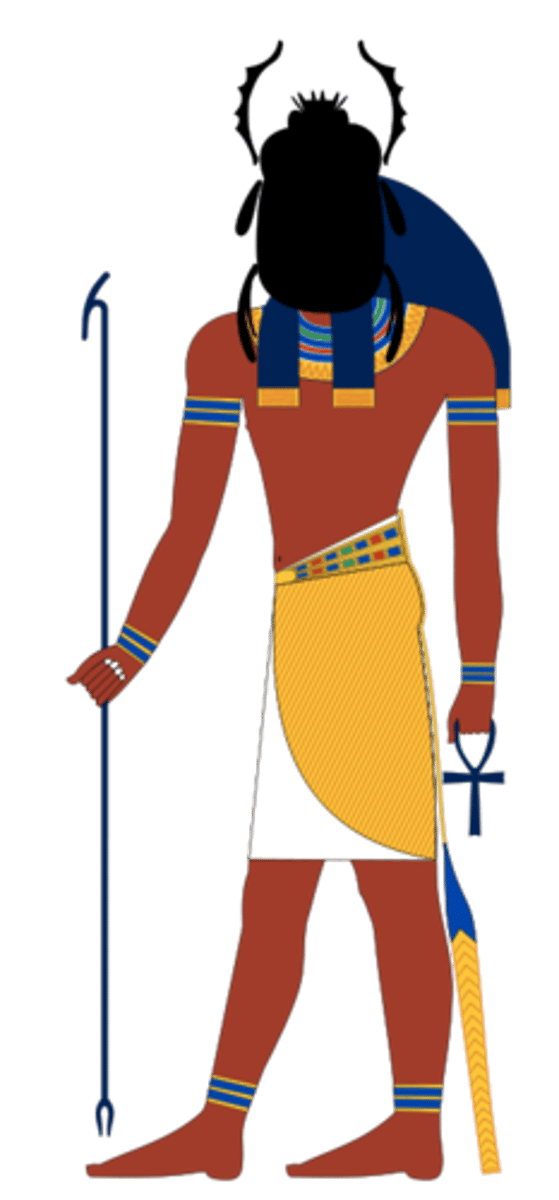
Khepri (god)
beetle connected with solar movement
- god associated with the rising sun, creation, transformation, and rebirth, often depicted as a scarab beetle or as a human with a scarab for a head.
-He represents the cyclical nature of the sun's journey across the sky, emerging from the darkness of night to bring light and life to the world each day.
-Khepri was believed to roll the sun disk across the sky, symbolizing the sun's daily renewal and rejuvenation.
-He was also associated with resurrection and regeneration, particularly in funerary contexts, where scarab amulets were placed on mummies to ensure the deceased's rebirth and journey to the afterlife.
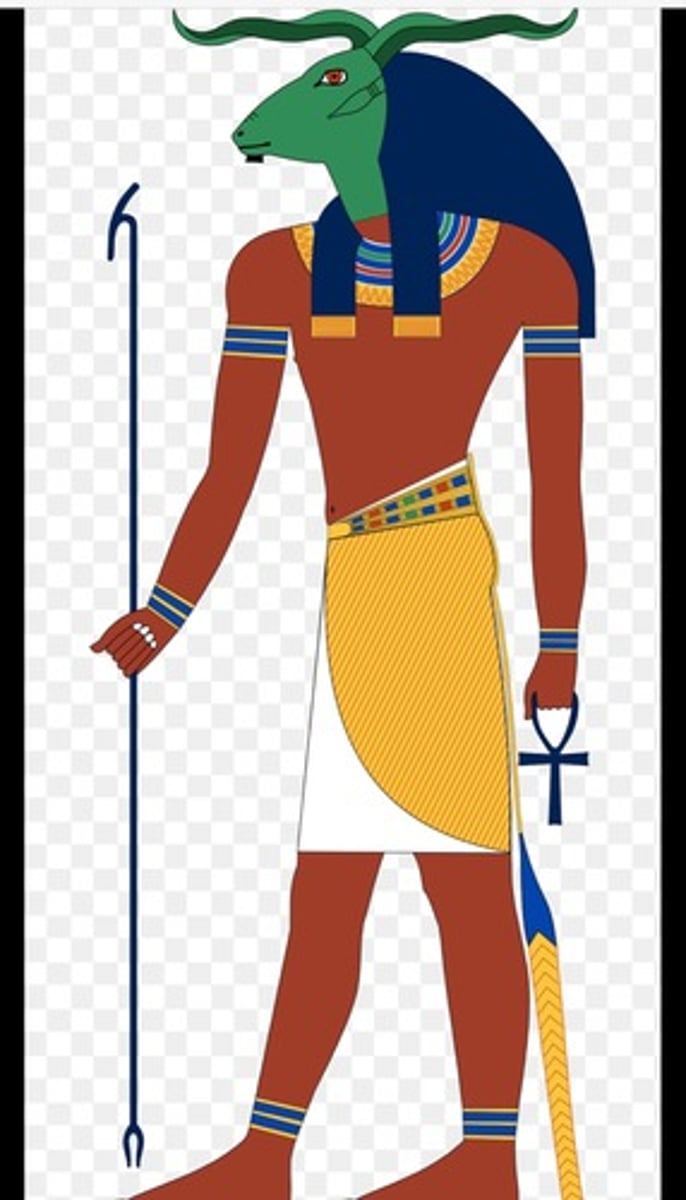
Khnum (god)
shown as a ram, creator of mankind
- god associated with the Nile River, fertility, pottery, and creation, often depicted as a ram-headed deity or as a man with a ram's head.
-He was believed to mold human bodies from clay on his potter's wheel and breathe life into them, symbolizing the act of creation and fertility.
-Khnum was worshipped primarily in Upper Egypt, particularly at the Elephantine Island sanctuary near Aswan, where he was revered as the guardian of the Nile's inundation and the source of fertility and abundance.
-He was also associated with the annual flooding of the Nile, which was essential for agriculture and the prosperity of ancient Egyptian civilization.
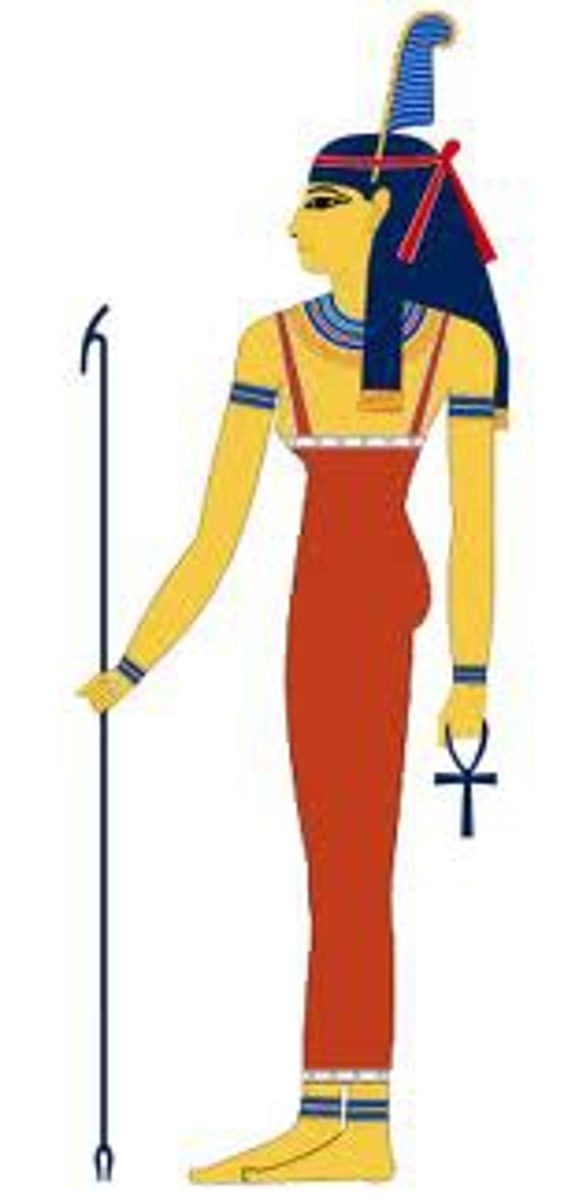
Maat (goddess)
Shown as a feather, goddess of divine order, truth, justice, harmony
-Maat is an ancient Egyptian concept representing truth, justice, harmony, balance, and cosmic order, personified as a goddess.
-She is often depicted as a woman wearing an ostrich feather on her head, symbolizing truth and justice.
-Maat was considered a fundamental principle in Egyptian religion and society, governing both cosmic and human affairs.
-The concept of Maat guided ethical behavior, moral conduct, and social interactions, with individuals expected to uphold truth, honesty, and righteousness in their daily lives
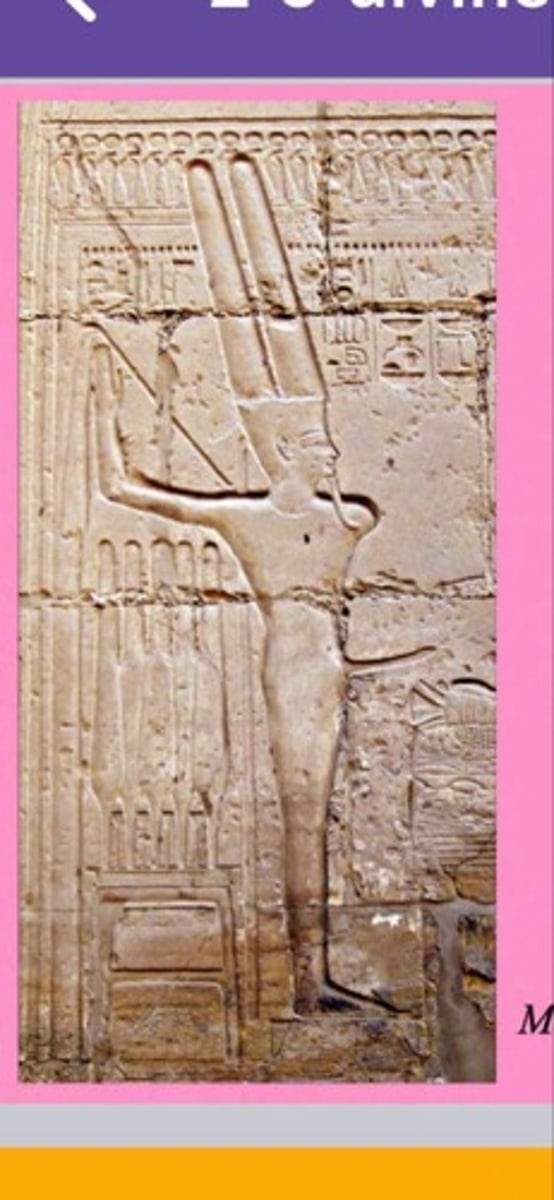
Min (god)
creator god, deity of male fertility
-god associated with fertility, sexuality, and the regenerative powers of nature, often depicted as a ithyphallic man holding a flail and a scepter.
-He was worshipped primarily in the city of Akhmim (Panopolis) in Upper Egypt, where he was revered as the local deity and the patron of the region's agricultural fertility.
-Min was celebrated in festivals and rituals aimed at promoting fertility, prosperity, and the renewal of life, particularly during the annual Min Festival held in his honor.
-He was also associated with the pharaoh's virility and power, symbolizing the monarch's ability to ensure the fertility and abundance of the land.
Mut (goddess)
-ancient Egyptian goddess worshipped as the mother goddess, often depicted as a woman wearing a vulture headdress or as a lioness-headed woman.
-She was associated with motherhood, fertility, protection, and the divine feminine aspect of creation.
-Mut was particularly revered as the consort of Amun, forming part of the Theban triad alongside Amun and their son Khonsu.
-She was worshipped in temples throughout Egypt, with her primary cult center located at Karnak in Thebes, where she was venerated as the divine mother and protector of the pharaoh.
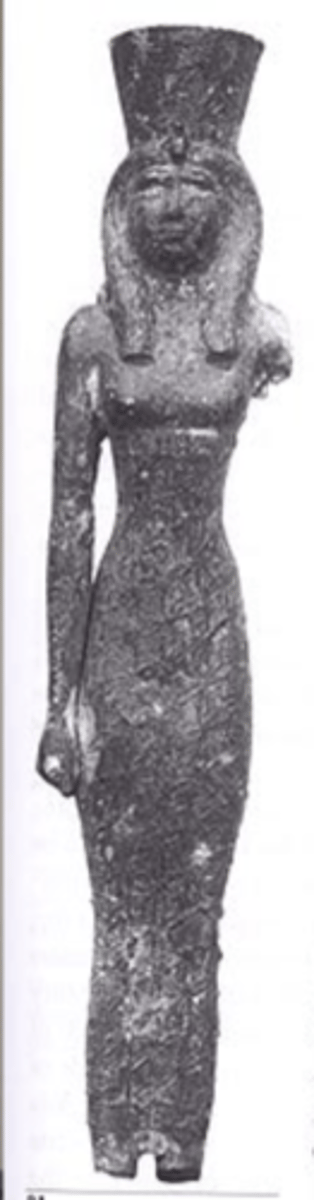
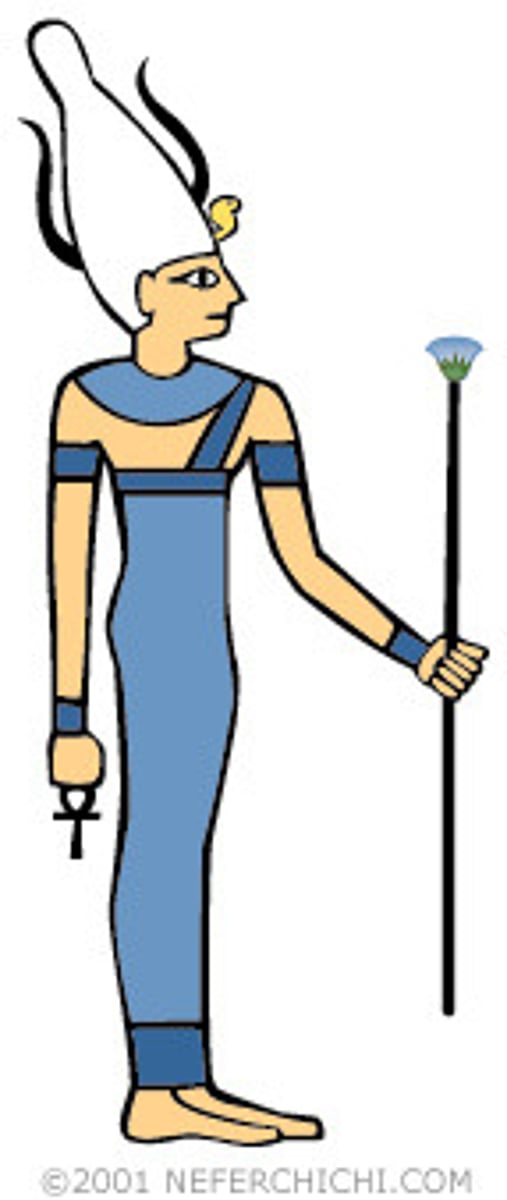
Nefertem (god)
-god associated with beauty, perfume, and the lotus flower, often depicted as a young man wearing a lotus blossom on his head.
-He was believed to embody the fragrance and beauty of the lotus flower, symbolizing rebirth, purity, and spiritual enlightenment.
-Nefertem was considered a protective deity, particularly against harmful influences and malevolent forces, and was invoked for healing and rejuvenation.
-He was worshipped in temples throughout Egypt, with his cult center located at Memphis, where he was venerated as a divine healer and guardian of the royal household.
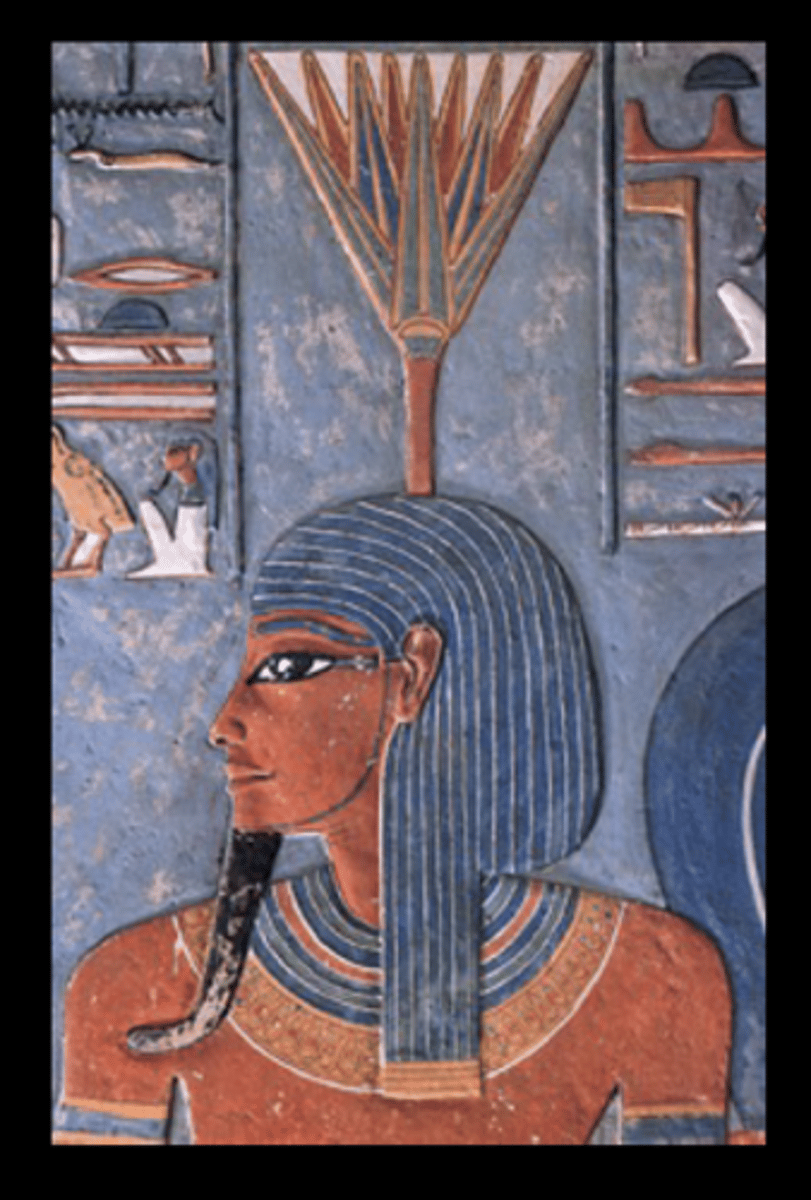
Neith (goddess)
-Neith is an ancient Egyptian goddess associated with war, hunting, wisdom, and weaving, often depicted as a woman wearing the red crown of Lower Egypt or as a lioness-headed deity.
-She was revered as a powerful and independent deity, sometimes described as the "Creator of the Universe" and the "Mother of the Gods."
-Neith was worshipped primarily in the city of Sais in the Nile Delta, where she was venerated as the patron goddess of the region and the protector of the pharaoh.
-She was also associated with the protection of the dead and was believed to weave the bandages for mummies, symbolizing her role in facilitating the journey to the afterlife.
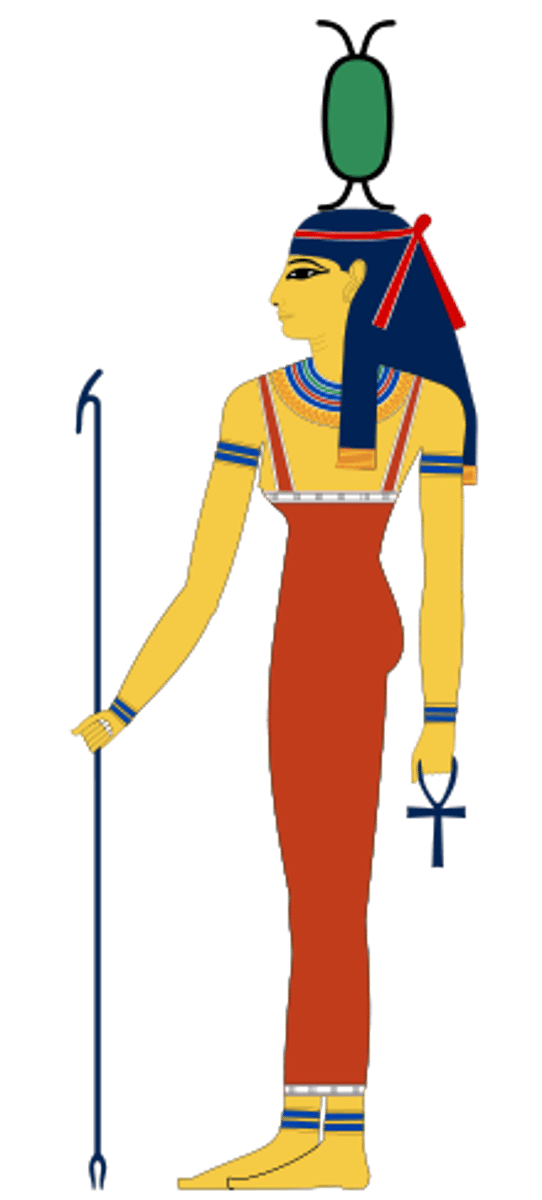
Nepthys (goddess)
Sister of Isis and wife of Seth
-Nepthys, also spelled Nephthys, is an ancient Egyptian goddess associated with death, mourning, protection, and the afterlife, often depicted as a woman wearing the hieroglyph for her name on her head.
-She was the sister of Isis, Osiris, and Set, and the wife of Set, although she was sometimes associated with Osiris as his protective sister and consort in his resurrection.
-Nepthys played a crucial role in the Osiris myth, helping Isis in her search for Osiris's body and assisting in the resurrection and protection of the deceased god.
-She was also worshipped as a guardian of the dead and was invoked for protection against malevolent spirits and dangers in the afterlife
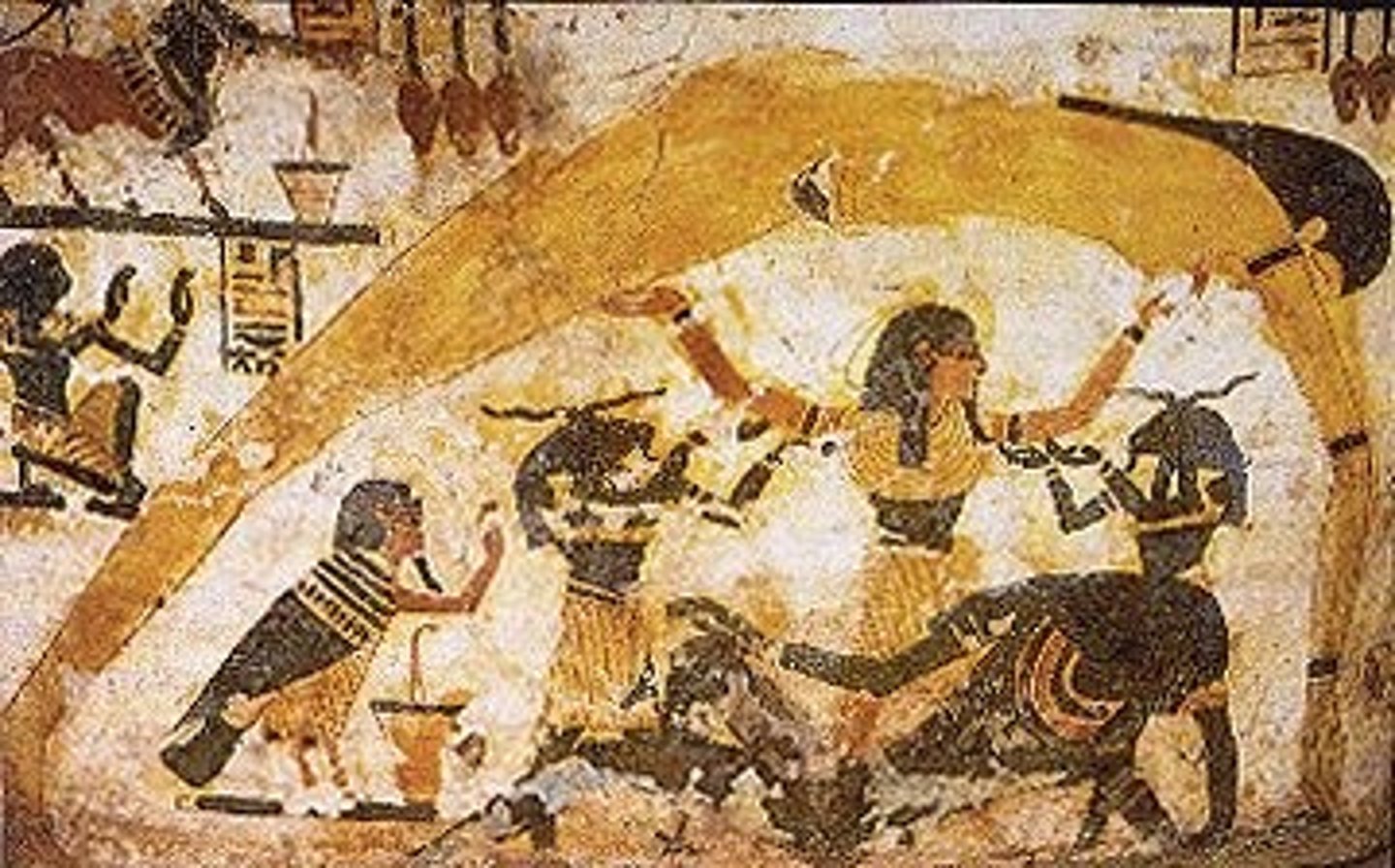
Nun (god)
Primordial Waters
-Nun is an ancient Egyptian deity representing the primordial waters of chaos, often depicted as a male figure reclining in a watery abyss, symbolizing the infinite and formless void from which the world emerged.
-He is considered one of the oldest gods in Egyptian mythology, representing the formless and chaotic state of the universe before creation.
-Nun was believed to encompass all potentiality and possibility, serving as the source of all existence and the foundation of order and stability in the cosmos.
-While not actively worshipped like other gods, Nun played a central role in Egyptian cosmology and creation myths, serving as the backdrop against which the gods and the world were formed.
Nut (goddess)
Sky goddess ('watery one')
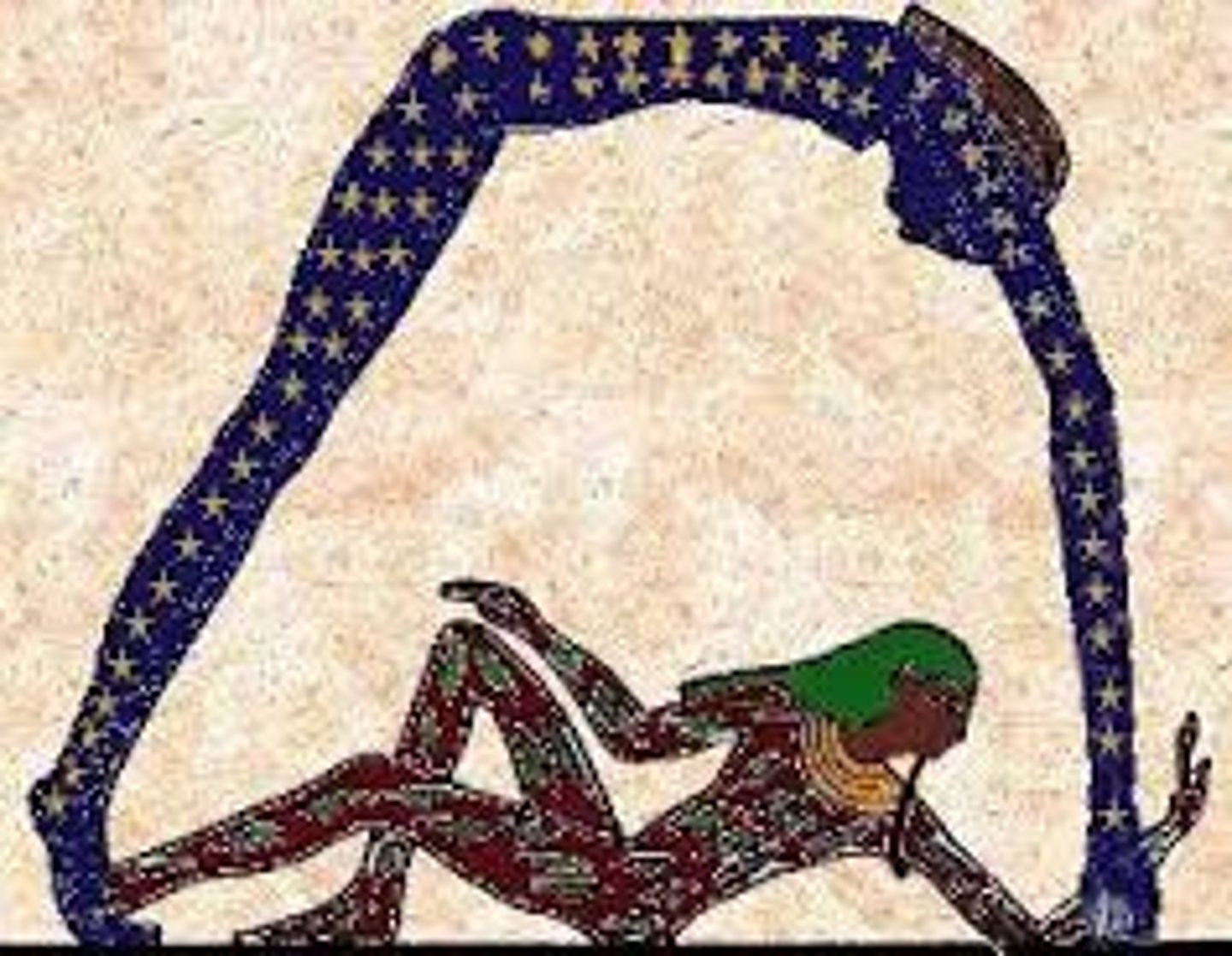
-Nut is an ancient Egyptian goddess of the sky, often depicted as a woman arched over the earth, her body adorned with stars, representing the celestial vault.
-She is the daughter of Shu (the god of air) and Tefnut (the goddess of moisture) and the mother of Osiris, Isis, Set, and Nepthys.
-Nut was believed to swallow the sun each evening and give birth to it again each morning, symbolizing the cyclical nature of the sun's journey across the sky.
-She was also associated with protection and nurturing, and her outstretched arms were believed to encompass and protect the deceased in the afterlife.
Ptah (god)
creator god of Memphis
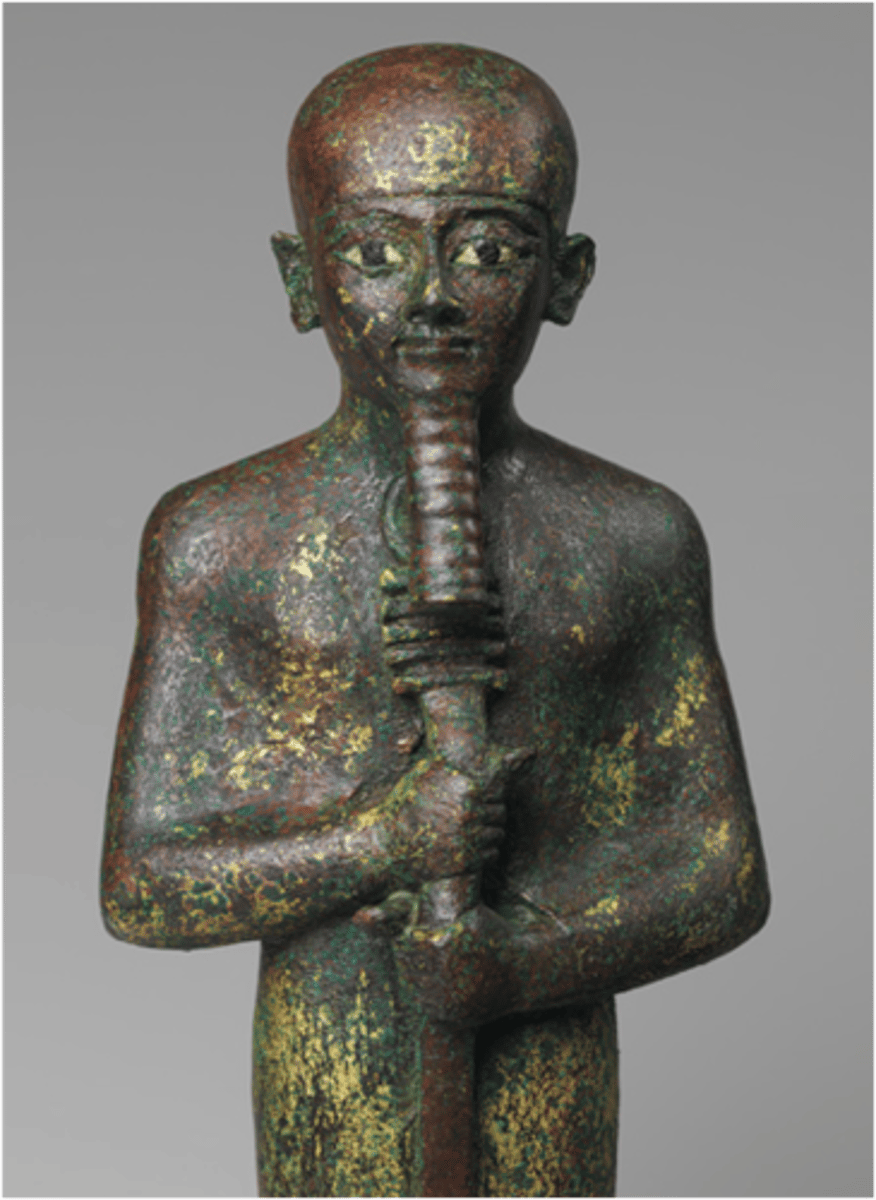
-Ptah is an ancient Egyptian creator god associated with craftsmanship, creation, and the arts, often depicted as a mummified man wearing a skullcap and holding a scepter.
-He was revered as the patron deity of craftsmen, artisans, and builders, believed to have created the world and all living beings through the power of his thought and speech.
-Ptah was worshipped primarily in the city of Memphis, where he was venerated as the chief deity and the protector of the royal necropolis.
-He was also associated with fertility and regeneration, particularly in his role as a god of creation and renewal, symbolizing the ongoing cycle of life and death in the natural world.
Re (god)
sun god
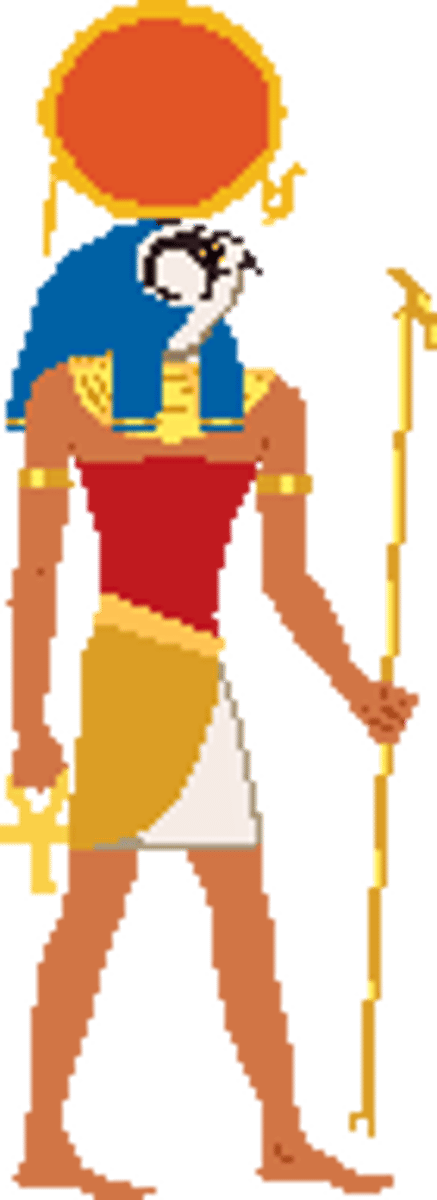
-Re, also known as Ra, is the ancient Egyptian sun god and one of the most important deities in Egyptian mythology, often depicted as a falcon-headed man wearing a sun disk headdress.
-He was believed to traverse the sky in a solar boat during the day and journey through the underworld at night, symbolizing the cycle of life, death, and rebirth.
-Re was associated with power, light, warmth, and life-giving energy, and he was worshipped as the creator of the world and all living beings.
-He was also closely linked with kingship and the pharaoh, who was believed to be the earthly embodiment of Re's divine authority and the intermediary between the gods and the people.
Sakhmet
"The Powerful One": Ancient Egyptian goddess depicted as a lioness, feared for her destructive power and her role as instrument of divine retribution; also associated with illness and plague and thus approached for healing.
-She was believed to possess great power and ferocity, capable of bringing both plague and healing to humanity, and she was invoked as a protector against enemies and evil spirits.
-Sakhmet was worshipped primarily in the city of Memphis, where she was venerated as the consort of Ptah and the protector of the city and its inhabitants.
-Despite her association with destruction and chaos, Sakhmet was also revered as a healer and a bringer of life, symbolizing the dual nature of power and its potential for both harm and benevolence.
Satet
goddess of the Nile and fertility and abundance, often depicted as a woman wearing the crown of Upper Egypt and holding a bow and arrows.
-She was believed to control the annual flooding of the Nile, which was essential for agriculture and the prosperity of Egypt, and she was venerated as a protector of the land and its people.
-Satet was worshipped primarily in the southern region of Egypt, particularly in the city of Elephantine, where she was revered as the guardian of the First Cataract of the Nile and the source of the river's life-giving waters.
-She was also associated with hunting and warfare, symbolizing the fertility and bounty of the land and the role of the Nile in sustaining Egyptian civilization.
Seth
Hybrid animal creature
Cult following: Nubt
Strength, depicted with red
"taming a beast"
-He was considered a disruptive and malevolent force in Egyptian mythology, known for his jealousy and hostility towards his brother Osiris, whom he murdered in his quest for power.
-Seth was also associated with protection and strength, particularly in his role as a defender against the forces of chaos and disorder.
-Despite his negative reputation, Seth was sometimes venerated as a protective deity, particularly by warriors and desert nomads who sought his strength and ferocity in battle.
shed
-Shed, also known as Shedu, is an ancient Egyptian protective deity depicted as a winged lion or a winged bull, often placed at the entrances of temples and palaces to ward off evil spirits.
-They were believed to possess protective and apotropaic (warding off evil) qualities, guarding against malevolent forces and ensuring the safety and security of sacred spaces.
-Shed figures were also associated with royal power and authority, symbolizing the king's ability to protect his kingdom and maintain order.
-The concept of Shed likely originated from Mesopotamian and Assyrian mythology, where similar winged creatures were depicted as protective spirits.
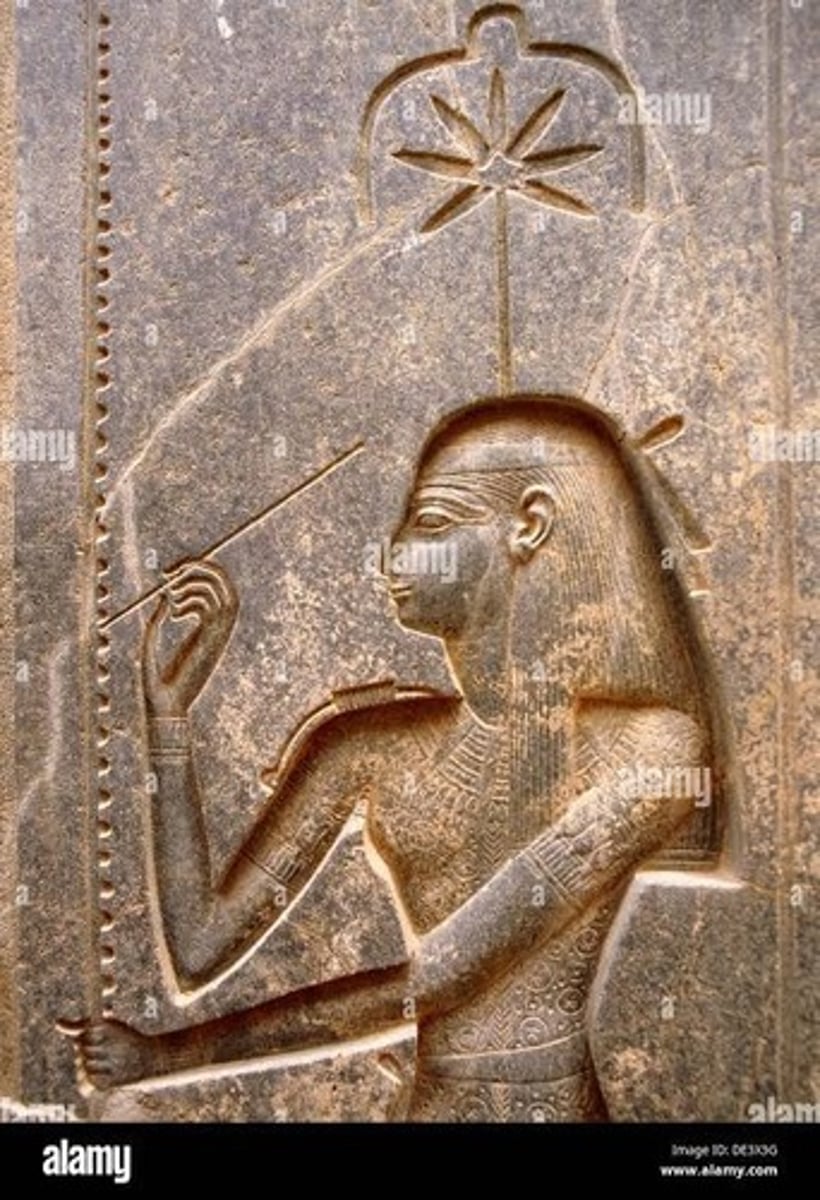
Seshat
"female scribe" archivist/librarian. No cult following. Female counterpart of thoth
-She was believed to be the inventor of writing and the keeper of records, responsible for recording the deeds and achievements of the pharaoh and the divine order of the universe.
-Seshat was also associated with architecture, mathematics, and astronomy, particularly in her role as the patroness of builders and architects.
-She was worshipped primarily in the city of Heliopolis, where she was revered as the consort of Thoth and the divine scribe of the gods.
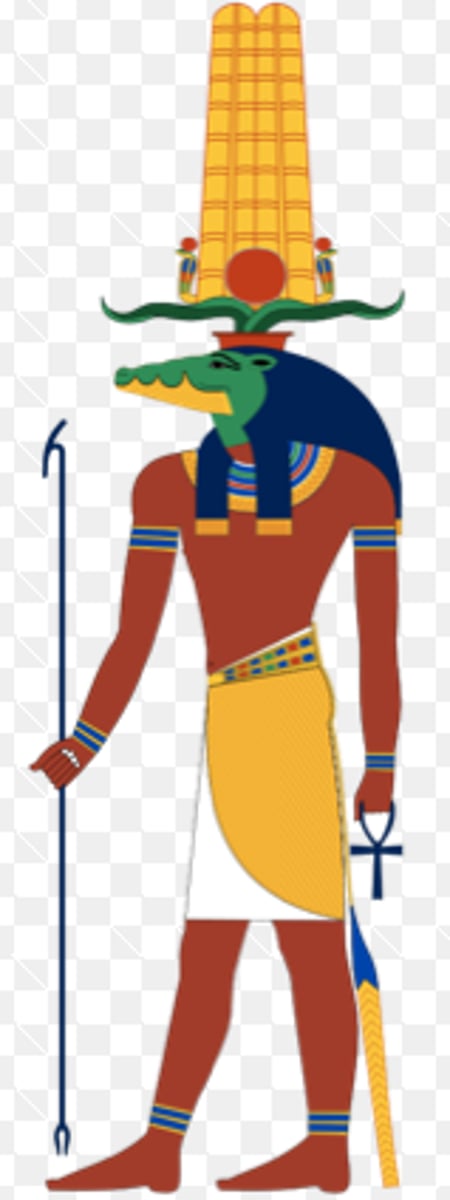
Sobek
crocodile god, god of the nile
-Sobek is an ancient Egyptian god associated with the Nile River, fertility, protection, and military prowess, often depicted as a man with the head of a crocodile or as a crocodile.
-He was revered as a powerful and ferocious deity, capable of both nurturing and destroying life, and he was worshipped as a protector of the pharaoh and the Egyptian people.
-Sobek was particularly venerated in the Faiyum region of Egypt, where he was believed to control the annual flooding of the Nile and ensure the fertility of the land.
-He was also associated with the military and was invoked as a patron of warriors and soldiers, symbolizing the strength and power of Egypt's military forces.
Souls of Pe & Nekhen
-The Souls of Pe and Nekhen are ancient Egyptian concepts referring to the souls of the deceased kings of Upper and Lower Egypt, respectively.
-Pe and Nekhen were ancient Egyptian cities associated with the rulership of Upper and Lower Egypt, respectively, and their souls were believed to reside in the afterlife.
-The Souls of Pe and Nekhen were venerated as divine ancestors and protectors of the kingdom, invoked for blessings and guidance by the living pharaoh and his subjects.
-They were often depicted in funerary art and inscriptions, receiving offerings and adoration from the living and accompanying the deceased king on his journey to the afterlife.
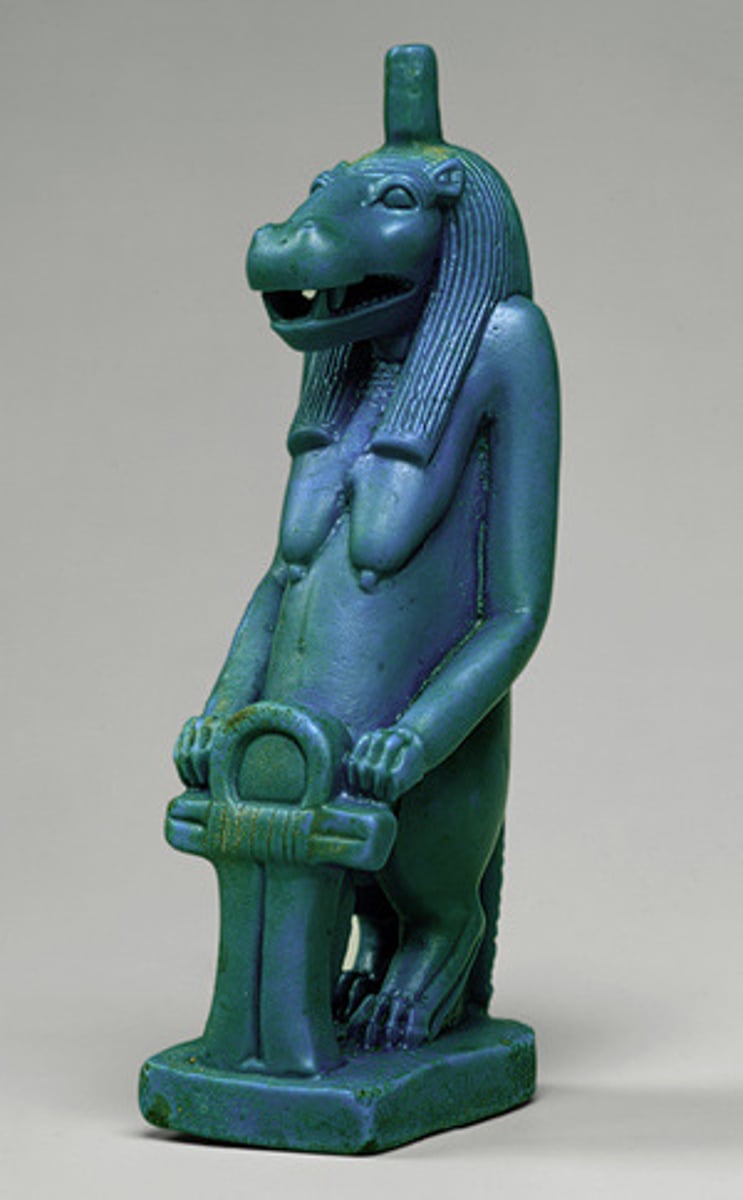
Taweret (goddess)
-Taweret is an ancient Egyptian goddess associated with childbirth, fertility, and protection, often depicted as a hippopotamus standing upright on her hind legs, with the limbs and mane of a lion, and the tail of a crocodile.
-She was believed to protect women during childbirth and ensure the safety of mothers and newborn babies, warding off evil spirits and malevolent forces.
-Taweret was also worshipped as a household deity, guarding against illness, accidents, and other dangers, and ensuring the well-being of families and households.
Despite her fearsome appearance, Taweret was revered as a benevolent and nurturing goddess, embodying the protective and nurturing aspects of motherhood.
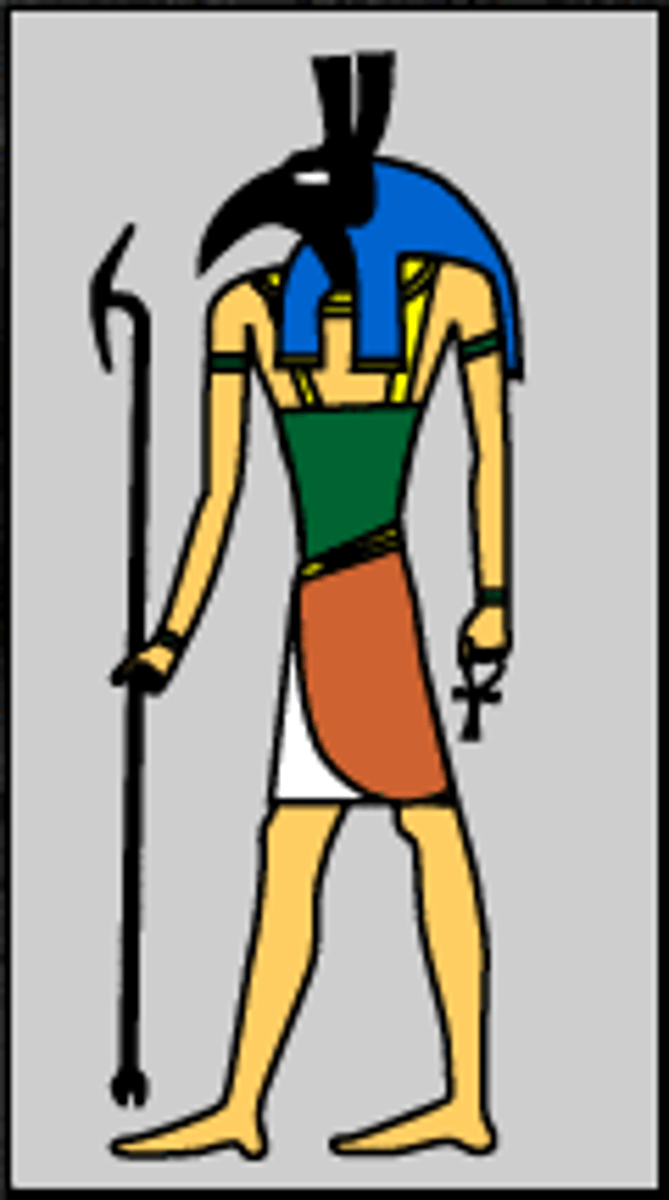
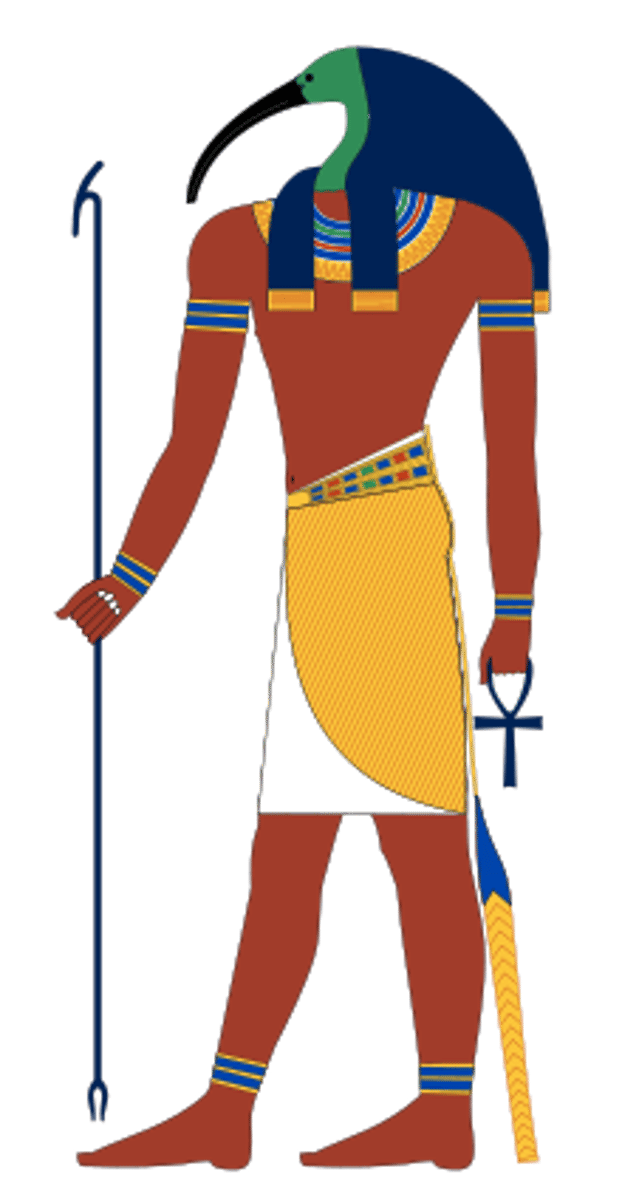
Thoth (god)
God of the mind and wisdom; smart; head of an Ibis; responsible for hieroglyphics. Counterpart of Sheshat.
-Thoth is an ancient Egyptian god associated with wisdom, writing, magic, and the moon, often depicted as a man with the head of an ibis or as a baboon.
-He was revered as the inventor of writing and the patron of scribes and scholars, responsible for recording the deeds of the gods and the affairs of mortals.
-Thoth was also associated with the moon and the measurement of time, and he was believed to regulate the -cycles of the moon and the stars.
-He was worshipped as a mediator and arbitrator, often invoked by those seeking wisdom, knowledge, and guidance in matters of law, science, and magic.
Abydos
-Abydos is an ancient city located in Upper Egypt.
-It was considered one of the most sacred sites in ancient Egypt, particularly associated with Osiris, the god of the afterlife.
-A notable feature of Abydos is the Temple of Seti I and the Osireion, a mysterious structure associated with Osiris.
-The city was a major center for pilgrimage and burial practices, with many important tombs and cenotaphs located in the area.
Apotropaic wand
-An apotropaic wand is a magical object used in ancient Egyptian religious practices to ward off evil spirits or avert harmful influences.
-These wands were typically made of wood or ivory and decorated with protective symbols and magical inscriptions.
-They were often carried by priests or used during religious ceremonies to ensure protection and purification.
-Apotropaic wands were believed to possess the power to repel malevolent forces and safeguard individuals and sacred spaces.
Beautiful Festival of the Valley
THINK: DAY OF THE DEAD
-The Beautiful Festival of the Valley, also known as the Festival of the Drunkenness of the Valley, was an annual celebration held in ancient Thebes (modern-day Luxor) during the New Kingdom period.
-It was dedicated to the worship of Amun, the chief deity of Thebes, and other gods associated with the afterlife, such as Osiris and Hathor.
-The festival involved processions, music, dancing, feasting, and libations, with participants celebrating and honoring the gods.
-The festival also had a religious significance, as it was believed to renew the bond between the living and the dead and ensure the continued prosperity and fertility of the land
Duat
-realm of the dead in ancient Egyptian mythology, often depicted as a mysterious underworld where the souls of the deceased journeyed after death.
-It was believed to be a dark and perilous realm, ruled by Osiris, the god of the afterlife, and inhabited by various demons, monsters, and deities associated with judgment and rebirth.
-The Duat was divided into different regions, including fields of reeds for the blessed, lakes of fire for the damned, and halls of judgment where souls underwent the weighing of their hearts against the feather of Maat.
-Journeying through the Duat was an essential part of the Egyptian conception of the afterlife, with funerary texts such as the Book of the Dead providing guidance and protection for the deceased on their journey.
Edfu
-Edfu is an ancient Egyptian city located on the west bank of the Nile River, known for its well-preserved Temple of Horus.
The Temple of Horus at Edfu is one of the best-preserved temples in Egypt and is dedicated to the falcon-headed god Horus, the son of Osiris and Isis.
-Construction of the temple began in the Ptolemaic period and continued into the Roman period, resulting in a magnificent complex adorned with elaborate reliefs and hieroglyphic inscriptions.
-The temple played a significant role in the annual Opet Festival, during which the statue of Horus would be ceremonially transported from Edfu to the temple of Luxor, symbolizing the union of Horus with the Theban triad of gods.
Satet Temple
-The Satet Temple, also known as the Temple of Satet, is an ancient Egyptian temple located on Elephantine Island in the Nile River near Aswan.
-It was dedicated to Satet, a goddess associated with the inundation of the Nile and fertility.
The temple complex at Elephantine was an important religious center in ancient Egypt, with evidence of worship dating back to the Old Kingdom period.
-The Satet Temple played a crucial role in rituals and ceremonies related to the annual flooding of the Nile, which was essential for agriculture and the prosperity of the land.
ennead
-a term used in ancient Egyptian religion to refer to a group of nine deities who were believed to govern the world and maintain cosmic order.
-The most well-known Ennead is the Heliopolitan Ennead, which consisted of Atum, Shu, Tefnut, Geb, Nut, Osiris, Isis, Set, and Nephthys.
-These deities were thought to be the offspring of the creator god Atum and were closely associated with the city of Heliopolis (Iunu) in Lower Egypt.
-The Ennead played a central role in Egyptian cosmology and mythology, with each member representing different aspects of the natural world and divine principles.
Eye of Re
-also known as the Eye of Ra
-another symbol in ancient Egyptian mythology associated with protection, power, and solar deity.
-it represents the sun god Re's all-seeing and fiery gaze, capable of destroying enemies and bringing light and warmth to the world.
-The Eye of Re is often depicted as a sun disk encircled by a uraeus (cobra), symbolizing the sun's life-giving energy and the king's divine authority.
-Similar to the Eye of Horus, the Eye of Re was believed to have protective qualities and was invoked for blessings and divine intervention.
Festival of Intoxication
- an ancient Egyptian religious festival celebrated in honor of various deities, including Hathor and Sekhmet.
-It was held annually and involved music, dancing, feasting, and the consumption of alcoholic beverages, particularly beer and wine.
-The festival was believed to have originated as a means of invoking the fertility and joyous aspects of the goddess Hathor, who was associated with music, dance, and inebriation.
-Participants would engage in ecstatic rituals and revelry, often reaching a state of intoxication as a form of religious ecstasy and communion with the divine.
Harem Conspiracy
New Kingdom, Dynasty 20, 1155 BC
How Rameses III was murdered
Secondary wife cooperated with court officials to assassinate him. Conspirators eventually caught and forced to commit suicide
Hathor
-Egyptian goddess associated with love, beauty, music, motherhood, and joy, often depicted as a woman with the ears of a cow, sometimes wearing a headdress consisting of a sun disk and cow horns.
-She was considered a benevolent deity, bringing happiness, fertility, and protection to her worshippers.
-Hathor was closely associated with the goddess Sekhmet and sometimes identified as her benign aspect.
-She was also linked with the afterlife and was believed to welcome the souls of the deceased into the afterlife, providing them with nourishment and care.
Heqaib
-Heqaib, also spelled Hekaib, was an ancient Egyptian official who served as the nomarch (governor) of the 1st Nome of ---Upper Egypt during the Old Kingdom period.
-He is known from inscriptions and artifacts discovered in the region of Elephantine, particularly from the tomb complex known as the Tomb of Heqaib.
-Heqaib held significant political and administrative power in the region, overseeing agricultural production, trade, and the collection of taxes.
-He is depicted in reliefs and statues as a seated figure wearing a kilt and holding various symbols of authority, such as the crook and flail, indicating his role as a regional ruler.
Hierakonpolis
-first real city in Egypt
-where gold/copper/mineral resources are
-tomb 100 is the earliest "royal" tomb
- also known as Nekhen, was one of the most important and ancient cities in predynastic and early dynastic Egypt, located in Upper Egypt.
-It was a center for religious, political, and economic activities, with evidence of settlement dating back to the Neolithic period.
-Hierakonpolis was associated with the worship of the falcon god Horus, who was believed to have been born there.
The city's archaeological remains include temples, palaces, tombs, and artifacts that provide insights into early Egyptian civilization and the rise of state institutions.
Cheops & the Magicians
- a tale from ancient Egyptian folklore, preserved in various texts and inscriptions.
-It revolves around King Cheops (Khufu), the builder of the Great Pyramid of Giza, and his encounters with wise men and magicians who possess supernatural powers.
-In some versions of the story, Cheops seeks the advice of the magicians to help him solve various problems or challenges, such as securing his kingdom or finding hidden treasures.
-The tale reflects the cultural fascination with magic and the supernatural in ancient Egypt, as well as the reverence for wisdom and cunning displayed by wise men and sages.
Ma'at and Isfet
The ancient Egyptians' dualistic concept that symbolically represented the ideas of order and chaos. A pharaoh was supposed to embody the forces of ma'at against the wickedness of isfet. ORDER VS CHAOS
Neheh and Djet
Cyclical/linear (the finite duration of time)
Isis
Divine queen, mother of Horus, protects the deceased
-ancient Egyptian goddess revered as a powerful deity associated with motherhood, magic, fertility, and protection.
-She is often depicted as a woman wearing a throne-shaped headdress with a sun disk, symbolizing her role as the queen of heaven and the divine mother of the pharaoh.
-Isis played a central role in Egyptian mythology, particularly in the Osiris myth, where she resurrected her husband Osiris and protected her son Horus, symbolizing the cycle of life, death, and rebirth.
Karnak Temple
Cult Temple dedicated to the Gods begun by Senusret I, finished by Ramses II. Worked on by 30 Pharaohs.
-Karnak is a vast temple complex located in Thebes (modern-day Luxor), Egypt, dedicated primarily to the god Amun and other deities.
-It is one of the largest religious complexes in the world, covering an area of over 200 acres and comprising numerous temples, pylons, obelisks, and statues.
-The most significant structure within Karnak is the Temple of Amun, a vast and elaborate sanctuary built and expanded over several centuries by numerous pharaohs.
-Karnak was a center of religious worship, pilgrimage, and royal ceremonies throughout ancient Egyptian history, and it remains one of Egypt's most visited archaeological sites today.
Khakheprre-sonbe
-is a throne name of the ancient Egyptian pharaoh Amenhotep II, who ruled during the 18th Dynasty of the New Kingdom period.
-The throne name Khakheprre-sonbe translates to "Appearance of Re, enduring of years" and reflects the pharaoh's divine connection to the sun god Re and his desire for a long and prosperous reign.
-Amenhotep II is known for his military campaigns, particularly his expeditions to Syria and Nubia, as well as his extensive building projects and artistic patronage.
-His reign is considered a period of stability and prosperity in ancient Egypt, characterized by economic growth, artistic innovation, and imperial expansion.
Medinet Habu
-Medinet Habu is an archaeological site on the west bank of the Nile River in Luxor, Egypt, known for its well-preserved mortuary temple of Ramesses III.
-The temple complex at Medinet Habu is one of the largest and most well-preserved in Egypt, featuring impressive pylons, courts, and reliefs depicting military victories, religious ceremonies, and daily life.
-it served as a funerary temple for Ramesses III and a center for the worship of various deities, including Amun, Mut, and Khonsu.
-Medinet Habu is also famous for its extensive inscriptions, which provide valuable insights into ancient Egyptian history, religion, and culture.
Memphite Theology
-The Memphite Theology is an ancient Egyptian religious text that presents a creation myth centered around the god Ptah and the city of Memphis.
-It asserts that Ptah, through the power of his heart and tongue, created the world and all living beings by uttering their names and forms into existence.
-According to the Memphite Theology, Ptah is the primordial creator god who predated all other gods and was responsible for bringing order and stability to the cosmos.
-The text emphasizes the importance of Memphis as a religious and political center and Ptah's role as the patron deity of craftsmen, artisans, and creators.
Meretseger
-Meretseger is an ancient Egyptian goddess associated with the Theban Necropolis, particularly the peak of the Theban Mountain (Deir el-Medina), where many tombs of nobles and artisans are located.
-She is depicted as a woman with the head of a cobra or as a cobra emerging from a basket, symbolizing her protective and sometimes venomous nature.
-Meretseger was believed to be the guardian and protector of the necropolis, overseeing the welfare of the deceased and punishing those who desecrated tombs or disturbed the dead.
Worshippers would offer prayers and offerings to Meretseger to seek her favor and protection, especially during their visits to the necropolis to honor their ancestors and loved ones.
Mirgissa Deposit
-The Mirgissa Deposit refers to archaeological findings from the ancient site of Mirgissa, located in modern-day Sudan, along the Nile River.
-Excavations at Mirgissa have revealed artifacts and structures dating back to the New Kingdom period of ancient Egypt, including evidence of military fortifications, temples, and settlement remains.
-The site was strategically important as a frontier outpost and military base for the Egyptian empire's southern expansion into Nubia.
-Archaeological discoveries at Mirgissa have provided valuable insights into ancient Egyptian military activities, trade relations, and cultural interactions with neighboring regions.
Narmer
-Narmer, also known as Menes, is a legendary figure in ancient Egyptian history traditionally considered the unifier of Upper and Lower Egypt and the founder of the First Dynasty.
-He is depicted in the Narmer Palette, an ancient artifact dating to the Early Dynastic Period, which shows Narmer wearing the crowns of both Upper and Lower Egypt and smiting his enemies.
-Narmer's reign marks the beginning of the historical period in ancient Egypt and the establishment of the centralized monarchy that would characterize Egyptian civilization for millennia.
-While the exact identity and achievements of Narmer are still debated by scholars, he remains an important figure in Egyptian mythology and historiography.
Ogdoad
-The Ogdoad is a group of eight primordial deities in ancient Egyptian cosmogony, representing the chaotic and formless state of the universe before creation.
-The Ogdoad consists of four male-female pairs of deities, each pair representing aspects of chaos and fertility, and often depicted as frog-headed or serpent-headed beings.
-The members of the Ogdoad are Nun and Naunet (the primordial waters), Huh and Hauhet (infinity and eternity), Kuk and Kauket (darkness and obscurity), and Amun and Amaunet (hiddenness and invisibility).
-The Ogdoad played a central role in creation myths, with their union bringing forth the divine egg from which the sun god Re emerged, marking the beginning of the ordered cosmos.
Opet Festival
-The Opet Festival is an ancient Egyptian religious festival celebrated annually in Thebes (modern-day Luxor), dedicated to the god Amun and his consort Mut.
-It was one of the most important festivals in ancient Egypt, lasting several weeks and involving processions, rituals, and offerings to the gods.
-The festival was believed to renew the divine bond between Amun and the reigning pharaoh, ensuring the continued prosperity and stability of Egypt.
-During the festival, the statue of Amun from the Karnak Temple would be ritually transported to the Luxor Temple, accompanied by the pharaoh and priests, symbolizing the god's journey to visit his consort Mut.
Ptahhotep
-Ptahhotep was an ancient Egyptian vizier and sage who lived during the Old Kingdom period, serving under the pharaoh Djedkare Isesi of the 5th Dynasty.
-He is best known for his literary work known as the Instructions of Ptahhotep, a collection of moral and ethical teachings addressed to his son, advising him on how to live a virtuous and successful life.
-The Instructions of Ptahhotep are among the oldest surviving works of wisdom literature in the world, offering insights into ancient Egyptian values, social norms, and philosophical beliefs.
-Ptahhotep is revered as a wise and learned figure in Egyptian history, celebrated for his wisdom, piety, and devotion to serving his king and country.
Syncretism
-Syncretism refers to the merging or blending of religious beliefs, practices, or deities from different cultural or religious traditions into a unified whole.
-In ancient Egyptian religion, syncretism was common, particularly during periods of political unification or cultural exchange with neighboring civilizations.
-For example, the gods Amun and Re were merged to create Amun-Re, a powerful solar deity who became the chief god of the Egyptian pantheon during the New Kingdom.
-Syncretism allowed for the assimilation of foreign deities into the Egyptian religious system, as seen with the incorporation of gods like Osiris, Isis, and Anubis from other cultures into the Egyptian pantheon.
-Syncretism helped to maintain social cohesion and political stability by integrating diverse religious beliefs and practices into a single religious framework.
Report of Wenamun
-The Report of Wenamun is an ancient Egyptian literary text dating to the late 20th Dynasty or early 21st Dynasty, during the Third Intermediate Period.
-it is a narrative account written in the form of a letter or report, detailing the journey of an Egyptian official named Wenamun to the Levant (modern-day Lebanon) in search of cedar wood for the construction of a temple.
-The Report of Wenamun provides valuable insights into ancient Egyptian trade relations, diplomatic interactions, and cultural exchanges with foreign lands during the late New Kingdom and Third Intermediate Period.
-it also highlights the challenges and obstacles faced by Egyptian officials traveling abroad, including encounters with hostile foreign rulers and difficulties in securing valuable resources for royal projects.
 Note
Note  Flashcards (21)