Lecture 3.2 -Gravity and Vertical Motion
 Studied by 0 people
 Call with Kai
 Learn
Learn Practice Test
 Spaced Repetition
 Match
Match Flashcards
 Knowt Play
1/33

There's no tags or description
Looks like no tags are added yet.
Name | Mastery | Learn | Test | Matching | Spaced | Call with Kai |
|---|
No study sessions yet.
34 Terms
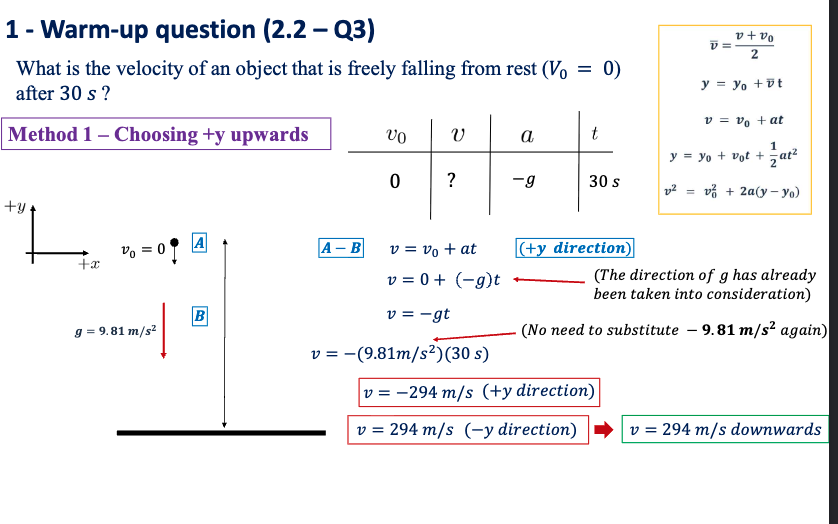
What is the acceleration due to gravity near Earth’s surface?
g=9.8 m/s2
Does the acceleration due to gravity depend on an object’s mass?
No. All objects fall with the same acceleration, regardless of mass (ignoring air resistance)
What direction does gravity act?
Toward the center of the Earth (downward)
Is gravity considered constant in Physics 1111?
Yes, near the Earth’s surface, gravity is treated as constant acceleration
What happens to a falling object’s velocity each second?
It increases by 9.8 m/s downward every second
If upward is defined as the positive direction, what is the value of g?
a=-9.8 m/s2
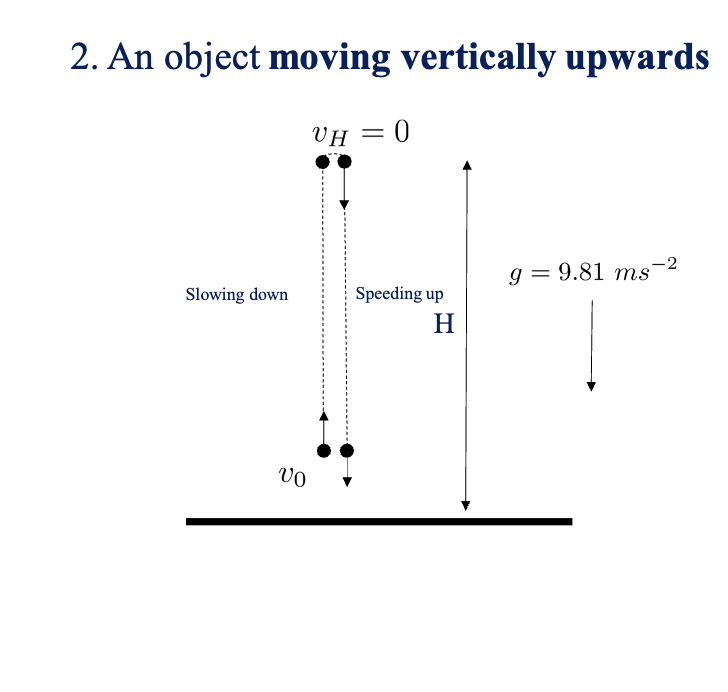
If downward is defined as the positive direction, what is the value of g?
a=+9.8 m/s2
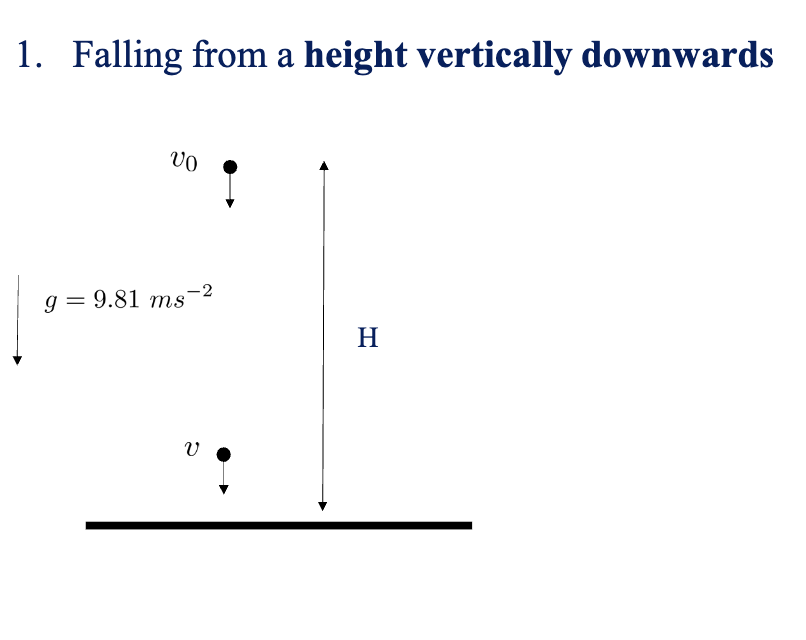
What is the free- fall rule?
All objects fall with constant acceleration g=9.8 m/s2 regardless of mass
What does ∣g∣ mean?
The magnitude (size) of gravity without direction
If downwardd is chosen as +y, what is the acceleration due to gravity?
a=+9.81m/s2
If upward is chosen as +y, what is the acceleration due to gravity?
a= -9.81 m/s2
Does gravity ever change direction?
No, only the sign changes based on the coordinate system
Why can gravity be positive or negative based on the coordinate system
Because the sign depends on how the coordinate system is defined
What is the first thing you check before choosing a kinematic equation?
Which variables are given and which variable is being asked for
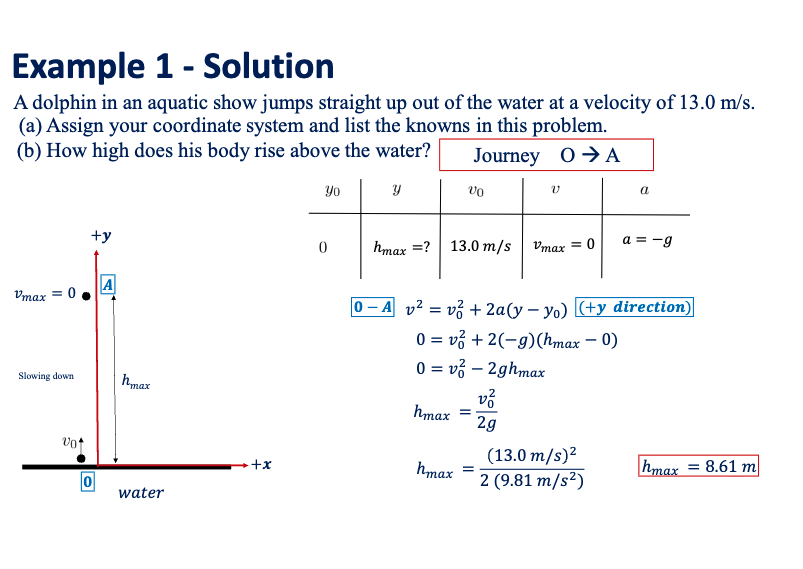
Which equation do you use when time is not given?
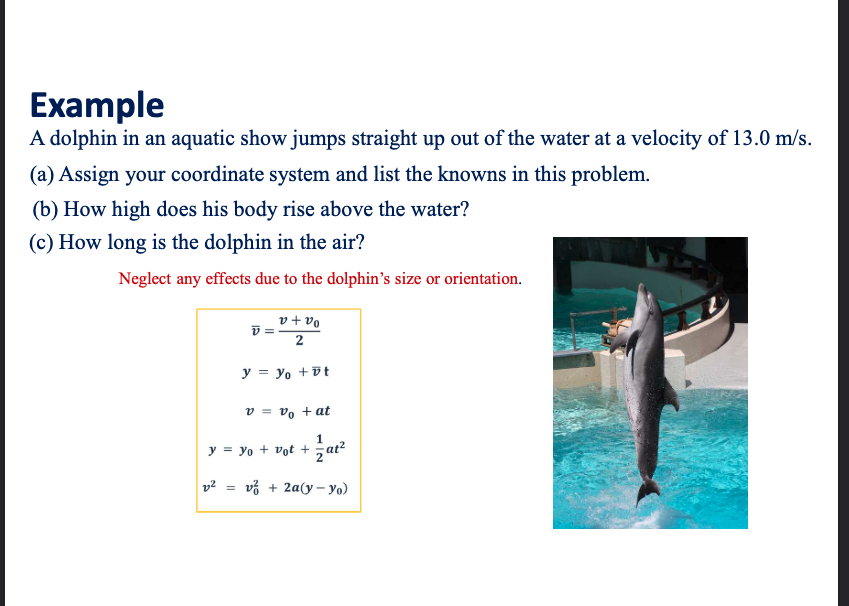
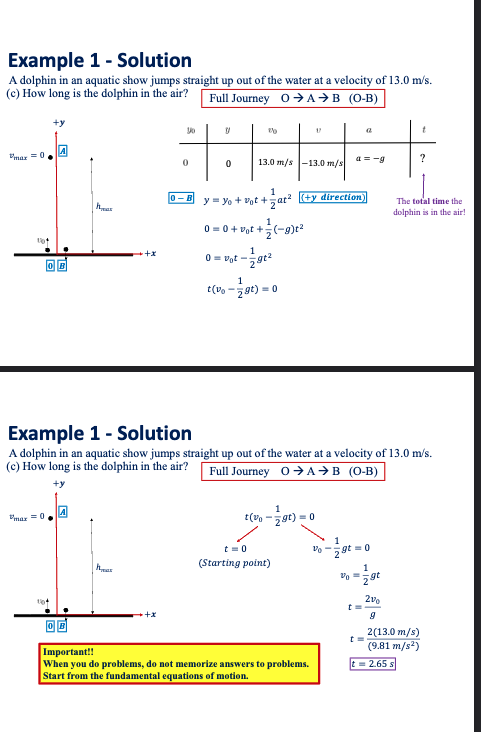
v2=v02+2a(y−y0)
Which equation do you use when the problem asks for velocity at a certain height?
v2=v02+2a(y−y0)
Which equation do you use when you are given time and want velocity?
v=v0+at
Which equation do you use when you are given time and want position?

Which equation do you use when you know initial velocity, final velocity, and time?
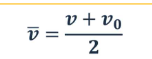
Which equation do you use when you know average velocity and time?
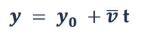
Which equation do you use when the question says “How far did it travel” and acceleration is constant?
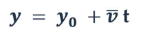
What equation do you use when the problem does NOT mention position at all?
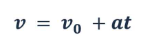
Which equation do you use when the problem does not mention time at all?
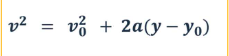
Which equation is used to find the final velocity just before hitting the ground?
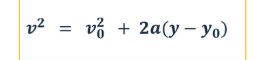
Which equation should you use if the velocity changes evenly over time?
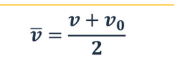
Which equation is commonly used FIRST to find velocity when time is known?

After finding velocity, which equation can be used to find displacement?

When time is not given, which equation is often used first?


Plug the velocity into another equation to find time or displacement
Can you find time after finding velocity?

When is it normal to solve for time first, then velocity?
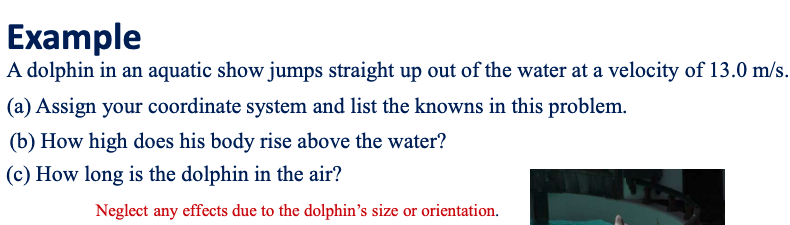
When height or position is given but time is not directly asked for

 Note
Note  Flashcards (58)