BIO106: Exam 2 Review
 Call Kai
 Learn
Learn Practice Test
 Spaced Repetition
 Match
Match Flashcards
 Knowt Play
1/74

There's no tags or description
Looks like no tags are added yet.
Name | Mastery | Learn | Test | Matching | Spaced | Call with Kai |
|---|
No analytics yet
Send a link to your students to track their progress
75 Terms
Anther
produces pollen
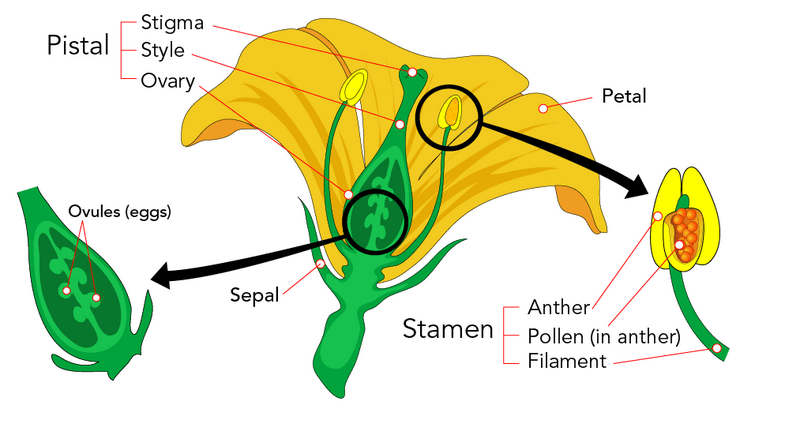
Flower
Reproductive organ of angiosperms; produces seeds and facilitates fertilization.
Fruit
Ripened ovary that contains seeds, aids in seed dispersal.
Petal
Brightly coloured modified leaves. Attracts pollinators.
Carpel
Female reproductive organs of a plant.
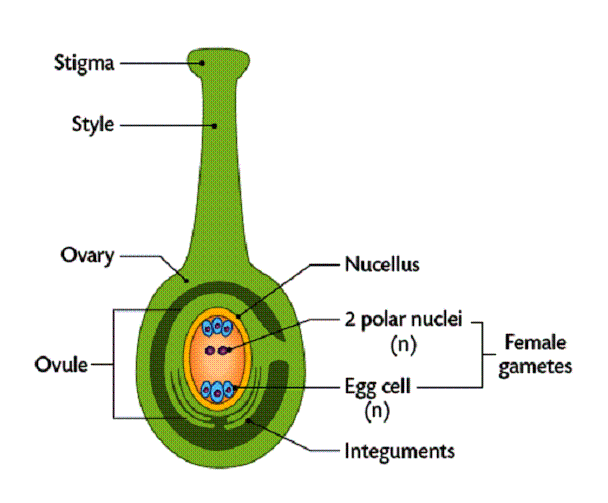
Pollen
Dust like grains needed for reproduction; carries haploid to female ovule.
Stamen
Male reproductive organ, produces pollen grains; consists of filament (stalk) and anther.
Pollination
Sexual reproduction in flowering plants. The transfer of pollen grains to stigma (male to female structures).
Cotyledon
Stored food for a developing seedling. Monocot and dicot.
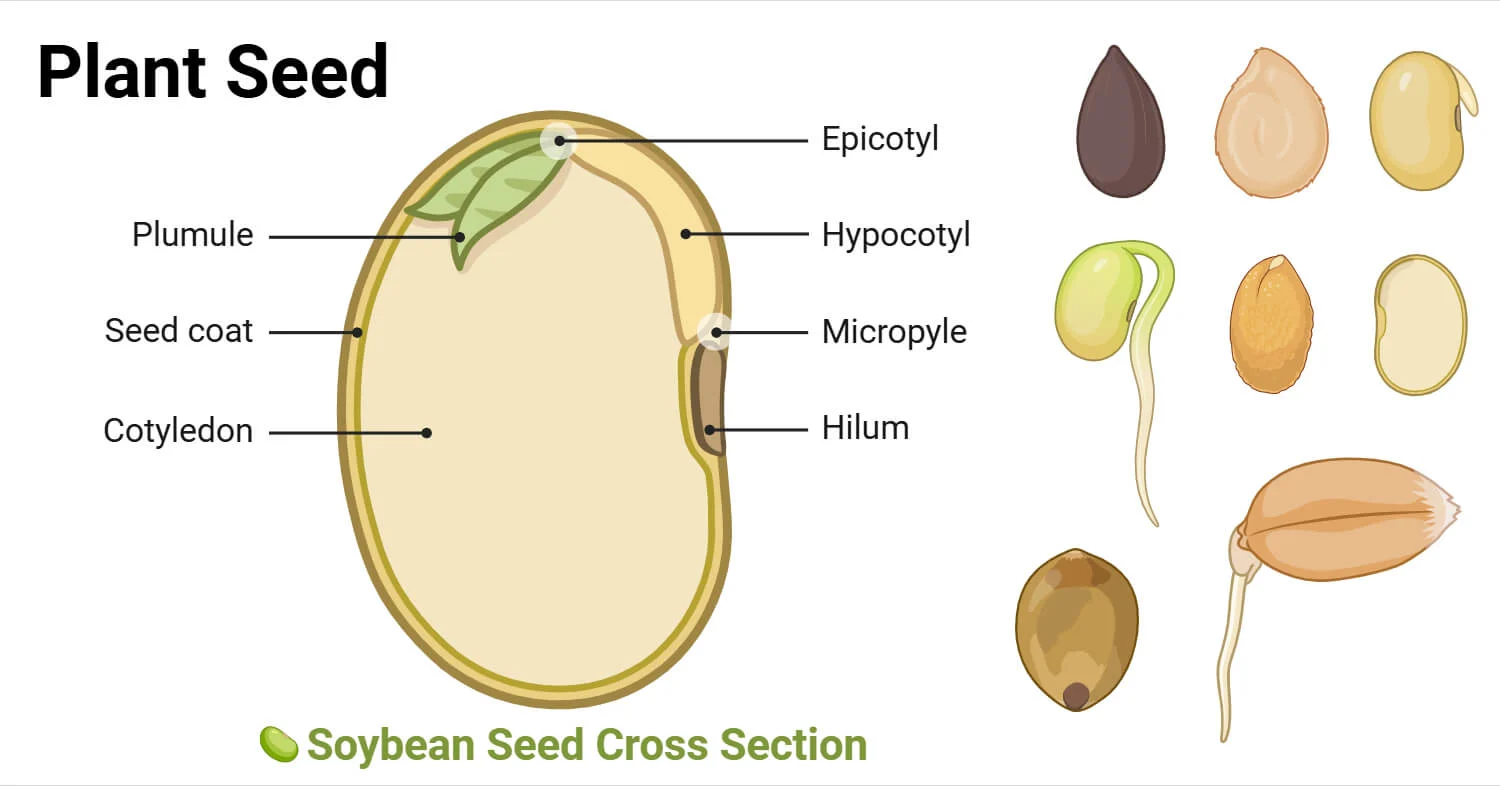
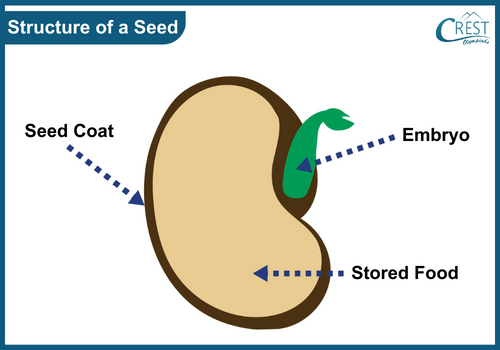
Embryo
Early developmental stage of a plant; from fertilization to seed maturity.
Three ways plants can be pollinated
Sexual reproduction (angiosperms and gymnosperms - pollination and seeds), Vegetative (asexual) reproduction (tubers: potatoes), Spore formation (bryophytes and seedless vascular - release haploid spores).
Ways seeds be be dispersed
Wind, water, animals (ingestion or attachment), gravity, ballistic (explosion).
Jean-Baptiste de Lamark
Suggested species evolve through inheritance of acquired characteristics. He proposed that organisms change in response to environmental needs, and traits developed during their lifetime are passed to offspring.
Charles Lyell
Argued that Earth was shaped by slow natural processes, Earth is millions of years old.
Thomas Malthus
Claimed that human population is increasing faster than food supplies.
Alfred Russell Wallace
Independently conceived the theory of natural selection.
Decent with modification
Species evolve over generations by passing traits to offspring; gradual evolution.
Natural selection
Favourable alleles increase in frequency, improving population survival.
Genetic drift
Random fluctuations in allele frequencies, especially in small populations.
Gene flow
Introduction of different alleles between populations, altering frequencies.
Mutation
Introduces new alleles into a population.
Bottleneck effect
Drastic shrinking of population, genes of majority make up most of new population.
Founder effect
Traits of small migrated group being passed down.
Intrasexual
Male competition
Intersexual
Female choice
Adaptive evolution
Phenotypic variation for individuals better suited to their environment. Disruptive, stabilizing, directional.
Directional adaptive evolution
Favours one extreme phenotype. Single allele is favoured due to environmental pressure
Disruptive adaptive evolution
Alleles for both extreme phenotypes are favoured. Can potentially form two groups, causing sympatric selection.
Stabilizing selection
Favours average phenotypes. Increased fitness for the average individual.
Non-random mating
If the animal chooses to mate with like-individuals.
Homozygous alleles
Pair of two of the same alleles for the same gene.
Heterozygous alleles
Pair of two different alleles for the same gene.
Ovule
Female reproductive organ, turns into the seed.
Central cell
Develops into endosperm, when 1n joins with central cell to form 3n.
Seed germination initiation
Imbibition (water uptake) causes seed expansion and ruptures the seed coat.
Gibberellins (GA)
Hormone responsible for elongation and germination.
Abscisic acid (ABA)
Promotes seed dormancy until conditions are optimal.
Charophytes
Algae: closest living relative to algal-like ancestors. unicellular,
How long ago did plants colonize land?
475 million years ago.
Bryophytes
Non-vascular land plants (includes mosses, liverworts, and hornworts). Lacks true roots, stems, and leaves. Dominant gametophyte (haploid), requires water for sperm to swim to eggs.
Seedless vascular plants
Vascular land plants (includes ferns, horsetails [monilophytes], club mosses [lycophytes]). Possess vascular tissue. Dominant sporophyte (diploid).
Gymnosperms
Produces ‘naked’ seeds typically in cones and not fruits. Include conifers, cycads, and ginkgo.
Angiosperm
Flowering/fruit-bearing plants that require pollination to reproduce.
How do Fungi get food?
Heterotrophs, they may secrete digestive enzymes. Decomposers, parasites, and/or symbionts.
What is the dominant life stage for fungi?
Haploid (1n). Dikaryotic (n+n) mycelium.
Lichens
Symbiotic relation between photosynthetic partner and fungus.
Monophyletic
Legitimate clade.
Common ancestor and all descendants.
Paraphyletic
Illegitimate clade.
Common ancestor but not all descendants.
Polyphyletic
Illegitimate clade.
Excludes ancestor with a combination of taxa.
List the classification order of organisms.
Domain, kingdom, phylum, class, order, family, genus, species.
Sister taxa
Closest relative in given tree.
Homologies
Similar physical structures inherited from common ancestor.
Convergent evolution
Similar features, but independent evolution due to ecological pressures.
Does evolution occur in an organism’s lifetime?
No. Evolution occurs over generations.
What is most important to the concept of “Species”?
Reproductive isolation.
Speciation
Ancestral species becomes subdivided by reproductive isolation.
Prezygotic reproductive barriers
Habitat isolation, temporal isolation, behavioural isolation, mechanical isolation, gametic isolation.
Postzygotic reproductive barriers
Reduces hybrid viability. reduced hybrid fertility, hybrid breakdown.
Habitat isolation
Different species inhabit different habitats in same area (eg. terrestrial vs. aquatic).
Prezygotic barrier.
Temporal isolation
Different species inhabit same area but breed at different times (eg. day vs. night).
Prezygotic barrier.
Behavioural isolation
Different species inhabit same area but have unique courtship rituals (eg. different dance styles in birds).
Prezygotic barrier.
Mechanical isolation
Morphological differences prevent successful mating (eg. sperm never reaches egg).
Prezygotic barrier.
Gametic isolation
Sperm of one species unable to fertilize eggs of another.
Prezygotic barrier.
Reduced Hybrid Viability
Hybrid offspring may be frail and underdeveloped.
Postzygotic barrier.
Reduced Hybrid Fertility
Hybrids may be sterile.
Postzygotic barrier.
Hybrid Breakdown
The first generation may reproduce, but the next generation is frail or sterile.
Postzygotic barrier.
Allopatric Speciation
Population is divided into multiple geographically isolated subpopulations and undergo different evolutionary change.
Sympatric Speciation
Reduced geneflow: habitat differentiation, sexual selection, polyploidy.
Polyploidy
More copies of chromosomes than parents. Errors during cell division.
Cannot reproduce with parents’ lineage.
Hybrid Zones
Zones where allopatric populations come into contact again and produce hybrid offspring.
Reinforcement outcome of Hybrid Zone
Reinforcement of reproductive barriers. Hybrids become more and more rare.
Fusion outcome of Hybrid Zone
Reproductive barriers are weak and populations fuse back into a single species.
Stability outcome of Hybrid Zone
Hybrid zone remains stable.
Double fertilization
2 sperm cells.
One fertilizes egg to make zygote.
One combines with polar nuclei to form 3n which turns into endosperm.
Artificial Selection
Humans direct what traits are favourable to create specific variations of organisms.

