Rec and Care: Clinical Lab Exam 2: Shoulder
0.0(0)
Studied by 0 people Call Kai
 Learn
Learn Practice Test
 Spaced Repetition
 Match
Match Flashcards
 Knowt Play
Card Sorting
1/65

Earn XP
Description and Tags
Last updated 4:18 AM on 11/30/22
Name | Mastery | Learn | Test | Matching | Spaced | Call with Kai | Chat |
|---|
No analytics yet
Send a link to your students to track their progress
66 Terms
1
New cards
Bony Anatomy: Clavicle: Superior and Anterior border
Along the neckline, down the shaft of the collarbone
Superior is on top of the bone
Anterior is along the front of the bone
Superior is on top of the bone
Anterior is along the front of the bone
2
New cards
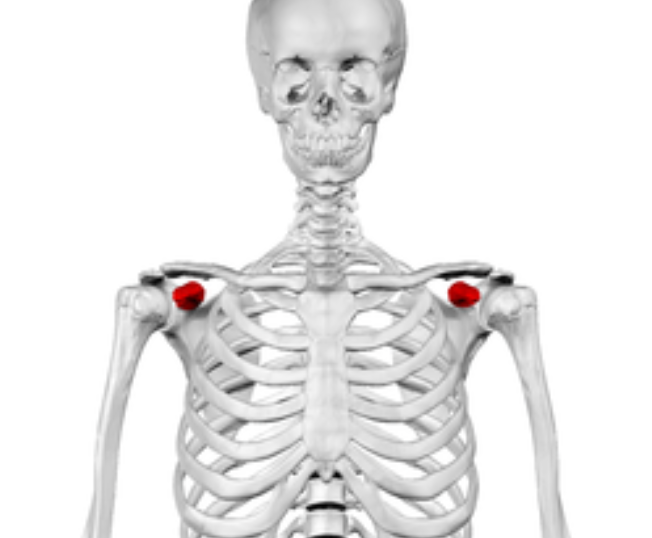
Bony Anatomy: Scapula: coracoid process
distal 1/3 of curved clavicle, go straight down from the S curve in the collarbone, the bone sticking out here is
3
New cards
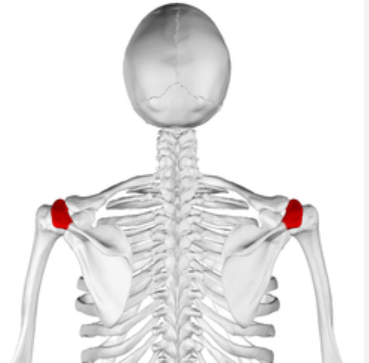
Bony Anatomy: Scapula: Acromion Process
At the end of the clavicle, the ridge of bone off the AC joint, just off the shoulder
4
New cards
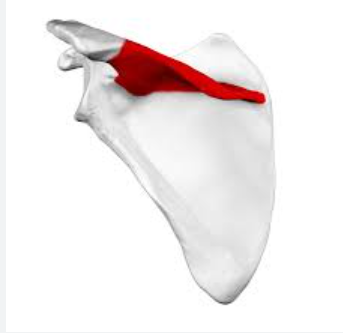
Bony Anatomy: Scapula: Spine
if you rub your thumb up and down along the scapula it is the bony projection, horizontal on back
5
New cards
Bony Anatomy: Scapula: Vertebral border
closest edge of shoulder blade to the spine, the ends make up the superior and inferior angles, runs parallel to spine
- also the medial border
- also the medial border
6
New cards
Bony Anatomy: Scapula: Axillary border
Posteriorly in the armpit, if individual puts hand on their head you can feel it pop out
- also known as the lateral border
- also known as the lateral border
7
New cards
Bony Anatomy: Scapula: Superior angle
get individual to shrug their shoulders, it will be close to the spine, at the top of the medial border Bony Anatomy: Scapula:
8
New cards
Bony Anatomy: Scapula: Inferior angle
at the bottom of the shoulder blade, can find easily if individual places their hand behind their back - it will pop out
9
New cards
Bony Anatomy: Humerus: head
on the deltoid, go into the soft divot on the back of the shoulder and anterior into the squishy spot there with thumb and forefinger
10
New cards
Bony Anatomy: Humerus : greater tuberosity
find the acromion process, go straight down to the lesser, if you go more to the side posteriorly , this will be the greater tub, can feel it roll if you rotate your arm
11
New cards
Bony Anatomy: Humerus: lesser tuberosity
find the acromion process and go straight down, the bump will roll away with adduction, more inferior and anterior
12
New cards
Articular Anatomy: Sternoclavicular joint
on the chest, very medial, at the proximal end of the clavicle, flat little projection
13
New cards
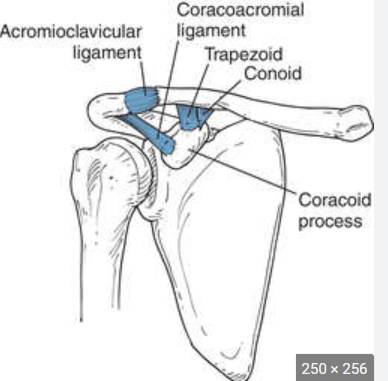
Articular anatomy: Acromioclavicular joint
- ligament
- ligament
formed by the acromion process and the clavicle
- the ligament attaches across this space horizontally and is a common site in many shoulder injuries
- the ligament attaches across this space horizontally and is a common site in many shoulder injuries
14
New cards
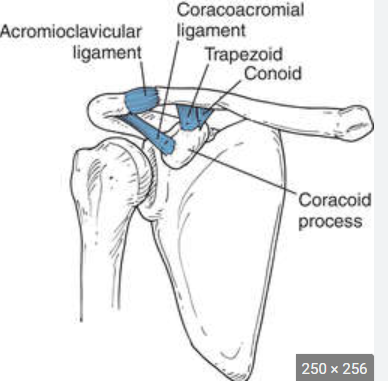
articular anatomy: coracoclavicular joint
found between the coracoid process and the conoid tubercle of the clavicle
- more medial than the acromioclavicular, and is on the anterior portion of the shoulder running vertically
- more medial than the acromioclavicular, and is on the anterior portion of the shoulder running vertically
15
New cards
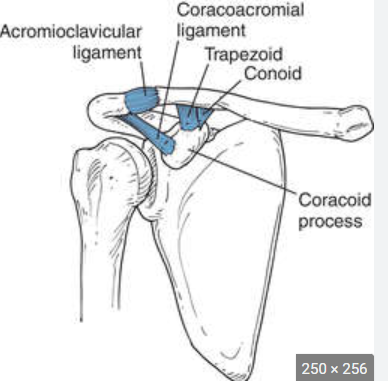
articular anatomy: coracoclavicular ligaments
- trapezoid
-conoid
- trapezoid
-conoid
two ligaments make up the joint
trapezoid; attaches the coracoid process and the trapezoid line of the clavicle, inferiorly and laterally
conoid; attaches to the conoid tubercle, medially inferiorly and posteriorly
trapezoid; attaches the coracoid process and the trapezoid line of the clavicle, inferiorly and laterally
conoid; attaches to the conoid tubercle, medially inferiorly and posteriorly
16
New cards
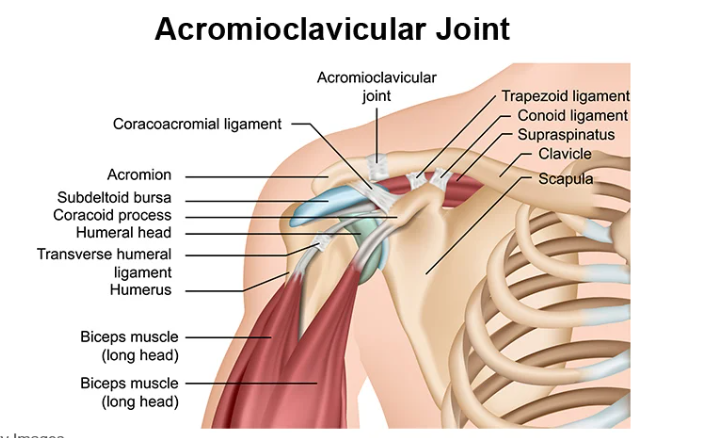
articular anatomy: coracoacromial ligament
ligament from the coracoid process to the acromion process
17
New cards
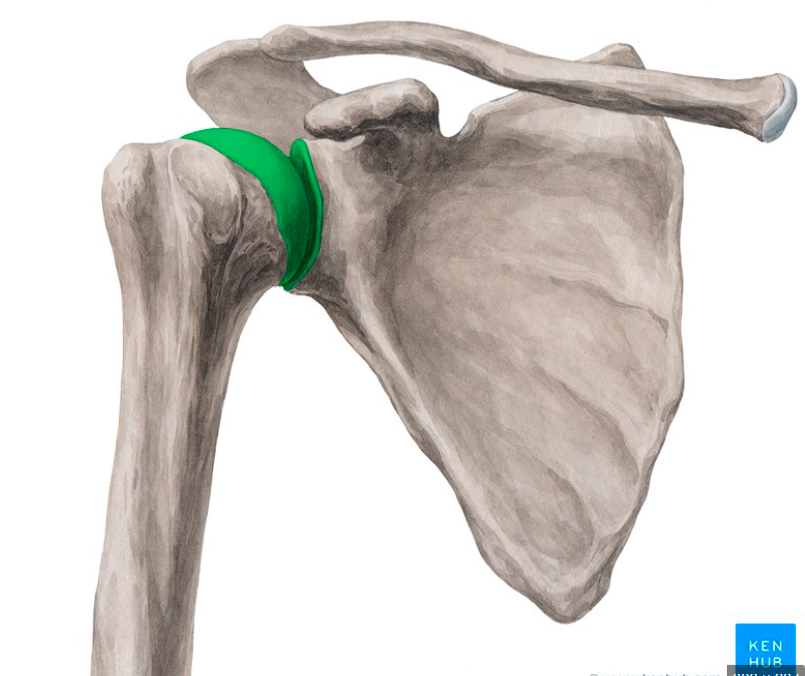
articular anatomy: glenohumeral joint
joint at the distal shoulder, ball and socket between the head of the humerus and the glenoid cavity
18
New cards
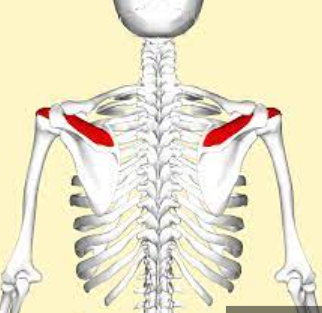
Muscular anatomy: supraspinatus
along the spine of the scapula
19
New cards
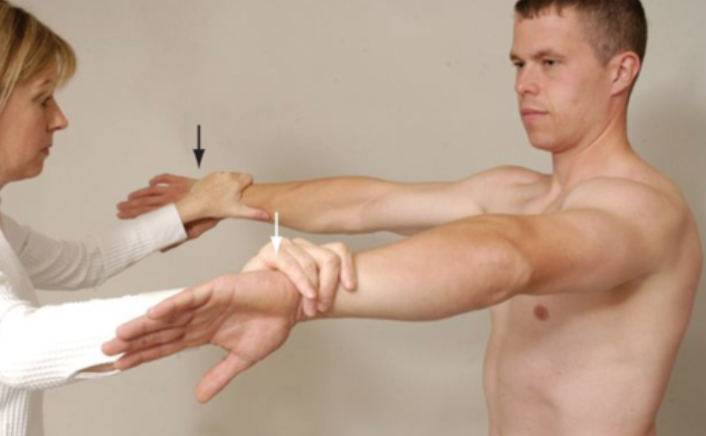
how to test the supraspinatus
test at 30 degrees, thumbs down, pushing down at the wrists
- resisted abduction
- resisted abduction
20
New cards
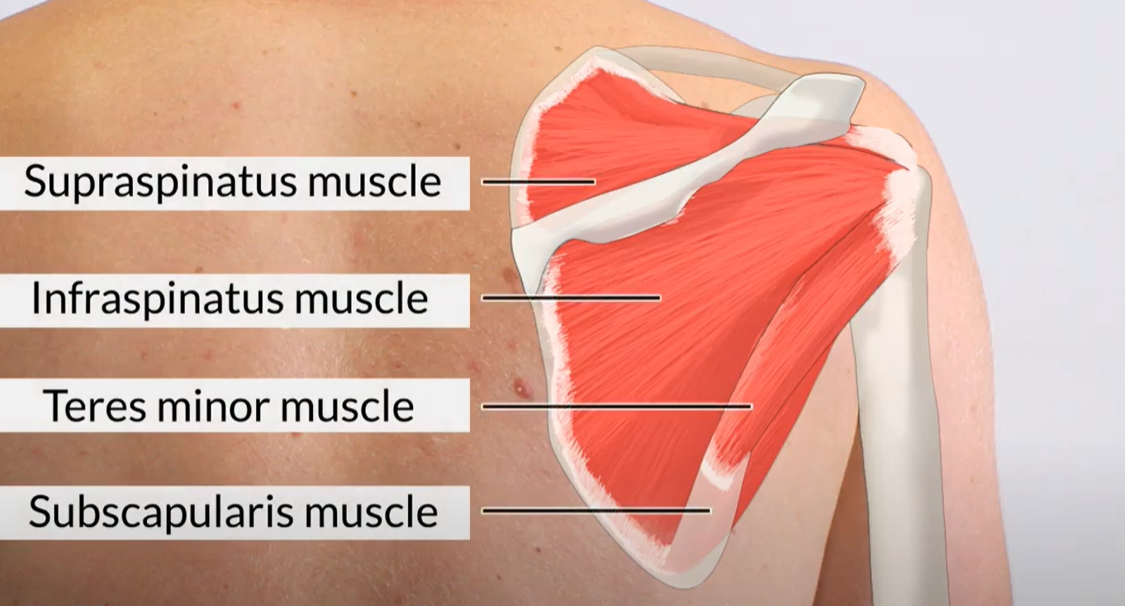
muscular anatomy: infraspinatus
underneath the spine of the scapula
21
New cards
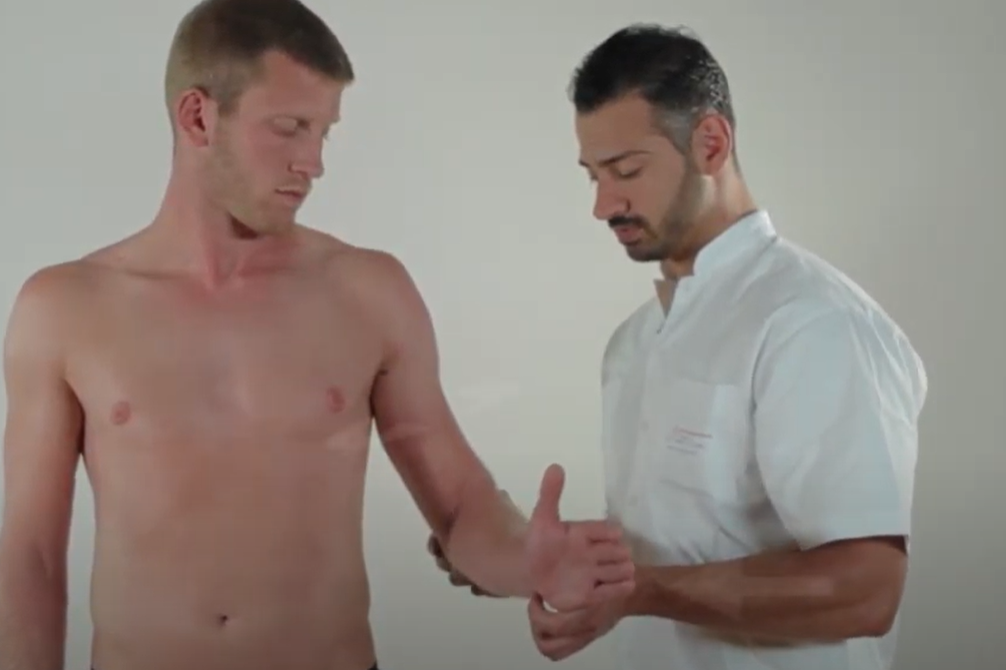
how to test the infraspinatus and teres minor
arms bent at 90 degrees, pushing internally, holding at the elbow and wrist, resisted extension
22
New cards
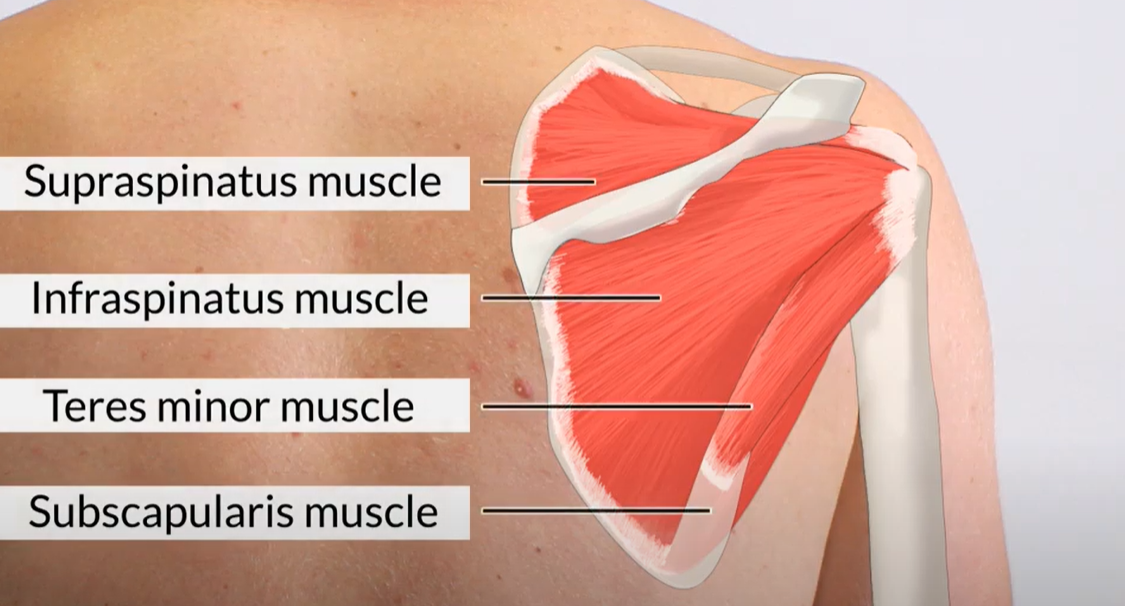
muscular anatomy: teres minor
narrow, intrinsic muscle extends from the lateral border of the scapula to the greater tuberosity of the humerus
23
New cards
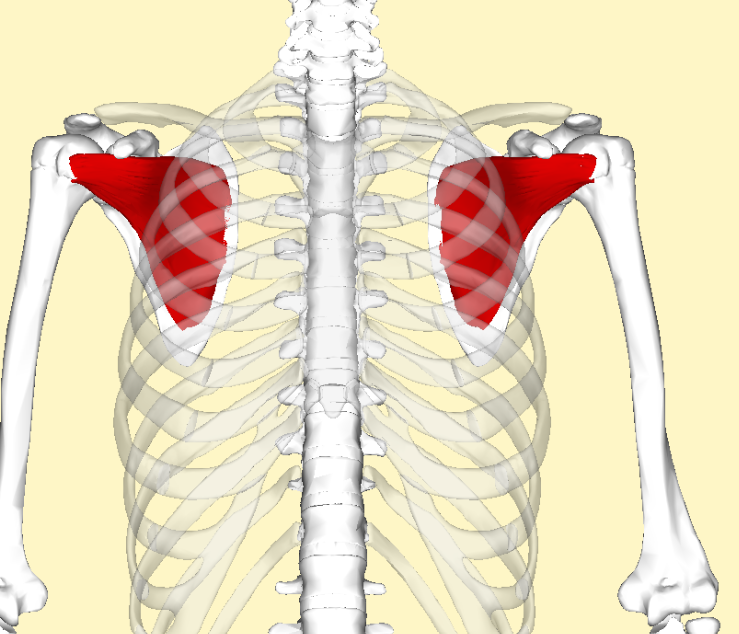
muscular anatomy: subscapularis
largest, and strongest muscle in the rotator cuff
lies on the anterior surface of the scapula
lies on the anterior surface of the scapula
24
New cards
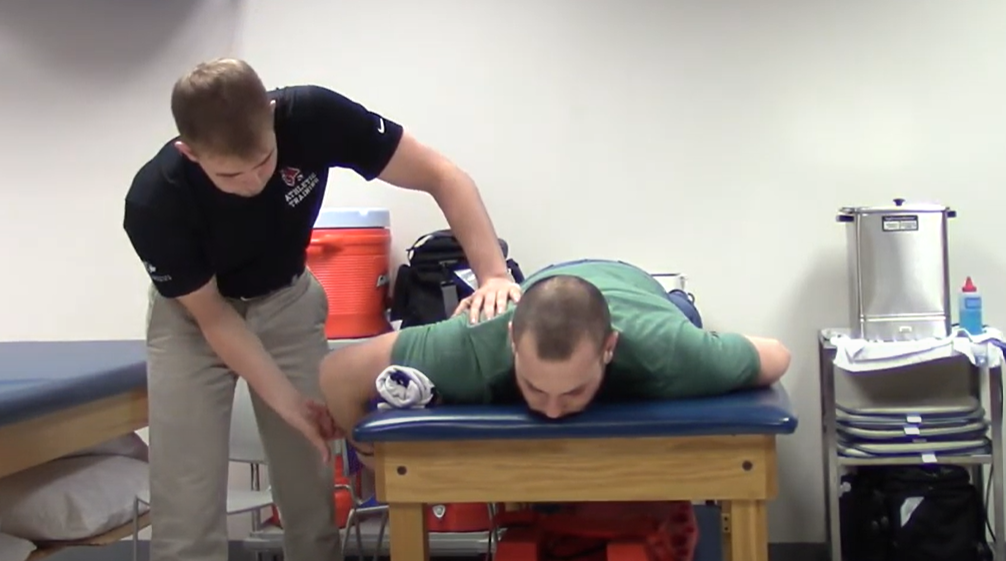
how to test the subscapularis
lay face down, with arm off the edge of the table and block at the elbow, push forward at the wrist and hand , individual tries to lift arm backwards
isolated internal rotation
- fall off-axial border into the armpit to feel contraction with fingers
- can also do the lift off test
isolated internal rotation
- fall off-axial border into the armpit to feel contraction with fingers
- can also do the lift off test
25
New cards
which four muscles make up the rotator cuff
supraspinatus
infraspinatus
teres minor
subscapularis
infraspinatus
teres minor
subscapularis
26
New cards
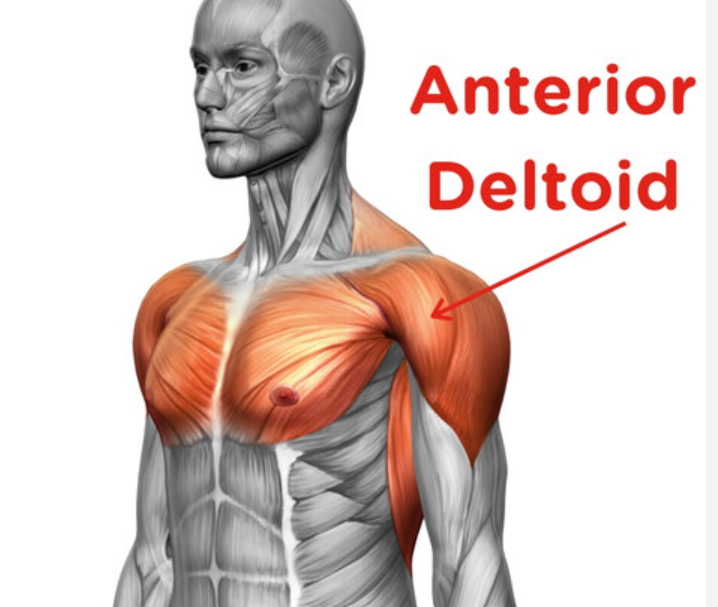
Muscular anatomy: deltoid - anterior
help move arm forward, connects to the clavicle
27
New cards
how to test the anterior deltoid
make fist, put arms straight out in front of you and then push down at wrists
28
New cards
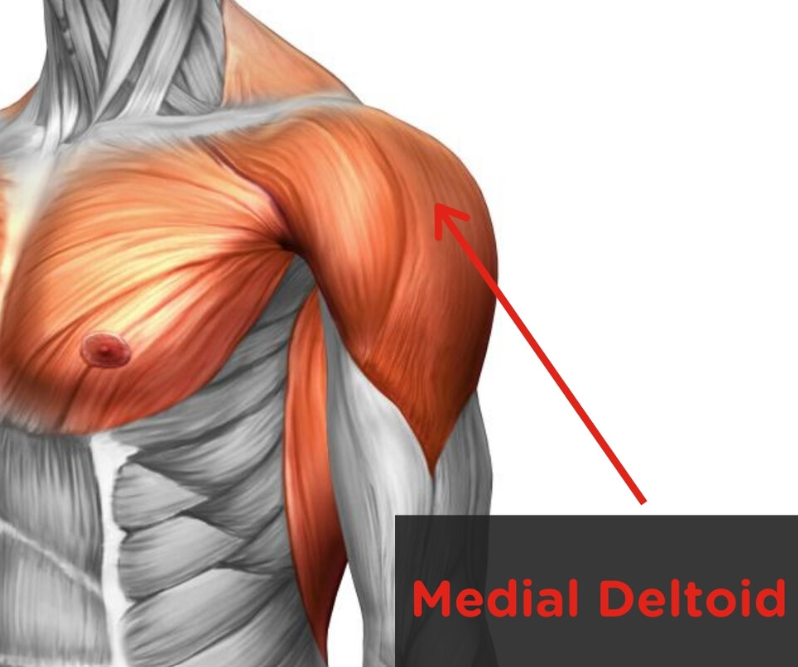
Muscular anatomy: deltoid - middle
largest and strongest part of the deltoid
29
New cards
how to test the middle deltoid
bend elbows and push down at the wrists
30
New cards
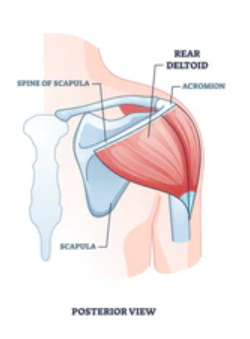
muscular anatomy: deltoid - posterior
deltoid on the posterior scapula, attaches on the spine
31
New cards
how to test the posterior deltoid
extension 45 degrees, hand on the shoulder, and pull at wrist
32
New cards
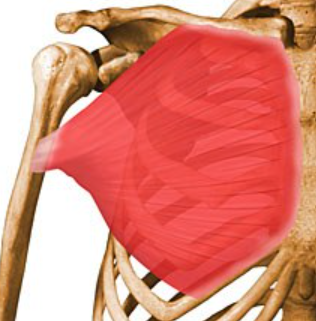
muscular anatomy: pectoralis major
the superior most and largest muscle of the anterior chest wall. It is a thick, fan-shaped muscle that lies underneath the breast tissue and forms the anterior wall of the axilla
33
New cards
how to test the pectoralis major - anterior
anteriorly the thumb goes into the armpit and pinches, intertwine your arm with theirs, resist elbow flexion, internal rotation, adduction, and pull arm up sideways
ie/ benchpress position
ie/ benchpress position
34
New cards
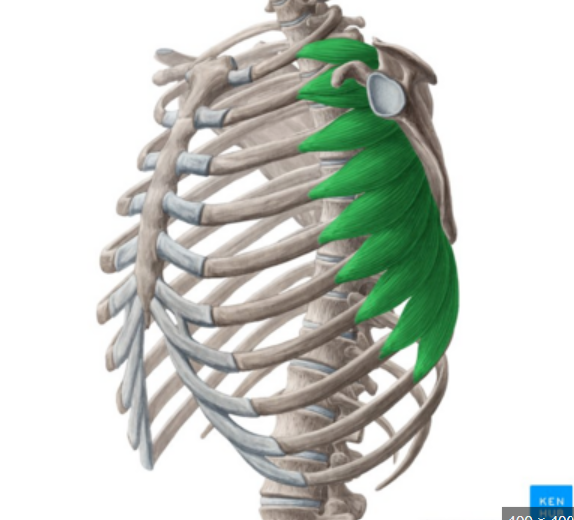
muscular anatomy: serratus anterior
is a fan-shaped muscle that originates on the superolateral surfaces of the first to eighth ribs or the first to ninth ribs at the lateral wall of the thorax and inserts along the superior angle, medial border, and inferior angle of the scapula.
35
New cards
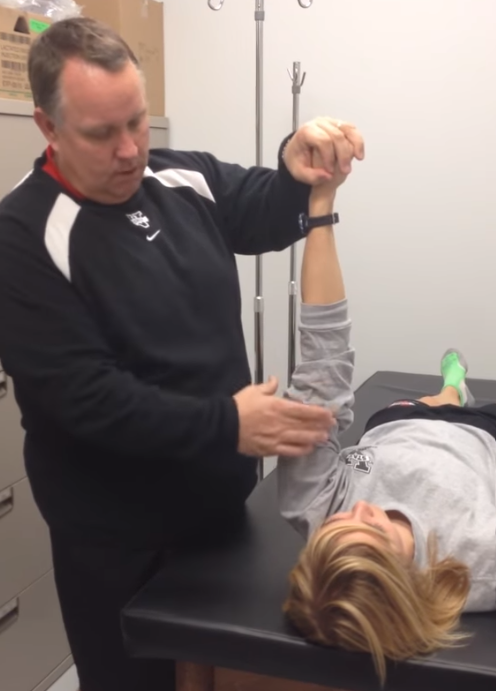
how to test the serratus anterior
straight arm with a fist, pushing straight back into a protracted position, push down at fist and around elbow
36
New cards
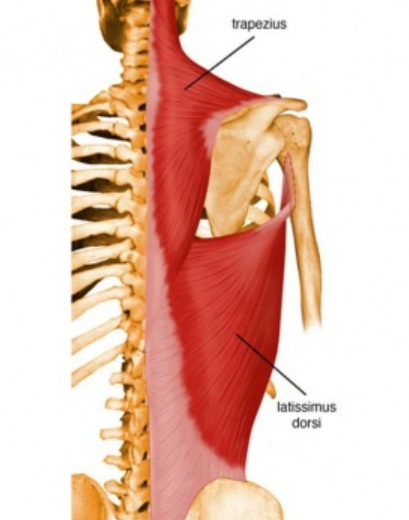
muscular anatomy: latissimus dorsi
The latissimus dorsi muscle is a broad, flat muscle that occupies the majority of the lower posterior thorax. The muscle's primary function is in the upper extremity but is also considered to be a respiratory accessory muscle.
37
New cards
how to test the latissimus dorsi
in a seated position, interlock fingers behind head, pull arms down
38
New cards
muscular anatomy: biceps
The biceps brachii , commonly know as the biceps, is a large, thick muscle on the ventral portion of the upper arm. The muscle is composed of a short head and a long head. The long head is located on the lateral side of the biceps brachii while the short head is located on the medial side.
39
New cards
how to test the biceps : neutral
test bilaterally
flexed elbow, hammer fist
flexed elbow, hammer fist
40
New cards
how to test the biceps : supinated
41
New cards
how to test the biceps : pronated
42
New cards
muscular anatomy: triceps
The primary function of the triceps is the extension of the elbow joint. It is composed of three heads (tri = three, cep = head): a long head, a lateral head, and a medial head.
43
New cards
how to test the triceps
hold arm flexed with fist
pull up on the wrist , and block at shoulder
- resisted elbow extension
pull up on the wrist , and block at shoulder
- resisted elbow extension
44
New cards
muscular anatomy: trapezius
either of a pair of large triangular muscles extending over the back of the neck and shoulders and moving the head and shoulder blade
45
New cards
how to test the trapezius : upper fibers of trapezius
shrug shoulders up and push down
46
New cards
how to test the trapezius : middle fibers of trapezius
pull shoulderblades back, or on stomach arms to the ride, lift up and push down
47
New cards
how to test the trapezius : lower fibers of trapezius
on stomach or standing; hands behind back, depress and adduction to the opposite side, opposite pocket
48
New cards
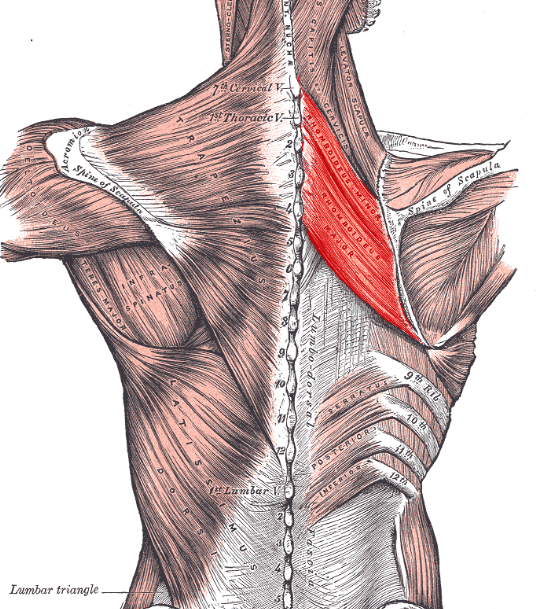
muscular anatomy: rhomboids
The rhomboids are a collective group of muscles formed by the rhomboid major and minor. The rhomboids are important in upper limb movement and stability of both the shoulder girdle and scapula.
49
New cards
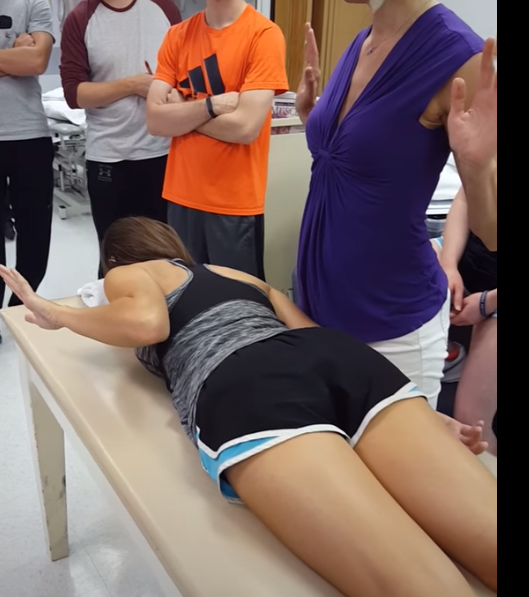
how to test the rhomboids
on stomach, arms in skydive position, thumb down, pushing along the vertebral border, resist at elbow
- protract and retract
- protract and retract
50
New cards
Special tests: Apley's scratch test 1.
ROM
Hand behind head, landmark this spot on the spine, get the patient to do the other side - ensure the same bilaterally
Hand behind head, landmark this spot on the spine, get the patient to do the other side - ensure the same bilaterally
51
New cards
Special tests: Apley's scratch test 2.
Hand behind the back, landmark this spot
52
New cards
Special tests: Apley's scratch test 3.
across the shoulder to the opposite side, both arms, if the space is more than a fist there may be a functional flexibility problem, behind head and above back
53
New cards
Special tests: Load and Shift
labral
Place the fingers on the shoulder with your top hand, on the clavicle and spine of the scapula
With the other hand, place the front finger on the lesser tuberosity of the humerus and the back finger on the divet on the back, on the head of the humerus
Push hand down on the shoulder, and then shift in and forward on the glenohumeral joint
- shoulder must be in the fossa for this test
Place the fingers on the shoulder with your top hand, on the clavicle and spine of the scapula
With the other hand, place the front finger on the lesser tuberosity of the humerus and the back finger on the divet on the back, on the head of the humerus
Push hand down on the shoulder, and then shift in and forward on the glenohumeral joint
- shoulder must be in the fossa for this test
54
New cards
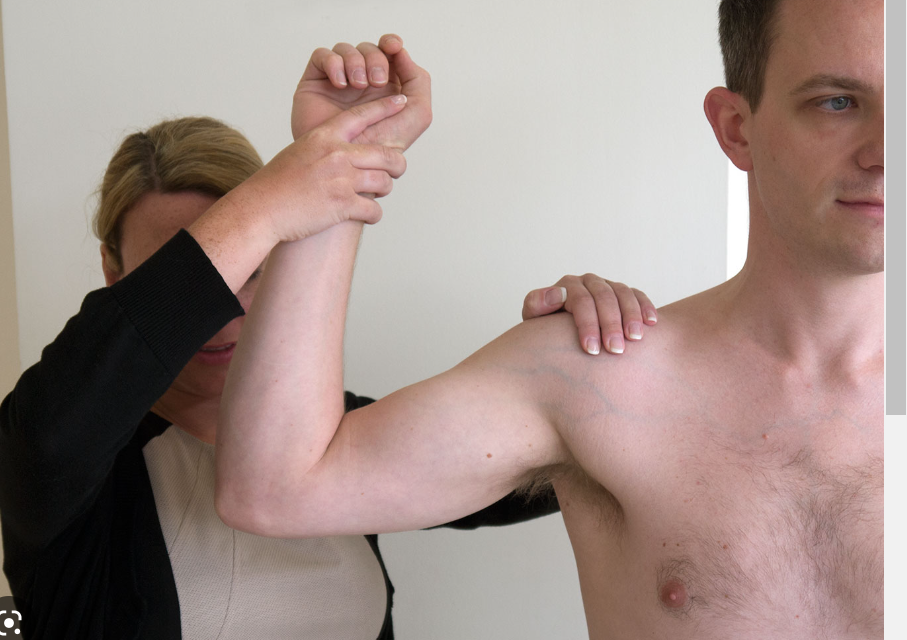
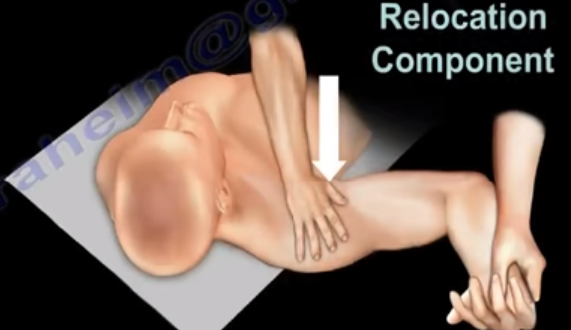
Special tests: Apprehension and relocation
anterior instability
apprehension: Arm abducted to 90 degrees, shoulder slowly rotated externally from pulling at the hand, and blocking at the shoulder
relocation: patient lying supine, the shoulder at 90 degrees and the elbow
apprehension: Arm abducted to 90 degrees, shoulder slowly rotated externally from pulling at the hand, and blocking at the shoulder
relocation: patient lying supine, the shoulder at 90 degrees and the elbow
55
New cards
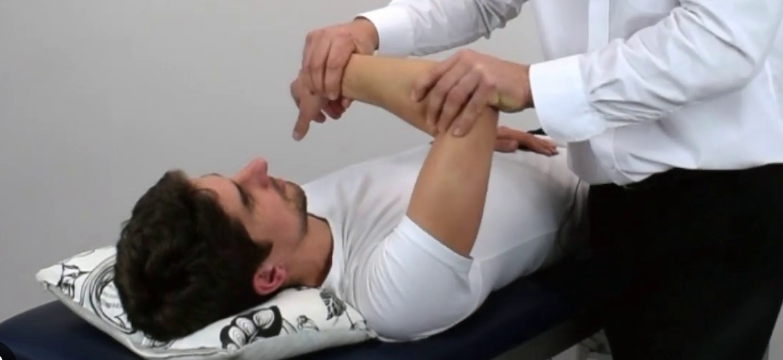
Special tests: posterior apprehension
push pull test; posterior instability
Elbow abducted, hand by face, compression shoulder and elbow
Elbow abducted, hand by face, compression shoulder and elbow
56
New cards
Special tests: sulcus test
inferior instability , AC joint superior glenohumeral ligament and coracohumeral ligament
Landmark acromion process grab elbow with bottom hand, top hand finger or thumb in divet, pull down at the elbow
Landmark acromion process grab elbow with bottom hand, top hand finger or thumb in divet, pull down at the elbow
57
New cards
Special tests: Feagan test
inferior instability
Arm straight out to the side , resting on your shoulder, hands intertwined with your own fingers at the shoulder, pull towards the ground
- positive test; laxity or apprehension
Arm straight out to the side , resting on your shoulder, hands intertwined with your own fingers at the shoulder, pull towards the ground
- positive test; laxity or apprehension
58
New cards
Special tests: drop arm test
RC tear
Both arms out to the side and let go, arm will drop if injured OR arms all the way to the top, and then get them to slowly lower
Both arms out to the side and let go, arm will drop if injured OR arms all the way to the top, and then get them to slowly lower
59
New cards
Special tests: supraspinatus test
supraspinatus tear
arms out at 30 degrees horizontal abduction , hands internally rotated with thumbs down, , push down at wrists : empty can test
full can: thumbs up, externally rotated and push down at the wrists
arms out at 30 degrees horizontal abduction , hands internally rotated with thumbs down, , push down at wrists : empty can test
full can: thumbs up, externally rotated and push down at the wrists
60
New cards
Special tests: Speed's biceps test
bicep tendon
palms up at side, supination, , lift to 30 degrees, extend , place finger on biceps tendon and apply resistance to 60 degrees of extension
positive: pain in bicipital groove
palms up at side, supination, , lift to 30 degrees, extend , place finger on biceps tendon and apply resistance to 60 degrees of extension
positive: pain in bicipital groove
61
New cards
Special tests: Lift off sign
Subscapularis injury
hand behind back, lift off and resist
However, a tight RC could cause a hand to not lift off as much
hand behind back, lift off and resist
However, a tight RC could cause a hand to not lift off as much
62
New cards
Special tests: clunk test
labral
Laying down, straight arm raise, hand pulls at wrist , other hand underneath the scapula, will feel a clunk, motion is a rotation and abduction
Laying down, straight arm raise, hand pulls at wrist , other hand underneath the scapula, will feel a clunk, motion is a rotation and abduction
63
New cards
Special tests: O'Brien's test
SLAP (speeds) - labral tears
1. Patient seated, glenohumeral joint at 90 degrees, horizontally adducted to 10 degrees, humerus is internally rotated , with palm up, pressure is resisted an inward push
2. Repeat with arm in externally rotated and supinated position , resist downward push
1. Patient seated, glenohumeral joint at 90 degrees, horizontally adducted to 10 degrees, humerus is internally rotated , with palm up, pressure is resisted an inward push
2. Repeat with arm in externally rotated and supinated position , resist downward push
64
New cards
Special tests: Impingement Test
painful arc
- Arms up to 90 degrees. straight arm, flip at halfway, and bring arms all the way to the top
- Arms up to 90 degrees. straight arm, flip at halfway, and bring arms all the way to the top
65
New cards
Special tests: Hawkins-Kennedy
impingement
Sitting,shoulder at 90 degrees forward flexion, internally rotate, push up at elbow, and bring wrist down counter clockwise
Sitting,shoulder at 90 degrees forward flexion, internally rotate, push up at elbow, and bring wrist down counter clockwise
66
New cards
Special tests: Scarf Test
AC joint
cross arm over opposite shoulder, pull shoulder, and push at elbow
cross arm over opposite shoulder, pull shoulder, and push at elbow