Pharmacology Exam 1
 Call Kai
 Learn
Learn Practice Test
 Spaced Repetition
 Match
Match Flashcards
 Knowt Play
1/240

There's no tags or description
Looks like no tags are added yet.
Name | Mastery | Learn | Test | Matching | Spaced | Call with Kai |
|---|
No analytics yet
Send a link to your students to track their progress
241 Terms
Pharmacology is the study of how medications act in the body. When we apply pharmacology to specific treatments, this is called what?
clinical pharmacology
What are the four “rules” of pharmacology?
All drugs are poisons
No drug is a silver bullet
All doses are guesses
Complacency kills
____ - these drugs are safe and effective for use and have been labeled with directions for the layman
Over the Counter (OTC)
Who determines the market status of drugs?
FDA
____ - these drugs contain ingredients requiring greater control of dispensing because of toxic effects, potential to be abused or diverted, and potential to do harm to the patient or the person handling the drug.
Veterinary Prescription Drugs (aka- Legend Drugs)
____ - when we use a drug in an animal in a manner that is not in accordance with the approved labeling.
Extralabel Drugs
____ drugs cannot be dispensed to a client or animal owner without a valid prescription written for an animal.
Veterinary Prescription Drugs (legend drugs)
In order to dispense prescription drugs, what must be established first?
a veterinarian-client-patieent-relationship
T or F: It is within the veterinarian’s rights to prescribe medication for a patient he or she has not seen.
False
Will you find an Rx Only label on veterinary medicine?
No, only found on human-approved prescription products
____ - this act gave statutory recognition to the veterinary prescription legend: “Caution: Federal law restricts this drug to use by or on the order of a licensed veterinarian.”
Generic Animal Drug and Patent Restoration Act of 1988
Must a veterinarian choose a veterinary-approved product over a human-approved product when prescribing for non-food animal?
No
Must a veterinarian choose a veterinary-approved product over a human-approved product when prescribing for a food animal?
Yes
T or F: If the intended use is in a non-food animal, an approved human drug can be used even if an approved animal drug is available.
True
What does AMDUCA stand for?
Animal Medicinal Drug Use Clarification Act of 1994
____ products - these are products that are only sold through licensed veterinarians. However, they have an OTC status and no legal basis.
Ethical products
____ products are known as veterinary “cosmetics” and includes shampoos, cream rinses, skin conditioners, etc.
Grooming aids
_____ - not classified as a drug, not regulated by the FDA, and cannot make therapeutic claims. (ex: Denosyl SD4)
nutraceuticals
Are veterinary biologics (vaccines) regulated by the United States Department of Agriculture or the FDA?
United States Department of Agriculture
Pesticides are regulated by whom?
Environmental Protection Agency (EPA)
Who is responsible for enforcing the Controlled Substances Act?
DEA
What schedule of drugs has the most potential for abuse and dependence?
Schedule I
What schedule of drugs has a high potential for abuse and dependence?
Schedule II
What schedule of drugs has a moderate potential for abuse and dependence?
Schedule III
What schedule of drugs has a low potential for abuse and dependence?
Schedule IV
What schedule of drugs has the lowest potential for abuse and dependence?
Schedule V
T or F: In order to purchase a controlled substance veterinarians must be licensed in the states where they practice but do not need a valid DEA registration.
False
Schedule II drugs must be ordered with which form?
Form DEA-222
Schedule III - V drugs have a sale limit of ___%
5%
All records of CS purchased, used, distributed, dispensed, and disposed of must be maintained for at least ___ years and made available for inspection by DEA.
2 years
What form must the veterinarian fill out if they need to dispose of a CS?
DEA form-41
____ - meeting individual patient needs within the context of a valid veterinarian-client-patient-relationship that cannot be met through approved products in their commerically available form.
Compounding
T or F: Compounding medicine is available for resale.
False
Who can legally compound for veterinary patients?
veterinarians
pharmacists
What is the abbreviation for “refill as needed”
prn
T or F: Schedule II drugs can be refilled?
False
How many times can Schedule III - IV drugs be refilled, and how long are those refills valid for?
Can be refilled a maximum of five times and are valid for six months
What are the components of a prescription?
prescriber information (name, address, phone # of clinic)
identification of animal
date issued
name of drug and strength
adequate instructions for administration
withdrawal information if food animal
expiration date
____ - any effect of the drug other than the intended effect
side effect
____ - describes a milk adverse reaction that usually does not require much medical intervention
precaution
____ - describes more serious or frequent side effects that could do significant harm to the patient
warnings
____ - strongest warning FDA can require, means adverse effects have a significant risk for severe of life-threatening effects
black box warning
____ - circumstances or conditions when the drug shouldn’t be used
contraindications
____ - a substance that when taken into the body alters its physiology. A substance used in the treatment, diagnosis, prevention, or mitifation of disease.
drug
_____ - science dealing with the properties of drugs and their effects on living systems
pharmacology
____ - separate and complemetary health-care profession concerned with collection, preparation, standarization, and dispensing of drugs.
pharmacy
____ - branch of pharmacology that deals directly with the effectiveness and safety of drugs in the clinical setting
clinical pharmcology
____ - the amount of drug given at one time
dose
____ - the amount of drug given, the route of administration, the interval between doeses, and the duration of therapy
dosage
_____ - relative measurement of biological activity
potency
_____ - effectiveness, the ability of a drug to control or cure an illness
efficacy
____ - highest drug concentration in a dosing interval
peak concentration
____ - lowest drug concentration in a dosing interval
trough concentration
_____ - lowest concentration that produces the desired effect
minimum effective concentration (MEC)
____ - lethal dose in 50% of animals
LD50
____ - dose that was effective in 50% of animals
ED50
____ - largest dose that does not cause toxicity
maximum nontoxic does (MNTD)
____ - measure of the relative desirability of a drug for attaining a particular medical end versus its risk of toxicity
theraputic index
____ - the drug concentrations associated with efficacy and not toxicity
therapeutic range
____ - describes the chemical composition of a drug; little practical use in the clinical setting (ex: D (-)-a-amino-p-hydroxybenzyl-penicillin)
chemical name
_____ - a more concise name given to the drug. Often referred to as the “generic” name. (ex: amoxicillin)
nonproprietary name
____ - unique name that the manufacturer gives to its specific brand of a drug. Referred to as the “trade name” (ex: Amoxil)
Proprietary name
Do you capitalize the nonproprietary name?
no
Do you capitalize the proprietary name?
yes
Is mitotane a proprietary or nonproprietary name?
nonproprietary
Is Lysodren a proprietary or nonproprietary name?
proprietary
____ - an adverse event that can be anticipated based on the known mechanism of the drug. Usually dose-dependent
Type A
____ - an adverse event that is idiosyncratic, unpredictable, and often non-dose-dependent
Type B
____ - describes the relationship between concentration and effect
pharmacodynamics
____ - a substance that induces a physiologic action. Enhances or mimics the effect. l
Agonist
____ - a substance that blocks the action of an agonist. Drug that blocks the effect.
Antagonist
_____ - Does not work at the same receptor, but its action serves to oppose that of another agonist.
Physiological antagonist
Agonist = ____
Antagonist = ____
Agonist = presser
Antagonist = blocker
____ - a compound naturally produced by the body which binds to and activates that receptor
endogenous agonist
____ - a drug that comes from the outside of the body that resembles the endogenous agonist and affects the receptor the same way
exogenous agonist
____ - drugs that bind to the receptor site the same way as the endogenous agonist, but fails to activate it preventing the action of endogenous agonists
antagonist
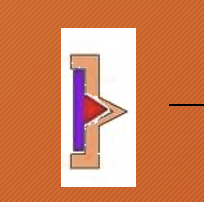
Endogenous agonist
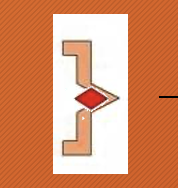
Exogenous agonist

Antagonist
____ - binds to the same site as an agonist, but it doesn’t activate it, therefore blocking the agonist action. Used to prevent the activity of drugs and to reverse the effects of drugs.
competitive antagoists
T or F: A competitive antagonist can be overcome by adding more agonist
True
____ - found on nerves that are associated with pain pathways through the brain and spinal cord, because of this, they are responsible for strong analgesia
Mu receptor
____ - milder degree of analgesia than the mu receptor, can cause sedation without as much respiratory depression as mu.
kappa receptor
____ - binds to one or more types of receptors and causes certain effects (typically more pronounced than that of a partial)
pure agonist
What is an example of a pure agonist?
morphine
____ - binds to more than one type of receptor, and causes an effect at one receptor and no effect or less pronounced effect at another
partial agonist
What is an example of a partial agonist?
Buprenorphine
____ - a mathematical description of how the drug behaves in the body. Describes the relationship of dose to drug concentration
pharmacokinetics
____ - the disposition of a drug as described by its absorption, distribution, metabolism, and excretion
ADME
_____ - when a large portion of an orally administered drug is inactivated by the liver before it enters the circulation. This is why some oral doses are higher than injectable doses.
first pass effect
____ - decreases the activity of metabolic enzymes, decreasing the rate of metabolism of other drugs.
enzyme inhibitor
____ - increases the number of enzymes available for metabolism, increasing the rate of metabolism of itself or other drugs. Requires several weeks
Enzyme inducer
____ - when peak and trough concentration do not vary between dosing intervals
steady-state
What are some signs associated with GI tract disease/injury?
regurgitation/vomiting
diarrhea
weight loss
colic
bloating
constipation
Most domestic animals have the same functionality of their GI system. What are they?
Intake of food
Absorption of nutrients
Secretions
____ - means single stomach; includes dogs and cats
monogastic
____ - have 4 compartment stomachs; includes cattle and sheep
ruminants
____ - consume a plant diet but do not have rumens; includes horses
nonruminants
T or F: It is safe to treat horses with NSAIDS when they are not eating.
False
Why can’t horses vomit?
connection between the esophagus and stomach known as the cardiac sphincter

