bio Final exam 3-from Ayden
 Call Kai
 Learn
Learn Practice Test
 Spaced Repetition
 Match
Match Flashcards
 Knowt Play
1/337

Name | Mastery | Learn | Test | Matching | Spaced | Call with Kai | Chat |
|---|
No analytics yet
Send a link to your students to track their progress
338 Terms
broad class of immunity
innate immunity
adaptive immunity
Innate immunity
present before any exposure to pathogens
does not have memory response
adaptive immunity
immune cell receptors recognize specific pathogens
innate immunity defense
skin
mucous
AMPs
skin and mucous defend with
Ph
oils
wax
Lysosome
AMP’s defend with
phagocytic cells
natural killer cells
antimicrobial proteins
inflammatory response
Lysosomes
are secreted in saliva
disrupt peptidoglycan in bacteria cell walls
peptidoglycan
is what bacterial cell walls are made of
AMP’s
protect against broad classes of pathogens
Antimicrobial peptides
defensin
Drosomycin
innate immunity
Drosomycin
Effective against fungi
AMP
defensin
effective against bacteria
AMP
Interferons
proteins that initiate signaling to block viral RNA and protein synthesis
innate immunity
Phagocytic cells
Hemocytes
Neutrophils
Macrophages
Neutrophils
secret proteolytic enzymes to break down structures between cells to search for invaders mobile phagocytes found in the bloodstream, attracted to inflammation
NETs
have rapid ameboid movement
innate immunity
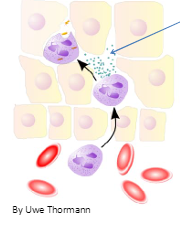
Hemocytes
phagocytic cells in invertebrates
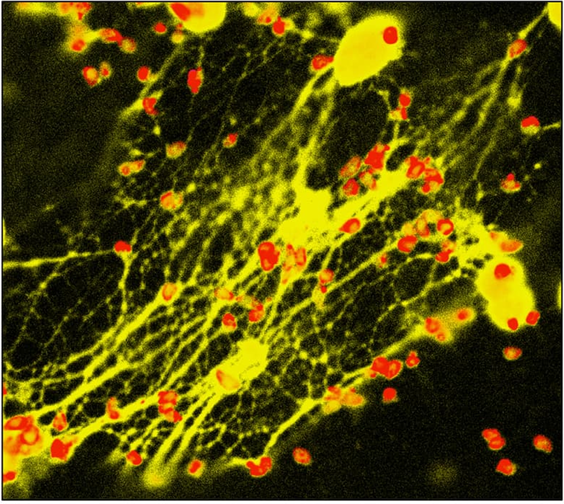
NETs
Neutrophil extracellular traps spew DNA nets that trap and kill microbes
the neutrophil dies after
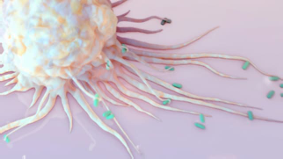
Macrophages
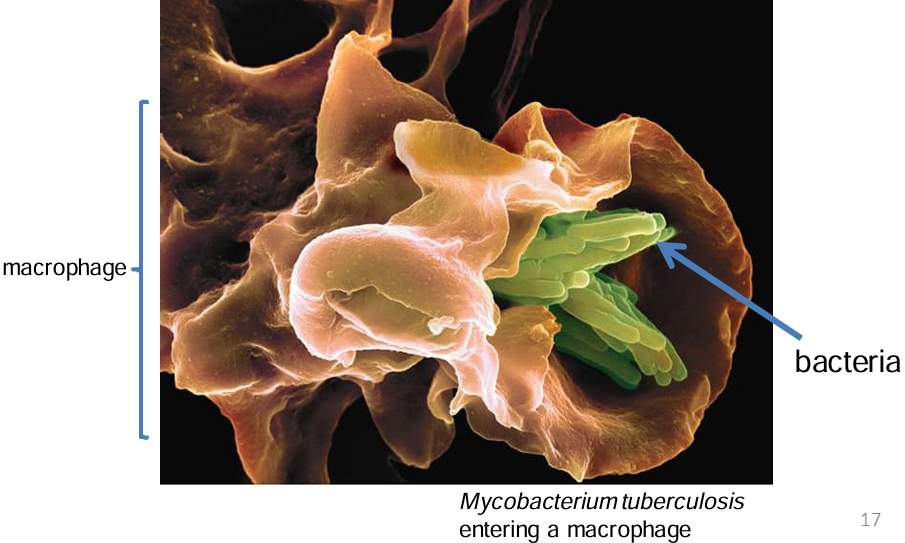
ingest dying cells, microbes, debris, and neutrophils
they congregate in lymph nodes
release cytokines may form from granulomas innate immunity.
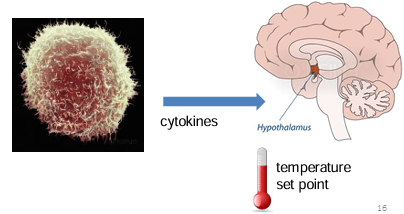
Cytokines
signaling molecules that induce fever when released to the hypothalamus
Mycobacterium tuberculosis
can resist digestion by lysozymes and can even grow inside macrophages
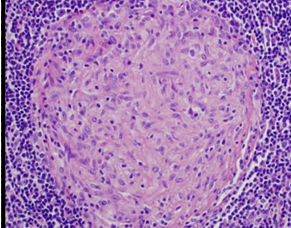
granulomas
a group of macrophages that surround and digest inanimate foreign bodies that are too large to be engulfed by a single macrophage
contains lymphocytes, macrophages, and fibroblasts
Natural killer cells
detect broad classes of non-self molecules and release chemicals to kill invaders, including infected self-cells
secretes perforins and granzymes
recognize self-MHC1
innate immunity
perforins
an enzyme that forms a hole in the enemy cell membrane
granzymes
enzymes that enter the hole in enemy cell membranes and degrade enemy cell enzymes.
natural killer cells do not attack
cell with self-MHC1 displaying epitomes on the surface
MHC1
Major histocompatibility complex
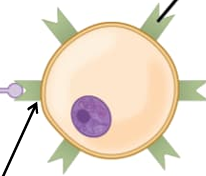
epitomes
self peptides
Lymphocytes
White blood cells that have receptors for specific pathogen antigens
B cells
T cells
adaptive immunity
B-cells
Mature in bone marrow
congregate in lymph nodes
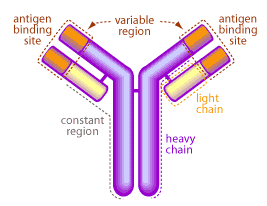
has 2 antigen binding sites
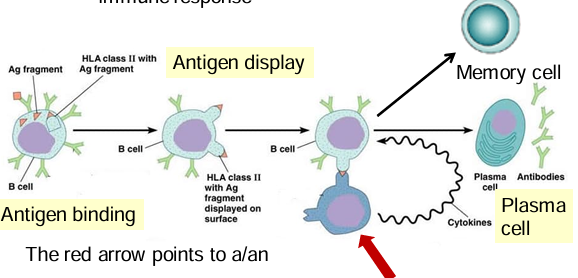
Activated B cells
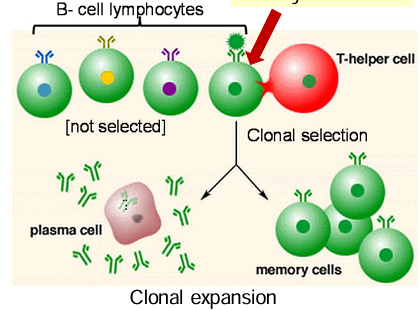
Make plasma cells, which secrete immunoglobulins the humoral immune response
Immunoglobulins
Antibodies
clonal selection
Proliferation of an activated lymphocyte
a lymphocyte with a matching receptor is produced to make memory cells
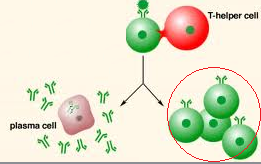
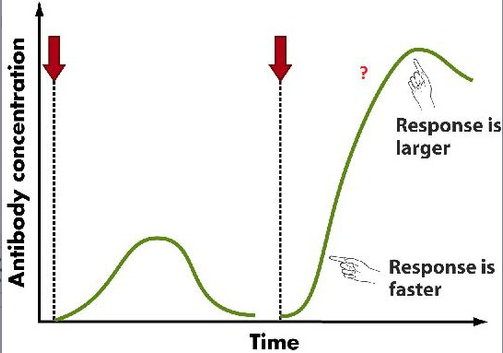
memory cells
are long-lived cells that respond to a pathogen in a second exposure
Aggregation
antibodies clump pathogens together to prevent infection
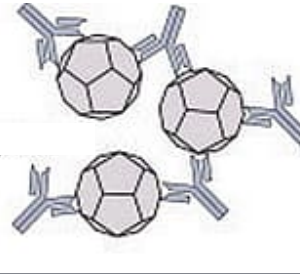
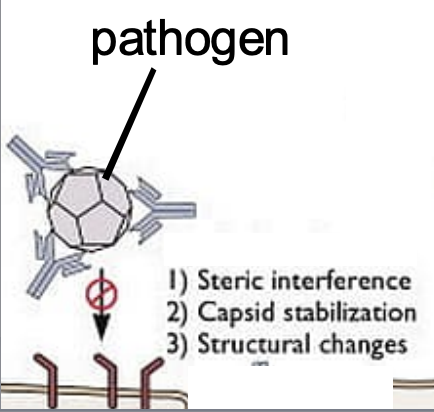
Blocked attachment
antibodies bind to a pathogen, preventing the pathogen from binding to a cell.
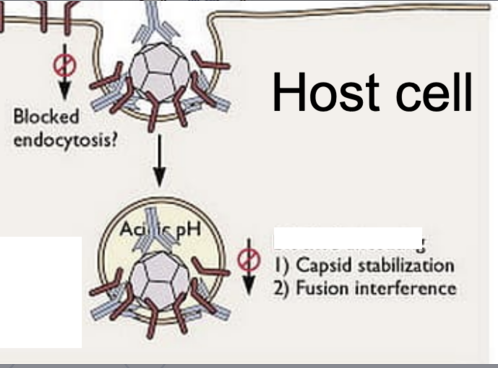
Blocked uncoating
antibodies inhibit the pathogen’s ability to uncoat its genome for replication
Antibodies can attract
macrophages to the pathogen
T cell
receptor has a single antigen binding site that binds to an antigen fragment (epitope) displayed on infected host cells
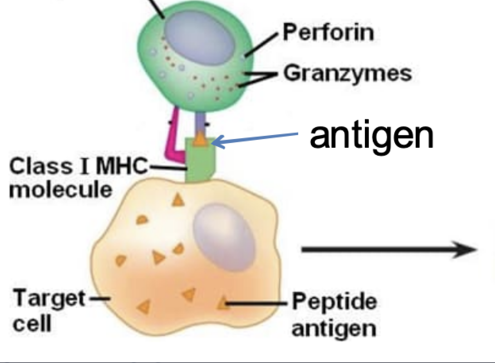
Cytotoxic T-cells kill
host cells that display the pathogen’s antigen
APCs
present antigens bound to MHC II on their cell surface, which attracts helper cells of the adaptive immune system
Helper T-cells
bind to antigens on APC cytokines stimulate self-republication and active cytotoxic T cells and B cells (release antibodies) they check if the B-cell found a pathogen
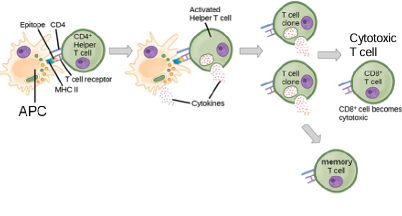
Circulating memory cells
allow a faster response upon second exposure to a pathogen.
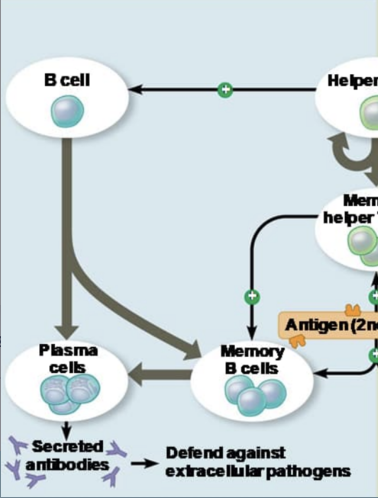
Hormonal immune response
The branch of acquired immunity that involves the activation of B cells and that leads to the production of antibodies which defend against bacteria
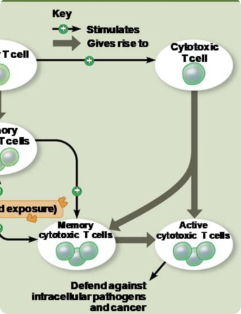
cell meditated
The branch of adaptive immunity that involves the activation of cytotoxic T cells, which defend against infected cells
Edward Jenner’s controversial experiment
infecting a healthy boy with cowpox, and then exposing him to the small pox virus (1796)
demonstrated the principle of vaccination
Passive immunization
involves transferring antibodies, providing short-lived protection
can be naturally acquired or artificial
Naturally acquired passive immunity example
maternal antibodies are transferred to the fetus through the placenta or form breast milk to the gut of the infant
Artificially acquired passive immunity example
Convalescent plasma therapy
injection of purified antibodies
Convalescent plasma therapy
transferring antiserum from a person who recovered after pathogen exposure
plasma
antiserum
injection of purified antibodies
is commonly applied in emergencies, or for patients with a compromised immune system
antivenom
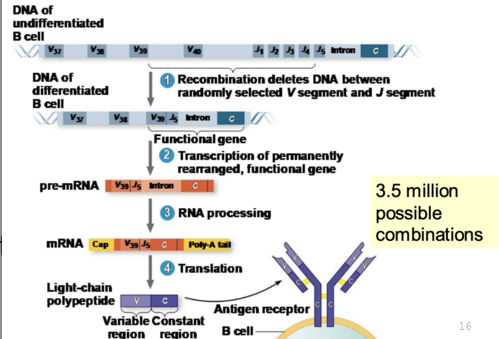
Receptor variation is created
during lymphocyte maturation by lymphocyte-specific RAG enzymes that cut and splice DNA
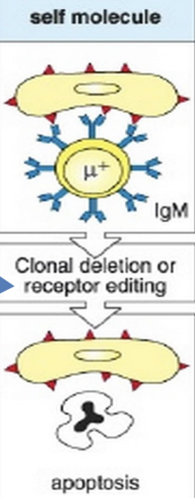
In autoimmune diseases
failure due to various mechanisms leads to the activation of self-reactive B or T cells
Mast cells
cells that bind to antibodies will bind to the allergen, triggering the release of histamine
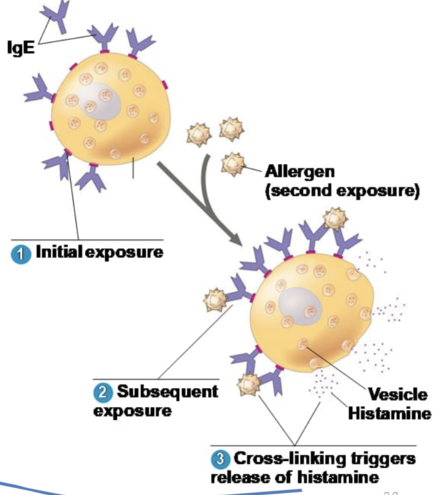
Anaphylactic shock
rapid and severe swelling to an allergen, leading to a drop in blood pressure
histamine
inflammatory mediator
commonly associated with allergic reactions, promoting vascular and tissue changes, and processing high chemoattractant activity
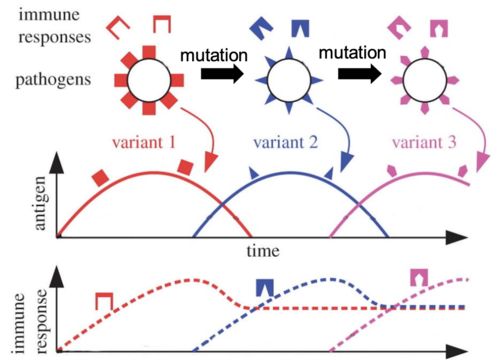
antigenic variation
Antigenic variation is the process by which pathogens modify their surface antigens to evade detection by the host’s immune system, enabling prolonged infection and transmission.
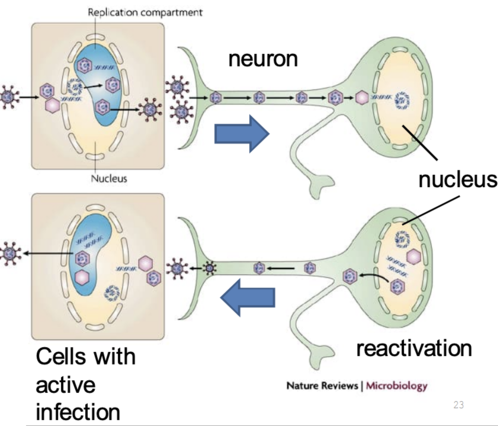
Latency
A pathogen may hide inside host cells in an asymptomatic form, preventing detection by the immune system
ex: Herpes simplex virus
Cancer Immunotherapy
was practiced by William B. Coley in 1891
injected streptococcal organism into a patient with inoperable cancer. He thought that the infection he produced would have the side effect of shrinking the malignant tumor. He was successful
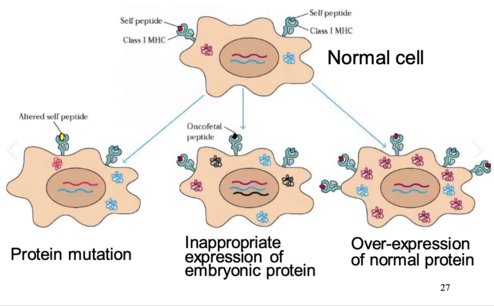
Cancerous cells may express
unique antigens, allowing them to be targeted by the immune system
Erysipelas
a hospital infection caused by Streptococcus bacteria
Kaposi sarcoma appears
due to a compromised immune system
a type of cancer
Nervous system process information in three stages
Sensory input, interaction and motor input
Sensory neurons
carry signals from the outer parts of the body (periphery) into the central nervous system
Interneurons
neurons within the brain and spinal cord that communicate internally with other neurons
Motor neurons
carry signals to your muscles or glands to help you move and function.
electrical potential of a resting neuron
~70 mV
An electrical potential is caused by
inorganic gradients across the semi-permeable cell plasma membrane
Na+ outside the neuron
150 mM
Na+ inside the neuron
15 mM
K+ outside the neuron
5mM
K+ inside the neuron
140 mM
Cl- inside the neuron
10 mM
Cl- outside the neuron
120 mM
Cation concentrations differ on each side of the cell plasma membrane
Ion pumps generate concentration differentials using ATP
Ion movement through channels (passive and active transport)
create electrical potential
K+
is the main determinant of resting potential (-70 Mv)
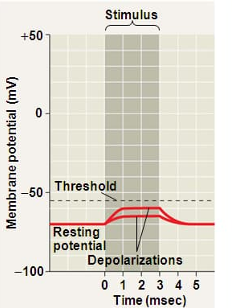
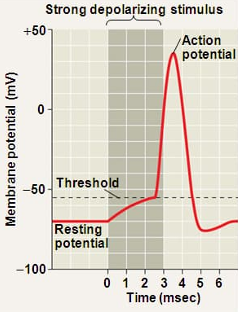
Depolarization
A shift towards a more positive membrane potential by increased permeability of sodium channels
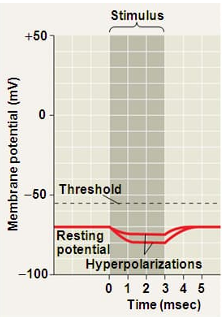
Hyperpolarization
a shift towards a more negative membrane potential caused by increased permeability of potassium channels
graded potential
A change in membrane potential that fails to reach the threshold
An action potential is triggered
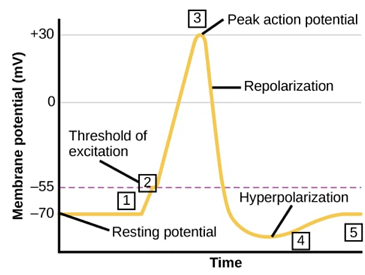
when depolarization exceeds the threshold (around -55mV)
The threshold of excitation is reached
voltage-gated sodium channels open rapidly letting in more Na+ making the change more positive (all or noting action potential
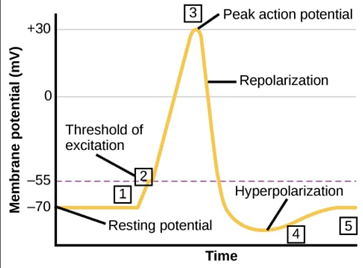
When peak action potential is reached
voltage-gated sodium channels close while voltage-gated potassium channels are opened, making the change more negative.
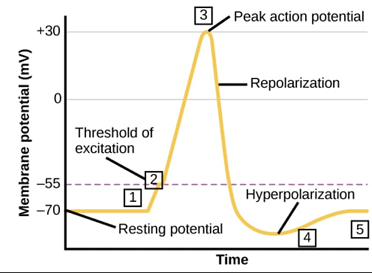
during Hyperlactation
temporarily deactivates voltage-gated sodium channels a refractory period.
refractory period
preventing initiation of action potential unidirectional flow of action potentials
Active transport of sodium and potassium
restores resting potential
(5)
Action potential originate
at the axon hillock in response to depolarization initiated at the dendrites
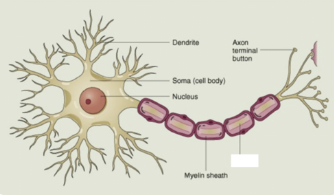
Axon
the part of a neuron where the action potential (AP) is propagated.
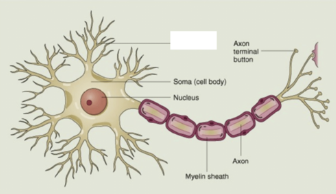
Dendrites
the receiving of input portions of a neuron
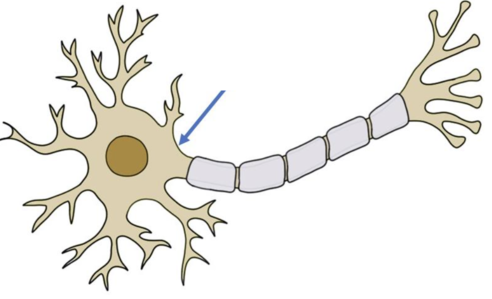
Axon hillock
the region of a neuron that controls the initiation of an electrical impulse based on the inputs from other neurons or environment
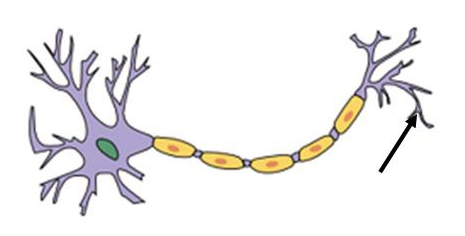
Synaptic terminals
release neurotransmitters when stimulated by an electrical signal carried by the axon.
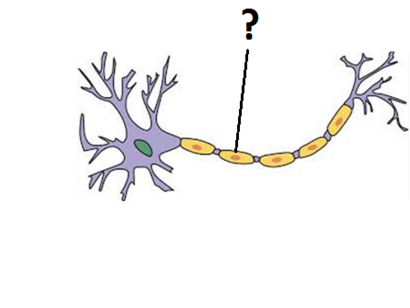
Schwann cells
glial cells that form the myelin sheath on axons for insulation which seeps up the propagation of the AP via saltatory conduction.
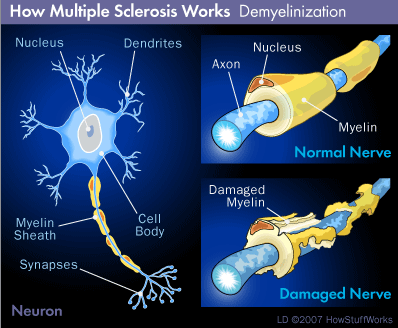
Multiple sclerosis (MS)
the immune system attacks the myelin, which becomes destroyed in many areas.
This loss of myelin forms scar tissue called sclerosis
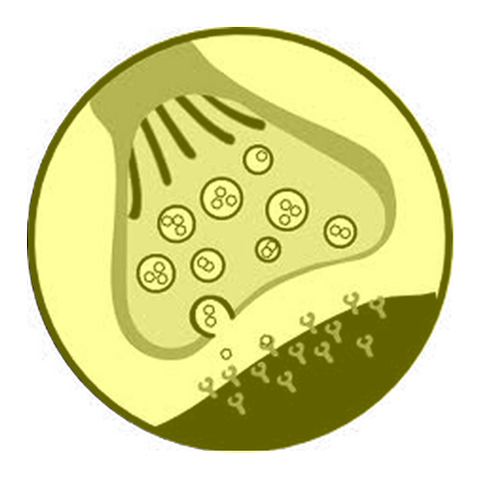
Synapses
a junction between two nerve cells, consisting of a minute gap across which impulses pass by diffusion of a neurotransmitter
may be electrical or chemical
Postsynaptic Neuron
integrates all the signals it receives to determine what it does next with chemical signals
Presynaptic Neuron
at the end of an axon and is placed where the electrical signal (the action potential) is converted into a chemical signal (neurotransmitter release)
PSPa
Postsynaptic potentials
excitatory (depolarizing) and inhibitory (hyperpolarizing), which are summed in the axon hillock
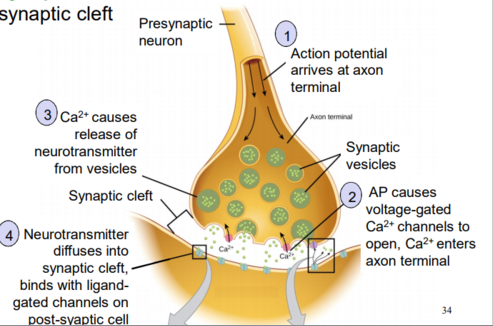
When an action potential reaches a chemical synapse
neurotransmitters are released into the synaptic cleft
Ca2+ triggers synaptic vesicle exocytosis, thereby releasing the neurotransmitters contained in the vesicles
adrenaline
a neurotransmitter and a hormone flight or fight response
dopamine
pleasure neurotransmitter
glutamate
memory neurotransmitter
most common type of neurotransmitter