PSYC 201: Chapter 10 Pt 2 motivation and emoition
 Call Kai
 Learn
Learn Practice Test
 Spaced Repetition
 Match
Match Flashcards
 Knowt Play
1/22

There's no tags or description
Looks like no tags are added yet.
Name | Mastery | Learn | Test | Matching | Spaced | Call with Kai |
|---|
No analytics yet
Send a link to your students to track their progress
23 Terms
Symtoms of Alexithymia
1. difficulty identifying emoitions
- rarely cry and when they do they cant tell why
2. inability to connect emoitions with physical sensations
- say"im feeling tight in my chest" to mean feeling anger
3. limited imaginative skills
- this can lead to a reliance on concrete thinking rather than abstract thought
4. challenges in verbal expression
5. emotional detachment
Alexithymia: case study
removal of tumor form prefrontal lobe caused damage and he experienced drastic change in personality
- no pain losing job
- no regret after losing money
- no insticts or gut feelings
- felt no emotional pain
Emotions and Cognitive Activity : congnitive signaler:
an emotional feeling influences a persons future cognitive appraisal
Emotions and Cognitive Activity : appraisal tendency hypothesis
each emotion has a unique influence on peoples judgement
Emotions and Behaviors: motivator of actions
the goal of each emotion is to induce and action that deals specifically with the emotional event. the person is in a state of action readiness
Positive and Negative affects as motivators: Evaliative space model
stimuli are evaluated for their postive and negative features, which results in positve and negative affect. the overall combined affect motivates a persons actions.
Charles Darwin approach to Emotion
- emotional expression is universal
- emotional responses are serving some adaptive functions
- emotions are inherited, specilized mental states designed to deal with certain class of recurring situations
What are the 6 primary emotions
fear
anger
sadness
disgust
(FASD)
joy
surprise
(J'S)
Study on facial expressions (meaning of facial expressions is socially learned)
- particpants from new guniea where photographed after ebing asked questions ex. look like you came upon rotting food
- particpants from other countries were asked to identify the emotions being expressed
- findings: facial expression were regonized around the world
conclusion: regonition of facial expression may be universal and therefore biological base
What is the conclusion of universaility of emotion?
People all over the world, regardless of culturaldifferences, race, sex, or education, express basic emotions in muchthe same way and are able to identify the emotions others areexperiencing by reading their facial expressions. the claim of universality is focused on some basic primaryemotions
Where are emotions processed in the brain?
The Limbic System
What is the Limbic system made up of and what are they reposnible for.
Hypothalamus: homeostasis (fight or flight)
Thalamus: relays information
Hippcocampus: memory conversion
Amygdala: emotion
fast pathway of fear
stimulus -> thalamus -> amygdala -> experience of fear
what part of the brain is responsible for descision making
Neo-Coretex
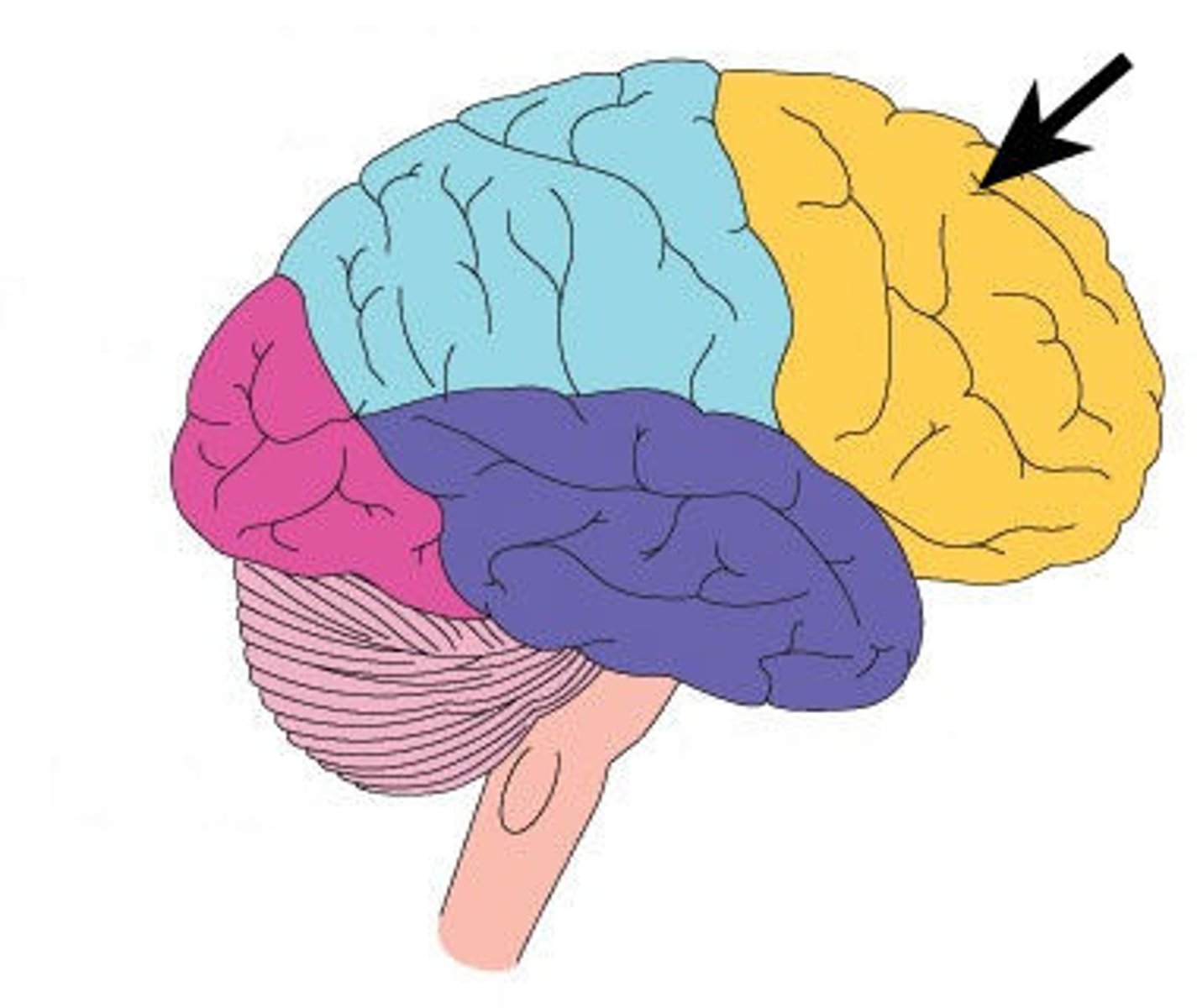
what part of the brain is responsible for emotion and motivation
Limbic Brain
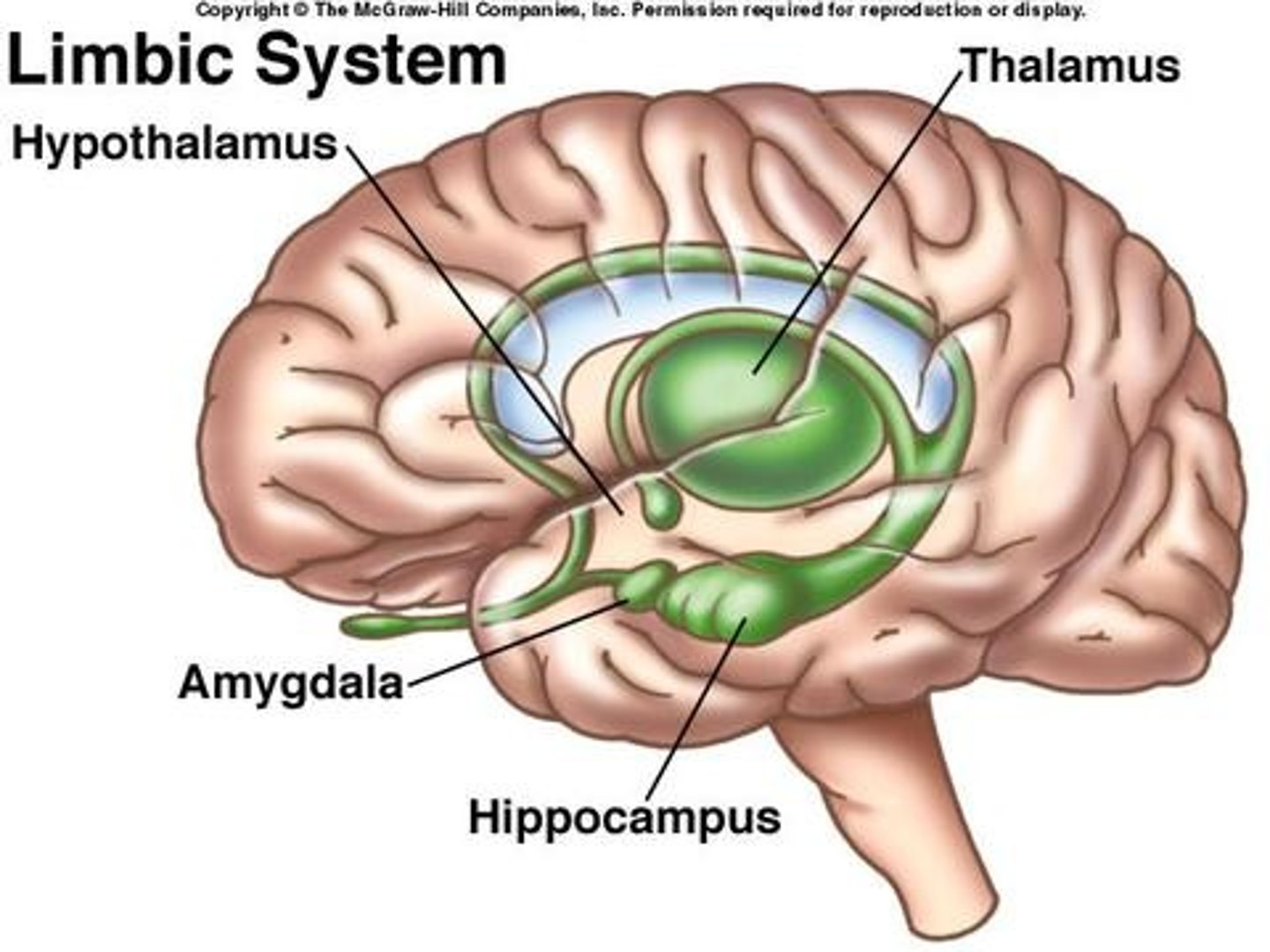
what part of the brain is responsible for insticts and urges
Reptilian brain also know as R-complex: is the brainstem and basal ganglia
What does the prefontal cortex responsible for
- control centre for high level cognitive functions which includes planning, decision making, personality expression, impulse control, and emotional regulation
a person without emoitional awareness and inability to make decisions likley dammaged which part of their brain?
Prefontal Lobes
the cross-cultural study on emotions with people from new guniea was done to falsify which theorists hypothesis
Charles darwin
In Elkman and Frisens study which two emotions where most esilyly mixed up and which one was easiest to identify
1. fear and suprise
2. happiness
What is alexithymia?
A condition characterized by difficulty in identifying and expressing emotions.
slow pathway of fear
stimulus -> thalamus -> cortex -> amygdala -> fear
Still learning (22)
You've started learning these terms. Keep it up!

