Topic 1: Cell Physiology Lectures 1-5
 Studied by 0 people
 Call Kai
 Learn
Learn Practice Test
 Spaced Repetition
 Match
Match Flashcards
 Knowt Play
1/45

There's no tags or description
Looks like no tags are added yet.
Name | Mastery | Learn | Test | Matching | Spaced | Call with Kai |
|---|
No analytics yet
Send a link to your students to track their progress
46 Terms
What is the plasma (cell) membrane?
Surrounds cell surface + separates intracellular fluid from extracellular fluid.
What are cell organelles?
performs specific functions + compartmentalize
are membrane-bound (enclosed by at least one lipid bilayer) or non-membrane bound
What are the 2 regions in the interior of the cell?
nucleus: houses genetic material (considered organelle but separate category)
cytoplasm: region outside of nucleus
organelles suspended in cytosol (gel-like fluid)
What are the 4 functions of plasma (cell) membranes?
physical barrier
keeps organelles + proteins inside cell
maintains difference in fluid composition between ECF/ICF
used to drive membrane transport processes
maintains homeostasis
cell-to-cell communication
has receptors that bind specific signalling molecules arriving at cell surface
structural support
specialized connections between plasma membranes or between membranes + extracellular materials
transport
selectively permeable ➡ plasma membrane maintains unique composition of cytosol
What do biological membranes surround in cells?
They surround the cell (plasma/cell membrane) and most intracellular organelles.
What’s the basic structure of all biological membranes?
A double layer of lipid molecules with embedded proteins (phospholipid bilayer).
Are all biological membranes made the same + if so, what does that reflect?
no, they differ in their ratios of lipids and proteins
reflects different functions of specific cells or organelles
What elements do lipids primarily contain?
carbon + hydrogen, with some oxygen + phosphates
depending on structure, oxygen + phosphates may lead to polar areas
What property do membrane lipids have?
Amphipathic: polar, hydrophilic head + non-polar, hydrophobic tails.
What are the main types of membrane lipids?
phospholipids
cholesterol
glycolipids
What are the components of the polar head group in a phospholipid?
Phosphate group attached to glycerol backbone + nitrogen-containing chemical group (R).
Why is the head of a phospholipid hydrophilic?
The phosphate + nitrogen-containing chemical group are charged or polar, making them water-loving + having uneven distribution of electrical charge (positive + negative ends)
What forms the non-polar region of a phospholipid?
2 fatty acid chains made of carbon + hydrogen.
What is the difference between saturated + unsaturated fatty acid chains in phospholipids?
saturated: no double bonds
unsaturated: double bonds ➡ kink or bend in chain
How do phospholipids arrange themselves in water?
Spontaneously form a bilayer.
In a phospholipid bilayer, how are the polar heads + non-polar tails oriented?
polar heads: face aqueous environments (extracellular fluid + intracellular fluid)
non-polar tails: face inward ➡ hydrophobic core isolated from aqueous environment
What cellular structures are formed by phospholipid bilayers?
Plasma membrane + organelle membranes.
What is cholesterol?
main steroid found in cell membranes (3 6-C rings, 1 5-C ring + CH group)
amphipathic due to polar hydroxyl group
maintains proper membrane fluidity
one molecule of cholesterol for each molecule of phospholipid by inserting itself between phospholipids in bilayer for stabilization
Do organelle membranes contain the same amount of cholesterol as the plasma membrane?
No, organelle membranes contain very little cholesterol.
What are glycolipids?
lipids with carbohydrate (CHO) chain attached
found on outer leaflet of plasma membrane
amphipathic
forms glycocalyx: identification + interaction between cells
What are the 3 types of membrane proteins?
integral (intrinsic)
amphipathic + partially span the membrane or are transmembrane proteins (either go on partway or fully into membrane)
peripheral (extrinsic)
not amphipathic + located on the inner or outer surface of membrane
glycoproteins
has attached carbohydrates located on extracellular surface of plasma membrane
form part of glycocalyx
How are membrane proteins distributed in the membrane?
Distributed unequally, contributing to selective permeability.
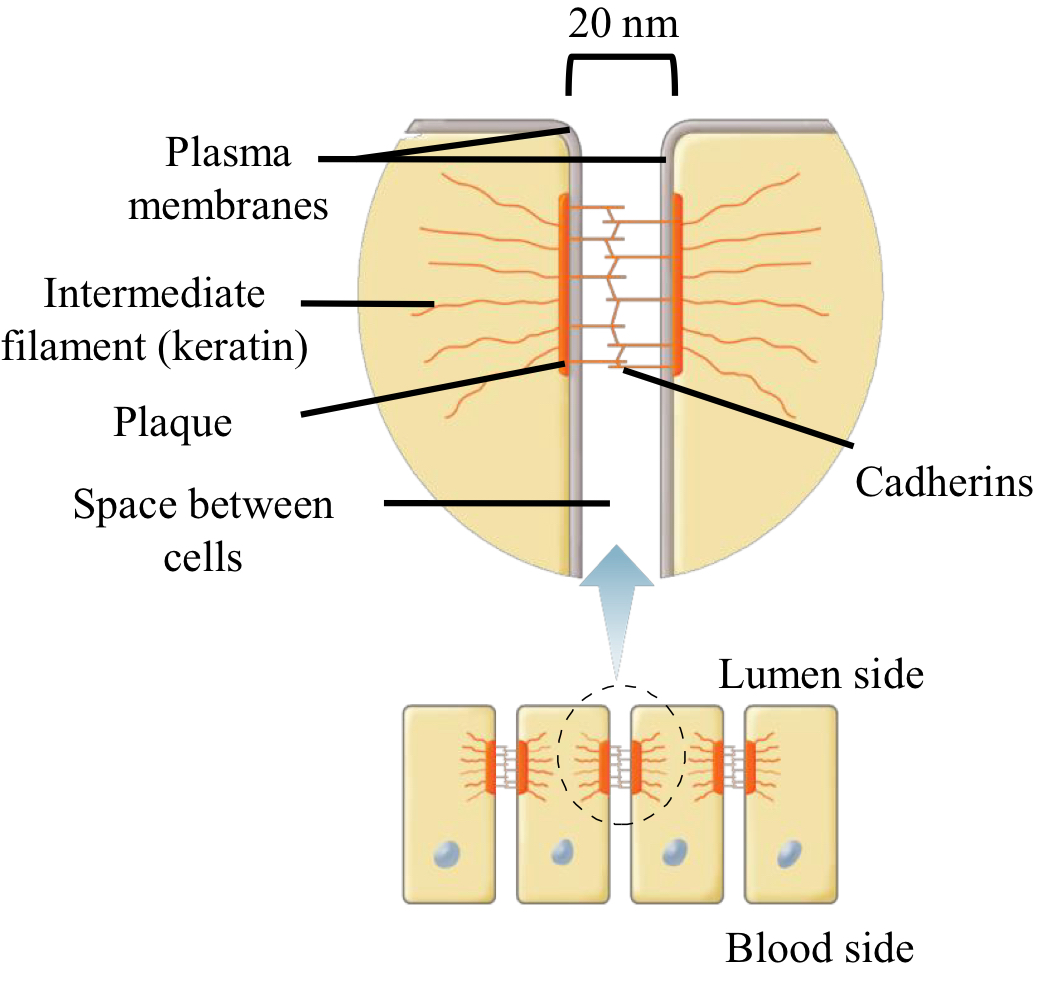
What are desmosomes?
adhering junctions that anchor cells together in tissues subject to considerable stretching ➡ structural integrity
3 proteins
plaques: cytoplasmic structures that are anchoring points for cadherins
cadherins: link cells
intermediate filaments: anchor cytoplasmic surface of desmosomes to cell components ➡ structural support
What defines tight junctions in epithelial cells?
no space between adjacent cells; functions form nearly impermeable barrier
keeps 2 sides of a cell functionally different so transport + absorption happen in correct places
commonly found in epithelial tissue specialized for molecular transport
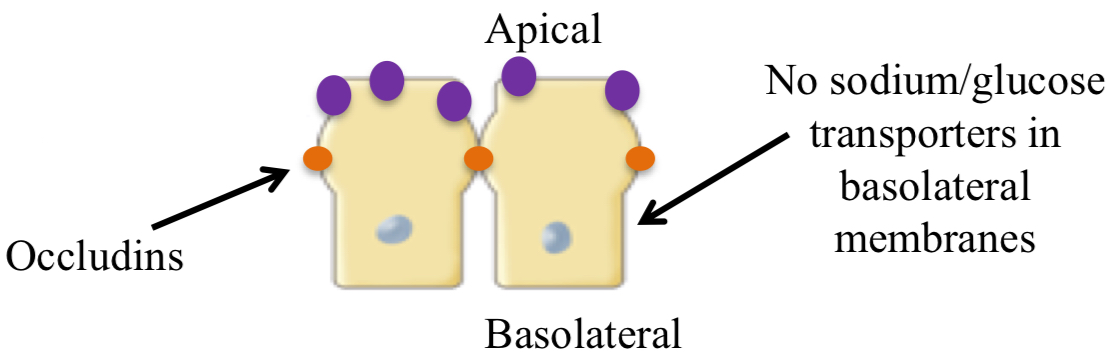
What are occludins + what’s their function in tight junctions?
proteins that link adjacent cells together
forms nearly impermeable junctions + limits molecule movement between cells
How do tight junctions affect the movement of molecules and membrane proteins?
They block extracellular (paracellular) pathways, forcing molecules to pass through cells (transcellular pathway) + limiting movement of integral membrane proteins and lipids, preserving distinct cell surface functions.
How do tight junctions maintain functional differences between the apical + basolateral sides of epithelial cells?
by restricting membrane proteins to either apical or basolateral surfaces
apical (lumen): faces outside environment for absorption or secretion
basolateral (blood): faces underlying tissue + blood vessels specialized for transport to tissue or blood
ex. sodium/glucose transporters only on apical membrane
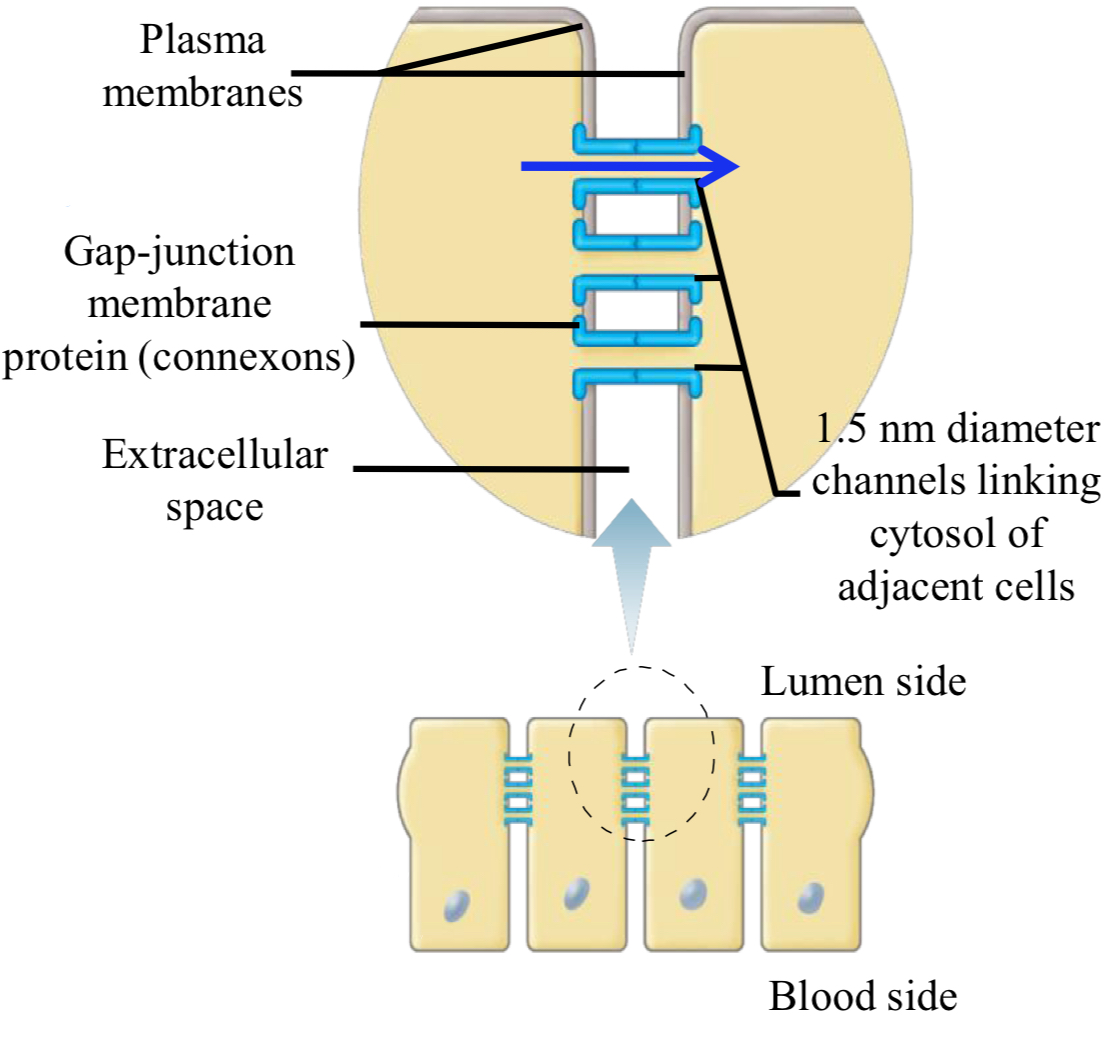
What are gap/communicating junctions?
gap junctions: transmembrane channels that link the cytoplasms of adjacent cells
connexons: protein that forms the gap junctions
functional significance: electrically + metabolically couple cells ➡ communication between them
allows small molecules + ions to move between cells (small due to limited diameter of connexons (1.5 nm))
What are the defining characteristics of desmosomes, tight junctions + gap junctions?
desmosomes: mechanical attachment between cells ➡ cells can resist pulling forces
tight junctions: forms nearly impermeable barrier between cells ➡ molecules just pass through cells
gap junctions: direct communication between cells ➡ passage of small molecules + ions
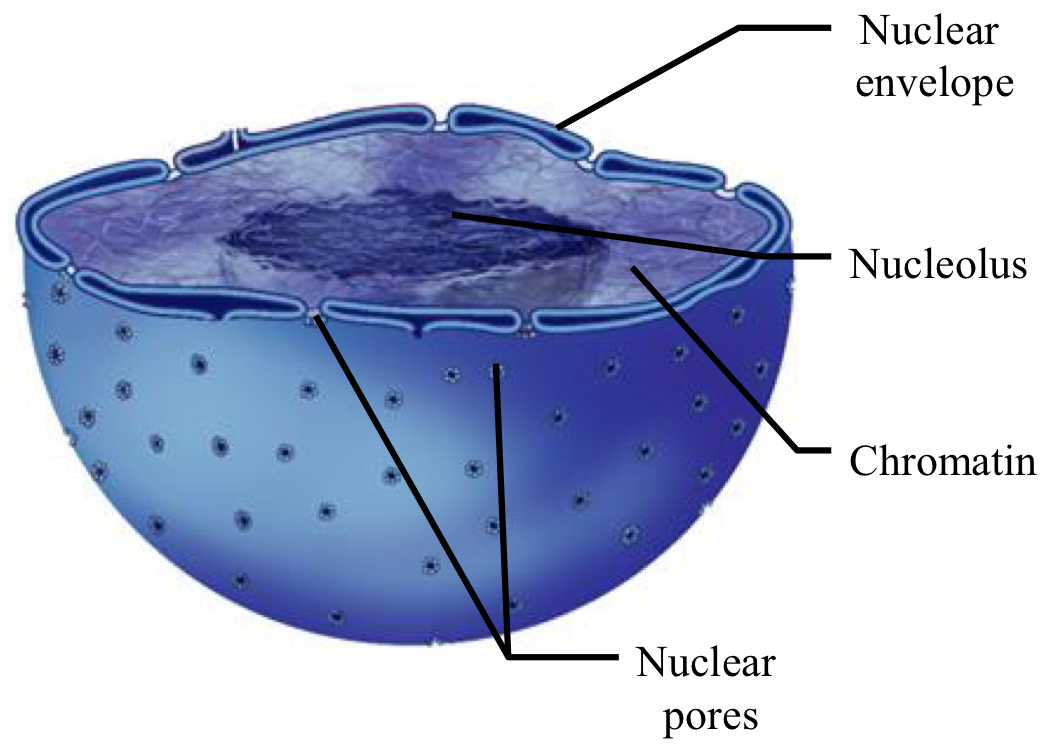
What is the main function of nucleus + its 4 components?
main function: transmission of genetic material + storage of info for protein synthesis
components
chromatin: DNA associated with proteins that condenses to form chromosomes during cell division
nuclear envelope: double-layered, porous membrane that surrounds nucleus
nuclear pores: openings in nuclear envelope that allow selective movement of molecules in + out of nucleus
nucleolus: structure inside nucleus responsible for ribosomal RNA synthesis
What are the 2 cells that don’t have one nucleus?
red blood cell: no nucleus or organelles
to make more room for hemoglobin ➡ increases gas-carrying capability
skeletal muscle cell: multinucleate
satisfies muscle’s high protein-making needs
What are ribosomes?
non-membrane bound (not surrounded by phospholipid bilayer)
protein synthesis: reads info in mRNA + assembles amino acids in correct order to make protein
2 subunits: small + large
each composed of proteins + rRNA
they join prior to protein synthesis ➡ functional (can synthesize proteins) ribosomes
2 major types of functional ribosomes
free ribosomes in cytoplasm
ribosomes bound to ER
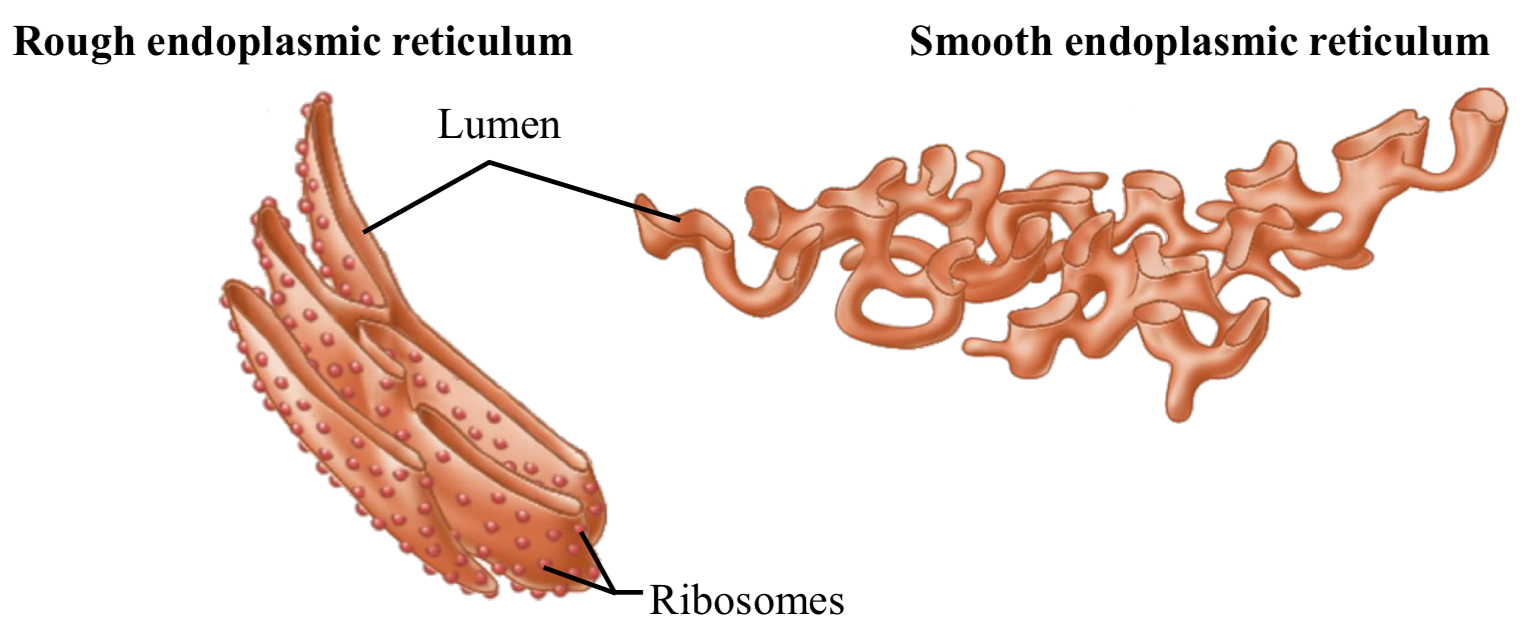
What is the ER + its 2 types?
ER: fluid-filled membranous system
2 types
RER
granular: ribosomes bound to its cytosolic surface
flattened sacs
function: synthesis of proteins by bound ribosomes then post-translational modifications of proteins
modifications needed for protein to become fully functional
SER
agranular: no ribosomes
branched tubular structure
functions
synthesizes lipids (fatty acids, steroids)
stores Ca2+ (muscle cells, sarcoplasmic reticulum)
drug detoxification (liver cells)
What is the Golgi apparatus?
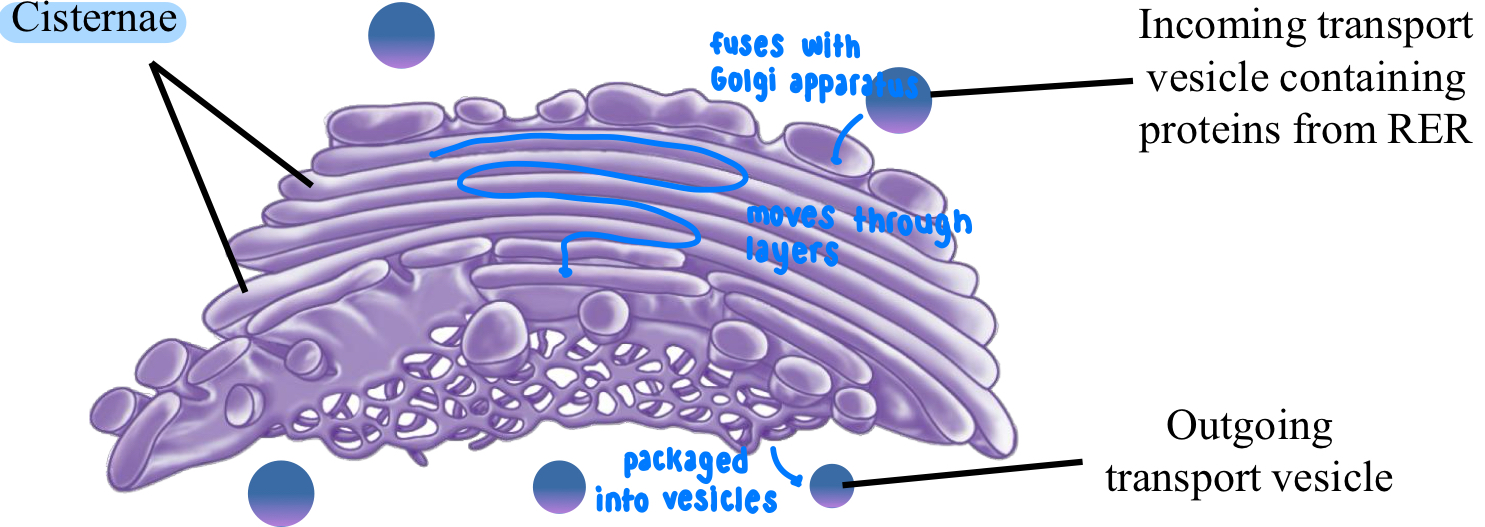
post-translational modification, sorting + packaging of proteins made in RER
process
transport vesicle containing proteins from RER fuses with Golgi apparatus
proteins move through cisternae (flattened, slightly-curved membrane bound sacs stacked in layers)
proteins are packaged into outgoing transport vesicles + may be:
secreted from cell
become integral membrane proteins or proteins of lysosomes, ER or Golgi
What are lysosomes?
contains digestive enzymes (specifically hydrolytic enzymes) that break down polymers into smaller subunits
degrades both extracellular + intracellular debris
recycle cell organelles
destroy endocytosed bacteria + viruses
functions optimally at acidic pH (~5.0)
made in RER
How are lysosomes connected to the Golgi apparatus + RER?
vesicle containing enzymes buds of RER, moves to + fuses with Golgi apparatus
enzymes are further processed + sorted in Golgi
vesicle that buds off from Golgi will become lysosome
newly-formed lysosome ➡ more acidic + enzymes become active
How does the presence of a lysosomal phospholipid bilayer help?
Allows lysosome to keep acidic pH while cytoplasm pH remains neutral.
How is lysosome’s acidic pH maintained?
Maintained by proton pumps that transfer H-ions from cytosol across membrane into lysosome.
What is exocytosis?
Method of removing undigested substances/waste from cell that can’t be broken down by lysosomal enzymes.
What are peroxisomes?
contains oxidative enzymes that use O to remove H from molecules
acts on fatty acids, alcohol + drugs
abundant in liver + kidney
What is the toxic byproduct of peroxisomal reactions?
hydrogen peroxide (H2O2)
catalase: converts 2 H₂O₂ → 2 H₂O + O₂
body can better handle water + oxygen
What are the 2 organelles only surrounded by double phospholipid bilayers?
Mitochondria + nucleus.
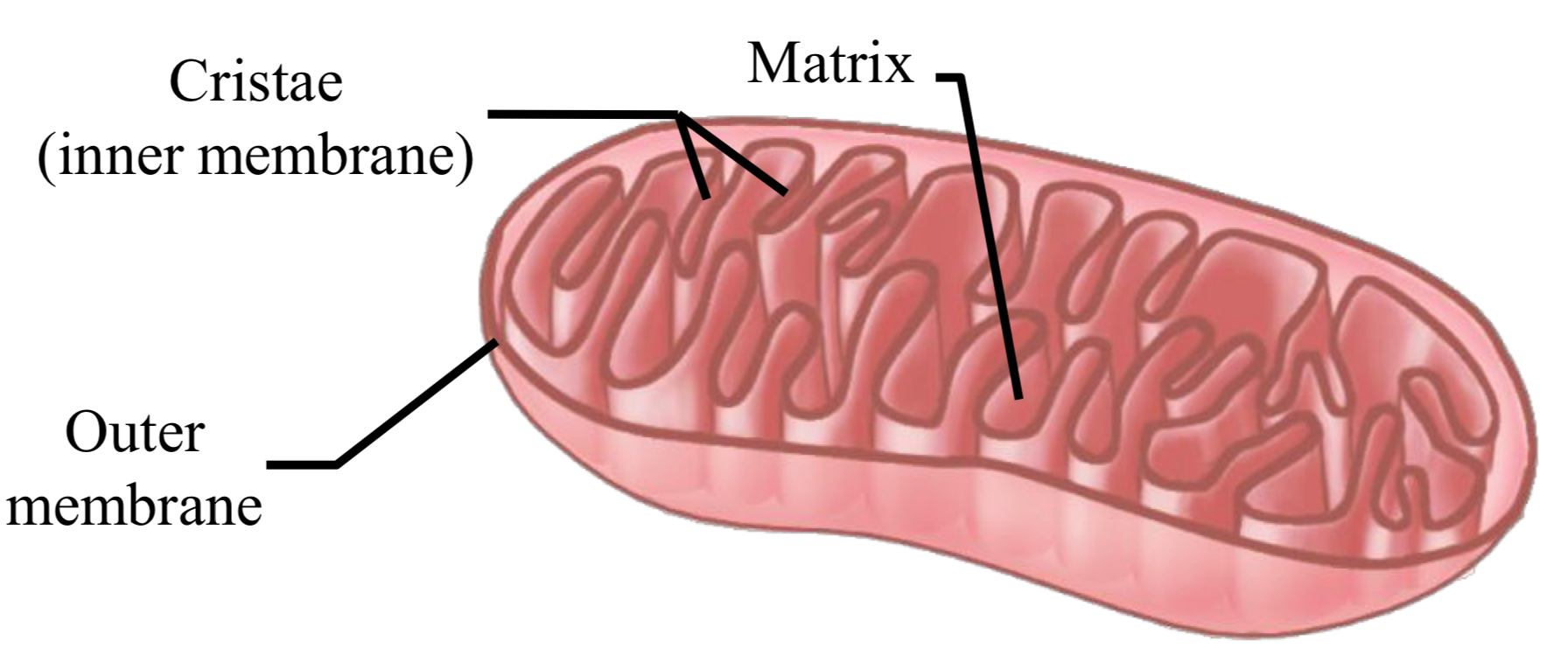
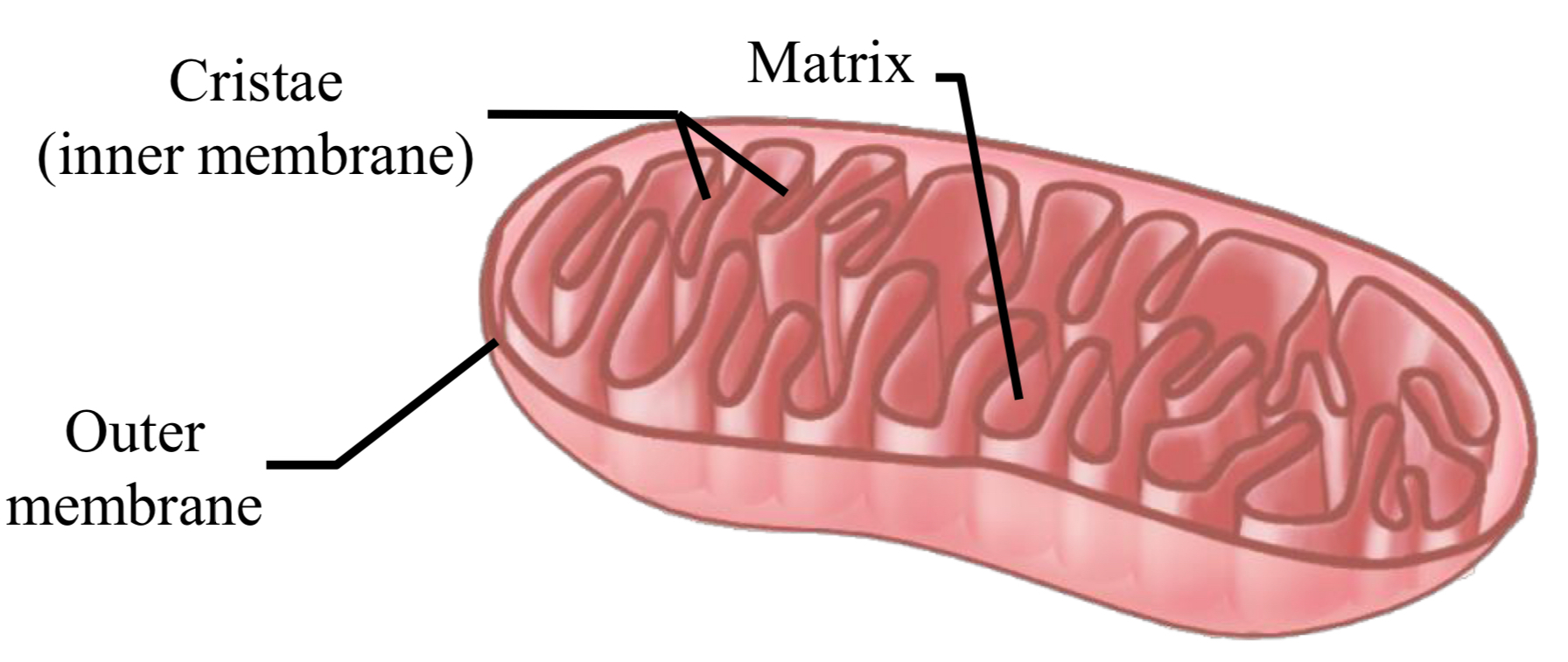
What is mitochondria?
powerhouse of cell that makes ATP
structure:
double membrane
outer membrane: separates mitochondria from cytosol
inner membrane (cristae) sheets or tubules increase SA
matrix
process: cellular respiration: biochemical energy from nutrients converted into ATP
The number of mitochondria depends on what?
energy needs of cell
ex. skeletal muscle, heart muscle, liver + sperm: lots needed
ex. red blood cells: none needed
Does mitochondria have its own DNA + if so, where did it come from?
double-stranded circular DNA
evolved symbiotically as bacteria entering eukaryotic cells billions of years ago
What is a cytoskeleton?
non-membrane bound network of string of proteins
made of:
microfilament/actin filament (smallest)
protein subunit: G-actin
intermediate filament (medium)
protein subunit: several proteins (ex. Keratin)
microtubule (biggest)
protein subunit: tubulin
general functions:
maintain cell shape
maintain organelle positions
mediate cell + organelle motility
 Note
Note  Flashcards (52)