Chapter 3 - The Second Law
0.0(0)
Studied by 3 people View linked note
 Call Kai
 Learn
Learn Practice Test
 Spaced Repetition
 Match
Match Flashcards
 Knowt Play
Card Sorting
1/28

Earn XP
Description and Tags
Last updated 4:49 AM on 1/11/23
Name | Mastery | Learn | Test | Matching | Spaced | Call with Kai | Chat |
|---|
No analytics yet
Send a link to your students to track their progress
29 Terms
1
New cards
Second Law of Thermodynamics
No process is possible in which the sole result is the absorption of heat from a reservoir and its complete conversion into work
2
New cards
Entropy (S)
A measure of the energy dispersed in a process
3
New cards
Boltzmann formula
The entropy calculated from it is sometimes called the statistical entropy

4
New cards
Reversible isothermal expansion from A to B at Th
The entropy change is qh/Th, where qh is the energy supplied to the system as heat from the hot source
5
New cards
Reversible adiabatic expansion from B to C
No energy leaves the system as heat, so the change in entropy is zero
6
New cards
Reversible isothermal compression from C to D at Tc
Energy is released as heat to the cold sink; the change in entropy of the system is qc/Tc; in this expression qc is negative
7
New cards
Reversible adiabatic compression from D to A
No energy enters the system as heat, so the change in entropy is zero
8
New cards
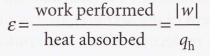
Efficiency (ε)
9
New cards
Clausius inequality

10
New cards
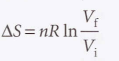
Expansion
11
New cards
Thermodynamic temperature scale
The efficiency of a heat engine
12
New cards
Trouton's rule
A wide range of liquids give approximately the same standard entropy of vaporization, about 85 J K^-1 mol ^-1
13
New cards
Third Law of thermodynamics
The entropy of all perfect crystalline substances is zero at T = 0
14
New cards
Nernst heat theorem
The entropy change accompanying any physical or chemical transformation approaches zero as the temperature approaches zero: ΔS → 0 as T → 0 provided all the substances involved are perfectly crystalline.
15
New cards
Third-Law entropies
Entropies reported on the basis that S(0) = 0
16
New cards
Standard (Third-Law) entropy
S°(T)
17
New cards
Standard reaction entropy
The difference between the molar entropies of the pure, separated products and the pure, separated reactants, all substances being in their standard states at the specified temperature

18
New cards
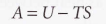
Helmholtz energy (A)
19
New cards
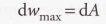
Maximum work
The change in the Helmholtz function
20
New cards
Gibbs energy (G)

21
New cards
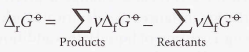
Standard Gibbs energy of reaction
The combination of standard entropies and enthalpies of reaction

22
New cards
Standard Gibbs energies of formation
The standard reaction Gibbs energy for the formation of a compound from its elements in their reference states
23
New cards
Fundamental equation

24
New cards
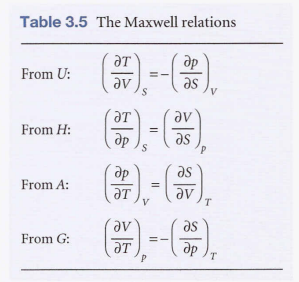
Maxwell relations
25
New cards
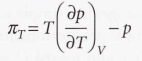
Thermodynamic equation of state
26
New cards
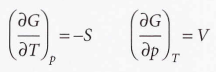
Properties of the Gibbs energy
27
New cards
First relation
* G always decreases when the temperature is raised
* G decreases most sharply when the entropy of the system is large.
* G decreases most sharply when the entropy of the system is large.
28
New cards
Second relation
* G always increases when the pressure of the system is increased.
* G is more sensitive to pressure when the volume of the system is large.
* G is more sensitive to pressure when the volume of the system is large.
29
New cards
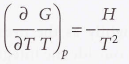
Gibbs-Helmholtz equation