Fatty Acid Synthesis Overview
 Call Kai
 Learn
Learn Practice Test
 Spaced Repetition
 Match
Match Flashcards
 Knowt Play
1/41

There's no tags or description
Looks like no tags are added yet.
Name | Mastery | Learn | Test | Matching | Spaced | Call with Kai |
|---|
No analytics yet
Send a link to your students to track their progress
42 Terms
What is the anabolic counterpart to beta oxidation
fatty acid synthesis
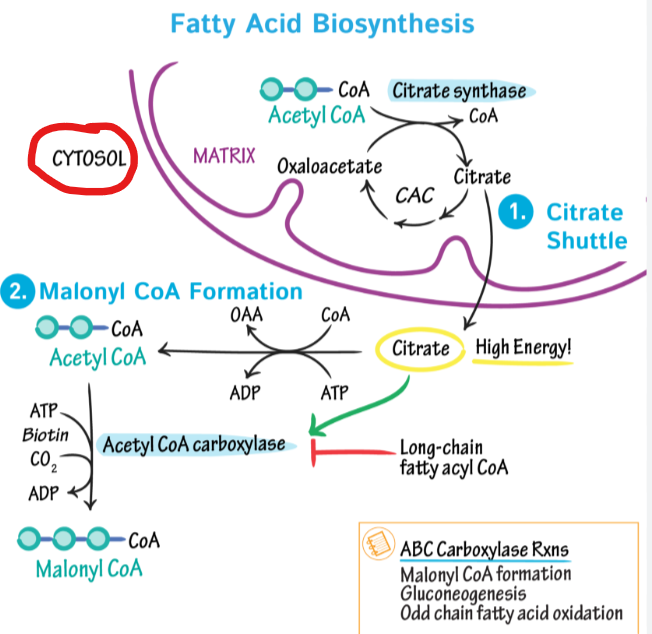
Unlike beta-oxidation, which occurs in the mitochondria, where does fatty acid synthesis occur
in the cytosol
What state is the body in for fatty acid synthesis
a well-fed state - when energy and carbohydrate availibility are high
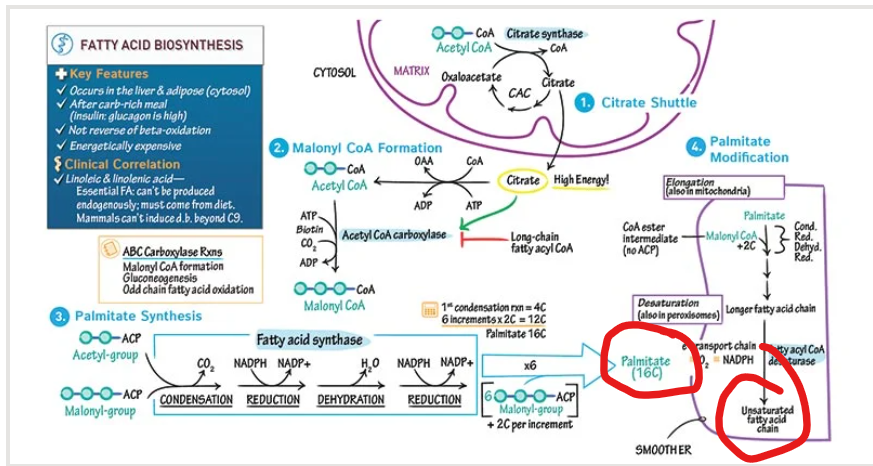
What is the overall goal of fatty acids synthesis
The production of palmitic acid using multiple acetyl-CoA units, ATP, and NADPH
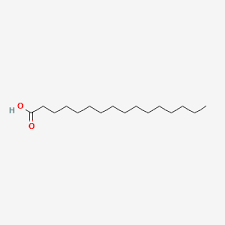
what is palmitic acid
a 16 carbon sturated fatty acid-
True or false: Fatty acids can be elongated or desaturated, but the core pathway focuses on producing this 16 carbon cahain efficiently
True
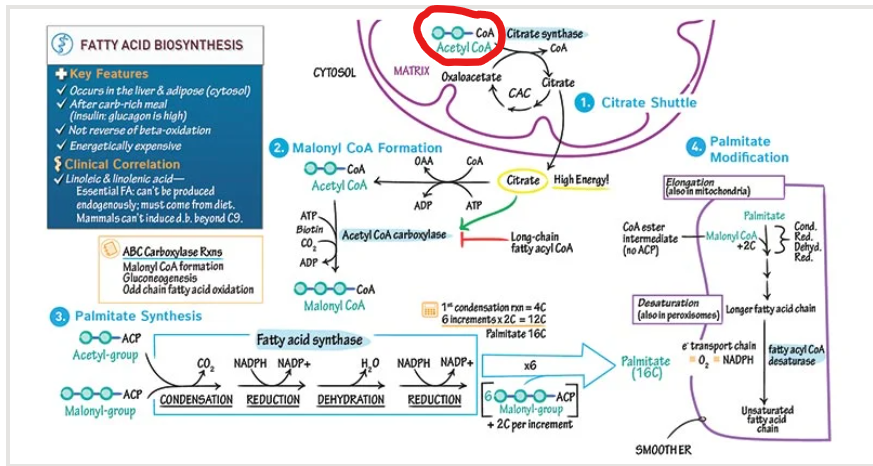
The fatty acid syntheis pathway beins with acetyl-CoA- but what must it first do to start fatty acid synthesis
it needs to get out of the mitochondial and into the cytosol
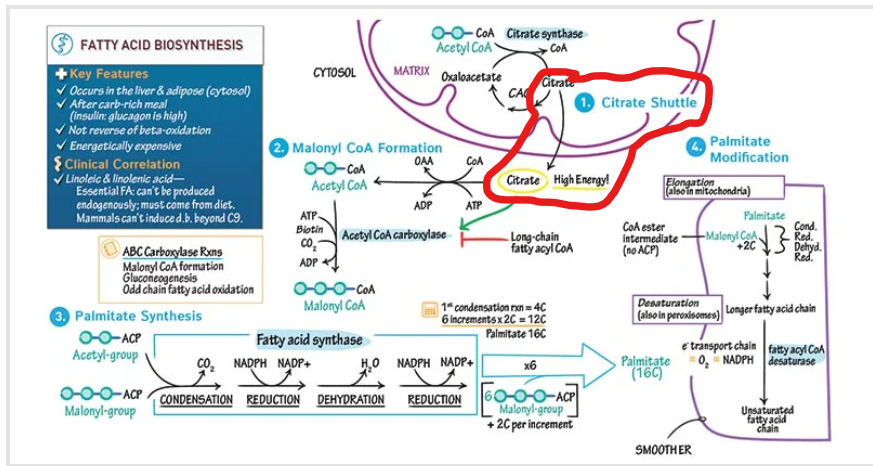
How will acetyl-CoA get transported out of the mitochondria into the cytosol for fatty acid synthesis
acetyl-CoA must be transported out of the mitochondria as citrate because acetyl-CoA itself cannot cross the mitochondrial membrane
What cleaves citosolic citrate to regeenrate acetyl-CoA and oxaloacetate
citrate lyase
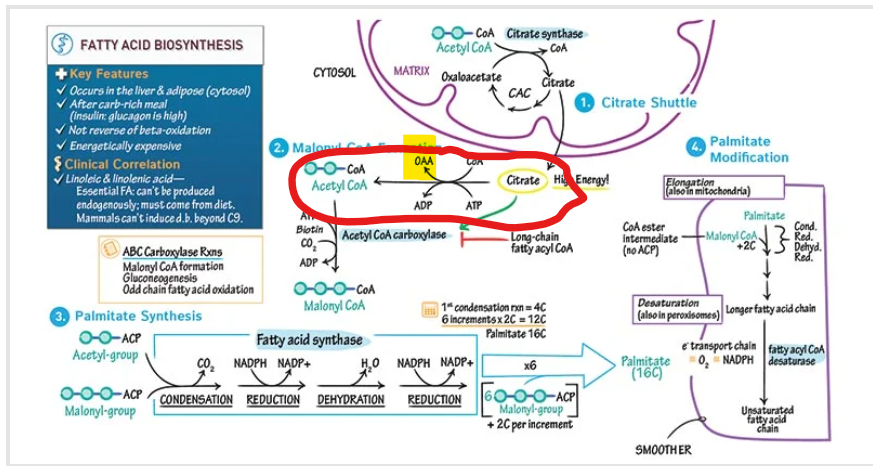
What happens to oxaloacetate after it gets regenerated after the cleavge of cytosolic citrate to regenerate acety-CoA for fatty acid synthesis
can either be:
recycled back into the mitochondria via malate
or converted into pyruvate by malic enzyme, generating NADPH, which is the essential reducing power for fatty acid synthesis.
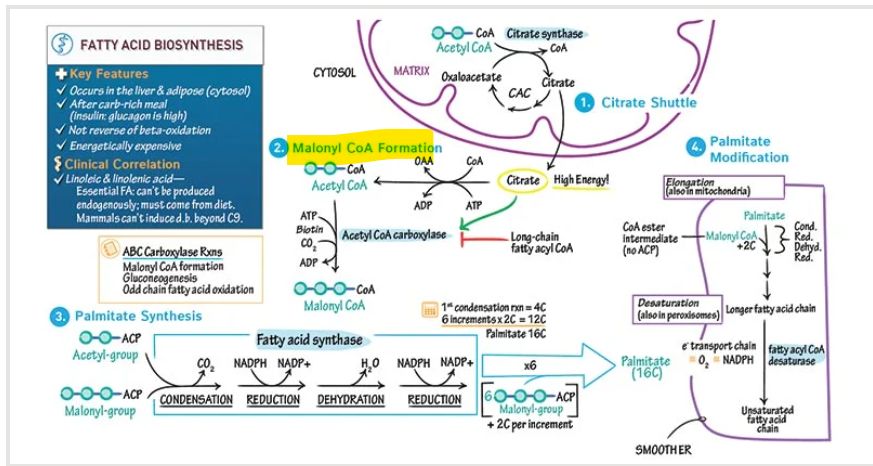
What is the first committed and rate limiting step in fatty acid synthesis
formation of malonyl-CoA from acetyl-CoA
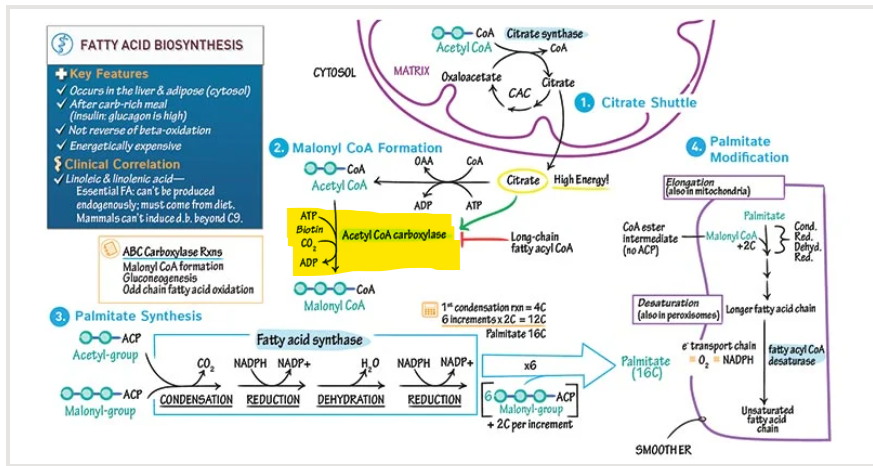
What is the formation of malonyl-CoA from acetyl-CoA catalyzed by
acetyl-CoA carboxylase (ACC)
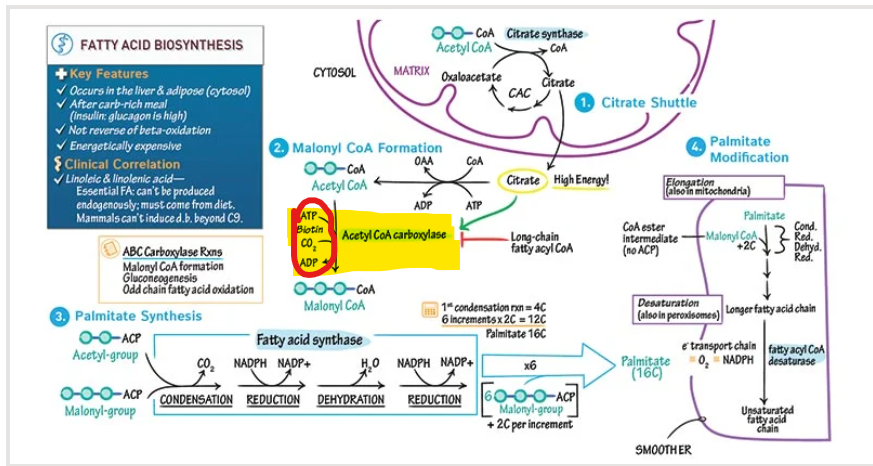
The first committed and rate-limiting step in fatty acid synthesis is the formation of malonyl-CoA from acetyl-CoA, catalyzed by acetyl-CoA carboxylase (ACC)
What is this reaction dependent on and what does it require
it is biotin dependent and requires ATP and CO2( from bicarbonate)
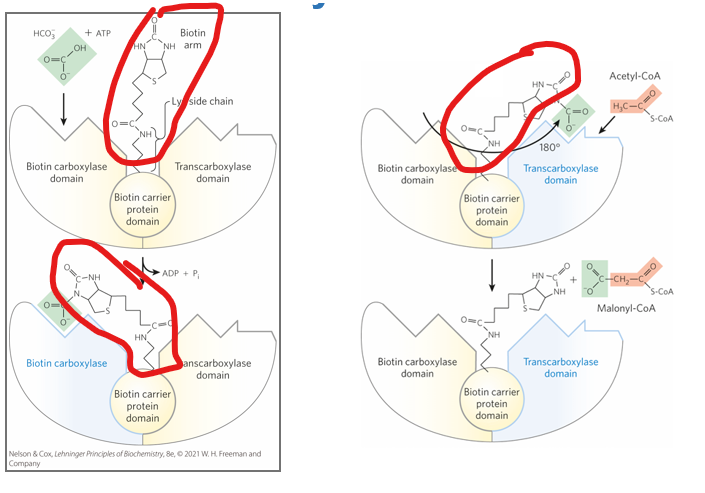
The first committed and rate-limiting step in fatty acid synthesis is the formation of malonyl-CoA from acetyl-CoA, catalyzed by acetyl-CoA carboxylase (ACC).
This reaction is biotin-dependent and requires ATP and CO₂ (from bicarbonate) to carboxylate acetyl-CoA
How does the biotin prosthetic group act
it acts as a swinging arm, transferring the activated CO₂ from one active site to the other, facilitating the carboxylation reaction
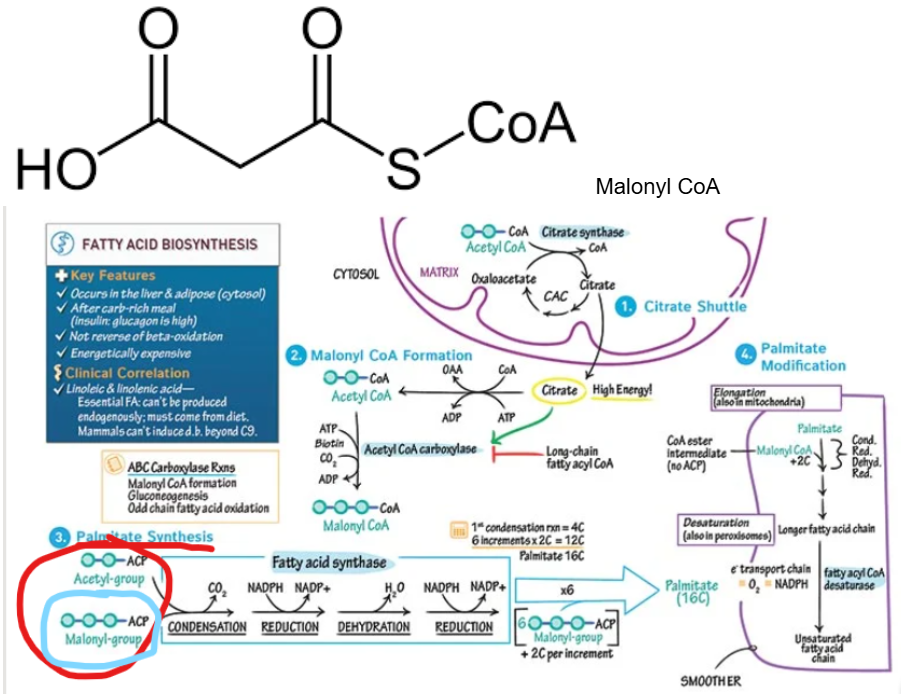
What serves as a two-carbon donor for chain elongation during fatty acid synthesis and functions as a regulatory molecule that signals the cell is ready to synthesize fatty acids
Malonyl-CoA
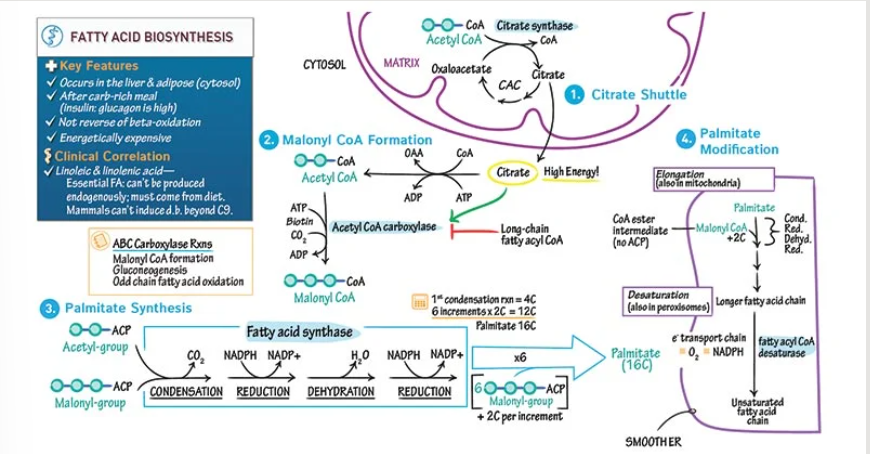
How is Acetyl CoA Carboxylase (ACC) tightly regulated
allosteric effectors
covalent modification
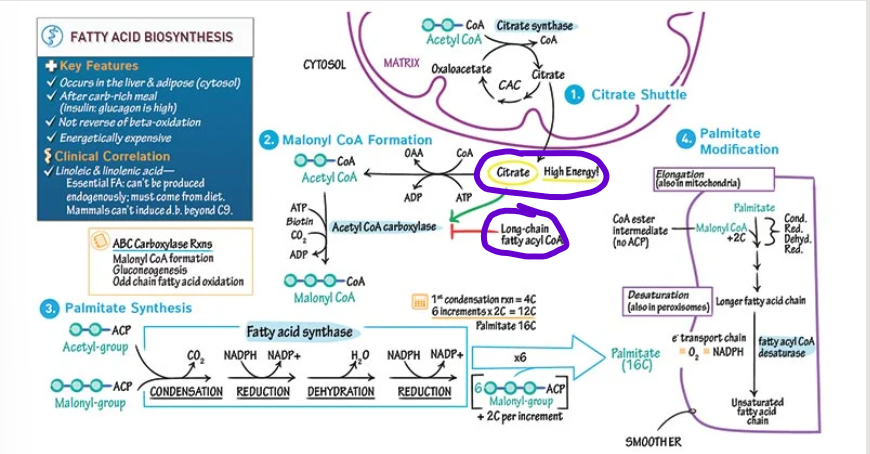
What allosteric effectors regulate ACC?
citrate activates and long chain fatty acids inhibt
How doe covalent modification regulate ACC
phosphorylation by AMPK inhibits
the tight regulation of ACC via covalent modification and allosteric effectors- emphasizes:
fatty acid synthesis is linked to the metabolic state of the cell
The actual synthesis of fatty acids is performed by _________
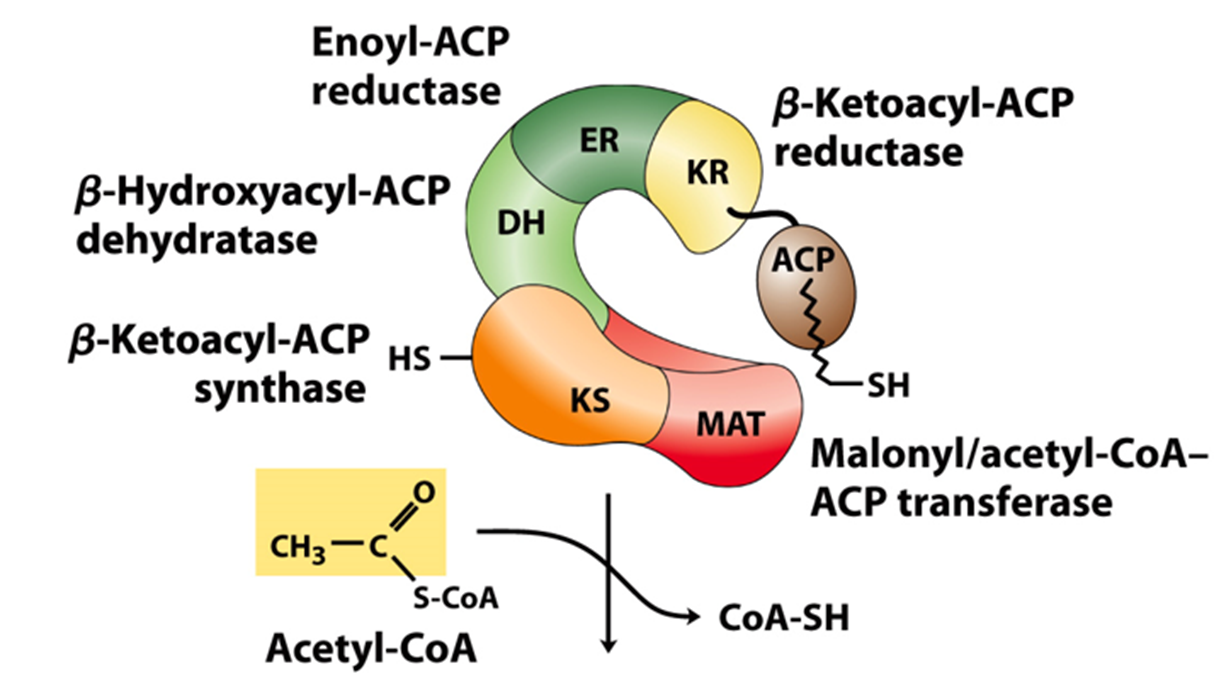
fatty acid synthase (FAS) complex
What is fatty acid synthase (FAS) complex
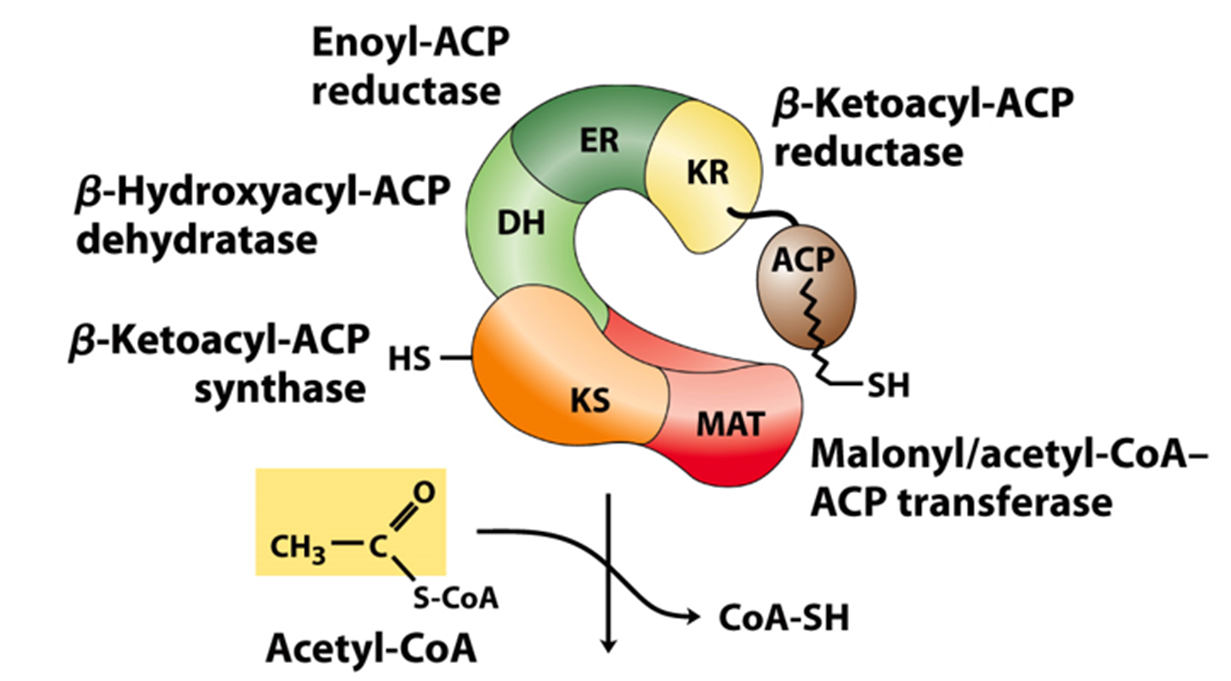
a large dimeric enzyme with multiple catalytic domains
What makes up fatty acid synthase (FAS) complex
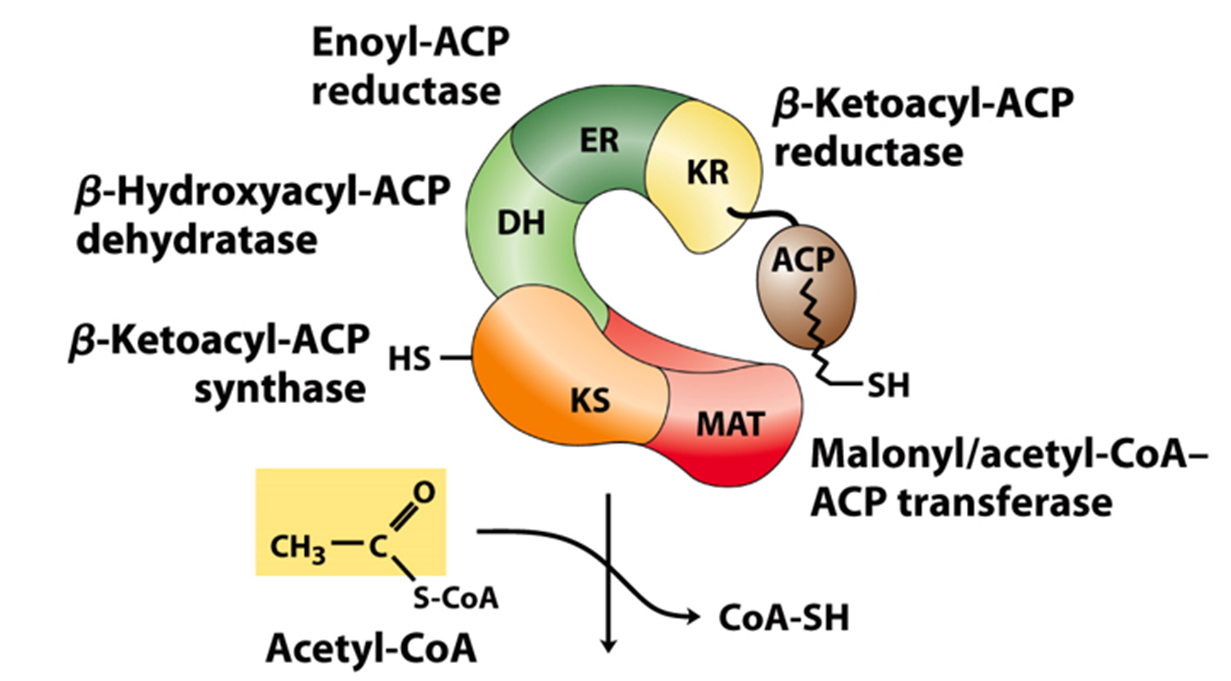
β-ketoacyl synthase (KS),
acetyl/malonyl transferase,
dehydratase,
two reductases
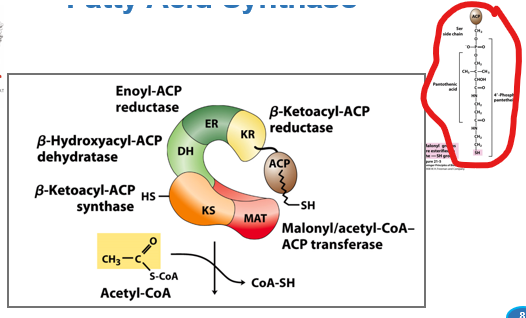
What coordnates the fatty acid synthase (FAS) complex
the acyl carrier protein (ACP)
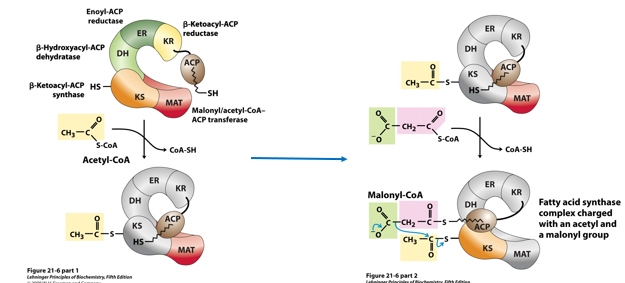
How does the the acyl carrier protein (ACP) act?
a swinging arm to shuttle substrates between active sites
How does the synthesis of Fatty acids begin?
priming the enzyme/ activation
Know the fatty acid synthase complex and chain elongation sequence:
The synthesis begins with priming the enzyme: acetyl-CoA is attached to the synthase thiol group, and malonyl-CoA is attached to the ACP thiol. During each elongation cycle, malonyl-CoA is decarboxylated, condensing with the growing acyl chain.This is followed by reduction of the β-keto group, dehydration to form a double bond, and a second reduction to yield a saturated chain
Will do
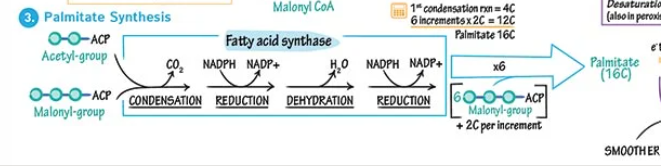
This condensation-reduction-dehydration-reduction cycle in fatty acid synthesis of the Fatty acid synthase complex mirrors ______
reverse beta-oxidation, and it repeats until a 16-carbon palmitate is formed.
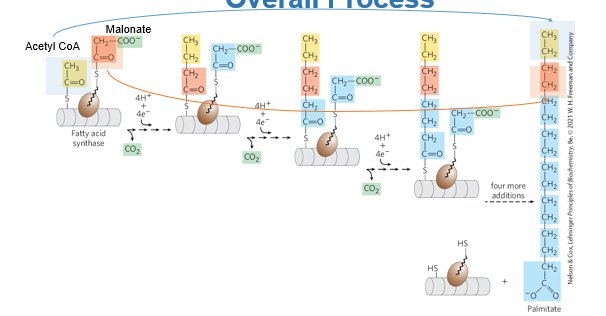
After the synthesis of a fatty acid, all carbons except the last two come from _____
malonyl-CoA
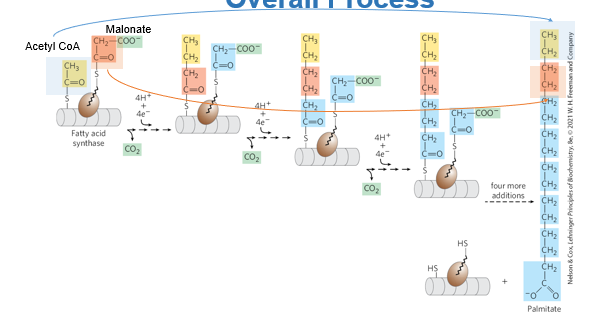
After the synthesis of a fatty acid, all carbons except the last two come from malonyl-CoA while the first two come from
initial acetyl-CoA
After fatty acid synthesis , what hydrolyzes the thioester linkage, relasing the fully formed acid?
thioesterase
Fatty acid synthesis is an energy-intensive process, reflecting its anabolic nature.
Each 16-carbon palmitate requires 8 acetyl-CoA (7 malonyl-CoA plus 1 acetyl-CoA), 14 NADPH (two per elongation cycle, for 7 cycles), and 7 ATP (used to generate malonyl-CoA)
Where does the NADPH primarily come from
the PPP pathway and partially from the malicenzyme reaction when converting malate to pyruvate
Fatty acid synthesis is an energy-intensive process, reflecting its anabolic nature. Each 16-carbon palmitate requires 8 acetyl-CoA (7 malonyl-CoA plus 1 acetyl-CoA), 14 NADPH (two per elongation cycle, for 7 cycles), and 7 ATP (used to generate malonyl-CoA). T
he NADPH primarily comes from the pentose phosphate pathway and, partially, from the malic enzyme reaction converting malate to pyruvate.
ATP provides the energy for carboxylation, while NADPH drives the reductive steps that convert keto groups into fully saturated carbon chains
What reasoning does this demonstrate?
why fatty acid synthesis occurs in a well fed, energy rich state, contrasting with veta oxidation - which occurs during fasting and energy deficient
Fatty acid metabolism is highly integrated with other pathways.
What happens during fasting?
glucagon promotes beta-oxidation, ketogenesis, and gluconeogenesis
Fatty acid metabolism is highly integrated with other pathways. During fasting, glucagon promotes beta-oxidation, ketogenesis, and gluconeogenesis.
What happens during a FED state?
insulin promotes fatty acid synthesis by stimulating ACC and citrate export.
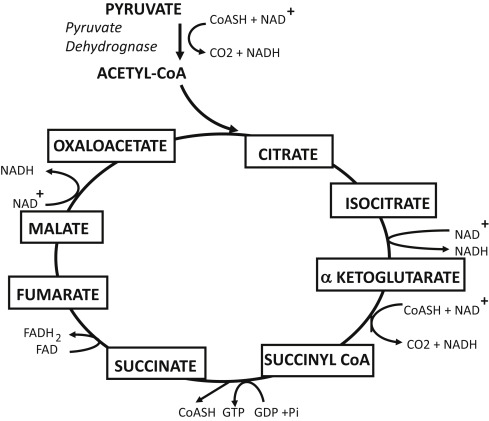
How are fatty acid synthesis and TCA cycle tightly linked
acetyl-CoA from the PDH complex provides the starting substrate, while citrate shuttles carbons into the cytosol.
What does NADPH from the PPP link to lipidi syntehsis
carbohydrate metabolism
what does the cross between metabolic pathways ensure
that energy, substrate availability, and metabolic state determine whether cells are breaking down fats for energy or building them for storage and structural needs.
What is this molecule
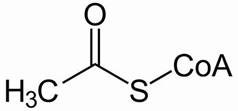
Hint- 2 Carbons
acetyl-CoA
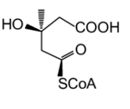
What molecules is this?
HMG-CoA
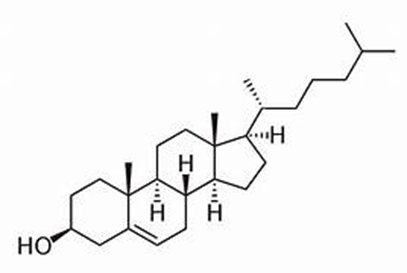
What molecule is this?
cholesterol
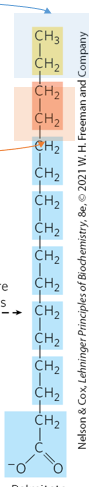
What is this molecule found at the end of fatty acid synthesis
Palimitate
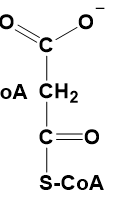
What molecule is this
Malony-Coa ( 3 carbons)
Explore top notes

