Cell Membrane
 Call Kai
 Learn
Learn Practice Test
 Spaced Repetition
 Match
Match Flashcards
 Knowt Play
 Podcast
1/4

Name | Mastery | Learn | Test | Matching | Spaced | Call with Kai | Chat |
|---|
No analytics yet
Send a link to your students to track their progress
5 Terms
Function
Separates the cell from the environment AND maintains differences between them.
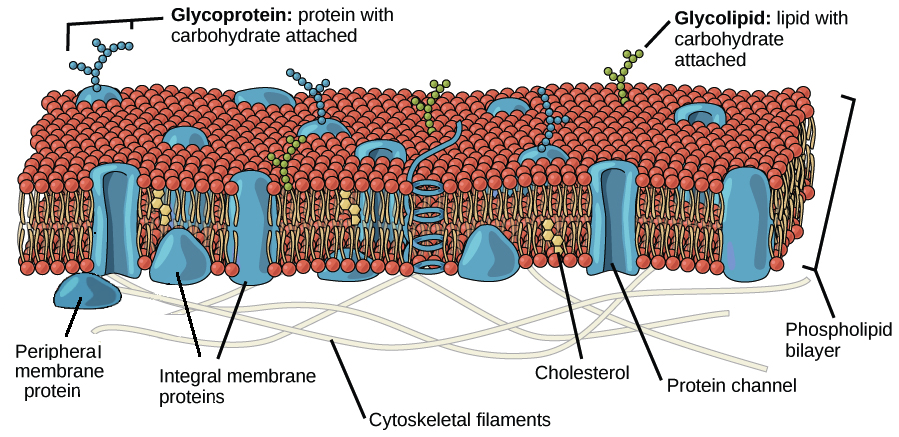
Composed of a phospholipid bilayer “studded” with proteins.
Structure
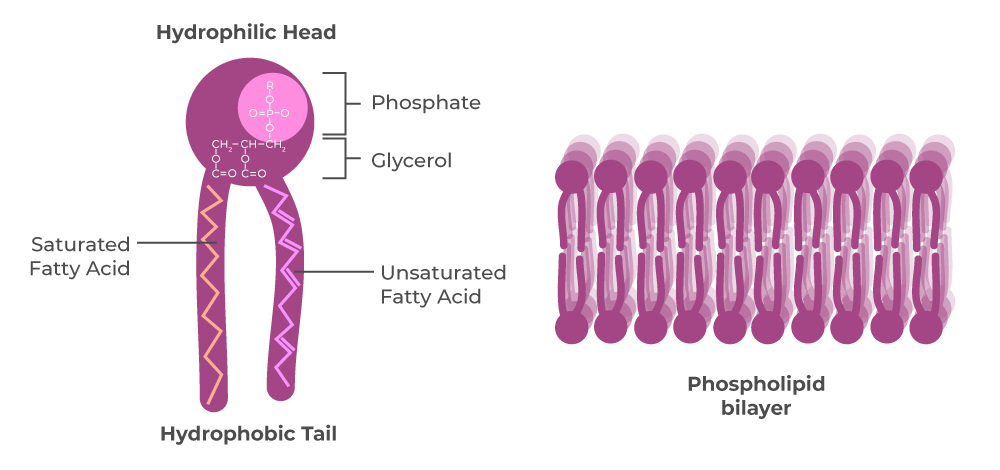
Phospholipid: a lipid made of glycerol, two fatty acid tails, and a phosphate-linked head group.
Phospholipid bilayer: two layers of phospholipids with their tails pointing inward.
Cholesterol: another lipid composed of four fused carbon rings, is found alongside phospholipids in the core of the membrane.
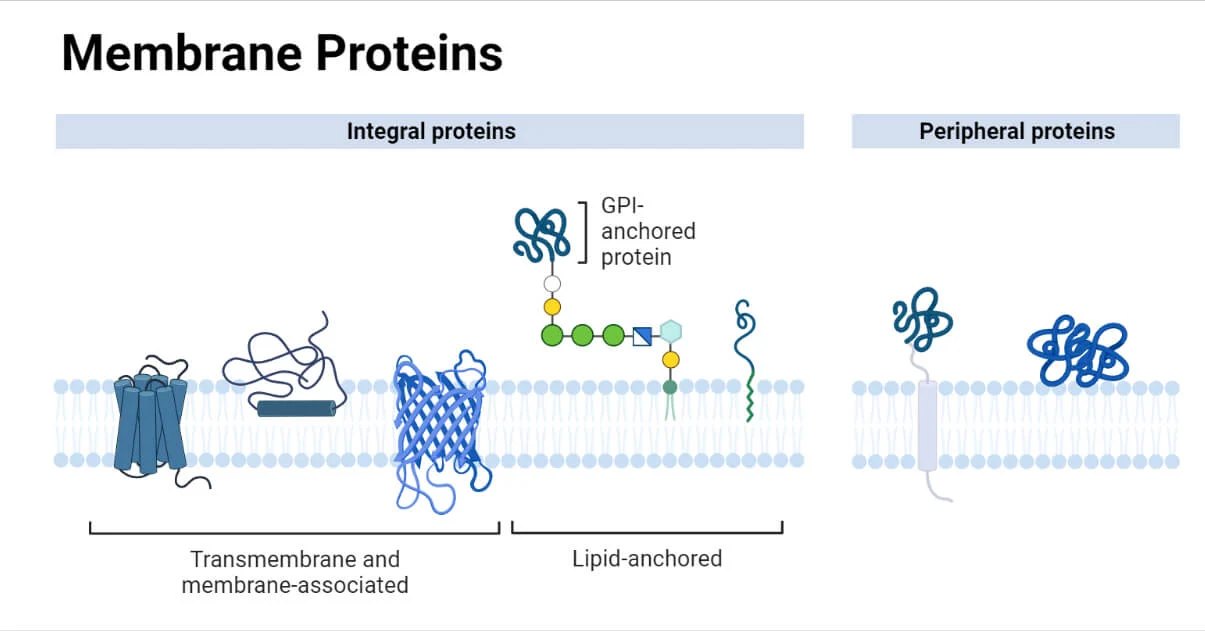
Proteins (integral and peripheral): stud with the phospholipid bilayer.
Carbohydrate groups: found on the outer surface of the plasma membrane.
Attach to proteins → Form glycoproteins
Attach to lipids → Form glycolipids
Phospholipids
Amphipathic
Acts as a barrier: polar/charged substances cannot cross a non-polar region.
→ They require a protein carrier.Only extremely small/non-polar molecules can cross the membrane without a carrier.
→ Ex: O2, CO2, H2O, steroid hormones (i.e., lipid)
Membrane proteins
Can go through the membrane (trans-membrane protein), sit on a polar surface, or sit in the non-polar layer.
Functions of membrane proteins:
Carriers/channels for transport
Enzymes for the reaction
Receptors for hormones
Cell-cell recognition
→ Glycoproteins have carbohydrate chains that extend outside of the cell, which are unique to each person.
→ White blood cells will treat foreign glycoproteins as “invaders”.
Fluid Mosaic Model
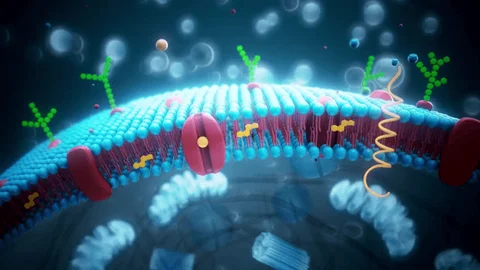
Often used to describe cell membranes.
Lipid: consistency of oil (fluid)
Proteins: arranged like tiles in a mosaic
→ Proteins can move left and right in the cell membrane, but trans-membrane proteins are “stuck”.Cholesterol is often found in membranes.
Increase fluidity at low temperatures and give membranes stability.