3.1.3 transport in plants
 Studied by 0 people
 Call with Kai
 Learn
Learn Practice Test
 Spaced Repetition
 Match
Match Flashcards
 Knowt Play
1/79

There's no tags or description
Looks like no tags are added yet.
Name | Mastery | Learn | Test | Matching | Spaced | Call with Kai |
|---|
No analytics yet
Send a link to your students to track their progress
80 Terms
why do plants need transport systems?
metabolic demands
SA:V
size
why do plants need transport systems because of their metabolic demands?
many internal and underground parts do not photosynthesis
they need glucose and oxygen transporting to them and need to remove waste products
why do plants need transport systems because of their SA:V?
plants can’t rely on diffusion alone to supply cells with what they need
although leaves have relatively hight SA:V
when stems and roots are taken into account they have low SA:V
why do plants need transport systems because of their size?
many plants can get very large and so need a substantial transport system
what are dicotyledonous plants?
plants that produce seeds that contain 2 cotyledons
these act as food stores for developing embryo to form the first leaves after germination
they have vascular system made up of xylem and phloem
what is the difference in number of cotyledons in monocots and dicots?
monocot has 1 cotyledon
dicot has 2 cotyledons
what is the difference in leaves of monocots and dicots?
monocots have long, narrow leaves and veins are parallel
dicots have broad network of veins
what is the difference in vascular bundles of monocots and dicots?
monocots have scattered vascular bundles
dicots have a ring of vascular bundles
what is the difference in flower parts of monocots and dicots?
monocots have flower parts in multiples of 3
dicots have flower parts in multiples of 5 or 4
what is the function of the xylem?
transports water and minerals
support the plant
how is lignin arranged in the xylem?
lignin is arranged in spiral or small rings
why is lignin arranged in spiral or small rings?
allows for flexibility
why is there pits in the cell wall, where there is no lignin?
so that other cells can be provided with water and mineral ions
to allow lateral movement of water between xylem cells, in case their is blockage/damage
what are the only living cells in xylem called?
thick walled xylem parenchyma
what does thick walled xylem parenchyma do?
packs around xylem cells, storing food and tannin deposits
what is tannin?
chemical that protects plant tissue from attacks by herbivores
since it tastes really bad
what is the sink in the summer in plants?
roots turn glucose into insoluble starch to store over the winter
what is the source in plants and when?
summer/ autumn, the leaf makes glucose by photosynthesis and loads up the phloem to send it to the roots
spring, the roots hydrolyse starch back into glucose and sends it up to growing parents of the the plant
what is the structure of sieve tube elements?
have no nucleus
very little cytoplasm and organelles
what is the structure of companion cells?
large nucleus
lots of mitochondria to help load assimilates (sucrose and amino acids) into sieve tubes
what are the cytoplasm of the sieve tube and companion cells connected by?
plasmodesmata
which way does phloem sap move, when moving through pores in the wall between sieve tubes?
vertically
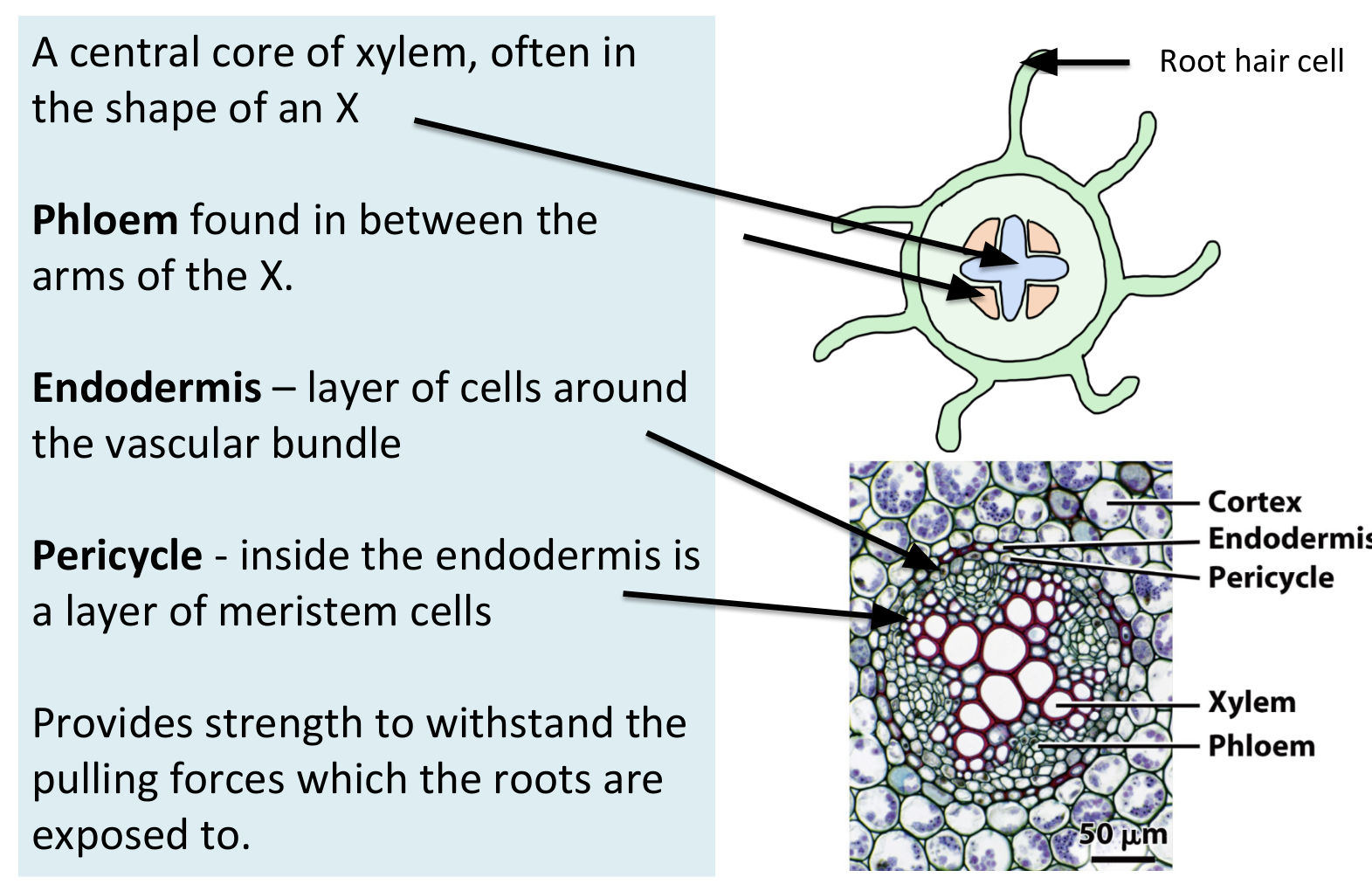
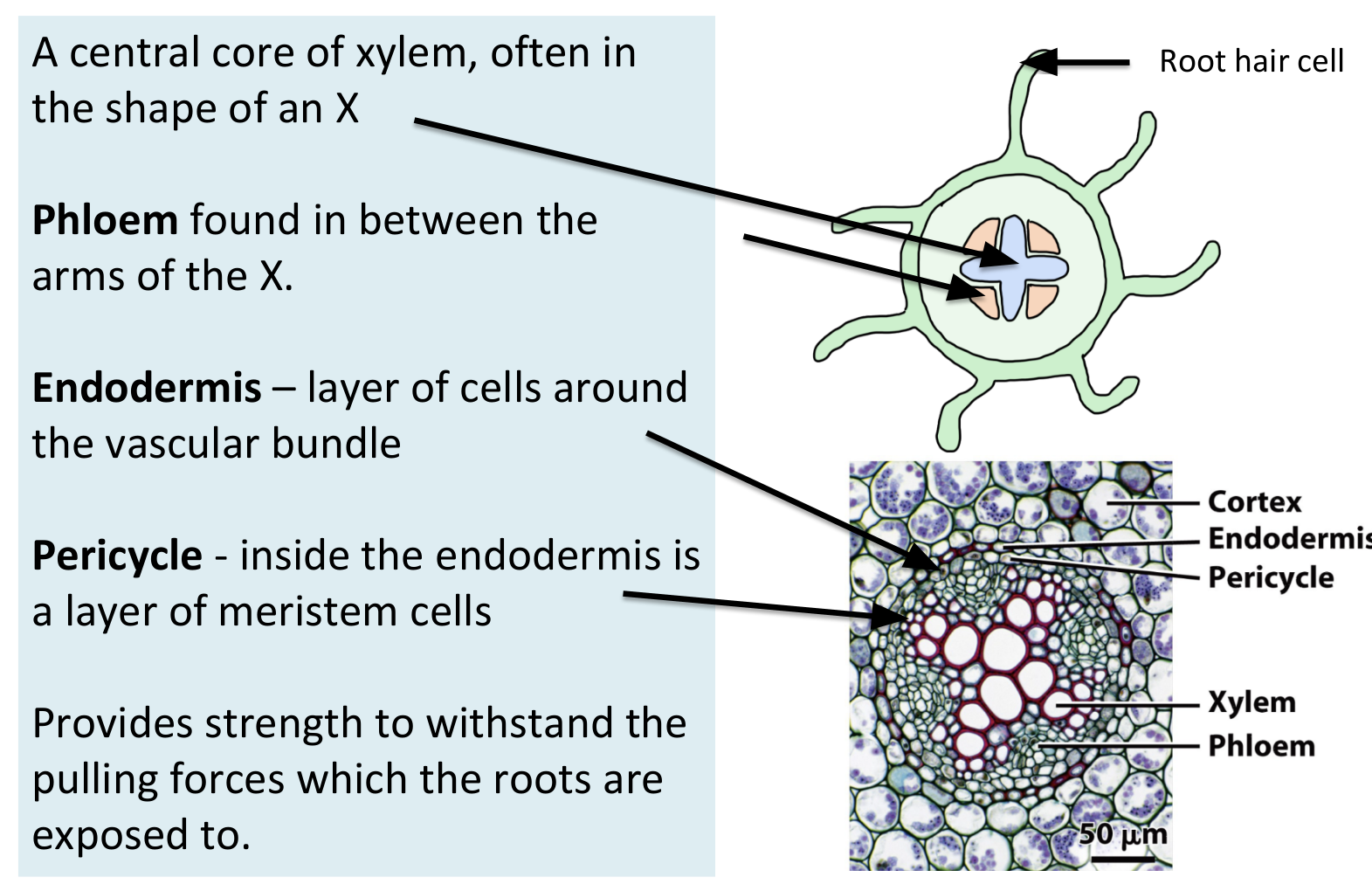
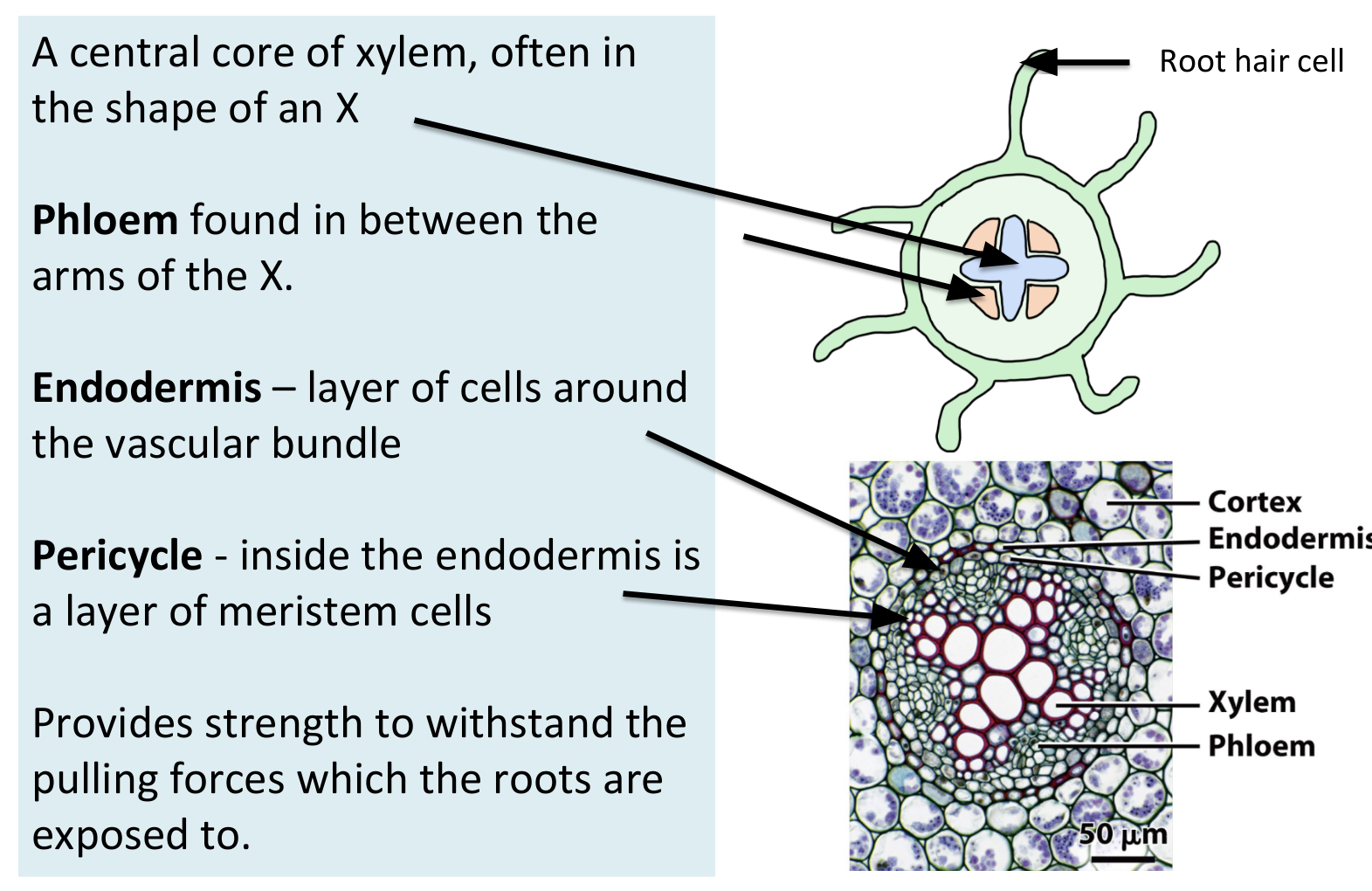
where is the xylem found in the roots on a cross sectional?
central core of xylem often in shape of an X
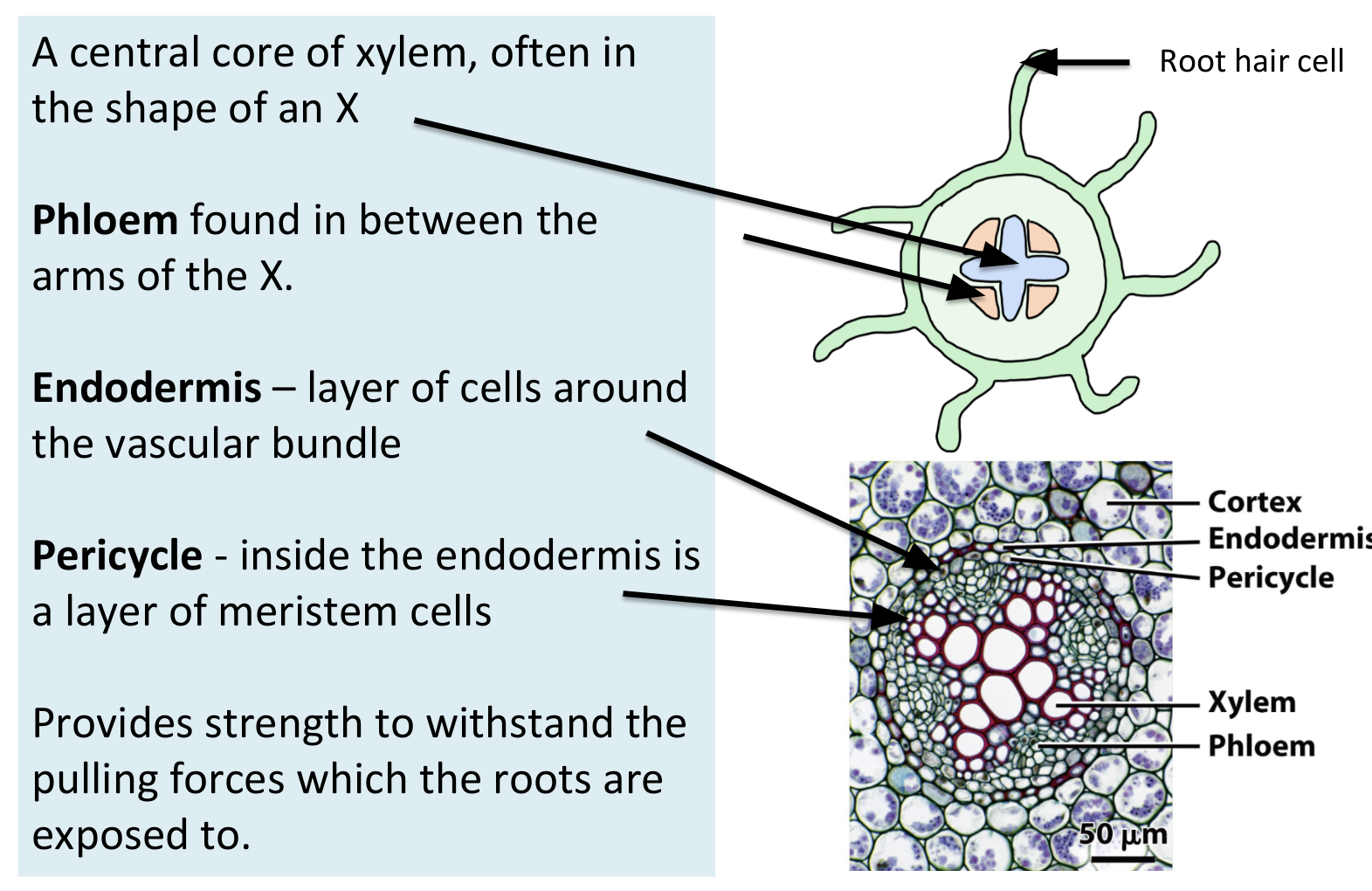
where is the phloem found in the roots on a cross sectional?
phloem is found in between the arms of the X
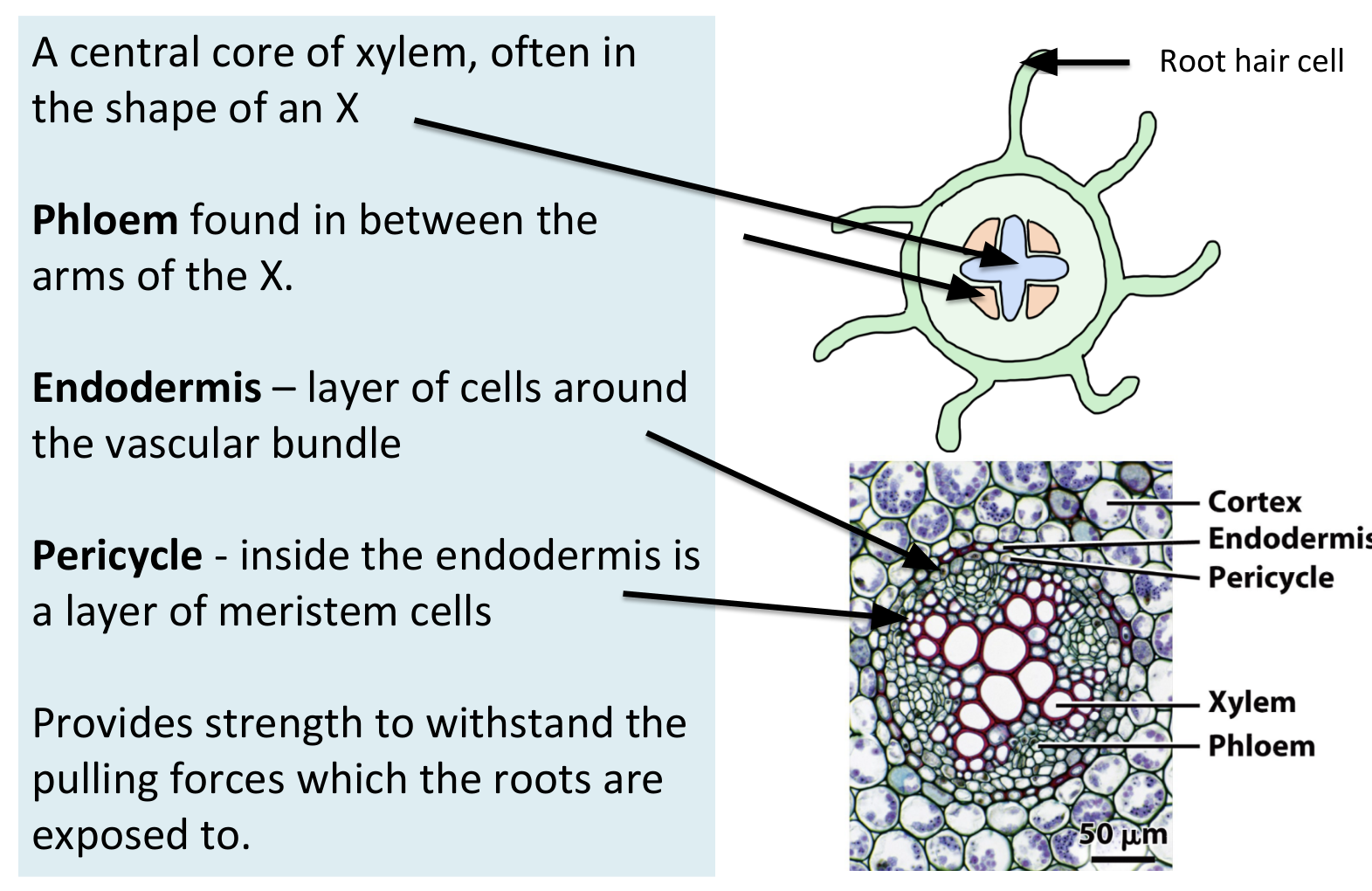
where is the endodermis found in the roots on a cross sectional?
layer of cells around the vascular bundle
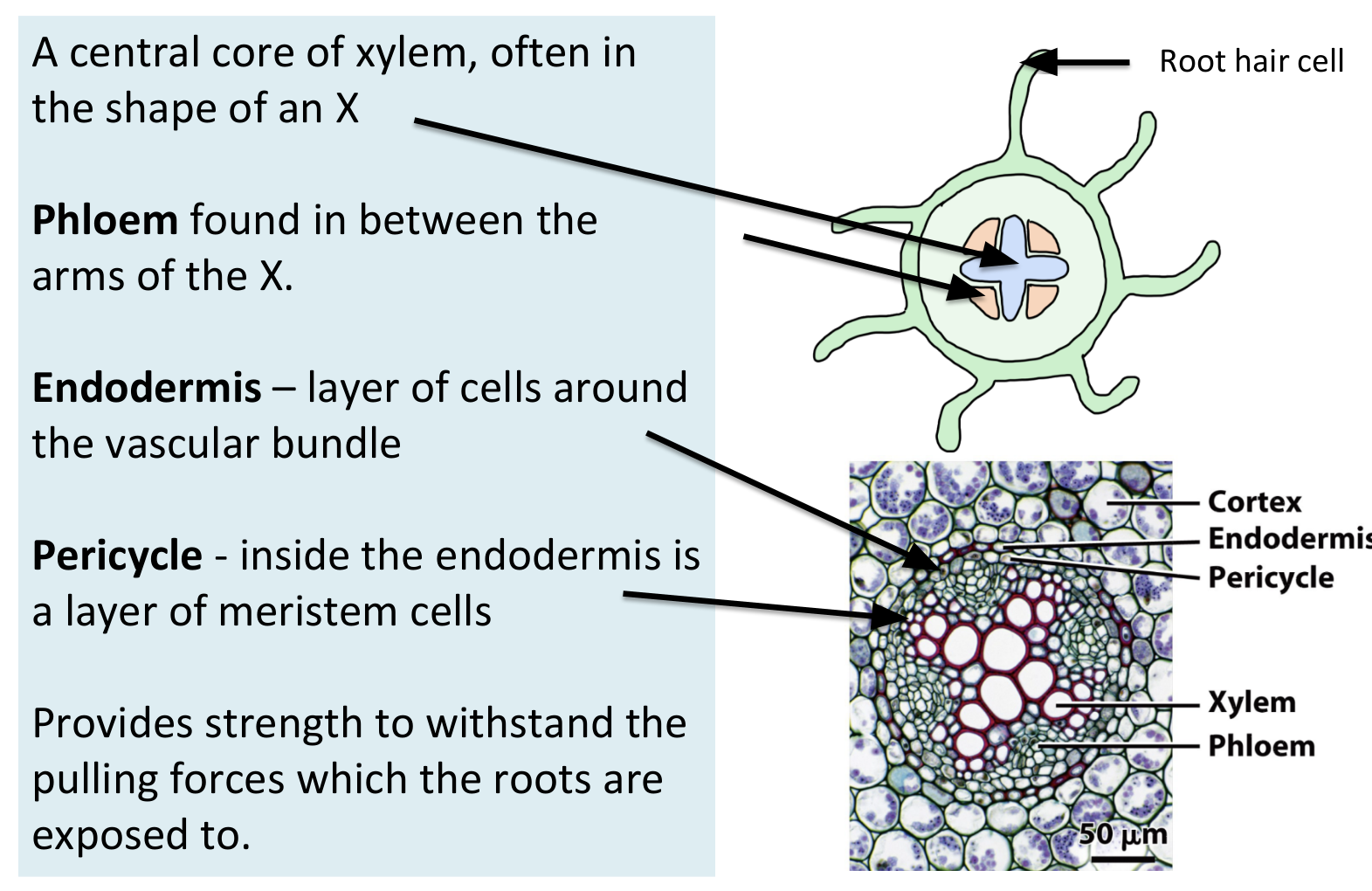
where is the pericycle found in the roots on a cross sectional?
inside the endodermis is a layer of meristems
where in the steam are the vascular bundles found?
near the outer edge of the stem to act as scaffolding
what is the layout of the vascular bundles in the stem?
xylem on inside of each vascular bundle
phloem towards the outside
in middle is layer of cambium
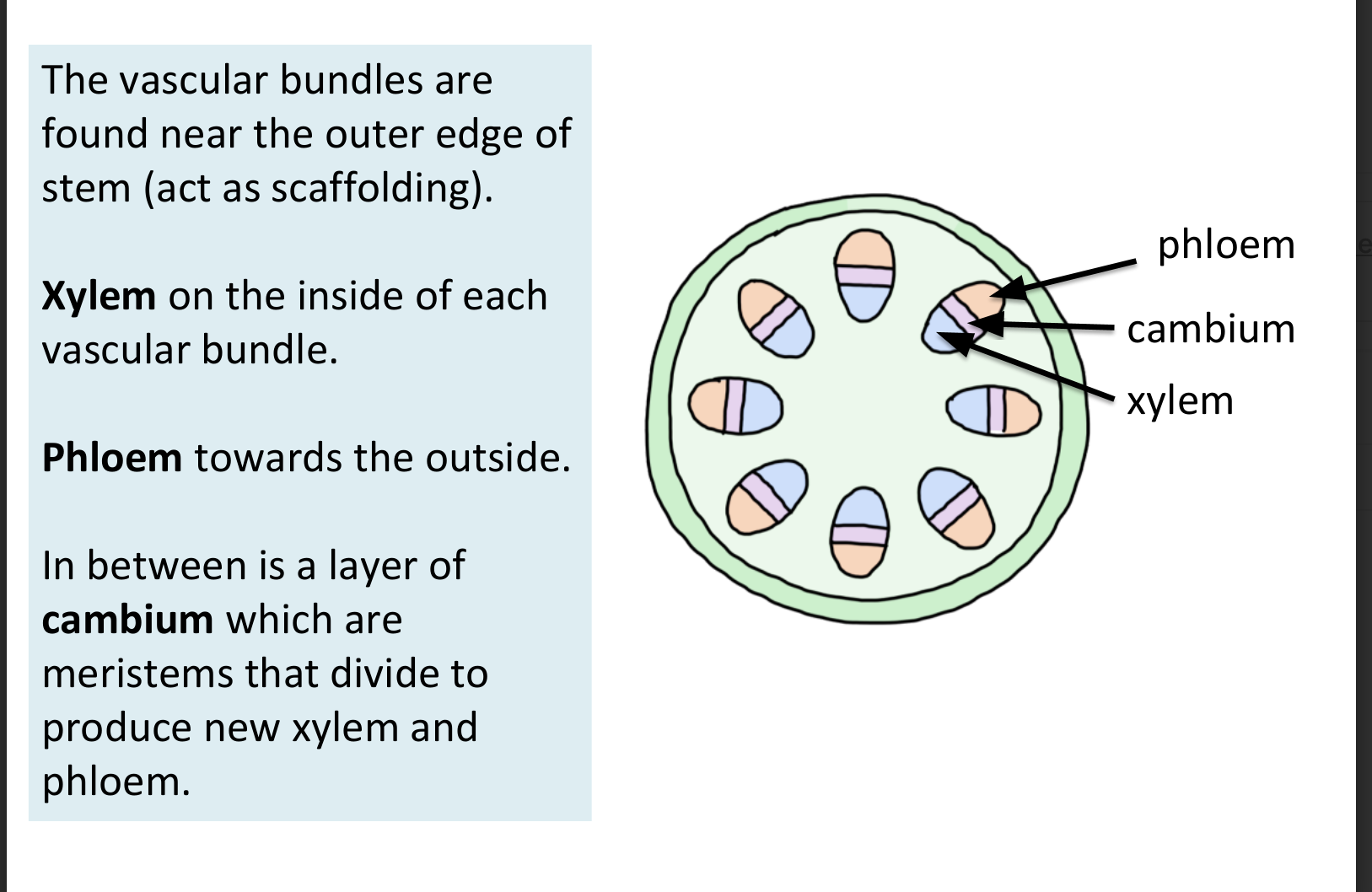
what is cambium?
meristem tissue that divide to produce new xylem and phloem
how do vascular bundles look in the leaf?
explain the how water travels through plant simplified?
absorbed by soil through root hairs
transported up the stem to the leaves
evaporation through the leaves through transpiration
what is the definition of transpiration?
Transpiration is the loss of water vapour from a plant to the atmosphere, mainly by evaporation from the surface of mesophyll cell and diffusion through stomata
what is the the transpiration stream?
water moving up the plant against gravity through xylem, fuelled by evaporation
what are the layers of a leaf (GSCE)?
waxy cuticle
epidermal tissue
palisade mesophyll
spongy mesophyll
epidermal tissue
what is the epidermal tissue covered with and why?
waxy cuticle
to reduce water loss by evaporation
what do palisade mesophyll contain?
most of chloroplasts
what is the purpose of xylem and phloem tissues in the leaf?
deliver water and nutrients and take away glucose
what do spongy mesophyll have and why?
air spaces
increase the rate of diffusion of gases
what does the lower epidermis have a lot of and why?
stomata
for gas exchange
how does water move in the leaf?
water is pulled along the xylem
water moves into spongy mesophyll cells down the water potential gradient by osmosis from xylem
water vapour diffuses into their air down the water potential gradient from spongy mesophyll, lowering water potential
what leaf structures affect transpiration?
leaf surface area
thickness of epidermis and cuticle
stomatal frequency
stomatal size
stomatal position
what are the factors affecting transpiration rate? (GSCE)
light
temperature
wind
humidity
why does light affect transpiration rate?
in bright light, transpiration increases
the stomata open wider to allow more CO2 into leaf for photosynthesis
why does temperature affect transpiration rate?
transpiration is faster in higher temperatures
evaporation and diffusion are faster at higher temperatures, this lowers the water potential of the air, so the water potential gradient is steeper
why does wind affect transpiration rate?
transpiration is faster in windy conditions
water vapour is removed quickly by air movement, speeding up diffusion of water vapour of of the leaf, lowering water potential of the air, so water potential gradient is steeper
why does humidity affect transpiration rate?
transpiration is slower in humid conditions
diffusion of water vapour out of the lead slows down if the lead is already surrounded by moist air
what does transpiration provide plants with water for?
cooling by losing water by evaporation
photosynthesis
turgor pressure (support, provides hydrostatic skeleton) (roots enables plants to force their way through firm material)
movement of minerals
what are the features of root hair cells?
long projections increase surface area to absorb water and mineral ions from soil
thin permeable cell wall
lots of mitochondria to provide energy for active transport
why does diffusion and osmosis happen quickly in root hair cell?
root hair cells have thin cellulose wall
how is water transported into the root?
water moves down the water potential gradient by osmosis because of active transport of the minerals into root hair cells which lowers the water potential in these cells
water only enters the root near the root tip because there are root hair cells which increases surface area for osmosis
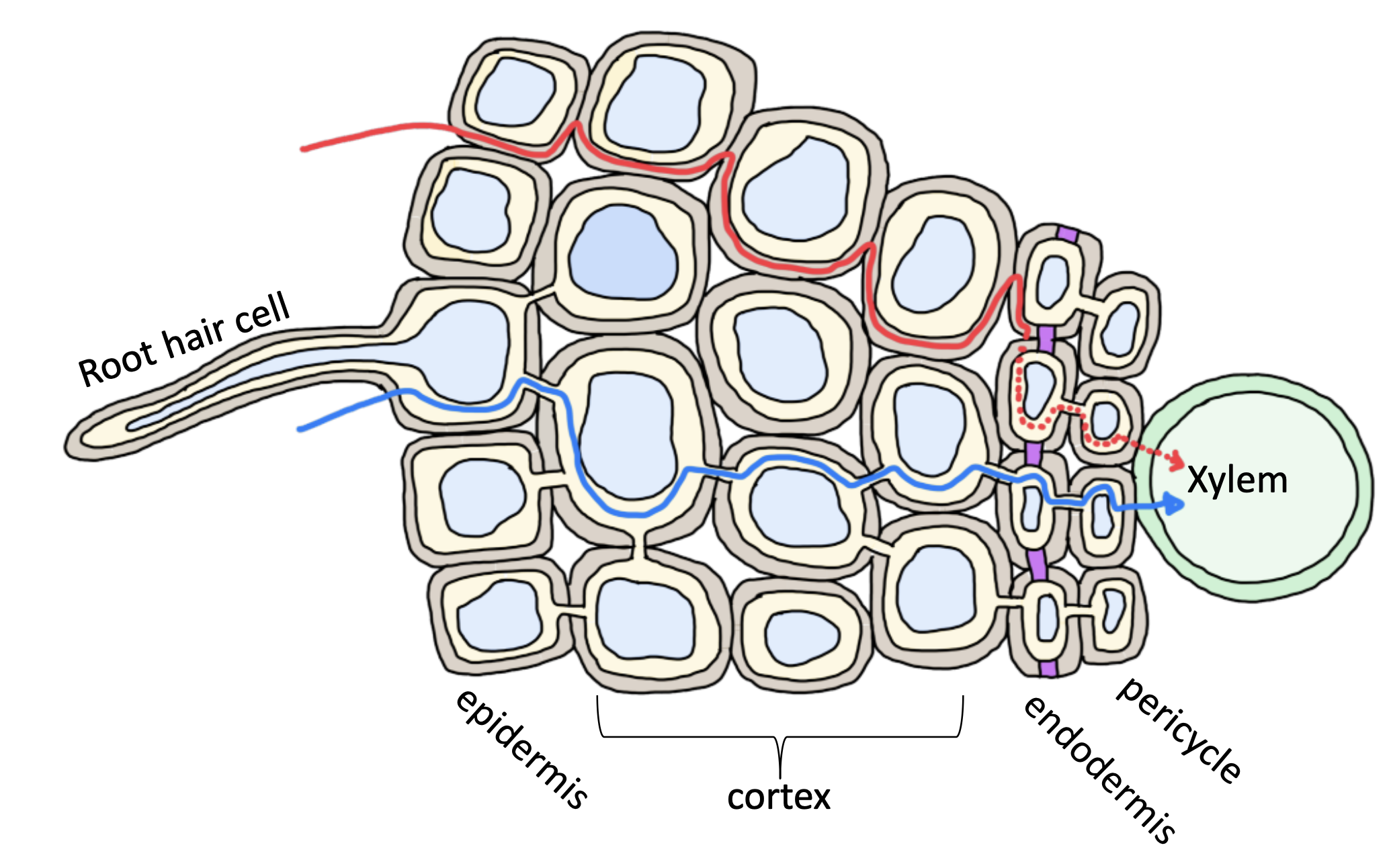
label what the blue, red and purple coloured parts are showing
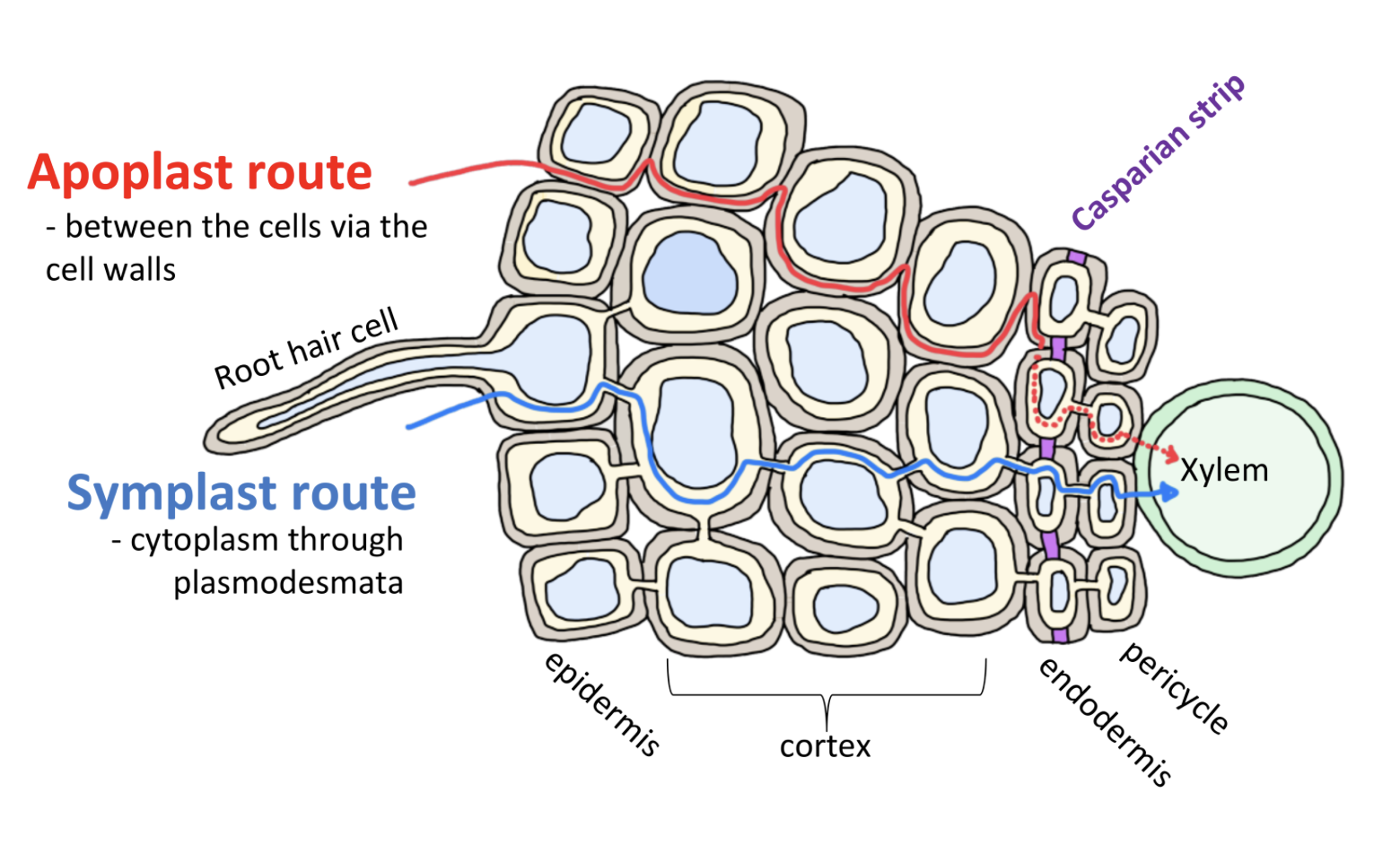
explain the apoplast route
water moves through the cellulose wall and intercellular spaces
the permeable fibres of cellulose don’t resist water flow
water cannot pass the endodermis route because the casparian strip in the endodermis cell wall is impermeable to water because of waterproof band of Suberin
so all water must past endodermis via cytoplasm
what is the importance of the casparian strip?
prevents harmful substances from entering the xylem (since they now have to move via symplast route)
prevents the leakage of water from xylem vessels
aids the development of root pressure (an upwards force pushing water up the stem)
explain the symplast route
through cytoplasm of cells
water enters the root hair cells across the partially permeable membrane by osmosis from high water potential in the soil to lower water potential in the cell
it passes from one cell to the other via plasmodesmata down the water potential gradient
what are the features of the source?
where the assimilates are produced/released
low water potential
high pressure
what are the features of the sink?
where assimilates are needed
high water potential
low pressure
what is translocation?
when leaves produce large amounts of glucose which is converted to sucrose for transport
when it reaches the cell, it’s converted to glucose for respiration, starch for storage or used to produce other products
products being transported are known as assimilates and are transported from sources to sinks (tissue that needs them) in process called translocation
how is sucrose transported from leaf cell through companion cell into the phloem?
H+ are actively pumped out of companion cells, as a result a concentration gradient is created
H+ ions diffuse back into companion cells co-transporting sucrose down the concentration gradient
the concentration of sucrose is now high in companion cell so diffuses into the sieve tube elements through plasmodesmata
why is the process of sucrose/phloem loading important?
increased pressure
mass flow
energy for the plant
explain the reasons why sucrose/phloem loading is important
increased pressure
the higher concentration of sucrose in the sieve tube elements, lowers the water potential, drawing water in by osmosis from surrounding xylem vessels
mass flow
this influx of water increases the hydrostatic pressure at the source, creating a pressure gradient that pushes the phloem sap towards the sink
energy for the plant
this process ensures that the energy rich sucrose produced during photosynthesis is transported to other parts of the plant that require it for growth or storage
what is evidence for translocation
if mitochondria of companion cells are poisoned, translocation stops
this is because the flow of sugars in the phloem is about x10000 faster than it would be by diffusion alone suggesting an active process is driving the mass flow
explain how the phloem is loaded
sucrose entering the sieve tube elements lowers water potential
this causes water to move into the sieve tube element via osmosis from surrounding cells
this increases the hydrostatic pressure at the source causing mass flow to area of lower pressures
explain how the phloem is unloaded
sucrose differs from the sieve tube into companion cells then other cells by diffusion
sucrose is constantly being used up so a concentration gradient is always maintained
the loss of sucrose from sieve tubes raises the water potential so water moves out via osmosis, this reduces the hydrostatic pressure at the sink
what are xerophytes?
plants adapted to a dry habitat
what are the adaptations of xerophytes to reduce water loss?
thick waxy cuticle to reduce evaporation
reduced leaf area to reduce SA:V ratio
hairy leaves as it traps a layer of saturated air
sunken stomata as the puts above the stomata become saturated
rolled leaves as this reduced the area expose to the air and keeps stomata on the inside so increasing the water vapour inside the roll
succulents to store water in specialised tissue in their stems and roots
leaf loss some plants prevent water loss by losing their leaves when water is not available
what does increasing water vapour around stomata do?
reduces the water potential gradient
so slows down water loss
what are hydrophytes?
plants adapted to wet habitat
what is a problem for hydrophytes?
water logging
this is because air spaces need to be full of air, not water
this will help plants float so they are near the surface so they can get more light for photosynthesis
what are some characteristics of hydrophytes?
large, flat floating leaves
long and flexible stem
roots embedded in the soil at the bottom
what are adaptations of hydrophytes?
very thin or no waxy cuticle
floating leaves have their sonata on the upper surface in contact with air, many are always open
some hydrophytes have air spaces which enable leaves to float to the surface
no supporting structures as water supports the leaves
smaller roots as there is less need for uptake by roots
what is aerenchyma? And what is the purpose?
spongy tissue in roots, leaves and stems
oxygen from photosynthesis fills them
this helps to keep the plants buoyant and forms.a low resistant pathway for oxygen to diffuse to tissues below water
what are pneumatophores?
where roots become water logged
air is in short supply so they develop special aerial roots
these roots have lenticels (raised pores) which allows gases into the roots
how does root pressure work?
water is pushed up the xylem by hydrostatic pressure
mineral salts are pumped into xylem vessels in the root by endodermal cells which lowers water potential in the xylem
water moves in from surrounding cells by osmosis which raises the hydrostatic pressure so pushing water up the xylem
what is evidence for roots pressure?
in certain conditions, such as at night when transpiration is low, some leaves exude water from their tips from their leaves = guttation
cut stumps of plants exude water from their cut ends
cyanide and other poisons which interfere with production of ATP, causes root pressure to disappear
low levels of oxygen means root pressure falls
root pressure increases with temperature implying it is chemically controlled
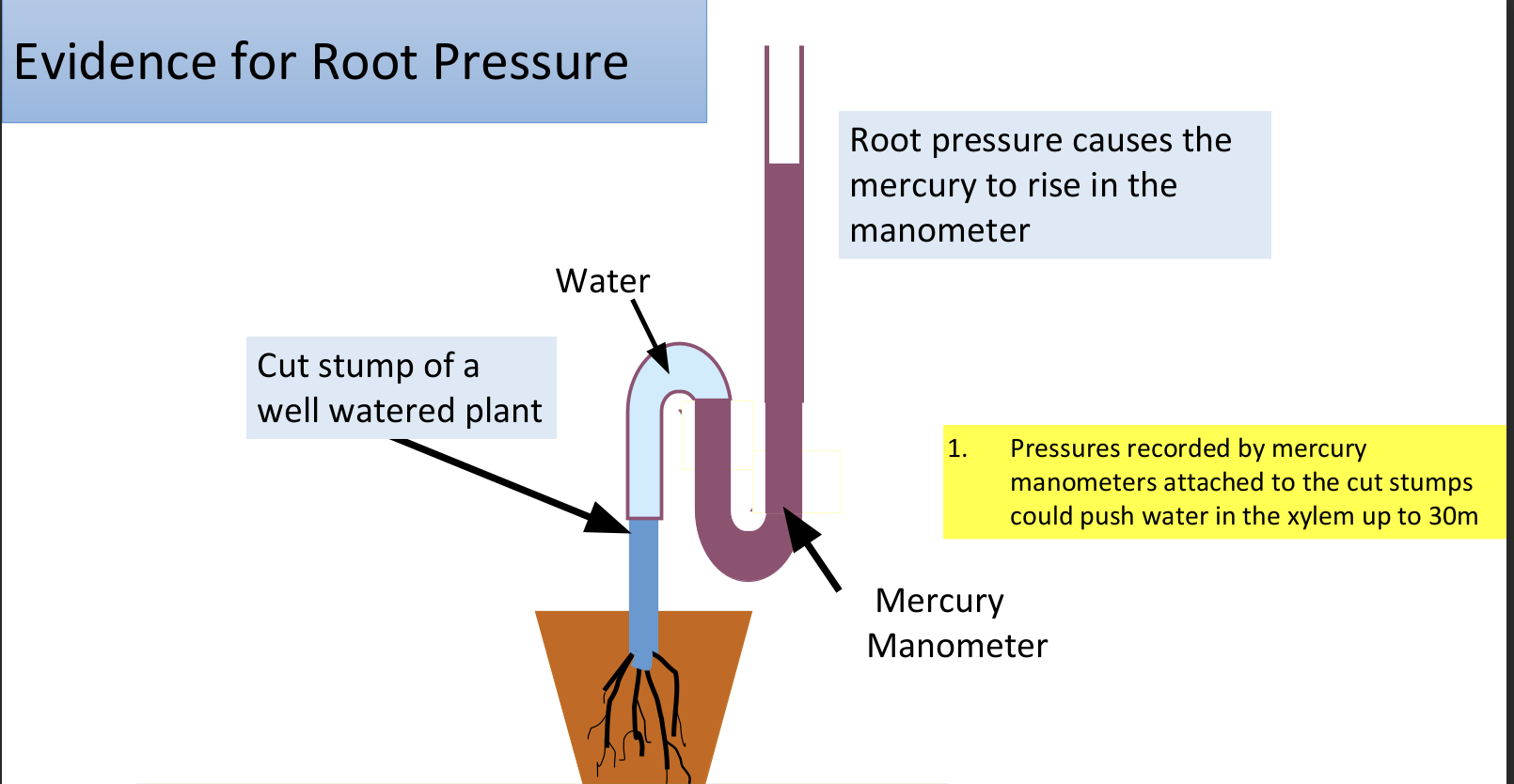
what are the limitations of root pressure?
the pressure measures is not enough to get water to the top of trees
relies on the plant’s energy (ATP) for active transport
how does capillarity work?
water rises up narrow tubes due to the adhesive forces between the water molecules and the wall of the tube
water rises higher in narrower tubes
xylem vessels are very narrow
what is the limitation of capillarity?
water will only rise 50mm
what is the cohesion tension theory?
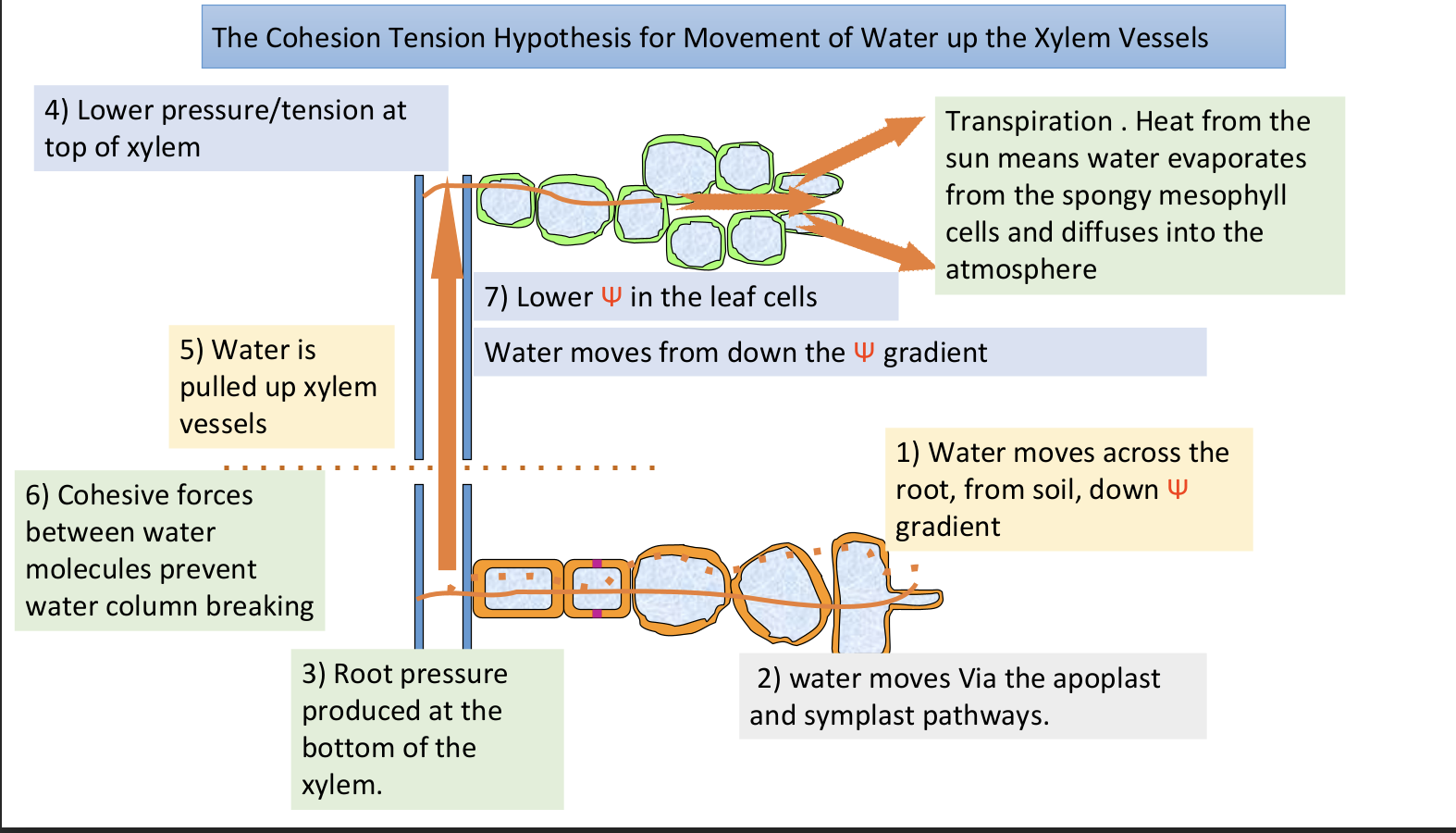
what is evidence for the cohesion tension hypothesis?
cut stems attached to a tube containing water over mercury almost 1m
dendrographs record that tree trunks have narrower diameter during the day when transpiration rate is higher, when the most tension is created
explain the variation in trunk diameter and transpiration rate over 24hrs?
the diameter of the trunk decreases as transpiration rate increases
evaporation from the leaves draws water from the xylem by osmosis, water is pulled up the xylem causing tension
the tension pulls the xylem vessel walls in, so the trunk diameter gets smaller
when the trunk has a larger diameter when there is less transpiration
this supports the cohesion tension hypothesis but not root pressure
 Note
Note  Flashcards (22)