2. Resource management and sustainable production
 Call Kai
 Learn
Learn Practice Test
 Spaced Repetition
 Match
Match Flashcards
 Knowt Play
1/88

There's no tags or description
Looks like no tags are added yet.
Name | Mastery | Learn | Test | Matching | Spaced | Call with Kai |
|---|
No analytics yet
Send a link to your students to track their progress
89 Terms
Resources
The stock or supply of materials that are available in a given context.
Renewable resources
A natural resource that can replenish with the passage of time or does not abate at all.
Features of renewable resources
Inexhaustible, Less carbon emission, More expensive to implement
Examples of renewable resources
Geothermal, wind, hydroelectric, solar energy, tidal energy
Non-renewable resources
A resource that does not renew/replenish itself at a sufficient rate for sustainable economic extraction
Features of non-renewable resources
Fixed and limited quantities, More carbon emissions, Less expensive to implement
Examples of non-renewable resources
Coal, petroleum and natural gas
Reserves
Accessible, and economically viable deposits of natural resource that has been identified in terms of quantity and quality
Proven reserve
A reserve that its at least 90% is recoverable by economically profitable means.
Probable reserve
A reserve that its less than 90% and more than 50% is recoverable.
Possible reserves
A reserve that its below 50% is recoverable
Examples of reserves and resources
Arctic region - oil & gas, Norway & Saudi Arabia - oil, Escondida mine (Chile) - Copper
Impact of a development on resource security for nations
Impact of a development on international treaties
Renewability
The level at which a resource is renewable. The rate that a resource can be replenished.
Renewability examples
Reuse
Reusing a product in the same context or in a different context
Recycle
Reusing the materials from obsolete products to create other products
Repair
Reconstructing or renewing any part of an existing device or structure
Recondition
Rebuilding a product so that it is in an “as new” condition, and is generally used in the context of car engines and tyres.
Re-engineer
Redesigning components or products to improve their characteristics or performance
Pollution
Introduction of contaminants into the natural environment that cause adverse change and can take the form of chemical substances or energy.
Waste
Any substance which is discarded after primary use, or it is worthless, defective and of no use.
Waste mitigation strategies
Strategies used to reduce the waste produced by a product or in the production and disposal of a product.
Life-cycle analysis (LCA)
The assessment of the effect a product has on the environment through five stages of its life: pre-production, production, distribution (including packaging), utilization, and disposal
Crade-to-cradle (C2C)
A design philosophy that aims to eliminate waste from the production, use and disposal of a product. It centres on products which are made to be made again.
Dematerialization
The reduction of total material and energy throughput of any product and service.
Dematerialization strategies
Reduction of raw materials at the production stage, Reduction of energy and material inputs at the user stage, Reduction of waste at the disposal stage
Product recovery strategies
The processes of separating the component parts of a product to recover the parts and materials.
Recycling
Using the materials from obsolete products to create other products
Raw material recovery
The process of separating the component parts of a product to recover the parts and materials.
WEEE recovery
WEEE (= the regulatory framework / design principles / management strategies aimed at reducing the environmental impact of electronic waste)
Energy recovery
The process of generating energy in the form of electricity and/or heat from the primary treatment of waste
Circular economy
An economy model in which resources remain in use for as long as possible, from which maximum value is extracted while in use, and the products and materials are recovered and regenerated at the end of the product life cycle
Embodied energy
The total energy required to produce a product
Components of embodied energy
Materials, Transportation, Assembly, Maintenance & Repair, Demolition & Recycling
Electrical grid
An interconnected network for delivering electricity from suppliers to consumers
How grid system works
Stations that generate electricity
High-voltage transmission lines that carry from distant sources to demand centers
Lower voltage distribution that connect residential, industrial, commercial customers
Combined Heat and Power (CHP)
A system that simultaneously generates heat and electricity from either the combustion of fuel, or a solar heat collector
Examples of CHP
Central heating system, hot water supply
Individual energy generation
The ability of an individual to use devices to create small amounts of energy to run low-energy products
Systems for individual energy generation
Smartphones, LED lights, sensors or wearables
Advantages of individual energy generation
Disadvantages of individual energy generation
Quantification of carbon emissions
Defining numerically the carbon emissions generated by a particular product
Quantification methods of carbon emissions
Record carbon emission, Discover how much is being produced, Discover who/where it is produced, Track the carbon footprint
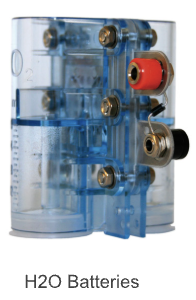
Hydrogen fuel cells battery
Cost high; Efficiency low; Environmental impact null; Reliability moderate; Heavy transport e.g. buses, trains, trucks
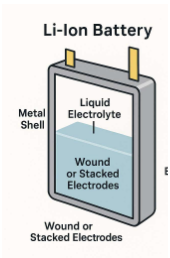
Lithium ion battery
Cost moderate; Efficiency high; Environmental impact moderate (mining); Reliability high; Portable electronics, electrical vehicles
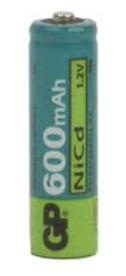
Nickel–cadmium battery
Cost moderate; Efficiency moderate; Environmental impact very high (cadium); Reliability high; Emergency lighting, military systems
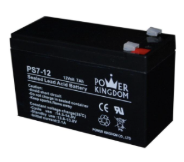
Lead acid battery
Cost low; Efficiency moderate; Environmental impact high (toxic lead/acid); Reliability low; Engine vehicles, electronic wheelchairs
Lithium polymer battery
Cost moderate; Efficiency high; Environmental impact moderate (mining); Reliability moderate; Drones, RC vehicles, ultra slim electronics
Drivers/reasons for clean technology manufacturing
Promoting positive impacts, Ensuring neutral impact or minimizing negative impacts through conserving natural resources, Reducing pollution and use of energy, Reducing waste of energy and resources
Legislation
Laws considered collectively to address a certain topic
The Earth Summit
International legislation set in Rio in 1992 to halt the destruction of irreplaceable natural resources and pollution of the planet
The Kyoto Protocol
International legislation set in Kyoto in 1997 to reduce emissions of greenhouse gases
The Copenhagen Accord
International legislation set in Copenhagen in 2009 to keep the global temperature below 2 celsius degrees
The role of legislation to provide impetus for manufacturers to clean up manufacturing processes
How manufacturers react to legislation
How legislation can be monitored and policed
End-of-pipe technologies
Technology that is used to reduce pollutants and waste at the end of a different process
Examples of End-of-pipe technologies
Filtering plants, wastewater treatment plants, etc.
Incremental solutions
the gradual improvement of technologies or approaches to manufacturing over time
Pros of incremental solutions for manufacturers
Exploit existing technologies, smaller investment, easy to respond to change
Cons of incremental solutions for manufacturers
A more frequent changes, Crowded mature marketplace with many competitors, Low potential for market growth
Radical solution
A new and often untried approach
Pros of radical solution for manufacturers
explore new technology, high potential for market growth, creates new industries, fewer competitors
Cons of radical solution for manufacturers
expensive and time-consuming, high uncertainty of success, high investment, untried methods aren't risk-free
Green Design
Designing in a way that takes account of the environmental impact of the product throughout its life.
Green legislation
Laws and regulations that are based on conservation and sustainability principles, followed by designers and manufacturers when creating green products
A short-term goal
t < 10 years
A long-term goal
t ~ 20-30 years
Consumer pressure
The public have become aware of environmental issues through media focus on issues such as the destructive effect of chlorofluorocarbons on the ozone layer.
Environmental legislation
Has encouraged design of products that tackle specific environmental issues
Design objectives for green products
Increasing efficiency in use of resources
Ensuring that the planned life of the product is most environmentally appropriate
Ensuring that the packaging and instruction encourage eco-friendly use
Minimizing long-term harm caused by the use of products
Minimizing pollution and waste
Taking full account of the effect of the end disposal of the product
Incremental green innovation
Strategies which often involve a focus on one or two environmental objectives when designing or redesigning products. Often easier to meet green legislation rather than through radical changes.
Radical green innovation
These strategies are when there is a complete redesign of the whole product and may include:
Complete overhaul of the selection of materials, joining method, finishing and manufacturing process
Needs to negotiate with manufacturing and material specialists to make the product still have the correct design integrity, function and performance
The prevention principle
The avoidance or minimization of producing waste in relation to the production, use and disposal of a product
The precautionary principle
The anticipation of potential problems in relation to the environmental impact of the production, use and disposal of a product
Evaluating green design
Consumption of raw materials, packaging, incorporation of toxic chemicals, energy in production and use, end-of-life disposal, production methods and atmospheric pollutants
Eco design
A more comprehensive approach than green design that focuses on all broad environmental categories (materials, energy, pollution/waste)
“Cradle to grave” philosophy
A design philosophy that considers environmental effects of a product all of the way from manufacture to disposal
“Cradle to cradle” philosophy
A design philosophy that aims to eliminate waste from the manufacturing, use and disposal of a product. It centers on products which are made to be made again
Life cycle analysis
The assessment on the effect a product has on the environment through five stages of its life from cradle to grave.
LCA stages
Pre production, Production, Distribution including packaging, Utilization, Disposal
The role of the designer in eco design
To plan the product obsolescence and how the object will be used (everything)
The role of the manufacturer in eco design
Involved in the production, distribution and packaging of the product (less)
The role of the user in eco design
Involved in utilization and the disposal of the product. (moderate)
“Design for the environment” software
Software that allows designers to perform LCA on a product and assess its environmental impact.
Converging technology
The synergistic merging of nanotechnology, biotechnology, information and communication technologies and cognitive science.

