SYMBOLISM / ART NOUVEAU / EXPRESSIONISM
 Studied by 0 people
 Call with Kai
 Learn
Learn Practice Test
 Spaced Repetition
 Match
Match Flashcards
 Knowt Play
1/29

There's no tags or description
Looks like no tags are added yet.
Name | Mastery | Learn | Test | Matching | Spaced | Call with Kai |
|---|
No analytics yet
Send a link to your students to track their progress
30 Terms
EGON SCHIELE
Austrian
1890-1918
Protégé of KLIMT
Celebrated for his singular style & unusual use of colours
Extremely erotic & controvesial
He was thought to supply collectors of pornography
He was fascinated by his own appearance (countless self portraits)
After being arrested (1912), due to the trauma, his style changed becoming even more rough
He was a crucial persona in the advancement of MODERNISM in EU
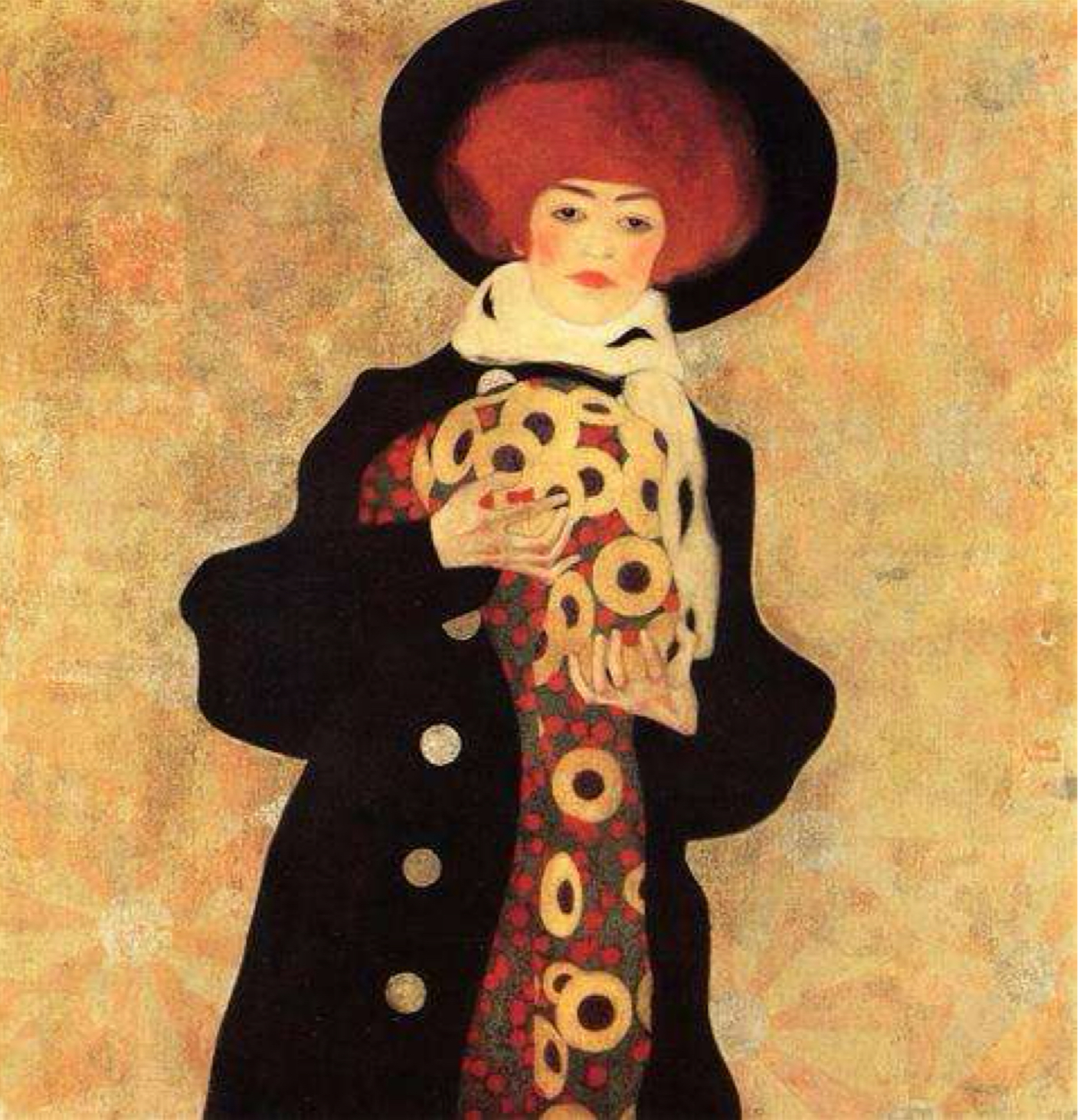
Woman with Black hat, 1909
symbolistic meaning (red head - evil, uncanny hand gestures, snake like patterns - eve)
He had an approach of showing what is hidden
The use of elaborated patterns is simmilar to climt
The hands add psychological tension and nervousness
Black hat - contrast between elegance and social anxiety
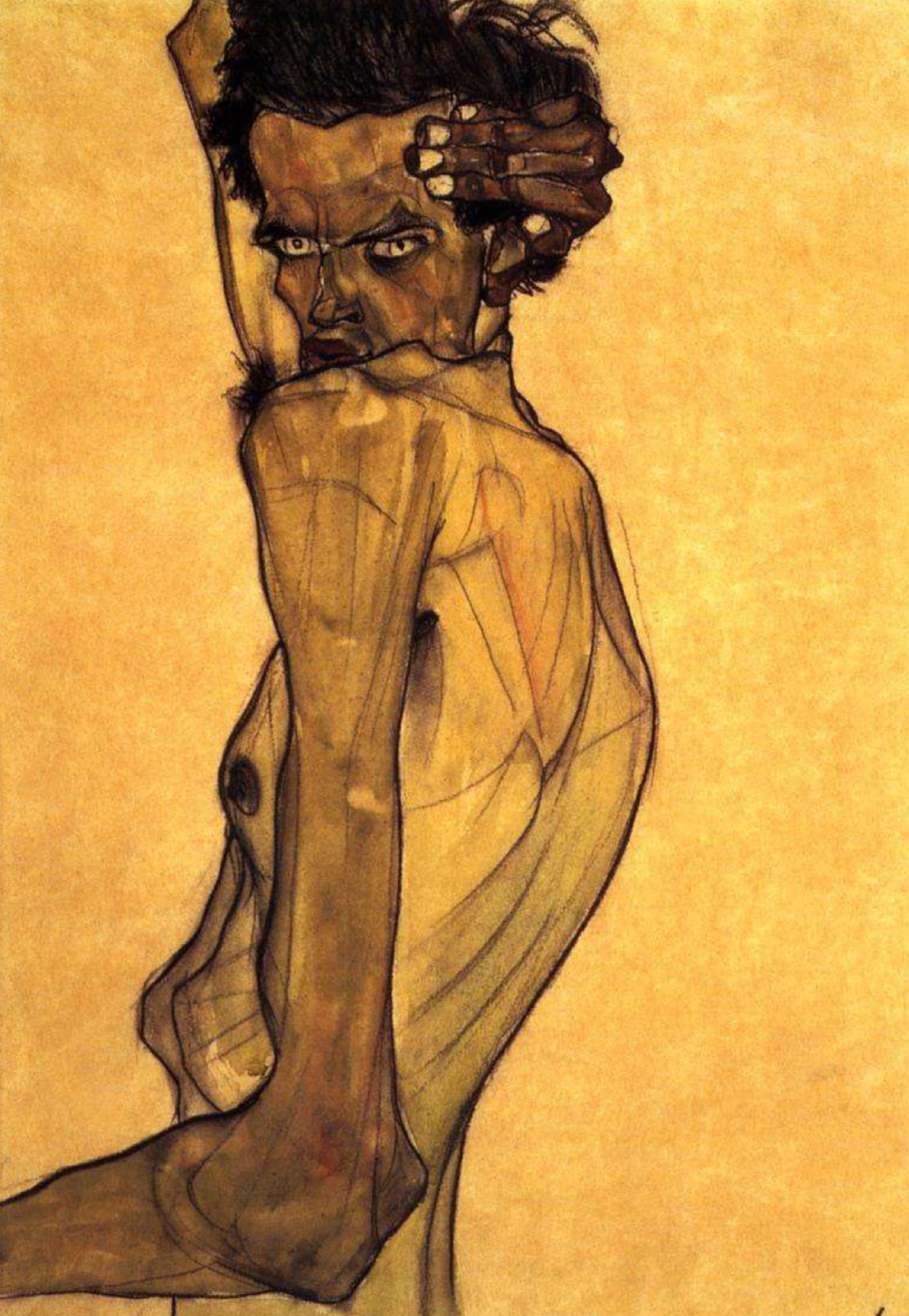
Self Portrait with Arm Twisting above Head, 1910, SCHIELE
contorted position - reflection of his personality
Teh intention of evoking discomfort in the viewer
Conveys inner torment & psychological anguish of the artst
Colour pallete (brown & yellow) = dirt/roughness/lacking beauty
He decsribes himself by lines = liberty of representation
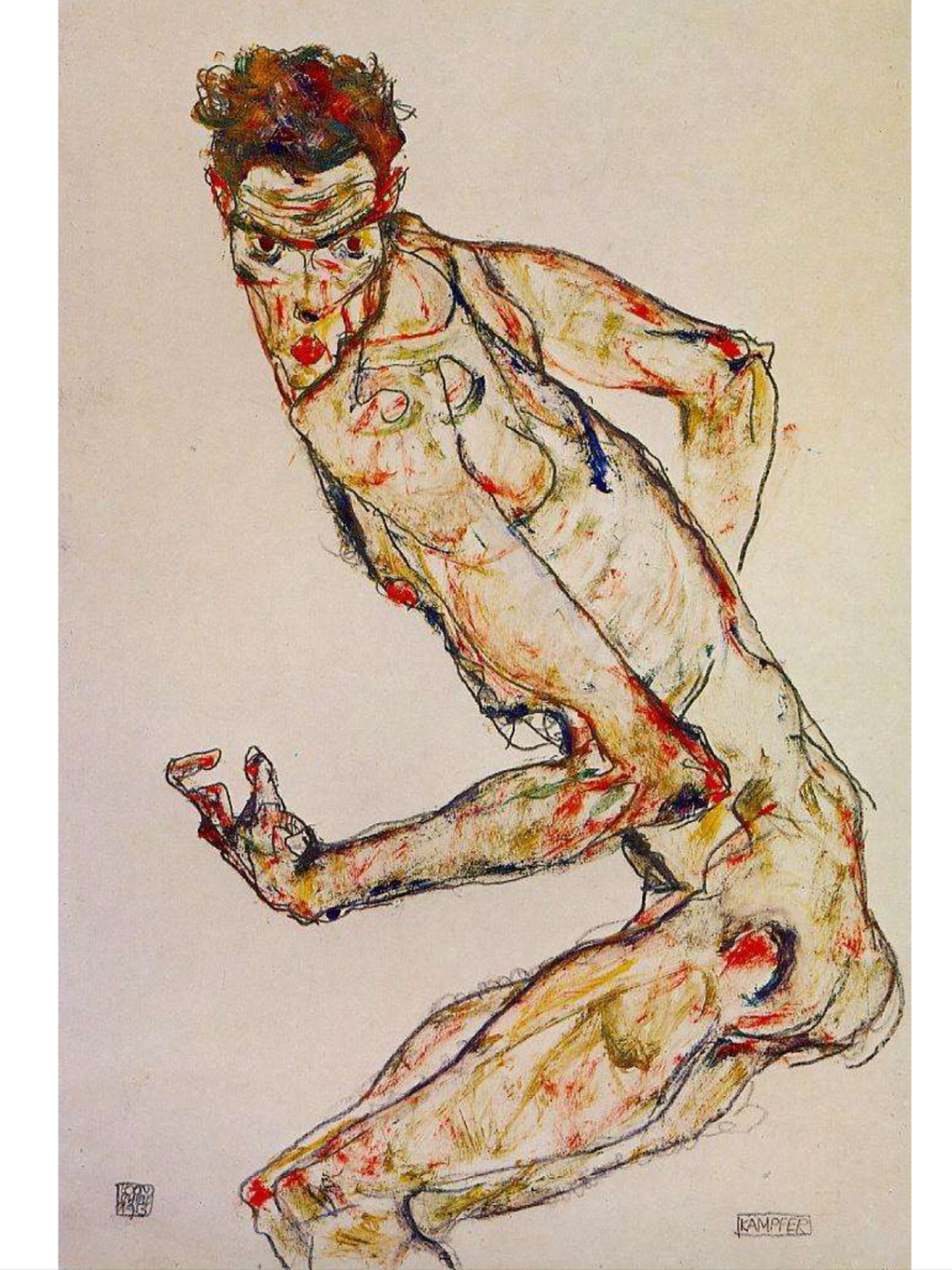
The fighter, 1913, SCHIELE
his signature is like an elaborate logo,
Posiion is extremely unnatural, evoking discomfrot
The portrayal lacks beauty/harmony/elegance - unlike past representations of warrioirs
Tightness of the figure and his muscles reresented by the lines
Lack of realistic colour - magnification of unpleasance by adding green & red
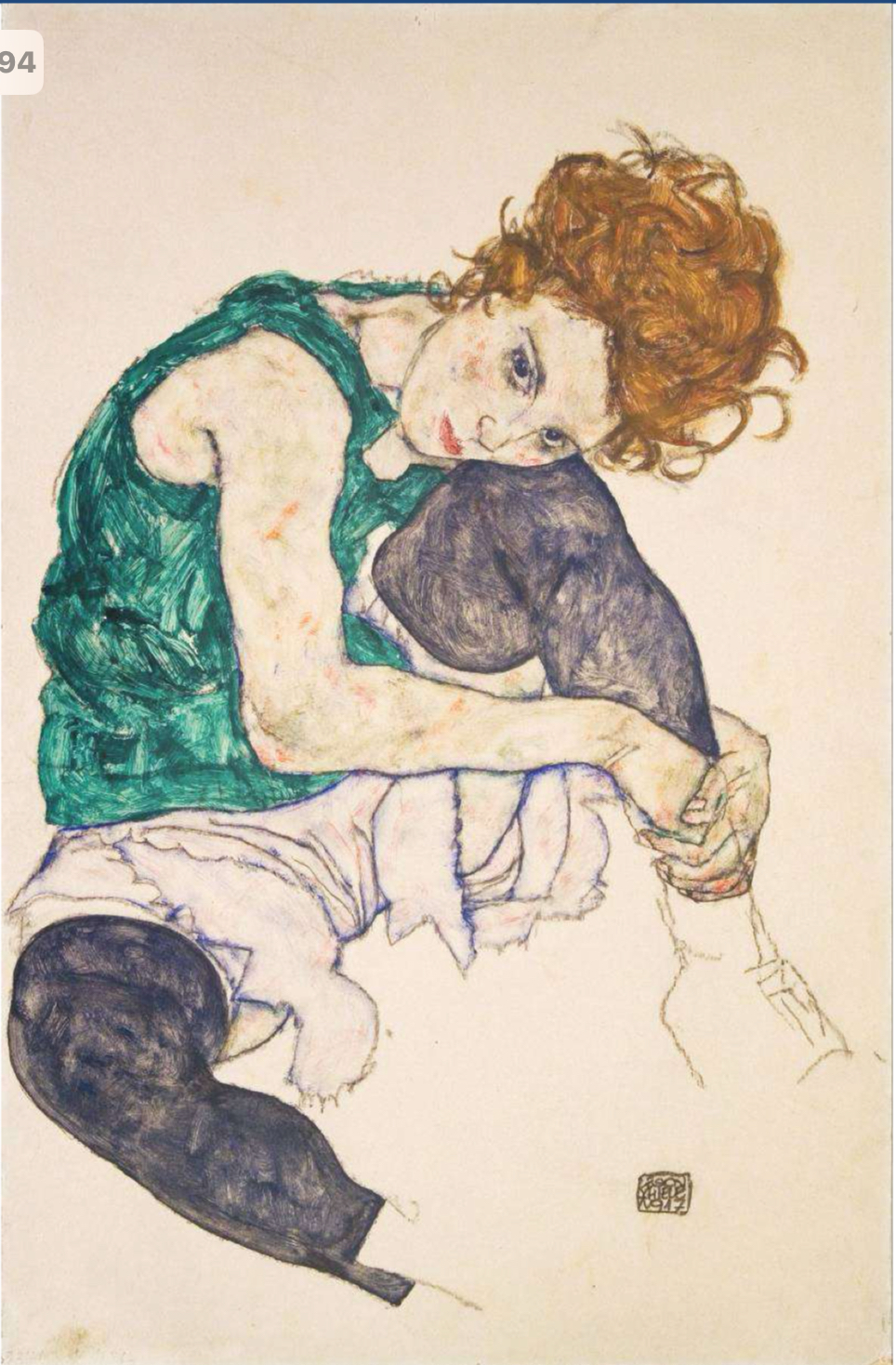
Seated Woman with Legs Drawn Up (Adele Herms), 1917, SCHIELE
provocative yet relaxed pose
Straring directly at the viewer, as if seeing and condemning us
Blends erotic sensuality, nervous energy, and distorted beauty in Expressionist style.
Empty background - she is in an unknown place/space
The colour pallete is again unnatural, amplifying the tenstion
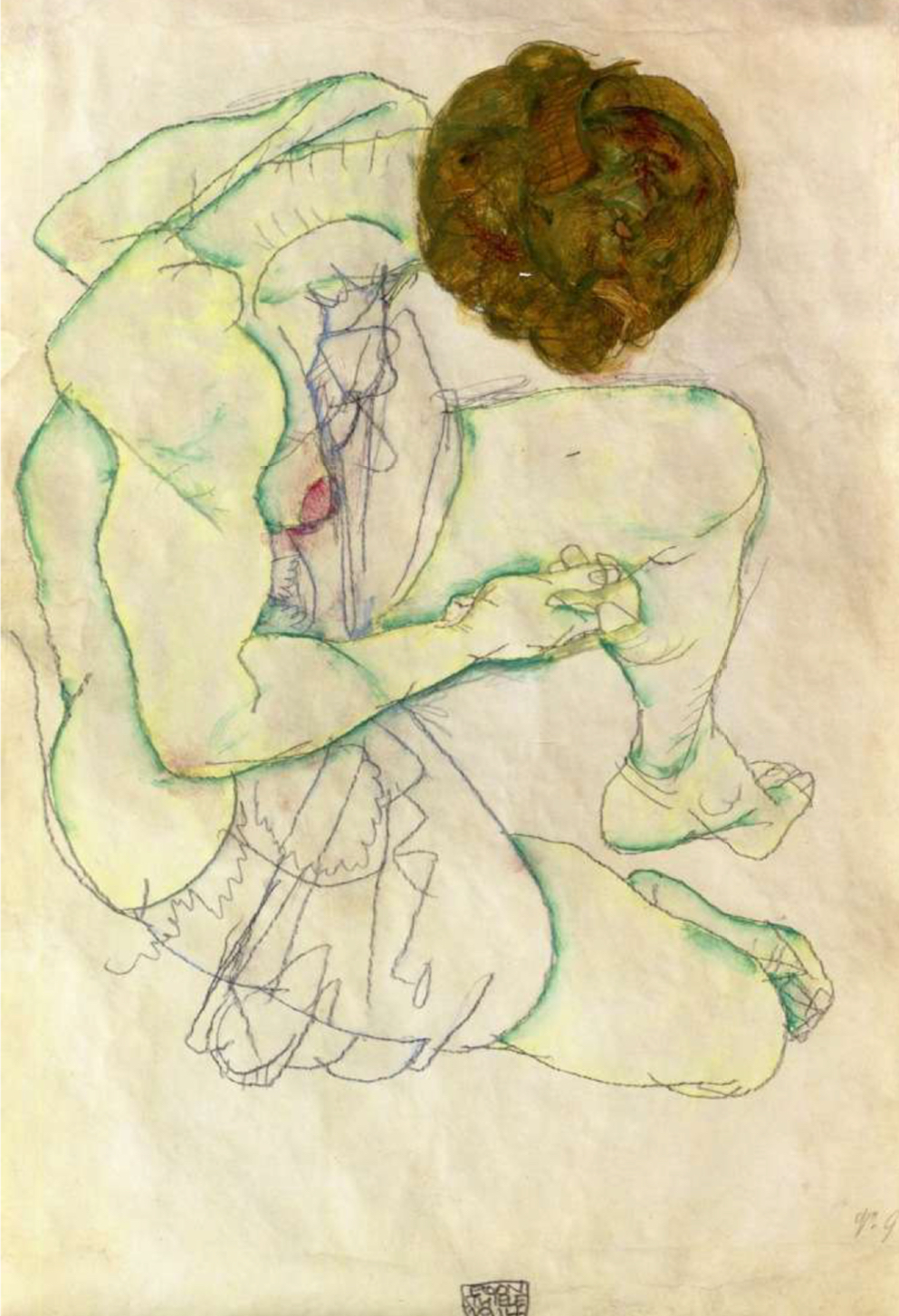
Sitting Woman, 1914, SCHIELE
psychological tension and intimacy
Very narrow point of view
Unnatural colour pallette used
Yellowish bg, combined with the colour pallete, makes the painting even more unrealistic
The women is completely made up of lines - striving for simplification
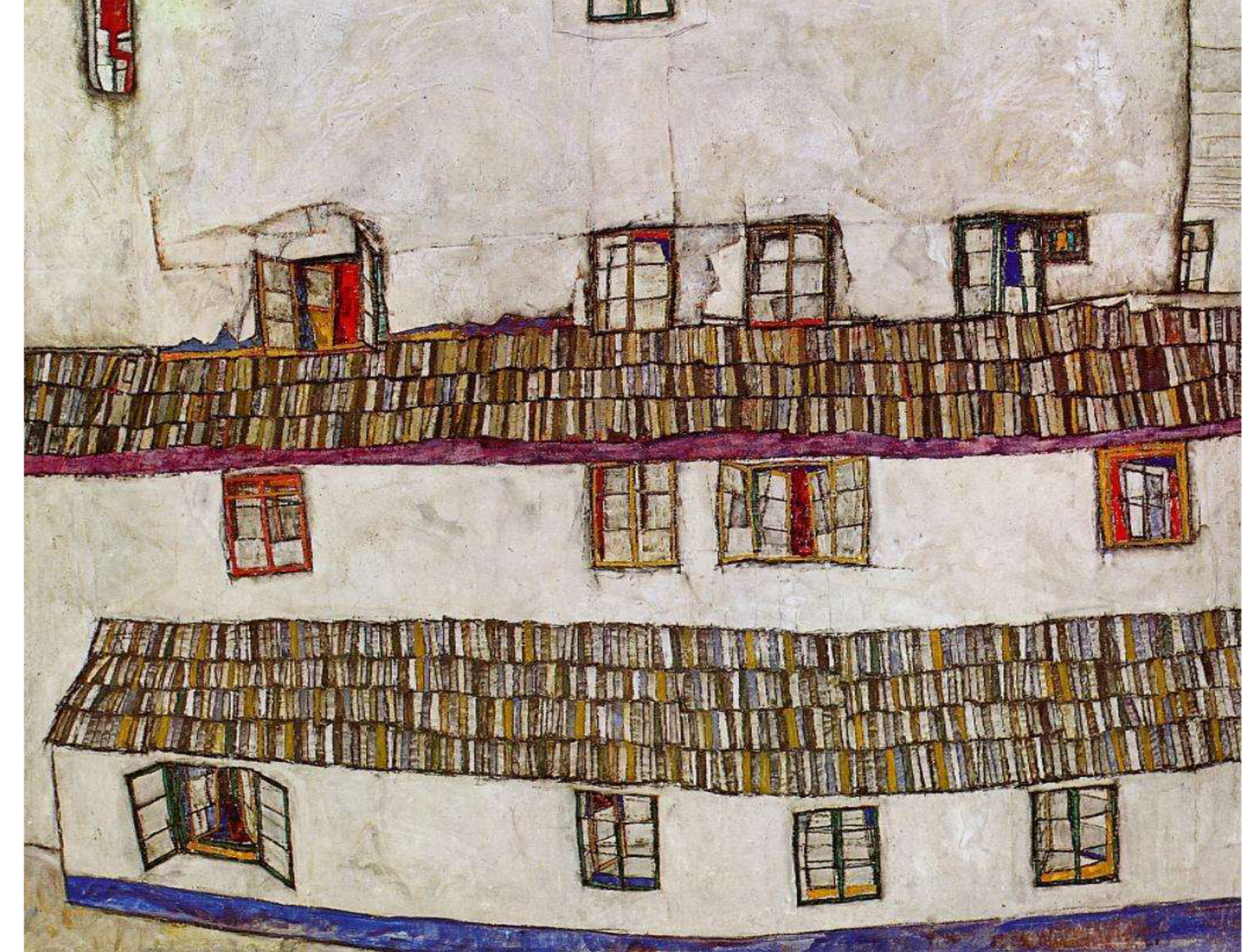
Windows (Facade of a House), 1914, SCHIELE
visible lack of horizon or proper perspective
Complete abstraction
Visible simplification of the elements, making the facade flat
Use of unnatural clours, adding a dream or fantasy like feeling of the portrayed object being unreal
Paul Cézanne
French
1839-1906
Building form with colour
Analytical approach to nature
In the begining he was an impressionist with a dark palette
He later abandoned it in exchage for briliant tones, painting outdoors - developed a tonal style
He would create scenes with distorted perpectival space
No use of shadows, but extremly subtle gradation of colours
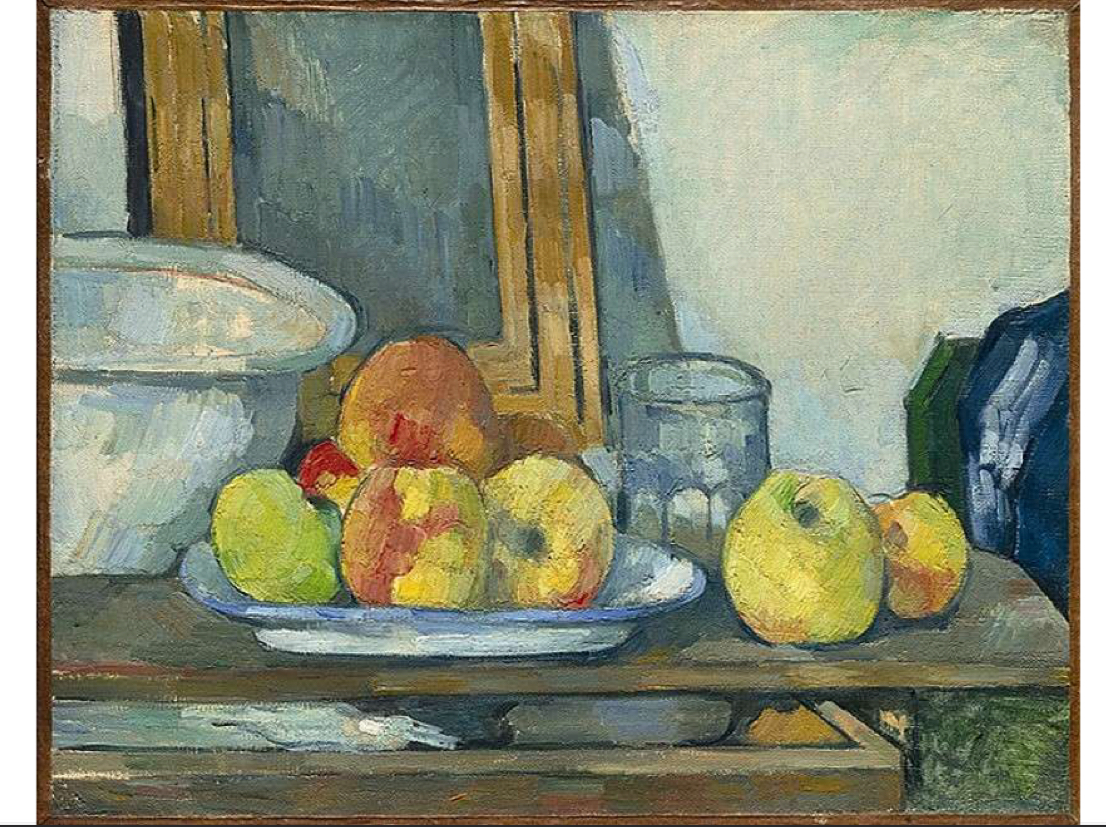
Still life with apples, 1877, CEZANE
clearly post-impressionistic = builds form through colour, rather than outlines
Focuses on the volume and depth, yet remains largely flat
Constructive brushwork
Quite vibrant and unrestrained palette
There is no visible horizon and the perspective is crooked
Everyday subject
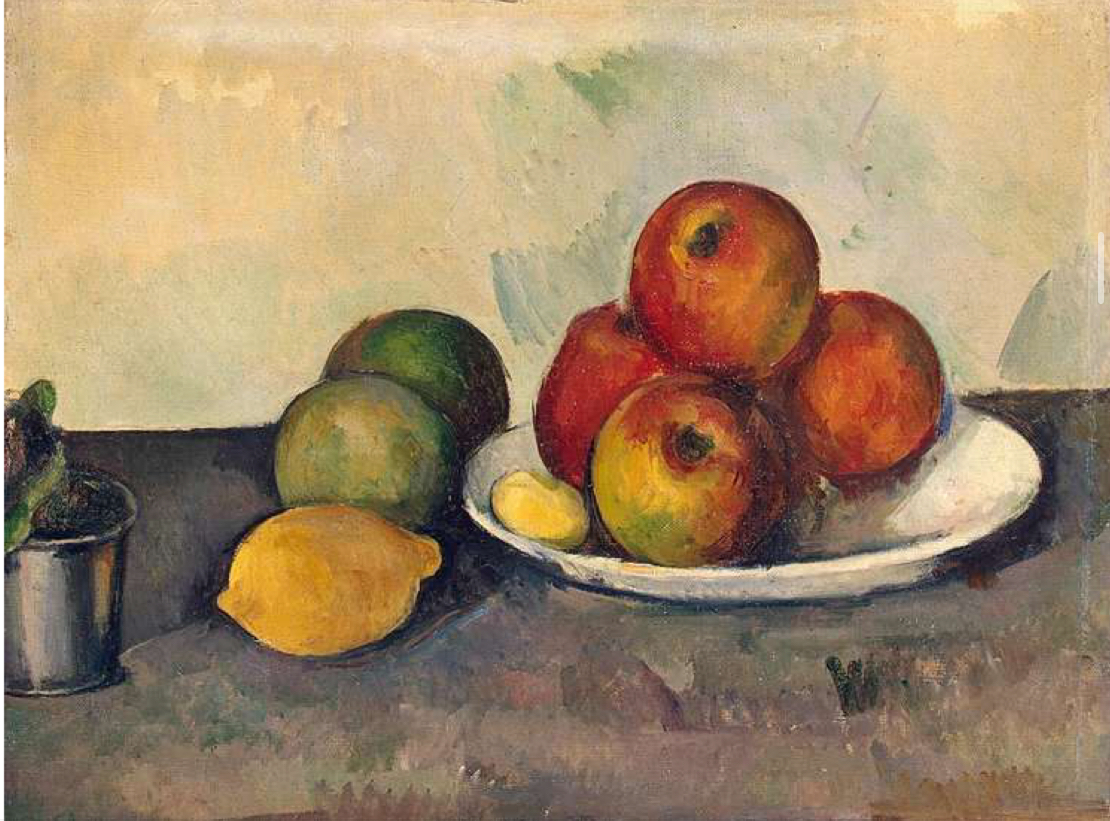
Still life with apples, 1890, CEZANE
post impressionistic
Emphasises structure through overly realistic light
Varied brushwork
Distorted perspective
Simple & everyday motifs
Precisely and sharply marked object outlines (with heavy paint)
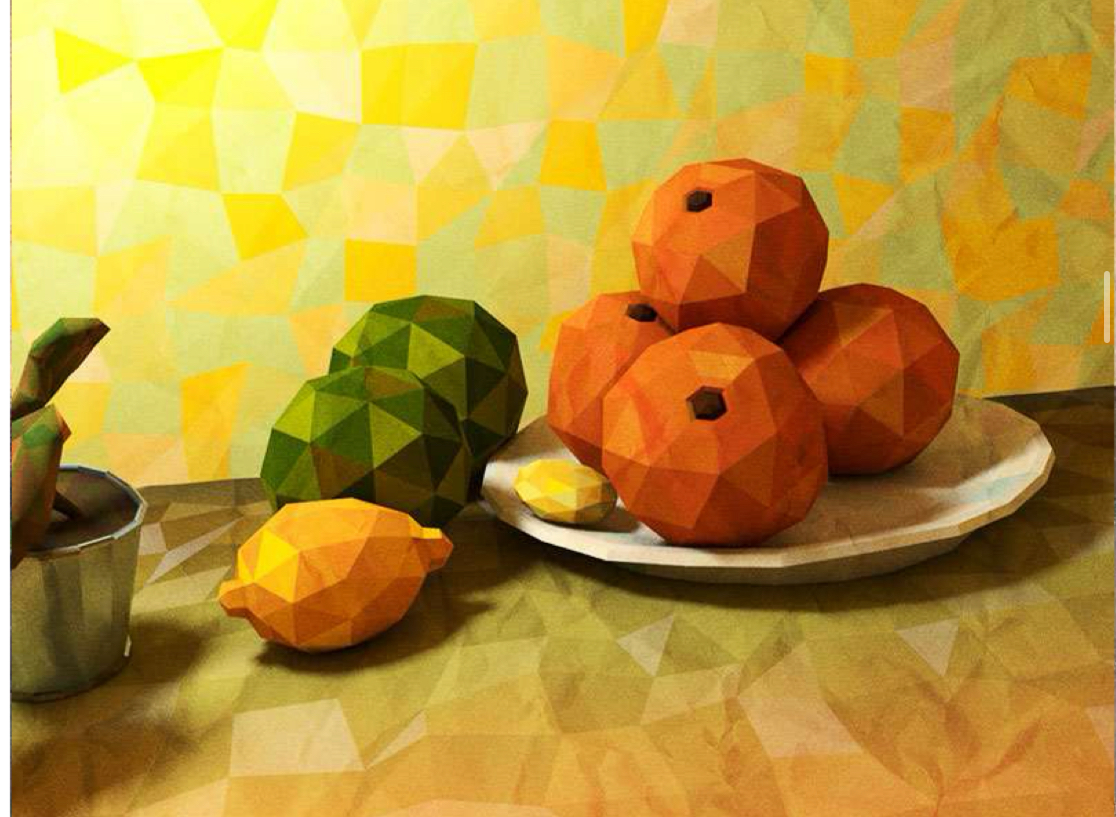
Inspired by Still life with apples, 1890, CEZANE
3d rendering of the original work
Geometric abstraction
Simplified
Bright and saturated colour scheme
Flat lighting
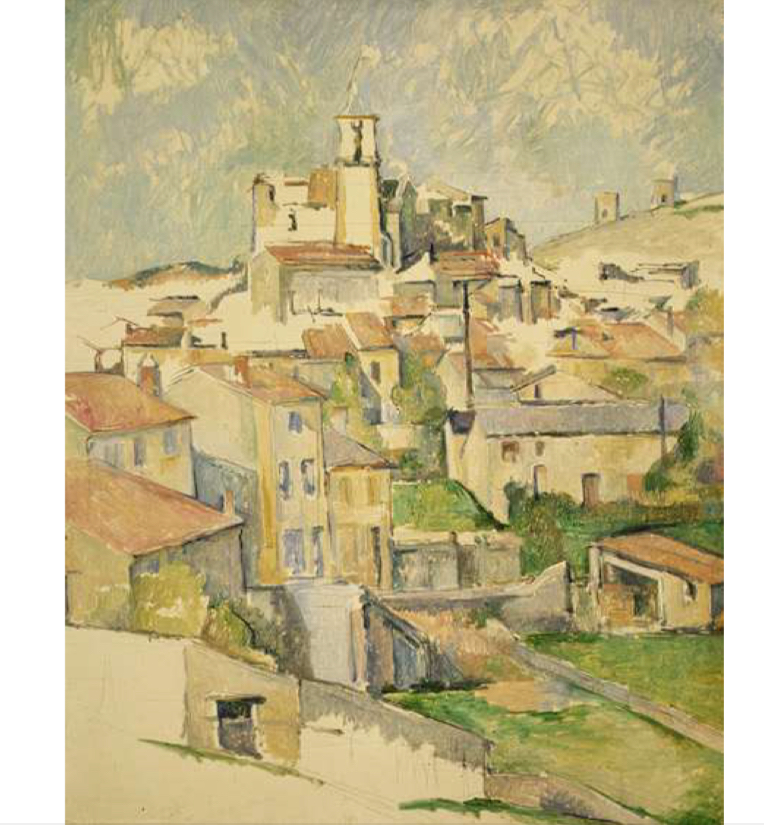
Gardanne, 1885-6, CEZANE
post-i,pressionism and cubism
Gemoetric simplification
Flatness of colours
Short layerd strokes
Distorted perspective
Focus on timeless landscapes
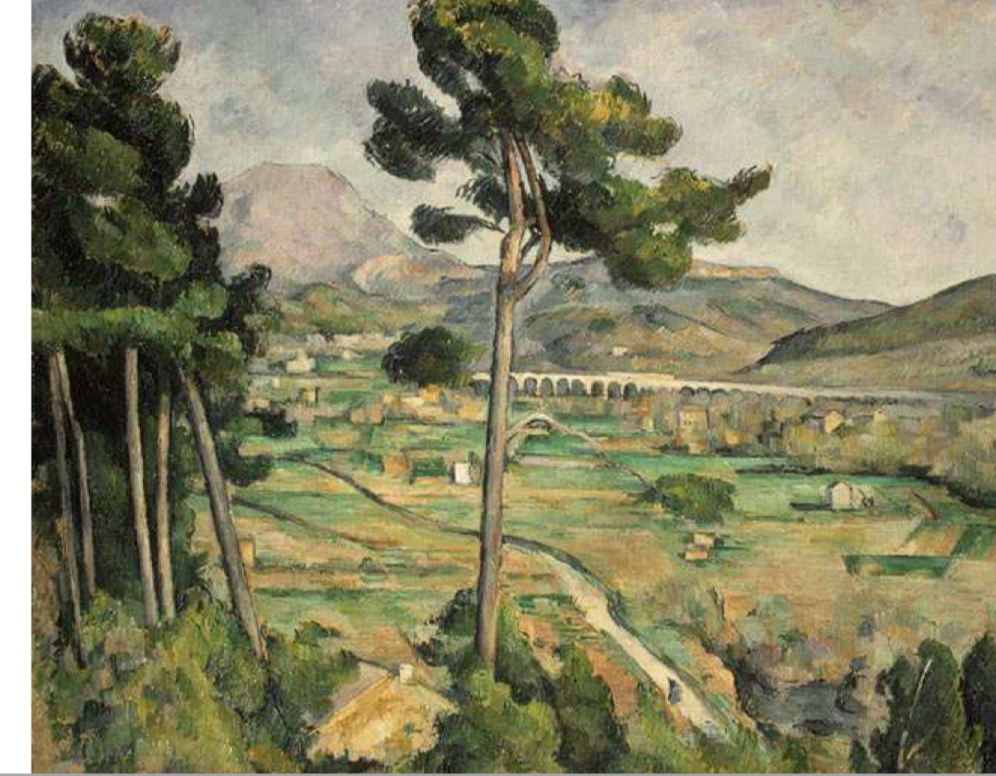
Mount Saint Victorie, 1882-5, CEZANE
geometric volumes in trees and buildings
Very delicate play of light via different hues of colour
Lack of proper perspective
The bg ground is blurry and uncertain
Typical landscape without further meaning
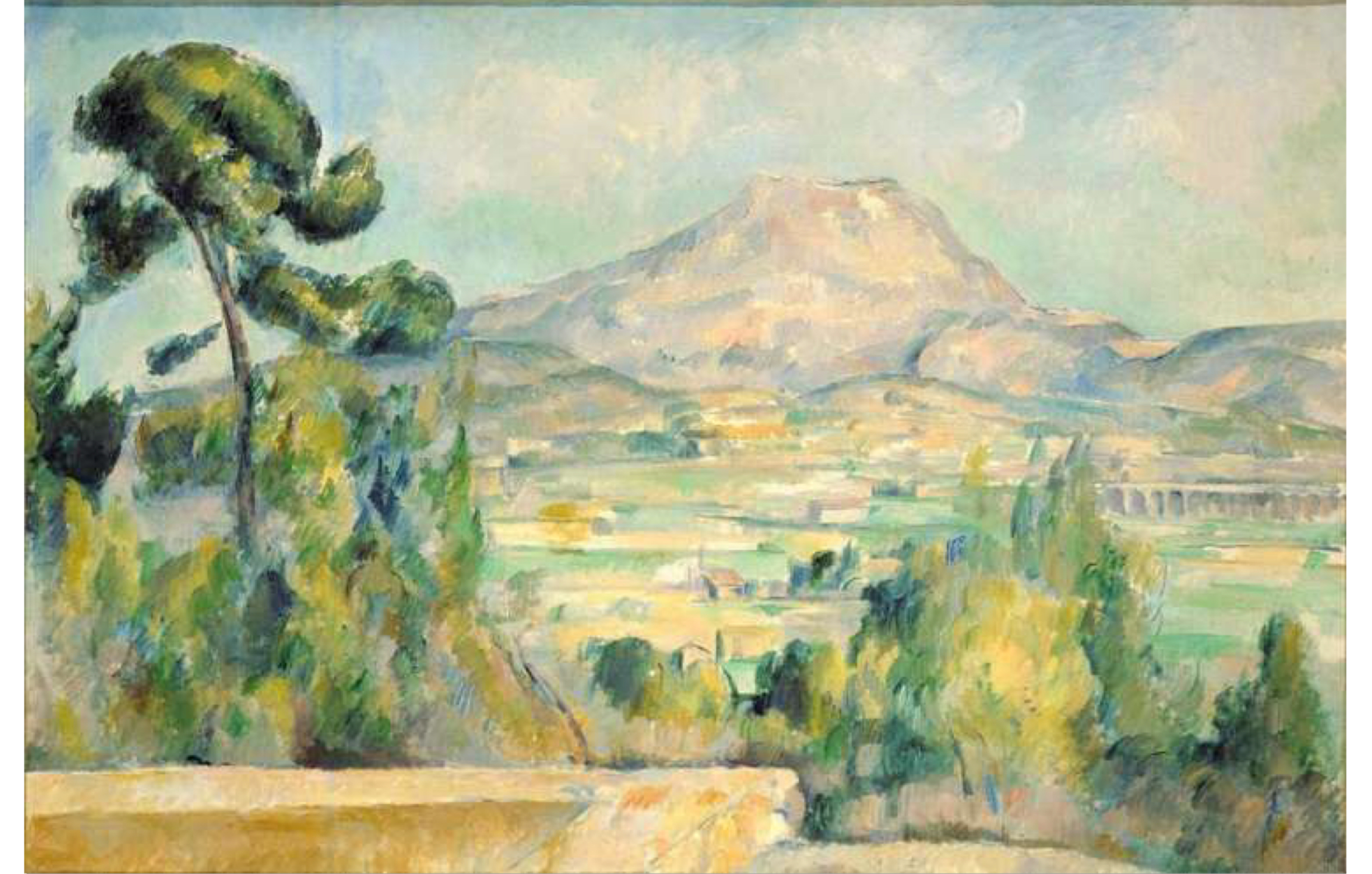
Mount Sainte Victorie, 1887-90, CEZANE
slightly more flat and abstract then the roevious one
Visible use of colour hues as the only hsadow source
All the things presented are blurry, blending into one
Everything is of flowy construction = paint stains
Dream like atmosphere die to the use of light colours
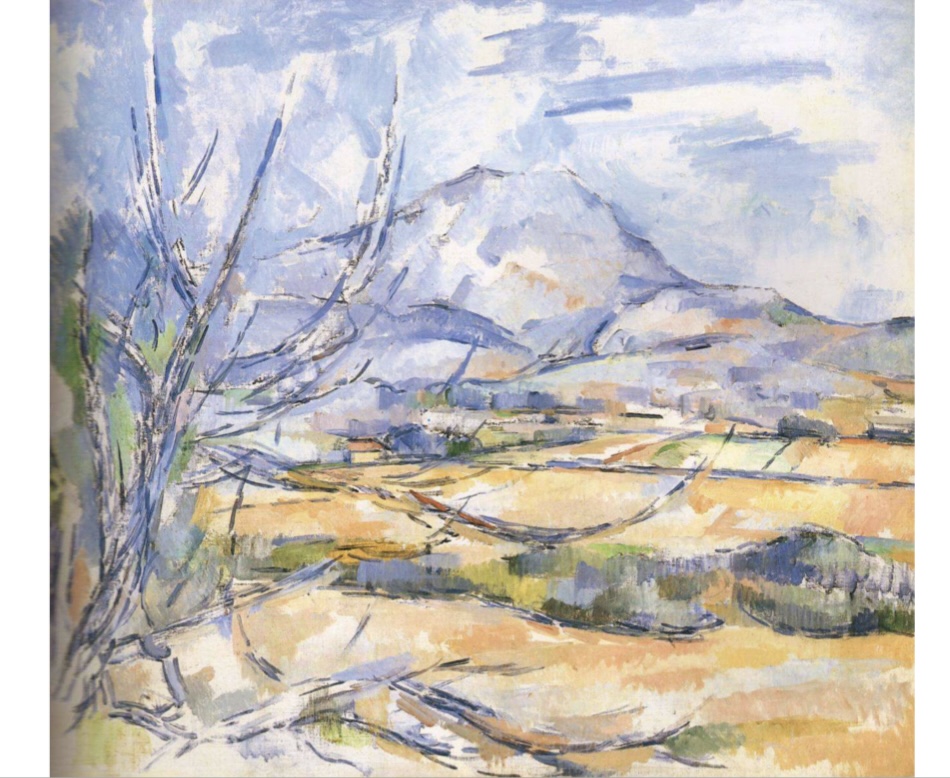
Mount Sainte Victorie, 1900-02, CEZANE
very flat
Use of very deliacte colours
No shadows, delicate lightplay
No horizon or proper perspective Complete= complete flatness
Sketch like
Reduction to gemoetric forms/ strokes of brush/ plains of colour
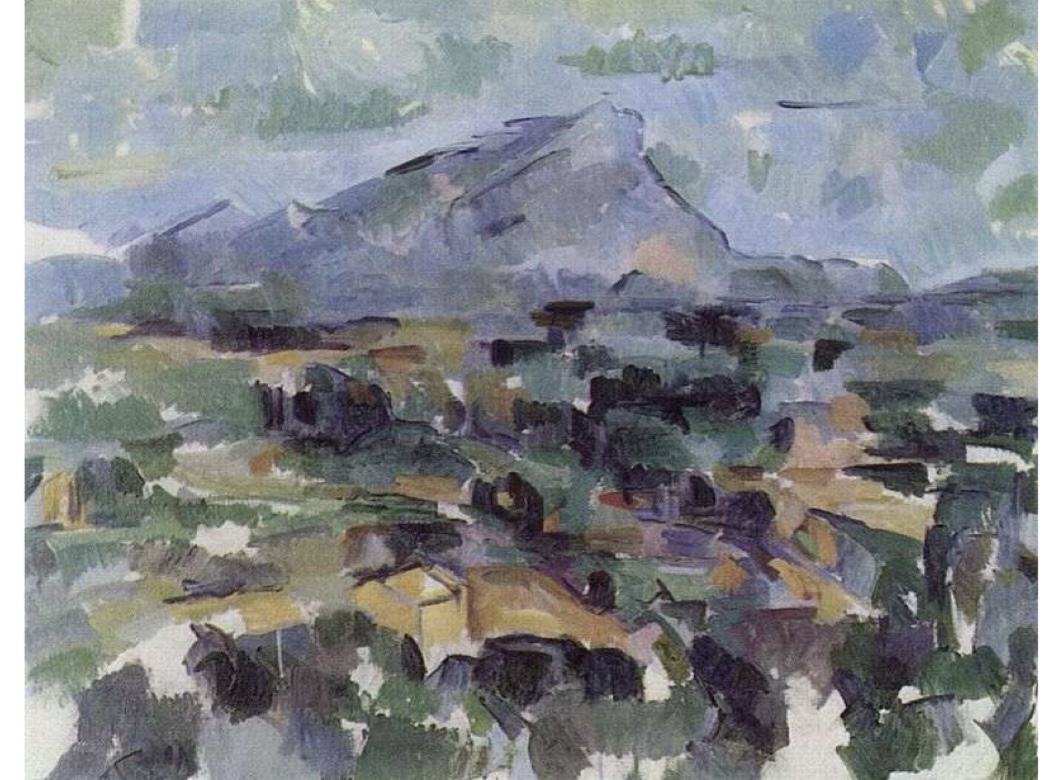
Mount Sainte Victorie, 1905 CEZANE
completely fantastic and late post-impressionistic
Patchy, without proper shape volumes
Everything is like bloches of paint
There is no horizon or perspective = flat surface
Shadow and light play is barely visible
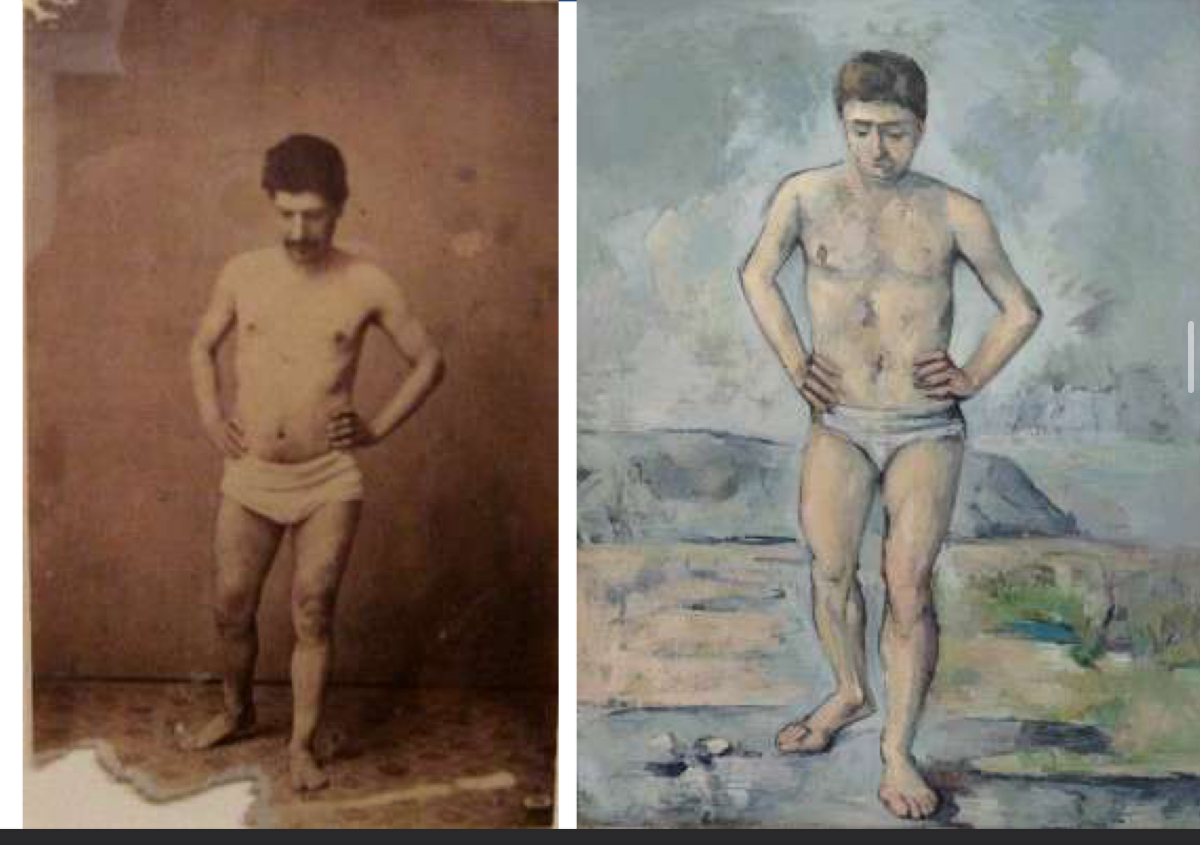
The bather, 1885, CEZANE
The mn is drawn rather corrctly, but ina blurry way
The bg is not easy to decipher = colourful fantasy
the man’s body ( muscle etc.) is drawn very lightly with colour stains
Minimal Light and shadow play
Strong outline comparing to his landscapes
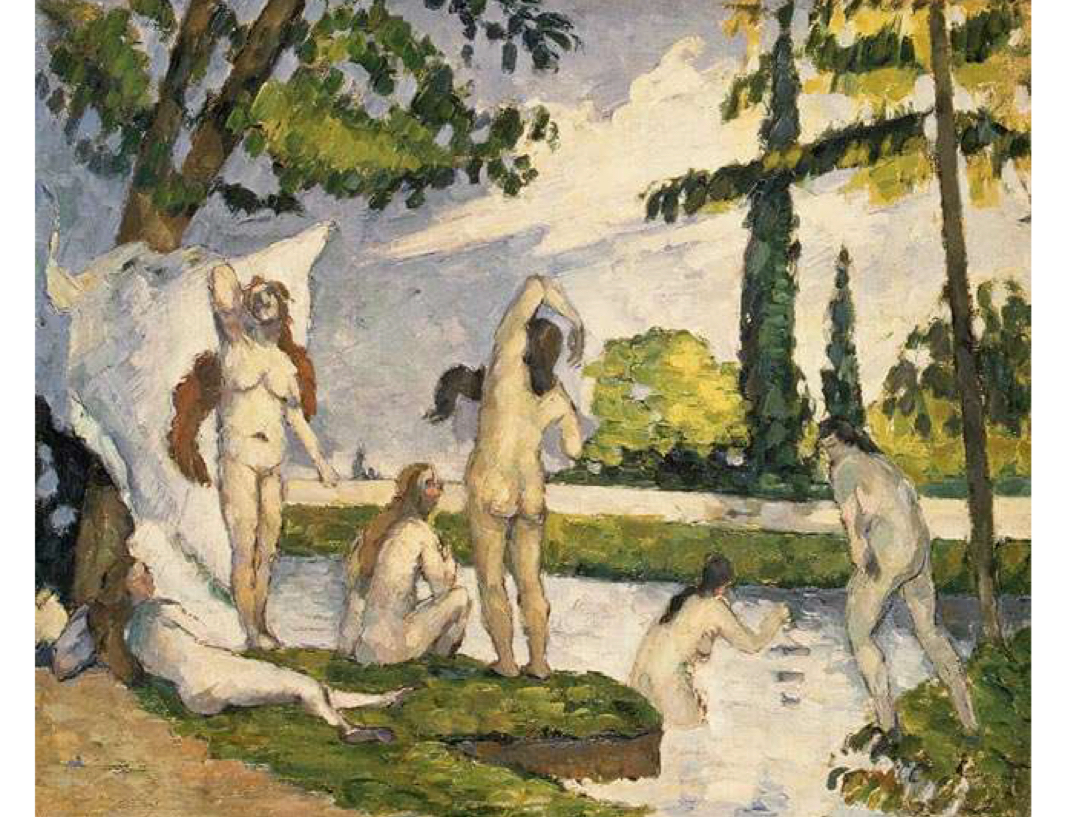
Bathers, 1874-75, CEZANE
typical theme of portraying women in nature settings
The objects shown are mostly vague shapes
No outlines, only light play and brushwork
Expressive and harsh brushwork
No perspective & wrong proportions
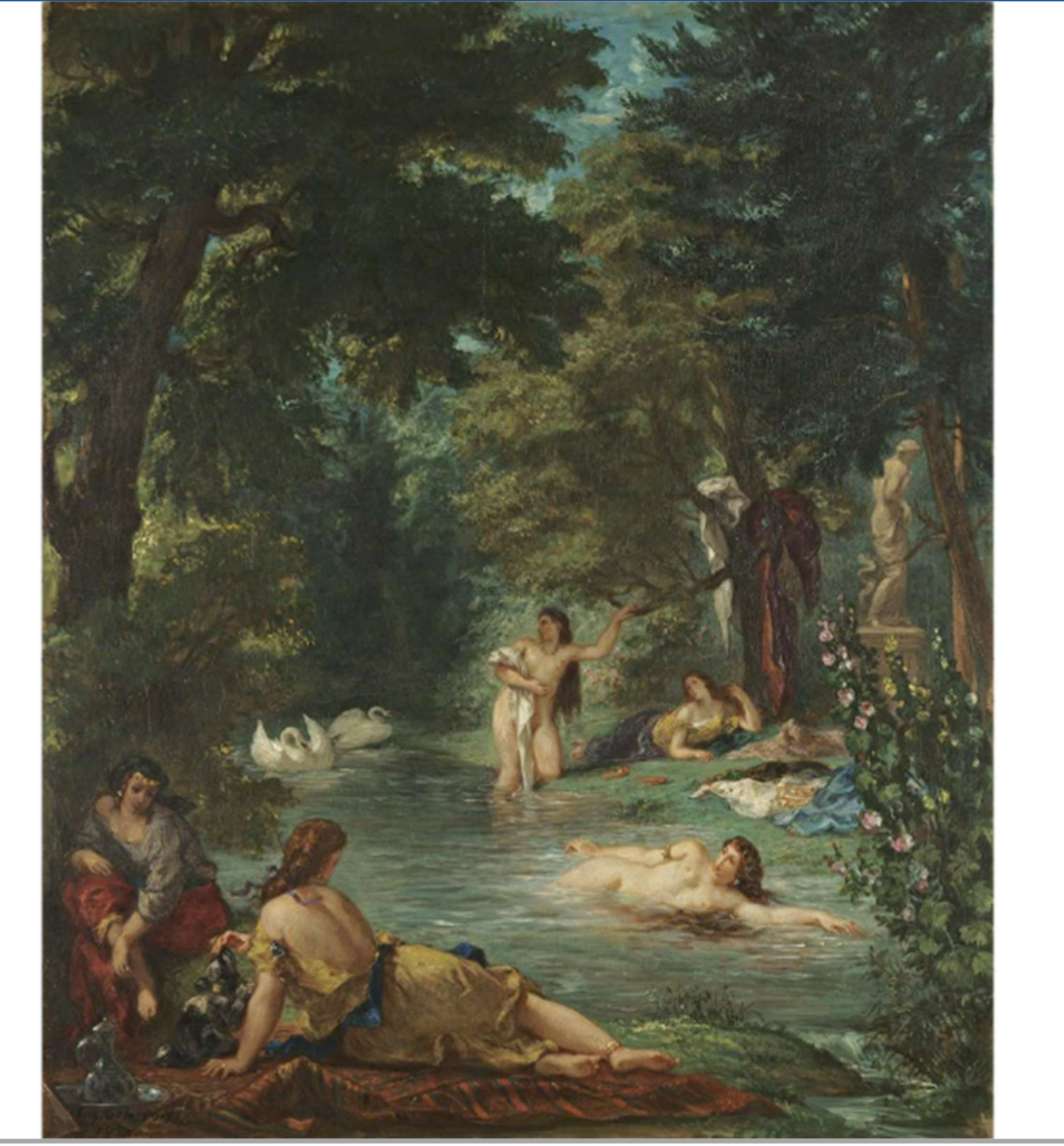
Eugène Delacroix, Bathers, 1854
clearly different from Cezane’s bathers
Typical portrayal of women among nature in an oasis
Everything is drawn in a traditional style
The choice of colours is natural, unlike cezane
The shadows and light are clear
The woman’s’ bodies and faces are painted with great detail
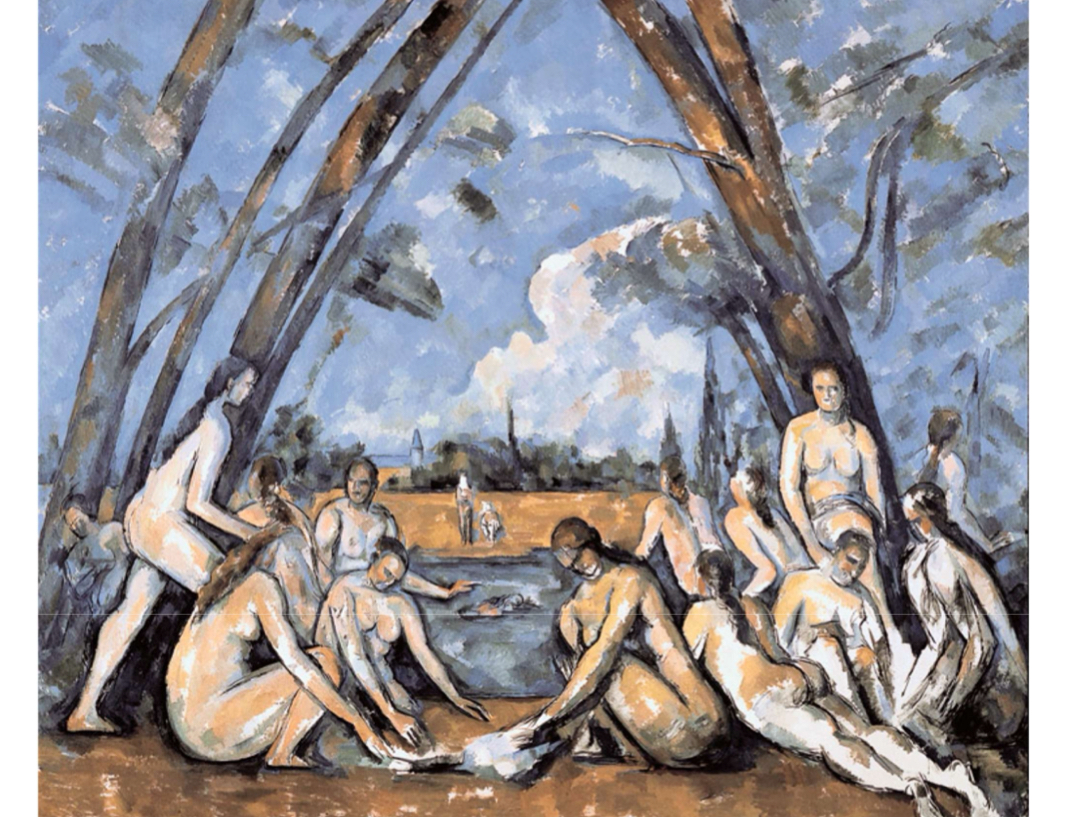
Paul Cézanne, Tho Bathers, 1898-1905
resembling of old bather paintings
Influences from cubism = tension between surface pattern and solidity
Harmony with nature
Nudes blending with the bg
Light colour palette
No shadows or lights
Bold brushwork
Paul Gaugin
French
1848-1903
Styles himself & his art as SAVAGE
Started as impressionist, later fled to create “primitive art”
He used distorted form and unnatural colour palette
Preoccupation with dreams, mystery & symbols
Achieved a new synthetic style by the use of broad fields of unnatural colours
Combined abstract patterning & figuration
Also carved, sculpted, made ceramics, etc.
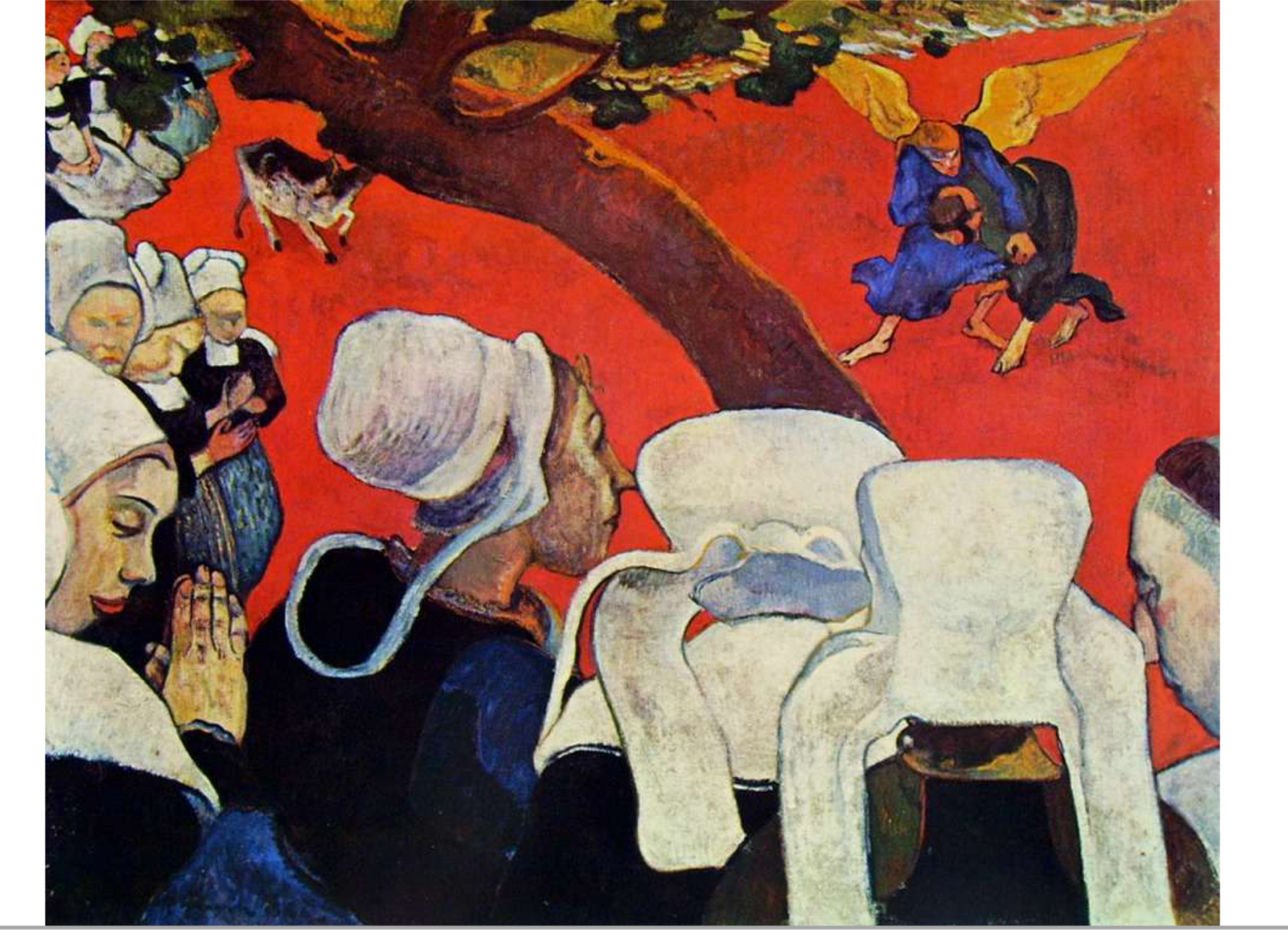
Vision after the Sermon or Jacob Wrestling with the Angel, 1861, GAUGIN
simmilarity with japanese art, branch taking a majority of the space of the canvas
The branch divides reality and dream
Heavy colours blend the reality & imagination
Focus on “primitive” faith
Rejection of naturalism
Simplified forms and flat areas of vivid colour
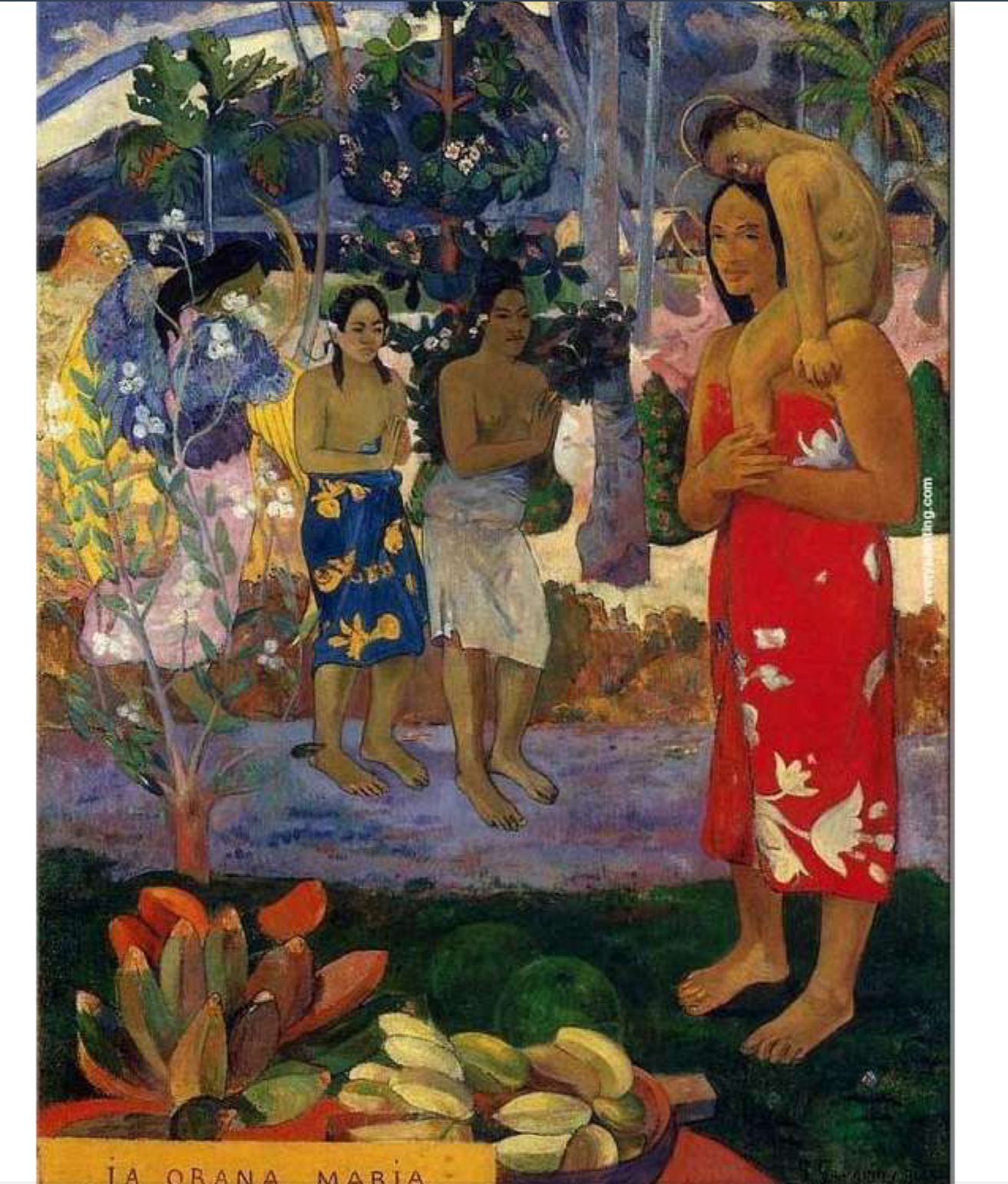
Orana Maria (We Hail Thee Mary) , 1891-92, GAUGIN
fusion of CHRISTIAN & TAHITIAN CULTURE
Non-naturalistic hues
Rigid poses
Shallow space
Bold outlines and flat block of colour
Simplified reality
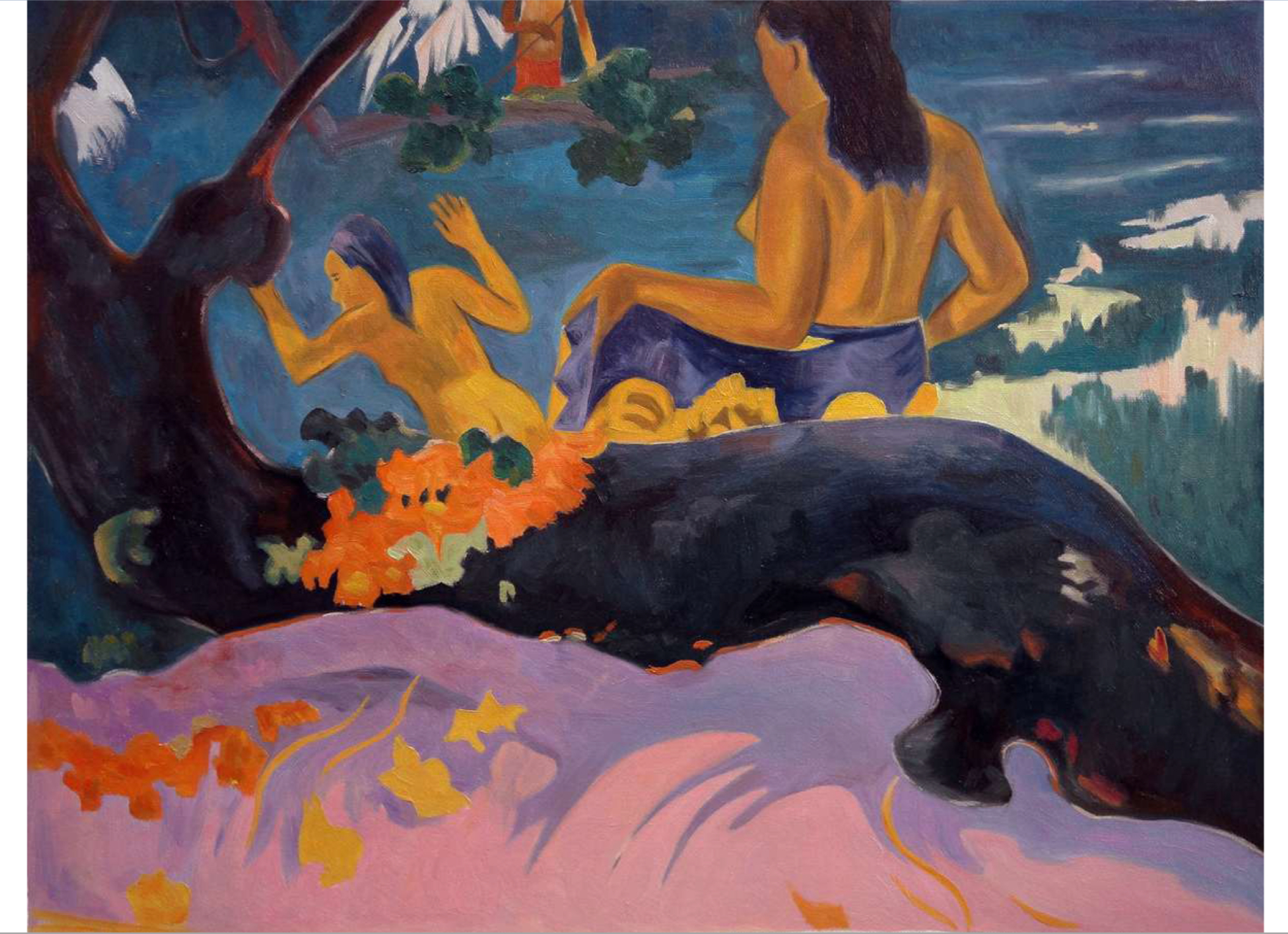
Fatata te Miti (By the Sea), 1892, GAUGIN
idealisation of polynesian figures
Free composition
Blend of tradition with fantasy
Intense and unnatural colour palette
Flat spaces
Low light/dark contrast
Focus on a tree in the middle of the composition
Vincent Van Gogh
Dutch
1853-1890
Largely self taught
Started by copying 19th century drawing manuals & books
He admired french artists = painted the regular life
He was a mic between impressionism, neo-impressionim & pointilism
He always added a personal symbolism
Sunflowers = joy, self affirmation
Untied shoes = emblematic for his itinerant existance
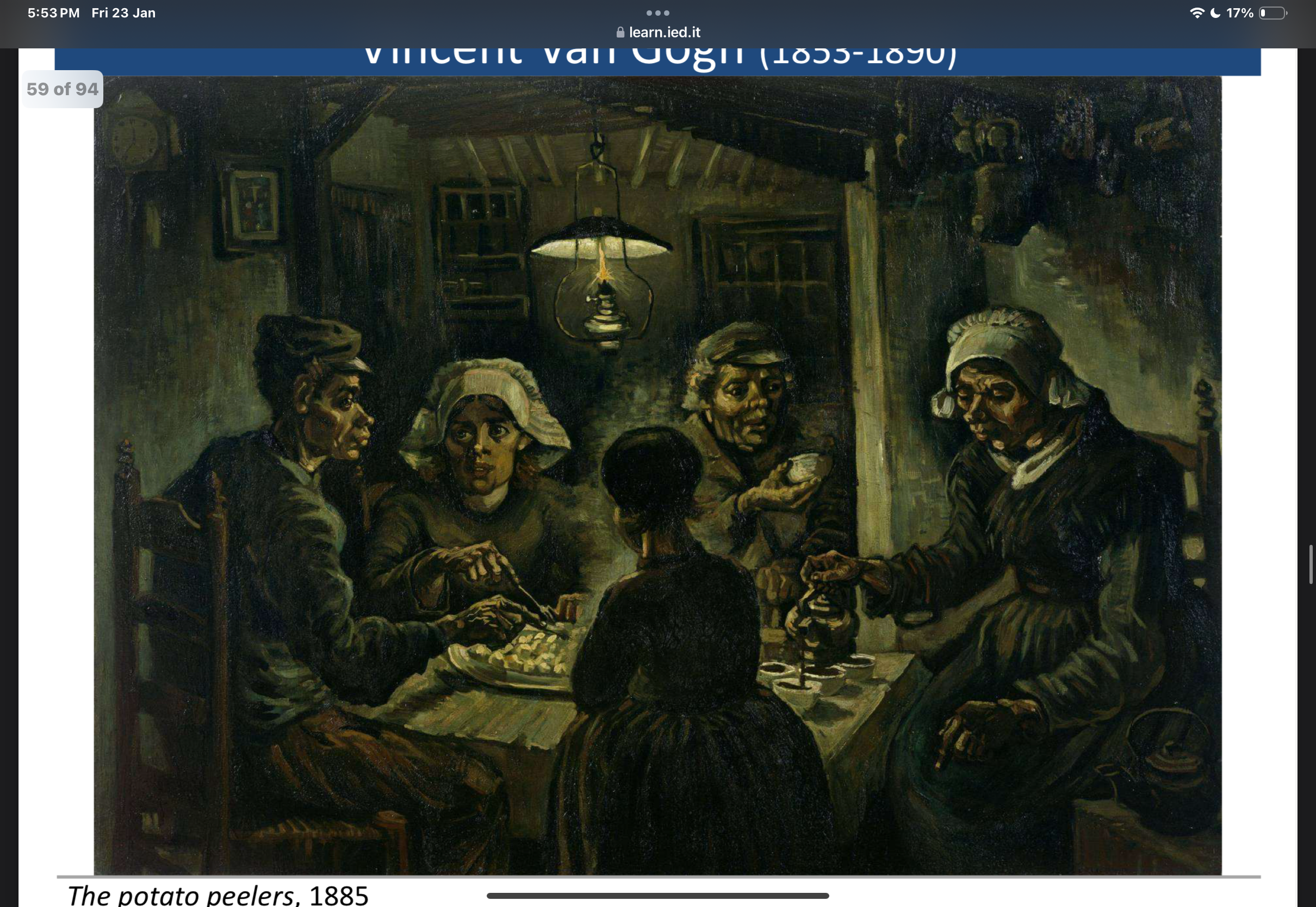
The potato peelers, 1885, VAN GOGH
dark & earthy palette = unpeeled potatoes & soil
Dim lighting creating dramatic shadows = crammed interior
Rough & expressive brushwork
Visible texture prioritising emtional impact
Coarse and worn faces
Focus on social realism = harsh, common figures (proto-exressionism)
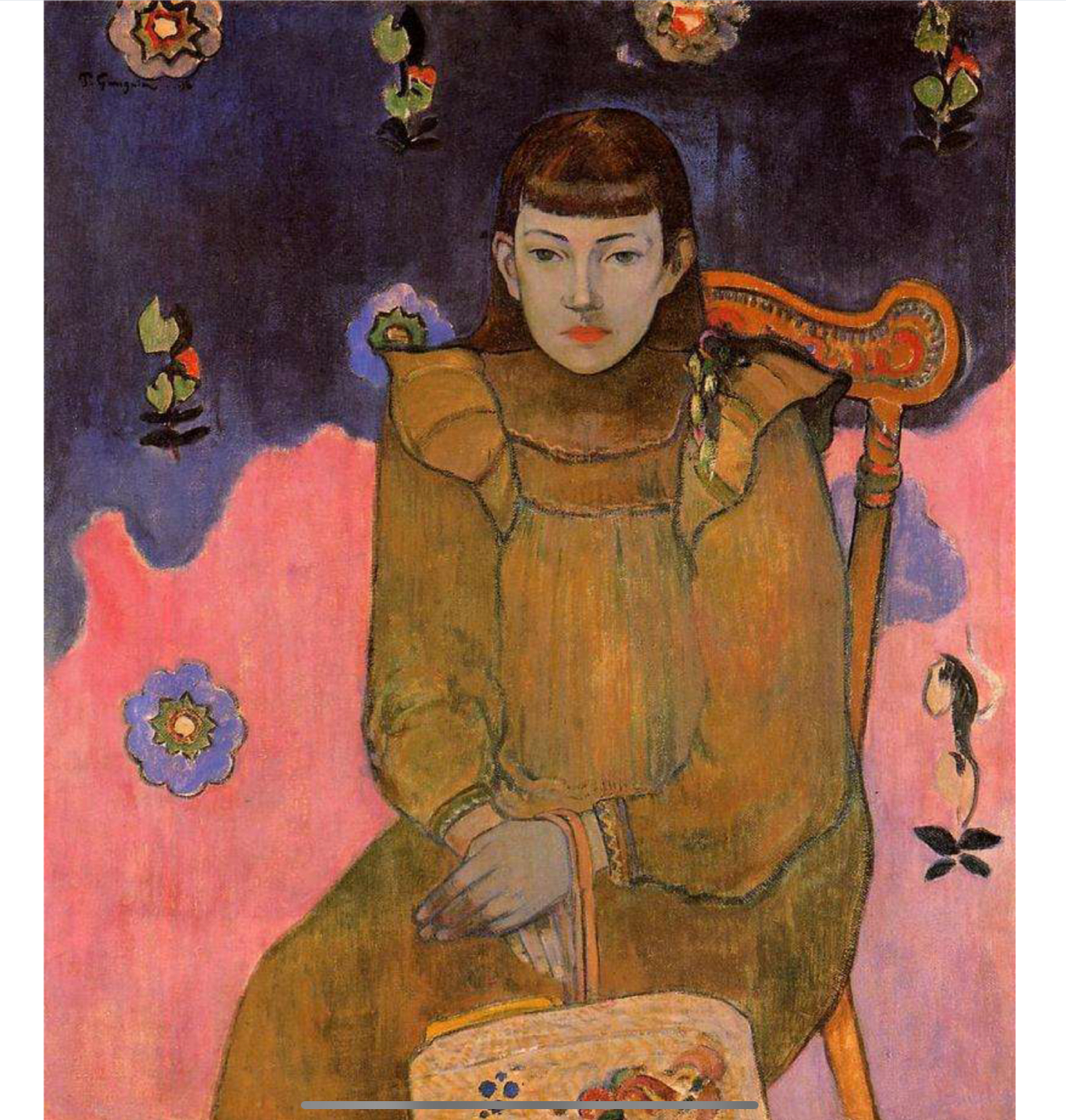
Tahitian woman with a flower, 1891, GAUGIN
he used to work closely with van gogh (ear cutting incident ended it)
Bold flat areas of simplified colour
Artistic tenstion between pointilism and symbolism
Idk?
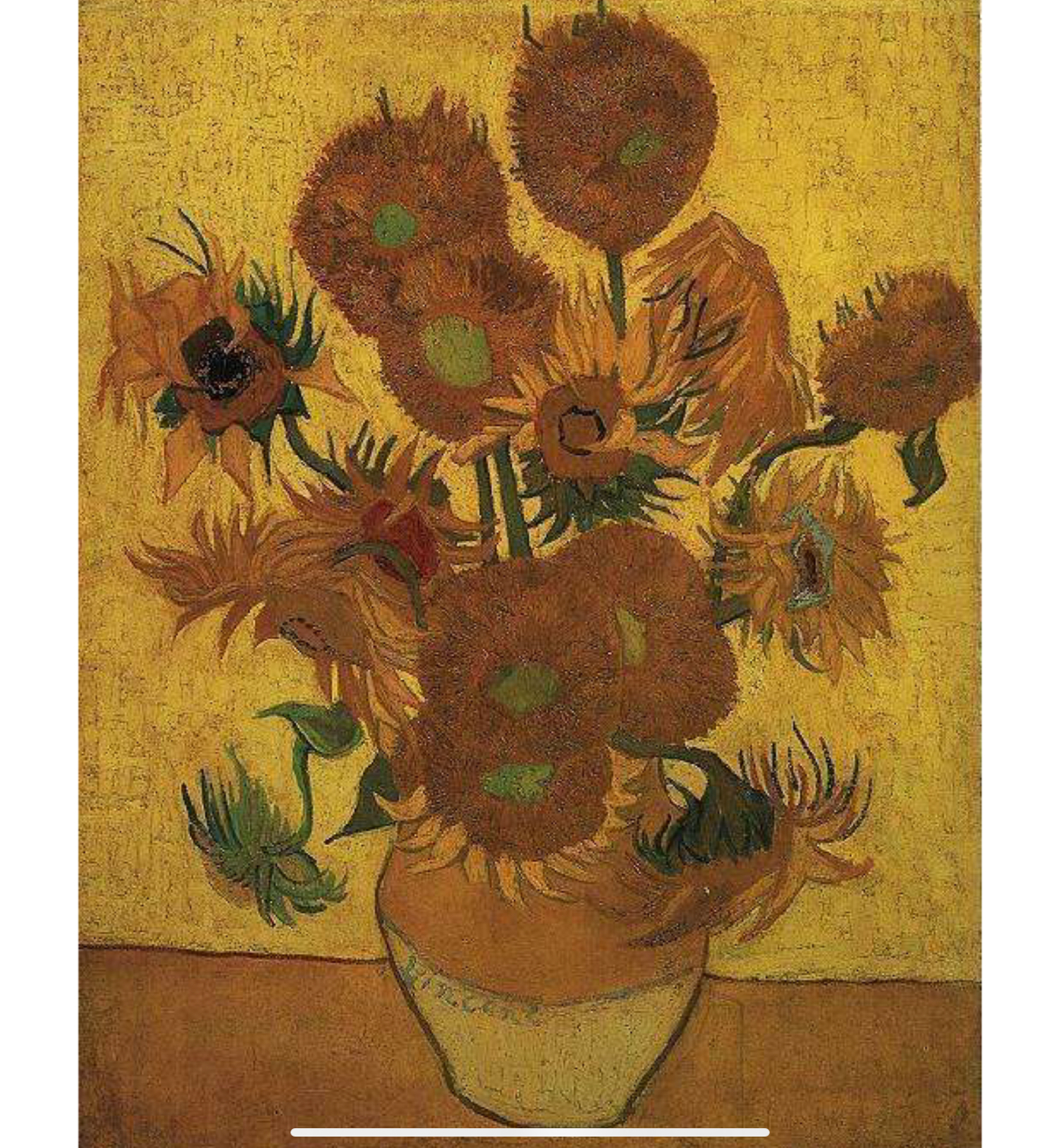
Sunflowers, 1889, VAN GOGH
van gogh explained to be teh only true representation of hsi feelings
made with variations of the same colour
Thick brushwork, creating textured/sculpture like surface = energy
Expressive, swirling, typical of van gogh
Radiant optimism in colour in contrast to potato peelers
Dynamic compositin with varying stage of blooming
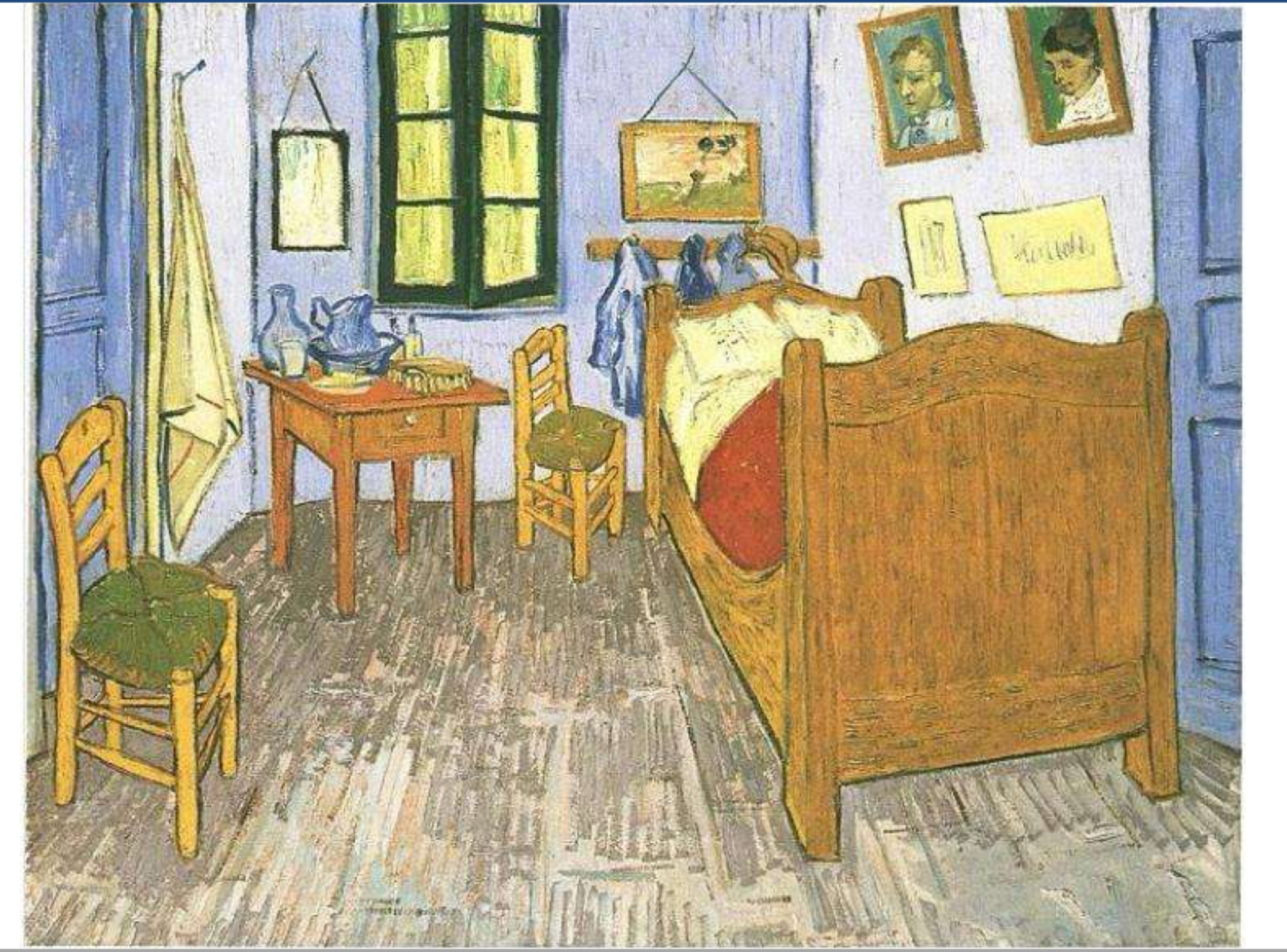
The Bedroom, 1888, VAN GOGH
intimate part of our house, which here can be interpreted as an invitation into the life of the artists “come visit me, I’m alone”.
The bed is made too big, everything si squeezed together & there is personal tools on the table. - everything underlines the welcoming messege
the room is unreal as it is a projection of a room in van goghs brain = he invites us into his brain
the perspective is off
Thick and bold outlines give it a rhythmic quality
Expressive use of colours
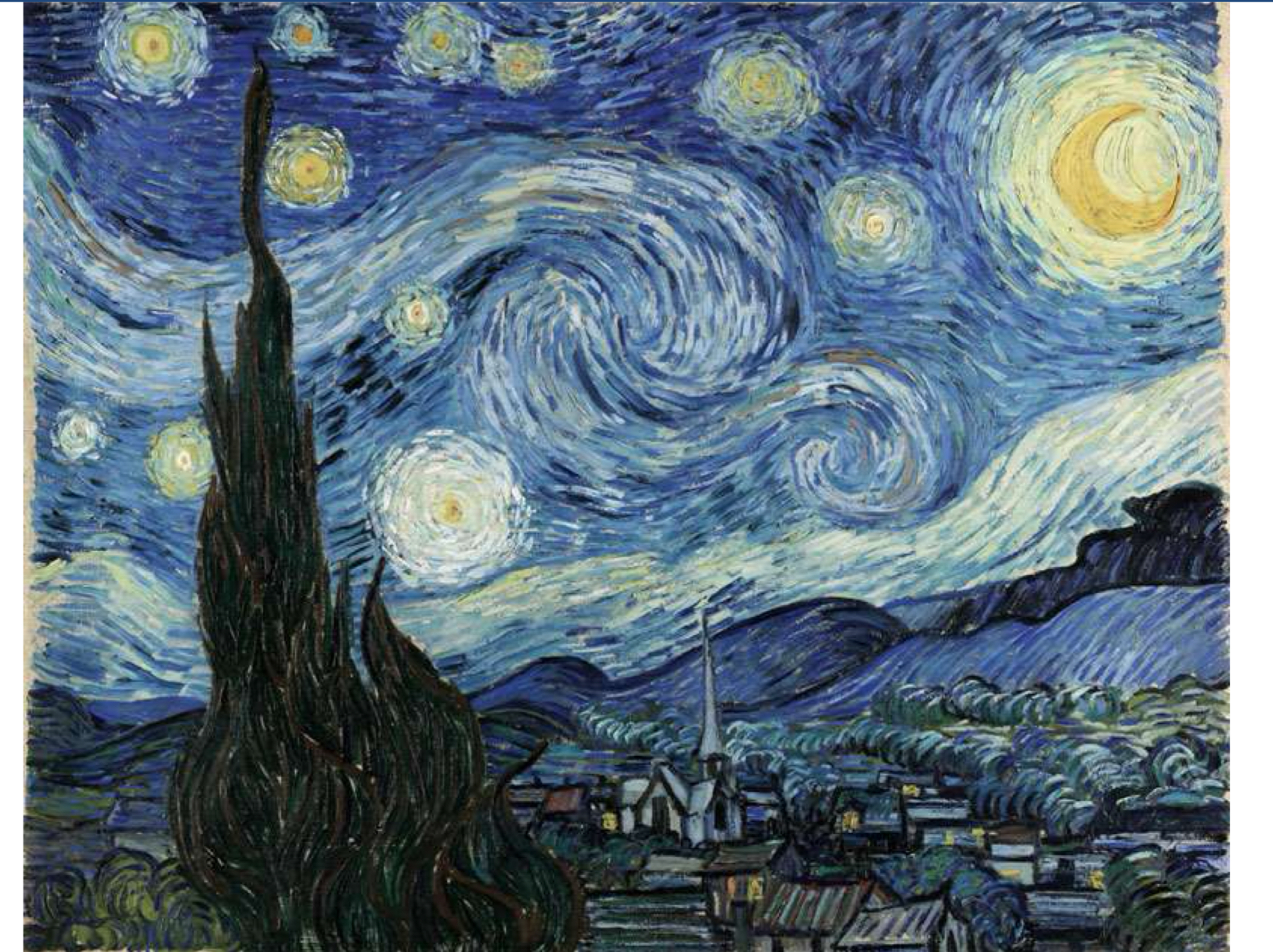
Starry night, 1889, VAN GOGH
swirling brushstrokes
Contrast of deep blue with white & yellow = energetic
Exaggerated forms (flame like trees, orderly chaos)
Symbolic blend of nature’s beauty with artists viison
Emotional expressionism, prioritizing mood
Modern abstraction
 Note
Note  Flashcards (24)