Digestive Enzymes, Absorption, and Metabolic States: A Comprehensive Review
 Call Kai
 Learn
Learn Practice Test
 Spaced Repetition
 Match
Match Flashcards
 Knowt Play
1/18

There's no tags or description
Looks like no tags are added yet.
Name | Mastery | Learn | Test | Matching | Spaced | Call with Kai |
|---|
No analytics yet
Send a link to your students to track their progress
19 Terms
What are the classes of enzymes responsible for digestion?
The classes of enzymes responsible for digestion include proteases for proteins, lipases for fats, amylases for carbohydrates, and nucleases for nucleic acids.
What is the difference between brush border enzymes and secreted enzymes?
Brush border enzymes are located on the microvilli of intestinal epithelial cells and act on substrates in the intestinal lumen, while secreted enzymes are produced by glands (like the pancreas) and released into the lumen to aid in digestion.
What is a zymogen?
A zymogen is an inactive precursor of an enzyme that requires a biochemical change to become an active enzyme.
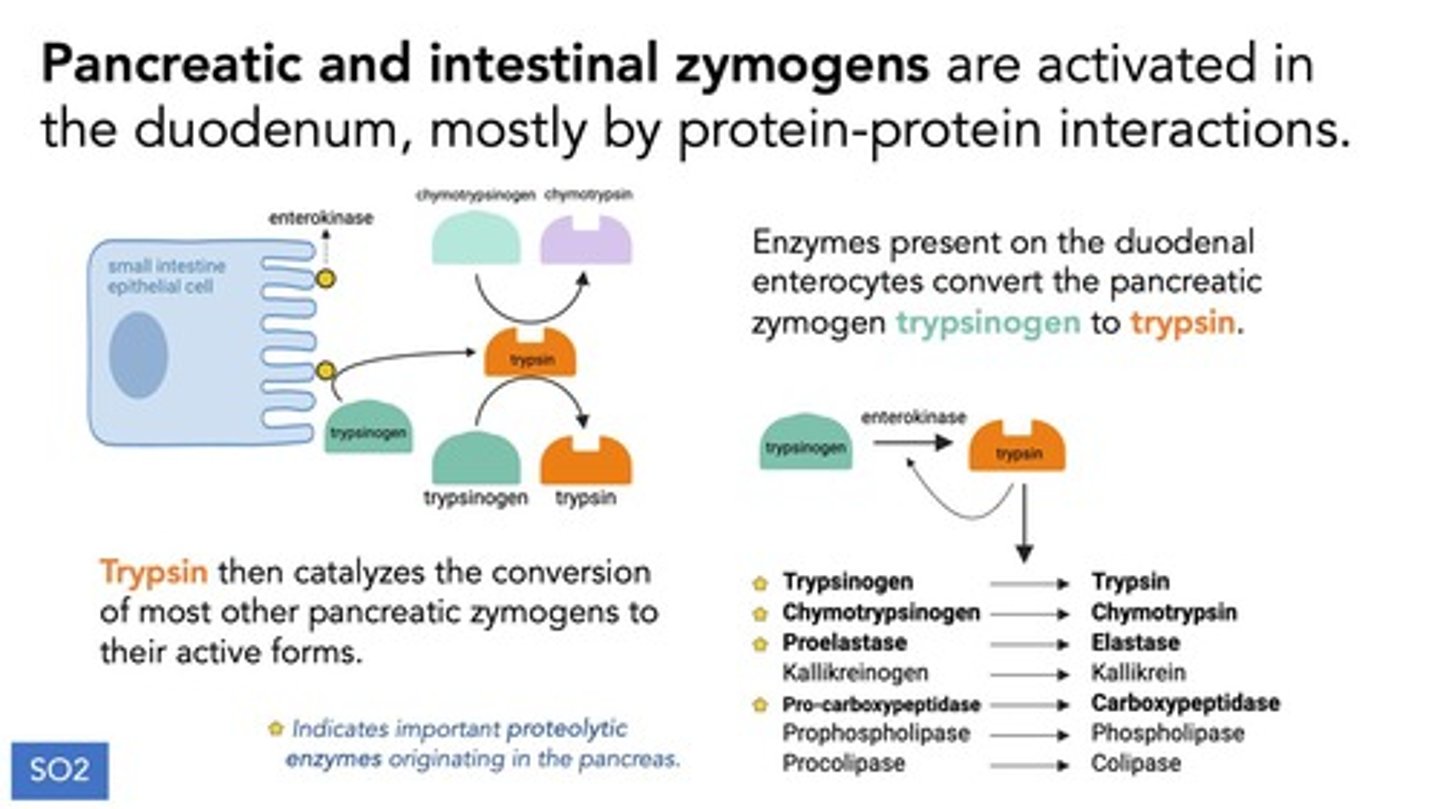
How are pancreatic zymogens activated?
Pancreatic zymogens are activated by enzymes present in the intestinal lumen, such as enterokinase, which converts trypsinogen to trypsin, and trypsin then activates other zymogens.
What is the basic structure of bile salts?
Bile salts are amphipathic molecules derived from cholesterol, consisting of a hydrophobic steroid nucleus and a hydrophilic side chain, allowing them to emulsify fats.
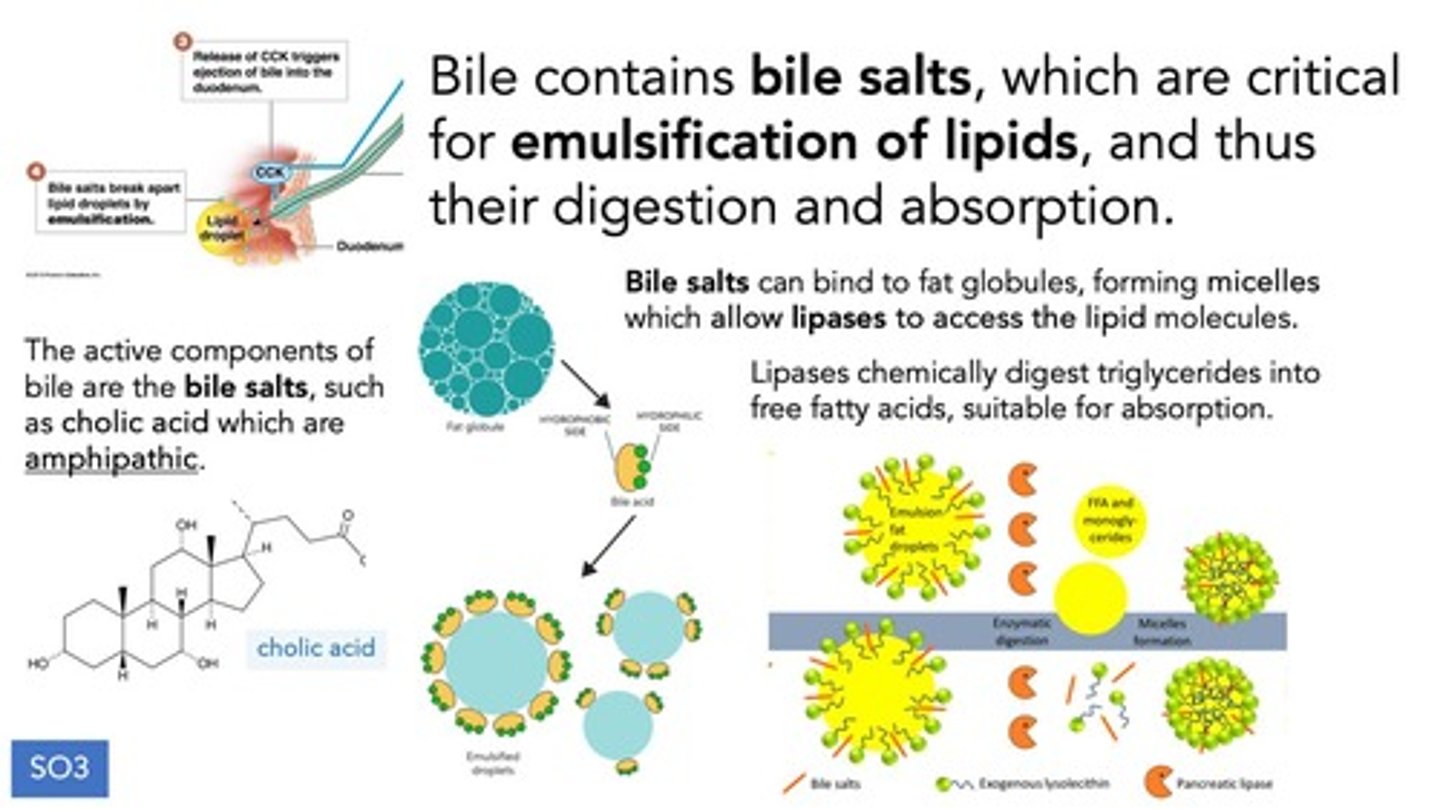
What role do bile salts play in digestion?
Bile salts emulsify dietary fats in the intestine, increasing the surface area for lipases to act and facilitating the absorption of fatty acids and monoglycerides.
How does fat absorption differ from carbohydrate and protein absorption?
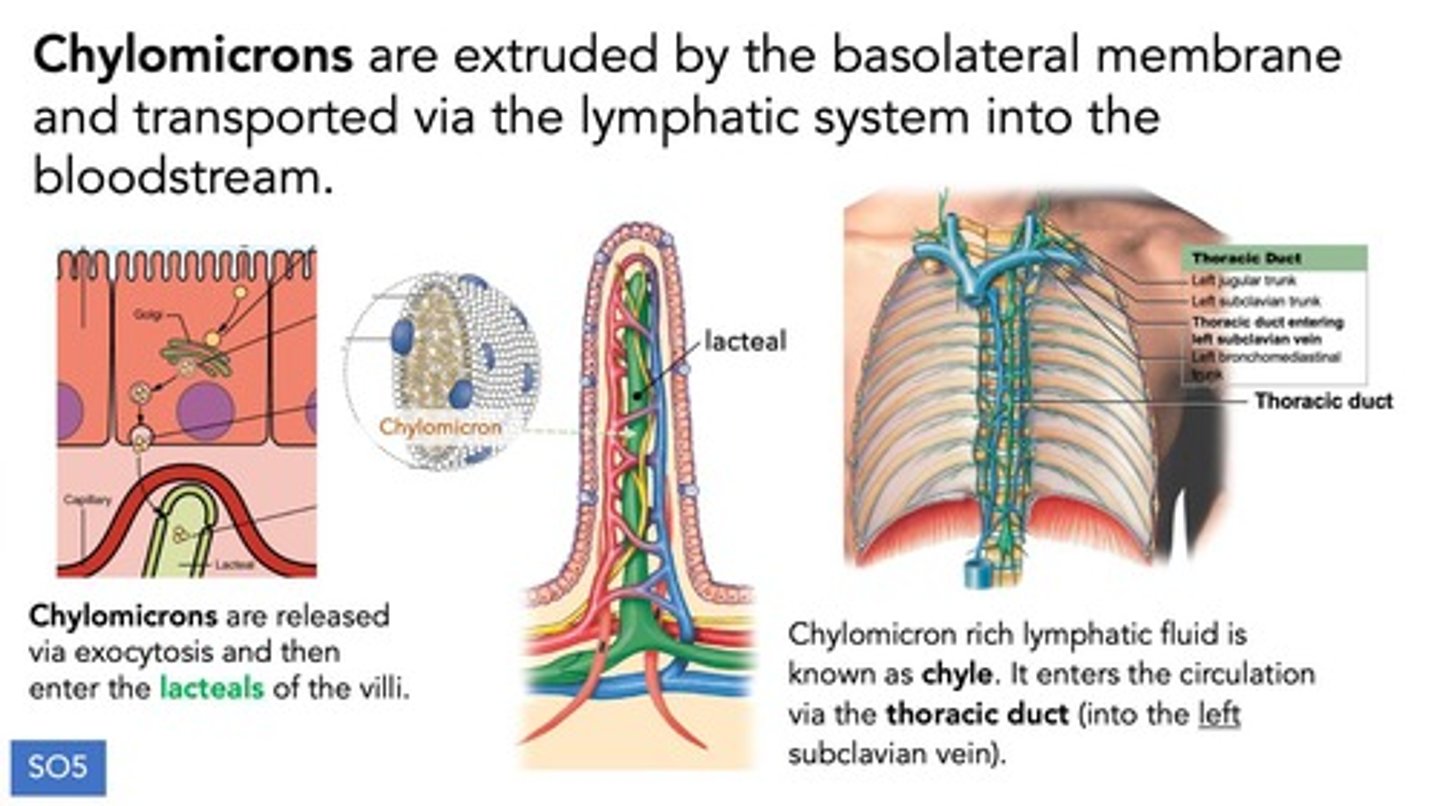
Fat absorption involves emulsification and transport via the lymphatic system, while carbohydrates and proteins are absorbed through facilitated diffusion and secondary active transport into the bloodstream.
What are the transport mechanisms for fats, saccharides, and amino acids from the intestines?
Fats are transported via chylomicrons through the lymphatic system, while saccharides and amino acids are absorbed into the bloodstream via the hepatic portal vein.
What are the major routes for absorption of water, minerals, and vitamins?
Water, minerals, and vitamins can be absorbed across intestinal lumens through passive diffusion, facilitated diffusion, and active transport mechanisms.
What is the absorptive state?
The absorptive state is the period following a meal when nutrients are being absorbed and utilized for energy, storage, and synthesis of macromolecules.
What is the post-absorptive state?
The post-absorptive state is the period when the digestive system is empty and the body relies on stored energy reserves to maintain blood glucose levels and energy supply.
What is the main function of the digestive system?
The main function of the digestive system is to absorb nutrients and other molecules from ingested food.
Why is chemical digestion essential?
Chemical digestion is essential because it breaks down large macromolecules into smaller molecules that can be efficiently absorbed by the body.
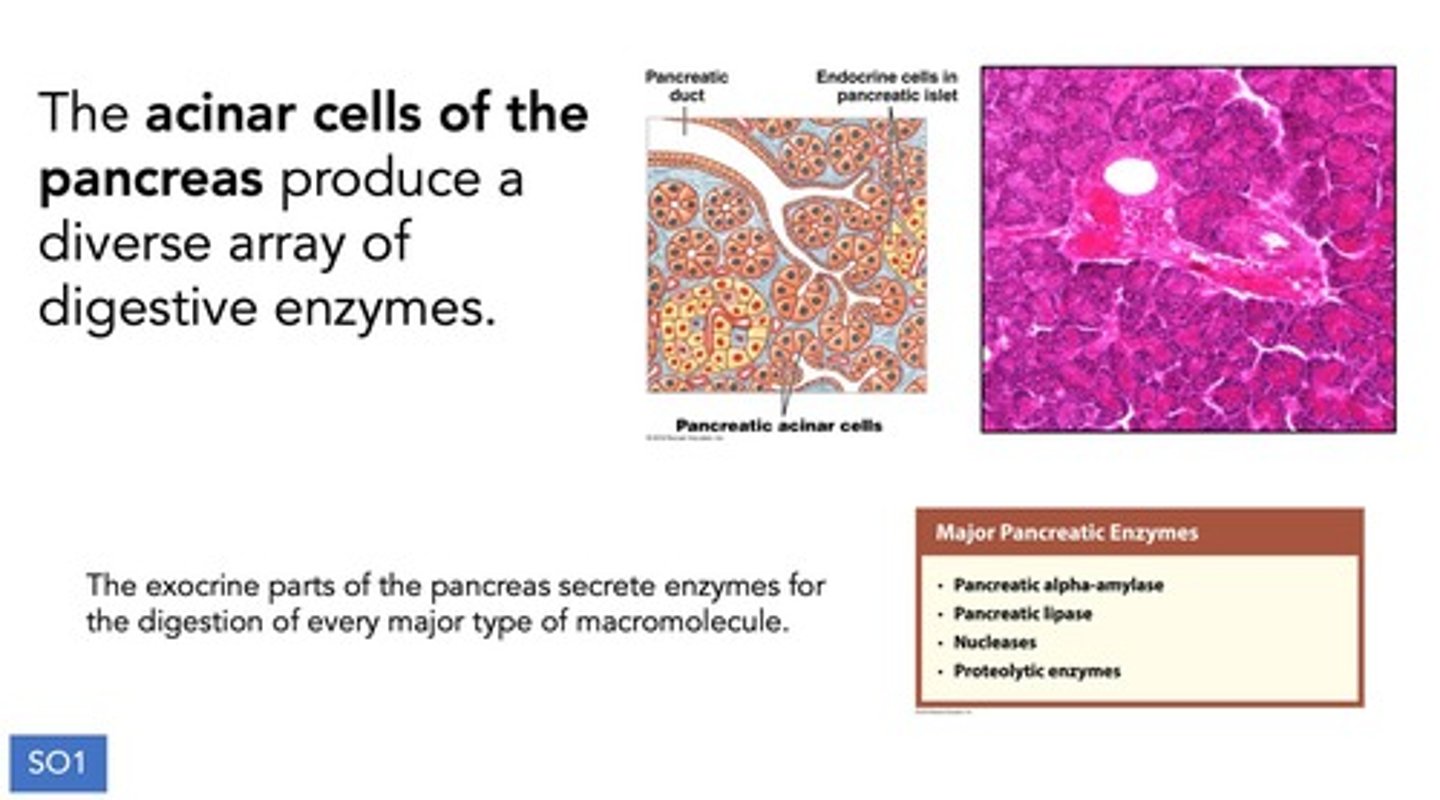
What is the role of the pancreas in digestion?
The pancreas produces and secretes digestive enzymes and bicarbonate into the small intestine to aid in the digestion of macromolecules.
How are carbohydrates absorbed in the intestines?
Carbohydrates are absorbed through facilitated diffusion and secondary active transport mechanisms into the intestinal epithelial cells.
How are proteins absorbed in the intestines?
Proteins are absorbed as amino acids or small peptides through facilitated diffusion and active transport mechanisms.
What is the hepatic portal vein?
The hepatic portal vein is a blood vessel that carries nutrient-rich blood from the intestines to the liver for processing.
What is emulsification?
Emulsification is the process of breaking down large fat globules into smaller droplets to increase the surface area for digestion.
What are chylomicrons?
Chylomicrons are lipoprotein particles that transport absorbed fats from the intestines through the lymphatic system into the bloodstream.