Unit 1
 Studied by 1 person
 Call with Kai
 Learn
Learn Practice Test
 Spaced Repetition
 Match
Match Flashcards
 Knowt Play
1/138

Earn XP
Name | Mastery | Learn | Test | Matching | Spaced | Call with Kai |
|---|
No study sessions yet.
139 Terms
Unit 1
Biological Bases of Behavior
1.1
Interaction of Heredity and Environment
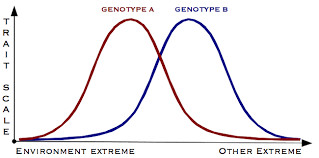
Nature (heredity/genes)
Passed down biological traits that influence physical characteristics, temperance, personality, intelligence, and mental health risks.
Nurture (environment)
Experiences and surroundings that shape the environment, including parenting styles, education quality, culture and social norms, and life events.
Natural selection
Traits that offer an advantage for survival and reproduction (which are more likely to be passed down).
Evolutionary psychology
An approach to psychology that uses evolutionary principles to explain why certain behaviors/mental processes were a form of adaptation for survival and reproduction.
Eugenics
A discredited movement that uses genetics to try and control or “improve” the human population.
Social darwinism
A misuse of evolutionary concepts that justify and claim that social inequalities (like being poor) reflect the “survival of the fittest”.
_____ compare different subjects to examine the impact of “nature” (genes) and “nurture” (environment) on a specific trait.
Twin studies
Similar to twin studies, this kind of research examines traits or disorders between relatives.
Family studies
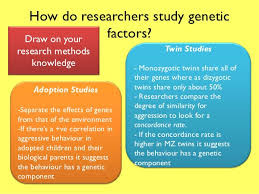
Adoption studies
Tests genetic and economic influence with biological and adoptive parents to separate genes vs. environment.
1.2
Overview of the Nervous System
Nervous system
The body’s communication and control network that coordinates sensation, thought, and action (divided into the CNS and PNS).
Central Nervous System (CNS)
Brain and spinal cord. Controls the processing of incoming sensory info and deciding how the body will respond by sending commands (for movement/behavior).
Peripheral Nervous System (PNS)
All the nerves in the body. Delivers messages from the body and the brain (and vice versa), collects sensory info, and carries out motor instructions. Made up of SNS and ANS.
Somatic Nervous System (SNS)
Voluntary/intentional movement that includes processing sensory info and moving skeletal muscles.
Automatic Nervous System (ANS)
Automatic/involuntary functions like breathing, heart rate, digestion, pupil dilation, and body temperature control. Has two opposing subsystem (sympathetic/parasympathetic NS).
Sympathetic Nervous System
Activates in stressful/emergency situations, boosting heart rate, dilating pupils, and slow digestion. Prepares your body for action (fight-or-flight).
Parasympathetic Nervous System
Helps bring the body back to a normal state after stress, slowing your heart rate and stimulating digestion. Restores calm (rest-and-digest).
1.3
The Neuron and Neural Firing
Neurons
A neural cell that sends electrical/chemical signals (allowing them to spread/receive info). Form complex pathways.
Glial cells
Neural cells that support neurons by structuring the nervous system, create insulation (myelin sheath), and helping with communication and waste clean up. Don’t send signals.
Reflex arc
A fast, automatic pathway that goes through the spinal cord to produce a response quickly.
Name the order of neurons in the reflex arc.
sensory neuron, interneuron, motor neuron
Sensory neuron
Neuron that detects incoming stimuli and carries information to the spinal cord or brain.
Interneuron
Neuron found in spinal cord/brain that processes incoming signals and relays commands.
Motor neuron
Neuron that carries info from the brain/spinal cord to muscles/glands.
Resting potential
The neuron is ready and not firing, with a stable slightly negative charge.
Threshold
The minimum level of stimulation needed to trigger a neuron to fire.
Action potential
A brief electrical impulse that travels down an axon when a neuron fires, either fires fully or doesn’t fire at all.
Depolarization
The influx of positive ions that reduces the neuron’s negative charge and starts the action potential. Flood in, flipping the charge.
Refractory period
The brief reset time after an action potential when a neuron cannot fire again.
Reuptake
The process of neurotransmitters being reabsorbed into the sending neuron after signaling.
Dopamine
A neurotransmitter involved in reward, motivation, and motor control.
Too much = Schizophrenia
Too little = Parkinson’s
Serotonin
A neurotransmitter that helps regulate mood, sleep, and appetite.
Too little = Depression
Norepinephrine
A neurotransmitter that increases alertness and arousal, especially during stress.
GABA
The main inhibitory neurotransmitter that reduces neural activity.
Too much = Anxiety, seizures
Glutamate
The most common excitatory neurotransmitter, important for learning and memory.
Too much = Migraines, seizures
Acetylcholine (ACh)
Neurotransmitter that controls muscle movement, important for learning and memory.
Linked to Alzheimer’s.
Endorphins
Neurotransmitters that act as natural painkillers, also producing feelings of pleasure.
Substance P
A neurotransmitter that carries pain signals from the body to the brain using the spinal cord.
Hormones are much _____ than neurotransmitters.
slower
Adrenaline (epinephrine)
Hormone that prompts fight-or-flight response
Leptin
A hormone that signals satiety and helps you feel full.
Ghrelin
A hormone that increases hunger.
Melatonin
A hormone that helps regulate the sleep–wake cycle.
Oxytocin
A hormone linked with bonding, trust, love, and human connection.
Why do psychoactive drugs mess with the brain?
Drugs interfere with normal neurotransmitter activity, affective behavior.
Agonists
Drugs that mimic neurotransmitters and activate their receptors.
Antagonists
Drugs that block neurotransmitters from binding to receptors.
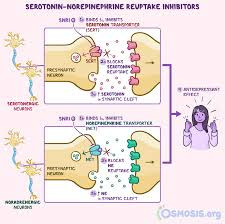
Reuptake inhibitors
Drugs that prevent neurotransmitters from being reabsorbed, leaving more available in the synapse.
Psychoactive drugs affect neural activity differently, and are usually reduced to the categories of:
Stimulants, depressants, hallucinogens, and opioids.
Stimulants
Drugs that increase central nervous system activity and arousal. Raise heart rate, alertness, energy, and euphoria.
Examples of stimulants
Caffeine, nicotine, cocaine, amphetamines.
Depressants
Drugs that slow brain activity and body functions. Increase relaxation, slow processing, reduce coordination and memory.
Examples of depressants
Alcohol, benzodiazepines.
Hallucinogens
Drugs that distort perception and can trigger sensory experiences without external input. Create sensory distortions, hallucinations, and alter ways of thinking/memory.
Examples of hallucinogens
Marijuana (THC), LSD, psilocybin.
Opioids
Drugs that block pain, cause euphoria and have a high addiction risk.
Examples of opioids.
Heroin, morphine, OxyContin.
Tolerance
Needing more of a drug over time to get the same effect.
Addiction
Compulsively seeking out a drug despite harm.
Withdrawal
Physical (anxiety, cravings) and psychological (sweating, nausea) symptoms that occur when a person stops using a drug.
The brainstem contains the…
Medulla, pons, and midbrain.
Medulla
A brainstem structure that regulates vital autonomic functions such as heart rate, breathing, and blood pressure.
Pons
Brainstem structure that controls your body’s level of alertness after waking up, and relays/regulates pain signals.
Midbrain
Associated with vision, hearing, motor control, sleep/wake, arousal, and temperature regulation.
Reticular Activating System (RAS)
Controls your wakefulness/alertness, attention, and filters incoming sensory information (helping focus). Damage can cause sleep disorders or even comas.
Cerebellum
Coordinates precise/smooth movement, helping motor learning, and involving attention and language processing.
Cerebral cortex
The outer layer of your brain — highly folded and complex. Handles complex thoughts, perception, and voluntary movement.
Left hemisphere
Language and logic.
Right hemisphere
Spatial awareness, emotion, and holistic processing.
Frontal lobe
The front part of the cortex involved in decision-making, reasoning, impulse control, and voluntary movement.
Prefrontal cortex
Executive functions (planning, self-control).
1.4
The Brain
Motor cortex
Triggers voluntary movement.
Broca’s Area
A region in the left frontal lobe that controls speech production.
Parietal lobe
The cortical area that processes body sensations like touch and helps with spatial awareness.
Somatosensory cortex
Maps sensory input from the body.
Temporal lobe
A cortical region important for hearing, language comprehension, and aspects of memory and emotion.
Wenicke’s Area
A region in the left temporal lobe that supports language comprehension.
Limbic system
A network beneath the cortex involved in emotion, motivation, learning, and memory.
The temporal lobe contains part of the limbic system, containing the ______ and ______.
hippocampus, amygdala
Occipital lobe
The primary visual processing center of the cortex.
What are the components of the limbic system?
Thalamus, hypothalamus, hippocampus, amygdala, pituitary gland
Thalamus
The brain’s sensory relay station that routes incoming information to the appropriate cortical areas.
Hypothalamus
A small but crucial structure that regulates hunger, thirst, body temperature, and links the nervous and endocrine systems.
Hippocampus
Forms new long-term (explicit) memories.
Amygdala
Processes emotions, especially fear/aggression.
Pituitary gland
Releases hormones (regulated by hypothalamus).
Split-brain surgery
A procedure that cuts the corpus callosum to reduce severe epilepsy, isolating communication between hemispheres.
Hemispheric specialization
The idea that each hemisphere tends to be more involved in certain functions (e.g., left for language).
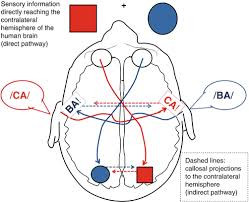
Contralateral organization
The cross-wiring of the nervous system where each hemisphere controls and receives input from the opposite side of the body/visual field.
Plasticity
Your brain’s ability to change and adapt over time — especially useful after injury or during learning.
Name a method of studying the brain that uses the brain’s electrical activity.
EEG (electroencephalogram)
Name a method of studying the brain that tracks blood flow in the brain.
fMRI (functional MRI)
Name a method of studying the brain that focuses on examining the effects of brain damage.
Lesioning
1.5
Sleep
Consciousness
Your awareness of your thoughts, feelings, and surroundings.
Circadian rhythms
Your internal 24-hour body clock plays a major role in regulating energy, mood, and mental clarity.