CLAS241 - Archaic Period (600-480 BCE)
 Call Kai
 Learn
Learn Practice Test
 Spaced Repetition
 Match
Match Flashcards
 Knowt Play
1/18

There's no tags or description
Looks like no tags are added yet.
Name | Mastery | Learn | Test | Matching | Spaced | Call with Kai | Chat |
|---|
No analytics yet
Send a link to your students to track their progress
19 Terms
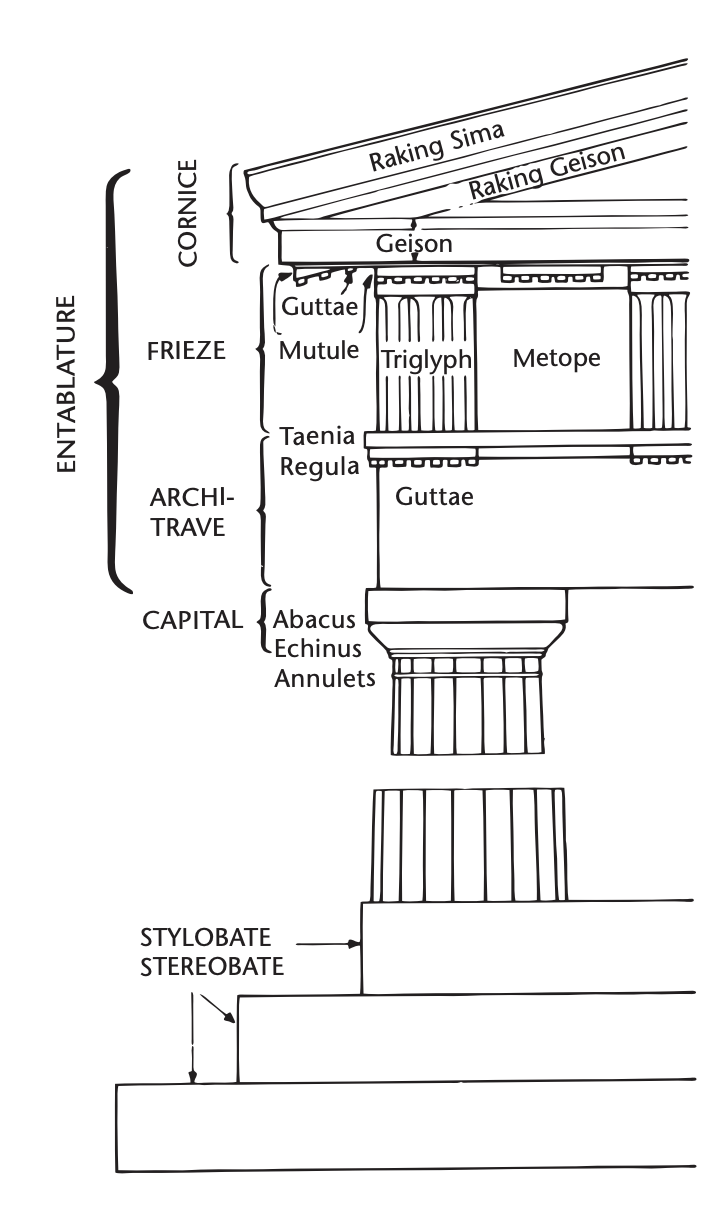
Doric Order
Mainland Greece and Greeks in the West; first Greek order
Mimics old wooden temples from previous periods
Bottom: base = 3 steps, 1-3 stereobate; stylobate = block columns rest on
Column sits directly on stylobate, no base
Top of column: capital (simple, undercoated, round)
Frieze:
- triglyph (3 cuttings meant to mimic carpentry marks
- metope (blank space, mimics end of wooden beam, sometimes decoratedCornice:
- roof
- area b/w roof and beginning of slope is called a pediment
- pediment: where decoration was often seen, at first in reliefVery Mathematical
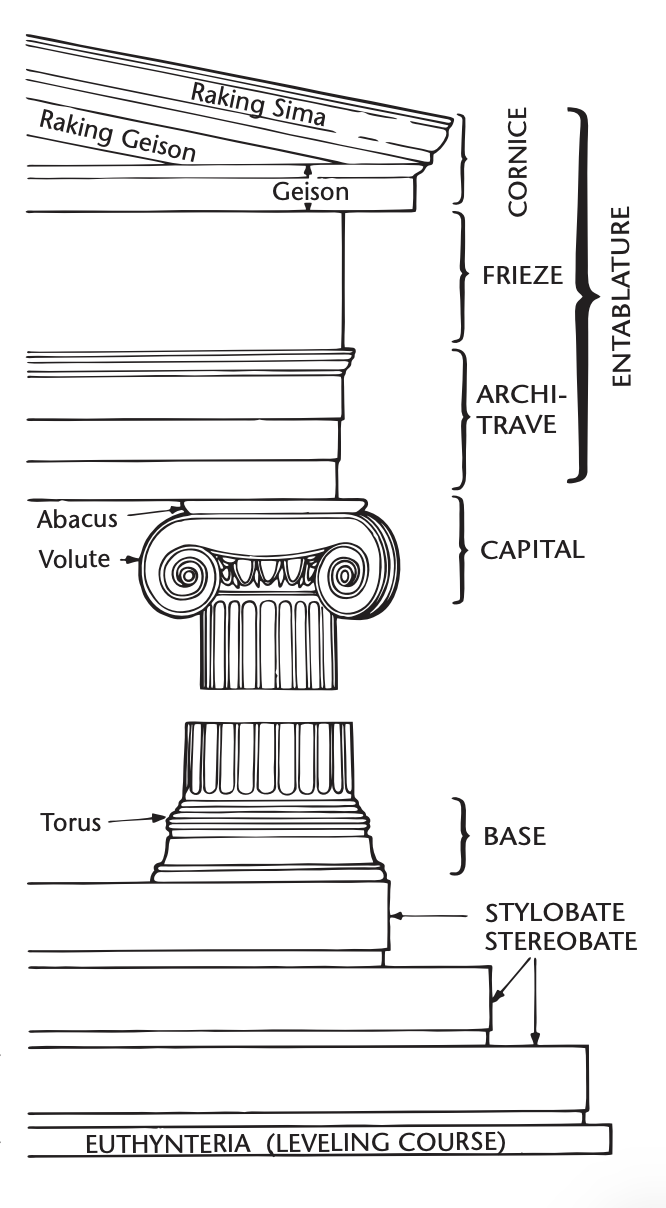
Ionic Order
Decorative
Column has a base
Column capital have fancy volute (swirly)
- These motifs appeared at a small scale in wood and bronze in the Near EastNo triglyph and metope in the frieze, unlike Doric order
- allows for more decoration
- frieze is continuous, sometimes carved w/ figuresSame roof style as Doric order
Popular style among the Greeks in the East (Asia Minor) and islands
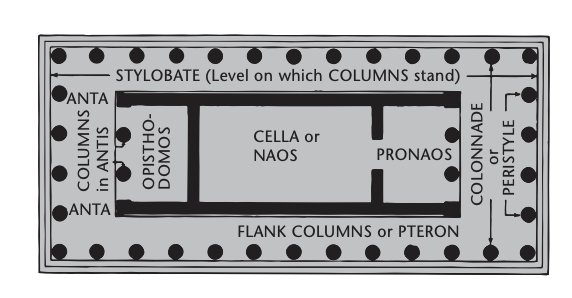
Typical Doric Temple Plan
Temple building located inside; surrounded by columns
Columns around = Peristyle Temple
Building: 2-3 rooms (similar to megaron; evolution of megaron)
Main building has a naos (room), Pronaos (porch)
A naos is where statues of Gods/Goddesses were kept
Outside is where sacrificial alter would be; inside mostly had priest/priestess
Opsithodomos: treasury (normally), where donations were kept (located in back)
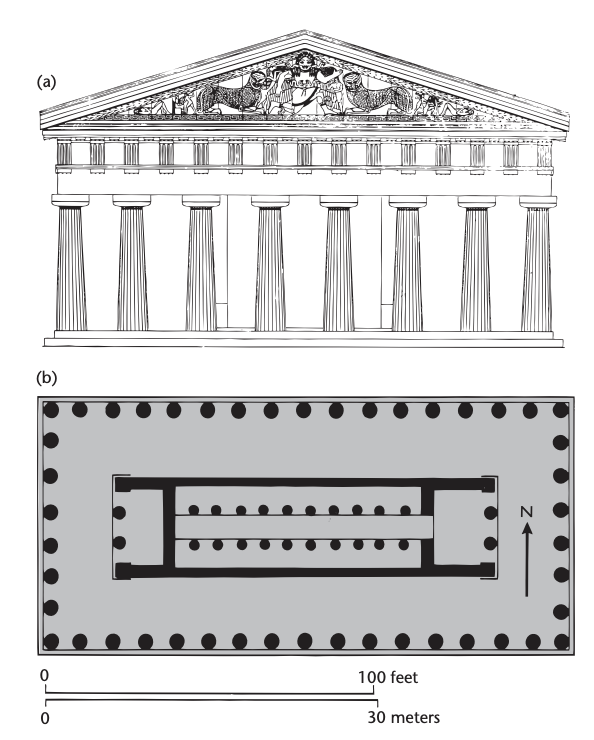
Temple of Artemis, Plan — Corfu
CA. 580 BCE
Doric Order
Style: Pseudo-dipteral
Columns: 8 × 17
- Formula: 2x + 1Column Height: 4.15 - 4.40 x d
Usually 6.5 x d OR 2x intercolumniation
Intercolumniation: space b/w 2 columns (centre → centre of columns)
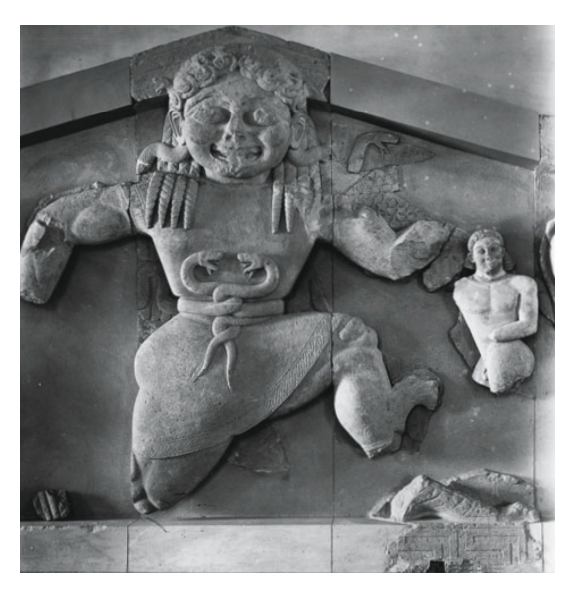
Temple of Artemis, Sculpture — Corfu
Gorgon, Pegasus, Chrysoara; children born at her death (“golden boy” apotropaic)
Zeus vs Giant (gigantomachy)
King Priam of Troy?
Body looks symmetrical
Starting to round off body
- shows growing interest in human anatomyRunning-kneeling position (same thing as the Bull Leaping Fresco)
Meant to be a scary img (apotropaic, in Greek, “to turn away”)
Gorgons meant to act as anti-evil figures; meant to scare away evil spirits (think evil eye)
Gorgon in the middle = Medusa
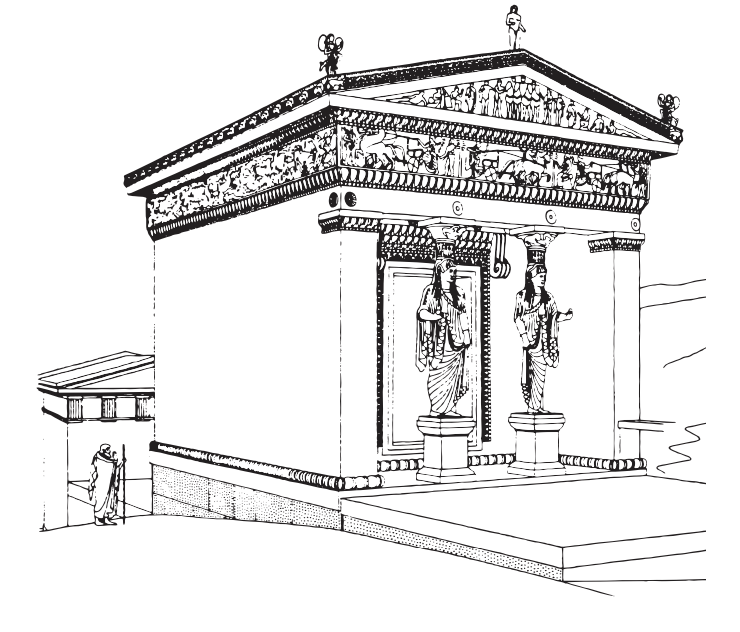
Treasury of the Siphnians — Delphi
Caryatid column — carved females/priestesses
Ionian Order
Securely dates; acts as a valuable chronological marker for the development of Greek sculpture
Relief sculpture on the running frieze
Sits beside the treasury of the Athenians (Doric Order) representing their hero
Each gable end o the Siphnian treasury was decorated w/ pedimental sculptures
Building faced West; Sacred Way = N/S
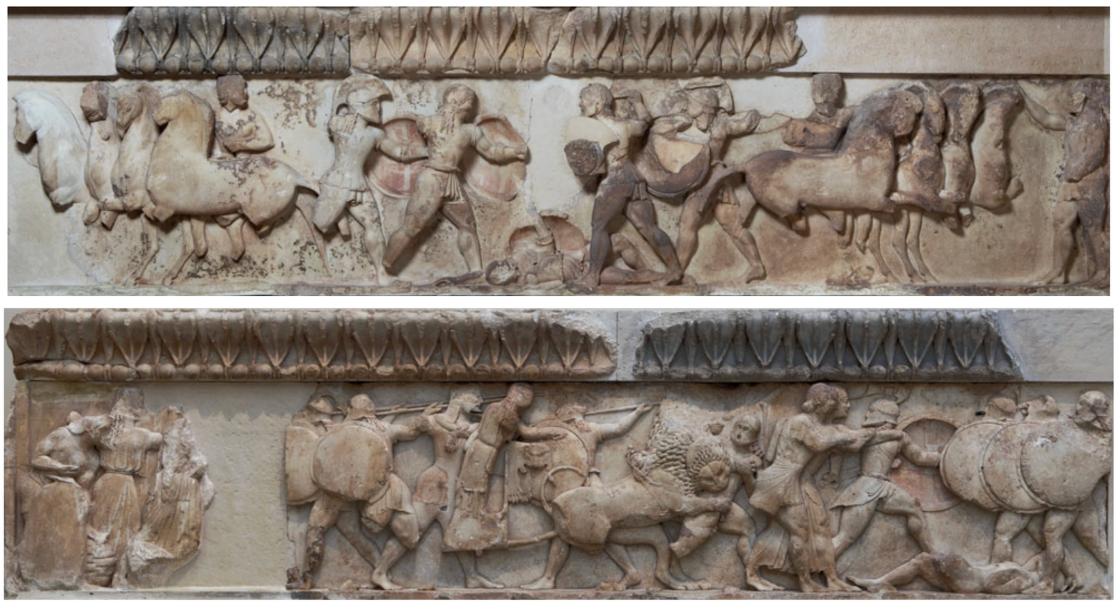
Treasury of the Siphnians, Sculpture — Delphi
Mythologic fighting scene
Timeless imagery, not depicting a specific historical event
Bodies look like Kouros statues, but wearing clothes
- Rounded forms, geometric, similar to old relief
- Giants depicted as humans, Dionysus wearing panther skinShows twin figures (Apollo + Artemis) → important in sanctuary
Mixed perspective; new technique = overlapped shields showing depth
Inscriptions showing artists’ names
Lion attacking giant
- Note body position → ¾ frontal view, arms strangling lion
- Note musculature → 3D roundness of body, somewhat flattened forms
- Note facial expressions → open mouth = in pain, nose scrunch on lion
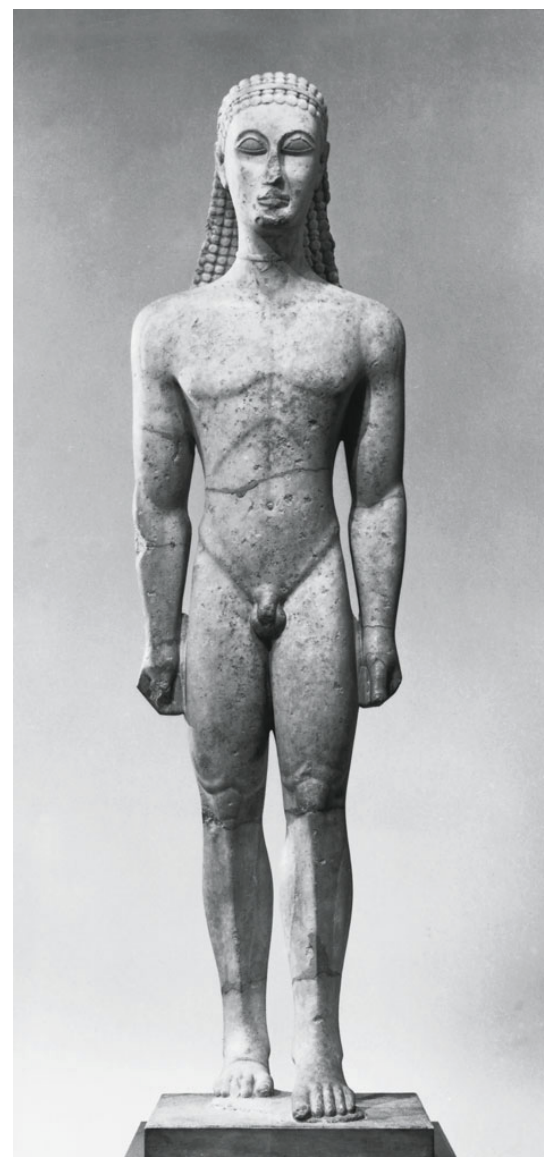
New York Kouros
Kouros = Young Boy
CA. 600 BCE (beginning of tradition)
Life size, usually placed in sanctuaries (as thanks) or cemeteries (grave markers)
- Comes from Daedalic traditionSimilar to Matiklos Bronze from Orientalizing period
Rounding body → shows evolution of art styles
1) ~80% of statues placed in thanks to Apollo
2) Becomes a grave marker, and a projection of the person that had passed (labelled w/ name on bottom)
Defining feature = nudity
- Defines heroism (can see muscles, etc)Smaller penis = don’t give into lustful urges, more focused on being a hero
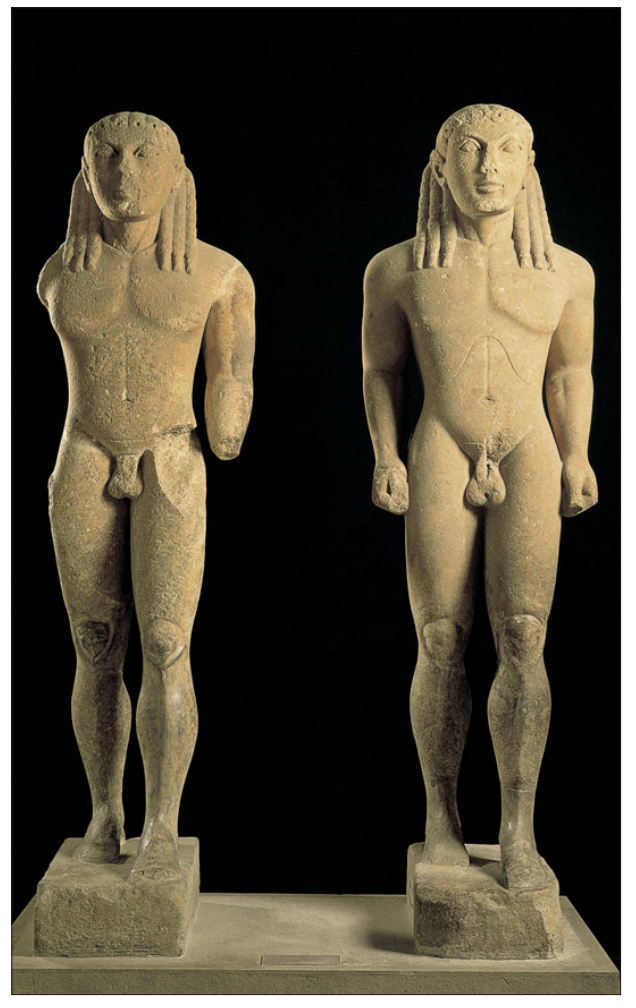
Kleobis and Biton
The Dioskouri? […]medes ← inscription, first part lost
Disoskouri: twin heroes of ancient Greece
Lifesize (1.97m), like NY Kouros
Note boots
- Represents they were travellingSmile theories → can’t be proven
- Engage more muscles w/ smiling → shows muscles more easily
- Rich people used these statues (referred to as laughing ones)Technically not a Kouros statues b/c they are not nude
Likely votive offerings from Delphi (grave markers)
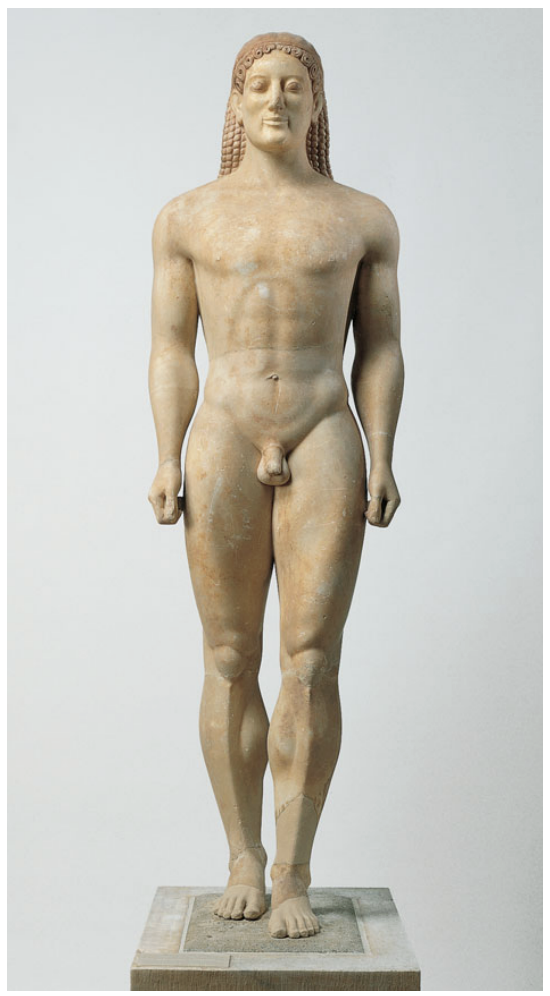
Anavysos Kouros
Also life size (1.94m)
More natural proportions and contours; more 3D
Evolved to look more naturalistic (ideal)
Differences from NY Kouros:
- Muscles and details rounded → more undercuts of pectorals, six pack and kneecaps defined
- Biomechanics are more accurate → the torso is more centred, one butt cheek is higher than the otherSimilarities to the NY Kouros:
- Symmetrical, equal cleats
- Smooth face, archaic smile — represents ideal young male
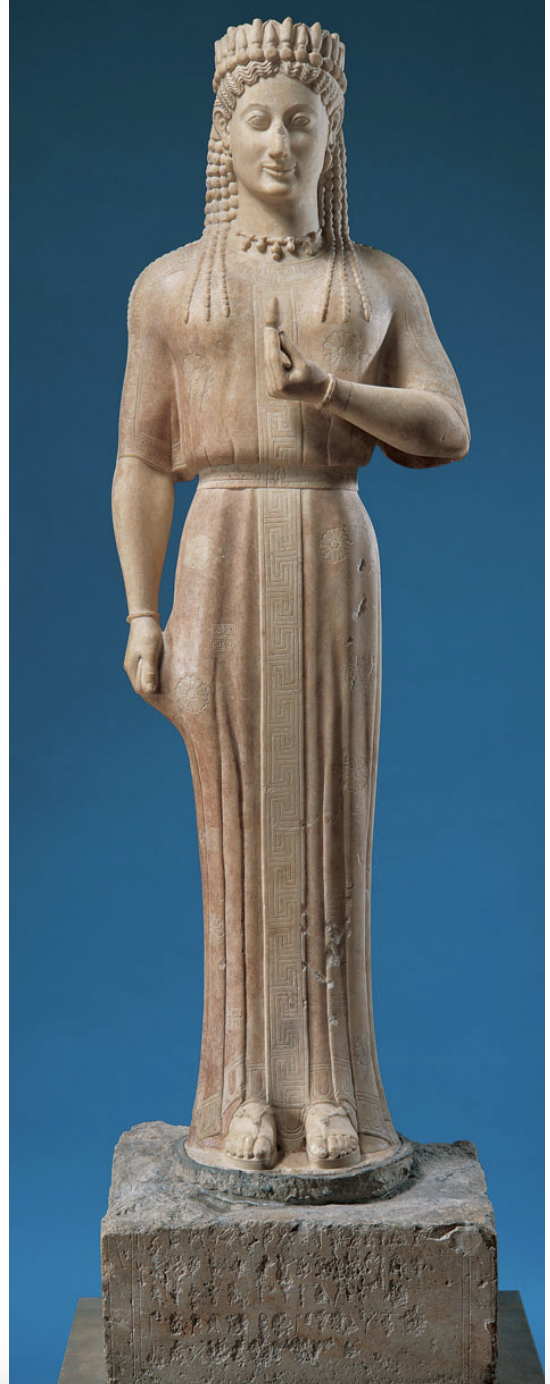
Phrasiklea
Athens
Painted version has patterns like the starburst, meander
Holding a flower (uncertain meaning), maybe a flower of death
Arm @ side like Kouros statues, but more natural and holding her dress
Inscription:
- Suggests she dies before marriage
- Poetic
- Artist signature — “Aristion of Paros made me”; like the statue is conversing w/ viewer; relationship b/w art and text
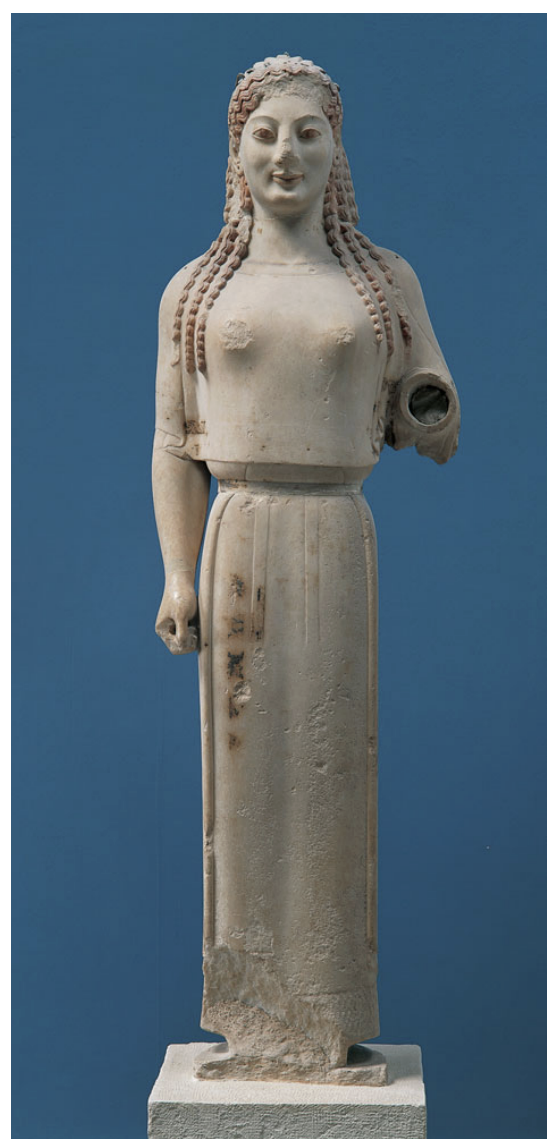
Peplos Kore
Kore: Maden (girl)
- Statue of women in ideal form
- YoungerPeplos: garment she’s wearing
Body form under clothing
- Visible breast and nipplesDifference from Kouros:
- Not nude
- Emphasize the interplay b/w the body and clothing; while Kouros emphasizes the body
- Might represent Artemis/Priestess; Kouros usually represent Apollo
- Painted features; pupils, red makeup, coloured dress
- Attachment holes; to insert jewelrySimilarities to Kouros:
- Votive offerings/grave markers
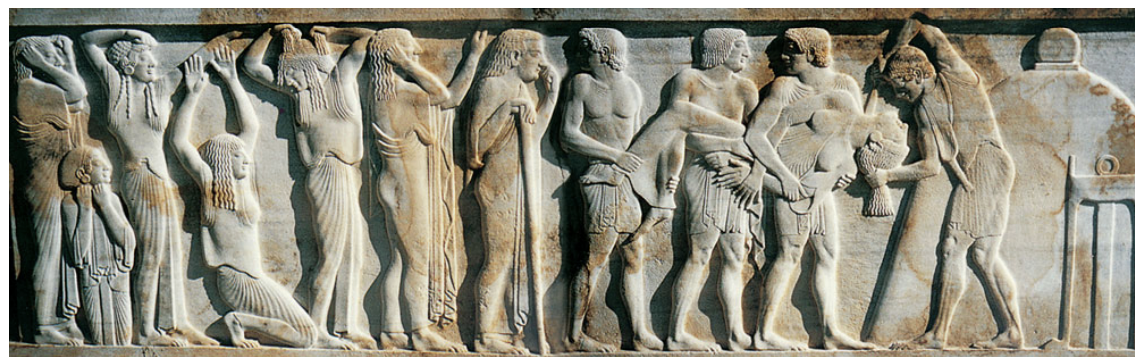
Polyxena Sarcophagus
Oldest figured sarcophagus in Asian Minor (Persia)
Women in gestures of mourning/dismay → rich people hired professional mourners for funerals to emphasize how important/influential they were
Isocephalic arrangement of figures
- Iso: equal, Cephalos: headMost figures have heads @ same level
- Creates a sense of order, a sense of equality among figures (designs)On the right: four men carry Polyxena, daughter of Priam, King of Troy; one is thrusting a sword into her throat; showing the sacrifice of Polyxena
- One end has a tumulus and tripod, which are allusions to the death of Achilles
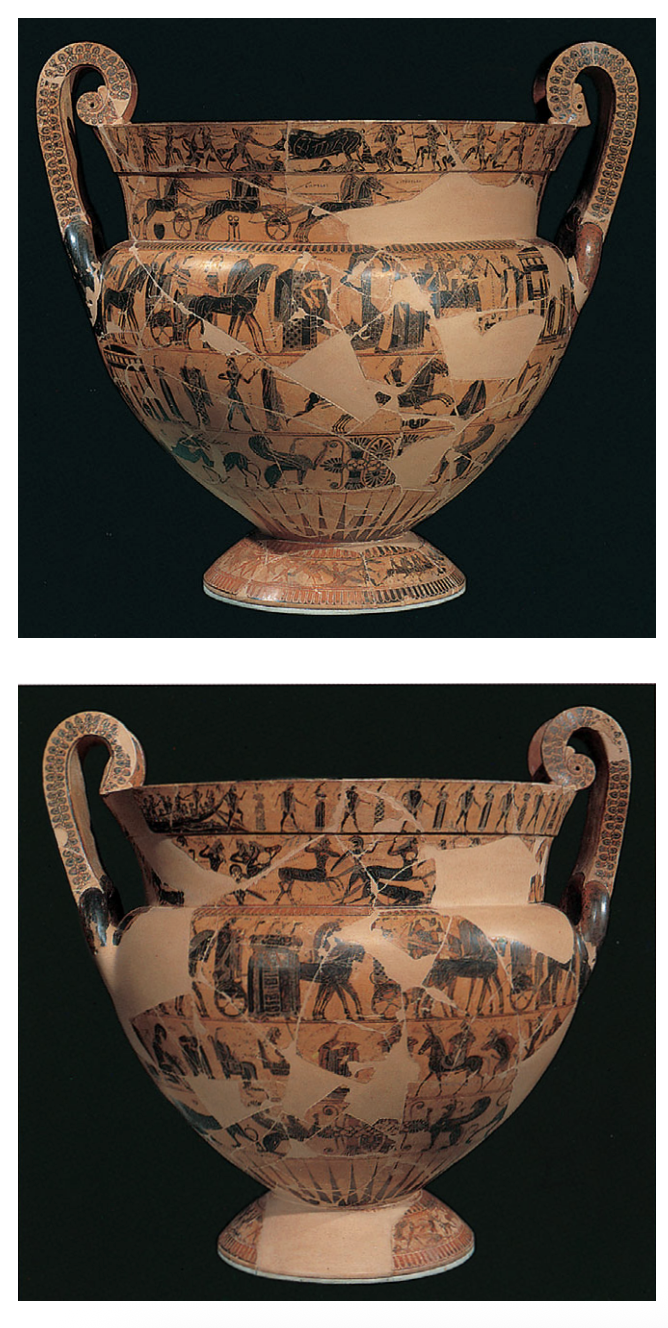
Francois Vase
Signed: Ergotimos and Keleitias
1) Funeral games of patroklos
- Homer’s iliad
2) The dance of theseus
3) The calydonian boar hunt
4) The battle of Lapiths vs Centaurs
5) The marriage of Peleus and Thetis
- Main story
- Any child Thetis had will be greater than his father(?)
Attic Black Figure
- Type of painting technique used during this eraAll mythological stories
All semi-related to e/o
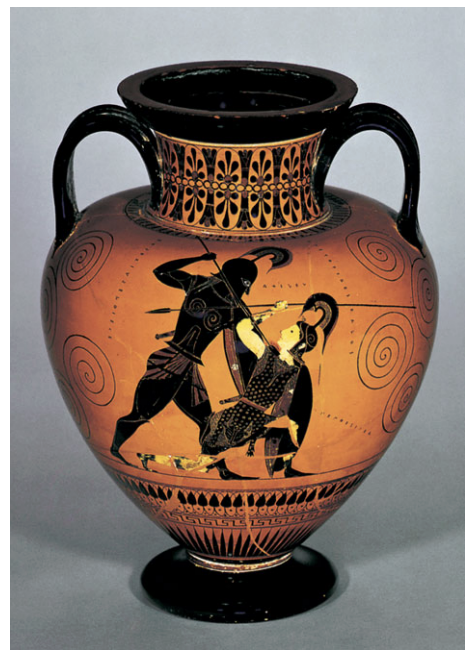
Achilles killing Penthesilea Amphora — Exekias
Exekias = artist
Intense emotion and drama
“The Moment In-Between”
Note their eyes locking right before Achilles kills her → hints that they may have fallen in love since Achilles found Penthesilea as a worthy opponent
Attic Black Figure
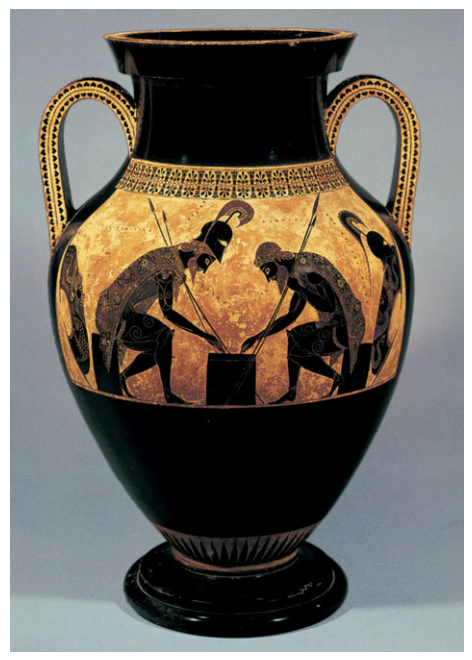
Achilles and Ajax Playing Dice Amphora — Exekias
Very Detailed
Very symmetrical
Becomes a very popular subject
Warriors are playing armed, with spears and shields at the ready
They are at Troy
Achilles’ anger has taken him out of combat, but he will return, and the viewer knows what’s to come
Scene full of foreboding, ominous w/ pent-up rage shortly to be released
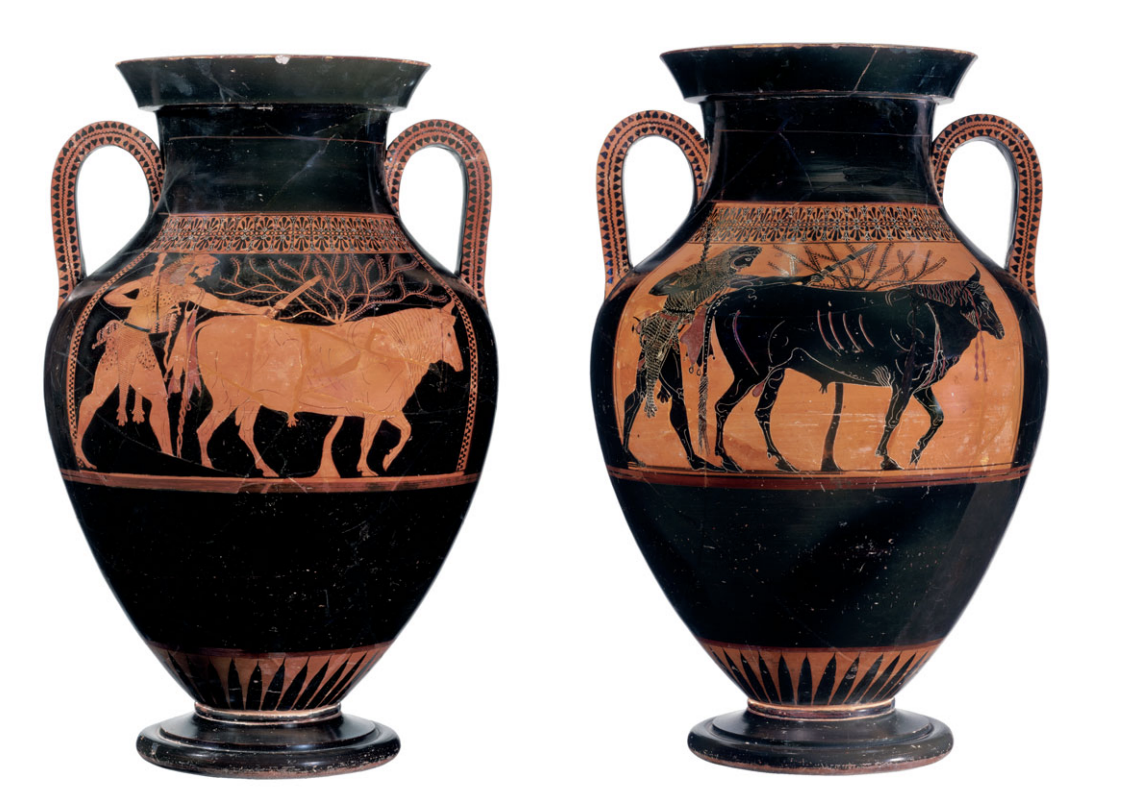
Bilingual Amphora — Workshop of Andokides
“Bilingual” = one side decorated w/ old-fashioned technique and new on the other
Hercules fighting/driving a bull → bulls still important?
L: Red Figure Amphora
- Allows for more (and different kinds of) detail in the figures → you can see eye colour and body definition better
- Body definition is a major interest in Greek art at this timeR: Black Figure
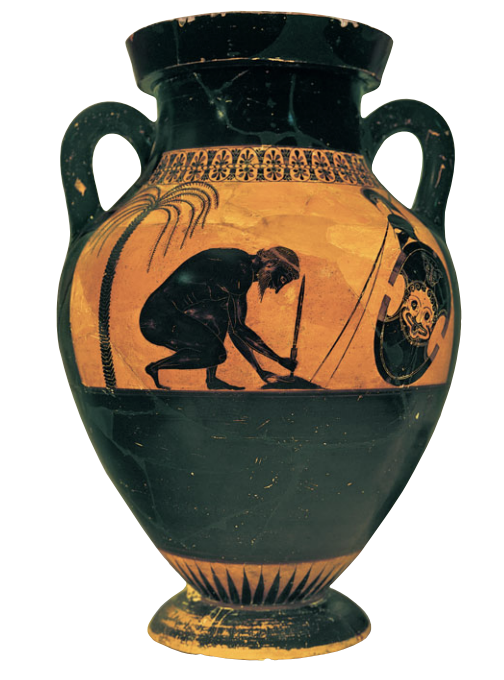
Ajax committing Suicide Amphora — Exekias
Very rare depiction
- Suicide tabooDepicts sadness and resignation of Ajax as he prepares his suicide
- Emptiness of background/sky
- Tree drooping down?
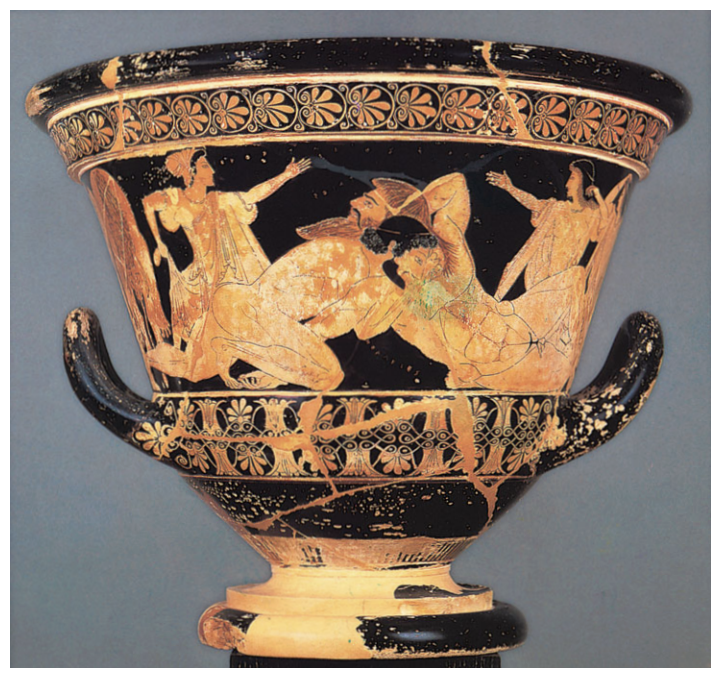
Herakles wrestling Anataios — Euphronios
Pot/drinking vessel — mix of wine and water
Used for parties
The image makes sense for the context
Red figure techniques that can’t be achieved w/ black figure
- Shows more body definitionSubtleties like wild hair, moustache, unibrow, individual teeth
Like gigantomachy — open mouth, new: grinning teeth
Shows how they want to advance w/ red figure