AP Human Geo Urban Models
 Studied by 0 people
 Call Kai
 Learn
Learn Practice Test
 Spaced Repetition
 Match
Match Flashcards
 Knowt Play
1/6

There's no tags or description
Looks like no tags are added yet.
Name | Mastery | Learn | Test | Matching | Spaced | Call with Kai |
|---|
No analytics yet
Send a link to your students to track their progress
7 Terms
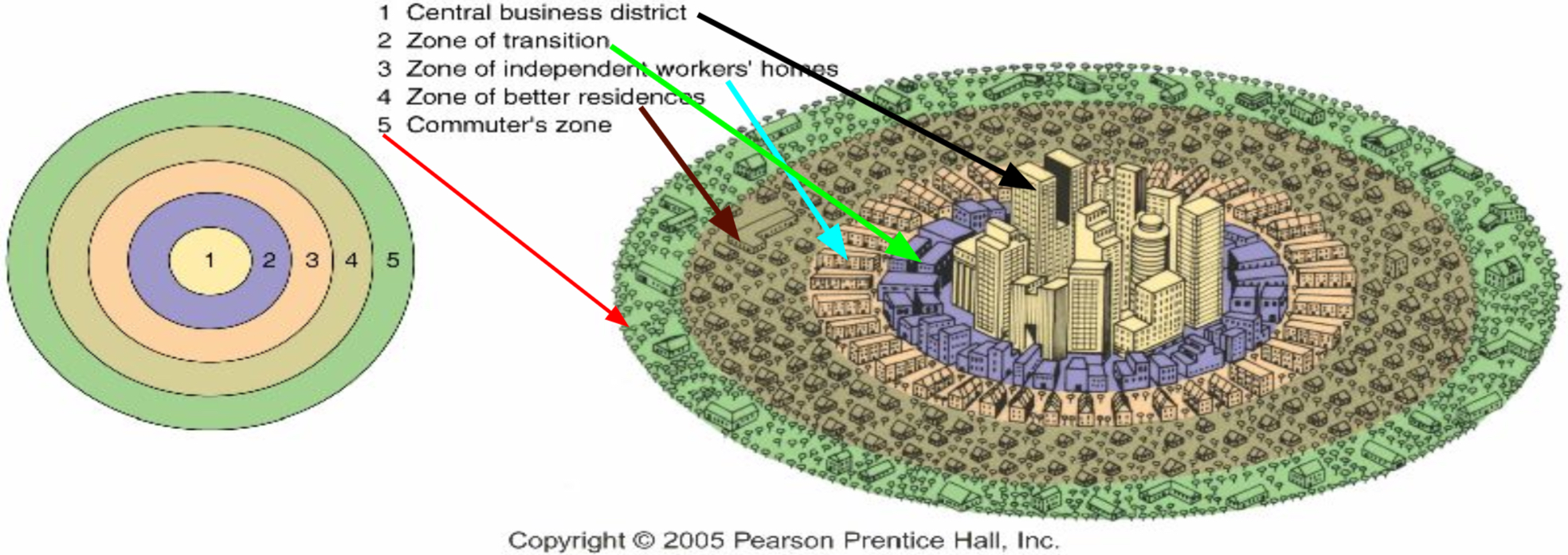
Burgess Concentric-Zone Model
Early 1900s
Mode of Transport: Walking/Horse/Horse and Carriage
CBD Importance: High; home to ALL economic activity of city
Housing distribution: Low income; closest to CBD, High income; further away from CBD and Industrial Zone
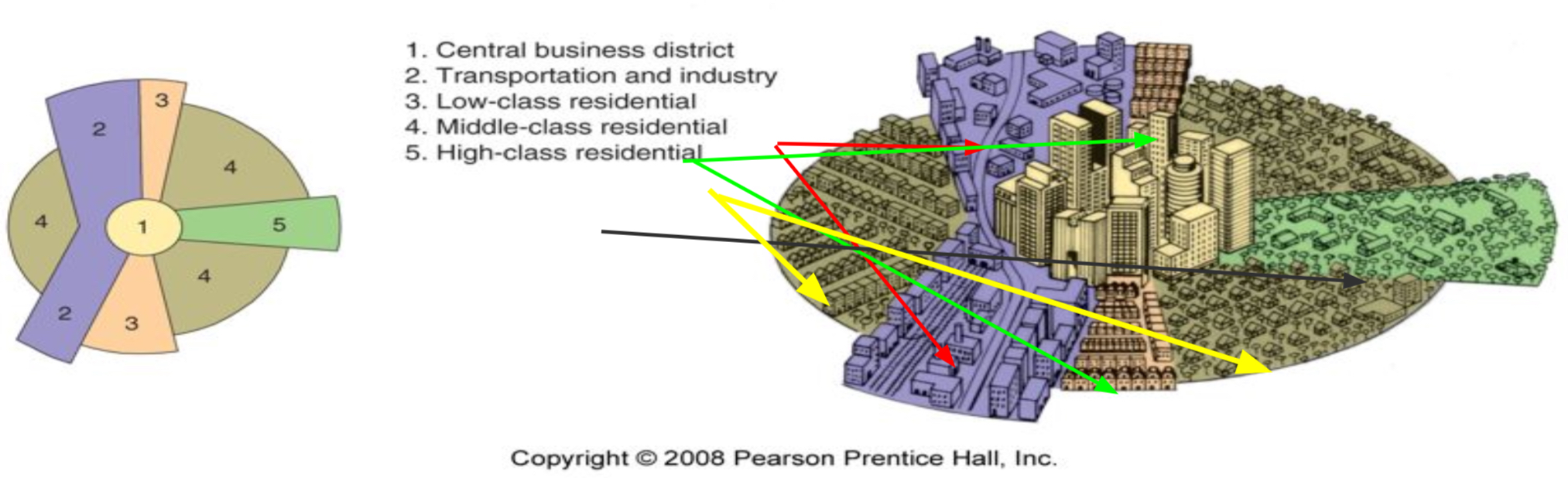
Hoyt Sector Model
1930s
Mode of Transport: Railroads/Trolleys/Streetcars
Role of Transportation in Model Morphology: wedge sectors outward from the CBD
CBD Importance: High; CBD is still focus of economic activity with some heavy industry starting to appear along heavy industrial rail line outward in a radial wedges/sectors
Housing distribution: Lower income; moves outward from CBD along heavy railroad lines and con wedges/pie slices, Higher income; radiates outward from CBD along boulevards and streetcar lines far away from industrial sector in wedges/pie slices
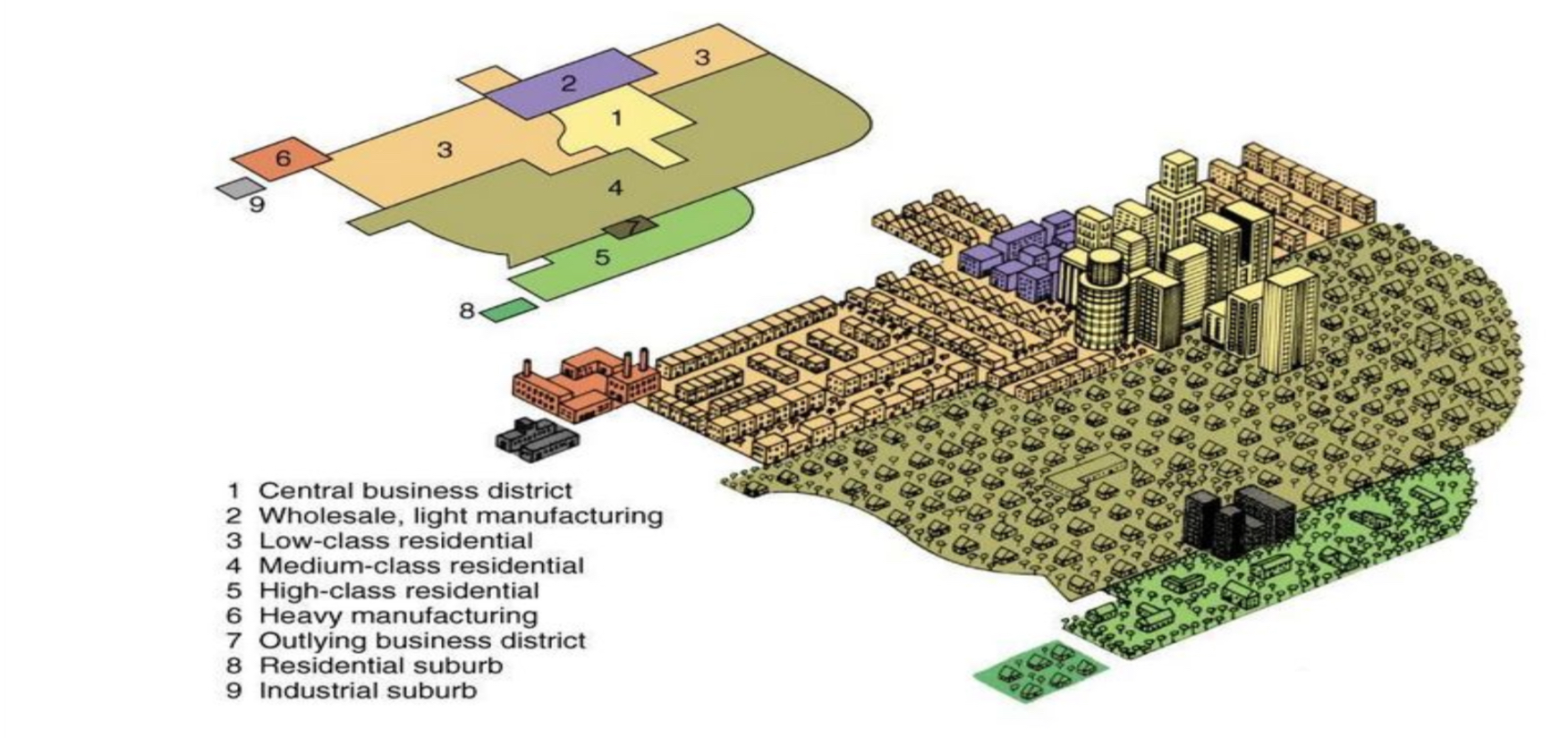
Harris-Ullman Multiple-Nuclei Model
1945
Mode of Transport: Cars
CBD Importance: High; more businesses can begin to move from the CBD but CBD is still main economic driver of city
Housing distribution: Cars enable high income residents to live in early suburbs further from places of employment
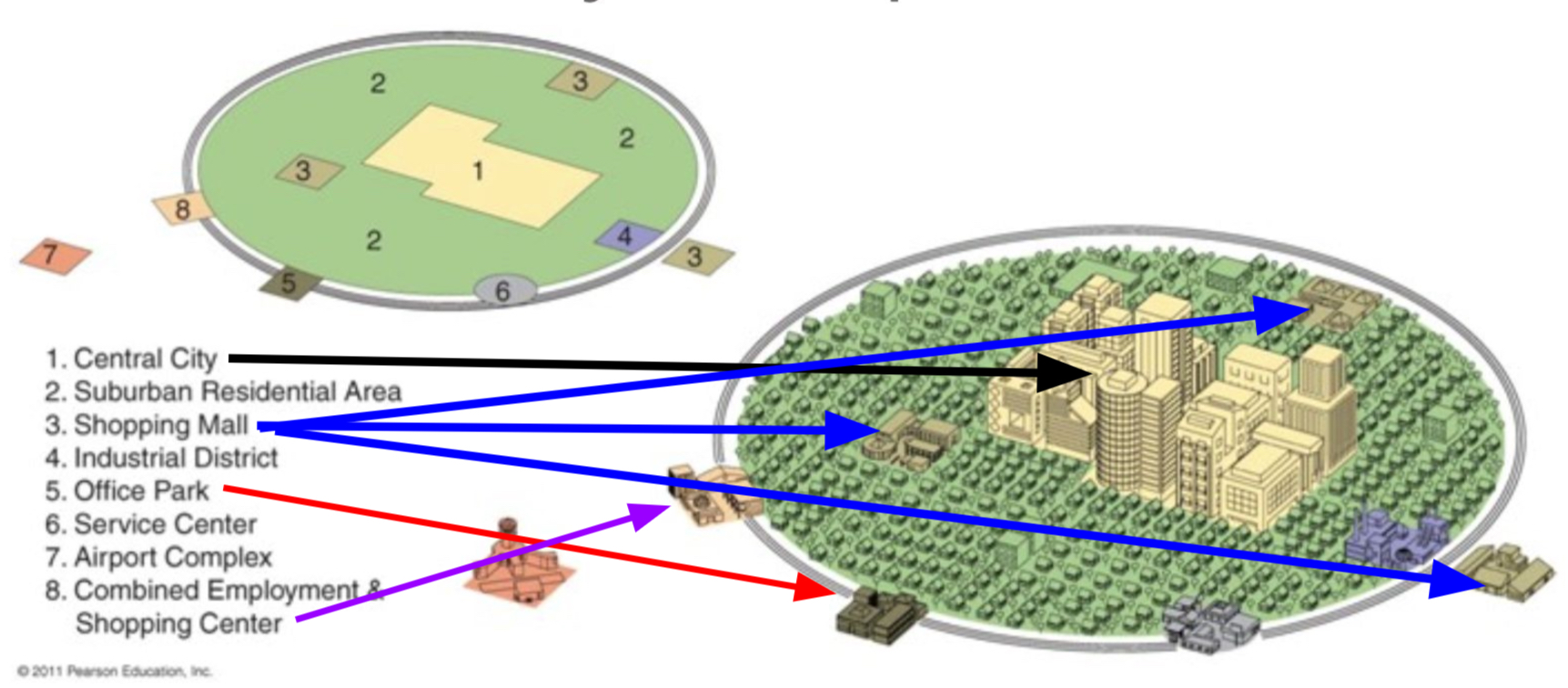
Galactic City Model
1960s
Mode of Transport: cars
Role of Transportation in Model Morphology: full blown suburbs and edge cities that operate independently
CBD Importance: High; edge cities operate as smaller “cities” usually on the periphery. Their commercial base does not rely on CBD. They are not residential.
Inner/Outer Loops and Beltways: Galactic Cities have beltways or loops that ring the city
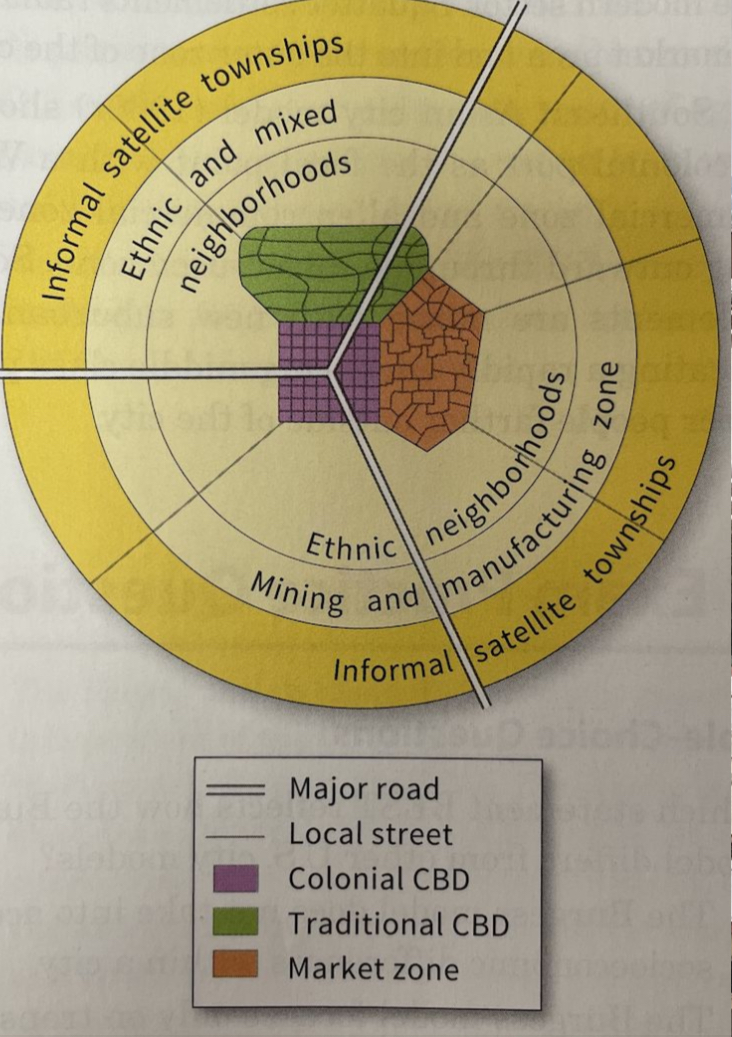
Sub-Saharan African City Model
3 CBD’s: Colonial CBD; governmental, Market Zone CBD; informal market, Traditional CBD; modern economic functions
Housing distribution: lowest income lives in slums/shanty towns
Colonial influence: based off Colonial Infrastructure (European Colonization)
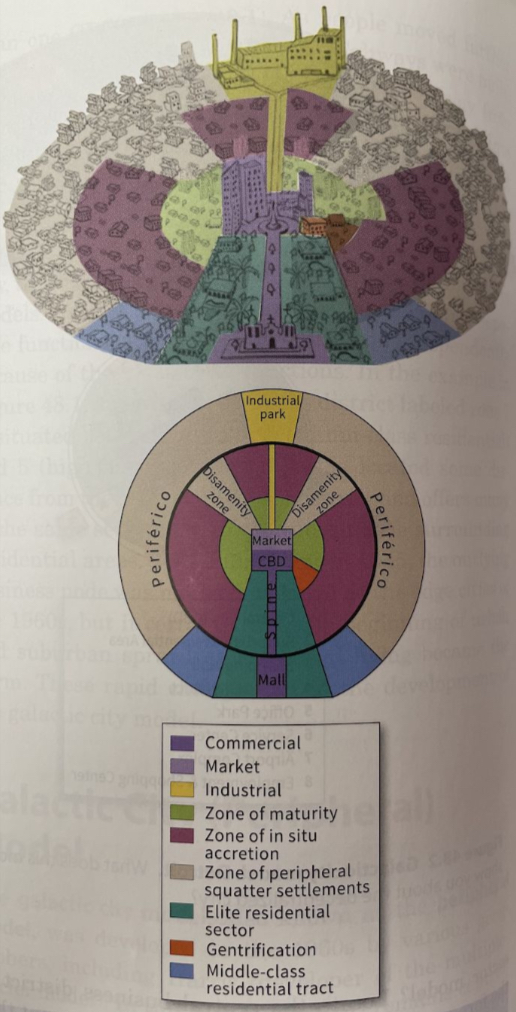
Latin American Model
Housing distribution: High income; along one or two avenues next to Elite Spine, Low income; Perifico Zone; Disamenity Zone; “Favela, Barrio”; squatter settlements on edge of cities
Elite Spine: Extension of CBD in sector pattern w many commercialized spaces of consumptions
Colonial Influence: Large Plazas usually w church and central square w wide boulevard extending outwards
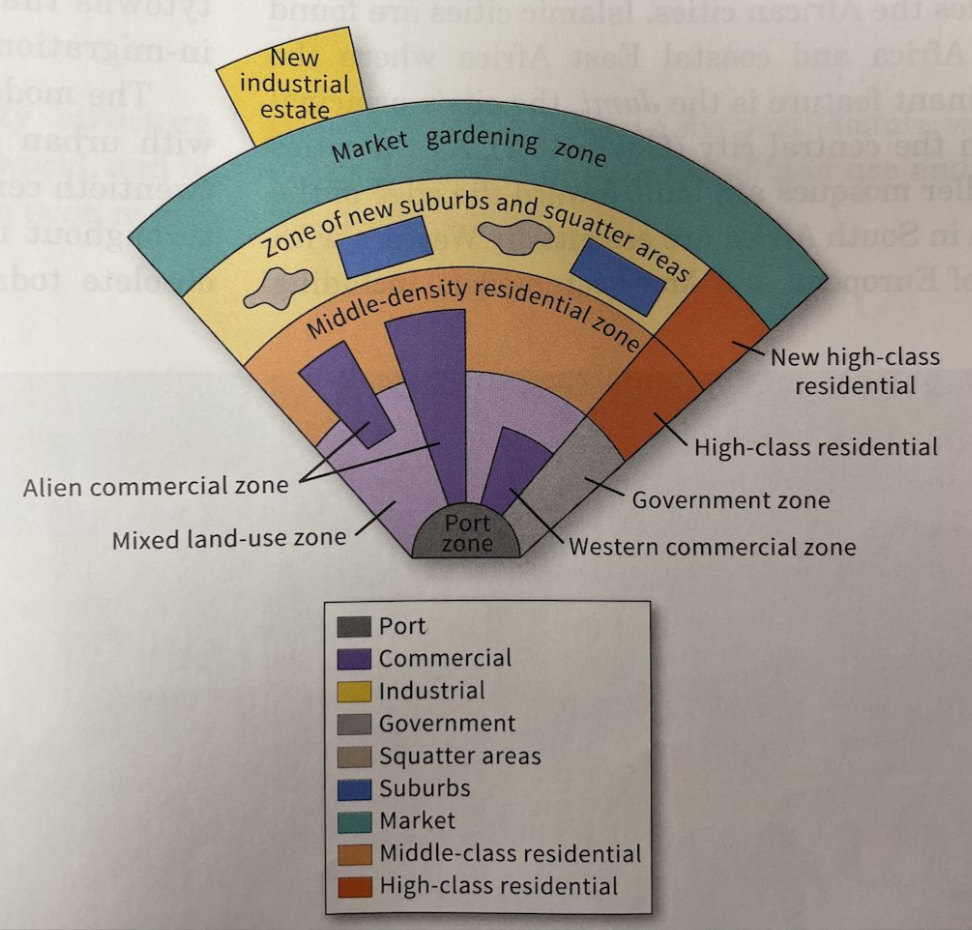
Southeast Asian City Model
CBD: lacks a CBD but has various economic focal points
Model Focal Point: Port Zone reflecting a city design oriented around ocean going trade (Colonial Influence)
Housing Distribution: higher income residents will live closer to the economic hub, in this case the port zone, and lowest incomes towards edge
Alien Commercial Zone: small businesses dominated by Chinese or Indian merchants
Explore top notes
 Note
Note Explore top flashcards
 Flashcards (32)