Introduction to the brain
 Studied by 0 people
 Call Kai
 Learn
Learn Practice Test
 Spaced Repetition
 Match
Match Flashcards
 Knowt Play
1/40

There's no tags or description
Looks like no tags are added yet.
Name | Mastery | Learn | Test | Matching | Spaced | Call with Kai |
|---|
No analytics yet
Send a link to your students to track their progress
41 Terms
What is an excitable cell?
A cell which can generate an action potential
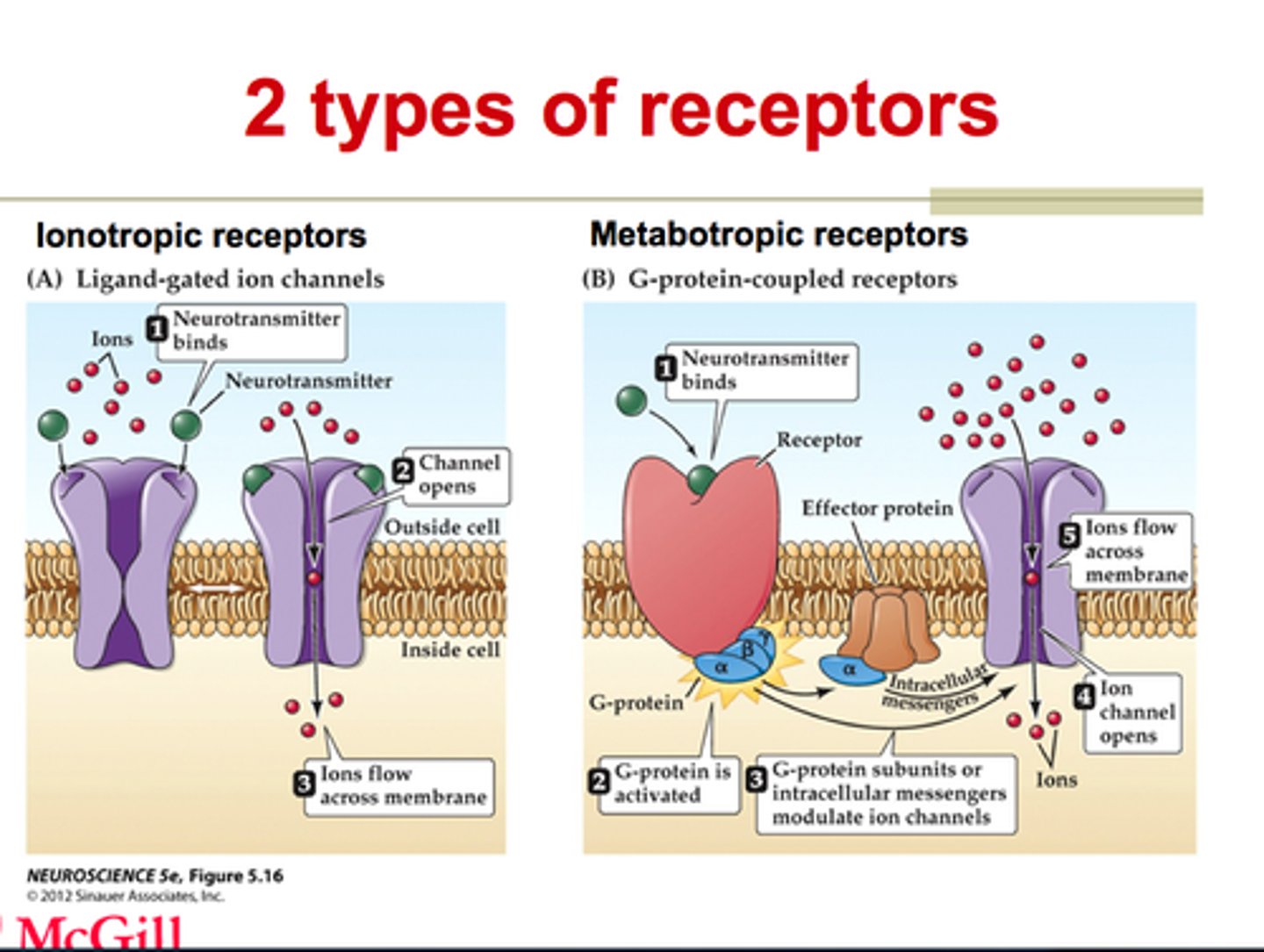
What are the two different types of neurotransmitter receptors?
1. Ligand-gated ion channels (ionotropic)
2. G protein coupled receptors (GPCRs) (metabotropic)
What is resting membrane potential?
-70mV
Describe how ions are distributed intracellularly
K+ 140 mM
Na+ 10-15 mM
Cl- 4-30 mM
There is a high concentration of K+ ions and a small concentration of Cl- and Na+ ions intracellularly.
Describe how ions are distributed extracellularly
K+ 4-5 mM
Na+ 145 mM
Cl- 110 mM
There is a high concentration of Cl- and Na+ ions and a low concentration of K+ ions extracellularly.
How is resting membrane potential maintained?
It is maintained by the sodium-potassium pump (Na+/K+ATPase), which moves three sodium ions out of the cell for every two potassium ions pumped in.
Also, there are leaky K+ channels that allow the passive transport of ions out of the cell.

Why is the resting membrane potential negative?
K+ channel is leaky so some level of K+ ions always leave the cell.
What is depolarisation?
When membrane potential rises above -70mV (becomes less negative).
This is due to Na+ channels opening, allowing Na+ to move down a concentration gradient into the cell.

What is hyperpolarisation?
When membrane potential drops below -70mV (becomes more negative).
This can be due to K+ channels opening, allowing K+ to move down a concentration gradient out of the cell.
This can also be due to Cl- channels opening, allowing Cl- to move down a concentration gradient into the cell.

What is repolarisation?
When the membrane potential goes back to -70mV (resting membrane potential).
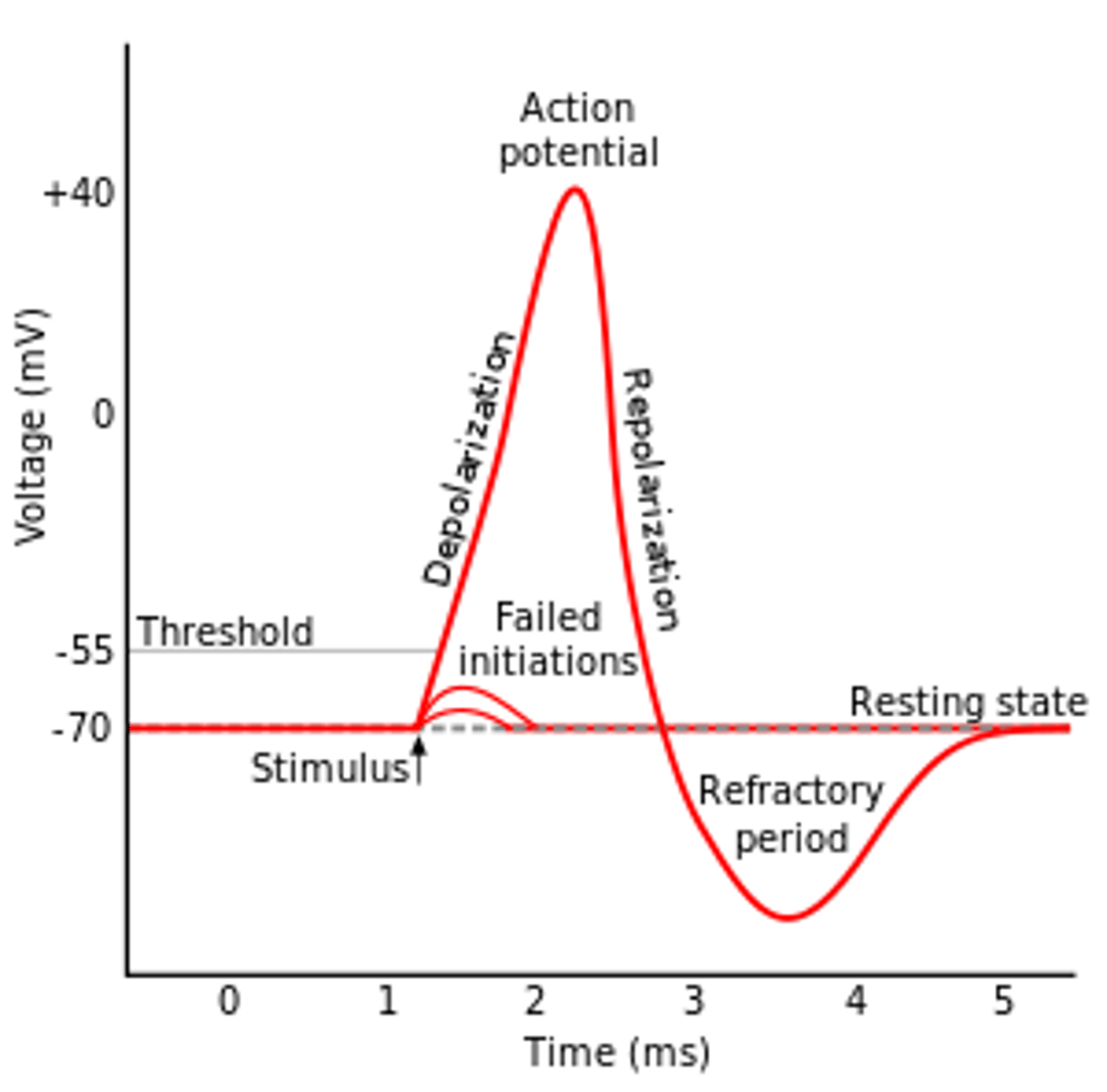
What are action potentials?
Large transient (short acting) changes in membrane potential. They have an "all or none" response (if does not rise above threshold then action potential is not generated).
How is an action potential generated?
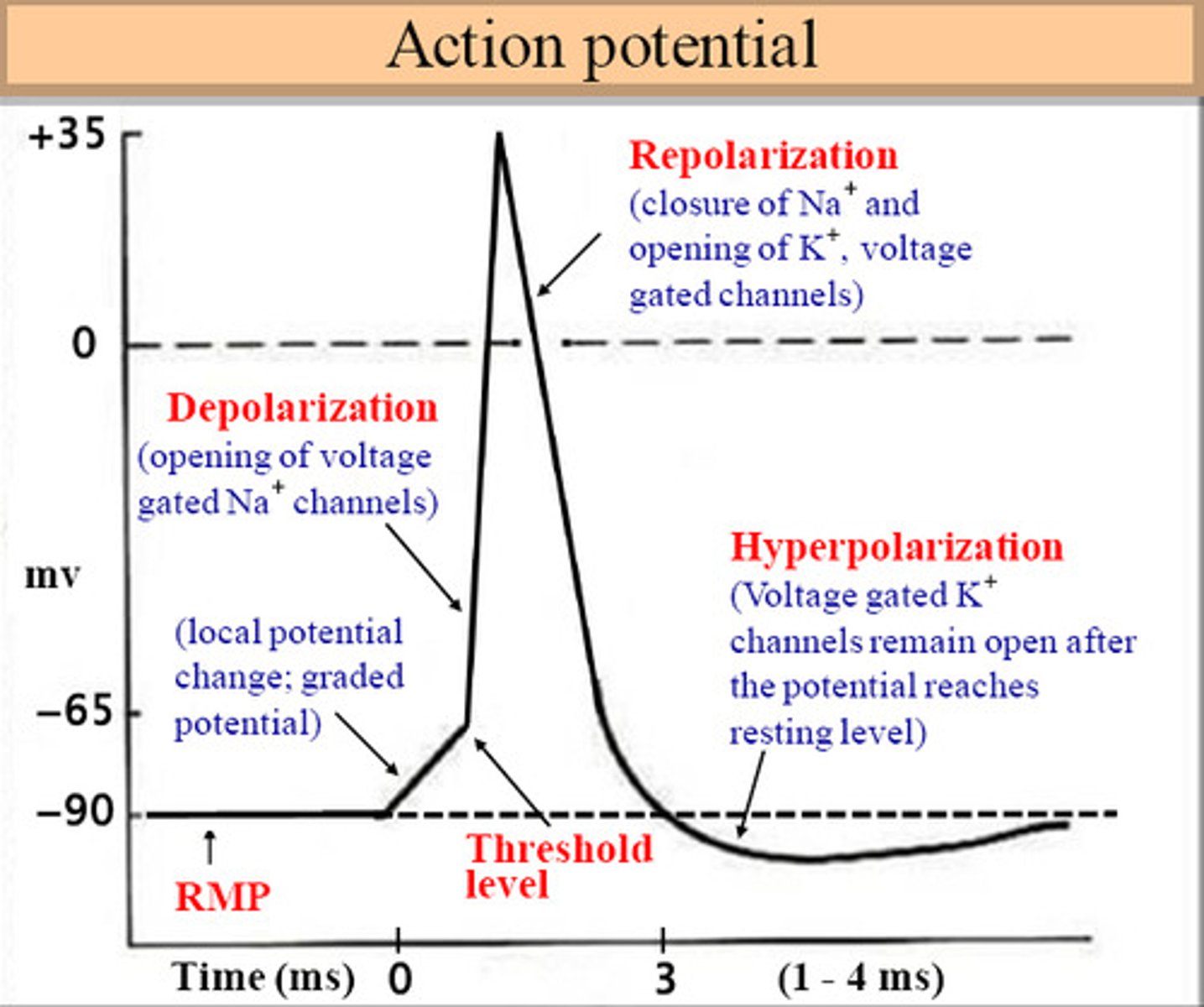
A stimulus causes threshold to be met (-40mV) which triggers the opening of voltage-gated Na+ channels.
Depolarisation
- Voltage-gated Na+ channels open for a short period of time and the neuron becomes depolarised.
- Here K+ channels begin to slowly open
Hyperpolarisation
Voltage-gated Na+ channels close quickly.
Then the K+ channels are still slowly opening which leads to hyperpolarisation
Sometimes the membrane becomes too negative (overshoots) and so Na+/K+ channel restores resting membrane potential.
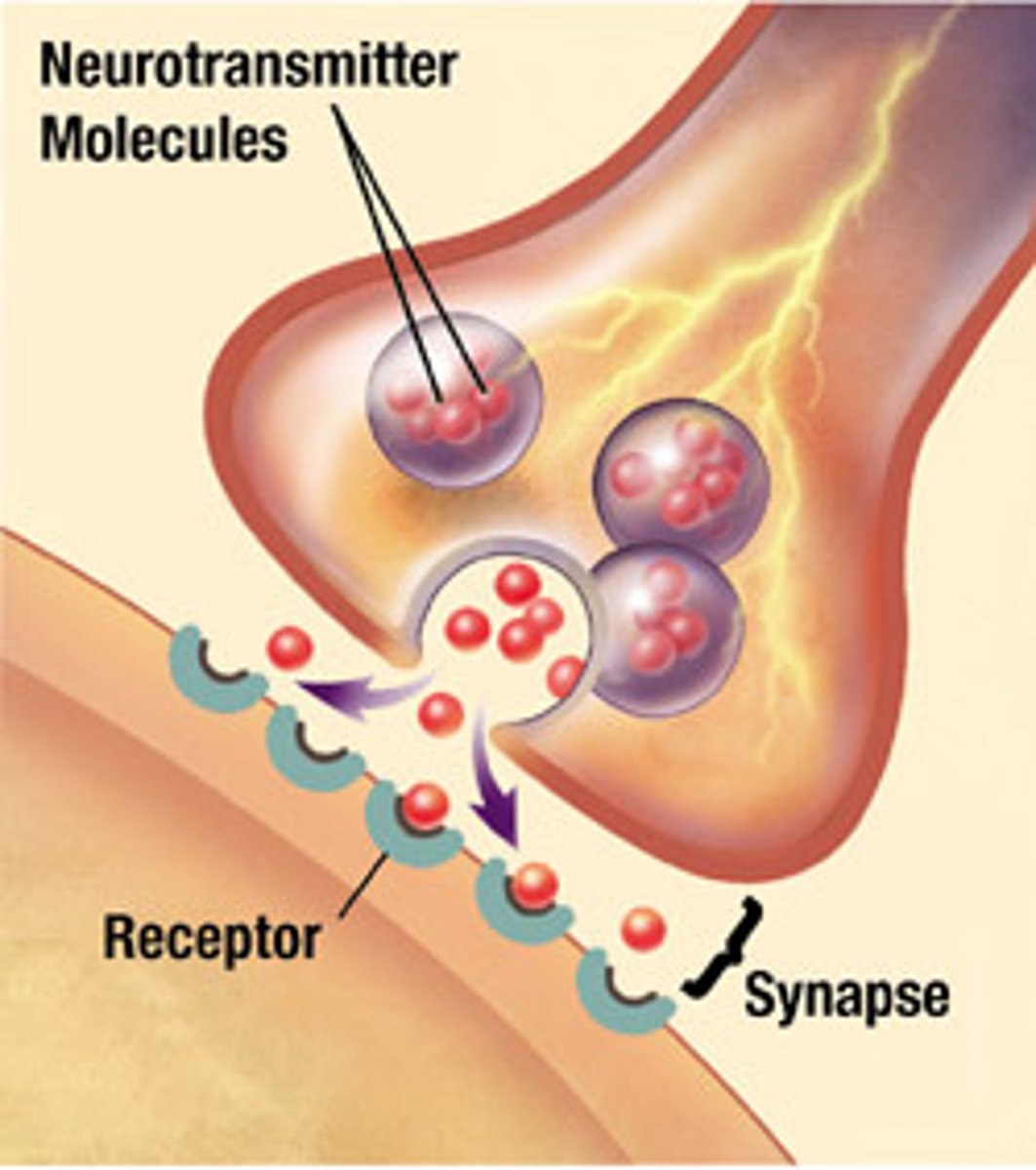
How do neurones communicate with each other?
Synapses
When an (graded) action potential is generated in the presynaptic neuron, it travels down the axon and causes the release of chemical neurotransmitter from the synapse.
Neurotransmitter diffuses across the synaptic cleft.
Neurotransmitter then binds to neurotransmitter receptors on the postsynaptic neuron, which generates an (graded) action potential in the post synaptic neuron.
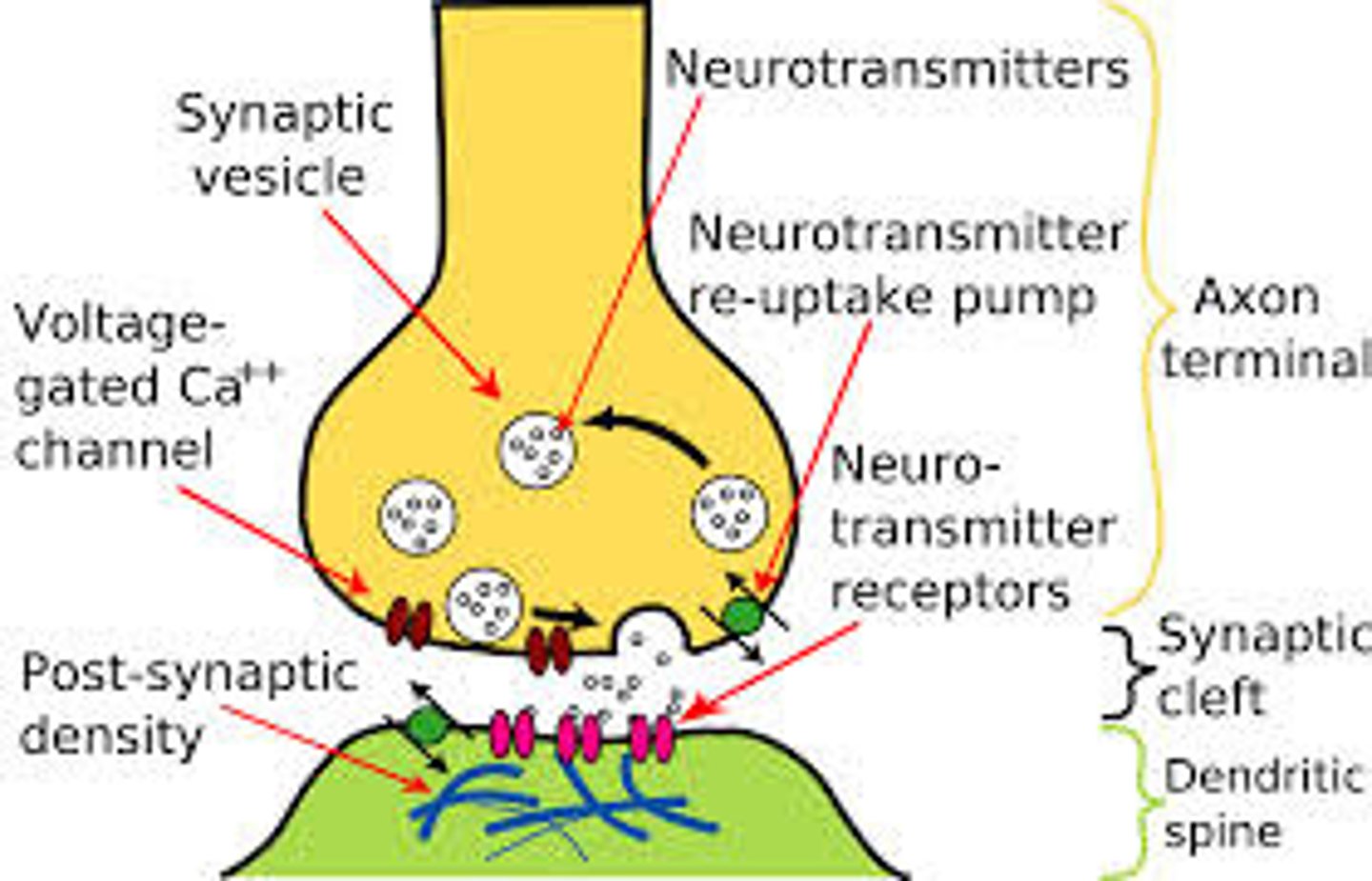
Describe how neurotransmitter is released
At rest neurotransmitter is made and stored in vesicles.
When an action potential reaches the axon terminal, it opens the VGCC (voltage gated Ca2+ channel). As a result, influx of Ca2+ into the cell. This causes fusion of vesicles to the membrane of the presynaptic neuron and release of neurotransmitter (via exocytosis) across the synaptic cleft.
What are the differences between ligand-gated ion channels and GPCRs?
Ligand-gated channels
- Fast transmission
- Fast decay
- Can cause hyperpolarisation or depolarisation
- e.g. nicotinic Ach receptors
- graded potentials
- travel small distances
- Show summation
GPCRs
- Slow transmission
- Can cause hyperpolarisation or depolarisation
- e.g. muscarinic Ach receptors
Give examples of neurotransmitters which bind to ligand-gated ion channels
Glutamate
GABA
What is the main excitatory neurotransmitter?
Glutamate
What is the main inhibitory neurotransmitter?
GABA
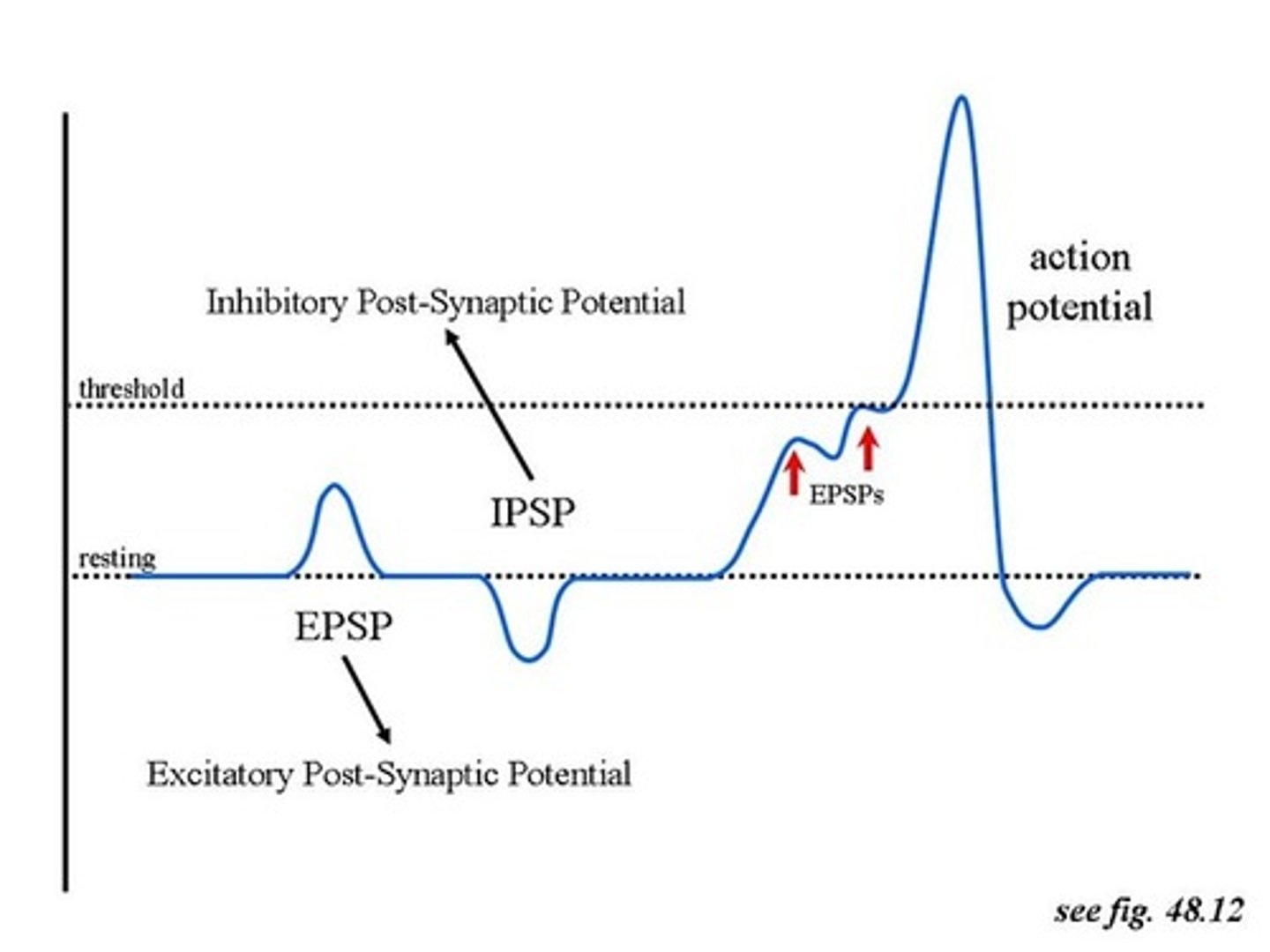
How may an excitatory post synaptic potential be generated? (graded potential)
Neuron releases glutamate. Glutamate binds to receptor causing the ligand-gated ion channel to open. This channel is Na+ permeable allowing Na+ into the cell for depolarisation
= Excitatory post synaptic change in potential.

How may an inhibitory post synaptic potential be generated? (graded potential)
Neuron releases GABA. GABA binds to ligand-gated ion channel. This channel is Cl- permeable. Cl- goes from outside to inside the cell down a concentration gradient into cell for hyperpolarisation.
= Inhibitory post synaptic change in potential
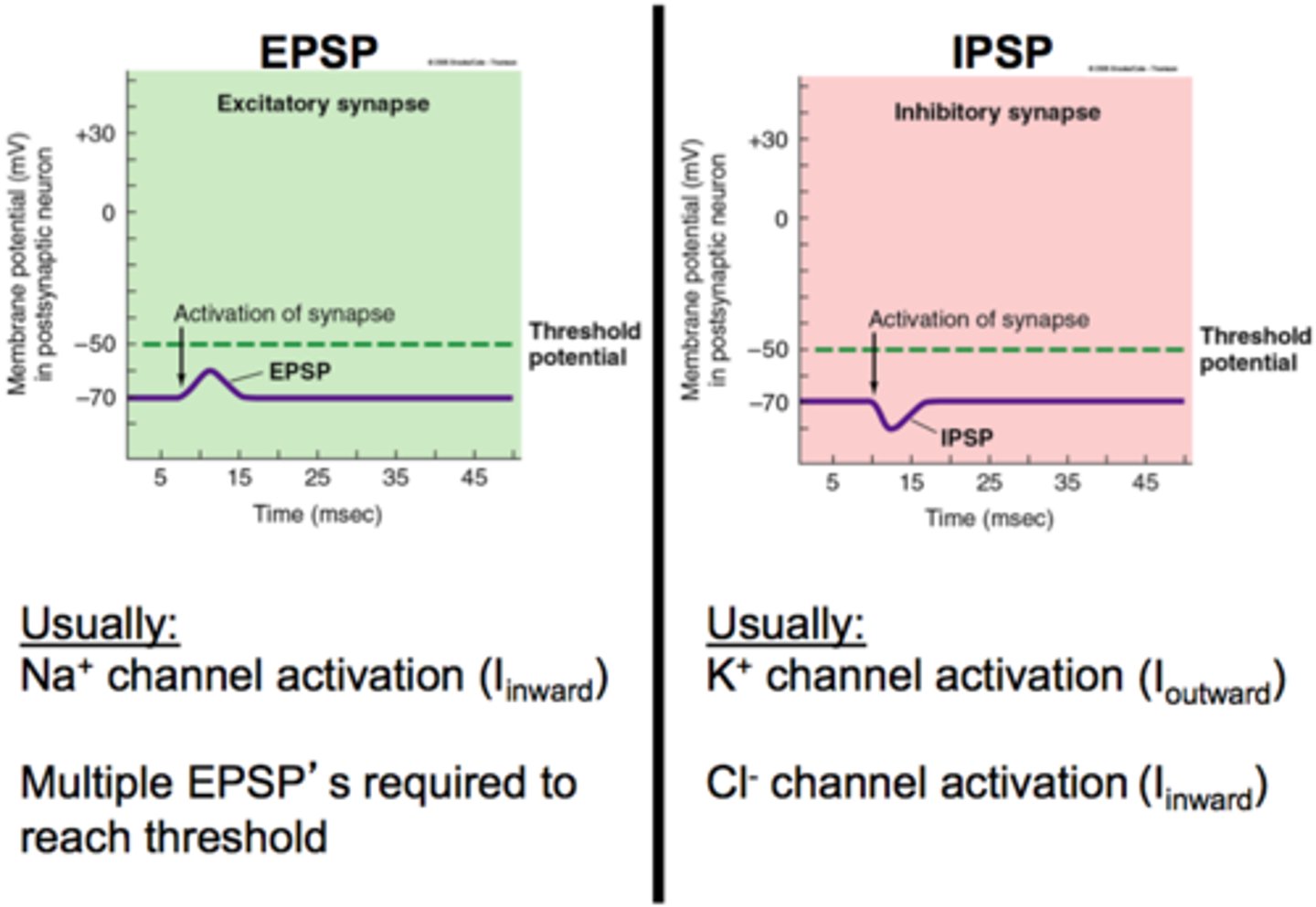
What is temporal summation?
When several impulses are released from one neuron over time.

What is spatial summation?
When impulses are released from several different presynaptic neurons.
What are the 3 different types of GPCRs?
Gs (stimulatory), Gi (inhibitory) and Gq
Describe the effect of activation of Gi receptor on membrane potential
A gentle slope downwards from resting membrane potential.
Membrane potential would gradually get more negative.
Describe the effect of activation of Gs or Gq receptor on membrane potential
A gentle slope upwards from resting membrane potential.
Membrane potential would gradually get more positive, but not surpass threshold.
What is an axo-somatic synapse?
When an axon innervates a nerve cell body (soma)
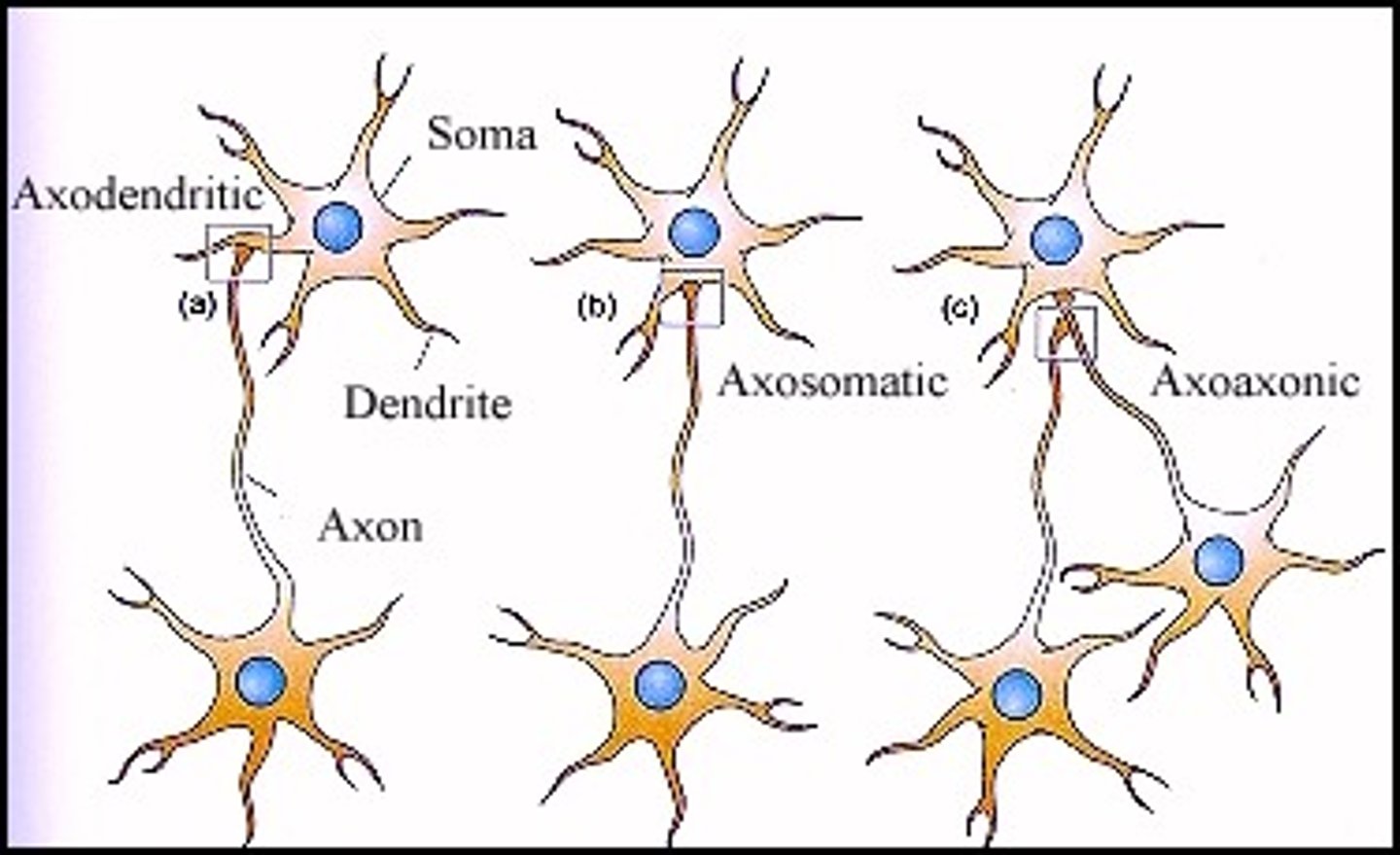
What is an axo-dendritic synapse?
When an axon innervates a dendrite
(most often seen)

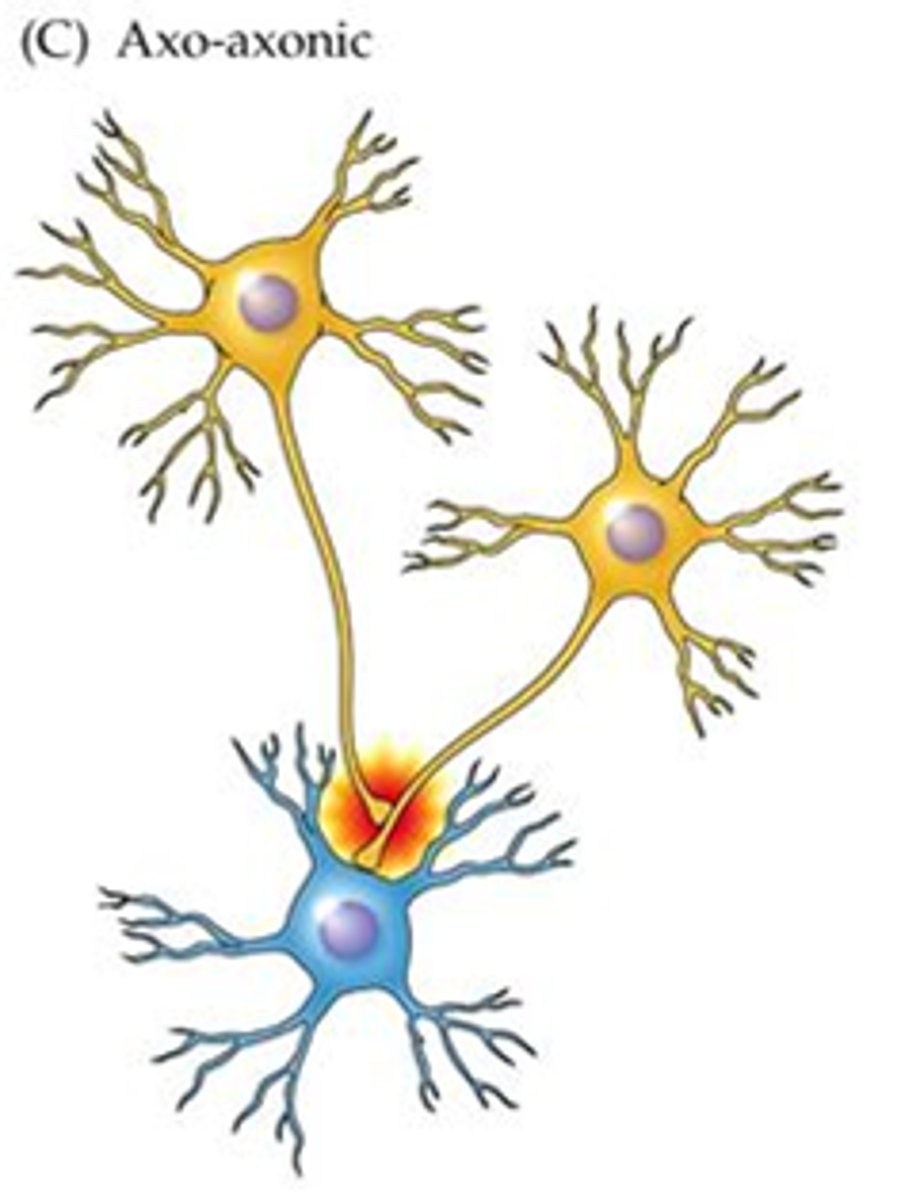
What is an axo-axonic synapse?
When an axon innervates a neighbouring axon instead of the dendrite or cell body
Why are CNS disorders hard to treat?
1. Neurones are highly complex structures interconnected in complex networks
2. There are numerous synapses on each neurone
3. There are several neurotransmitters and receptors
What are possible sites of action for CNS drugs?
1.Substrate transporter
2.Synthesis pathway
3.Vesicular transporter
4.Vesicular movement
5.Release of neurotransmitter process
6.Postsynaptic ionotropic (ligand-gated) receptors
7.Postsynaptic GPCR
8.Second messenger systems (GPCR)
9.Uptake transporter (into pre-synaptic neuron)
10.Enzymatic degradation (neurotransmitter)
11.Presynaptic receptors
12.Membrane ion channels (pre and post synaptic neuron)
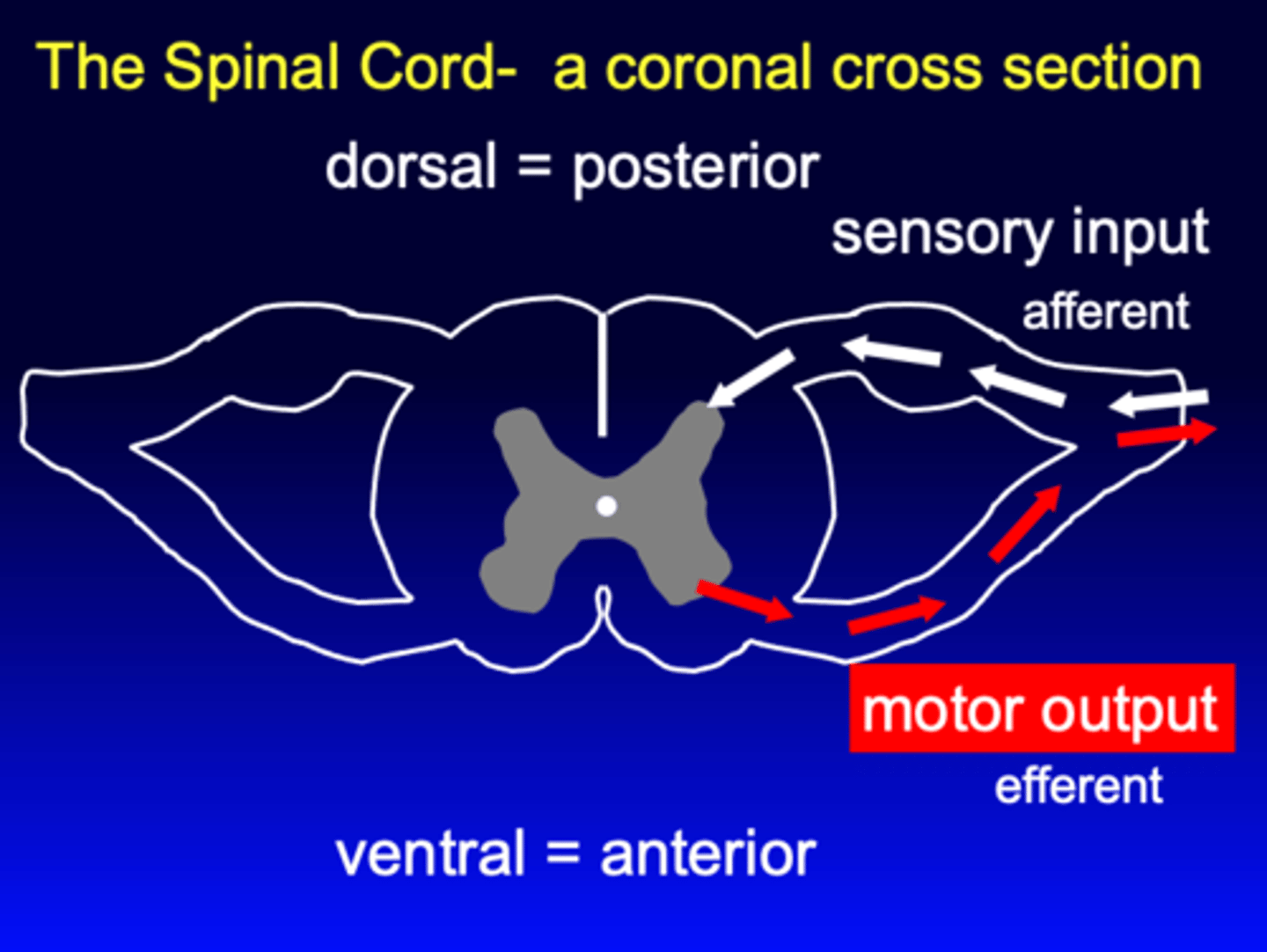
What does afferent mean?
Towards the CNS (input)
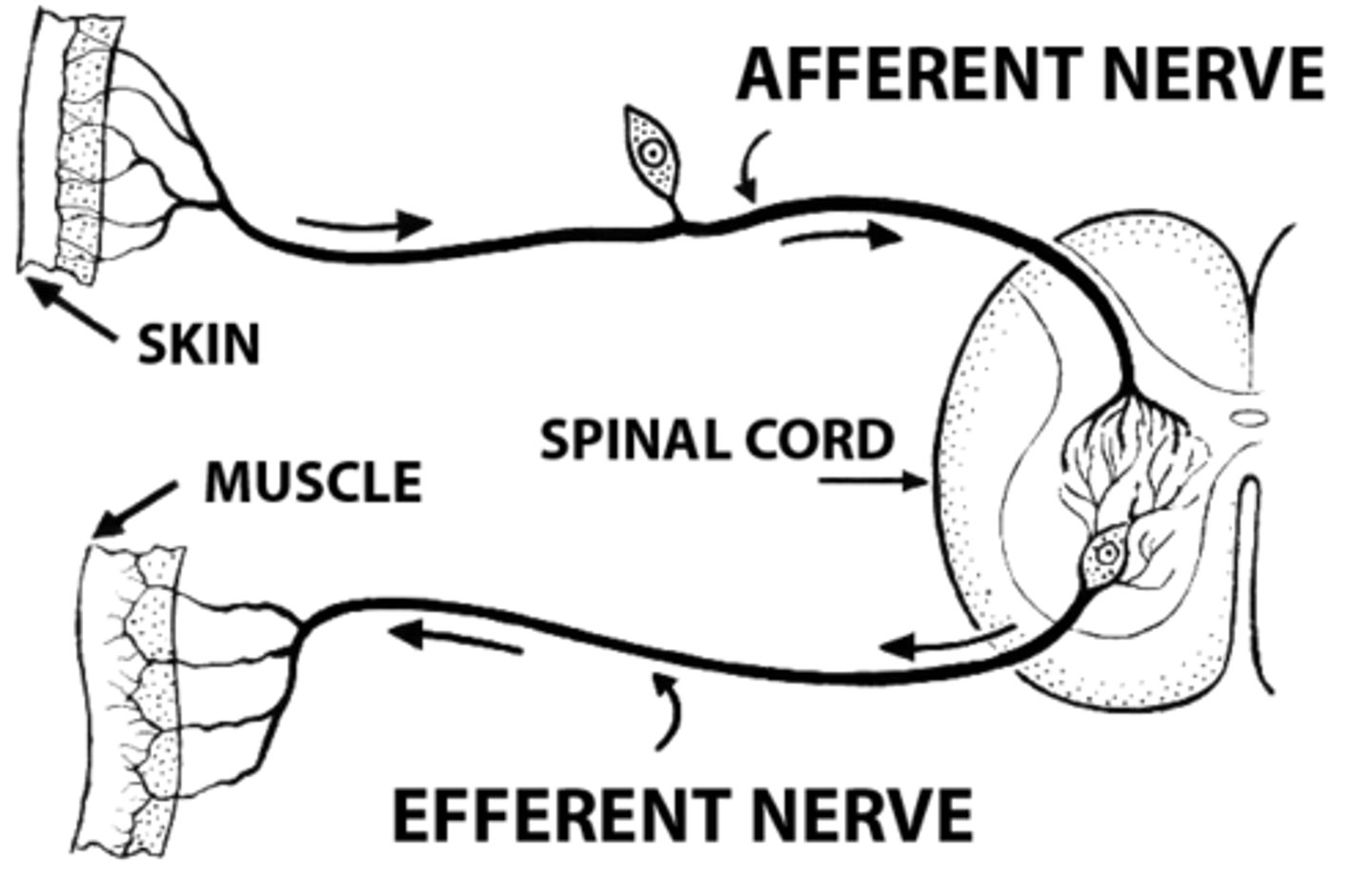
What does efferent mean?
Away from CNS (output)
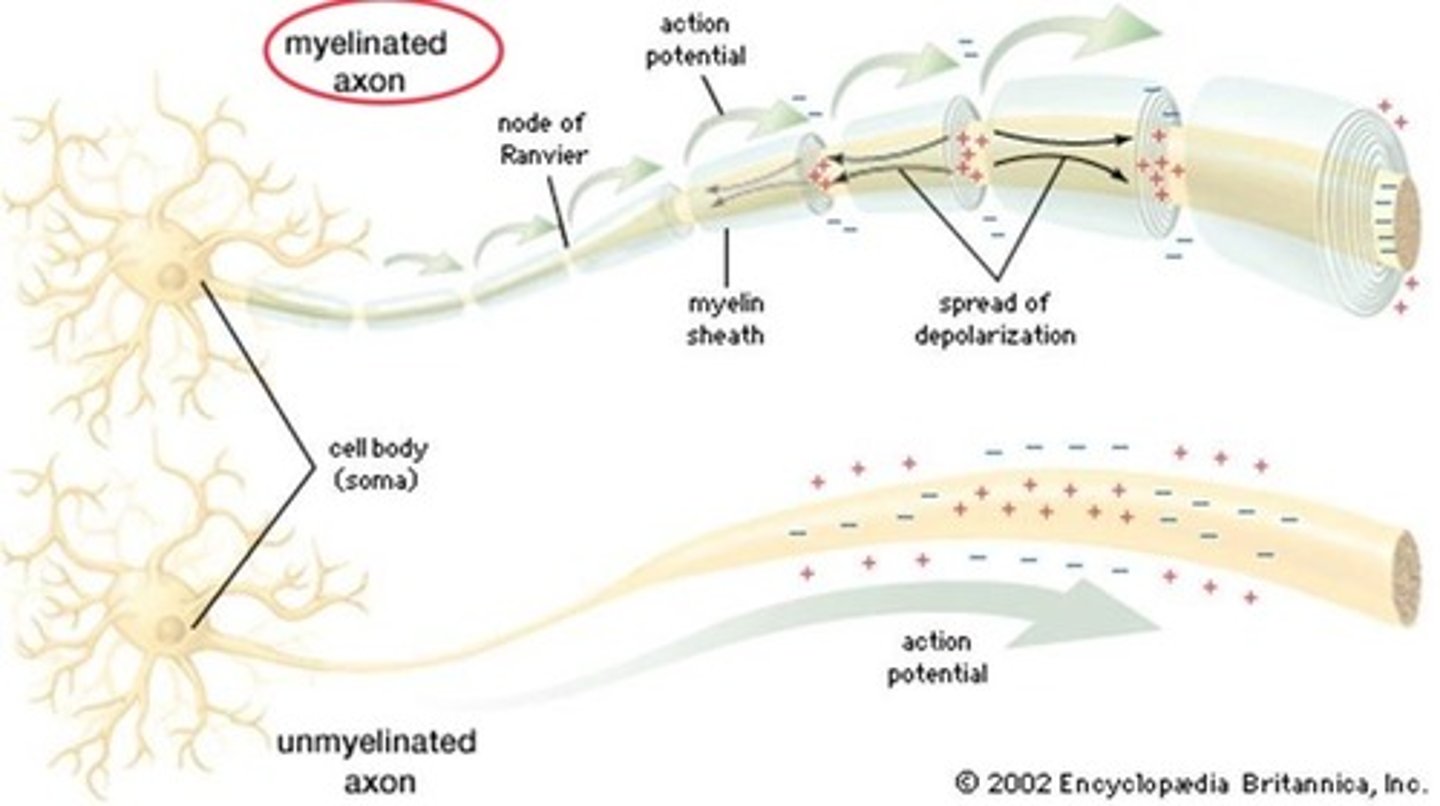
Why are axons myelinated?
To increase speed of conduction of the action potential (AP).
In nonmyelinated axons, the AP has to travel the whole length of the axon which is slow.
In myelinated axons, the AP only has to jump between the nodes of Ranvier along the axon, which is faster.
Describe the gross structure of the brain
Gross structure:
- Brain stem
- Midbrain
- Cerebral cortex
- Cerebellum
Dorsal = top of brain
Ventral = bottom of brain
Anterior = front of brain
Posterior = back of brain
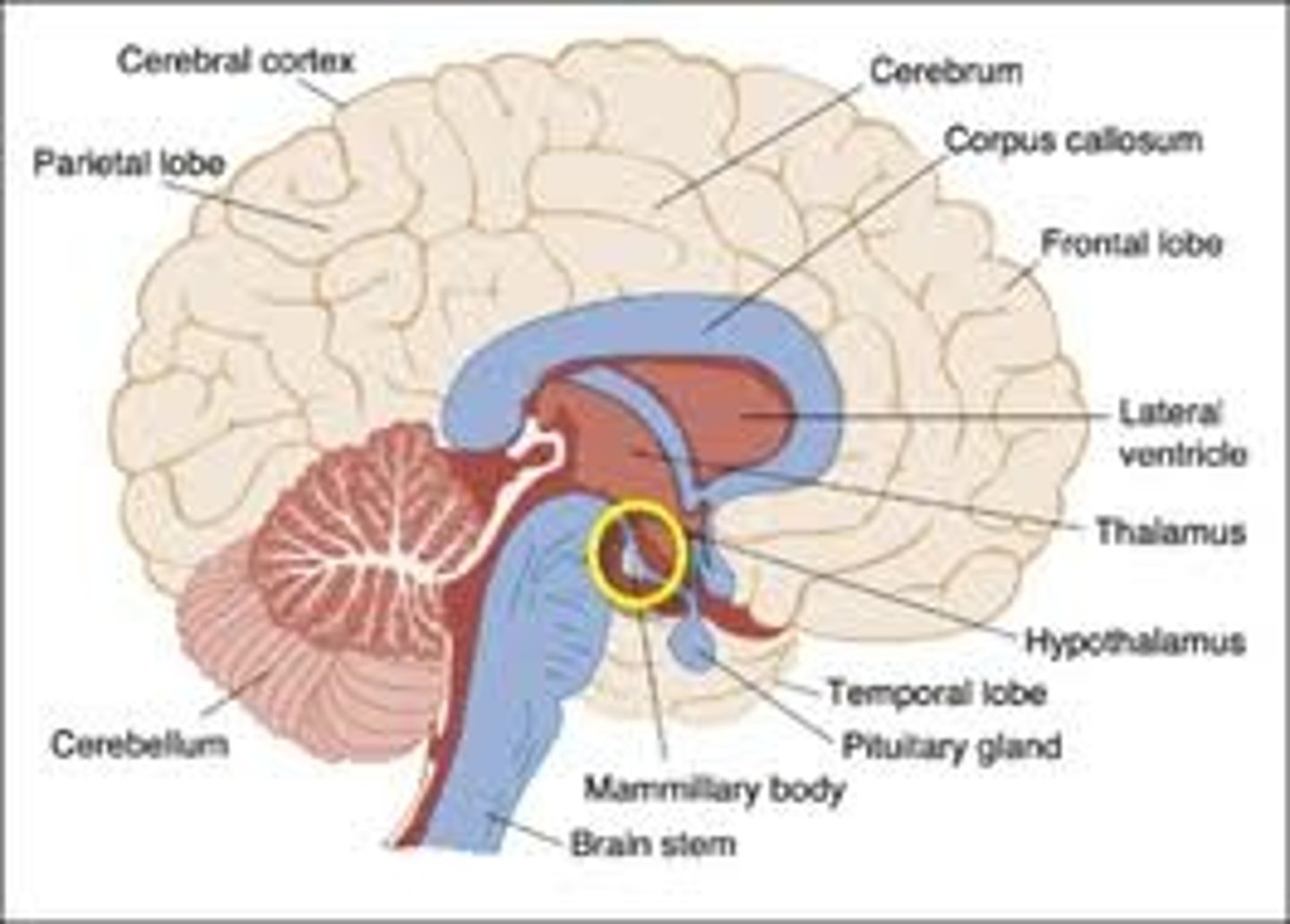
What are the different parts of the cerebral cortex?
1. Frontal lobe
2. Parietal lobe
3. Temporal lobe
4. Occipital lobe
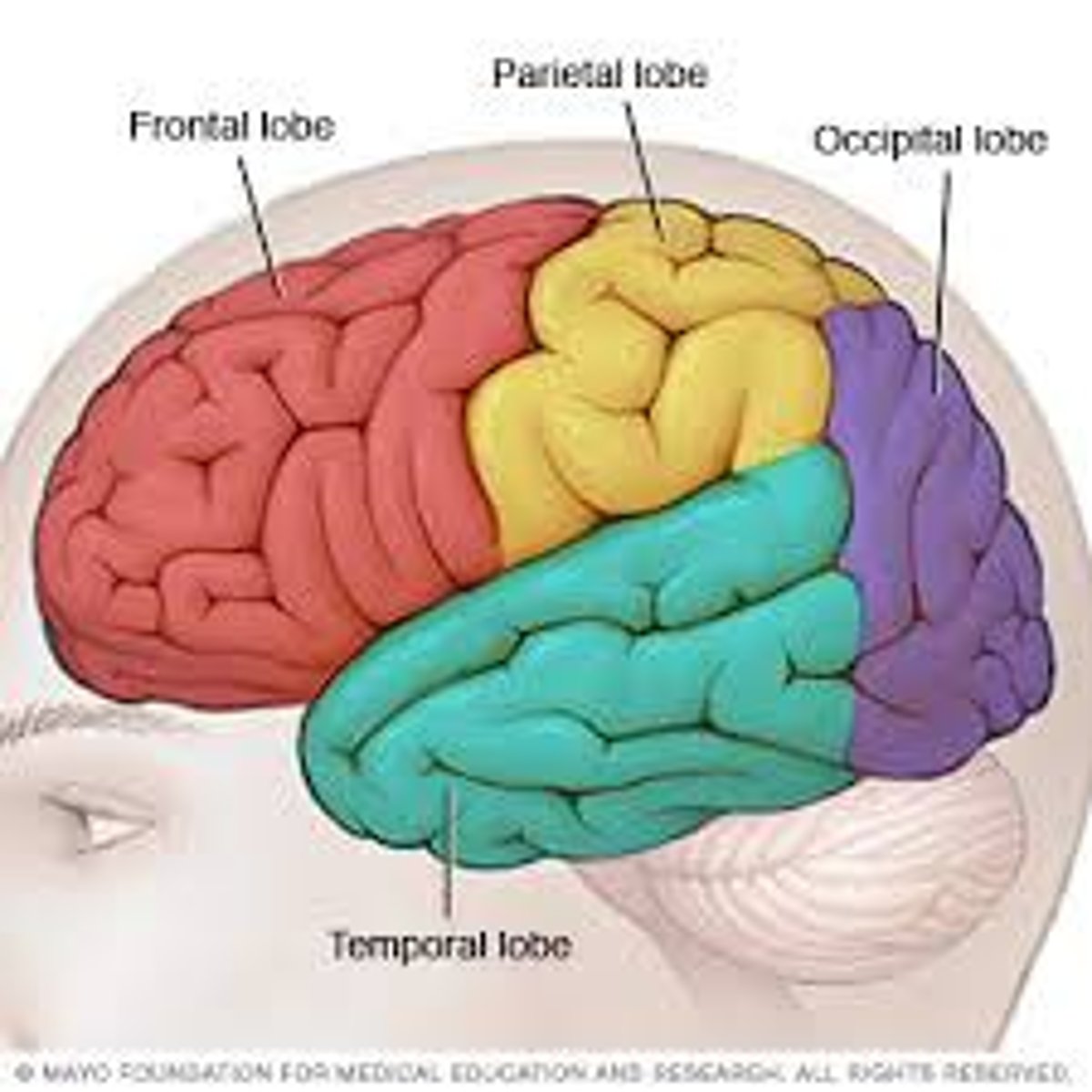
What are Brodmann's areas?
Numbered regions areas of the cerebral cortex that have been "mapped" to specific cognitive functions

What is Wernicke's area?
The area of the brain involved in understanding language
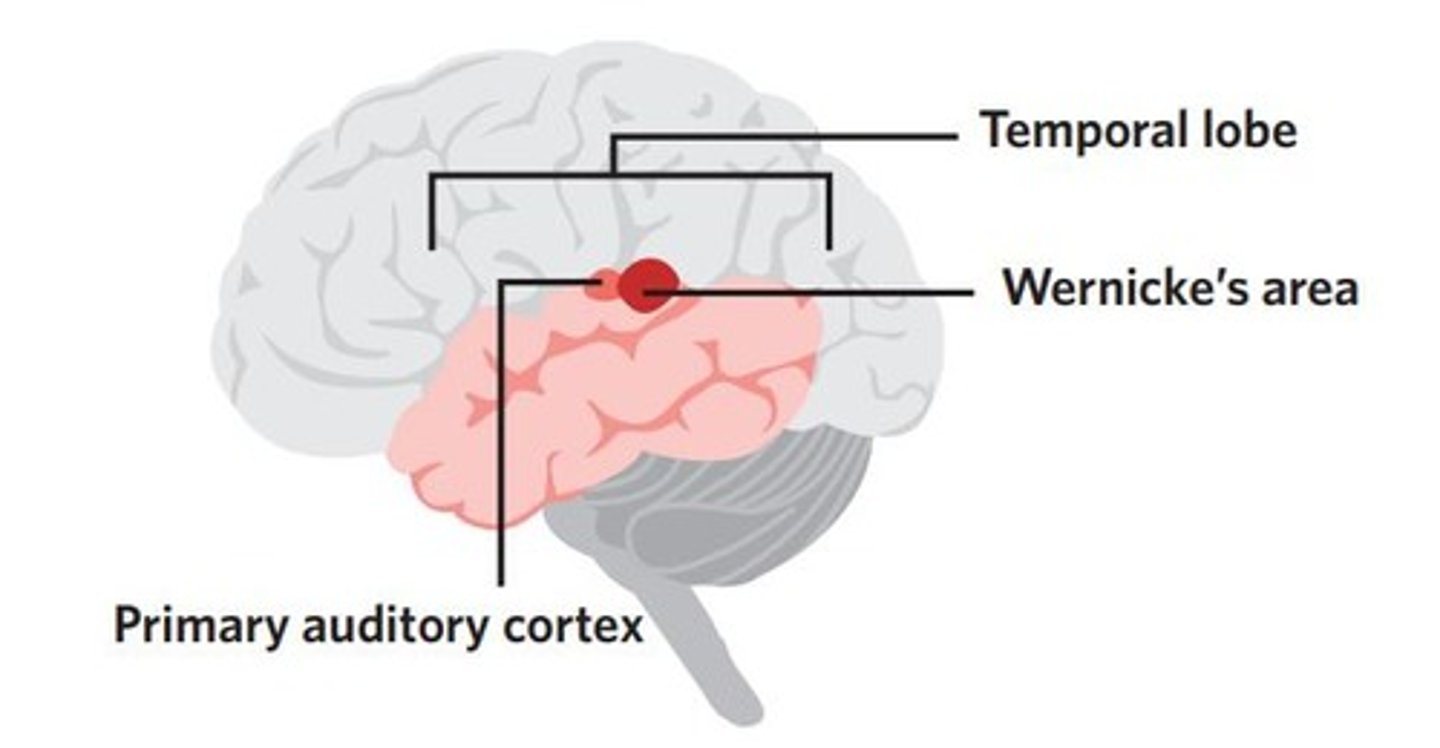
What is Broca's area?
The area of the brain involved in speech production

Where is cerebrospinal fluid produced?
The choroid plexus
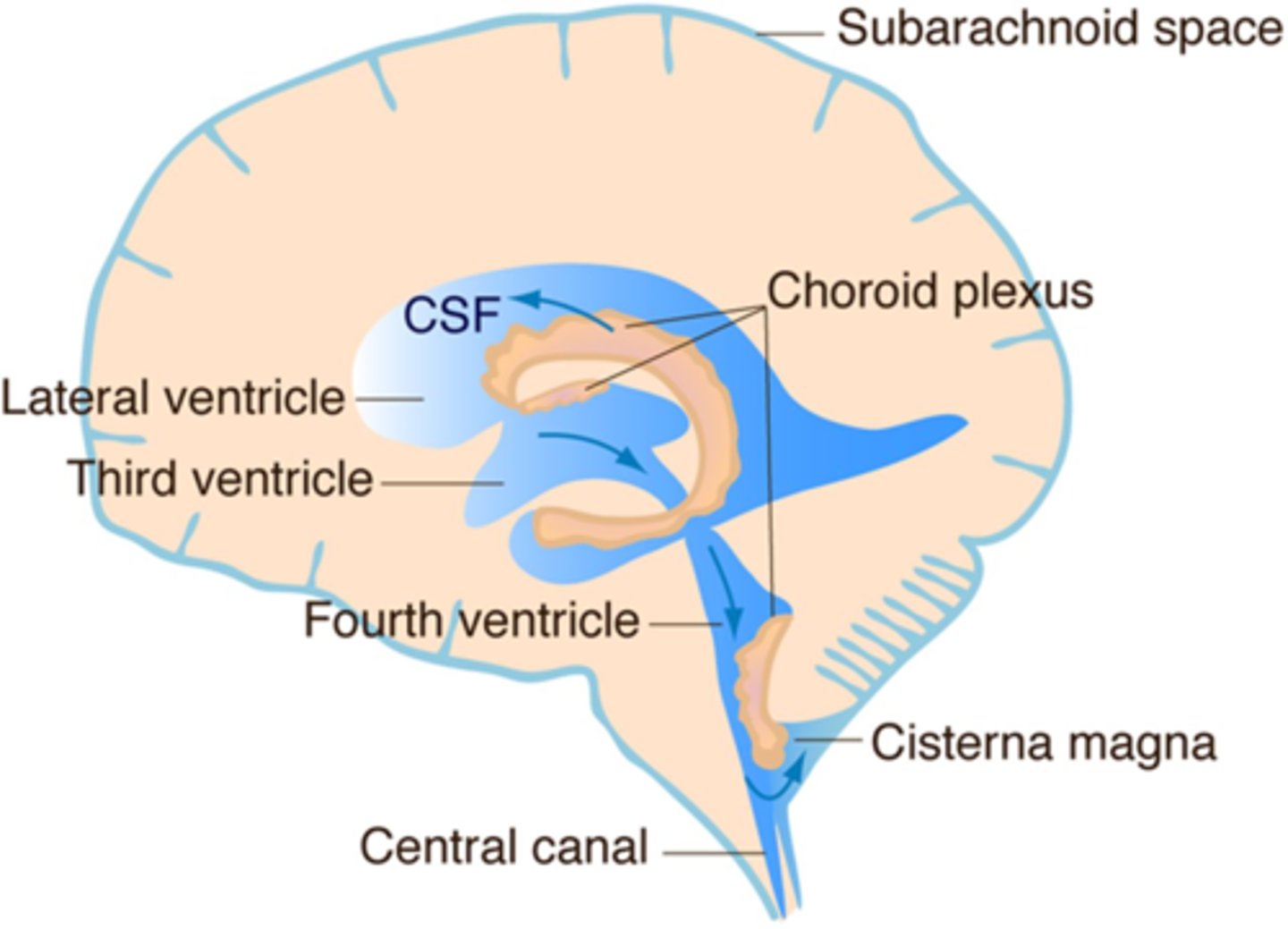
What is in cerebrospinal fluid?
Water, NaCl and glucose
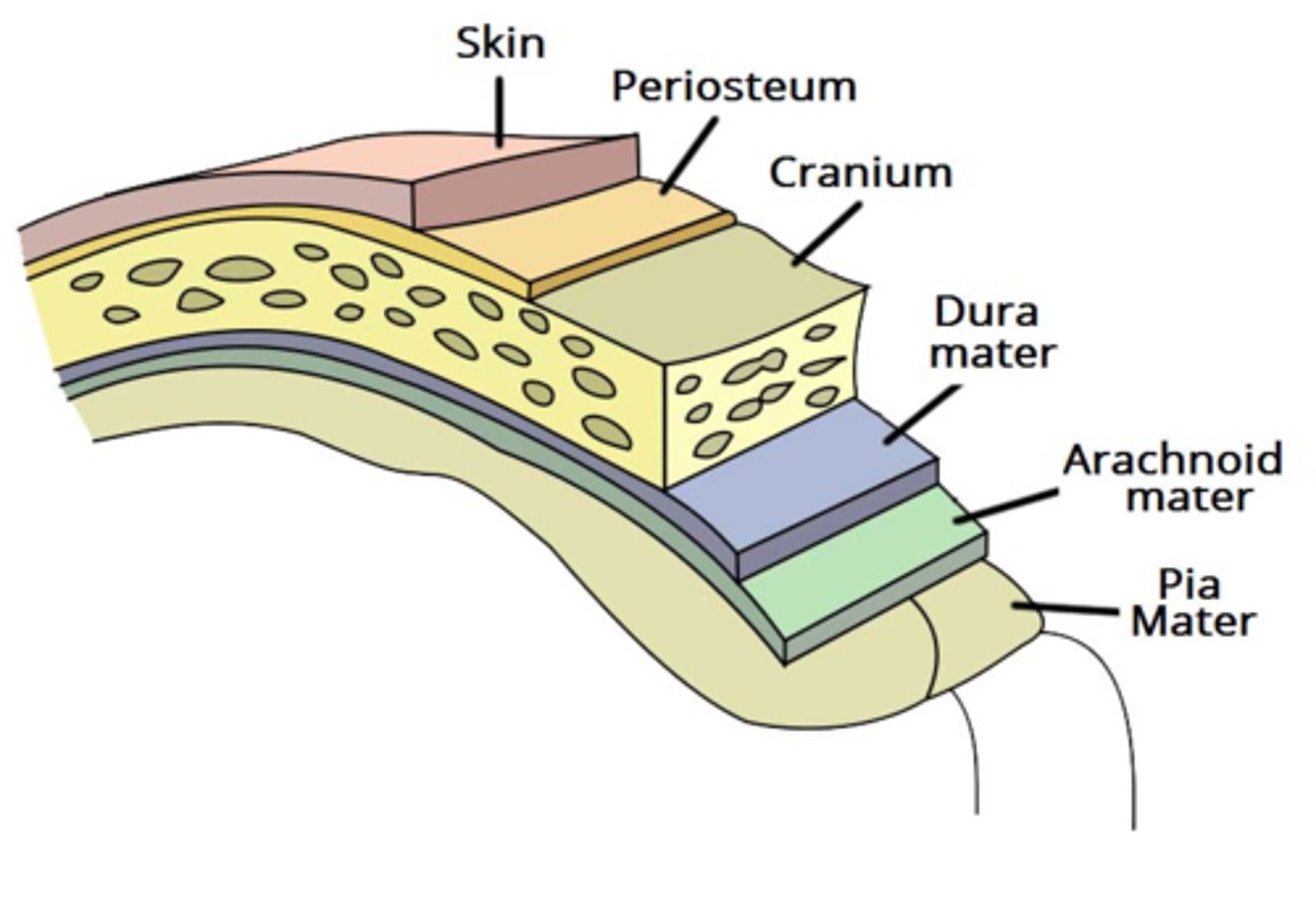
What are the meninges?
The membranes that cover the CNS (brain and spinal cord).
It includes the dura mater, arachnoid membrane and pia mater.
 Note
Note  Flashcards (27)