Fungal Practical
 View linked note
 Call Kai
 Learn
Learn Practice Test
 Spaced Repetition
 Match
Match Flashcards
 Knowt Play
1/53

There's no tags or description
Looks like no tags are added yet.
Name | Mastery | Learn | Test | Matching | Spaced | Call with Kai | Chat |
|---|
No analytics yet
Send a link to your students to track their progress
54 Terms
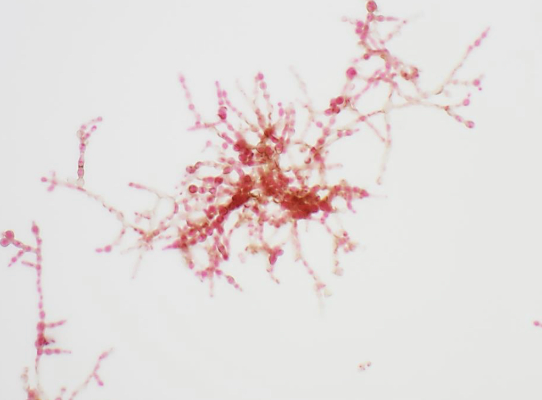
Fonsecaea Pedrosoi
A fungus found in tropical areas of the world that causes Chromoblastomycosis. “francesca and pedro went to the tropics”
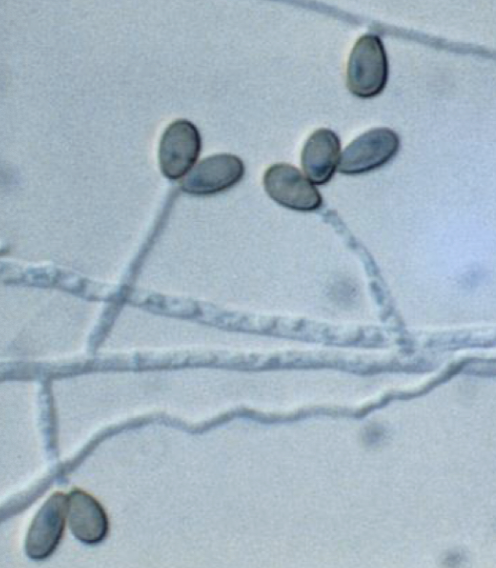
Scedosporium spp.
Fungi found in the "Mycetoma belt" in North Africa, Asia, and around the equator, causing various infections.
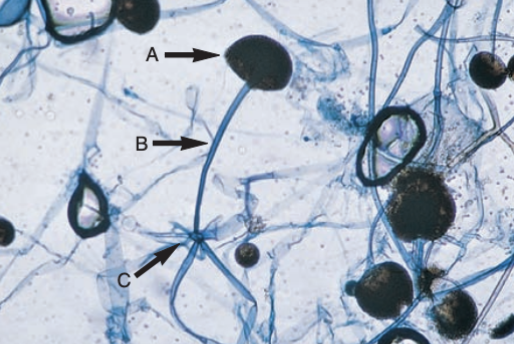
Rhizopus
A type of hyaline mold that causes Mucormycosis and is characterized by unbranched sporangiophores with rhizoids.
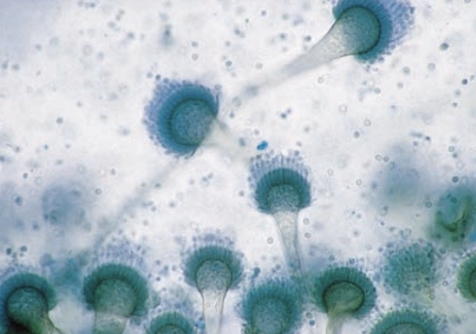
Aspergillus Fumigatus
A fungus causing Hyalohyphomycosis with rapidly growing dichotomously branching septate hyphae and short or long conidiophores. Very common!!
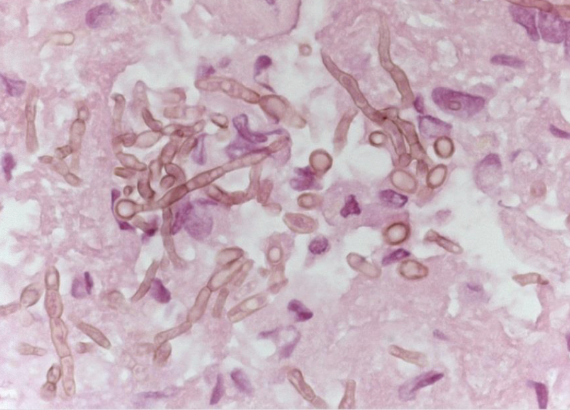
Cladophialophora bantiana
A fungus causing Phaeohyphomycosis & brain abscess with long, poorly branched conidial chains and melanin pigment in its cell wall. “bust down bantiana with a brain abscess”
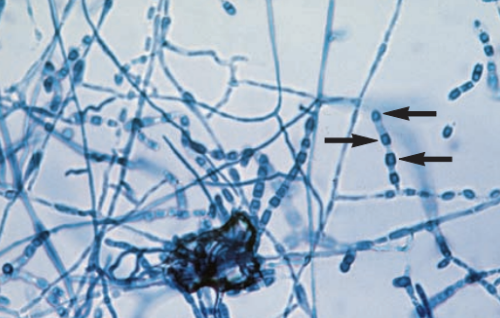
Coccidioides spp.
Dimorphic mold causing Coccidioidomycosis, mainly affecting the lungs, skin, and meninges. Numerous thick-walled, retagnular, or barrel-shaped alternate athroconidia
Trichophyton spp.
Dermatophyte fungi that grow on the outer layer of the skin, hair, and nails.
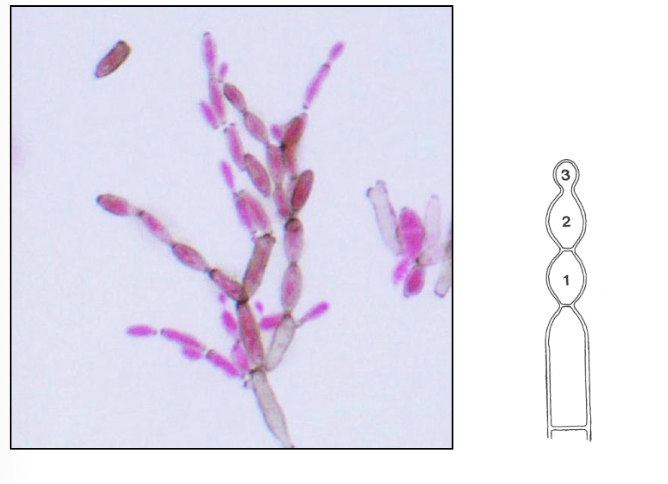
Acropetal chaining with branches
A characteristic of Trichophyton spp. where the youngest cell is at the tip of the chain.
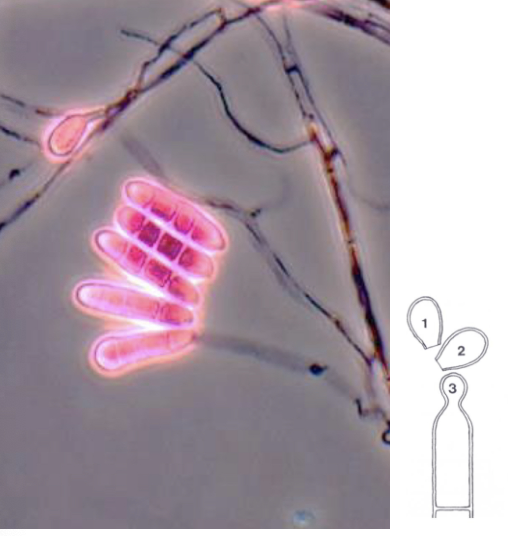
Conidia in wet masses
A characteristic of Trichophyton spp. where conidia are clustered together in moist conditions.
Phialides
Structures found in Trichophyton spp. that produce conidia.
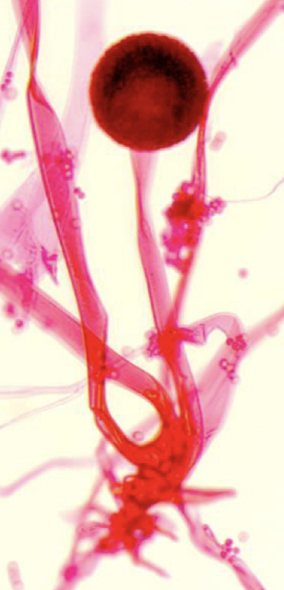
Rhizopus Oryzae
A species of Rhizopus that produces sporangia within a sporangium and has sporrangiophores.
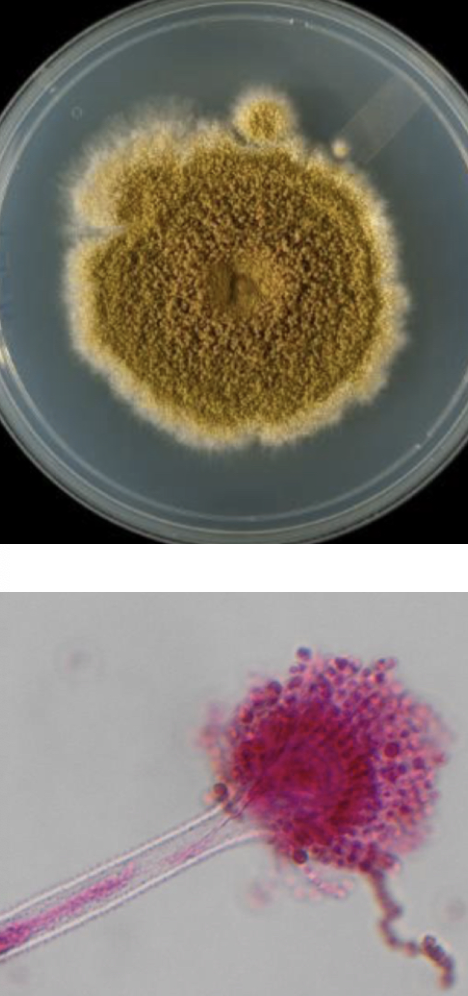
Aspergillus Flavus
A species of Aspergillus with yellow-green to lime green colonies and conical heads radiating to columnar. Biseriate mostly
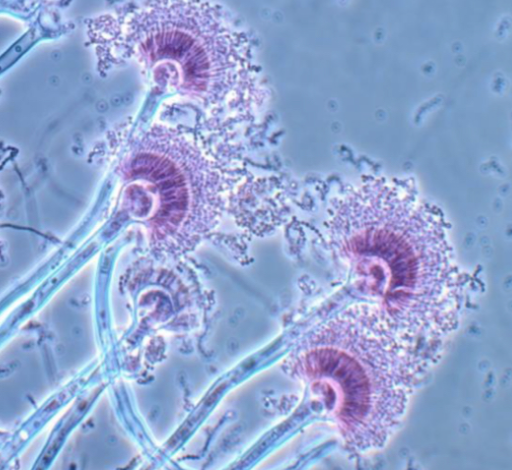
Aspergillus terreus
A species of Aspergillus with cinnamon-brown colonies and very long chains of conidia.
Conidia heads columnar, covers upper half of vesicle
Amphotericin B resistant
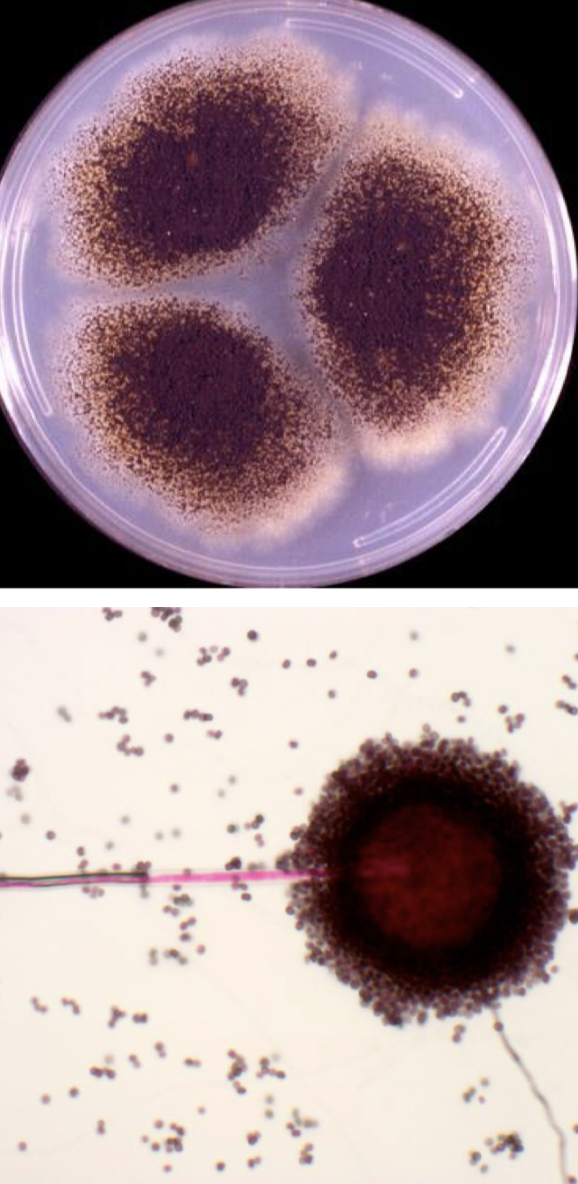
Aspergillus niger
A species of Aspergillus with black conidia that cover the entire vesicle and commonly causes ear infections in children. Very large
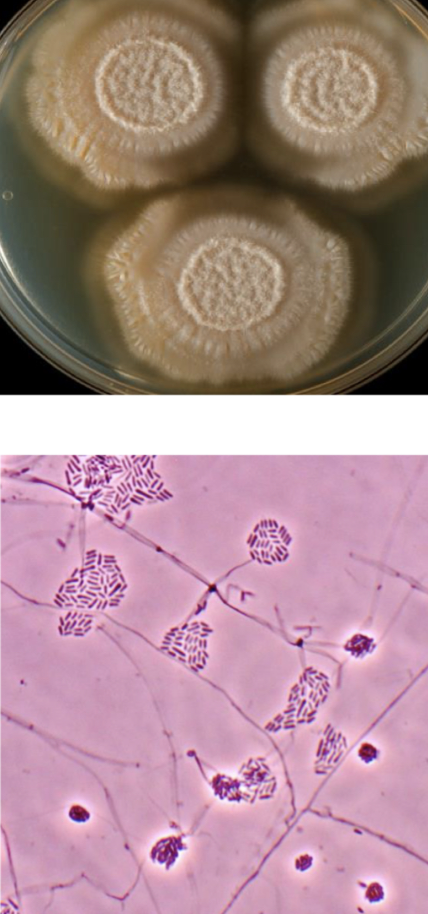
Sarocladium spp
A fungus with single-celled cylindrical conidia that grow in wet masses and can grow in blood culture. Waxy colonies.
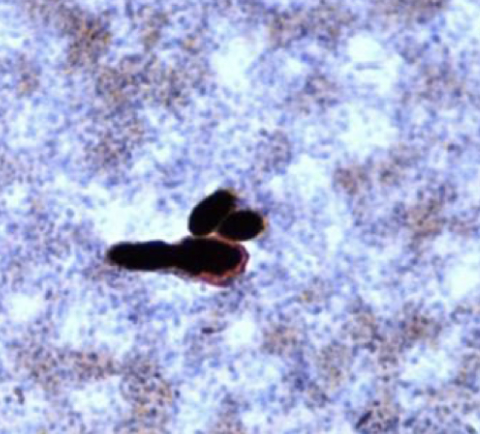
Fusarium spp.
Fungi with macro and micro conidia that are curved like a canoe or a banana.
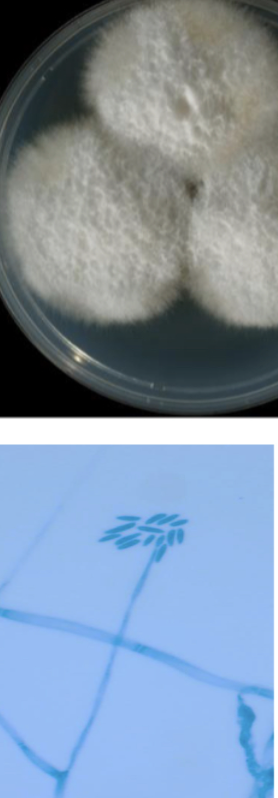
Fusarium solani
A species of Fusarium with white to cream cottony colonies and long conidiophores. May contain Chlamydosmore
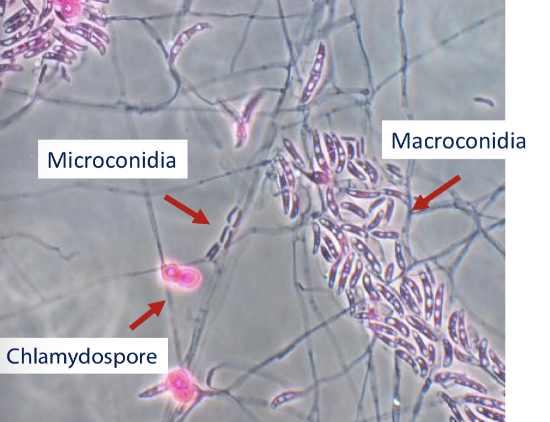
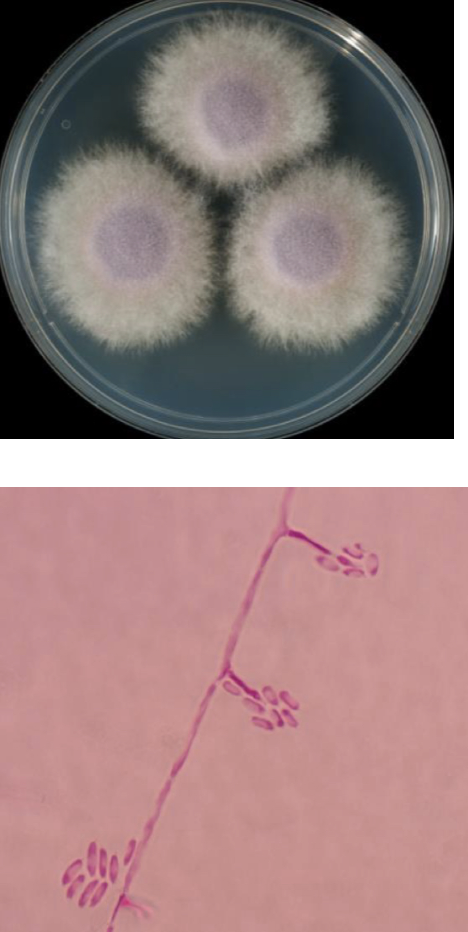
Fusarium oxysporum
A species of Fusarium with wooly white colonies becoming lavender to purple and short conidiophores. “oxycodone makes you happy like pink and purple”
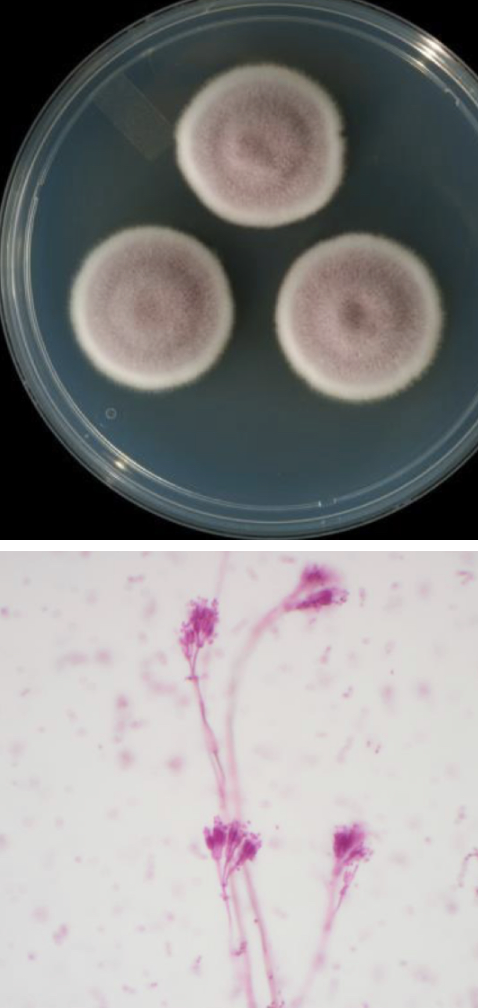
Purpureocillium lilacinum
A fungus with enteroblastic conidia in basipetal chains and powdery cream colonies turning violet with age.
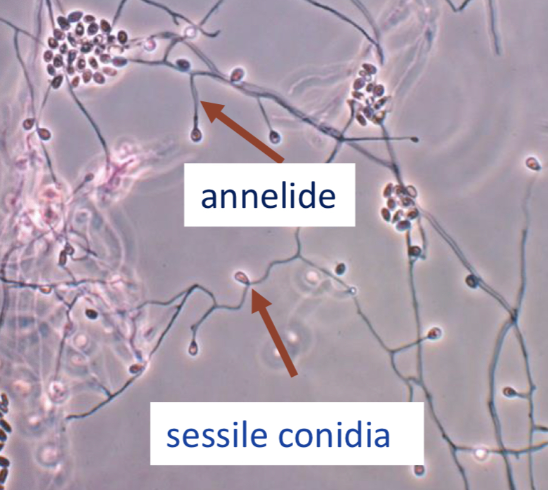
Scedosporium Apiospermum
A fungus that grows at 42C but not 45C and produces oval to globose conidia. Long ennelids
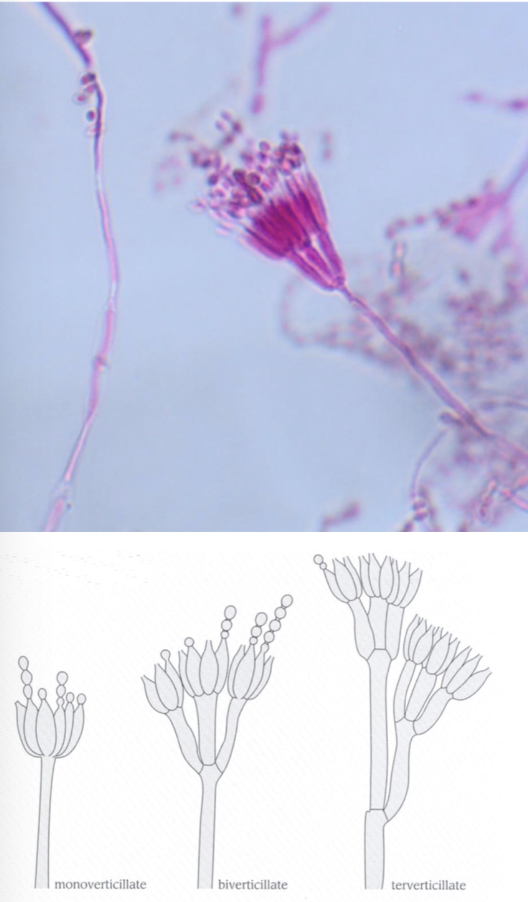
Penicillium species
Green to slate-gray colonies of fungi that rarely cause disease and can have 1-3 rows of phialides.
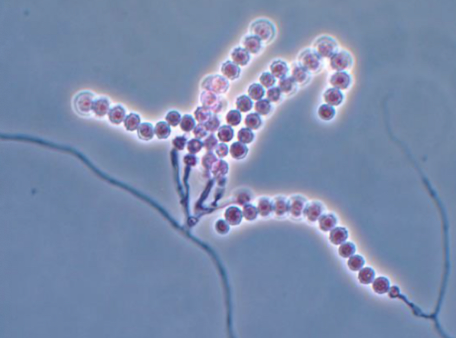
Scopulariopsis Brevicaulis
A thermally dimorphic fungus with pinkish-brown colonies and rough-walled conidia. Broom-like
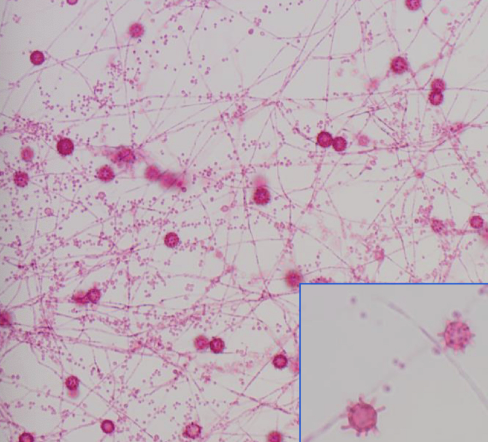
Histoplasma Capsulatum
A fungus that exists in both mold and yeast forms and causes histoplasmosis. Tubercules
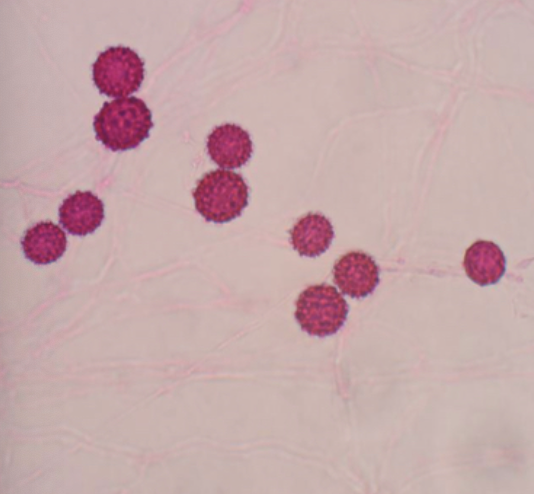
Sepedonium spp.
A fungus that resembles Histoplasma but only has macroconidia and cream to amber colonies.
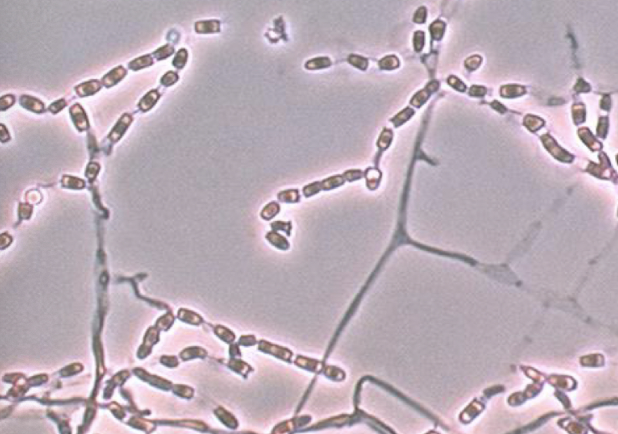
Coccidioides immitis
A fungus with suede-like, gray-white colonies and barrel-shaped arthroconidia. Disjunctor cells. Grows on cycloheximide
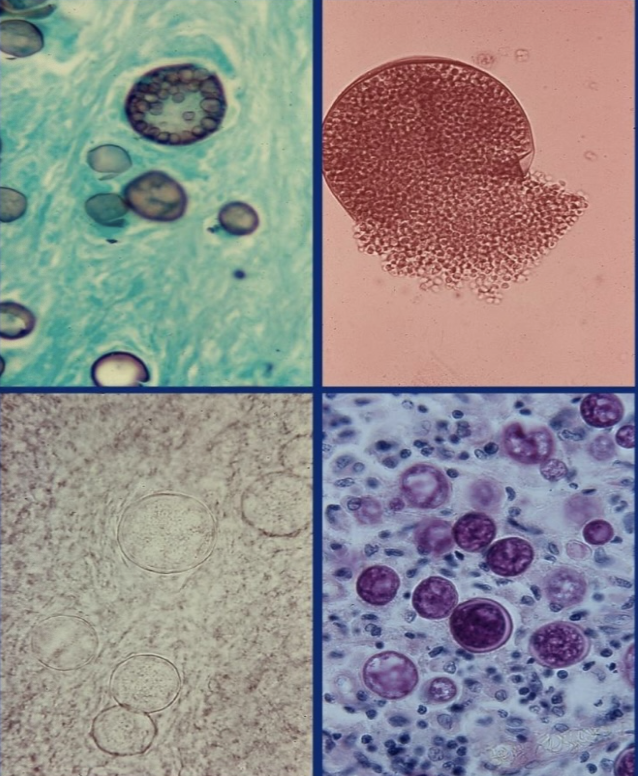
Coccidioides immitis spherules
Structures filled with endospores that can be released upon bursting.
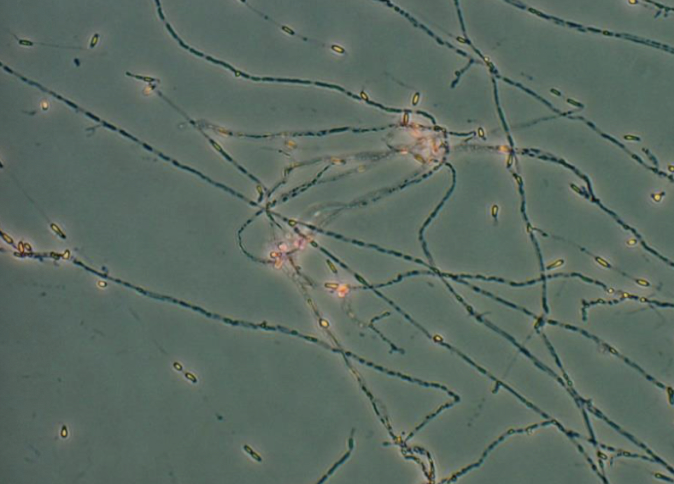
Malbranchea spp.
Fungi that resemble Coccidioides arthroconidia but are much smaller in size.
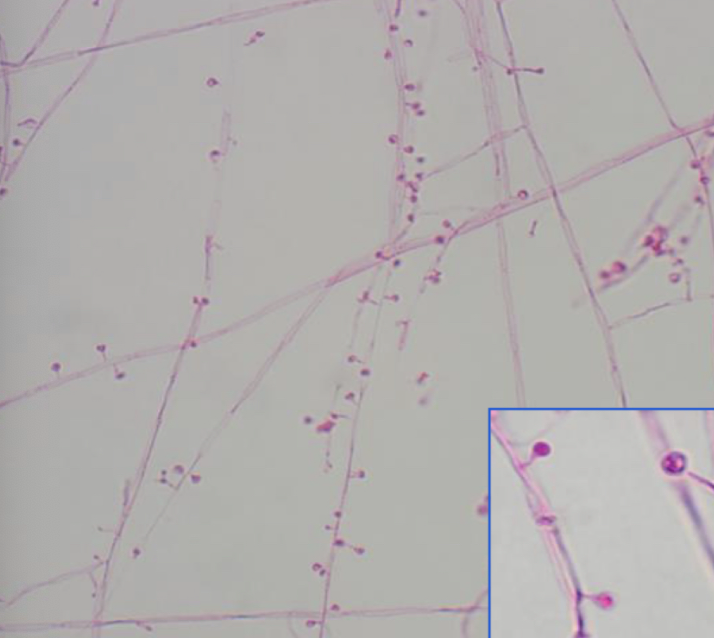
Blastomyces dermatitidis mold
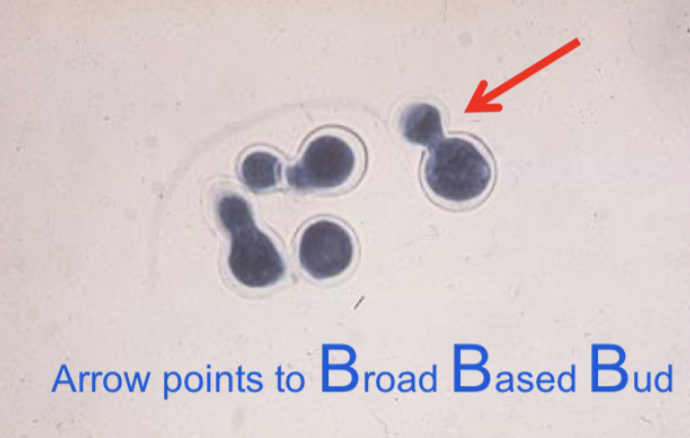
A fungus with short stems and small conidia on the end, resembling lollipops. Usually diagnosed by distinct yeast form. Broad Based Bud
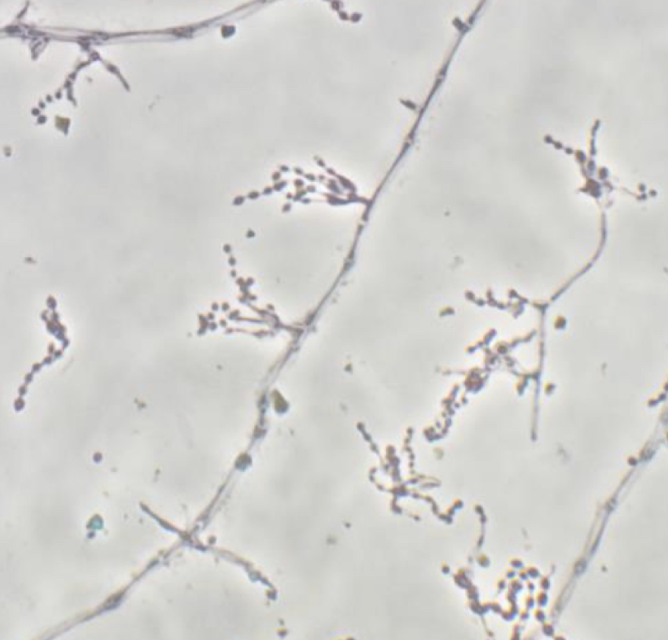
Talaromyces marneffei
A Penicillium-like fungus with red pigment and mono- or biverticillate phialades. Occurs in pts who are already sick
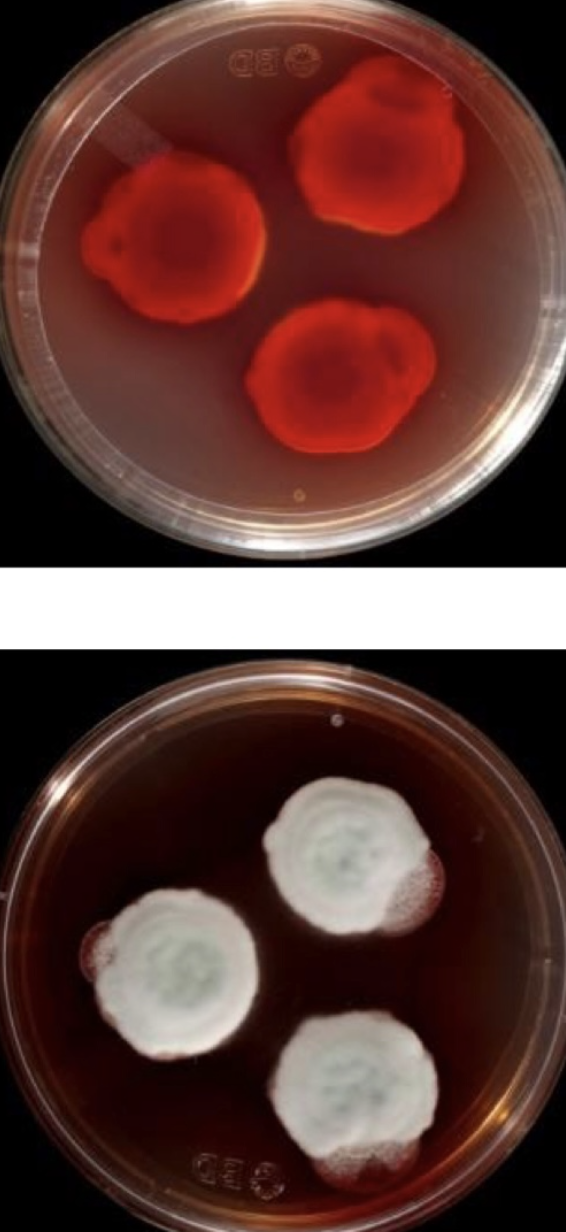
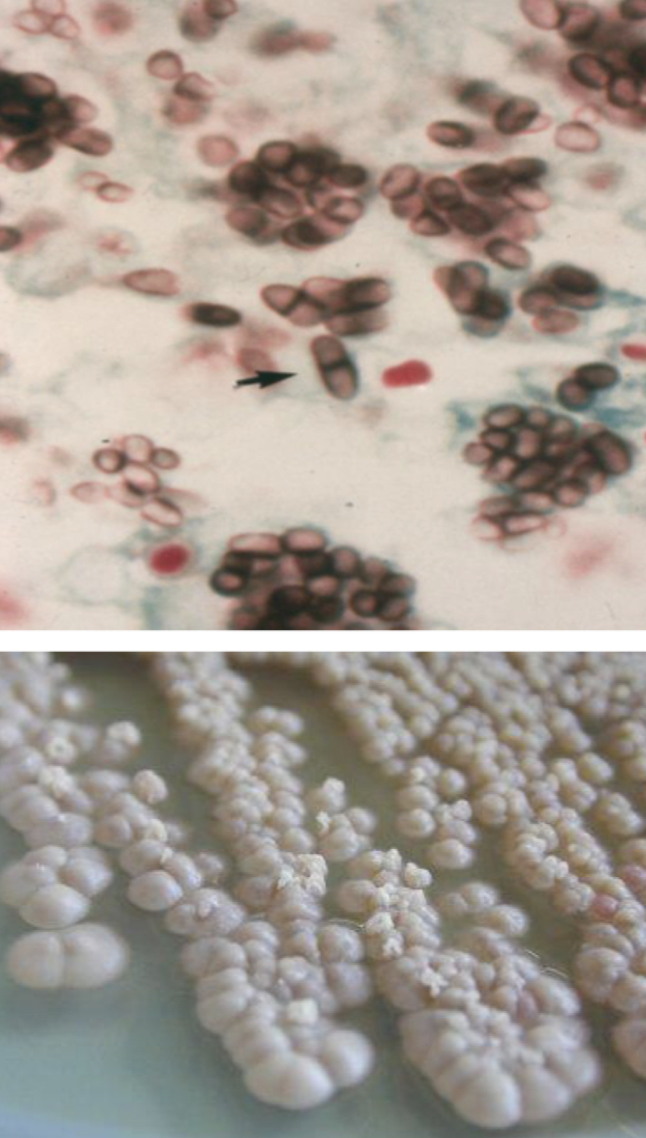
Talaromyces marneffei yeast phase
The yeast phase of Talaromyces marneffei that undergoes binary fission. BHI agar
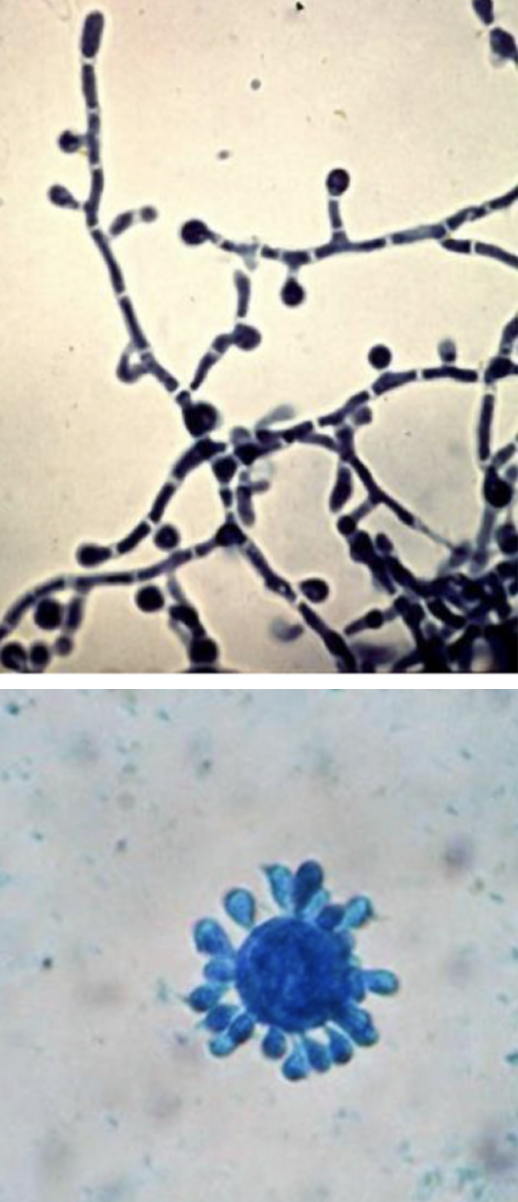
Paracoccidioides brasiliensis
A fungus with hyphae on short stalks and smooth-walled conidia resembling lollipops. Large yeast with multiple buds- mariner’s wheel
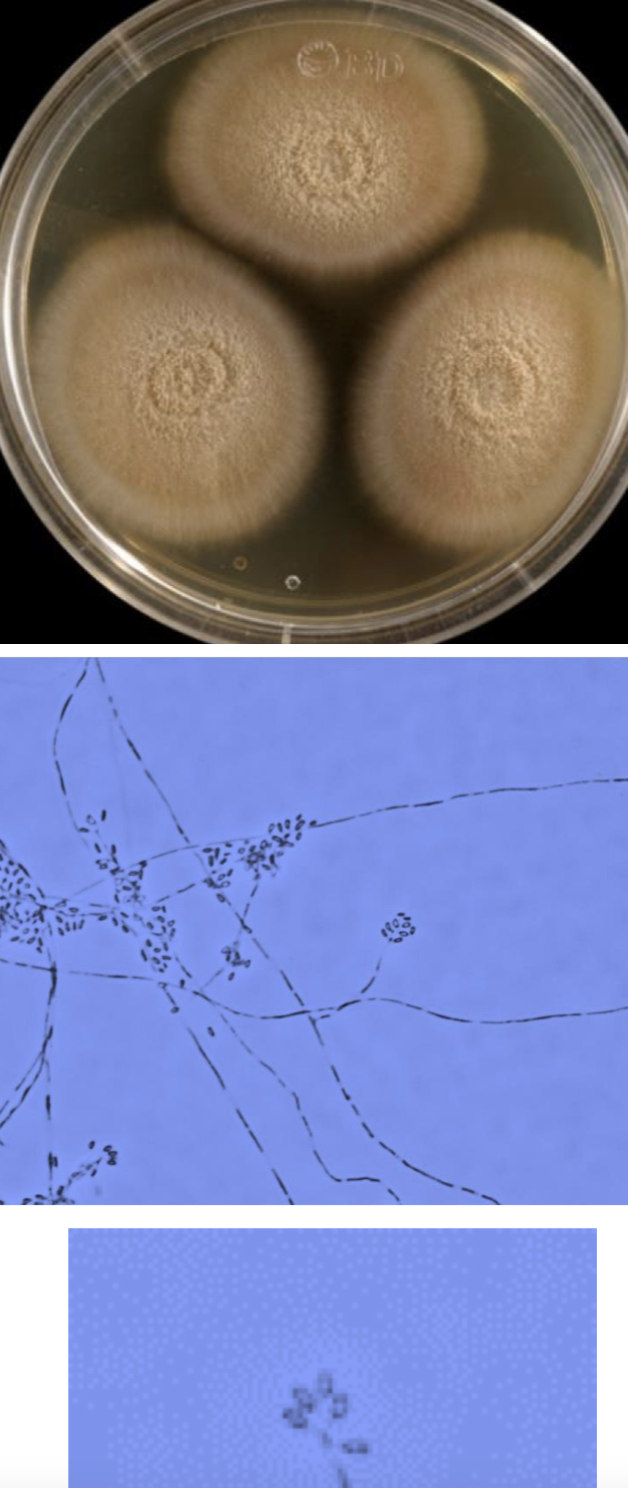
Sporothrix schenckii mold
A fungus with waxy to cottony white to cream colonies, turning dark with age. “Daisy petal”
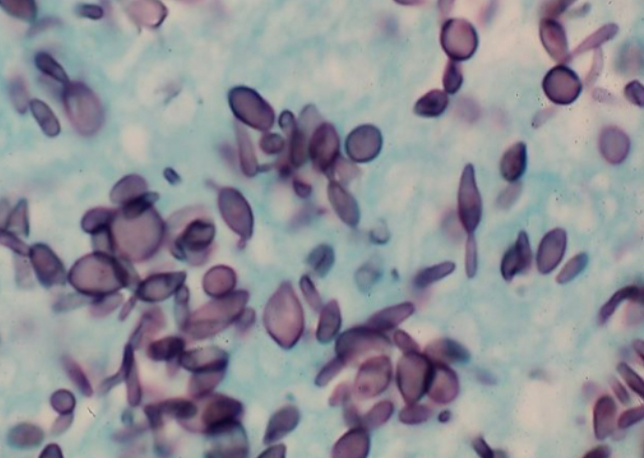
Sporothrix schenckii yeast form
The yeast form of Sporothrix schenckii with pleomorphic cells, some cigar-shaped. Similar lymphogenic affects as nocardia. Rose-grower’s disease
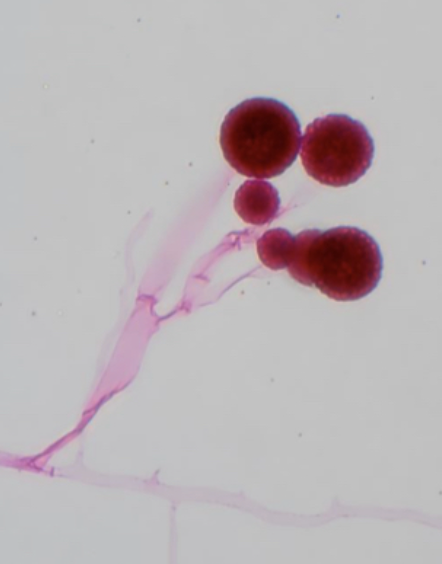
Mucor circinelloides
A fungus that does not grow above 37 degrees C and has branched sporangiophores. NO rhizoids
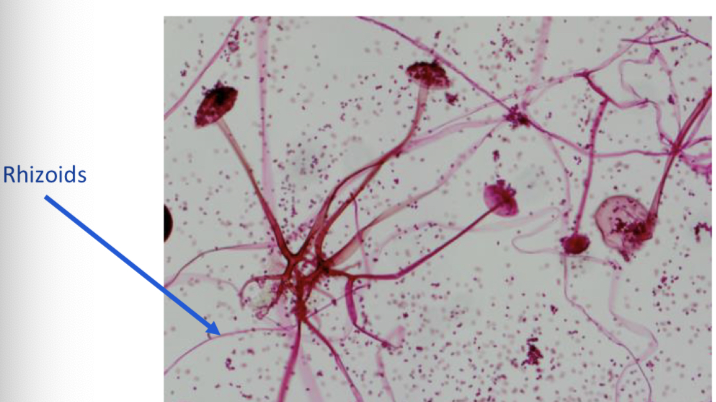
Rhizopus oryzae
A species of Rhizopus with white colonies turning gray with age and unbranched sporangiophores. Rhizoids present. Columella seen when ruptured
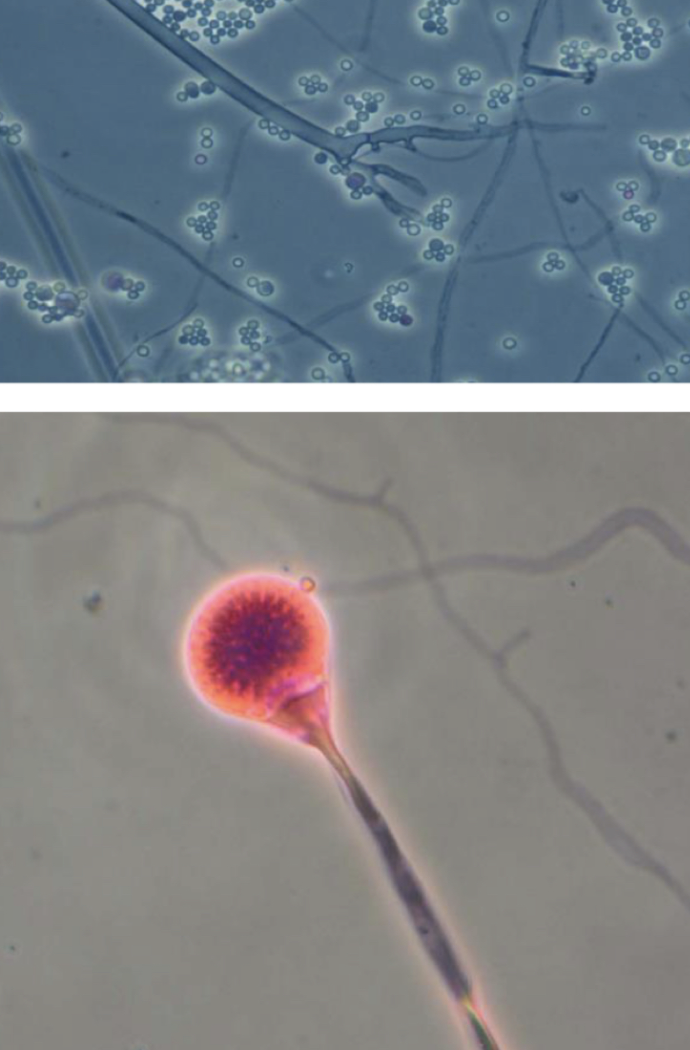
Lichtheimia corymbifera
A fungus that grows better at higher temperatures and has branched sporangiophores. “Champagne glass” apophysis. Rhizoids present
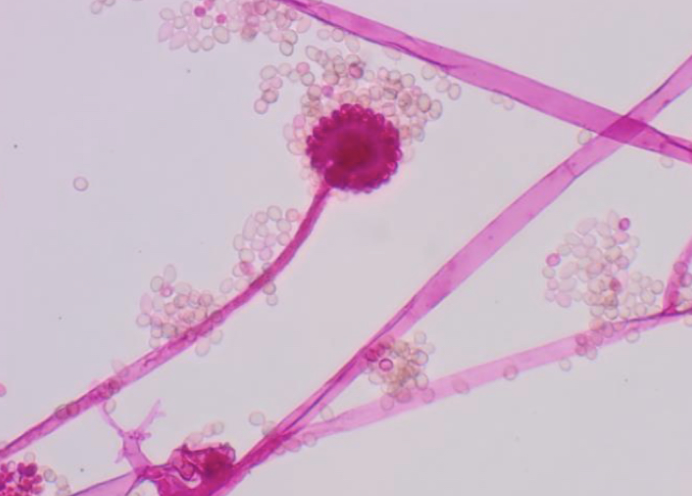
Cunninghamella bertholletiae
A fungus with swollen vesicles and tannish gray colonies. Growth up to 45 degrees. “cunning barthalamew has a swollen testicle”
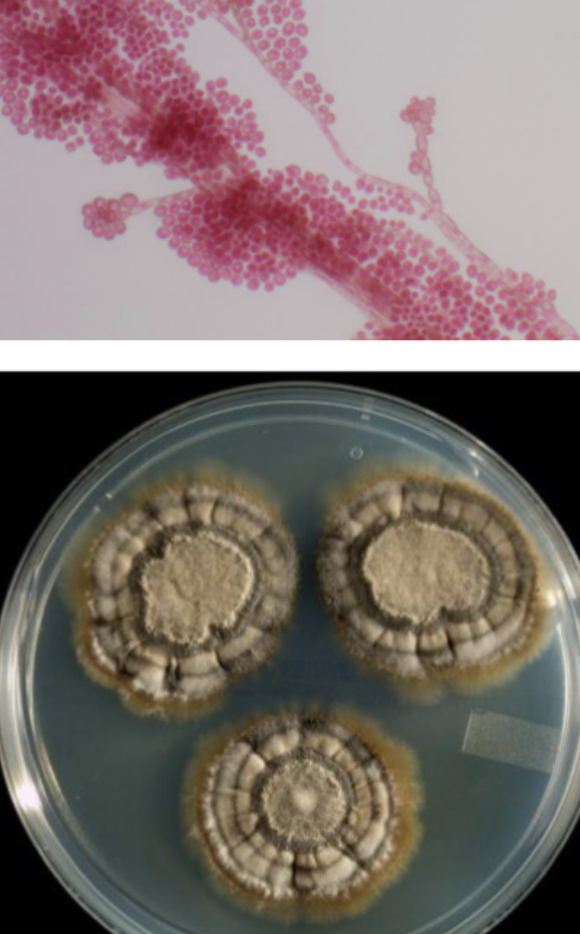
Exophiala dermatitidis
A mold also known as a "black yeast" with brown colonies and phaeohyphomycosis. 40-42 degrees C
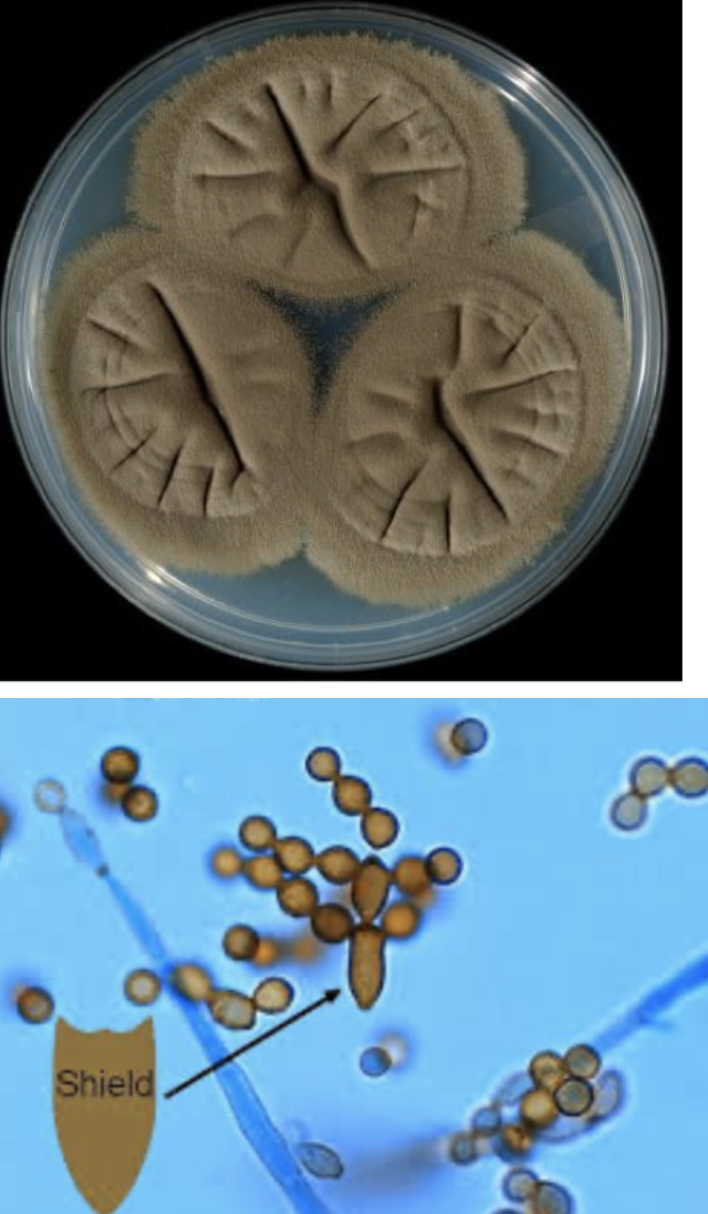
Cladosporium species
Slow-growing fungi with olive to brown colonies and poorly differentiated conidiophores. Shield cells “iron clad shield”
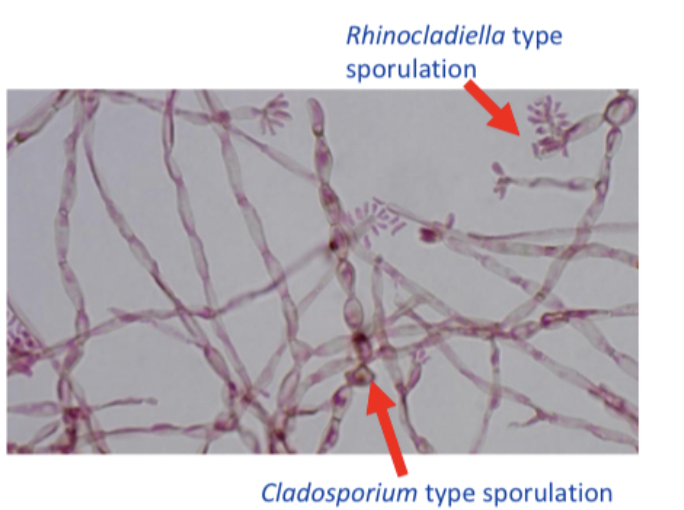
Fonsecaea pedrosoi
A fungus with velvety to cottony colonies and unique conidiogenesis types.
Can produce 4 types of conidiogenesis
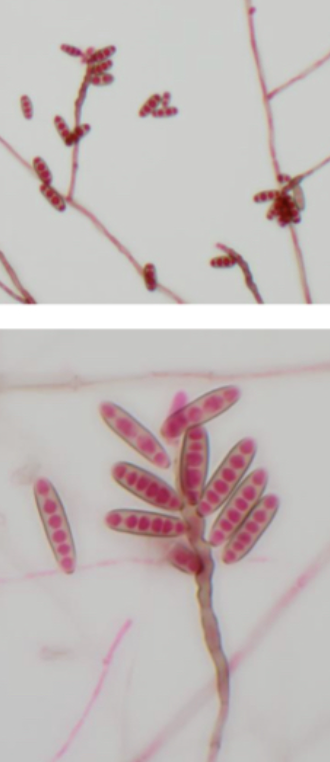
Curvularia spicifera
A fungus with ellipsoidal conidia divided into compartments by distosepta. 3-6 cells.
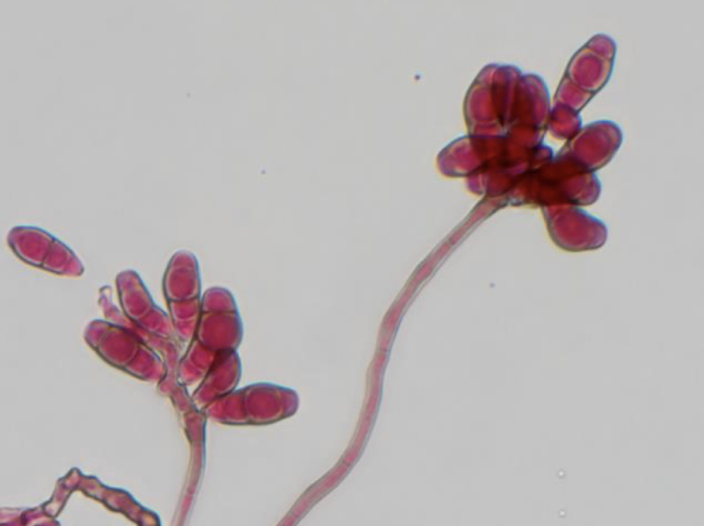
Curvularia lunata
A fungus with pear-shaped or curved conidia divided into compartments. croissant, 4-5 cells
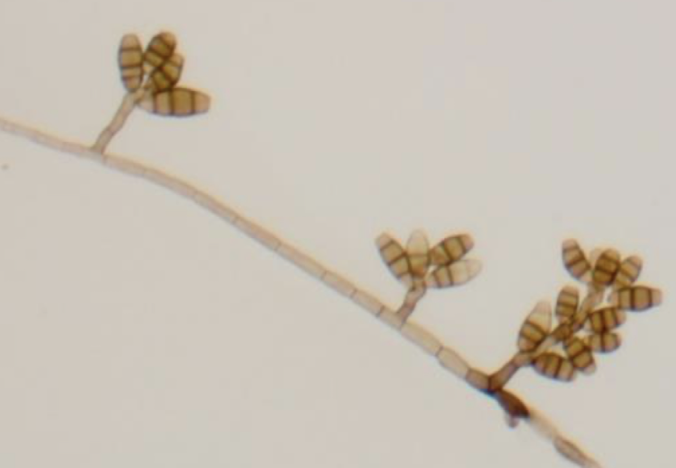
Curvularia geniculata
A fungus with croissant-shaped conidia and sympodial conidiogenesis. Geni= knee-like
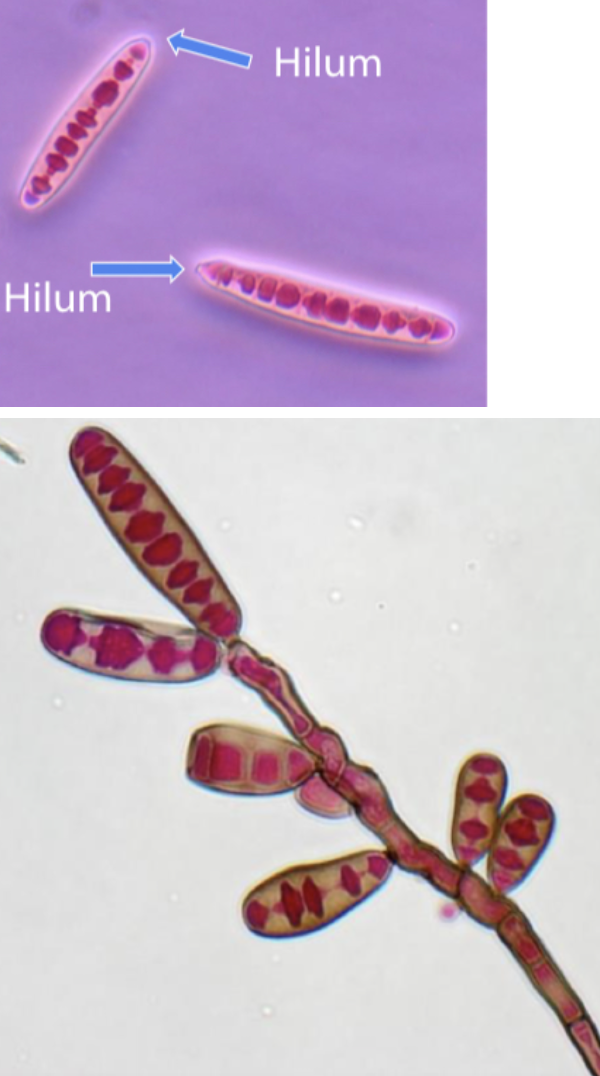
Exserohilum rostratum
A fungus with ellipsoidal conidia divided into compartments and prominent hilum. 7-12 cells. Cells on ends are darker. False septa
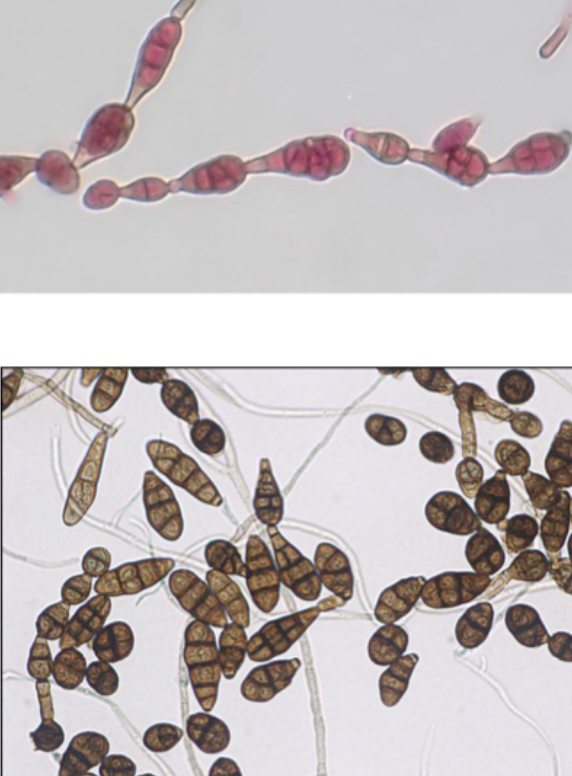
Alternaria sp.
A common plant pathogen with flat, brown conidia in unbranched chains. Turkey leg, beaked apex
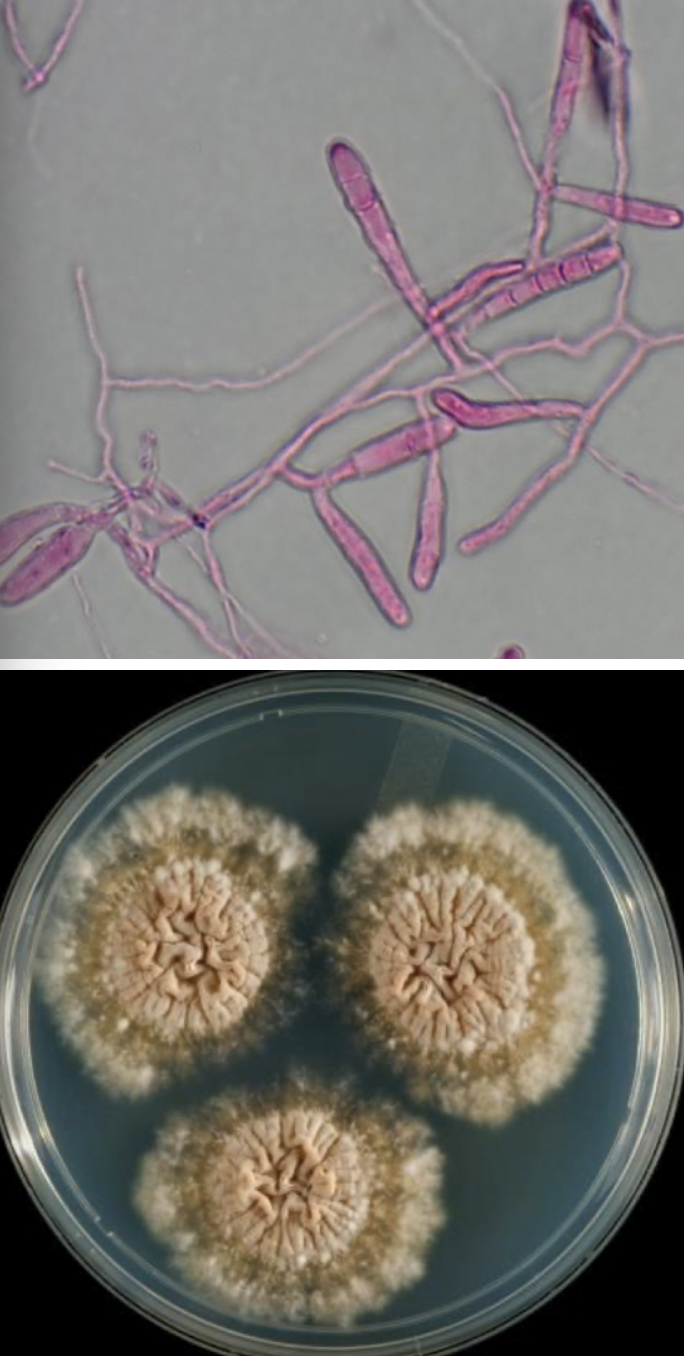
Epidermophyton floccosum
A fungus causing athlete's foot with pale yellow to mustard yellow colonies. Beaver tail
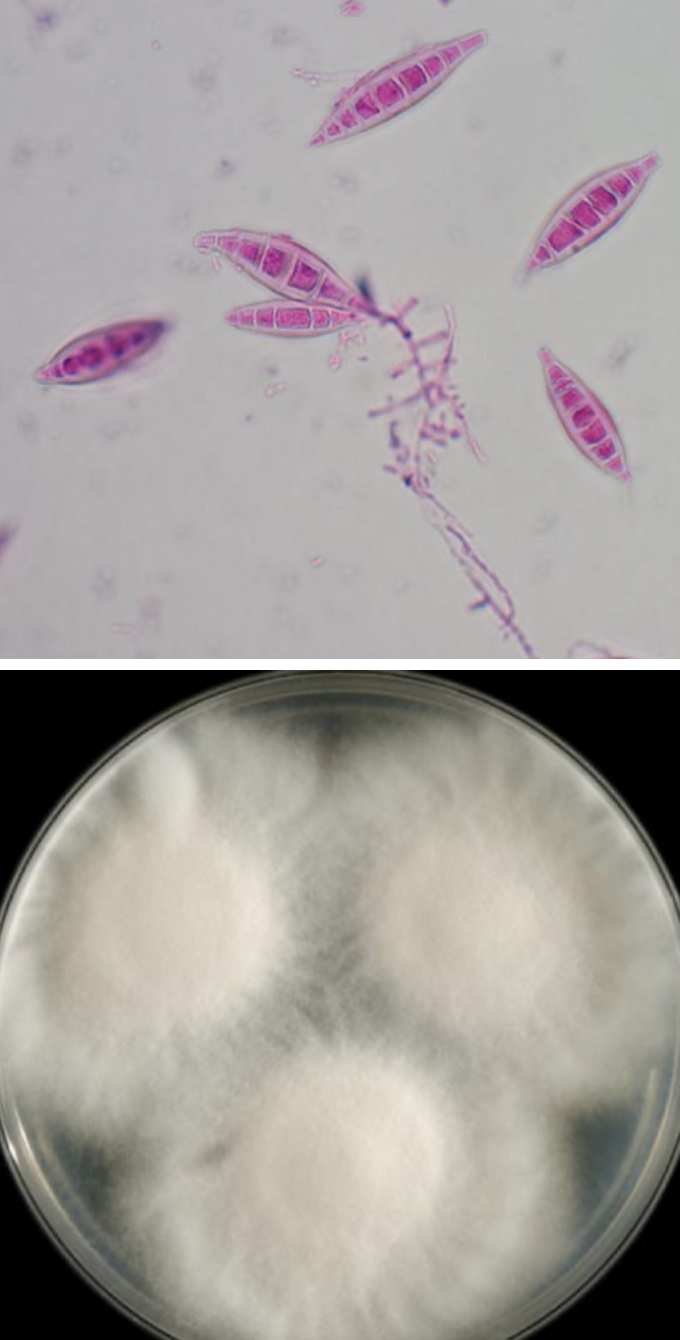
Microsporum canis
A fungus causing skin and hair infections with spindle-shaped macro- and microconidia. bent terminal knob
Paracoccidioides brasiliensis
A fungus with hyphae on short stalks and smooth-walled conidia resembling lollip
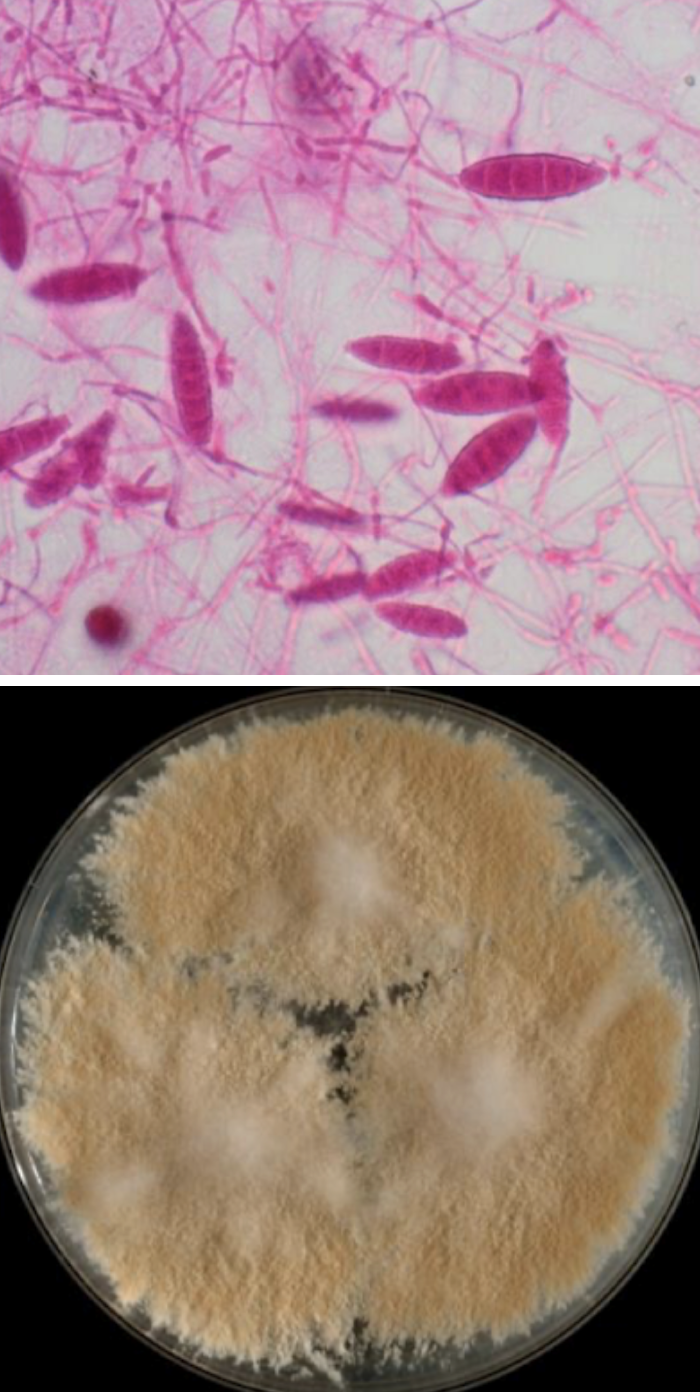
Microsporum gypseum
A type of dermatophyte fungus that is zoonotic and does not fluoresce under UV light.
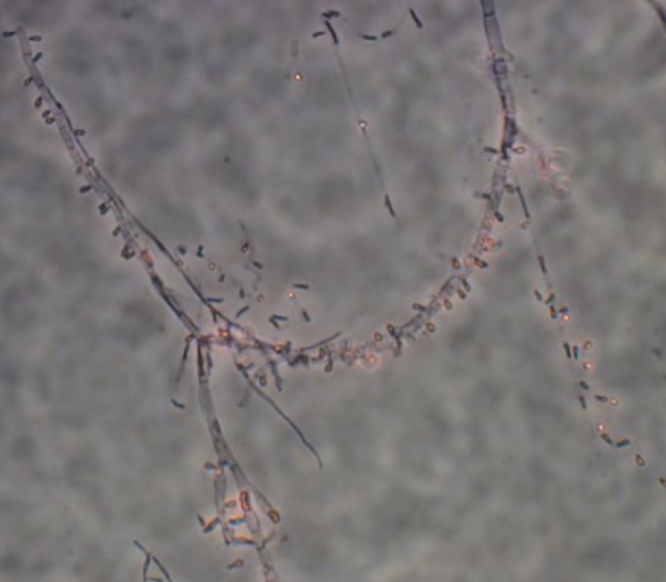
Thricophyton rubrum
A dermatophyte fungus that is red in color and has club-shaped microconidia, often referred to as "birds on a wire". Urease neg “Red robin= red rubrum, robin bird”
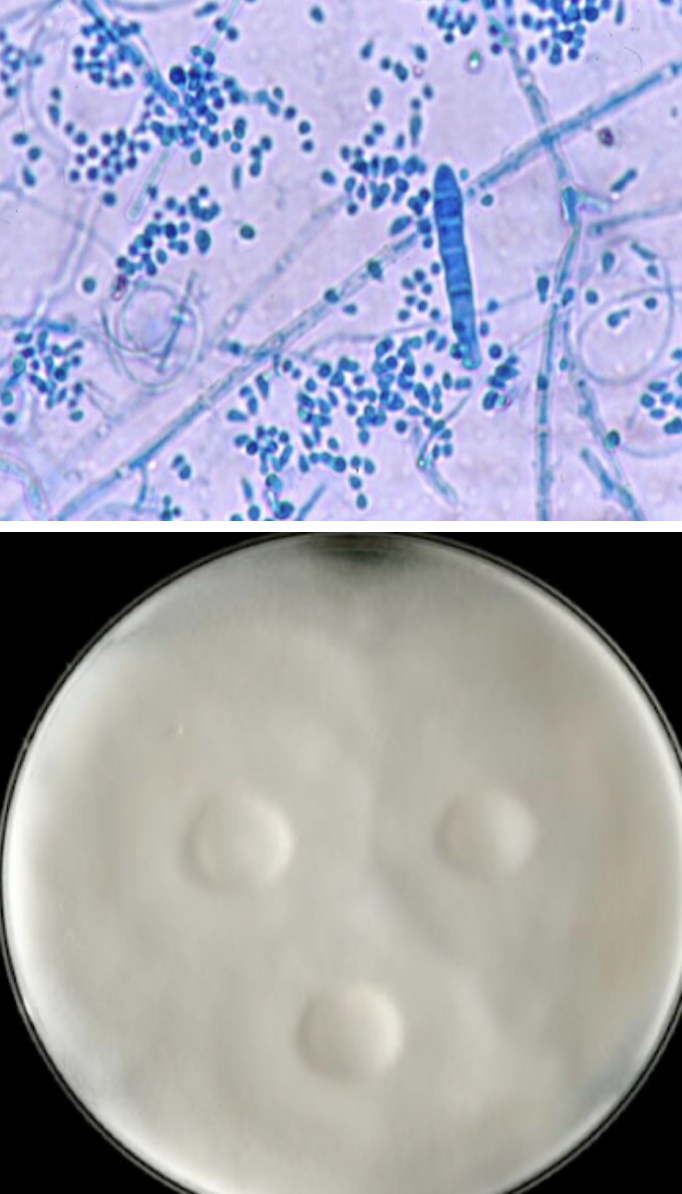
Trichophyton mentagrophytes
A dermatophyte fungus with cylindrical walls, thin and smooth, and clusters of conidia. It also has spiral hyphae. 3-8 cells
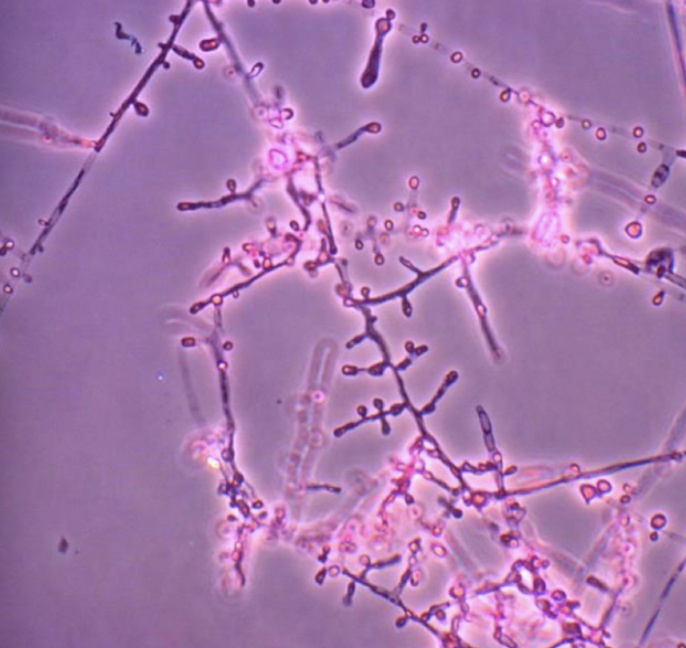
Trichophyton tonsurans
A dermatophyte fungus with variable shaped microconidia (club-shaped, cylindrical, balloon-shaped), abundant chlamydospores. "fairy lights".
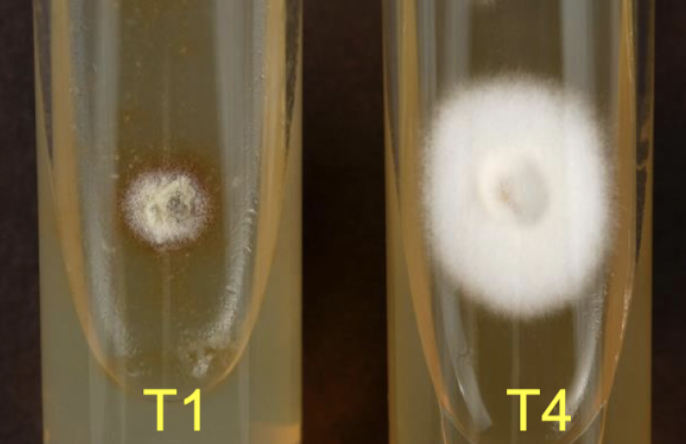
Trichophyton agars (T-media)
A type of media used for growing Trichophyton fungi, with T1 and T4 being the most commonly used. It contains vitamin-free casamino acids and individual supplements.
MALDI-TOF
A technique commonly used for identifying fungi, including Trichophyton species, by analyzing their protein profiles.