unit 2 bio psych notes (but simpler)
 Studied by 0 people
 Call Kai
 Learn
Learn Practice Test
 Spaced Repetition
 Match
Match Flashcards
 Knowt Play
1/30

There's no tags or description
Looks like no tags are added yet.
Name | Mastery | Learn | Test | Matching | Spaced | Call with Kai |
|---|
No analytics yet
Send a link to your students to track their progress
31 Terms
Vision System Sensory Receptor
Photoreceptors
Vision System Cranial Nerve
Cranial Nerve 2
Vision System Major Brain Areas
LGN (thalamus), V1 and V2 (occipital lobe), Superior Colliculus (midbrain)
Gustation System Sensory Receptors
Taste Buds
Gustation System Cranial Nerves
Cranial Nerve 7, 9, 10
Gustation System Major Brain Areas
NST → thalamus → primary gustatory cortex (in the insula)
Hearing System Sensory Receptor
Hair cells
Hearing System Cranial Nerves
Cranial Nerve 8
Hearing System Major Brain Areas
Inferior Colliculi, MGN, Auditory cortex
Olfactory System Sensory Receptor
Cilia
Olfactory System Cranial Nerves
Cranial Nerve 1
Olfactory System Major Brain Areas
Amygdala, Hippocampus, Olfactory Cortex, Entorhinal cortex
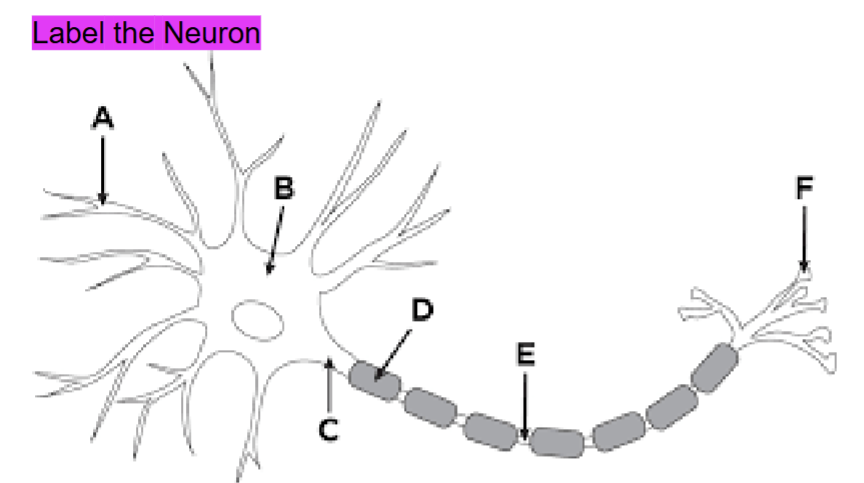
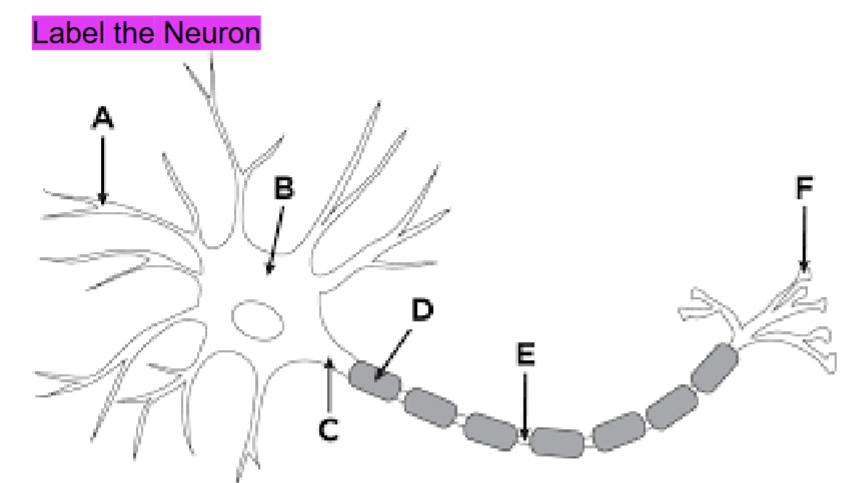
Neuron Key A
Dendrite
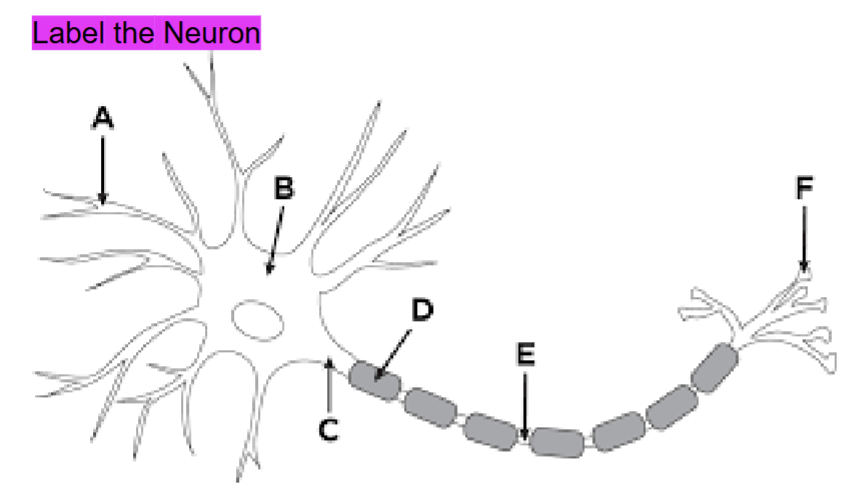
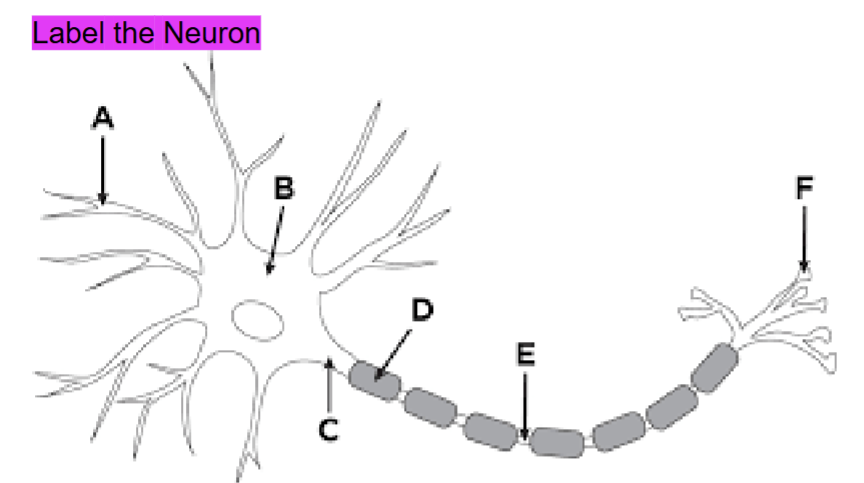
Neuron Key B
Soma
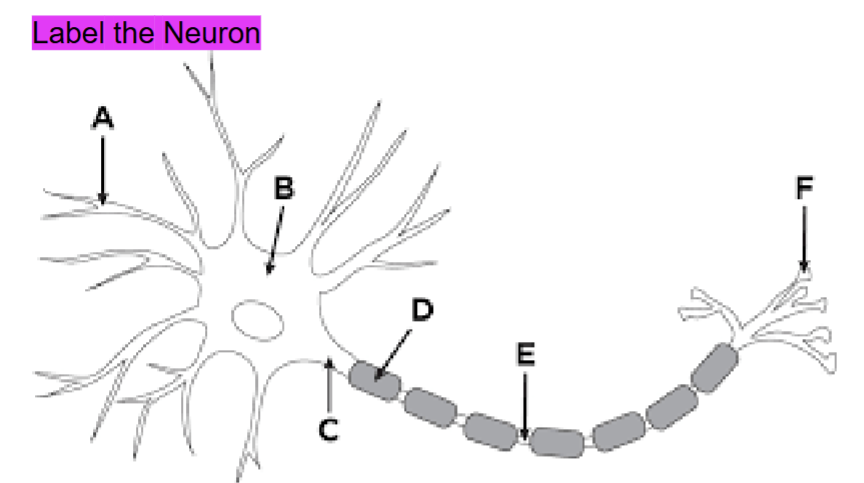
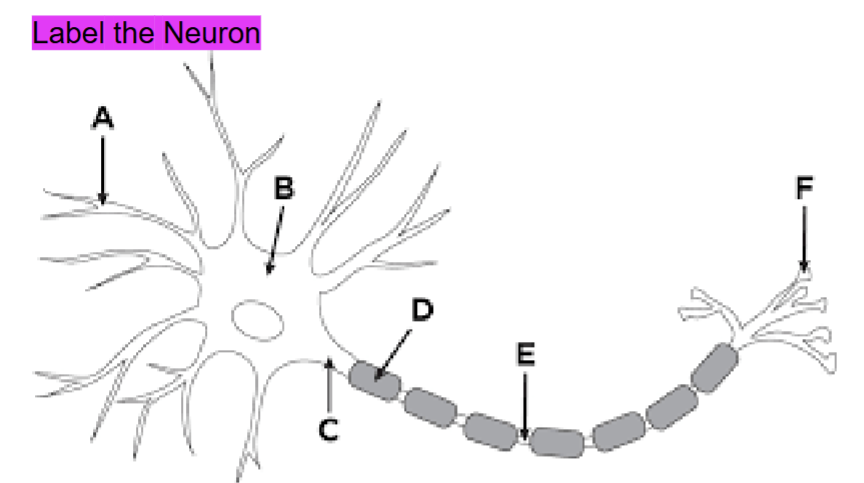
Neuron Key C
Axon Hillock
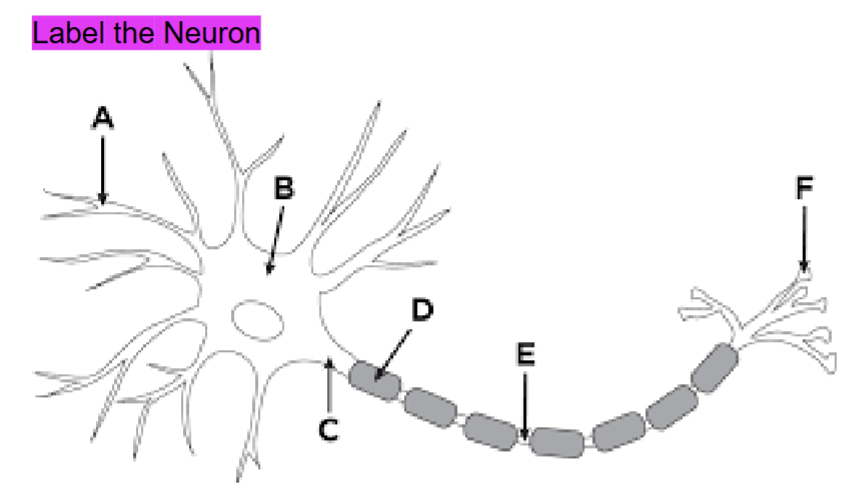
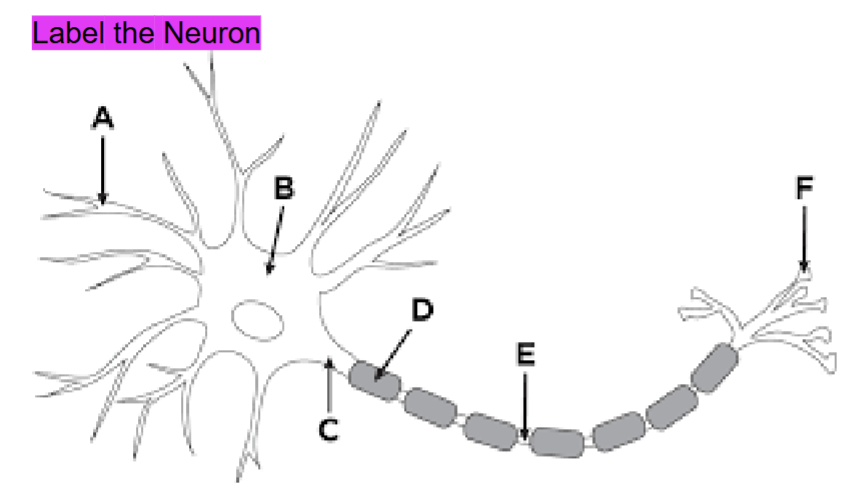
Neuron Key D
Myelin Sheath
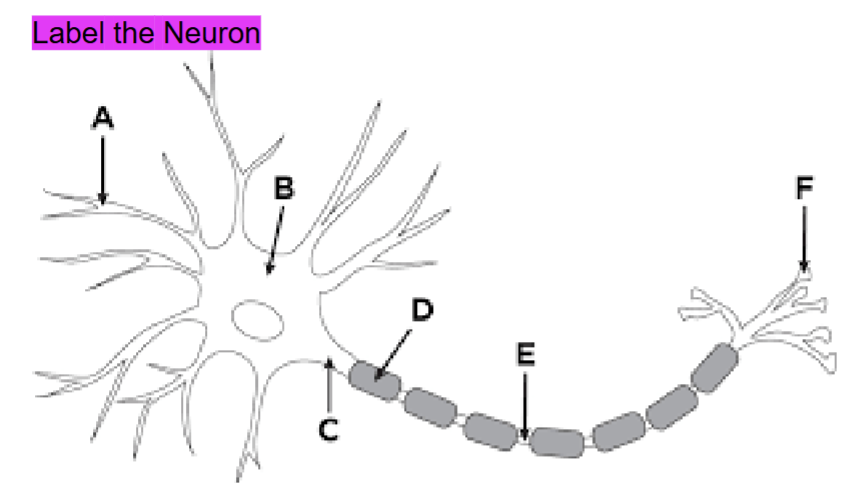
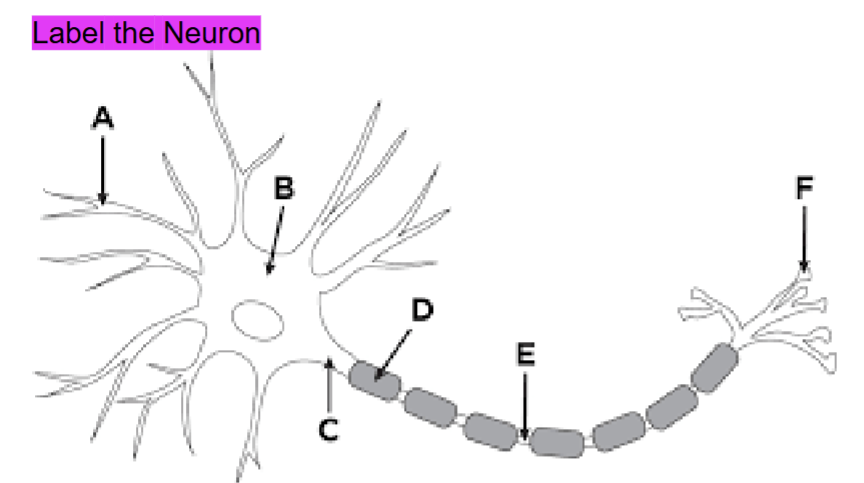
Neuron Key E
Node of Ranvier
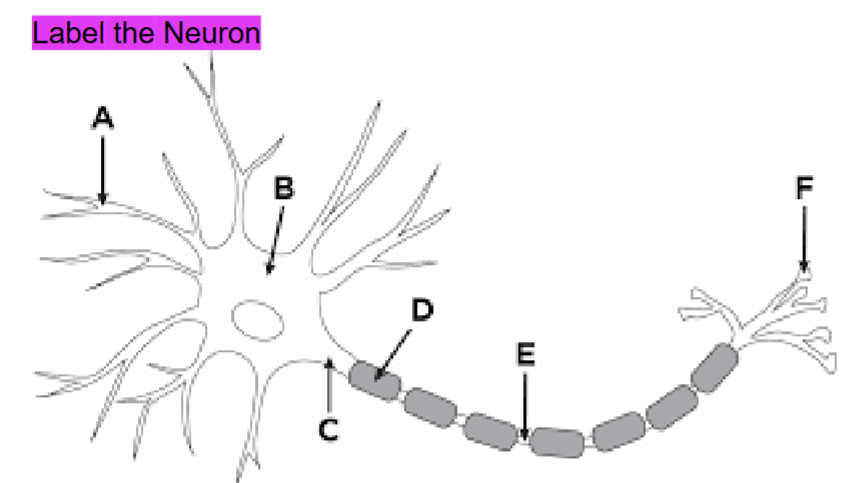
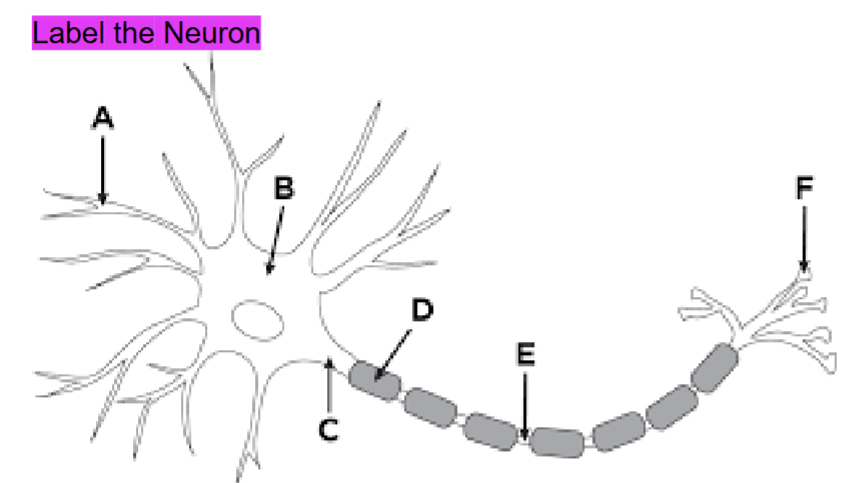
Neuron Key F
Terminal Buttons
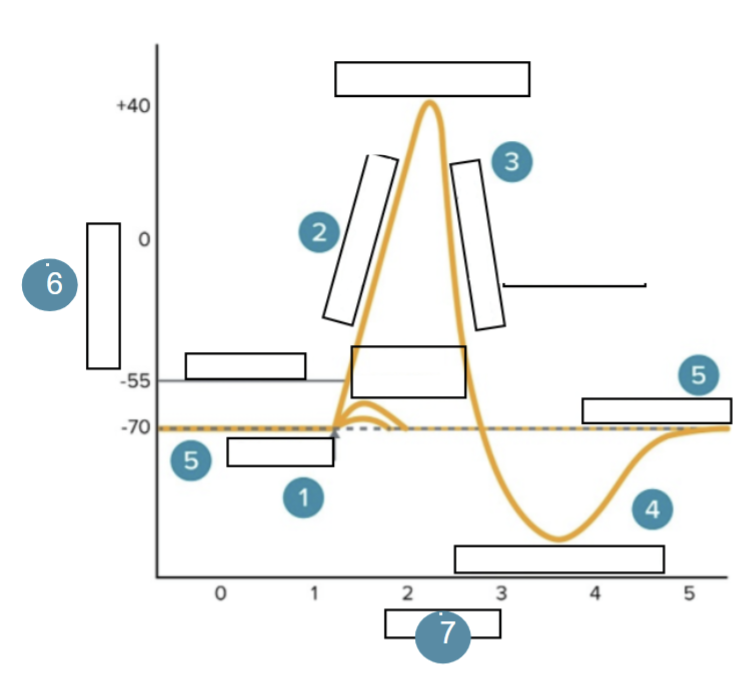
Action Potential 1
Resting State
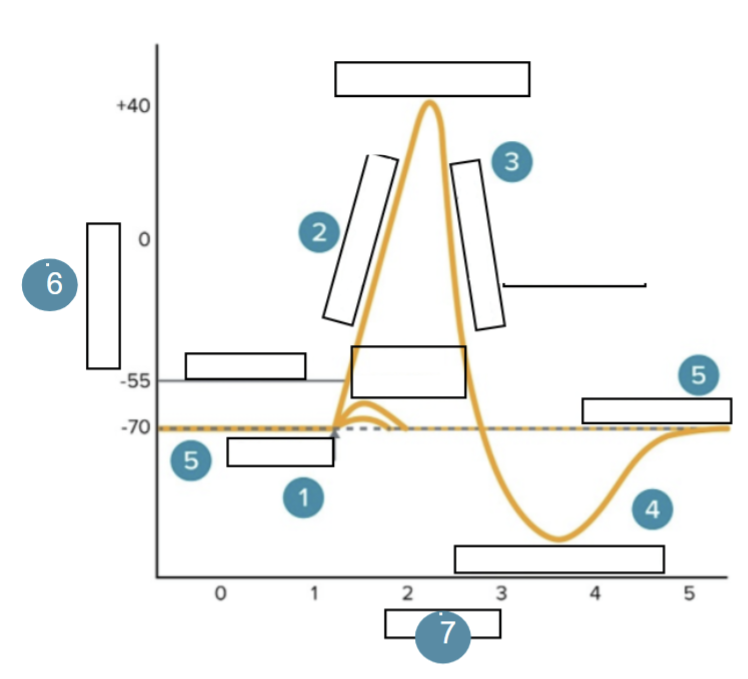
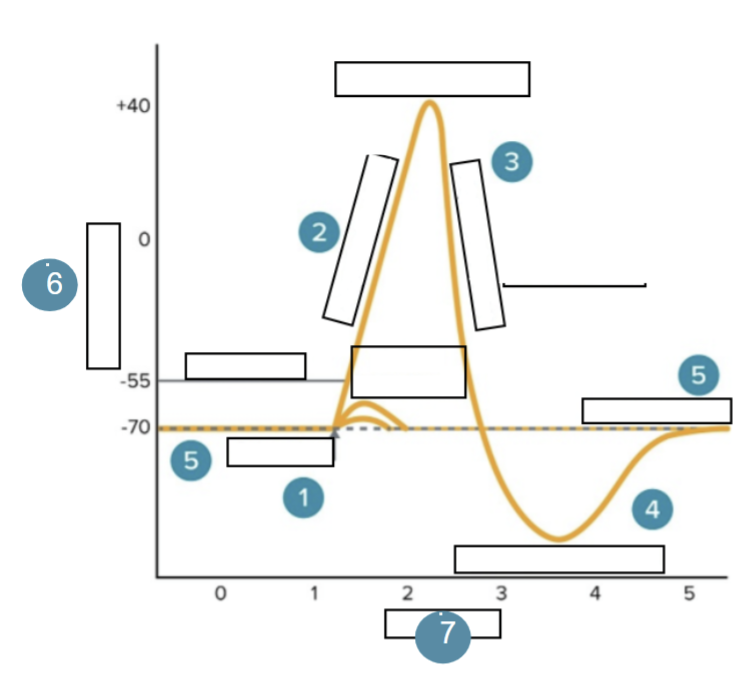
Action Potential 2
Depolarization
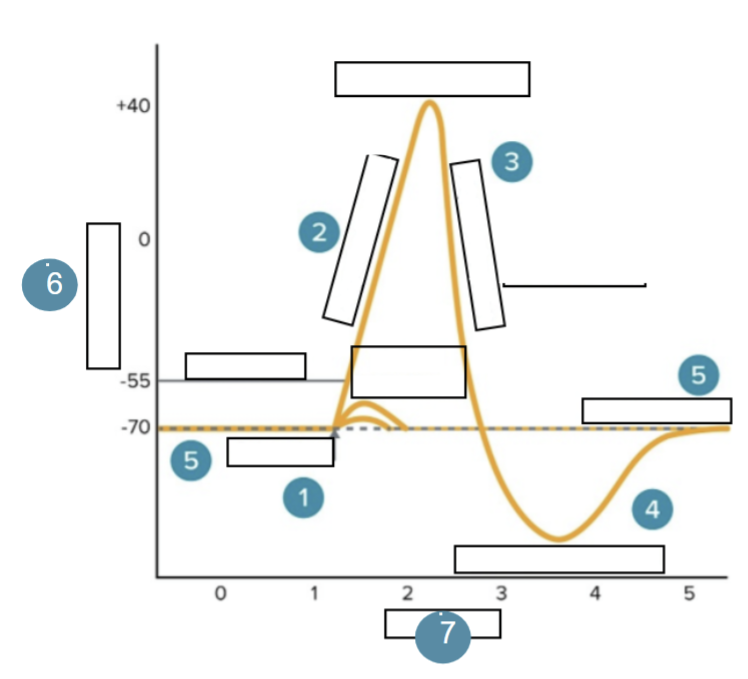
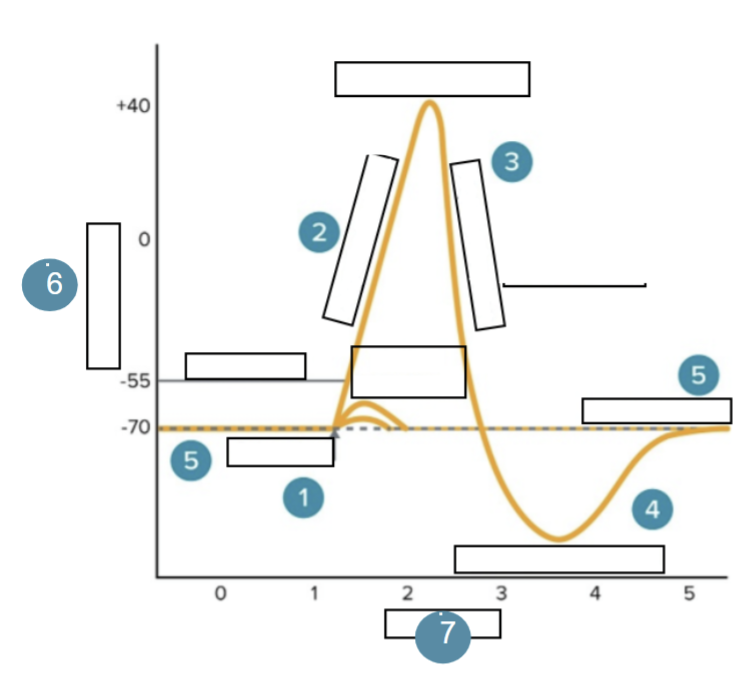
Action Potential 3
Repolarization
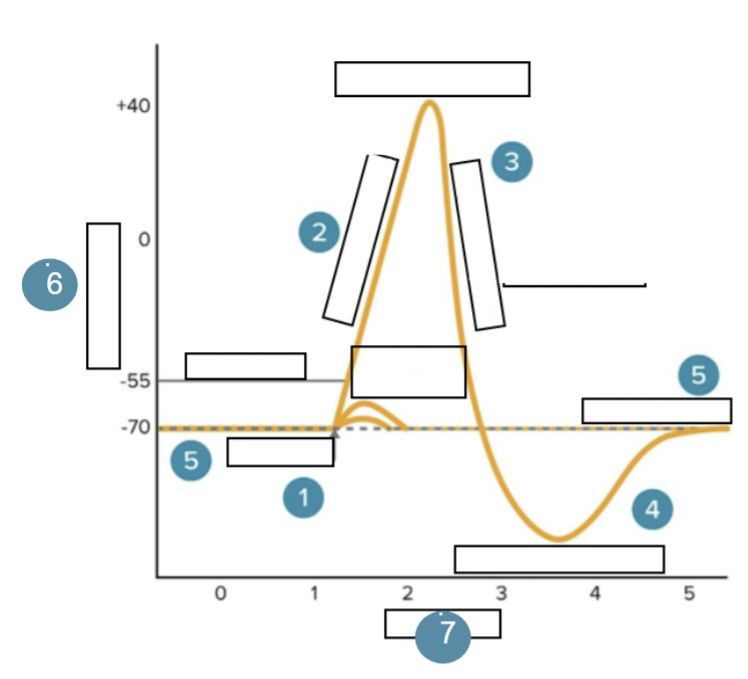
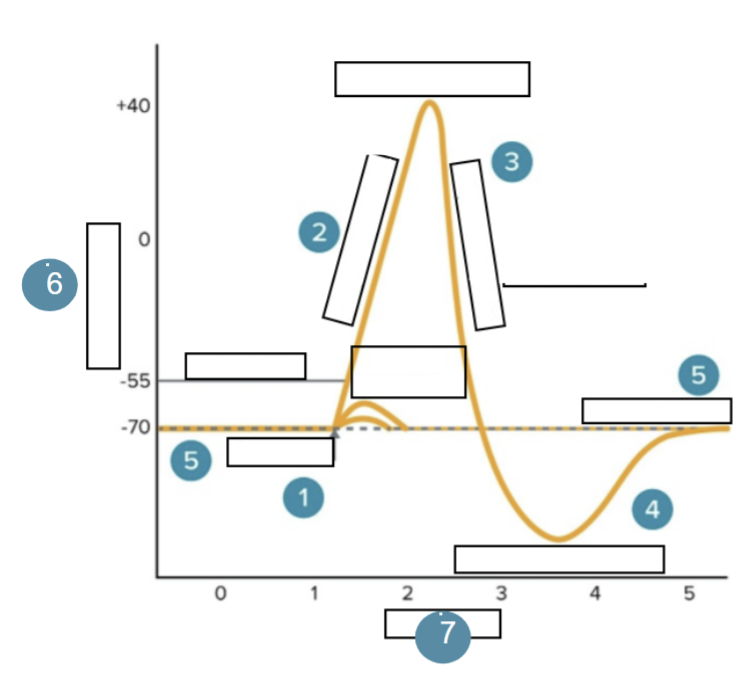
Action Potential 4
Hyperpolarization
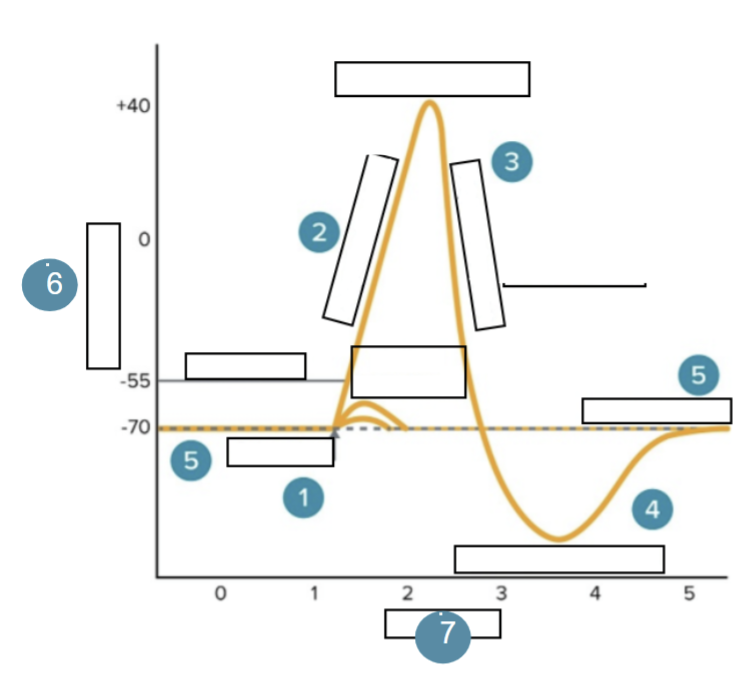
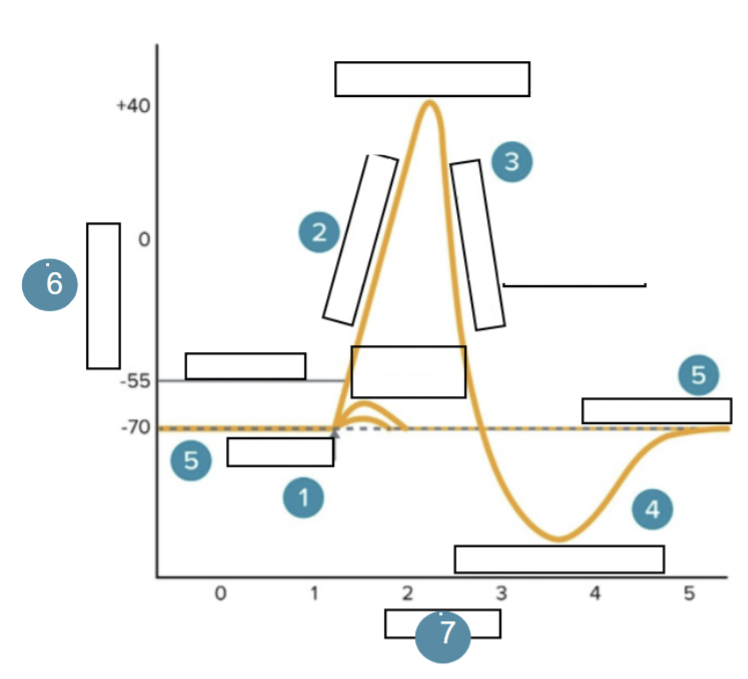
Action Potential 5
Resting State
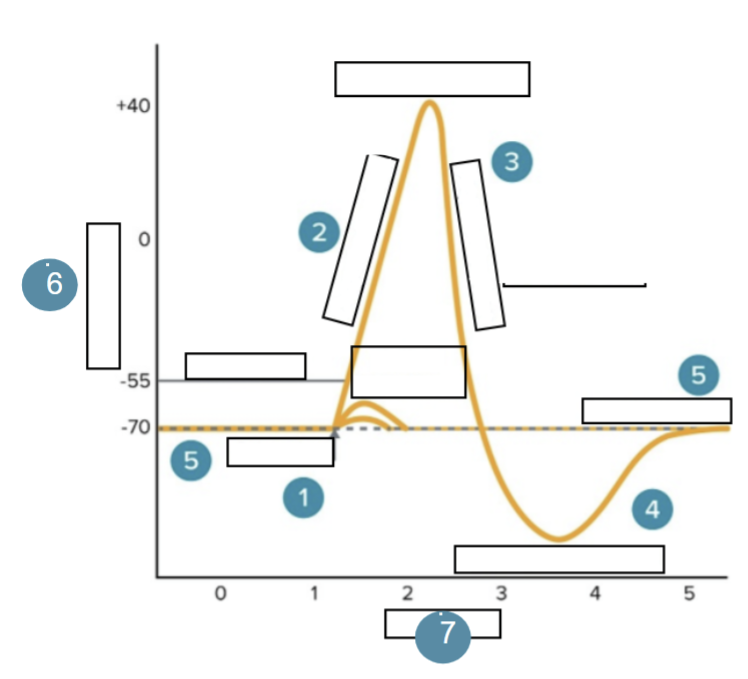
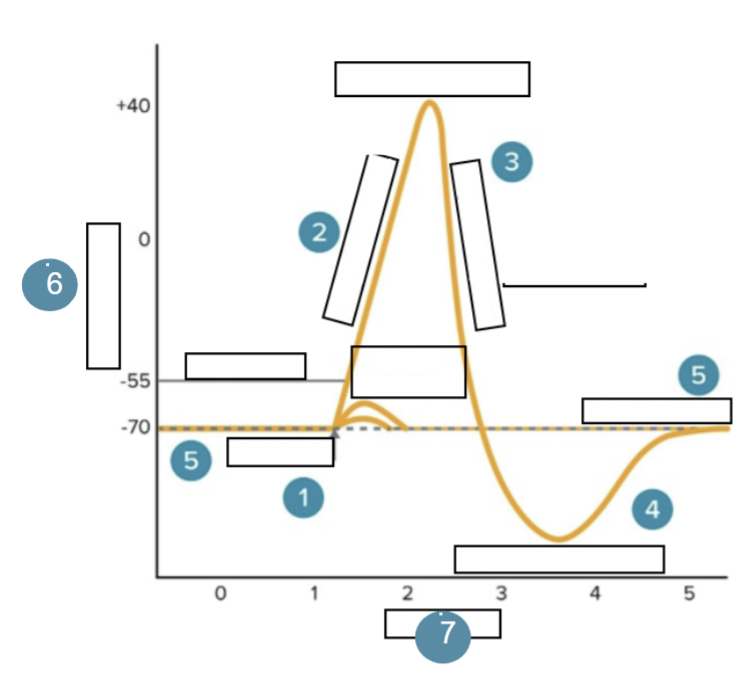
Action Potential 6
Membrane Potential (mV)
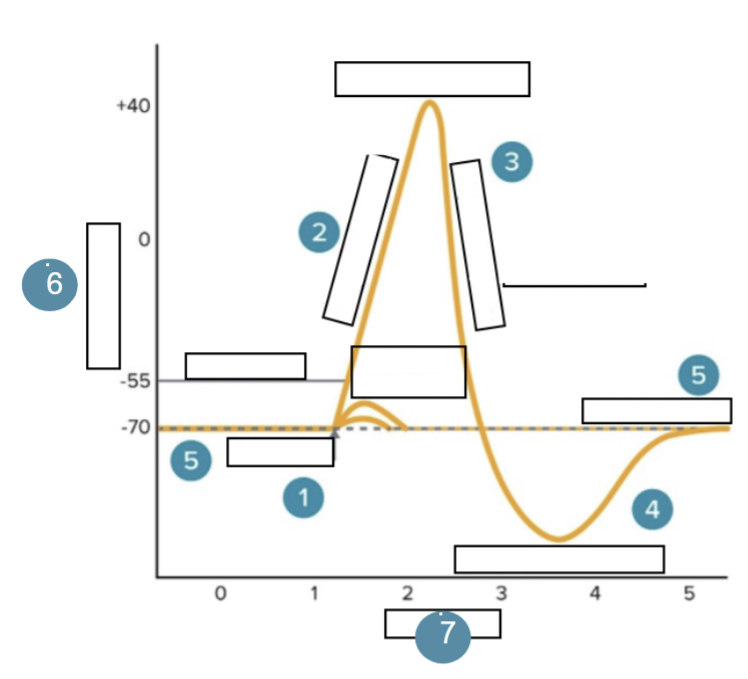
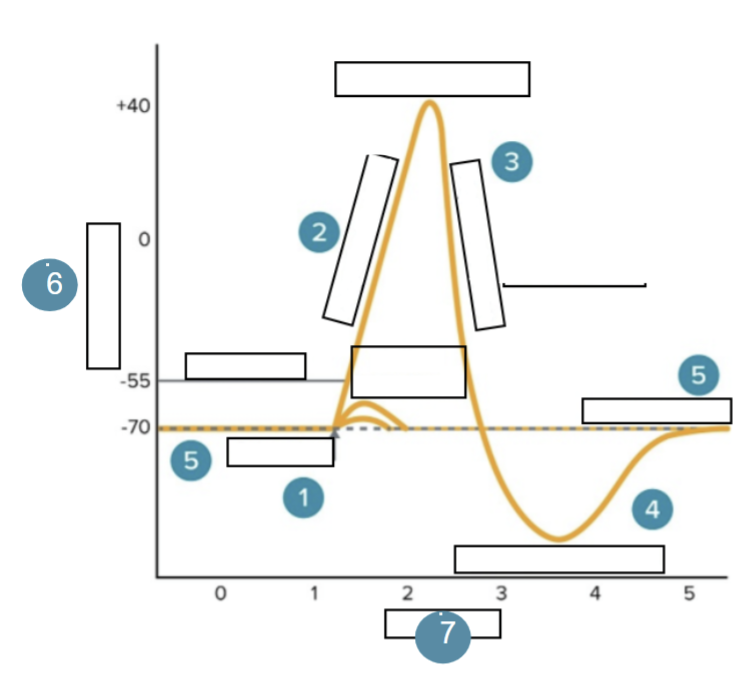
Action Potential 7
Time (ms)
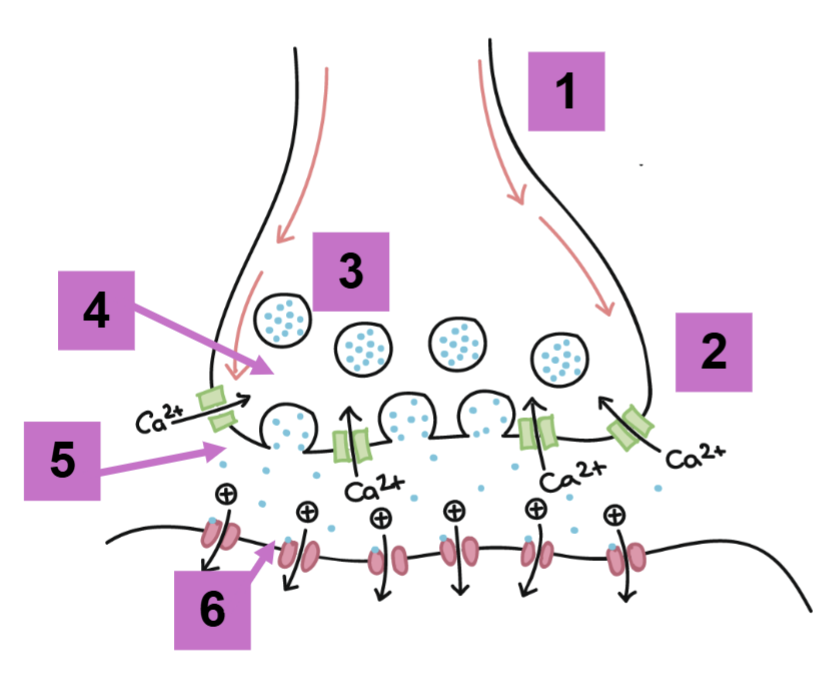
Synaptic Transmission 1
Action potential propagates to terminals
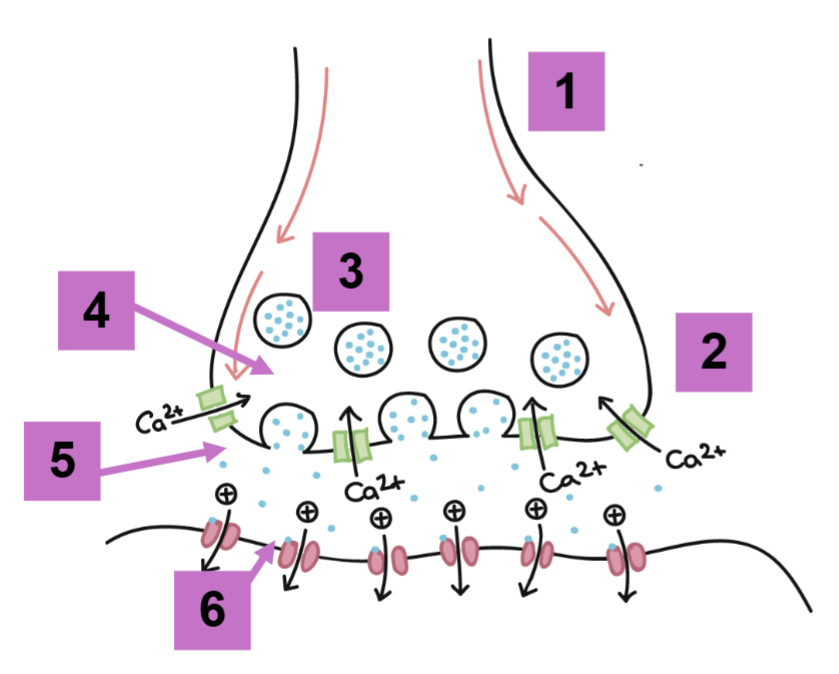
Synaptic Transmission 2
Calcium ion channels open and calcium ions enter the presynaptic cell
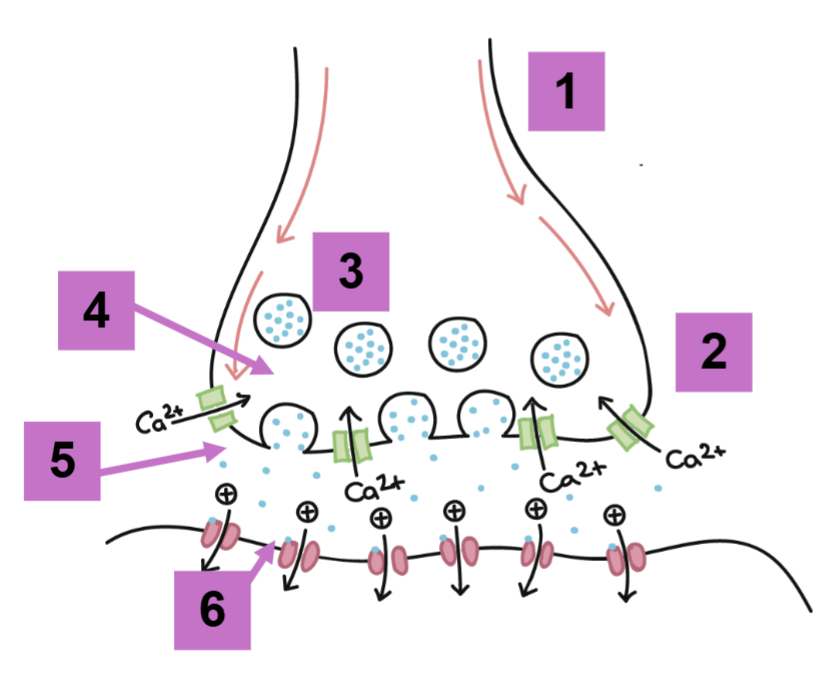
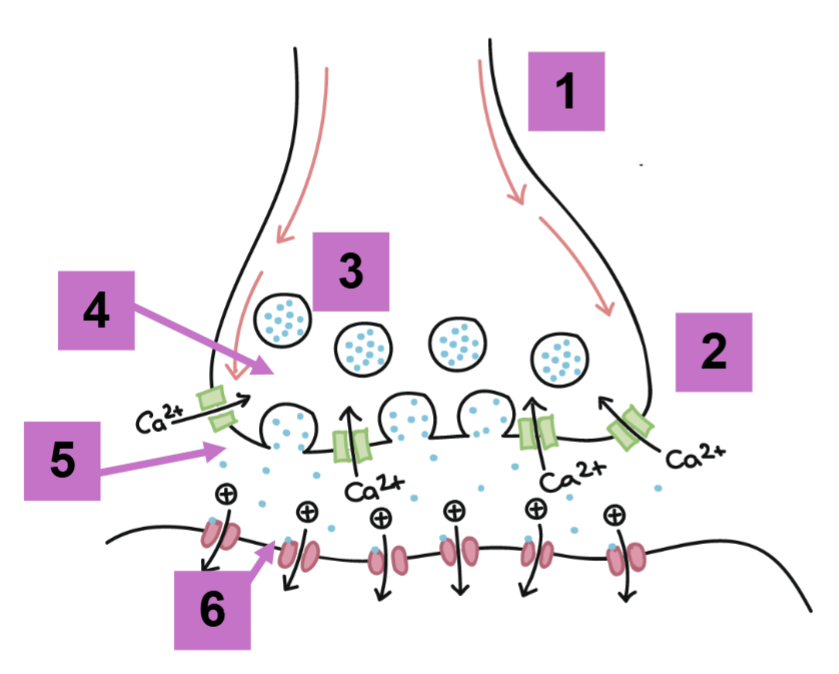
Synaptic Transmission 3
Calcium ions attach to vesicles
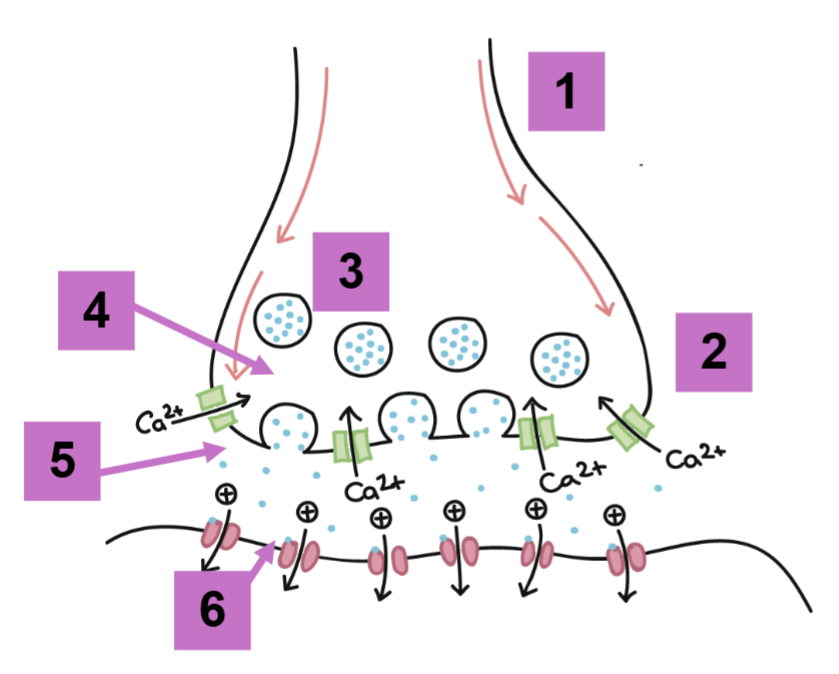
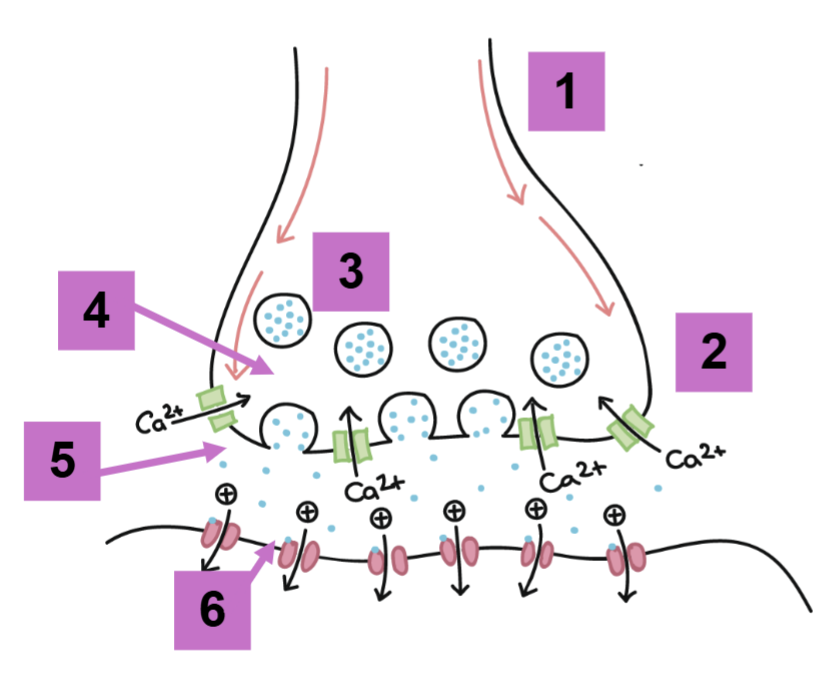
Synaptic Transmission 4
Versicles bind to the presynaptic cell membrane and open (get unzipped)
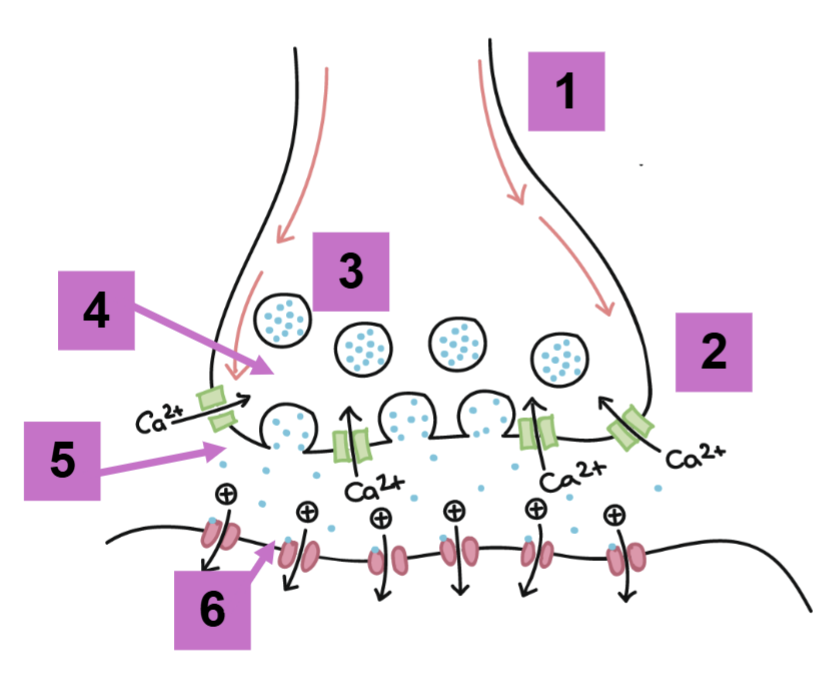
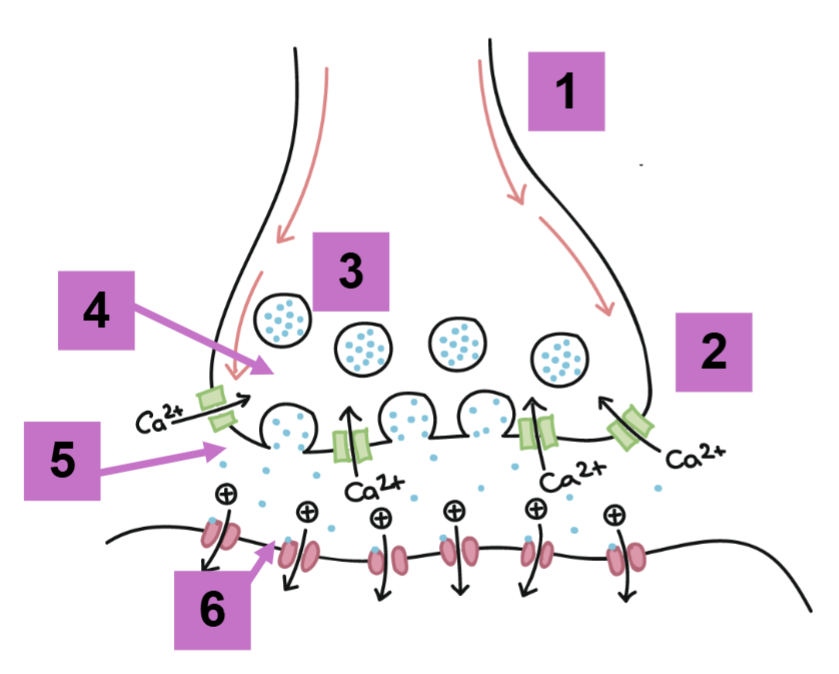
Synaptic Transmission 5
Neurotransmitters are released into the synapse
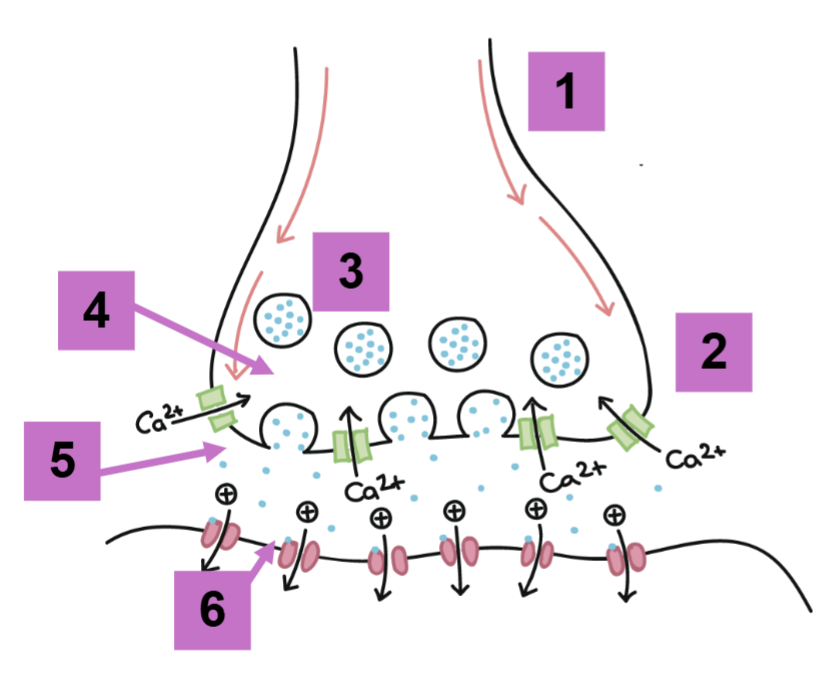
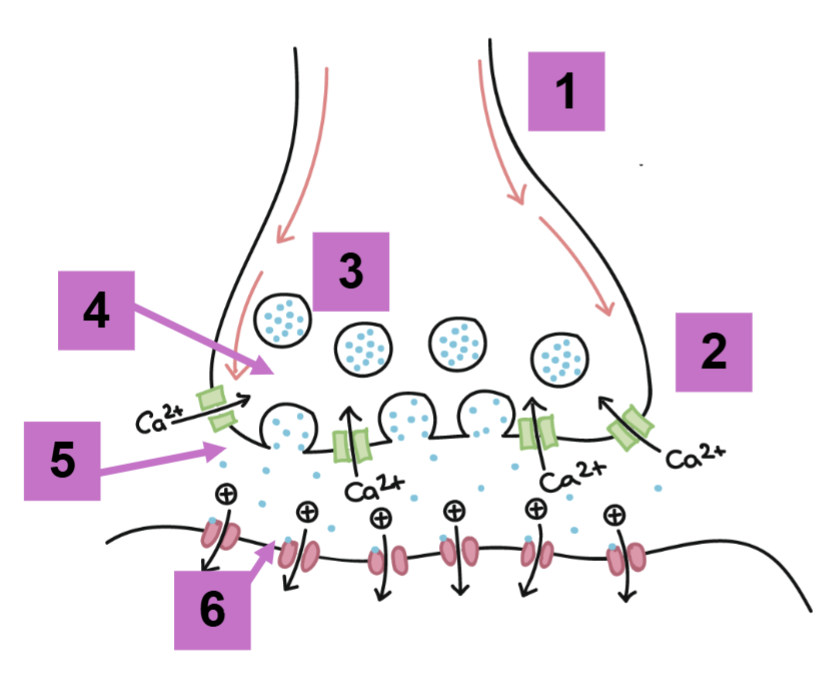
Synaptic Transmission 6
Neurotransmitters bind to receptors on the postsynaptic cell membrane
 Note
Note  Flashcards (76)