NSC 4130 Lab
 Call Kai
 Learn
Learn Practice Test
 Spaced Repetition
 Match
Match Flashcards
 Knowt Play
1/18

There's no tags or description
Looks like no tags are added yet.
Name | Mastery | Learn | Test | Matching | Spaced | Call with Kai |
|---|
No analytics yet
Send a link to your students to track their progress
19 Terms
Spinal nerves (numbers & divisions)
8 cervical (lots of connections, wide)
12 thoracic (fewer connections, smallest)
5 lumbar (lots of connections, round)
5 sacral (lots of connections)
1 coccygeal
2 types of tracts
ascending → periphery to spinal cord & brain
descending → cortex to periphery & exterior
DC/ML tract
ascending → decussates at medulls, terminates in VPL thalamus
carries info for fine touch, vibration, proprioception
fasciculus gracilis (medial) = lower limbs
fasciculus cuneatus (lateral) = upper limbs
spinocerebellar tract
ascending
carries unconscious proprioceptive info from body to cerebellum
dorsal = fine coordination of posture, individual muscle movement
ventral = impulses from lower extremity
spinothalamic / anterolateral tract
ascending
lateral = pain & temp
injury affects opposite side of body one spinal cord segment below lesion (contralateral)
anterior = light touch
injury produces little disturbance
corticospinal tracts
descending → 85% decussates at pyramids → voluntary, skilled movement
lateral = primary motor cortex → terminates throughout spinal cord
movement of contralateral limbs
ventral = primary motor cortex → cervical/upper thoracic spine, doesn’t decussate
control of bilateral axial & girdle muscles
rubrospinal tract
descending: red nucleus → decussates in ventral tegmentum → terminates in cervical cord
muscle tone
vestibulospinal tract
descending: vestibular nuclei → entire cord (lateral) or cervical/upper thoracic (medial)
lateral: maintain balance
medial: head/neck position
reticulospinal tract
descending: reticular formation → entire cord
pontine = automatic posture/gait-related movements, axial & limb muscles
medullary = automatic posture/gait-related movements
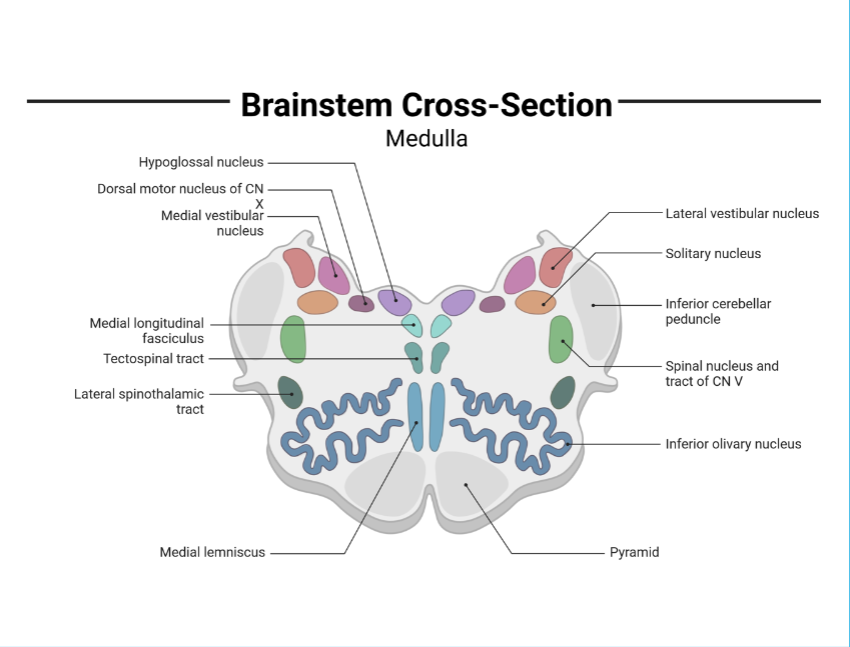
medulla function (4 types)
AUTONOMIC
cardiac → sympathetic/parasympathetic function
respiratory → chemoreceptors detect variation of oxygen concentration in blood
reflexes → vomiting, coughing, sneezing, and swallowing
vasomotor → baroreceptors, change in blood pressure
where do medulla sensory fibers decussate
obex
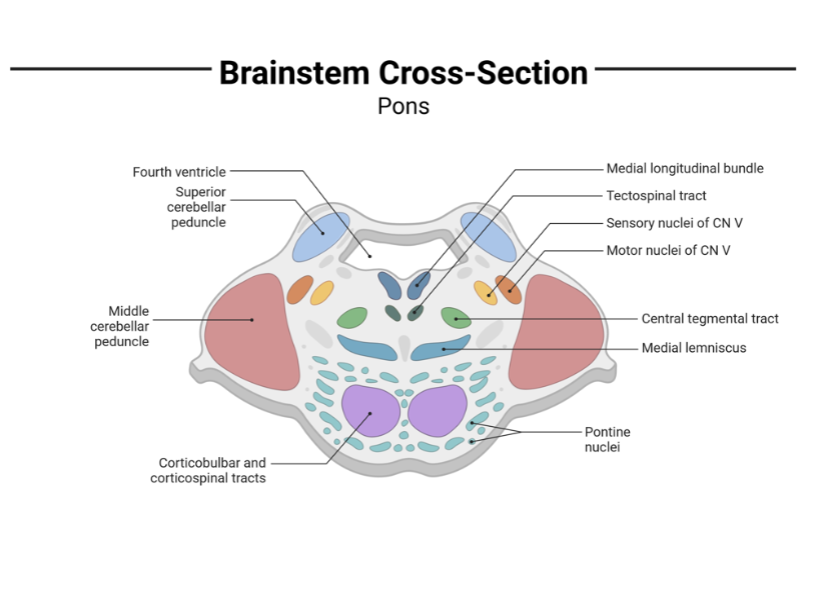
pons function (4 types)
AUTONOMIC & info integration
respiratory regulation
involuntary actions
SENSORY: hearing, taste, facial sensations
MOTOR: eye movement, face expressions, chewing, swallowing, tear/saliva secretion
corticospinal tract (PYRAMIDAL)
motor cortex → spinal cord (LMN in ventral horn)
function: voluntary motor control of limbs & voluntary posture adjustments
corticobulbar tract (PYRAMIDAL)
motor cortex → medulla & pons
function: swallowing, tongue movement, face/jaw muscles
colliculospinal/tectospinal tract
superior colliculus → LMN
function: involuntary head movements
rubrospinal tract
red nucleus → LMN
function: involuntary arm movements, body support
vestibulospinal tract
vestibular nucleus → LMN
function: posture and balance
reticulospinal tract
reticular formation → LMN
function: involuntary motor movements that assist with balance
2 main parts of pons
basilar part of pons
pontine tegmentum

