Post-Impressionism
 Studied by 0 people
 Call Kai
 Learn
Learn Practice Test
 Spaced Repetition
 Match
Match Flashcards
 Knowt Play
1/5

There's no tags or description
Looks like no tags are added yet.
Name | Mastery | Learn | Test | Matching | Spaced | Call with Kai |
|---|
No analytics yet
Send a link to your students to track their progress
6 Terms
Post-Impressionism
a late 19th-century movement where artists moved beyond Impressionism to express emotion, structure, or symbolism, instead of just capturing light and visual impressions.
Not a single style → different personal responses to Impressionism
Rejects Impressionism’s focus on fleeting moments
Emphasizes structure, emotion, symbolism, or science
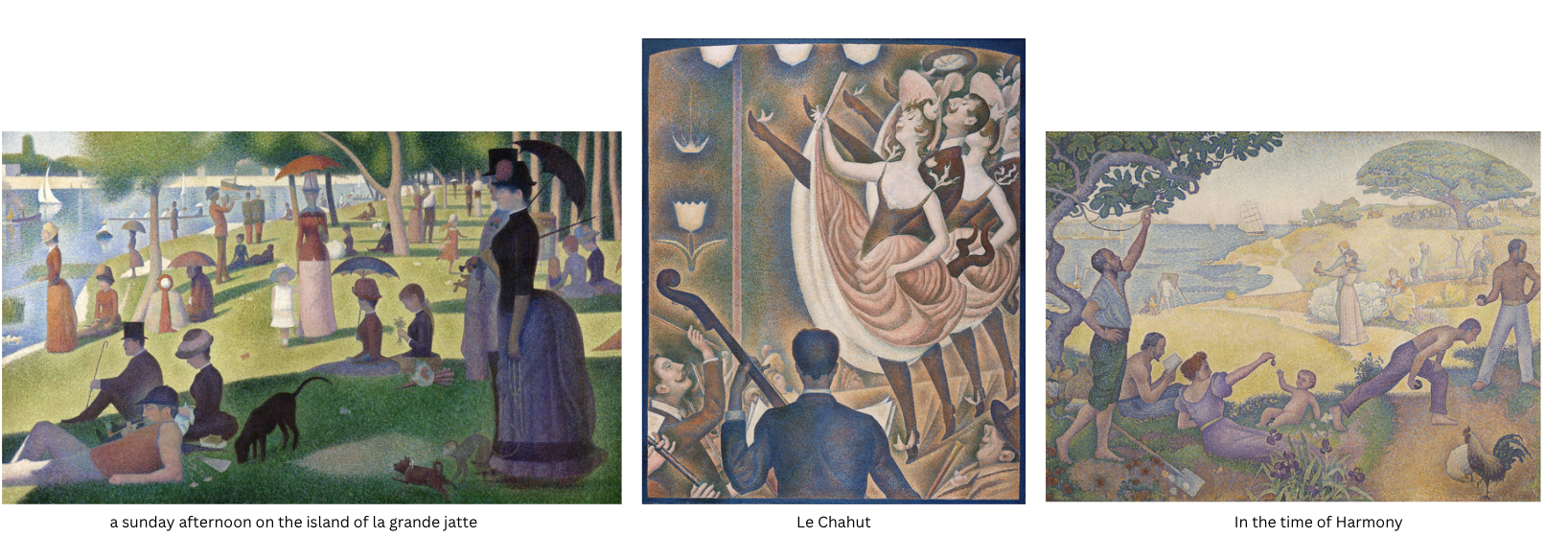
Neo-Impressionism / Pointillism
Georges Seurat – A Sunday Afternoon on the Island of La Grande Jatte (1884–86)
A monumental leisure scene painted using a scientific method of color application.
Pointillism (small dots of pure color)
Optical mixing
Carefully planned, not spontaneous
Modern urban lifestyle
Georges Seurat – Le Chahut (1889–90)
Depicts dancers in a café-concert using color and line to suggest emotion.
Scientific color theory
Stylized movement
Emotional effects through color
Paul Signac – In the Time of Harmony (1893–95)
Utopian scene expressing socialist and anarchist ideals.
Neo-Impressionist technique
Political symbolism
Bright, harmonious colors
Color linked to emotion (joy vs sorrow)
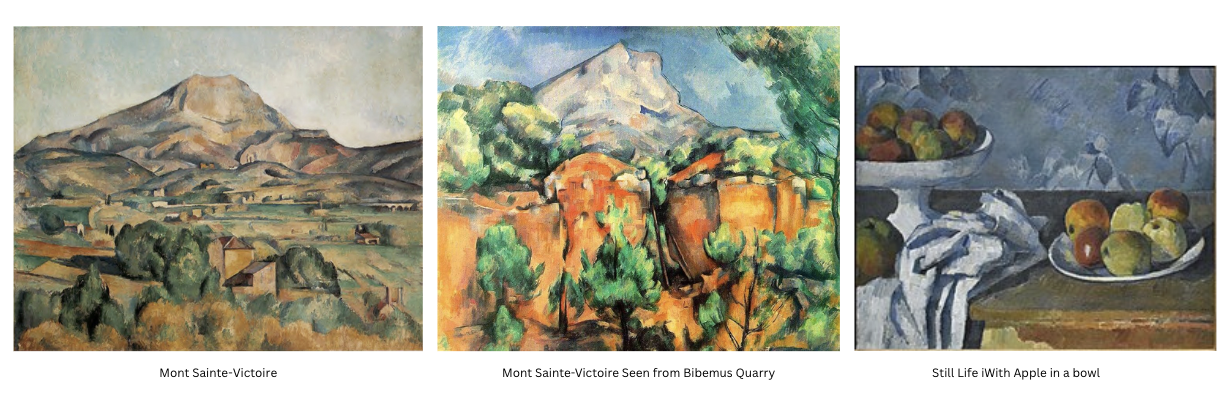
Paul Cézanne: Structure & Form
Sought to make Impressionism more solid and structured by reducing nature to geometric forms and planes of color, laying the foundation for Cubism and modern art.
Mont Sainte-Victoire (c.1885–87)
Structure over atmosphere
Brushstrokes build form
Nature treated geometrically
Bridge toward Cubism
Mont Sainte-Victoire Seen from Bibemus Quarry (c.1897–1900)
Later, more abstracted version of the same motif.
Fragmented planes
Strong geometry
Space flattened
Still Life with Apples in a Bowl (1879–83)
Still life exploring perception and form.
Distorted perspective
Solid, weighty objects
Balance and structure
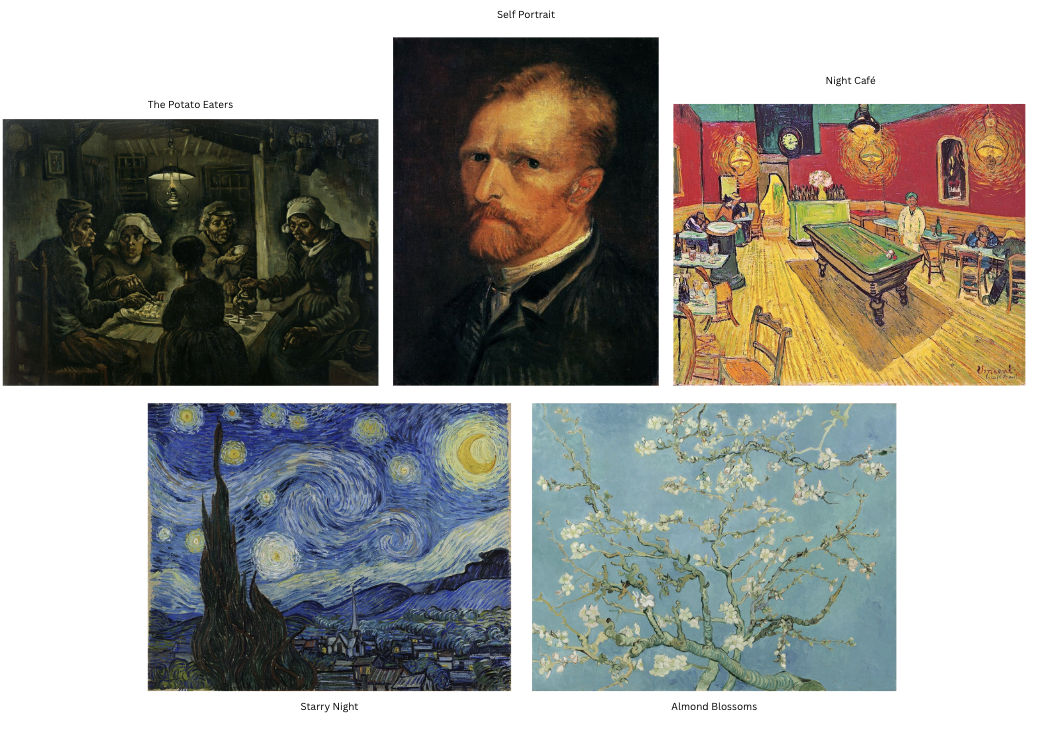
Vincent van Gogh: Emotion & Expression
used intense color, expressive brushwork, and emotional distortion to convey inner feelings and psychological states, making his work a foundation for Expressionism.
Vincent van Gogh – The Potato Eaters (1885)
Early work showing peasant life and manual labor.
Dark palette
Social realism
Rough figures
Vincent van Gogh – Self-Portrait (1886)
Psychological exploration of the self.
Expressive brushwork
Emotional intensity
Distorted color
Vincent van Gogh – Night Café (1888)
Interior meant to express psychological tension.
Aggressive colors
Emotional symbolism
Distorted space
Mood over realism
Vincent van Gogh – Starry Night (1889)
Swirling forms
Emotional turbulence
Symbolic nature
Inner reality
Vincent van Gogh – Branches with Almond Blossom (1890)
Description:
Celebration of renewal and hope.
Japanese influence
Flat composition
Symbolism
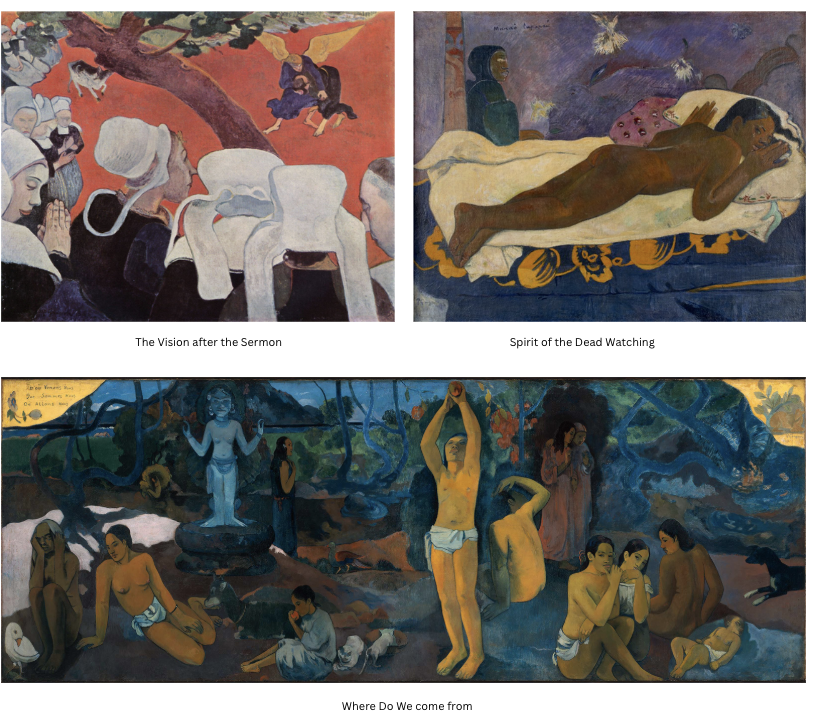
Paul Gauguin: Symbolism & Primitivism
rejected Western realism in favor of symbolism, bold color, and so-called “primitive” imagery, using art to express spiritual meaning, emotion, and imagination rather than direct observation.
Paul Gauguin – The Vision after the Sermon (1888)
Religious vision imagined, not observed.
Flat areas of color
Japanese influence
Rejection of realism
Paul Gauguin – Spirit of the Dead Watching (1892)
Psychological and cultural themes from Tahiti.
Emotional fear
Non-Western influence
Symbolic color
Paul Gauguin – Where Do We Come From? (1897)
Philosophical painting about life, death, and meaning.
Monumental scale
Symbolic narrative
Spiritual themes
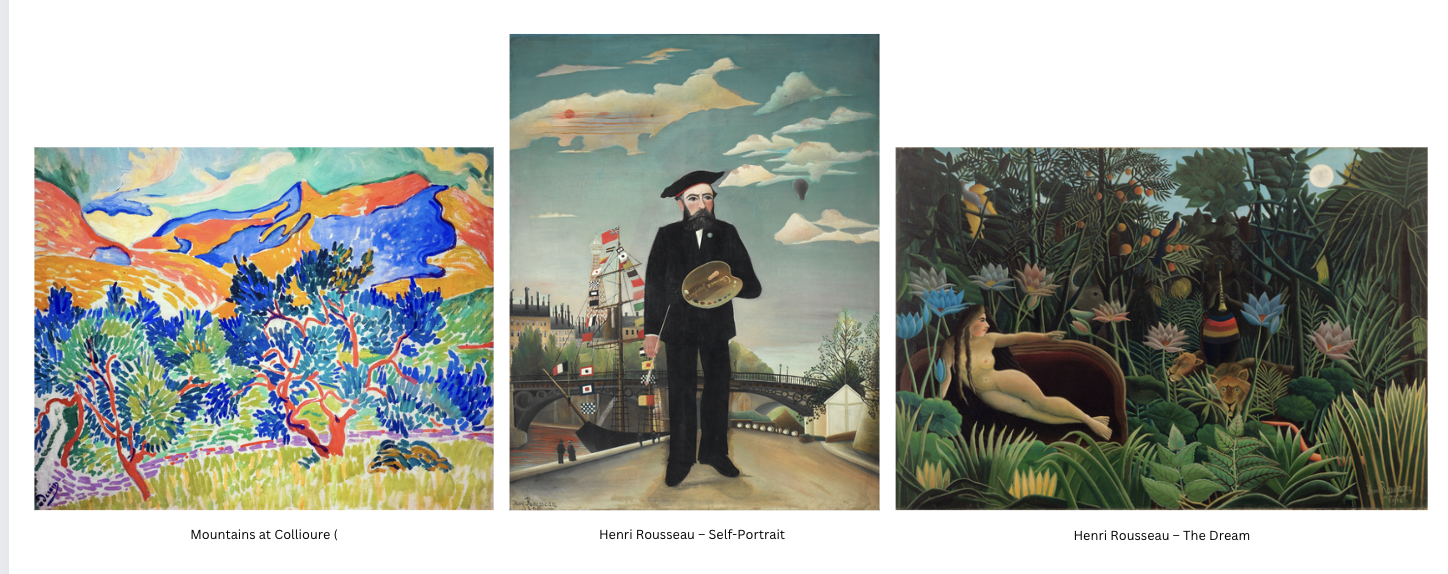
Towards Modernism
André Derain – Mountains at Collioure (1905)
Early Fauvist work using expressive color.
Intense, unnatural color
Emotional expression
Break from naturalism
Transition to Fauvism
Henri Rousseau – Self-Portrait (1890)
Self-taught artist presenting himself with confidence.
Flat perspective
Dreamlike realism
Individual vision
Henri Rousseau – The Dream (1910)
Fantasy jungle scene painted entirely from imagination.
Dream imagery
Flat forms
Surreal atmosphere
 Note
Note  Flashcards (76)