Magnetism
 Call Kai
 Learn
Learn Practice Test
 Spaced Repetition
 Match
Match Flashcards
 Knowt Play
1/16

There's no tags or description
Looks like no tags are added yet.
Name | Mastery | Learn | Test | Matching | Spaced | Call with Kai |
|---|
No analytics yet
Send a link to your students to track their progress
17 Terms
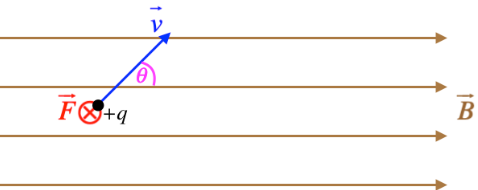
Magnetic Force of a Charged Particle
Fmag = |q|vBsin(θ)
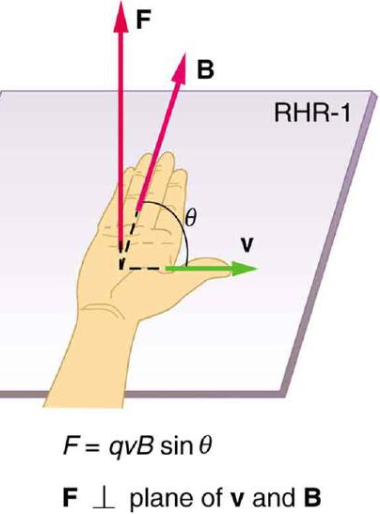
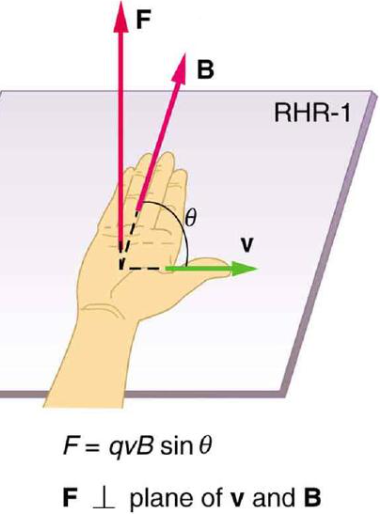
Right hand rule for Fmag, v, B
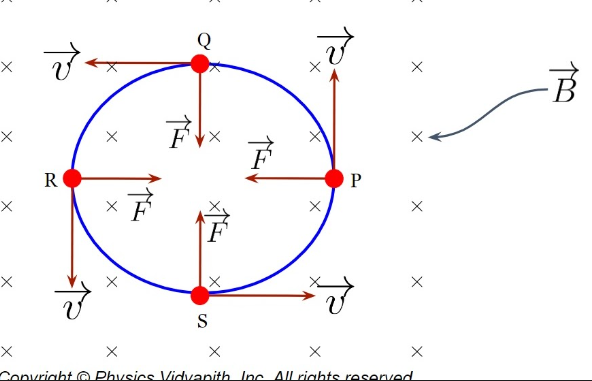
Charged particle in magnetic field (B)
Charge spins in circles
Opposite charge would make Fmag in opposite direction
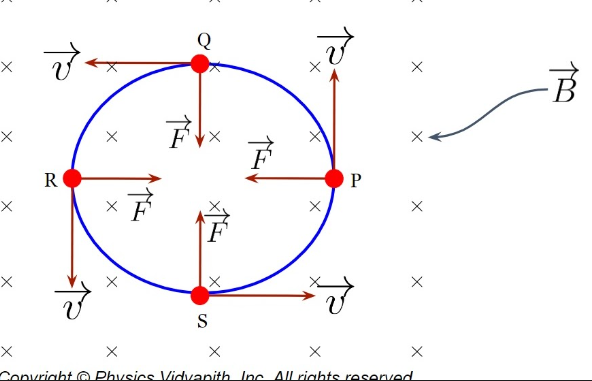
Can a magnetic field (B) do work on a particle?
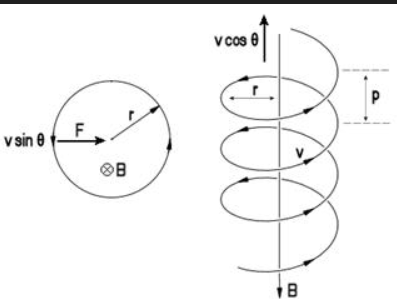
Radius of particle path
r = ( m v ) / ( |q| B)
a particle in w/ vinitial at an angle will move in a helical path
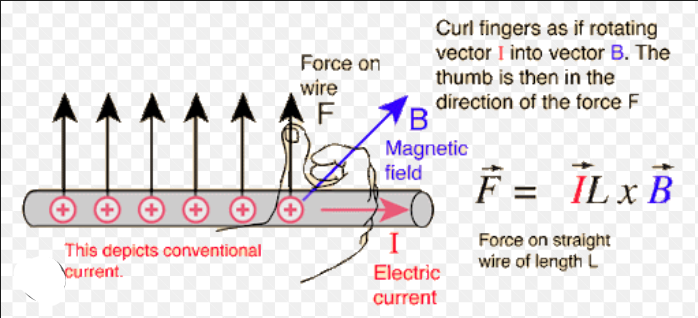
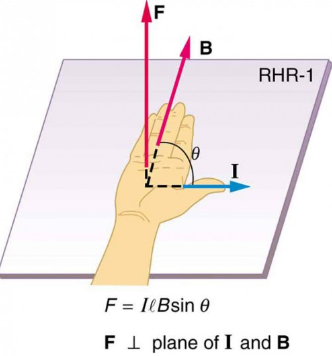
Magnetic Force of Current-Carrying Wire
Fmag = ILBsinθ
Fmag perpendicular to I
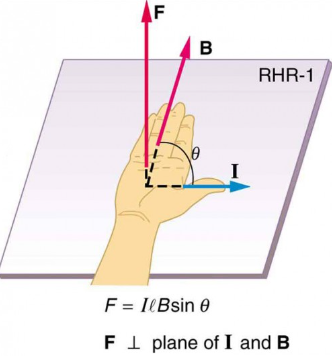
Right hand rule for Fmag, I, B
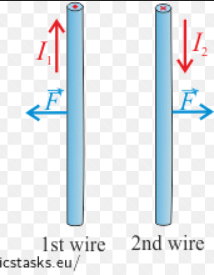
Two vertical sides of current-carrying wires
right side force is going out of page, left side force is going into page
On vertical sides: Forces are equal in magnitude, but opposite in direction
Creates torque
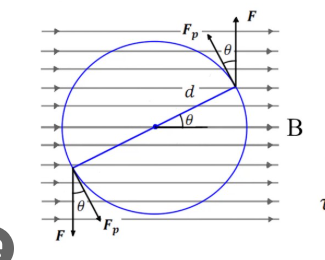
Torque on current carrying loop
𝜏 = NIABsinθ
A = area, N = # of turns/loops
torque increases as # of loops increases (N), if current ( I ) increases
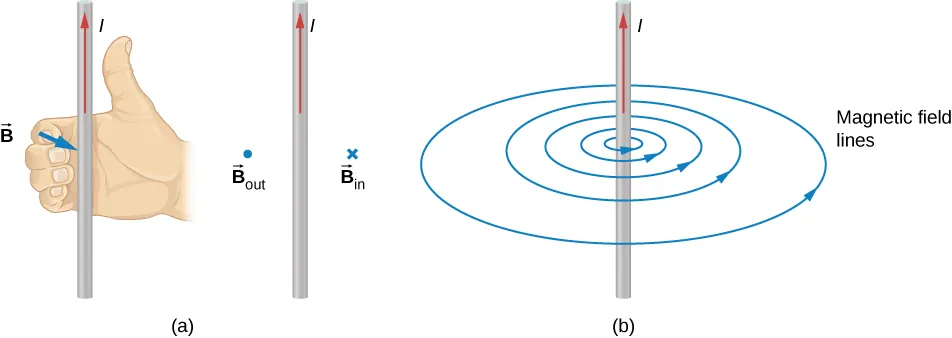
Direction of magnetic field due to Current carrying wire right hand rule
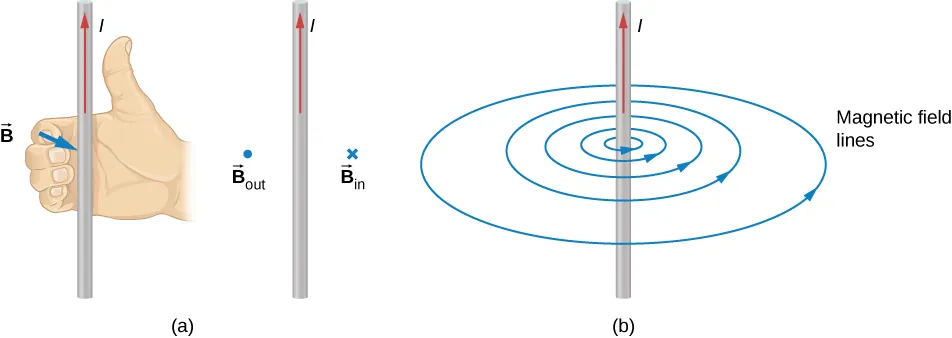
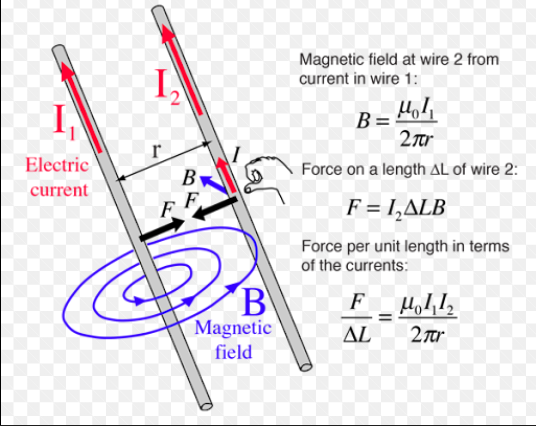
Ampere’s Law
∑BΔL = μo Ienclosed
μo = 1.26 × 10⁻⁶
Ampere’s Law to solve for B
B = (μoI) / (2πr)
2πr is circumference
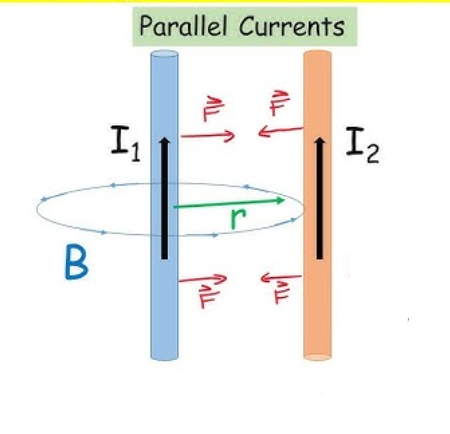
Currents in same direction
forces come towards each other
magnetic field in opposite directions (both going CW or CCW)
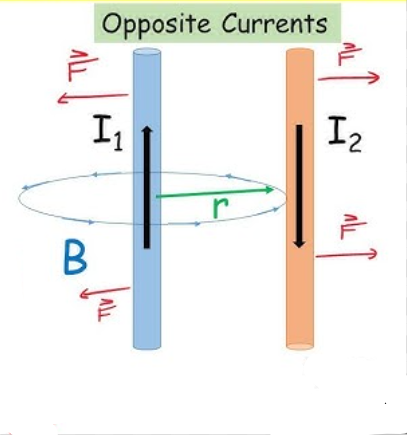
Currents in opposite direction
forces go away from each other
magnetic field in same directions (one going CW other going CCW)
Fmag equation for two current-carrying wires
Fmag = (μoI1I2) / (2πd)
d = 2 * circumference
Magnetic Field of a Current Loop / Bar Magnet (Bloop)
Bloop = (NμoI) / (2R)
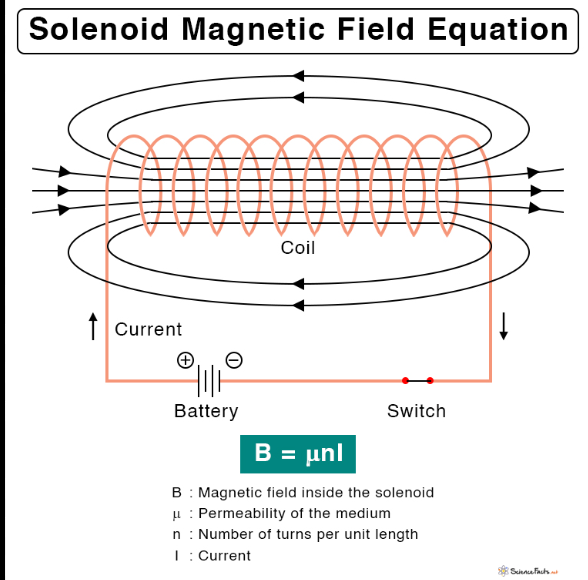
Magentic Field of a solenoid (Bsolenoid)
Bsolenoid = (NμoI) / L = μonI
n = # of turns / unit length (N/L)

