Senses and Perception
0.0(0)
Studied by 7 people Call Kai
 Learn
Learn Practice Test
 Spaced Repetition
 Match
Match Flashcards
 Knowt Play
Card Sorting
1/53

Earn XP
Description and Tags
Last updated 11:46 PM on 10/26/22
Name | Mastery | Learn | Test | Matching | Spaced | Call with Kai | Chat |
|---|
No analytics yet
Send a link to your students to track their progress
54 Terms
1
New cards
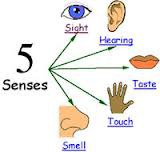
Sensation
The process by which our sensory receptors and nervous system receive and represent stimulus energies from our environment
2
New cards
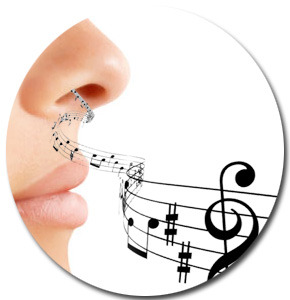
Synesthesia
Blending of perceptions between different sensory modalities (experiencing color as taste, or music as shape)
3
New cards
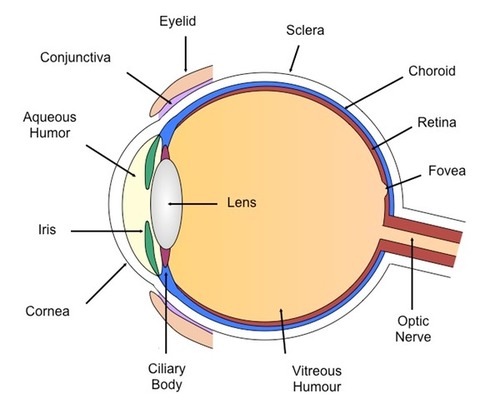
Eye
The corresponding visual or light detecting organ present in humans, and many vertebrae animals
4
New cards
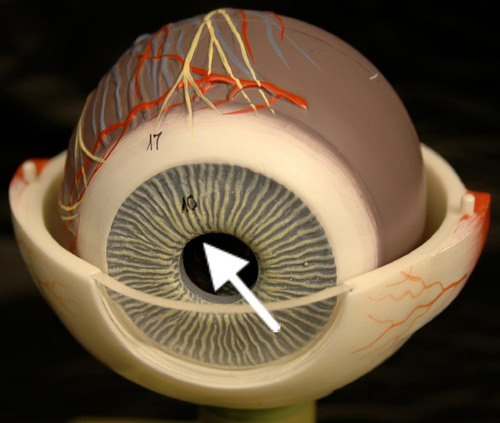
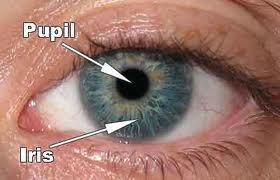
Pupil
Iris opening that changes size depending on how much light is in the environment
5
New cards
Iris
It's muscles control the size of the pupil
6
New cards
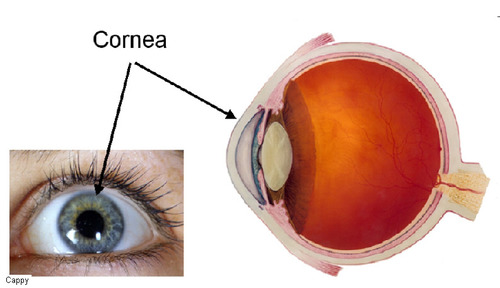
Cornea
Works with Lens to bend light waves to the image can be focused on the retina
7
New cards
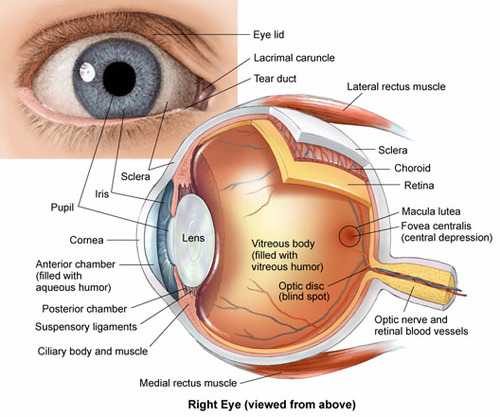
Retina
Contains photo receptor cells (rods and cones); responsible for absorbing and processing light information
8
New cards
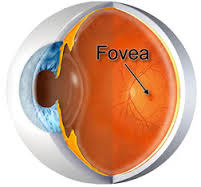
Fovea
Central area of retina; greatest density of photo receptors (cone cells)
9
New cards
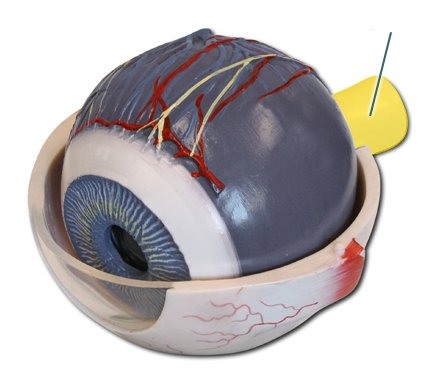
Optic Nerve
Sends visual information to the brain
10
New cards
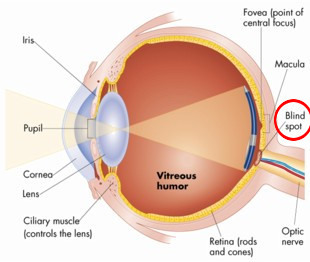
Blind-Spot
Optic disc; where the optic nerve leaves the eye; no photo receptors (rod and cone cells)
11
New cards
Visual Accomodation
The change in the thickness of the lens as the eye focuses on objects that are close or far away
12
New cards
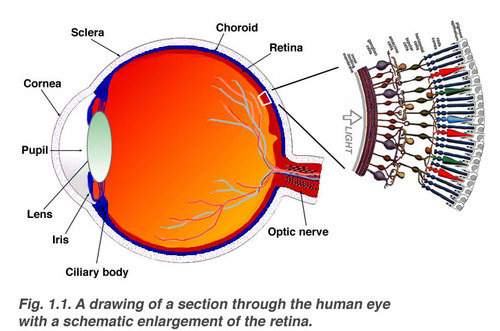
Cone Cells
Special photo receptor cell; responsible for color vision
13
New cards
After Image
A visual image that persists after a stimulus is removed (green and yellow flag)
14
New cards
Trichromatic Theory
The idea that color vision is based on our sensitivity to three different colors: blue, green, and red
15
New cards
Opponent Process Theory
The sensory receptors arranged in the retina come in pairs (red/green, yellow/blue, black/white) If one sensor is stimulated, its pair is inhibited from firing. (Explains after image and color blindness)
16
New cards
Colorblindness
Occurs if any of the cone types are dysfunctional
17
New cards
Perception
The use of sensory information and pre-existing knowledge to create a functional representation of the world
18
New cards
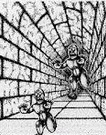
Size Constancy
refers to the fact that our peceptions of the size of objects are relatively constant despite the fact that the size of objects on the retina vary greatly with distance.
19
New cards
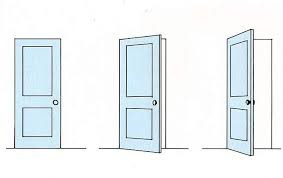
Shape Constancy
Objects viewed from different angles will produce different shapes on our retina, but we know the shape of an object remains constant.
20
New cards
Brightness Constancy
We perceive objects as being a constant color even as the light reflecting off the object changes.
21
New cards
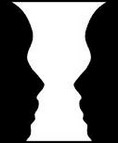
Figure-ground Relationships
A Gestalt principle of perceptual organization that we automatically separate the elements of a perception into the feature that clearly stands out and its less distinct background.
22
New cards
Gestalt Psychology
a philosophy of mind of the Berlin School of experimental psychology.
23
New cards
Proximity
Rule of perception; tendency to perceive objects that are close to one another as a part of the same grouping.
24
New cards
Closure
the illusion of seeing an incomplete stimulus as though it were whole.
25
New cards
Continuity
Rule of perception; objects that form a continuous form (such as a trail or geometric figure) are more likely to be perceived as belonging in the same group.
26
New cards
Moon Illusion
27
New cards
Retinal Disparity
The difference in images between the two eyes, which is greater for objects that are close and smaller for distant objects.
28
New cards
Convergence
When your eyes move together to look at the same thing
29
New cards
Binocular Cues
visual information taken in by two eyes that enable us a sense of depth perception
30
New cards
Aerial Perspective (clarity)
objects that are farther away become blurry
31
New cards
The Visual System
rods and cone sin the retina responding to light waves
32
New cards
Transduction
what takes place when many sensors in the body convert physical signals from the environment into encoded neural signals sent to the central nervous system
33
New cards
The Auditory Sense
uses the ear to collect, amplify, and transduce sound waves into electrical impulses that allow the brain to perceive and localize sounds
34
New cards
The Olfactory Sense
sense of smell
35
New cards
Lens
When you try to focus on something the lens changes shape (called accomodation) and then focuses the incoming light onto the back of the eye (the retina) which send the information on to be processed by the brain.
36
New cards
Gustation
the physical act or the sense of tasting.
37
New cards
Depth Perception
the visual ability to perceive the world in three dimensions, coupled with the ability to gauge how far away an object is
38
New cards
Monocular Cues
that allows us to perceive the depth and distance of an object.
39
New cards
Linear Perspective
a type of monocular cue in which parallel lines appear to converge at some point in the distance.
40
New cards
Relative Size
a perceptual clue which allows you to determine how close objects are to an object of known size.
41
New cards
Interposition
occurs in instances where one object overlaps the other, which causes us to perceive depth.
42
New cards
Basic Sensations
Sweet, Sour, Salty, Bitter, Umami
43
New cards
Sensory Interaction
the ability of one sense to influence or interact with another.
44
New cards
Vestibular Sense
Sense of balance/movement located in our semicircular canals in our ears
45
New cards
Kinesthetic Sense
Tells us where our individual body parts are
46
New cards
Gate Control Theory
non-painful input closes the "gates" to painful input, which prevents pain sensation from traveling to the central nervous system.
47
New cards
Parts of the Ear
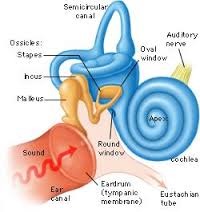
48
New cards
Parts of the Eye
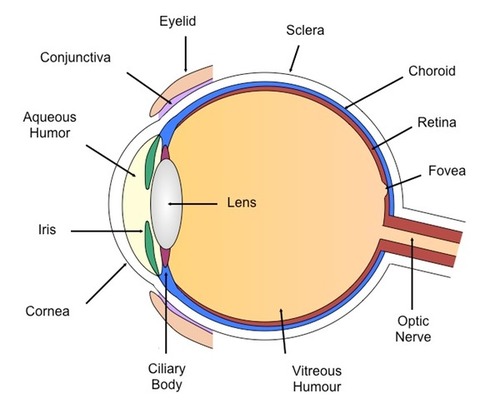
49
New cards
Hammer, Anvil, Stirrup
Bones of the middle ear that help amplify sound waves to the Cochlea
50
New cards
Hair Cells
Auditory Receptors
51
New cards
Cochlea
Main part of the inner ear where auditory reception and transduction takes place.
52
New cards
Basilar Membrane
Part of the Cochlea that contains hair cells
53
New cards
Place Theory
Sounds that are perceived as high pitch activate different specific areas of the Basilar Membrane.
54
New cards
Frequency Theory
Pitch is perceived according the the frequency of the sound wave.