Cell Bio Exam 3
 Call Kai
 Learn
Learn Practice Test
 Spaced Repetition
 Match
Match Flashcards
 Knowt Play
1/19

There's no tags or description
Looks like no tags are added yet.
Name | Mastery | Learn | Test | Matching | Spaced | Call with Kai |
|---|
No analytics yet
Send a link to your students to track their progress
20 Terms
What is the cell doctrine? What is required for it to exist?
All living things are composed of one or more cells; the cell is the basic unit of life, and all cells arise from pre-existing cells (a cell divides into two identical cells)
Cell division is high fidelity; controlled by the cell cycle
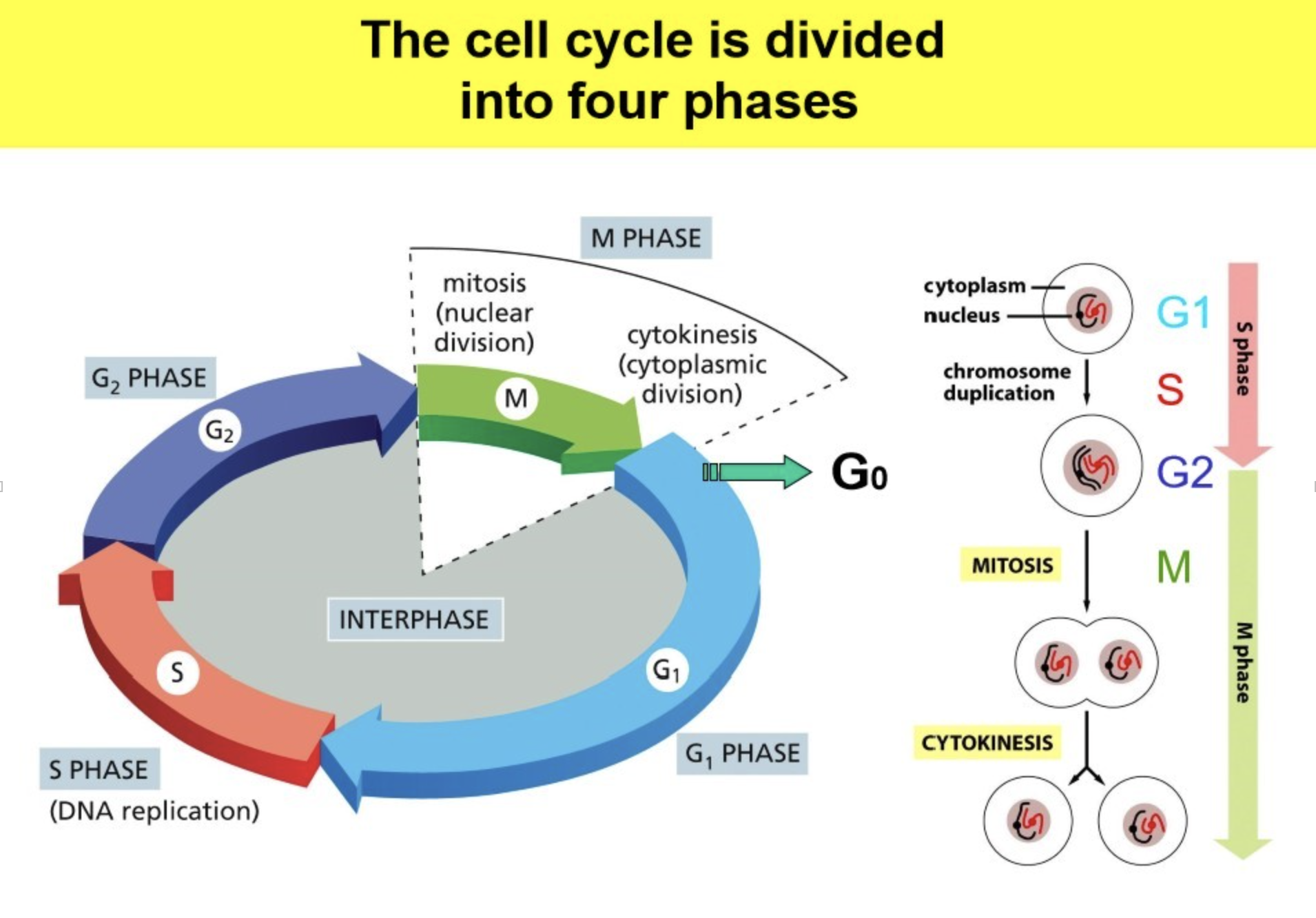
What are the stages of the cell cycle?
Interphase:
G1: cell grows and becomes bigger, monitoring to find and repair DNA damage
S: DNA replication
G2:
Mitosis
G0: cells can decide if they should divide; this phase is outside of the cell cycle, where a cell is not dividing
Note: this applies to stem cells, once a cell is differentiated, it remains in G0
What does it mean to say that the cell cycle is evolutionarily conserved? How was this proven?
All cells on Earth divide the same way; there is no variation
In yeast, scientists deleted the gene that encoded the Cdk protein of the M-Cdk complex
Resulted in cell death (cell cycle does not occur)
Then put the human Cdk gene into the yeast
Cells stayed alive, showing Cdk gene is same in humans and yeast
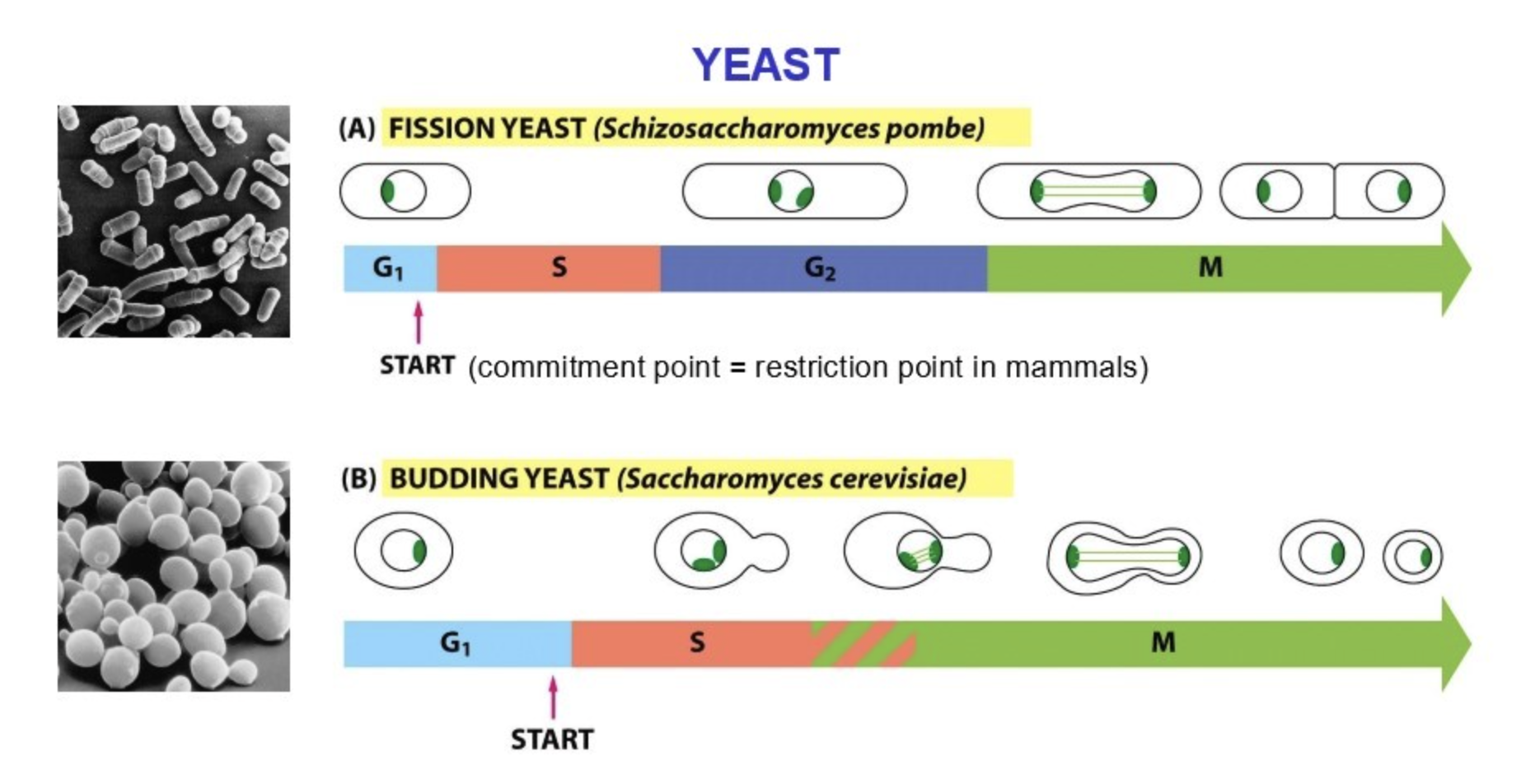
Why is yeast a good organism to use to study the cell cycle?
Yeast is haploid; if you mutate a single gene, you immediately see a phenotype change
Morphology reveals the cell cycle stage
Allowed for scientists to identify the genes involved in the cell cycle
What are temperature-sensitive mutants?
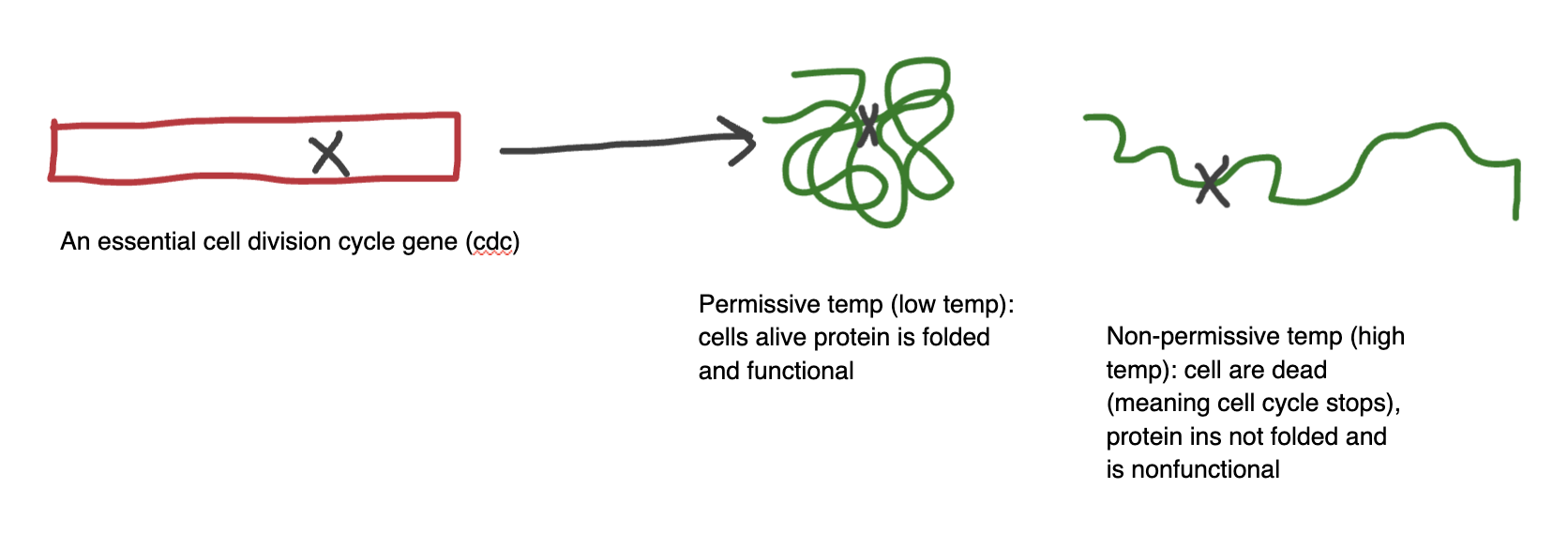
Conditional mutation where the protein product functions normally at a low ("permissive") temperature but becomes unstable, inactive, or denatured at a high ("restrictive") temperature
What is replicative cell senescence? What are immortalized cell lines?
Human fibroblasts stop dividing after 25-40 divisions
Immortalized cell lines proliferate indefinitely (eg tumor cells)
What is a fluorescence-activated cell (FAC) sorter?
Sorts heterogeneous cell mixtures into distinct, pure populations based on their fluorescent labels and light-scattering characteristics
Can be used to determine DNA content of cells
Come back to this and add drawings
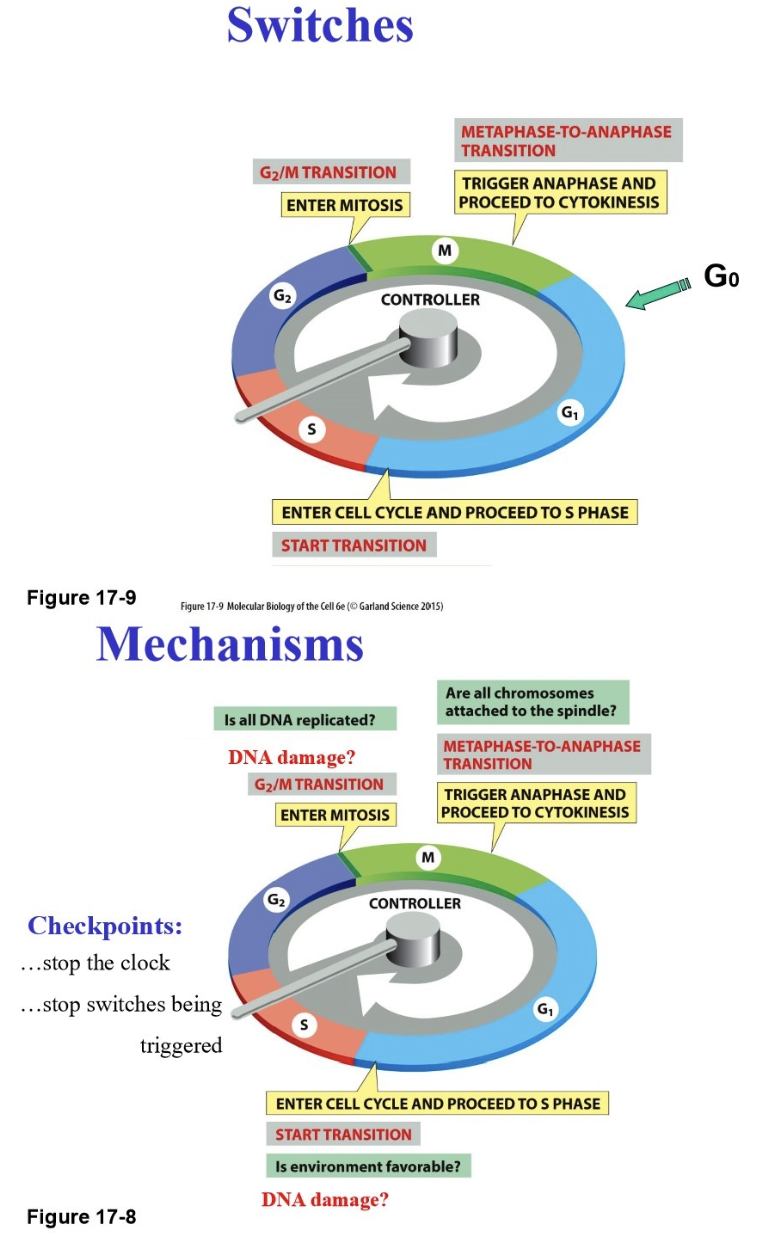
What are the elements of the cell cycle control system?
Clock: determined when the cell transitions to the next stage
Switches: trigger the cell cycle transitions (e.g., for G2 → mitosis transition, M-Cdk is activated)
Mechanisms: monitor problems (e.g., DNA damage), checkpoints
When a mitotic cell and a G2 cells are fused, what happens?
The G2 cell also enters mitosis
Upon the fusion of the cells together, the G2 now has Cdk activity, inducing mitosis
M-Cdk is dominant
What happens if you fuse a G1 and S cell?
G1 stars replicating its genome, entering S phase
Upon the fusion of the cells together, the G1 now has Cdk activity, inducing mitosis
S-Cdk is dominant
What makes up the cell cycle clock?
Cdks
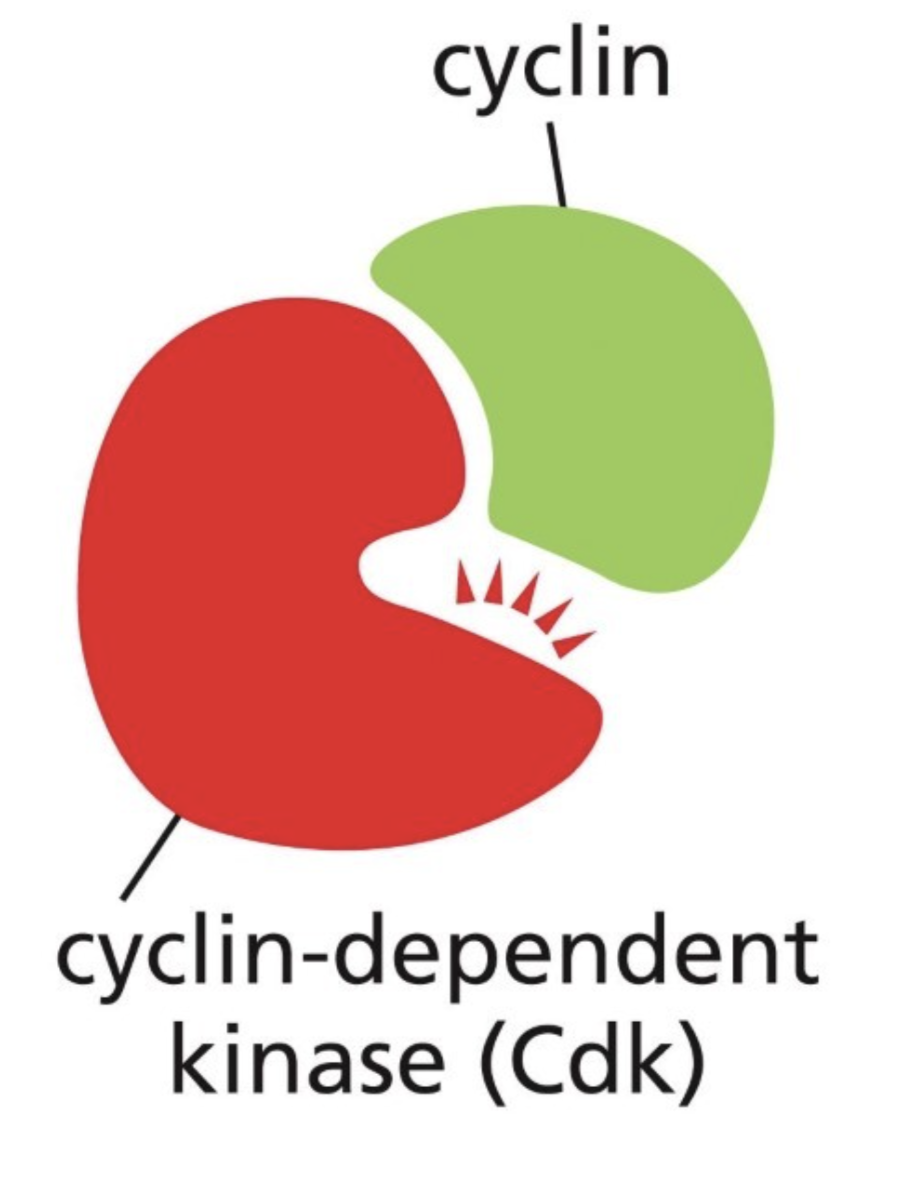
What is S-Cdk?
What the Cdks phosphorylate
That triggers the initiation of DNA replication during the S-phase of the cell cycle
Replication factors → DNA replication
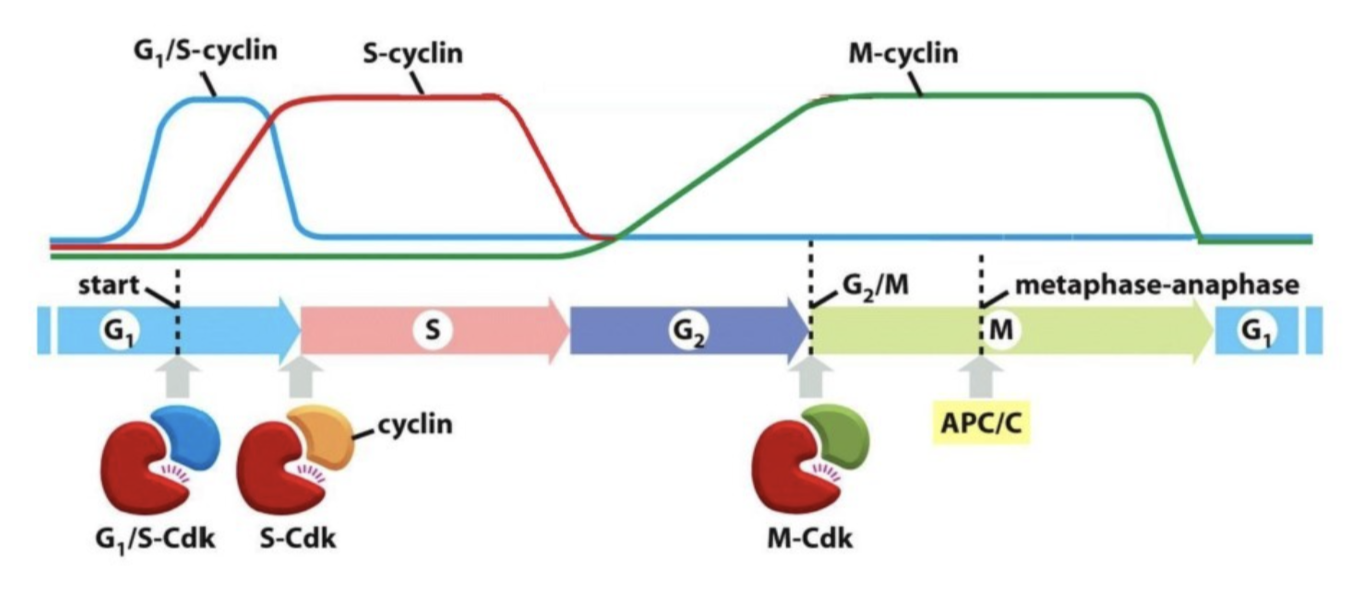
What is cyclin? Does its abundance remain constant? What about Cdk?
Cyclin:
Activates Cdk
Gives Cdk substrate specificity
Protein abundance oscillates through the cell cycle (by txn and proteolysis)
E.g.:
M-Cdk = M cyclin + Cdk
S-Cdk = S cyclin + Cdk
Note: protein abundance of Cdk = kinase is constant through the cell cycle
What stages of the cell cycle do M cyclin and S cyclin correspond with?
The cyclins are made by transcription and translation, and degraded through proteolysis
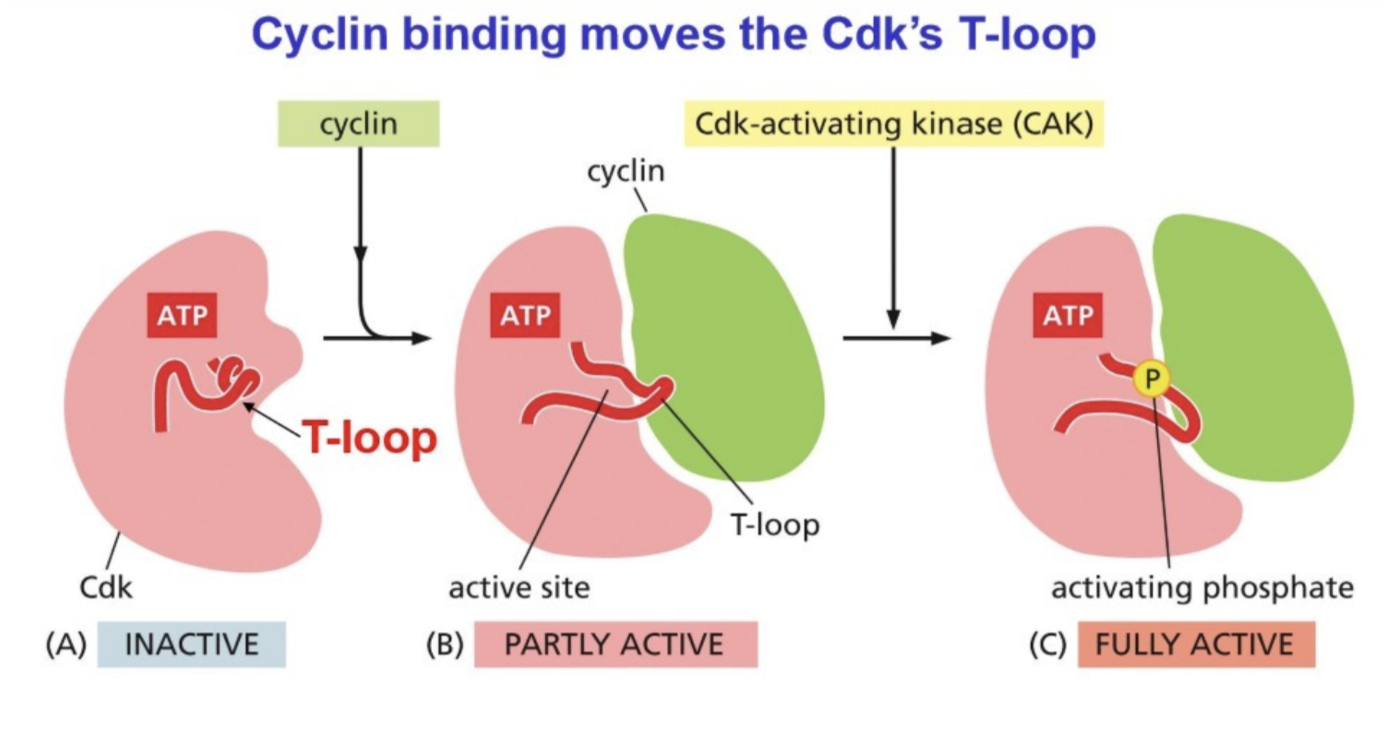
What is the structural basis of Cdk activation by cyclins?
When inactive: active site covered up by T-loop
Binding of cyclin induces a conformational change that moves T-loop, allowing it to be partially active
Cdk-activating kinase (CAK) phosphorylates the T-loop, inducing another conformational change that moves the T-loop further away from the active site, allowing for full activity
“activating phosphorylation”
What happens if there is no cyclin?
There is no Cdk activity, even if Cdk-activating kinase (CAK) is present
What is ubiquitin-dependent proteolysis/degradation?
Ubiquitin (Ub) is a small protein that can covalently attach to other proteins in chains (Ub-Ub-Ub-Ub) by a ubiquitin ligase
This flags the protein for degradation by the proteasome
This is how cyclins get degraded
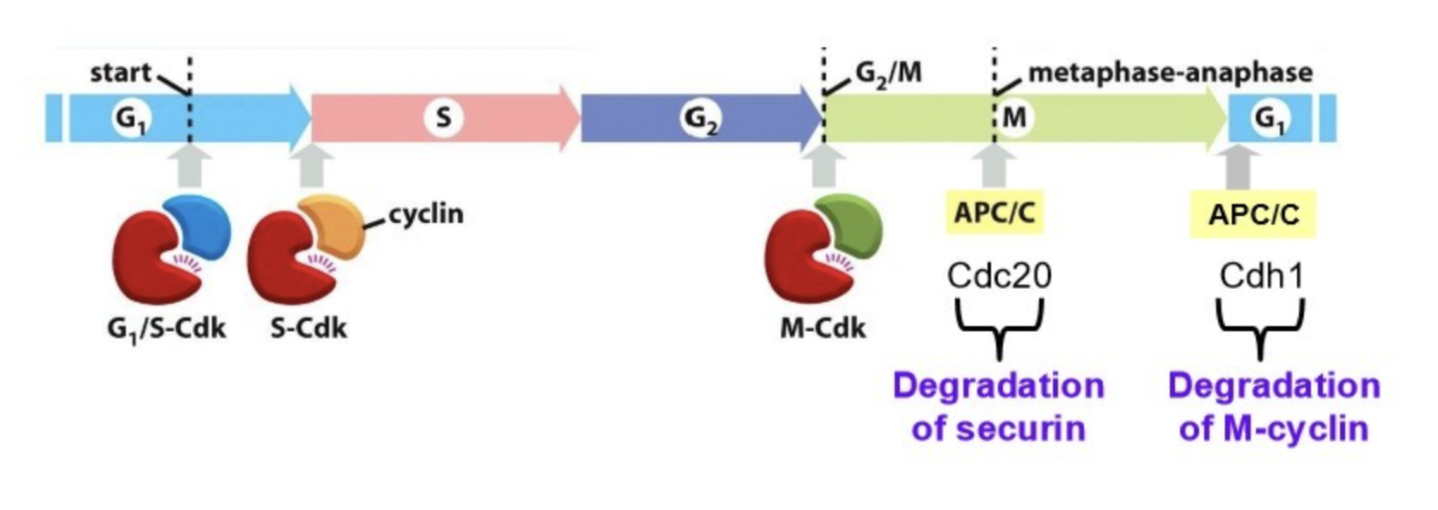
Done by ubiquitin ligase APC/C
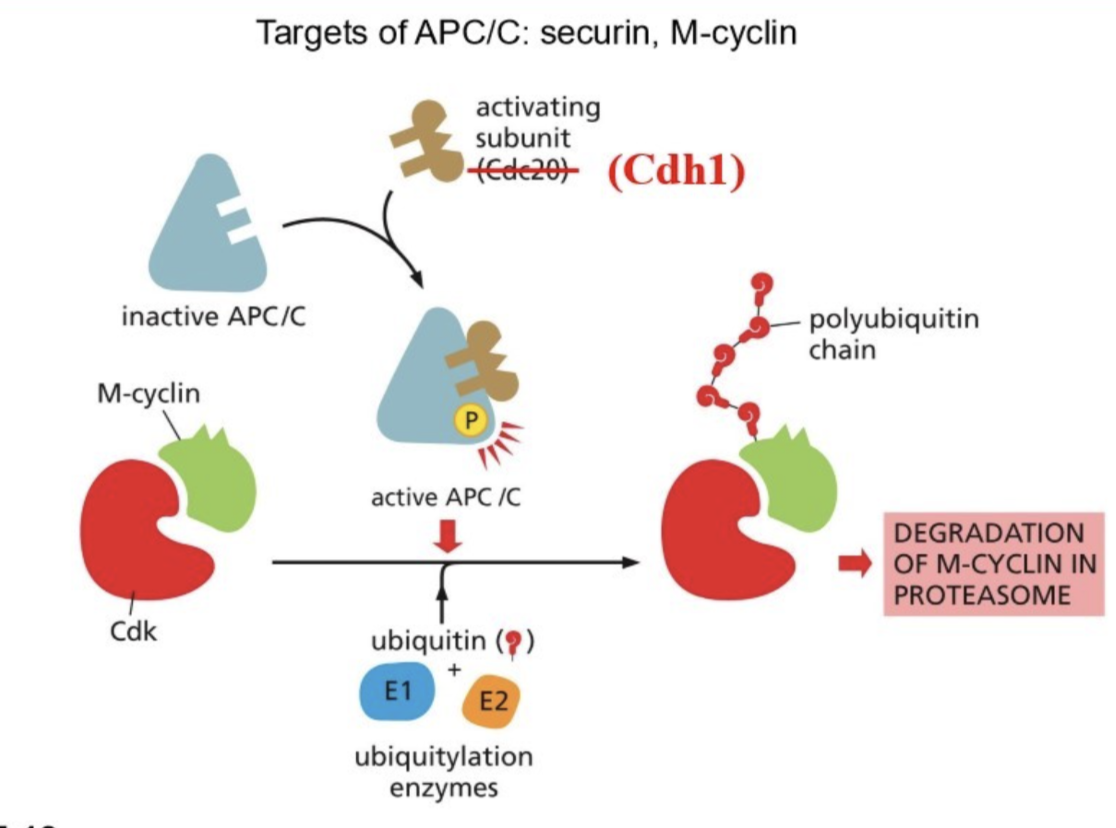
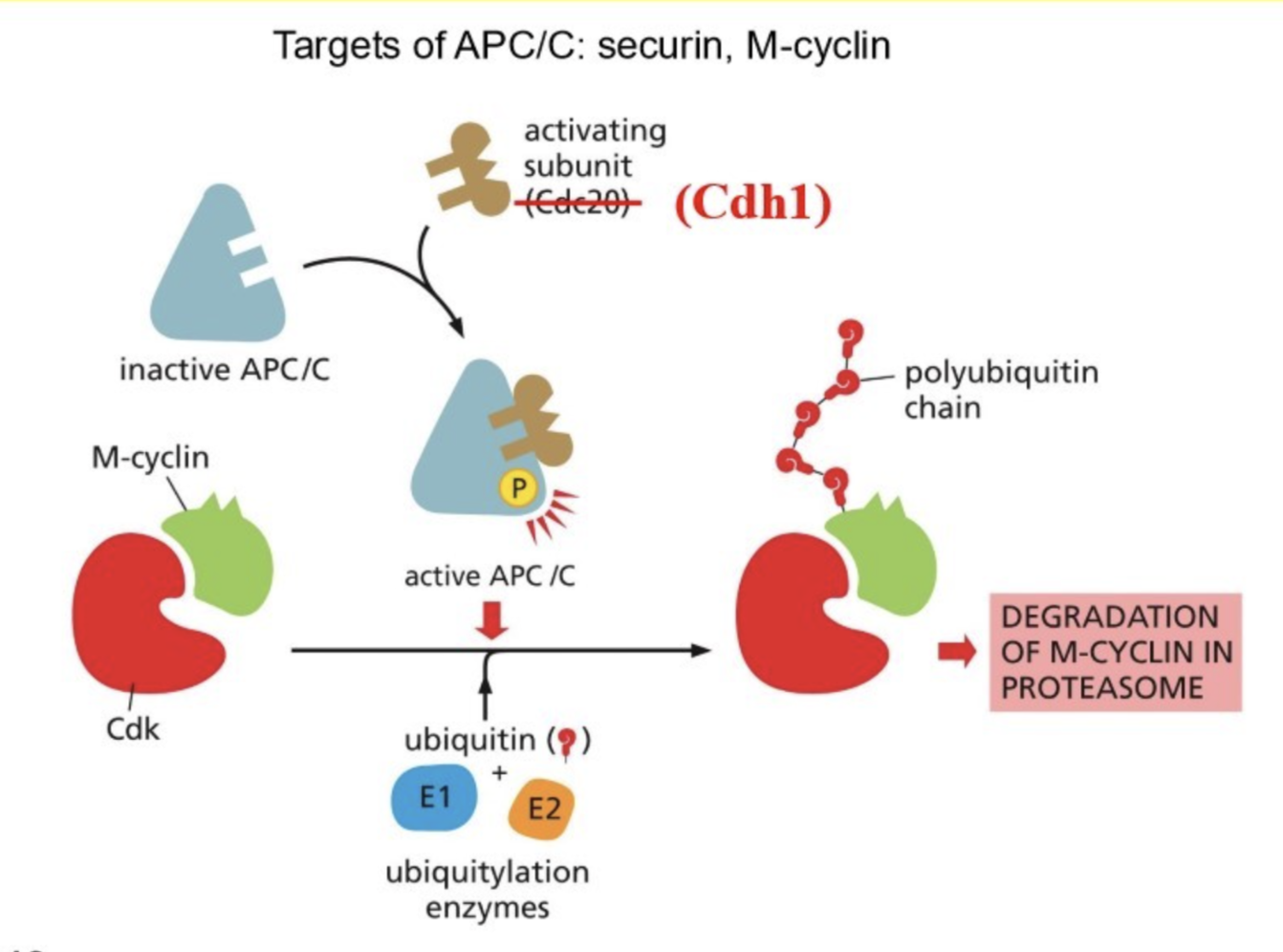
What is ubiquitin ligase APC/C (anaphase promoting complex/cyclosome)
APC/C is present throughout the whole cell cycle
It gets activated at specific cell cycle transitions by activating subunits
cdh1 → APC/C—cdh1 → the active APC/C ubiquitinates M Cyclin
cdc20 → APC/C—cdc20 → the active APC/C ubiquitinates securin
Activating subunits (cdh1 and cdc20) active APC/C and provide substrate specificity
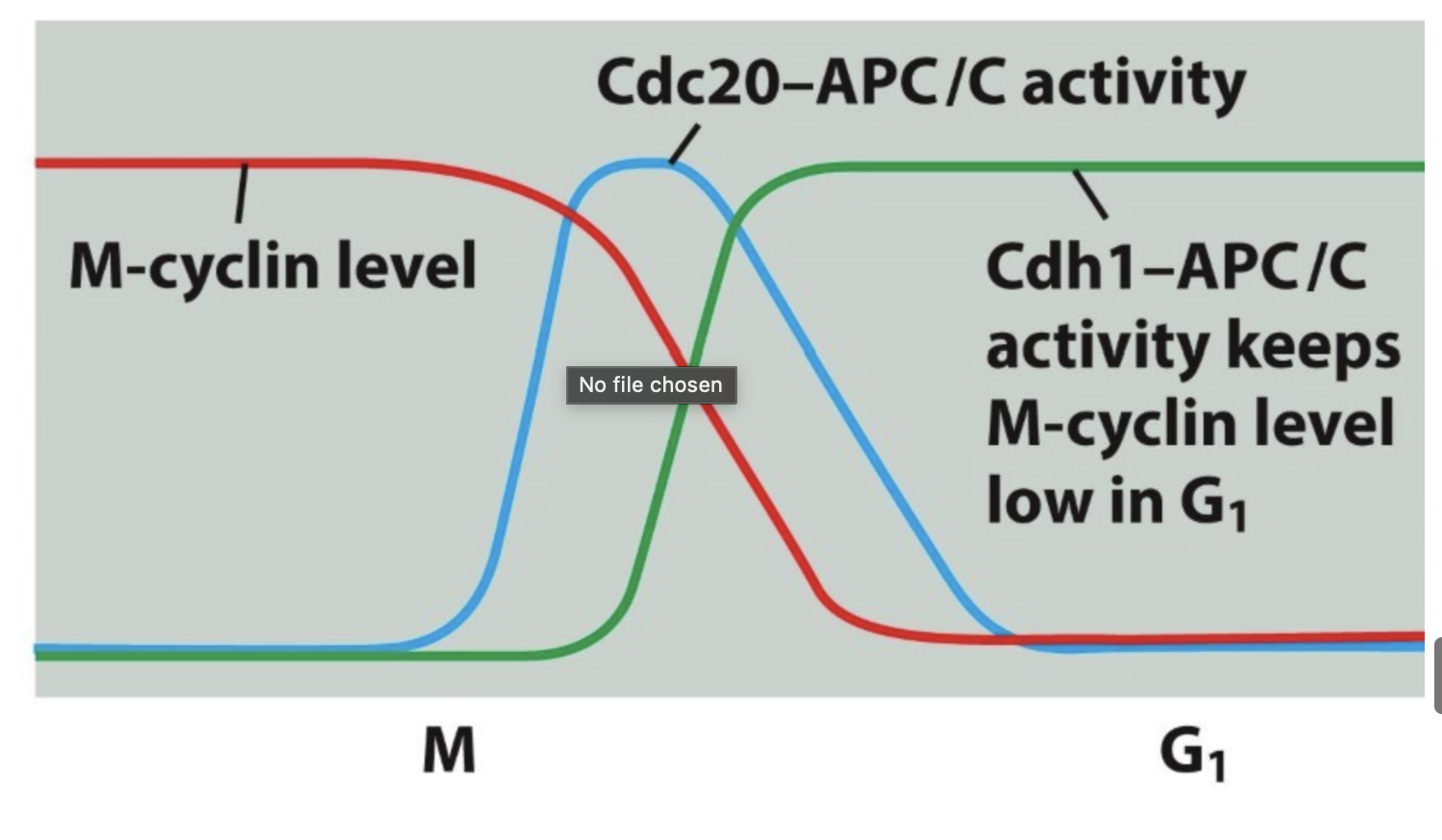
What does this figure show?
M-cyclin levels decrease at end of mitosis because Cdh1-APC/C activity levels increases to degrade M-cyclin
Cdc20-APC/C activity increases, which triggers the transition from metaphase to anaphase
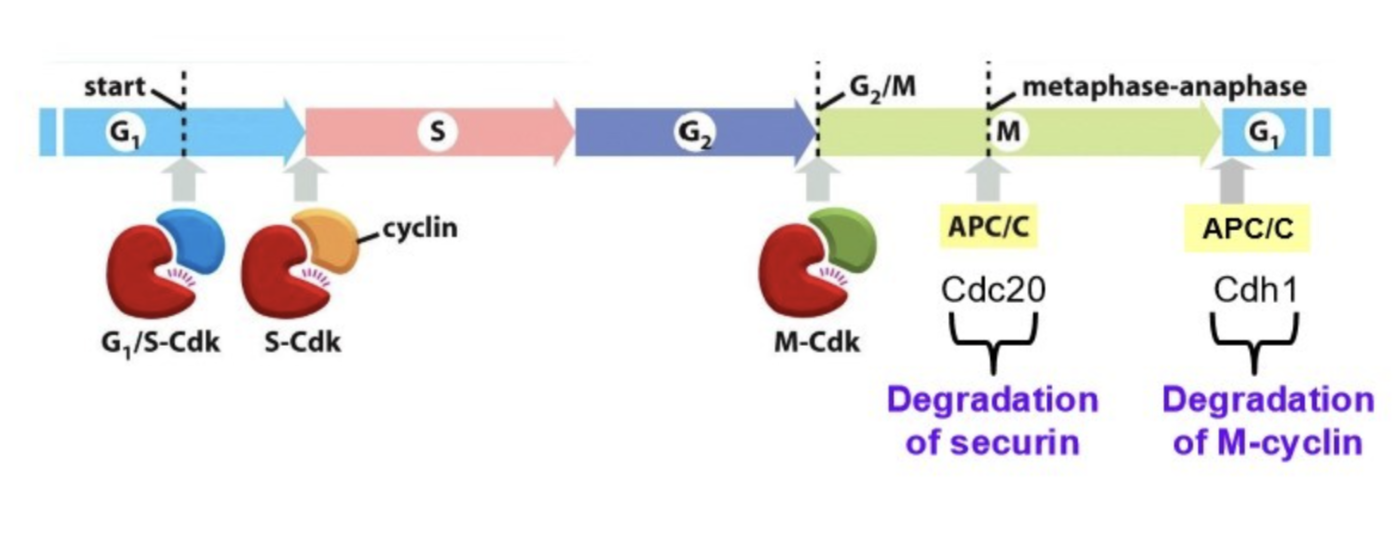
What are the different Cdks and APC/C complexes and what transitions do they correspond to?
S-Cdk activation: triggers the initiation of DNA replication during the S-phase of the cell cycle
M-Cdk activation: triggers transition into mitosis
Cdc20-APC/C: triggers transition from methaphase to anaphase (degradation of securin)
Cdh1-APC/C: triggers transition from metaphase to G1 (degradation of M-cyclin)