Nuclear receptor TF + hormone regulators
 Studied by 0 people
 Call Kai
 Learn
Learn Practice Test
 Spaced Repetition
 Match
Match Flashcards
 Knowt Play
1/8

There's no tags or description
Looks like no tags are added yet.
Name | Mastery | Learn | Test | Matching | Spaced |
|---|
No study sessions yet.
9 Terms
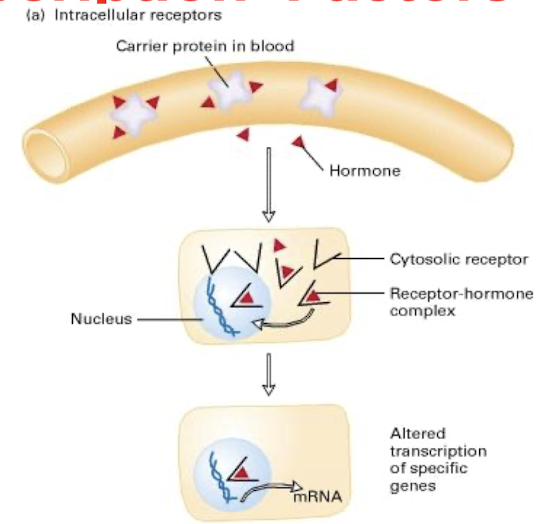
What is meant by Intracellular gene regulation by Transcription Factors?
Small lipophilic molecules diffuse across the plasma membrane and interact with intracellular receptors e.g. nuclear hormone receptors.
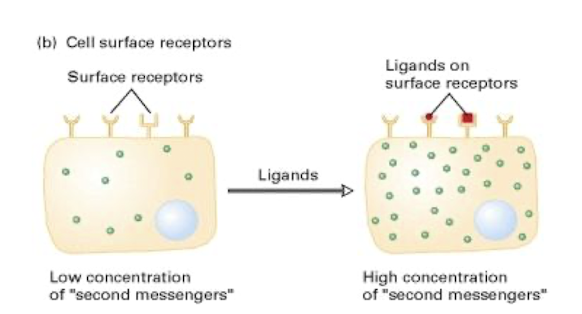
What is meant by Extracellular gene regulation by Transcription Factors?
Hydrophilic - eg. peptide hormones such as insulin, growth factors, and glucagon
Lipophilic molecules that bind to cell-surface receptors – prostaglandins
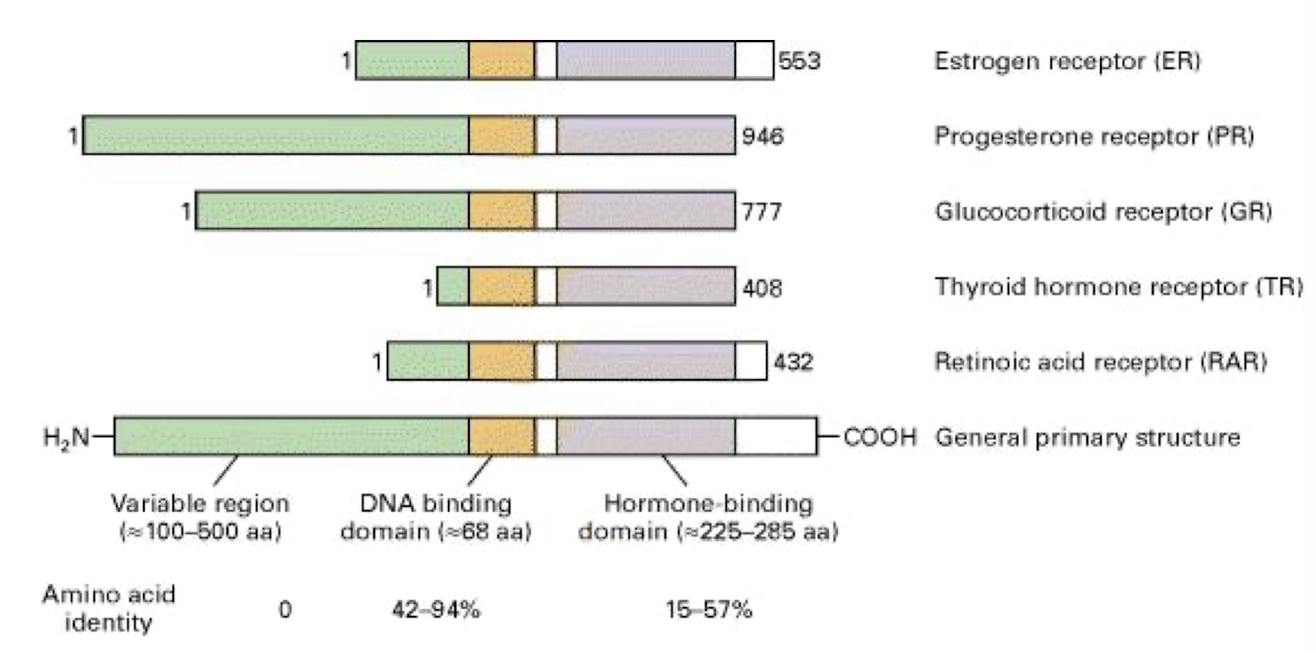
What are some examples of the Nuclear Receptor Superfamily of Transcription factors?
Examples include steroid hormone receptors e.g. estrogen, thyroid hormone receptors, and retinoic acid receptors.
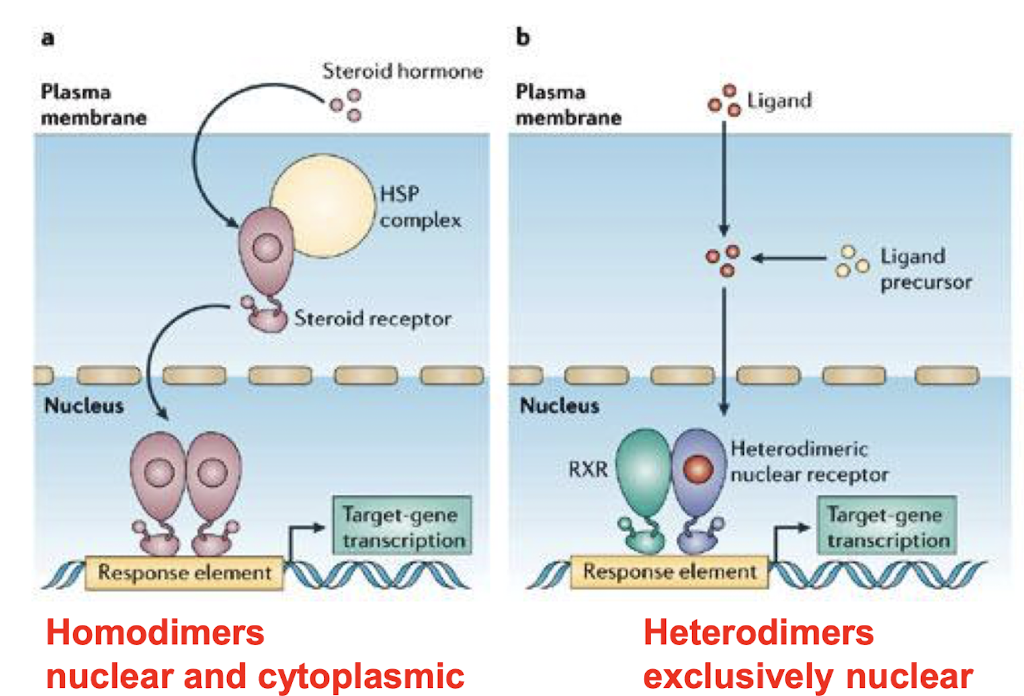
What is the difference between nuclear and cytoplasmic nuclear receptors?
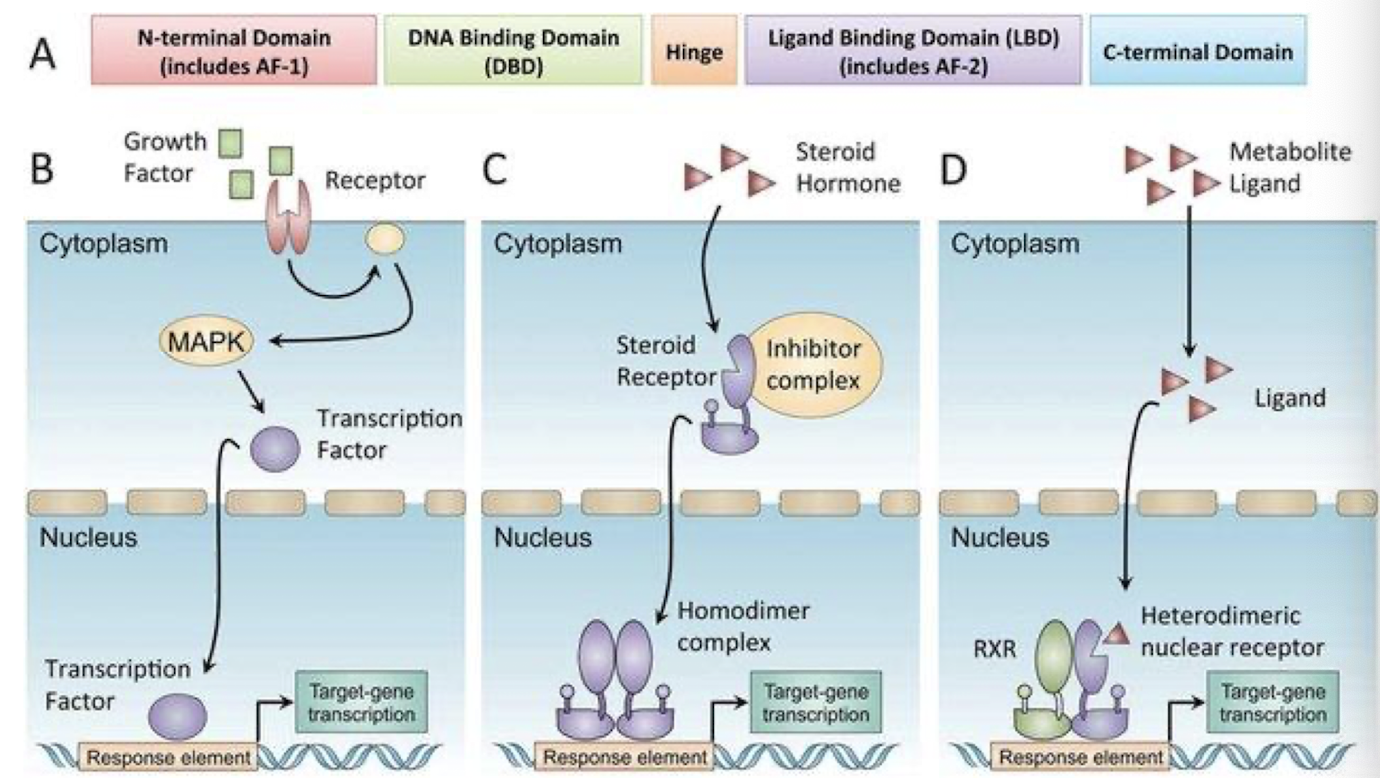
Homodimers can be nuclear AND cytoplasmic e.g. GR & activity is regulated by controlling transport from cytoplasm → nucleus
Heterodimers are exclusively nuclear Heterodimers, e.g. RXR-TR, controlled by absence/ presence of hormone ligand, which induces a conformational change that facilitates binding to specific DNA regions and gene regulation.
What is an example of gene regulation by Homodimeric Nuclear Receptors?
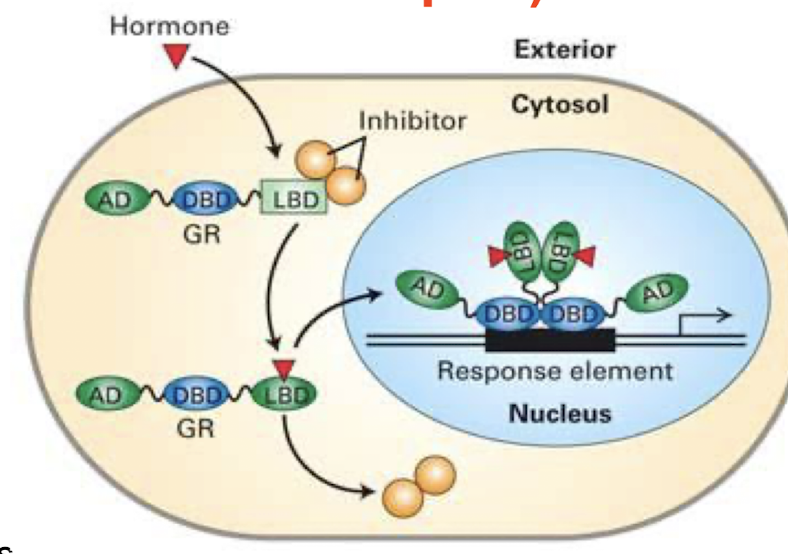
e.g Glucocorticoid Receptor
Absence of Hormone:
GR anchored in cytoplasm complexed to inhibitor complex through LBD (ligand binding domain)/ Hormone BD.
Presence of Hormone:
Conformational change in GR and is released from cytoplasmic anchor and enters nucleus
Binds target gene response elements
Activates transcription by histone acetylation and facilitating co-operative assembly of transcription initiation complex
What is the significance of palindromes to the binding of receptors to the HRE (hormone response elements)?
Palindromic sequences in hormone response elements (HREs) facilitate receptor dimerisation, enhancing the specificity and stability of transcription factor binding to DNA.
The ability of binding to these different motifs implies that the DBDs can rotate with respect to the LBDs that are held together through the dimerization interface

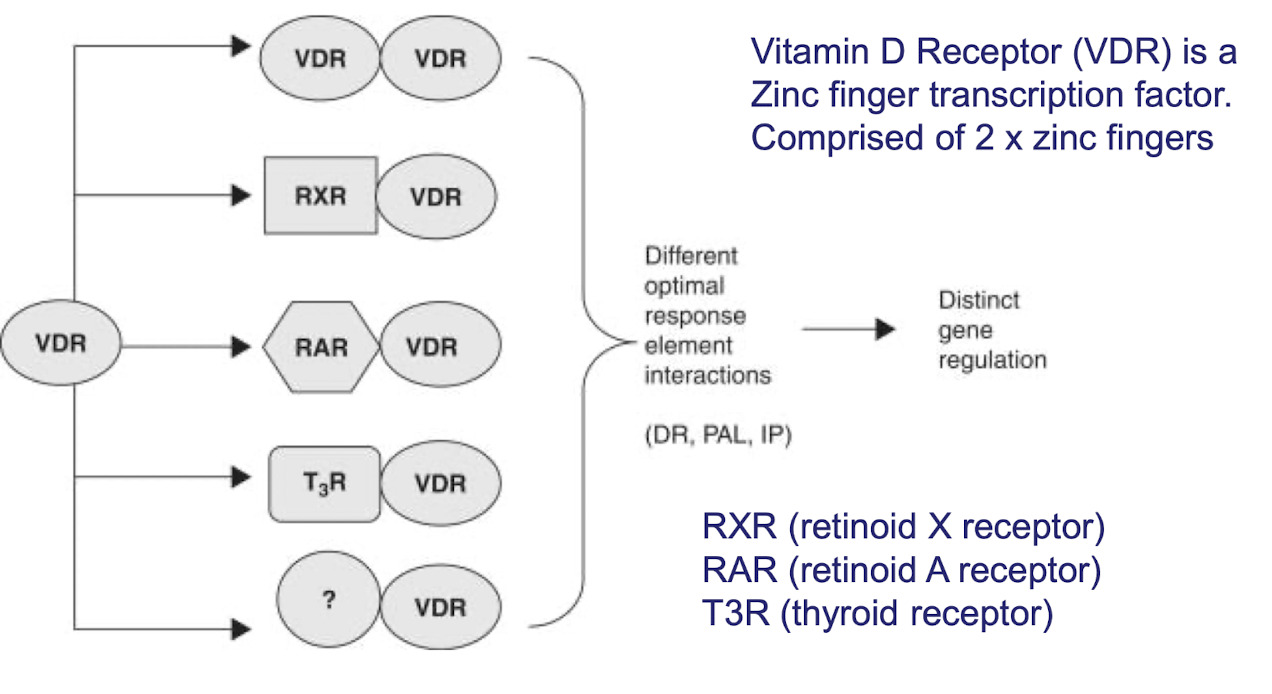
How can the Vitamin D Receptor (VDR) have possible homo and heterodimer interactions with other receptor members of the superfamily?
VDR can form both homodimers and heterodimers with other nuclear receptors as it is composed of 2 ZF motifs, with each dimer pair having an enhanced affinity for distinct DNA targets allowing a small family of receptors to generate a diverse range of physiological effects.
It interacts with partners, such as RXR, RAR, T3R
What is the biologically active form of Vit D?
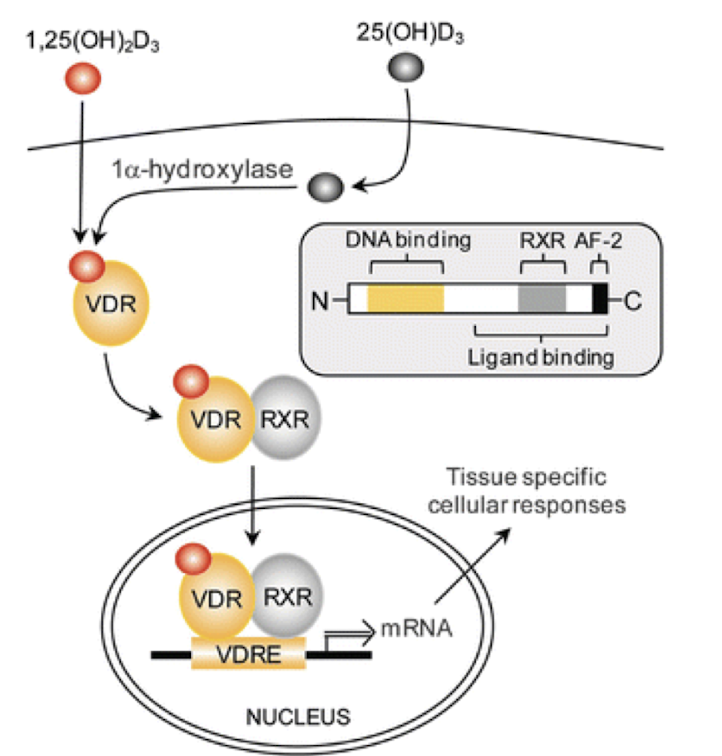
1α,25(OH)2 vitamin D3 [1α,25(OH)2 D3] (1,25-Dihydroxyvitamin D) functions as a steroid hormone
How does the steroid hormone 1,25-Dihydroxyvitamin D interact with the VDR and regulate genes regulated by Vit D?
VDR is a ligand controlled TF, (RXR Heterodimer)
Formation of VDR-RXR heterodimers bind to Vit D responsive elements (VDREs) on DNA
Induction of rapid changes in tissue-specific expression of VitD-regulated genes
The key organ in the vitamin D endocrine system is the kidney where the hormonal 1α,25(OH)2 D3 is produced and circulates in the blood
➢ Liganded VDR–RXR functions in osteoblasts/osteocytes function
 Note
Note  Flashcards (41)