Authorial Choices
 Call Kai
 Learn
Learn Practice Test
 Spaced Repetition
 Match
Match Flashcards
 Knowt Play
1/41

Earn XP
Description and Tags
A combination of authorial choices and techniques to analyse for English.
Name | Mastery | Learn | Test | Matching | Spaced | Call with Kai | Chat |
|---|
No analytics yet
Send a link to your students to track their progress
42 Terms
Voice
Voice is the distinct personality, style, or perspective that comes through in a text. It is often shaped by many other choices, such as the narrator’s tone, attitude and style. It may be useful to consider the point of view(type of narrator voice): first-person (I/me/we), second-person (you), third person limited (outside narrator using he/she/they) or third person omniscient (all-knowing perspective, can jump around from character to character).
Effect on reader: shift emotional reaction, trust in narrator and sense of what really is happening.
Diction
Diction is the specific choice of words. There are two types of diction: concrete and abstract. Concrete diction (eg. “smashed”) describes specific, physical things and makes writing feel vivid/emotionally charged. Abstract diction (eg. “freedom”) describes intangible concepts and creates tone through ideas. Diction has both a literal meaning(denotation) and connotation. Connotation refers to the underlying association that a word carries on a deeper level.
Allusion
An allusion is a brief reference to something outside the text, a myth, religious text, historical event, or cultural work, that carries meaning without explicit explanation. It deepens emotions and meaning, relying on the reader’s existing knowledge to understand the context.
Modality
Modality shows the writer/character’s level of certainty, authority or obligation. It reveals power dynamics, inner chaos and sets the vibe. It is often connected to tone and characterisation. Always state high or low modality, not modality on its own. High modality correlates to a high level of certainty, with use of words such as must, should and certainly. Low modality correlates to uncertainty, with use of words such as might, could and maybe.
Layout
Layout is the spatial arrangement of elements on a page or screen. It guides the readers eye and controls the flow of information.
Words to describe layout: Foreground, symmetrical, balanced, framed, cluttered, background, asymmetrical, unbalanced, isolated, minimal
Typography
Typography is the style, size and arrangement of text. Typography can convey tone and emphasise key ideas.
Vocabulary to describe typography: bold, block capitals, decorative, large-scale, italic, script font, clean, small-scale
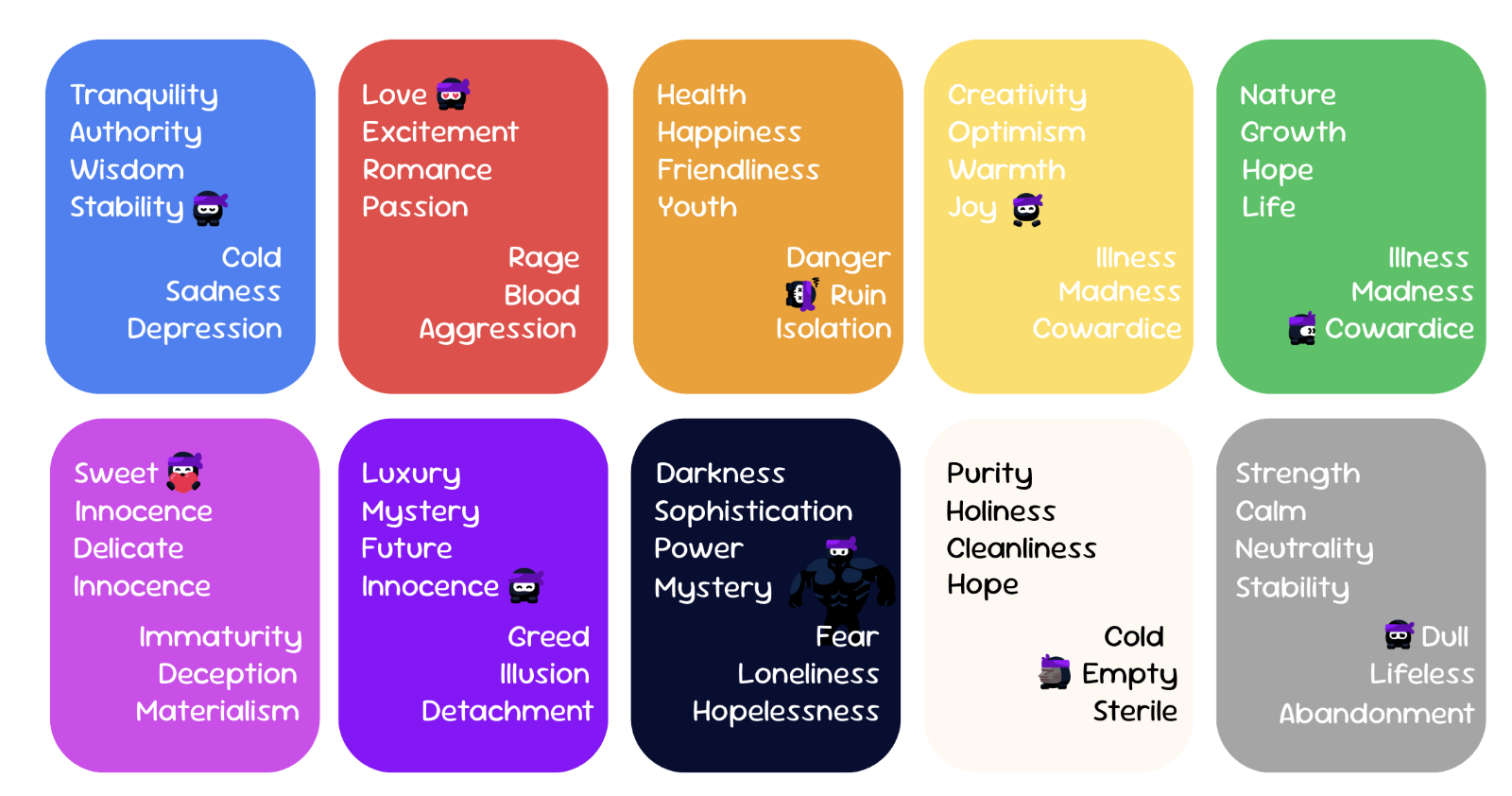
Color
Color is the technique that uses color to influence emotion or signal meaning.
Vocabulary to describe color: high contrast, muted tones, saturated, monochrome, symbolic color use
Panel arrangement
Panel arrangement is the organisation of panels in graphic novels or comics. Panel arrangement controls pacing and emphasies key moments.
Vocabulary to describe panel arrangement: tight sequence, left-to-right flow, fragmented sequence, non-linear sequence
Stage directions
Stage directions are the instructions in a play’s script about the actor’s movements and positioning. Stage directions can reveal character relationships and set the tone of a scene.
Vocabulary to describe stage directions: proxemics (use of space), levels (standing/sitting/height difference), blocking (the exact planning of where actors stand/move)
Figurative language
Figurative language is when writers use comparisons, exaggerations, or contradictions to suggest meaning indirectly. It is used to compress big ideas into small phrases, create emotional resonance and shape interpretation. They can reinforce central themes, build characterisation and set the mood. There are two main types: similies and metaphors.
Similes are comparisons (“like” “as”). It creates vivid imagery, reveals emotional undercurrents and shapes mood through indirect comparisons; this draws a clear link between something in the text and something familiar to readers.
Metaphors directly equate things to something else, implying they share qualities. They go further than similes by saying something is another thing, merging two ideas to create deeper meanings.
Symbolism
A symbol is a tangible object or image that stands in for an abstract ideas. They are used to add layers of meaning, hint at themes/character emotions and create universal resonance through shared cultural ideas. It adds depth, engages readers and has universal appeal.
Motif
A motif is a recurring image, idea or phrase that reinforces a theme throughout a text. It develops themes gradually through repetition, creates a sense of cohesion through various parts of a text and invites readers to reflect on patterns of meaning. Motifs often evolve, revealing new levels of meaning as the story evolves.
Imagery
Imagery is a literary device that uses descriptive language to create vivid mental images or sensory experiences for the reader. It creates atmosphere, reveals character emotions and builds a theme. There are five types of imagery: visual (appeals to sight), auditory (appeals to sound), tactile (appeals to touch), olfactory (appeals to smell), gustatory (appeals to taste).
Personification
Personification is a literary device where non-human things are given human characteristics such as actions, emotions or intentions. It transforms the abstract into the relatable, so you can connect with concepts that might otherwise feel impersonal or distant. It may elicit empathy, foreshadow emotional/thematic shifts and create vivid imagery.
Alliteration
Alliteration is the repetition of initial consonant(non vowels) sound in a series of words (in the beginning of words). It can create a rhythmic flow, captures the audience’s attention and makes language more memorable. Soft consonants (eg. s,f) result in a calm, soothing mood. Harsh cosonants (eg. k,p) build tension, urgency or highlight brute force.
Assonance
Assonance is the repetition of vowel sounds within words. It can give a text rhythm/flow, enhance memory and set the mood. Long vowels (oh, ah) create a drawn out feeling, while short vowels (e, i) create a tense/quick feeling.
Consonance
Consonance is the repetition of consonant sounds in the end or middle of words. It can make ideas more memorable, increases the musical quality of words and slow down reading.
Onomatopoeia
Onomatopoeia is the use of words that imitate sounds they describe. It pulls readers into the sensory world of text, immersing the audience further.
Rhyme
Rhyme is the repetition of similar or identical sounds at the end of words. Rhyme can create cohesion and flow, drawing attention to linked ideas.
Parallelism
Parallelism is the repetition of similar grammatical structures in a sentence or series of sentences (or in successive clauses in a sentence). It is a stylistic component of syntax (sentence structure). It may add rhythm and finality, emphasising a series of actions/traits and create a balanced, memorable sentence. Eg. she came, she saw, she conquered. (repeating subject-verb structure).
Subordination
Subordination uses dependent clauses to add detail or context to a main clause. It may be used to show contrast, cause, condition or time, potentially revealing character motivation/inner conflict. Eg. Although she was tired, she kept going.
Anaphora
Anaphora is the repetition of a word or phrase at the beginning of successive clauses or sentences.
Chiasmus
Chiasmus is a rhetorical device where the structure of one clause is reversed in the next. It sharpens contrast and makes the message stick through surprise and balance. It is used to highlight irony, contrast or transformation, making a sentence seem more polished/profound.
Punctuation choices
Punctuation choices can shape the rhythm and flow of a sentence. Periods can create short, abrupt sentences. Commas and semicolons allow for longer, flowing sentences. Dashes and colons can add emphasis and additional information.
Gaze/Focalisation
Gaze is the narrative vantage point: who sees the action, and how much they know. It determines what the reader experiences and whose lens we’re looking through. Gaze is used to direct empathy, build tension and shape how much we trust what we are told. It may create dramatic irony(when we know more than the characters).
Internal focalisation: The narrator presents the world through the character’s eyes, revealing their thoughts and feelings. Creates empathy.
External focalisation: The narrator only describes observable actions, withholding the character’s inner thoughts. Creates suspense.
Zero focalisation: The narrator knows everything, including the character’s thoughts and things outside their awareness. Creates irony.
Stanza length (poetry)
Short stanzas create emphasis/disruption. Long stanzas create a sense of flow and uninterrupted thought.
Line length (poetry)
Short lines can isolate phrases, add emotional weight or slow the reader down. Long lines can increase pace and pressure, mimicking stream of consciousness.
Line breaks (poetry)
Line breaks are when words are continued on the next line, not necessarily at the end of a sentence. It can shift focus, pause rhythm and highlight specific words.
Enjambment (poetry)
Enjambment is when a line continues to the next without punctuation. Creates momentum, urgency or a stream of thought.
Endstopping (poetry)
Endstopping is when a line ends with punctuation. It slows pace, creating formality and control.
Caesura (poetry)
Caesura is a pause within a line marked by punctuation. It creates hesitaiton and interruption.
Meter (poetry)
Meter is the rhythmic pattern of stressed and unstressed syllables in a line.
Iambic pentameter: Each line features ten syllables structured into five pairs called "iambs," where the first syllable is unstressed and the second is stressed. (da-DUM x5)
Trochaic pentameter: Each line features eight syllables structured into four pairs called “trochees”, where the first syllable is stressed and the second is unstressed. (DA-dum x4)
Regular meter creates balance and control, while disrupted meter signals instability, intensity or disorientation.
Volta (poetry)
Volta is a rhetorical or thematic shift, especially in sonnets, where the tone or argument changes. They signal a shift in tone, logic or emotion focus.
Refrain (poetry)
Refrain is a repeated line or phrase, usually at regular intervals (often at the end of stanzas). Refrain emphasises key ideas, build rhythm and create dramatic or emotional resonance.
Irony
Irony is when there is a gap between what is said/expected and what actually happens. This contrast creates meaning, often humorous, tragic or critical, and encourages the reader to think deeply. It depends on cultural context, reader awareness and shared knowledge.
Verbal irony: When a speaker says the opposite of what they truly mean.
Situational irony: When events turn out the opposite of what is expected.
Dramatic irony: When the audience knows something the characters do not.
Characterisation
Characterisation is the way a writer reveals a character’s personality, thoughts and relationships.
Types
Direct description: The narrator or another character tells the reader what someone is like, describing their looks, personality, background or motivations.
Actions—a character’s actions reveal their priorities, values and sometimes contradictions. Behavior may be more trustworthy than claims.
Dialogue: a written or spoke conversational exchange between two characters. It creates interaction, which shows personality. May reveal power dynamics, hidden agendas or emotional undercurrents.
Internal monologue (thoughts and feelings)—may contrast with speech/behavior. Gives access to a character’s inner world, pulling readers closer.
Juxtaposition
Juxtaposition is when two contrasting elements are placed side by side to highlight their differences and to create tension.
Oxymoron
Oxymoron is a figure of speech where two opposite words are combined to create a striking or thought-provoking effect. They capture feelings that do not fit in one category, carrying emotional punch. eg. productive procrastination
Antithesis
Antithesis is when two opposing ideas in parallel structure are used to highlight a contrast or conflict. It creates balance through contrast. Eg. small step for man, giant leap for mankind.
Hyperbole
Hyperbole is a figure of speech that uses deliberate and obvious exaggeration to create a strong impression or emphasise a point. Eg. I’m starving
Salience
Salience is the deliberate emphasis of certain elements in a text, making them stand out to the reader. Basically what grabs the reader’s attention.
Balance
Balance is the way that emphasis interacts with surrounding content to create a sense of harmony and cohesion. Smooths the audience’s experience, makes the whole text feeling thoughtful.