Control of Microbial Growth Flashcards
 Note
Note Call Kai
 Learn
Learn Practice Test
 Spaced Repetition
 Match
Match Flashcards
 Knowt Play
1/31

Earn XP
Description and Tags
Vocabulary flashcards covering physical and chemical control methods of microbial growth, biological safety levels, clinical cleanliness classifications, and disinfectant effectiveness testing.
Name | Mastery | Learn | Test | Matching | Spaced | Call with Kai | Chat |
|---|
No analytics yet
Send a link to your students to track their progress
32 Terms
Sterilization
The complete removal or killing of all vegetative cells, endospores, and viruses from an inanimate item or organism.
Disinfection
The inactivation or killing of microbes on inanimate surfaces (fomites) using heat or antimicrobial chemicals, which does not guarantee the destruction of all endospores.
Sanitization
The reduction of microbial load on an inanimate item to safe public health levels through heat or chemical application.
Antisepsis
The reduction of microbial load on living tissue or skin through the application of an antimicrobial chemical.
Degerming
The reduction of microbial load on skin or tissue through gentle to firm scrubbing combined with the use of mild chemicals, such as handwashing.
Critical Items
Medical items that must be sterile because they come into direct contact with sterile tissue or enter the bloodstream.
Semicritical Items
Medical items that require high disinfection rather than sterilization because they contact non-sterile tissue or mucous membranes without penetrating tissue.
Noncritical Items
Medical items that contact intact skin without penetrating tissue and do not require sterilization, such as stethoscopes.
Bactericidal
An agent or treatment that results in the direct killing of bacteria.
Bacteriostatic
An agent or treatment that inhibits or stops the growth and division of bacteria without directly killing them.
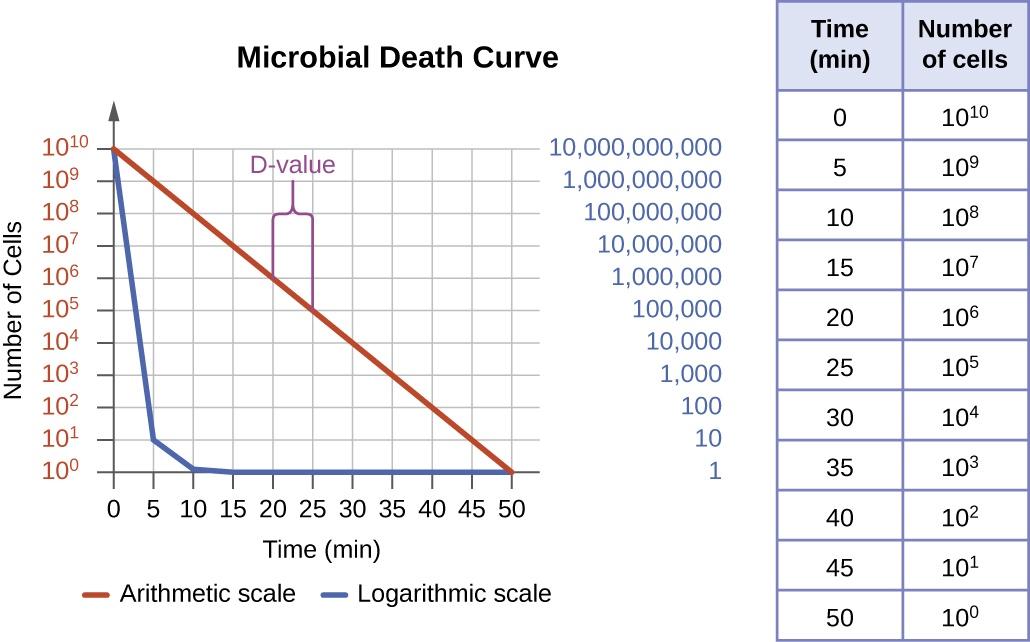
Decimal Reduction Time (DRT)
The amount of time in minutes required to kill 90% (a 1-log reduction) of a population of microbes under a specific condition.
Thermal Death Point (TDP)
The lowest temperature required to kill all microorganisms in a liquid sample in 10minutes.
Thermal Death Time (TDT)
The length of time required to kill all microorganisms in a sample at a specified temperature.
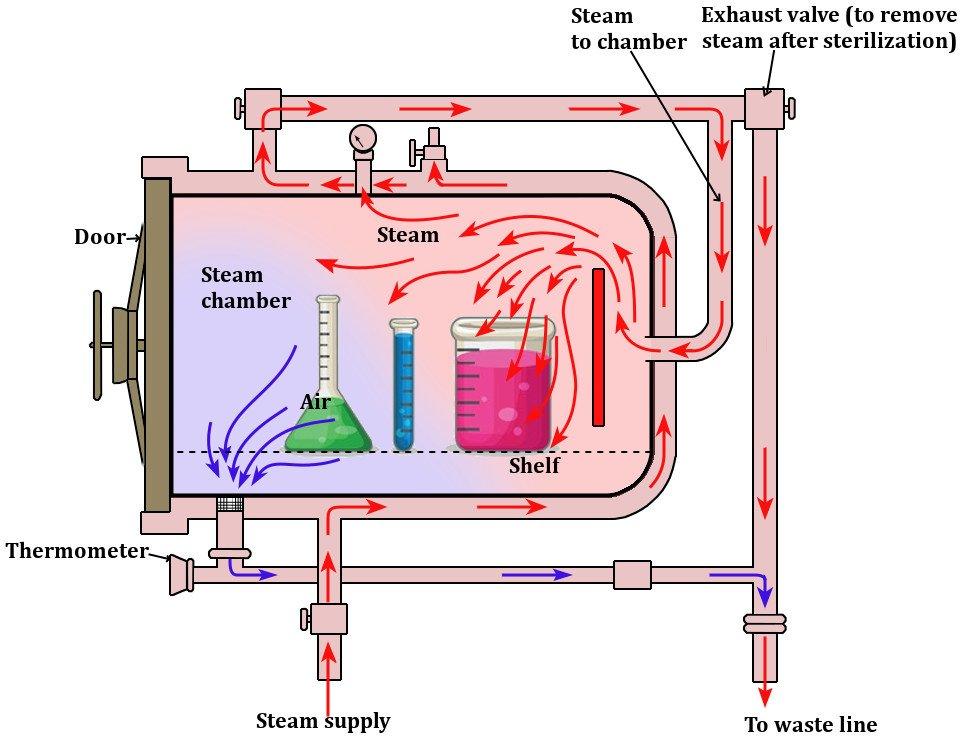
Autoclave
A sterilization device that uses pressurized steam, typically set to 121∘C at 15psi for roughly 20minutes, to kill endospores and viruses.
HTST Pasteurization
High-Temperature Short-Time pasteurization, where milk is heated at 72∘C for 15seconds and then bottled and refrigerated.
UHT Pasteurization
Ultra-High-Temperature pasteurization, where milk is heated at 138∘C for 2or more seconds and sealed in airtight containers for storage up to 90days without refrigeration.
Pascalization
A high-pressure physical control method (100–800MPa) used in food processing to denature proteins and induce cell lysis.
Lyophilization
A desiccation process involving rapid freezing under vacuum to inhibit metabolism, used for long-term preservation of foods, laboratory cultures, or reagents.
Ionizing Radiation
High-energy radiation (X-rays and gamma rays) that penetrates cells, alters molecular structures, and introduces double-strand breaks into DNA.

Nonionizing Radiation
Radiation such as ultraviolet light that does not deeply penetrate surfaces but damages exposed cells by forming thymine dimers in DNA, leading to lethal mutations.
Sonication
The use of high-frequency sound waves to induce bubble formation inside cells, leading to cellular lysis.
HEPA Filter
High-efficiency particulate air filter designed with physical pore barriers (usually 0.2μm or smaller) capable of trapping microbes and viruses.
Phenolics
Chemical disinfectants featuring a benzene ring with an −OH group (e.g., cresols, triclosan) that denature proteins and disrupt cell membranes.
Iodophor
A complex of iodine bound to an organic molecule, increasing iodine stability and providing slow, continuous release.
Surfactants
Chemical compounds (such as soaps and detergents) that lower the surface tension of water to assist in mechanical removal of microbes or cell membrane disruption.
Quaternary Ammonium Compounds (Quats)
Cationic detergents that mimic phospholipids and insert into bacterial cell membranes, causing membrane disruption.
Bisbiguanides
Cationic antiseptic molecules (e.g., chlorhexidine, alexidine) that disrupt microbial cell membranes and are used for surgical hand scrubs.
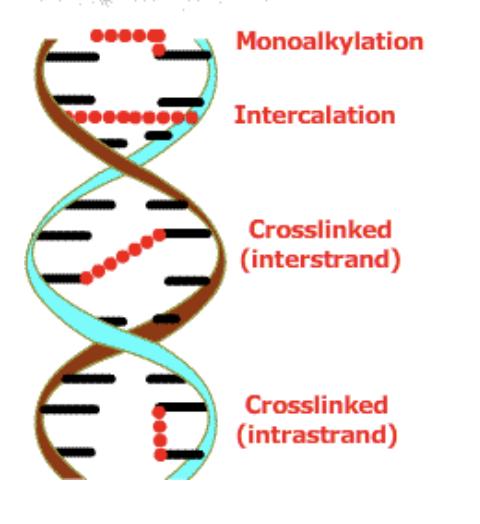
Alkylating Agents
Chemical disinfectants and sterilants (e.g., formaldehyde, glutaraldehyde, ethylene oxide) that replace hydrogen atoms with alkyl groups, inactivating enzymes and nucleic acids.
Peroxygens
Strong oxidizing agents (e.g., hydrogen peroxide, benzoyl peroxide, ozone gas) that produce oxygen free radicals to disrupt cellular macromolecules.

Supercritical Fluid
A state of a chemical (such as supercritical CO2) brought above its critical temperature and pressure to exhibit properties between a liquid and a gas, penetrating cells and lowering intracellular pH.
Phenol Coefficient
A historical standard measuring the efficacy of a disinfectant relative to that of phenol.
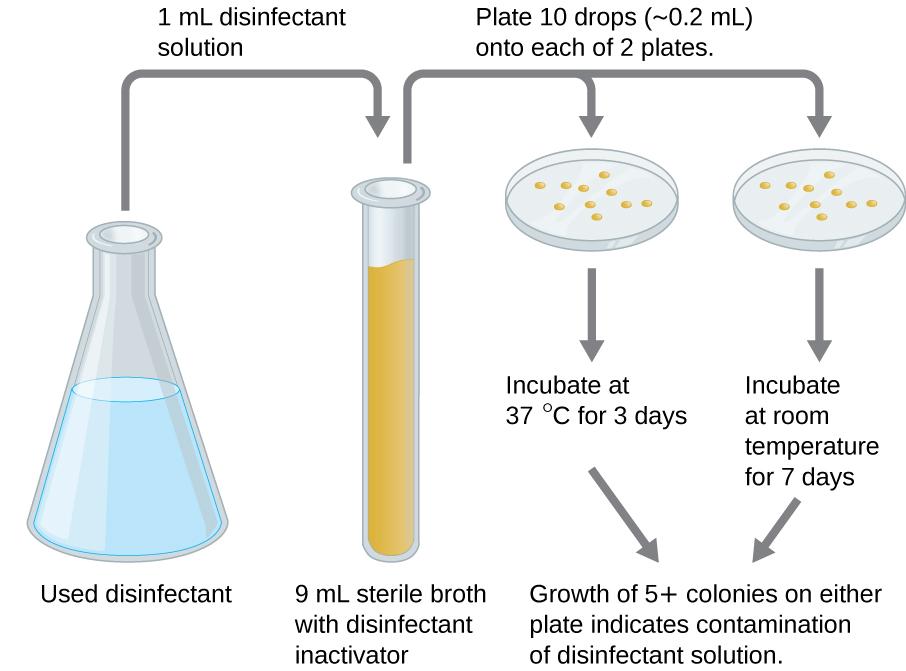
In-Use Test
A clinical assay used to determine whether an actively used disinfectant solution in a facility has become contaminated with microorganisms.