AP Hug unit 5
 Studied by 1 person
 Call Kai
 Learn
Learn Practice Test
 Spaced Repetition
 Match
Match Flashcards
 Knowt Play
1/102

There's no tags or description
Looks like no tags are added yet.
Name | Mastery | Learn | Test | Matching | Spaced | Call with Kai |
|---|
No analytics yet
Send a link to your students to track their progress
103 Terms
Agriculture
the planting and harvesting of domesticated plants and the raising of domesticated animals for food
What are domesticated plants and animals
Domesticated plant: a plant that is deliberately planted, protected, cared for, and used by humans and is genetically distinct from its wild ancestors
Domesticated animal: an animal that depends on people for food and shelter and is different from its wild ancestors in looks and behaviors as a result of close contact with humans
farmers
people who practice agriculture by raising crops, rearing animals, or some combination of the two
Physical geography
the study of Earth’s physical characteristics and processes: how they work, how they affect humans, and how humans affect them
Best soils for agriculture have what characteristics?
Crumbly texture that provides space for water and air to move through to the plant roots
Rich base of organic materials
diverse population of microorganisms(eg earthworms, ants and bacteria) to decompose ground surface organic material
nutrients
components of topsoil(eg nitrogen, phosphorus, and potassium) necessary for plants to survive, grow, and reproduce
Topography
the arrangement of shapes on Earth’s surface
Climate vs weather
Climate: average pattern of weather over a 30 year period for a particular region
Weather: day-to-day atmospheric conditions that affect daily decisions
Climate patterns approximately for the world
Dry climate: North Africa, west US, Australia, Middle East
Tropical: Latin America, Sub-saharan Africa, Southeast Asia
Continental: northeast US, Canada, Russia, Eastern Europe
What are tropical climates and what are the subtypes?
Tropical: located 20 degrees north and south of the equator, 80 F year round
Tropical wet: rain every day, tropical rain forests(Amazon River Basin in Brazil, Congo River Basin), farming in rainforests as small family operations
Tropical wet and dry climates: has a dry season with little to no rain(usually in winter), can experience monsoons
monsoons and monsoon rains
seasonal reversal of winds with a general onshore movement in summer and a general offshore movement in winter(onshore=monsoon rains)
Monsoon rains: long periods of heavy rains every day at the end of a short dry season
Dry climates
Dry: lack of precipitation, temperatures can be hot year round or very hot in he summer and very cold in the winter, 30% of the world’s land surface
Arid: less than 10 inches of rain annually
semiarid/steppe: 10-20 inches of rain annually, which can support farming(but farming is risky because it can have severe droughts), usually sourroudn ddeserts
Moderate climates
Average year round temperature of 75 F, on the edges of tropics. Usually have 2 seasons(mild winter). Rain in winter or year round
Humid subtropical: eastern coasts of continents. Long, hot summers, and short, mild winters with variable precipitation(EX eastern China has a winter monsoon not typical of this climate)
Marine west coast: western coasts closer to the poles. Moderate temp during long summers and cool winters because ocean breezes bring warm air while polar winds bring cooler air. Cooler, shorter summers, and less humid than humid subtropical. Has a large area in wester and central Europe because there are few topographical borders to wind blowing in
Mediterranean: mostly around the Mediterranean sea(EX Europe around Italy and Cali around the Central Valley). Winter precipitation 15 in near the equator and 25 inches close to the poles. Mild 50 F winter. Clear skies and sunshine, especially in the summer. 2 Mediterranean zones(US area and South Africa area). Hilly and rugged with narrow valleys. Transhumance. Figs, date, olives, grapes, and tomatoes.
Continental Climates
Interior of continents north of moderate climate zones. Only in the northern hemisphere and characterized by continentality(remoteness from oceans) so there is little influence from oceanic breezes
Humid continental: four seasons, moderate precipitation, warm to hot summers, cold winters with snow
Humid cold(sub arctic): frigid year round, northern most of continental)
Intensive Agriculture with list of types(no description yet)
Crop cultivation and livestock rearing systems that use high level of labor and financial capital relative to the size of the landholding. Usually use less land and are close to urban centers
Subsistence farming, commercial farming, market gardening, truck farming, plantations, mixed crop/livestock agriculture, paddy rice farming, grain farming, livestock fattening, dairying
Subsistence farming
Intensive. Food production mainly for consumption by the farming family and local community, rather than primarily for sale
Commercial farming
Intensive. Farming mostly for agricultural commodities to sell in market
Market gardening
Intensive. Small-scale farming system in which a farmer plants 1 or a few acres that produce a diverse mix of veggies and fruits mostly for sale in local and regional markets Done in moderate climates
Truck farming
Intensive. A scaled up version of market gardening with more acreage, less crop diversity, and is oriented to more distant marketet
It doesn’t refer to truck vehicles but troc in French for barter since truck farmers work together to market more cheaply
Plantation
Intensive. Large landholding devoted to capital-intensive, specialized production of a single tropical or subtropical product for the global market
In less developed countries and former colonies where there is a surplus of cheap labor. Owned by large corporations like Dole and Chiquita who hire farmers to manage plantations and workers
Usually grow cash crops
EX sugarcane, bananas, coffee, pineapple, sugar
monocropping
growing the same crop on the same land ever year
Mixed crop/livestock agriculture
diversified system of agriculture based on the cultivation of cereal grains and root crops(potatoes, yams, etc) to feed the livestock. Usually in colder regions/semiarid. Cows and sheep are extensive. Poultry are intensive because they need more concentrated labor and are indoors.
Cereal grains
seeds coming from a wide variety of grasses cultivated around the world(wheat and barley in the middle east, sorghum and millet in africa, oats and maize in the Americas)
millet
fast-growing cereal plant widely grown in warm regions with poor soil
root crops
vegetables that form below the ground and must be dug at maturity(cassava, potatoes, yams). Used primarily to feed the farmer family
Cash crops
crops raised to be sold for a profit rather than to feed the farm family or livestock
peasants
small-scale farmers who own their own land, depend on family labor, and produce cereal crops for themselves and for sale
Paddy rice farming
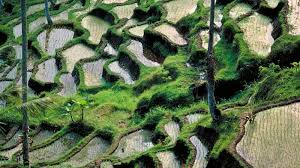
Intensive. System of wet rice cultivation on small level fields bordered by watertight dikes(long walls). The paddy fields are flooded with water for ¾ of the growing season. Many times terraced on hillsides
In humid tropical and subtropical parts of southern and eastern Asia
grain farming
humid continental. Highly mechanized commercial farming system specializing in the production of cereal grains. Requires large farms and widespread use of machinery, synthetic fertilizer, pesticides, and GMO seeds
Livestock fattening
Intensive: system of animal feeding using feedlots to fatten livestock(usually cattle and hogs) for slaughter and processing done mostly by mobile immigrant labor for the market
Humid continental and humid subtropical
EX Us corn belt where corn and soybeans are grown to feed to livestock
Western and Central Europe
feedlots
fenced enclosure for livestock to limit their movement and associated weight loss
Dairying
Intensive. Farming system specializing in the breeding, rearing, and utilization of livestock to produce milk and its by products(yoghurt, butter, cheese)
Cannot be found in tropical wet and dry zones and arid zones. May use feedlots(especially in semiarid zones)
Extensive Agriculture
crop cultivation and livestock rearing systems that require little hired labor or monetary investment to successfully raise crops and rear livestock. Rely on natural soil fertility and climate conditions(Work with the environment they have)
Shifting cultivation, nomadic herding, livestock ranching
Shifting cultivation
Extensive Found in the tropics. Can be a form of subsistence farming
Cultivation of a plot of land until it becomes less productive(3-5 years) . When productivity drops, the farmer shifts to a new plot of land prepared with slash and burn agriculture, leaving the old plot of land to fall
Usually use intercropping
Slash and burn agriculture(swidden)
extensive. cutting small plots in forests/woodlands, burning the cuttings to clear the ground to release nutrients and planting in the ash of the cleared spot
Allows for no fertilizer needed
Intercropping
practice of planting multiple crops together in the same clearing
Stronger taller crops shield smaller, weaker ones. Less change of total crop loss
Nomadic herding(nomadic pastroalism/pastroralism)
extensive. system of breeding and rearing herd livestock(cattle, sheep, goats) by following the seasons. EX transhumance or following season rain patterns.
Mostly in the eastern hemisphere by ethnic tribal culture groups for subsistence
tundra
the vast, flat, treeless region of Europe, Asia and north america where the subsoil is permanently frozen
livestock ranching
extensive. the practice of using large tracts of land usually far from urban centers to rear herds of livestock to sell as meat, hides or wool. Have fixed places of residence(ranches).
Usually cattle and sheep(australia, china, US New zealand make up 71% of wool exports)
Semiarid
rural area vs rural settlement
rural area: area located outside of towns and cities; all the space, population, and housing not include din an urban area
rural settlement: small group of people living outside of an urban area(EX US Midwest has many miles between homes, farms, and villages
How much of the world’s area is used for agriculture?
1/3
Agricultural landscape
the visible imprint of agricultural practices
grain elevators
large storage fascilities for grains
suitcase farms
In the US: commercial grain agriculturla regions; a farm where no one lives; planting and harvesting done by migrant workers
silo
a round or square tower-like structure that stores feed for livestock on the farm(usually family farms)
Shifting Cultivation
several small clearings near a village in tropical areas
Settlement patterns
the ways in which people organize themselves on the land
Types of settlements
clustered settlements; dispersed settlement patterns; linear settlement patterns
Clustered settlements(farm villages) - nucleated
A tightly bunched farm settlement that has between a few dozen to several hundred inhabitants. Usually in Europe and places colonized by them. Homes are close together with the fields being outside the cluster of homes. Farmers had to walk to and from the fields.
Farmstead
It was easier to defend in times of insecurity and formed because of strong communal ties(like the Mormon communities in Utah)
Farmstead
center of farm operations, which includes the farmhouse, barns, shed, livestock, and family garden
Dispersed/isolated settlement pattern
families live relatively distant from one another
In times of peace and security in the countryside
Usually because of colonization by pioneer families and the land is well-drained with available water.
Preferred in the US in the midwest because of the pioneer families who lived alone
linear settlement pattern
Buildings are arranged in a line, often along a road or river; limited to areas where legal systems dictate that property lines must be rectangular
Survey methods
methods used by surveyors to lay out property lines
Types of survey methods
metes and bounds, township and range, long-lot survey system
Cadastral system
the systematic documentation of property ownership, shape, use, and boundaries
metes and bounds
survey system that uses natural features such as trees, boulders, and streams to delineate property boundaries
Great Britain and the 13 colonies
township and range
land survey system created by the US land ordinance of 1785 which divides most of the country’s territory into a grid of square shaped townships with 6 mile sides. Everywhere except the 13 original colonies in the US
long-lot survey system
a unit block surveying system whose basic unit is a rectangle that is typically 10 times longer than it is wide. Divides a scare resource into the hands of many
France(Louisiana and Quebec)
domestication
the long-term process through which humans selectively breed, protect, and care for unique plants and animals taken from wild species to create genetically distinct speices(domesticates)
First Agricultural Revolution
period in which the early domestication and diffusion of plants and animals and the cultivation of seed crops led to the development of agriculture
teosinte
large wild grass native to Mexico that produced the small ears of maize favored as food among early groups in EMesoamerica. Through domestication(selective breeding), it began producing the large ears of corn we eat today
Mesoamerica
cultural region in the AMericas that includes the diverse civilizations in modern-day Mexico, Guatemala, Honduras, Belize, El Salvador, Nicaragua, and Costa Rica
How did domestication start?
According to Sauer, the first farmers were sedentary folk who had enough food to remain settled in 1 place and devote time to plant care
Best in hilly places and areas with great biodiversity. Independnetly began in multiple regions. 12000 years ago
biodiversity
the variety and variability among species and ecosystems
domestication of animals?
It was after the plant domestication(except for dogs)
Began because of mutual beneficial interactions
Goats, sheep, pigs, cattle are still important worldwide today
But water buffalo are used in Asia and llamas are used in South America in the Andes
Hearth
a center from where innovation or new practices develop and from which they diffuse
Southwest asia’s role in the first agricultural rev
10,000 years ago plant domestication; heart for the largest number of aniamls important for agriculture. Fertile Crescent and Indus River valley
Fertile crescent
area in southwest asia that includes the river valleys of the tigris and euphrates
earliest center for domestication of seed plants; orgin of great cereal grains(wheat, barley, rye, and oats) and first domesticated grapes, apples, and olive. First major animal domestication, espeiclaly herd animals. Domesticated cattle
Indus River valley
area along the INdus river that flows from the highlands of tibet and continues down along the border between pakistan and india
a site of the earliest domestication of plants and herd animals.
Domesticated dry rice, wheat, adn cattle. May have been the first to combine animals an plants in a mix crop/livestock farming(used oxen to plow fields)
China’s role in first ag rev
rice, soybeans, sugarcane, pigs
South and southeast asia’s role in first ag rev
14,000 years ago: root crops(before dom of seed crops in the fertile crescent), water buffalo
New Guinea’s role in the first ag rev
bananas and taro
Africa’s role in the first ag rev
peanuts, yams, coffe, barley, wheat, rice sorghum, millet
cattle dom
america’s role in the first ag rev
maize, tomatoes, beans, squash, potato
llama, alpaca, guinea pig, Muscovy duck
Columbian exchange
the interaction and widespread transfer of plants, animals, cultures, human populations, tech, disease, and ideas between the americas, west africa, and the old world in the 15th and 16th century
demographic collapse
phenemenon of near-genocide of native populations(happened in columbian trade because of smallpox and influenza)
Second agricultural rev
period that brought improved methods of cultivation, harvesting, and storage of farm produce that began in the late 1600s and continued through the 1930s. Coincides with the industrial revolution
seed drill
machien for planting seeds in a row
mechanical reaper
machine used to harvest grain crops mechanilcally; pattented by cyrus mcCormick in 1831. Increased yield by 10 times
scythe
an agricultural hand tool with a curved blade used for gutting grain the fields
agrichemicals
chemical compounds obtained from petroluem and natural gas for use in agriculture; includes fertilizers, pesticides, and herbicides
synthetic fertilizer
industrially manufactured nitrogen, phosphorus, and potassium; made from petroleum by products; contains higher concentrations of nutrients for plants than natural fertilizers
Plows
Horsed used to pull steel plows was the first commercially successful plow
the cast iron plow earlier was the first agricultural improvement in 2000 years but it was not successful
enclosure movement
land formerly owned in common by all village members changed to fenced in privately owned land
pesticides
material used to kill or repel animals or insects that can damage, destroy, or inhibit crop growth
herbicide
pesticide designed to kill/inhibit the growth of unwanted plants(weeds) that compete with crops
nutrient pollution
consequence of overuse of fertilizer; occurs when excess nutrients seep down into groundwater or are carried into nearby waterways as runoff
runoff
flow of rain or irrigation over land
tractor’s effect
increased efficiency and saved labor; used the gas-powered internal combustion engine; back then, it was hard for farmers to fix it when it broke down, which caused many problems
railroads and shipping canals role in second rev
affordable access to distant markets and to transport their cattle. Allowed the Us to become the #1 exporter of wheat and corn
Green revolution
the third agricultural revolution; the US supported evelopment of high-yield seed varieties that increased the productivity of cereal crops and accompnaying agricultural technologies for tarnsfer to less developed countries. Started in the 1950s and focused on grain to allow developing countries to overcome food deficits
Main characteristics: high yeidl seeds, synthetic fertilizers and pesticides, and use of irrigation and mechanization
crossbreeding
the act of mixing different species or varieites of plants or animals to produce hybrids
hybrid
the offspring of 2 plants or animals of different species or varieties
double cropping
planting another crop on the same plot of land as soon as the first crop has been harvested
multicropping
planting 2 or 3 crops per year on the same land
cassava
root veg native to south america; became important in africa after the columbian exchange
sorghum
grain plant native to northeast africa
endemic
native to or characteristic of a certain environemt
environmental contamination
chemical residue that builds up with each application fo synthetic pesticides and fertilizers
soil salinization vs soil salinity
soil salinization: the concentration of dissolved salt in the soil
soil salinity: a measure of the concentration of dissovled salts in the soi; high soil slainity results from poor irrigation pracices
Explore top notes
 Note
Note Explore top flashcards
 Flashcards (32)