Marine Biology Exam 3
 Call Kai
 Learn
Learn Practice Test
 Spaced Repetition
 Match
Match Flashcards
 Knowt Play
1/81

There's no tags or description
Looks like no tags are added yet.
Name | Mastery | Learn | Test | Matching | Spaced | Call with Kai |
|---|
No analytics yet
Send a link to your students to track their progress
82 Terms
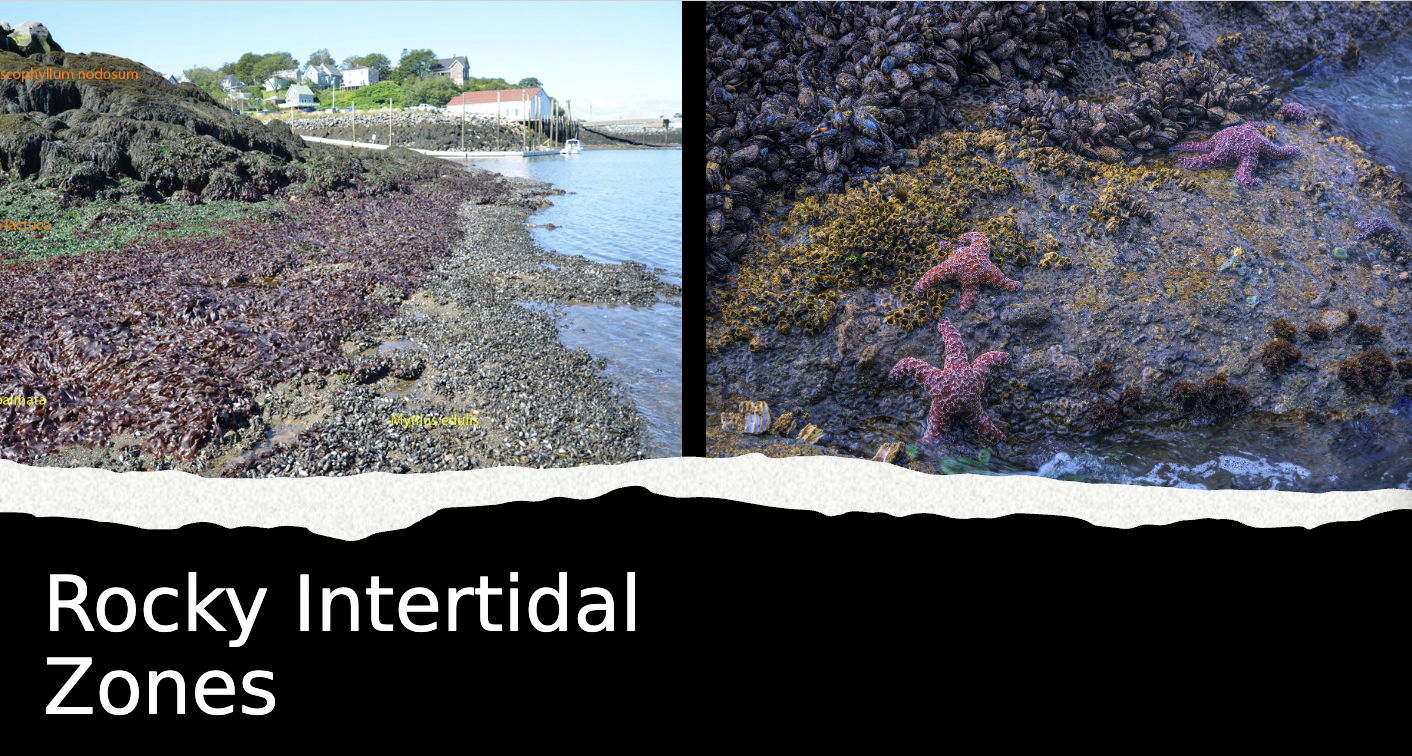
Rocky Intertidal
What are the rocky intertidal zones
Spray zone, Upper (high) intertidal, middle intertidal, lower intertidal
what is the spray zone
Located above the high tide line and wetted by splash and spray and occasionally by extremely high tides or storms
what is the upper (high) intertidal zone
Submerged during the high tide, but exposed and dry for long periods between the high tides.
what is the middle intertidal zone
Submerged and exposed whaby the tides on a regular basis
what is lower intertidal
Submerged most of the time. Only exposed during the lowest Spring tides.
what is vertical zonation
systematic horizontal layering of organisms into bands along a vertical gradient
What physical factors affect vertical zonation
Desiccation
thermal stress
changes in salinity
shortage of oxygen
reduced opportunities for feeding
wave shock
What organisms are in upper rocky intertidal
periwinkles - dominant
limpets
lichens
encrusting algae
what organisms are in middle intertidal
barnacles - dominant
mussels
seaweeds
what organisms are in lower intertidal /extreme lower
lower → irish moss
seaweeds
what are upper limits of species distributions
desiccation (drying up and dying from lack of moisture, instense sun or freezing winter)
Restriction of feeding (ex barnacles mussels) (filter feeders unable to feed when tide is out / even mobile feeders at risk of drying out when active
adaptations for upper limits of distribution
color → brown shell reflects solar radiation better than black / white shell reflect sunlight
stay cool → shell ridges radiate heat
high wave energy resistance → grow shorter so theres less resistance pushing from wave / flexibility allows them to flow in high current and not break
what biological factors affect zonation
larval and adult preference
competition
feeding/ predation
lower distributions limits
competition → space is a limiting facts / species can overgrow or undercut other species and dominate a level / impacts size of species realized niche
feeding and predation → predators limited by immersion time / ex: mussel beds sharp lower limit because of carnivorous sea stars
what is a keystone species
organism that holds together ecosystem and required for stability due to their large influence. removal often leads to reduced biodiversity or ecosystem collapse
Rocky intertidal keystone species
sea stars
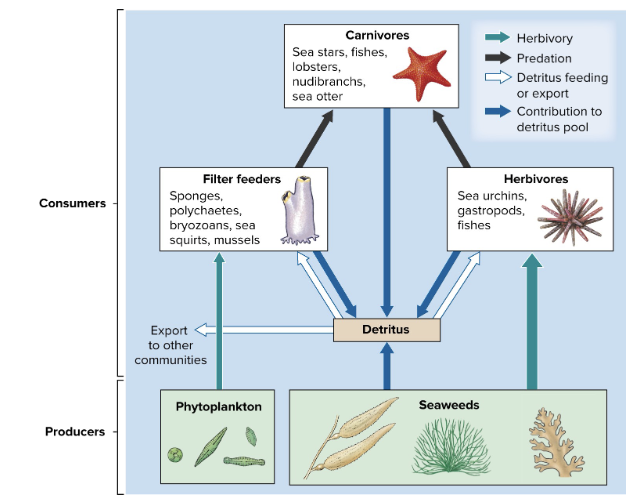
Subtidal Hard bottom environments (seaweeds and kelp forests)
characteristics of seaweeds (macroalgae)
eukaryotic
multicellular
photosynthetic
typically grow attached to substrate
lack true roots &vascular systems & absorb nutrients directly from water
many produce distasteful chemicals to deter grazing
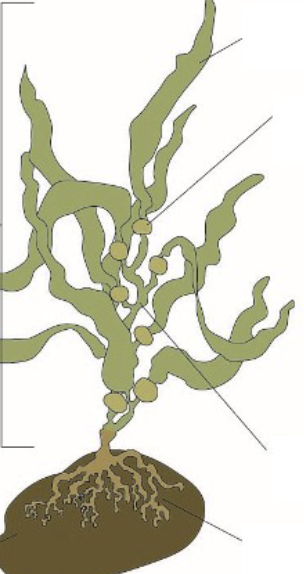
Anatomy
Thallus : can vary from tar like crust to elaborate branching with differentiated structures for light gathering, support, reproduction, flotation, and attachment
usually a holdfast, stipe, and blade(or frond)
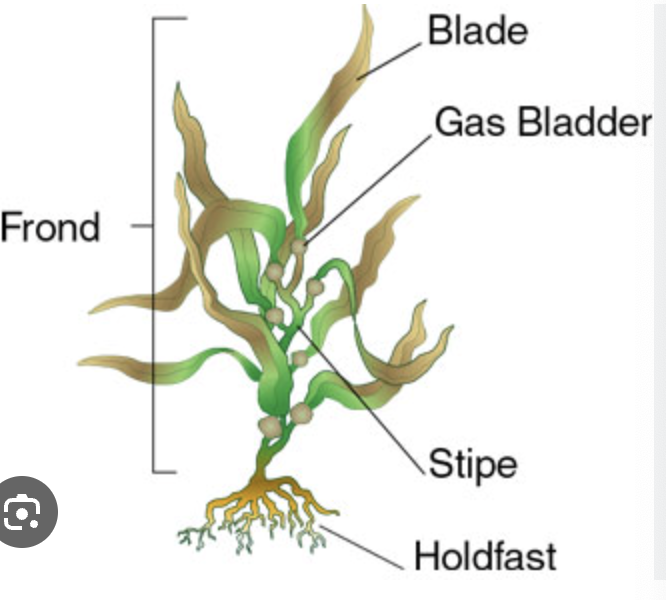
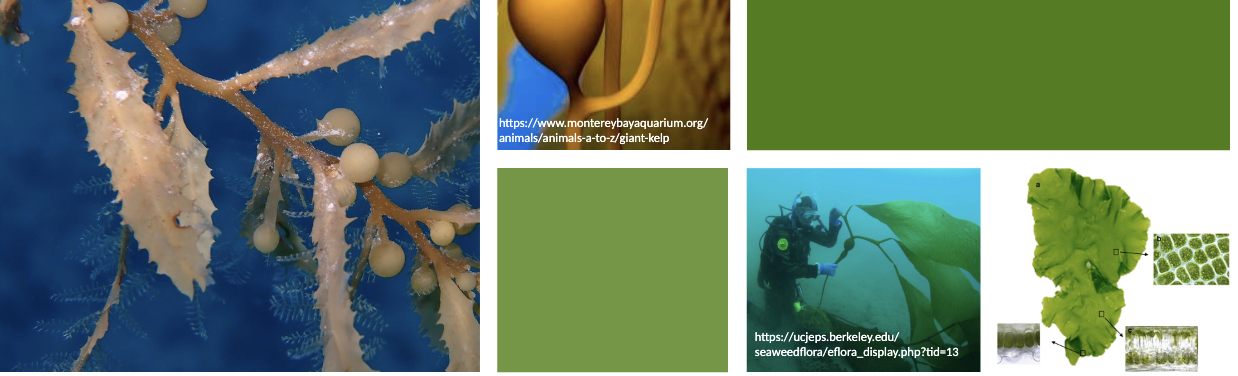
Blades and Pneumatocysts
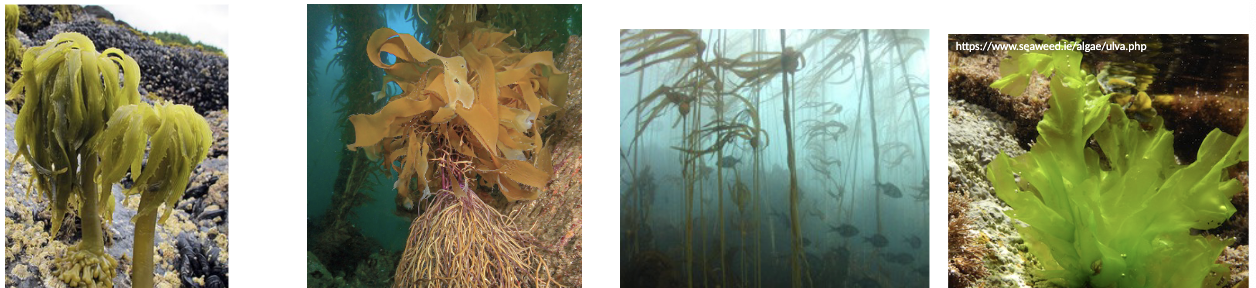
Stipes & Holdfasts
holdfasts attach macro algae to the substrate
stipes provide support and connect the blades and holdfast (in some groups stipe is well developed / others the blades merge into holdfast without stipe)
asexual reproduction
vegetative growth
sexualreproduction
larger seweeds alternate between sporophytes and gametophytes
prominence of these generations vary among species
red algae commonly have 3 distinct life cycle stages
how are seaweeds classified
pigments used to gather light for photosynthesis
storage products
types of flagella in spores
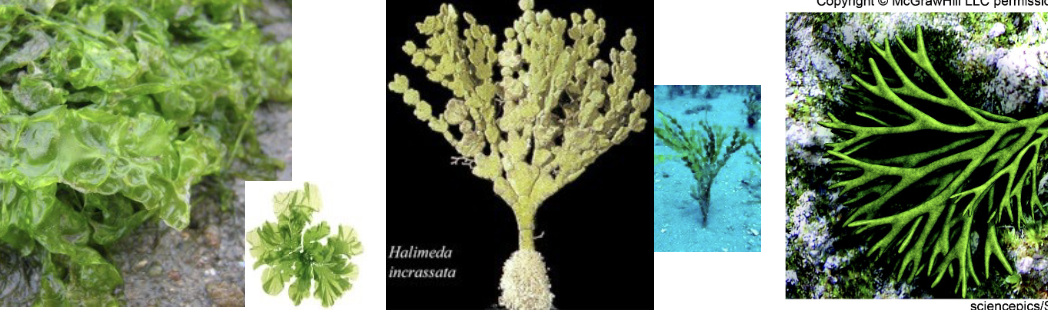
green algae characteristics (features, pigments, food reserves, cell wall components, ecology)
eukaryotic protists, unicellular and multicellular, mostly bottom dwelling, many have alteration of generation
pigments: chlorophyll a, b, carotenoids
food reserves: starch
cell wall components: cellulose, calcium carbonate in calcareous algae
ecology: primary producers, calcareous → important for reefs
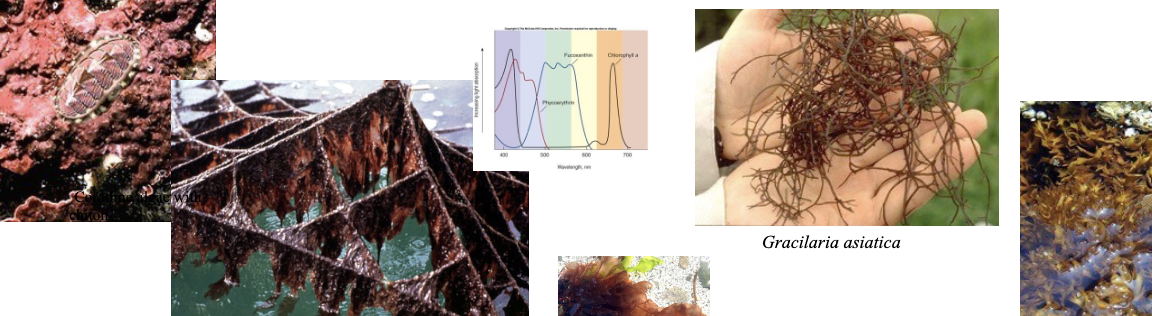
red algae (rhodophyta) characteristics (features, pigments, food reserves, cell wall components, ecology)
features: eukaryotic protists, multicellular, bottom dwelling, alteration 3 generations
pigments: chlorophyll a, phycobilins
food reserve: starch
cell wall: agar, carrageenan, cellulose, calcium in coralline
ecology: primary producers, coralline important for reefs
Brown seaweeds (Phaeophyta) characteristics (features, pigments, food reserves, cell wall components, ecology)
features: eukaryotic protists, multicellular, bottomdwelling, some alteration of generations
pigments: chlorophyll a,c, carotenoids
food reserves: laminarin, alginates
cell wall: cellulose, alginates
ecology: primary producers, dominate kelp forests
kelp forces’s influenced by
temperature
light levels
substrate
wave energy
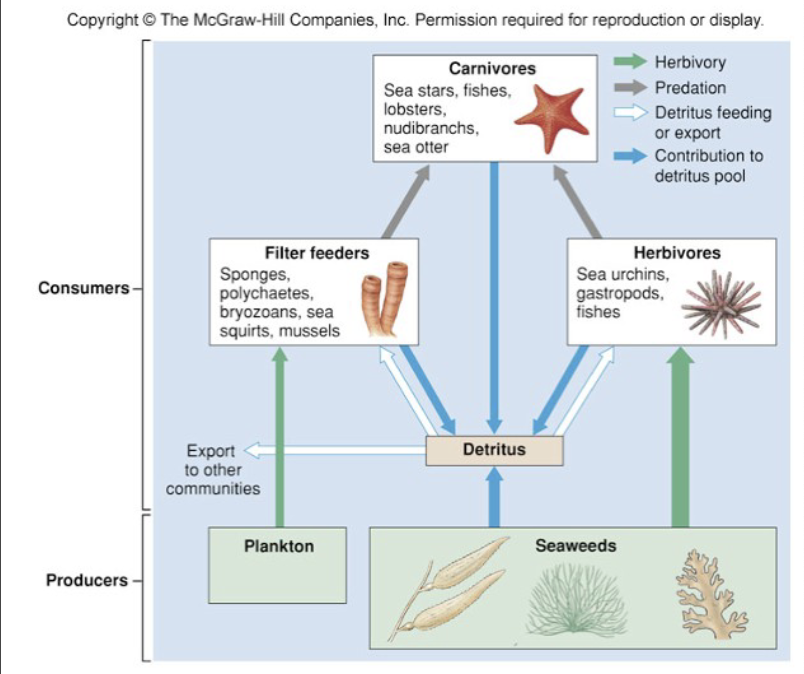
kelp forest food web
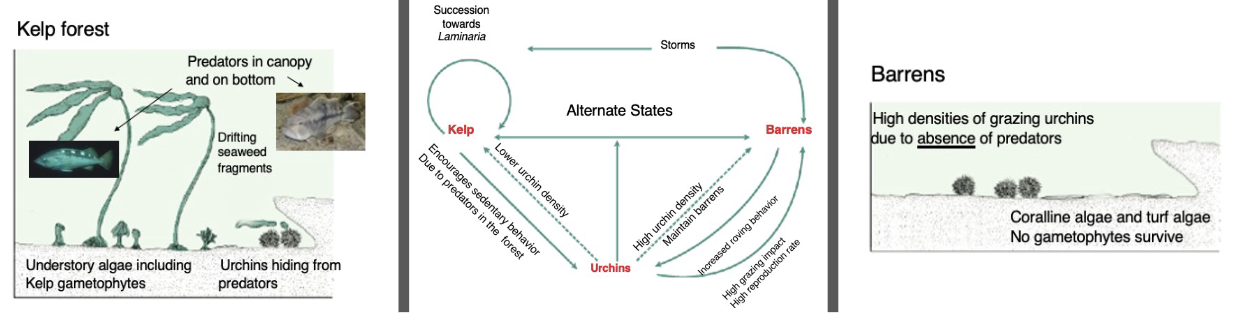
how do sea urchins affect kelp forests
sedentary behavior feed primarily on drift kelp
active feeding behavior large numbers strip away kelps/ seaweeds leaving urchin barrens
kelp forests key stone species
sea otters (if orcas eat too many → urchins overgraze and kill kelp)
soft bottom communities and estuaries
how does grain size affect type of organisms found (large/fine)
larger grain: provide site for attachment so epifauna and flora dominate
finer grain: often unstable / most organisms are infauna and meiofauna
intermediate grain: inhospitable because too unstable for epifauna but too large for infaunal
grain size relationship to porosity and permeability
A. well sorted (coarse) → water drains quickly
B. well sorted (fine) → water drains slowly
C. poorly sorted → water blocked
how does grain size affect oxygen availability and organic matter
Fine sediments → higher amounts of organic matter and reduced water flow → deficient in oxygen
Coarse sediments → lower amounts of organic material and greater water flow → more abundant oxygen
Size classifications
macrobenthos > 0.5mm
Meibenthos 0.1 - 0.5mm
microbenthos < 0.1mm
epibenthic / epifaunal
lives on top of seafloor attatched to surfaces
infaunal
lives buried within sediment
semi-infaunal
partially buried, part of body insediment, part exposed
interstitial
lives between sediment grains (tiny spaces in sand or mud)
demersal
lives just above seafloor, swims but stays near bottom
food web of soft bottoms
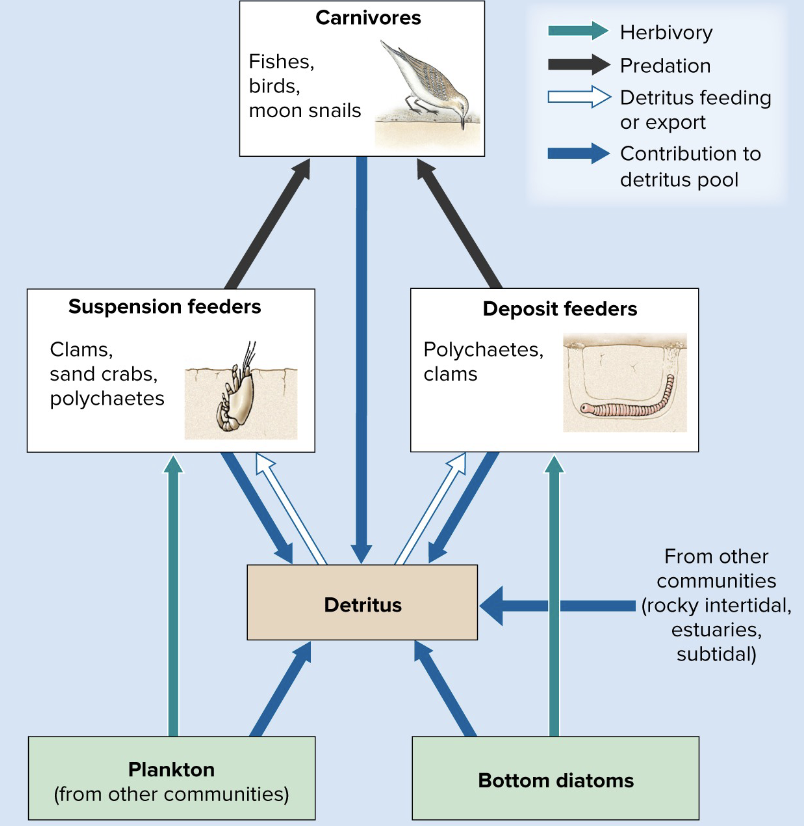
types of feeding
deposit feeding: eats organic material in sediment (swallows sand/ mud and extracts food)
suspension feeding: filters food particles from water (uses water currents to capture food)
what is an estuary
coastal area where freshwater from rivers mixes with saltwater from the ocean (usually partially enclosed)
what are the types of estuaries
tectonic: formed when land sinks or faults → sea water floods in
fjord / glacier carved : deep steep sided valleys carved by glaciers → flooded by ocean
drowned river valley/ coastal plain: river valleys flooded by rising sea level (broad and gentle sloping
bar built /restricted mouth: sand bars or barrier islands partially block the estuary from the ocean
circulation patterns in estuaries
freshwater flows out at surface and denser salt water flows along bottom → mixing and salinity gradient
salt wedge
partially mixed
well mixed
fjord type
estuary communities
open water in bays, channels, and tidal creeks: (plankton, floating algae, fish, larvae
mudflats: (snails, clams, worms shrimp, birds are major predators)
salt marshes
mangrove forests
oyster reefs
seagrass beds
salt marshes
where are salt marshes found
mid to high latitudes
what are the ecosystem services of salt marshes
coastal protection: reduce storm impact/ flooding, stabilize sediments and reduce erosion
habitat: nursery and nesting ground, foraging grounds, shelter
carbon storage: sequester more carbon than terrestrial forests
clean water: filter pollutants and runoff
salt marsh structure
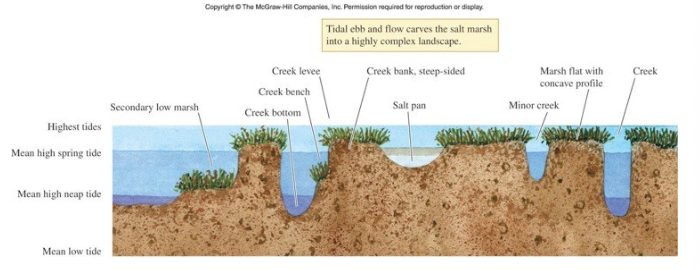
what are the challenging conditions in the salt marsh
waterlogged
anoxic sediments
high salt levels
what are salt adaptations
most are halophytes (salt tolerant plants)
salt glands (excrete excess salt)
succulence + concentrating salt into vacuoles in leaves that will be dropped
salt exclusion (filters out salt at the roots)
what are adaptations to anoxic sediments
aerenchyma tissue: spongy tissue helps oxygen move to submerged roots
adventitious roots: roots that grow from stems or above ground parts to help support and uptake oxygen
what is the dominant species in salt marsh and what does it do
Spartina: smooth cordgrass (acts as ecosystem engineer by trapping sediments, stabilizing shoreline & reduce erosion, build marsh elevation, create habitat, slow water flow increasing nutrient retention)
what is the georgia salt marsh zonation
tidal creek
levee
low marsh
high marsh
marsh border
transition communities
maritime climax forest
what is a levee
tidal creek banks / water aerated / less temp and salinity fluctuation / flow of nutrients/ tall form spartina
low marsh
majority of southern marshland / flooded several hours a day / more variable temp salinity/ short form spartina
high marsh
higher elevation/ flood tides barely enough cover surface for hour / high evaporation and salty / dwarf spartina if present at all
what factors are affecting salt marshes
salt pans: small high salt patches limit plant growth
thermal stress: extreme heat or cold damage plants
wrack: accumulated seaweed, debris, drift material that smothers vegetation
consumer pressure: grazing/ burrowing by animals reduce plant cover & alter structure
ice: freezing damages plants
what is detritus
dead plant & animal material that decomposes releasing nutrients at the base of the food web (feeds microbes, invertebrates, fish)
helps build soil and organic matter
flow of energy in a salt marsh
sun→ spartina and algae → insect herbivores & detritus → spiders & bacteria, nematodes and crabs, export by tide
threats to salt marshes
climate change
sea level rise
pollution
human activity
sea grass beds
how are sea grass beds ecosystem engineers
stabilize sediments protect against erosion
reduce wave action and currents
reduce turbidity and allow sediments to settle out
provide habitat for diverse groups of invertebrates and fish
nursery grounds
primary producers
carbon storage and oxygen production
sea grass food web
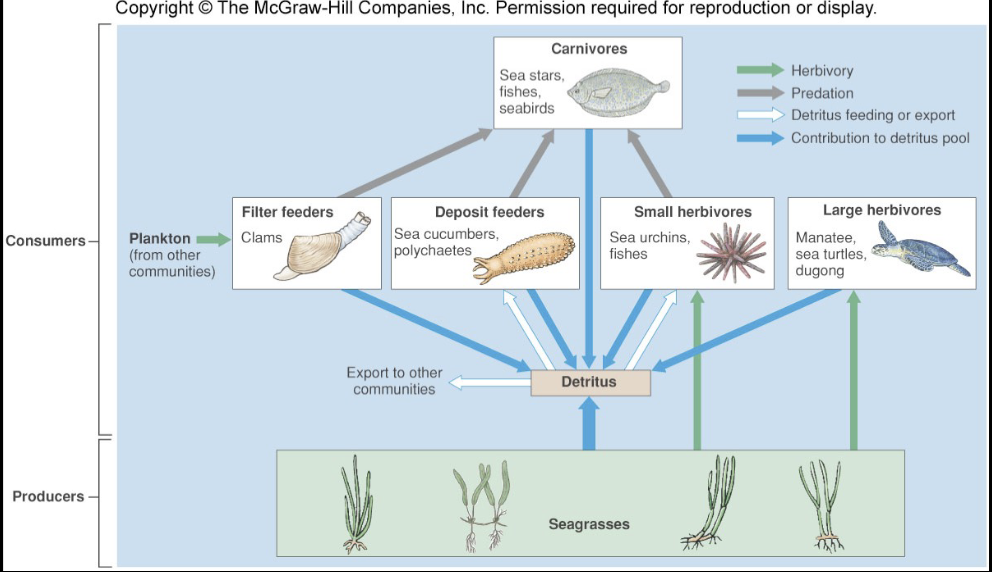
threats to seagrass communities
disease (ex wasting disease)
runoff (excess nutrients and pollution)
decreasing water clarity
dredging and sedimentation
prop scarring
mangrove forests
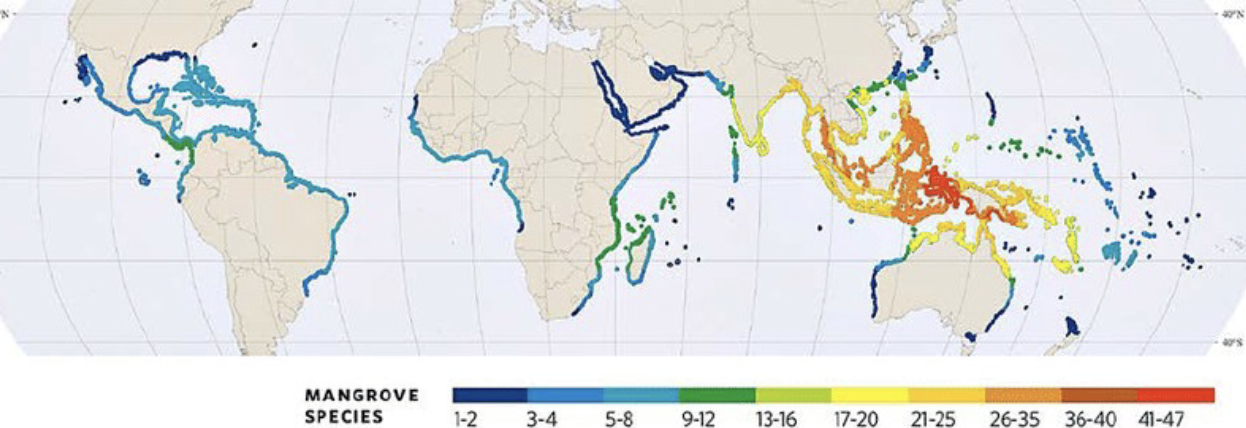
where are mangrove forests located
tropical and subtropical coastal areas
grow in intertidal zones along sheltered shores, estuaries, and lagoons
mangrove adaptations to salinity
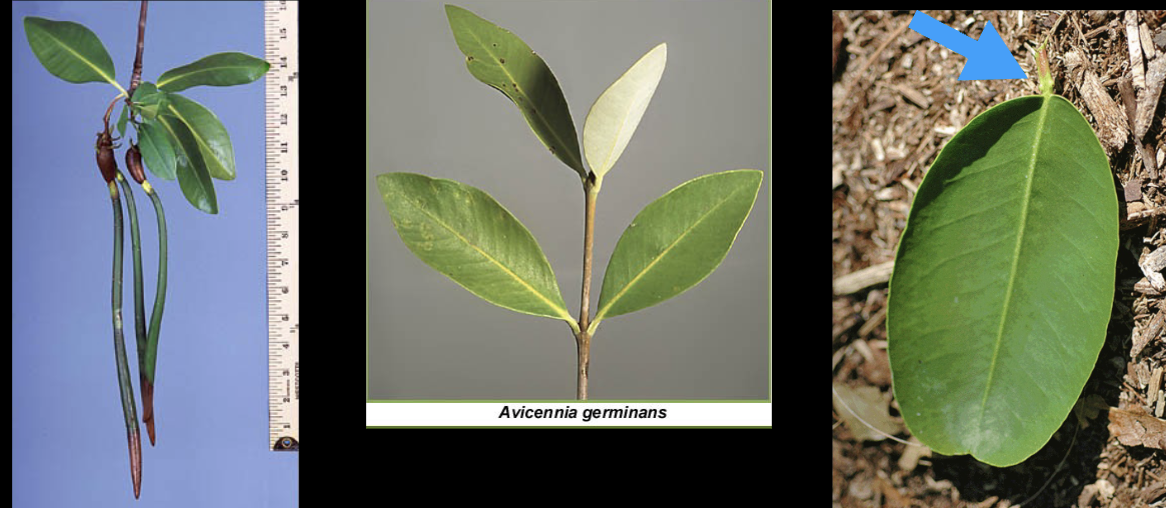
salt exclusion: ultrafiltration
salt glands: excretion
accumulation of salt in leaves that are shed
mangrove adaptations to low oxygen
red mangrove prop roots: roots above water to access oxygen
black mangrove pneumatophores: roots stick out of sediment to absorb oxygen
ecosystem services of mangroves
stabilize sediments protect shorelines
capture nutrient runoff and improve water quality protecting reefs
productive communities
nursery habitat for commercially and recreationally important species
food, shelter, and habitat for animals in water and canopy
types of florida mangrove
red mangrove
black mangrove
white mangrove
threats to mangroves
land clearing for coastal development
increased erosion from agricultural grazing
sewage and aquaculture outflow add concentrated nitrogen and phosphorus
sea level rise changes where they can grow

