Art Historical Studies: 19th & Early 20th Century Movements
 Call Kai
 Learn
Learn Practice Test
 Spaced Repetition
 Match
Match Flashcards
 Knowt Play
1/26

Earn XP
Description and Tags
This set of flashcards covers key vocabulary and concepts from 19th and early 20th-century art movements, including definitions and characteristics of each movement.
Name | Mastery | Learn | Test | Matching | Spaced | Call with Kai |
|---|
No analytics yet
Send a link to your students to track their progress
27 Terms
Impressionism
A movement characterized by loose painting, capturing light and atmosphere, often painted en plein air, depicting bourgeois leisure.
Neo-Impressionism
An art movement using Pointillism; utilizes dots of pure color to mix optically, based on scientific color theory.
Post-Impressionism
A movement that emphasizes internal emotional experience over external reality, featuring deliberate brushwork, expressive color and form.
Fauvism
An art movement known as 'The Wild Beasts' focusing on loud, non-descriptive color and vigorous brushwork.
Analytic Cubism
A style emphasizing fractured forms and near-monochromatic color, presenting simultaneous multiple views.
Industrial Architecture
Architecture characterized by the use of modern materials like metal and glass, without classical ornamentation.
Plein air
A style of painting outdoors to capture natural light and atmosphere.
Pointillism
A technique of painting using tiny dots of color that blend optically when viewed from a distance.
Simultaneous views
An artistic technique showing multiple perspectives within a single composition.
Impasto
A technique involving the application of thick layers of paint to create texture and depth.
Chromoluminarism
A theory of color used in Neo-Impressionist painting, focused on the interaction of colors and light.
Bourgeois leisure
Depictions of middle-class recreational activities commonly found in Impressionist paintings.
The Wild Beasts
A name given to the Fauvist artists known for their bold colors and brushwork.
Exaggerated hands/faces
A characteristic in some Post-Impressionist works where features are distorted for emotional impact.
Simultaneous multiple views
A technique found in Cubist works where different perspectives are shown in one image.
Tempera
A fast-drying painting medium made from colored pigments mixed with a water-soluble binder.
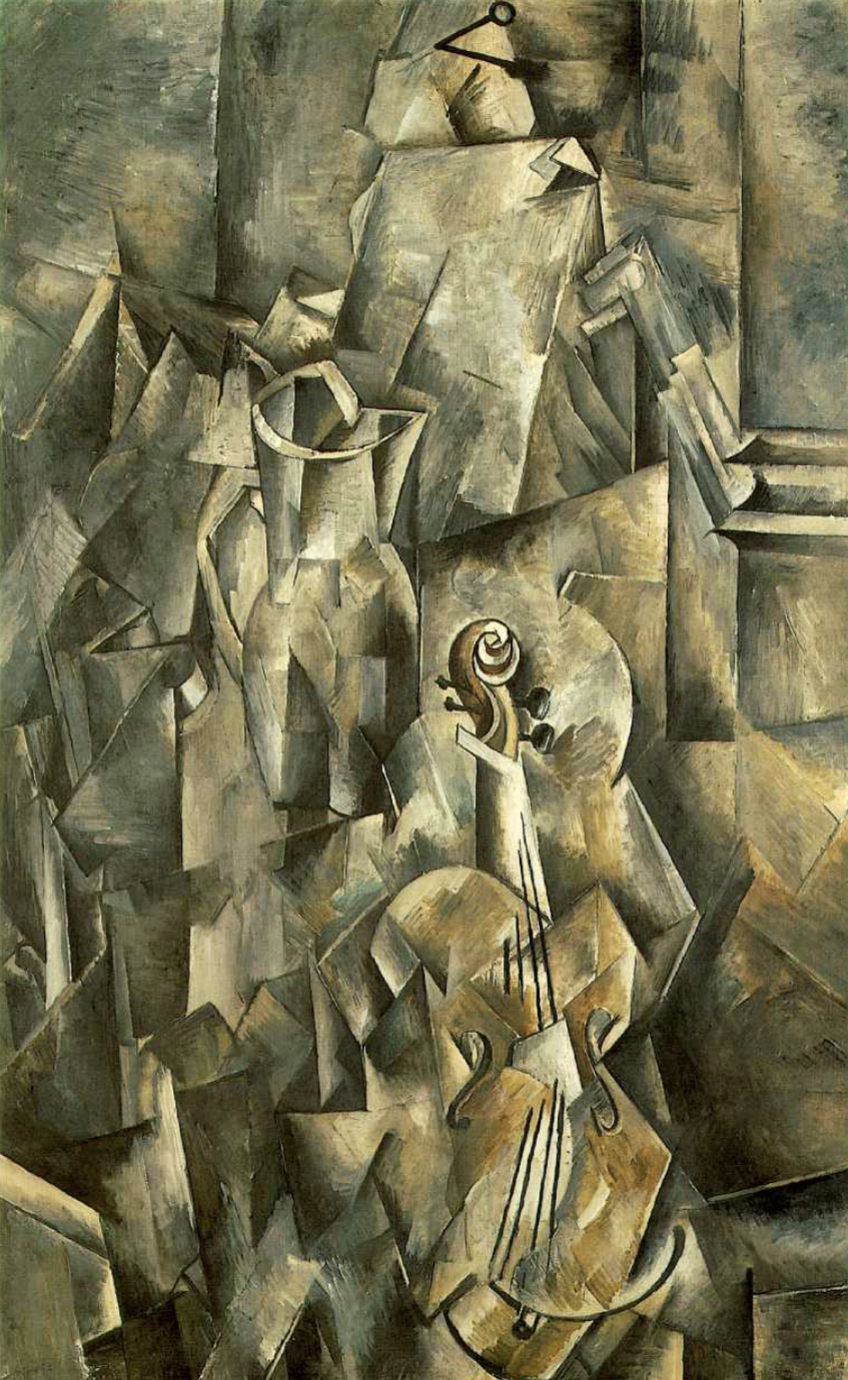
Georges Braque (Violin and Palette) 1909-10
MOVEMENT: Analytic Cubism
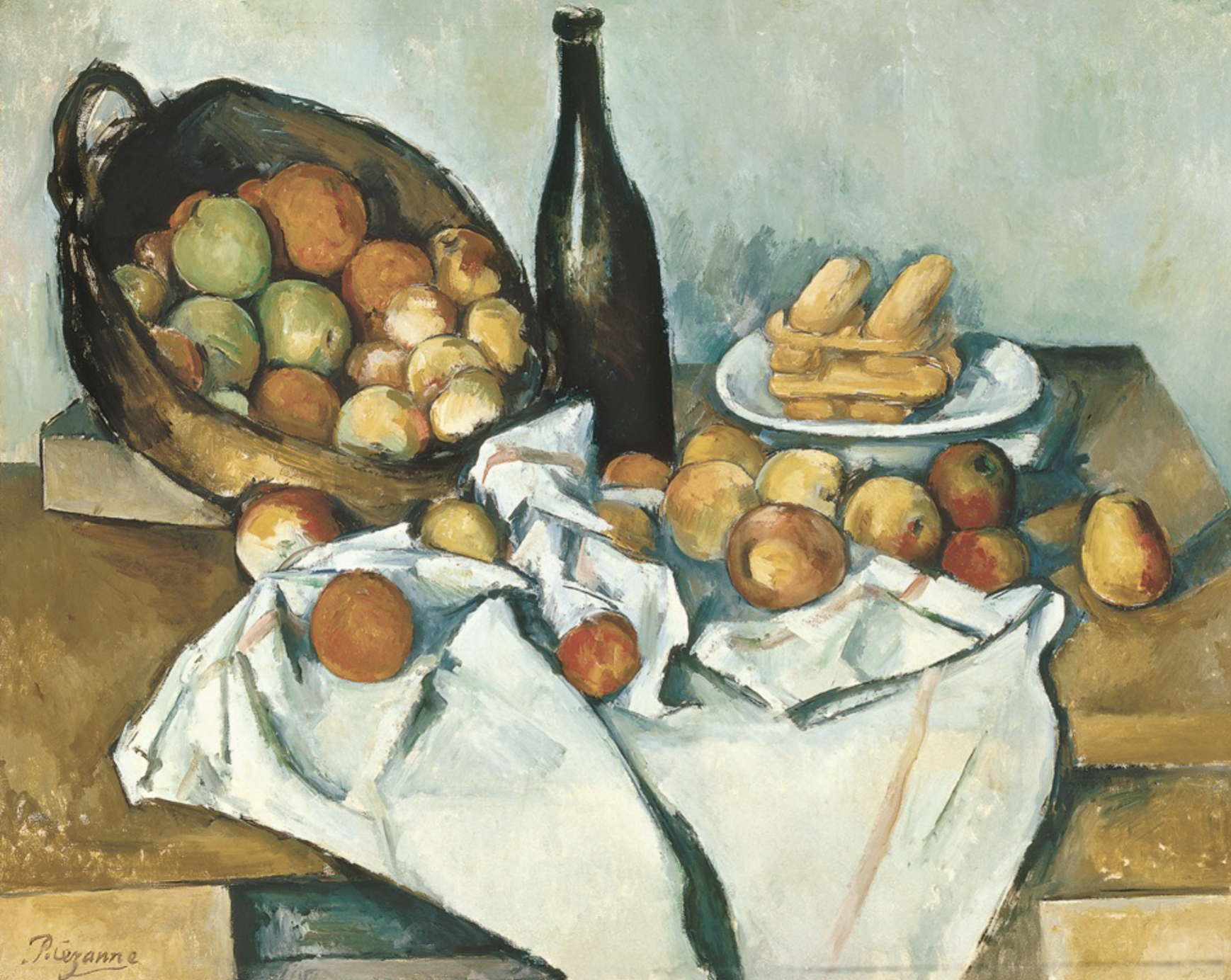
Paul Cezanne (Still Life with Basket of Apples, 1880-94)
MOVEMENT: Post-Impressionism, known for its unique brushstroke and color application.
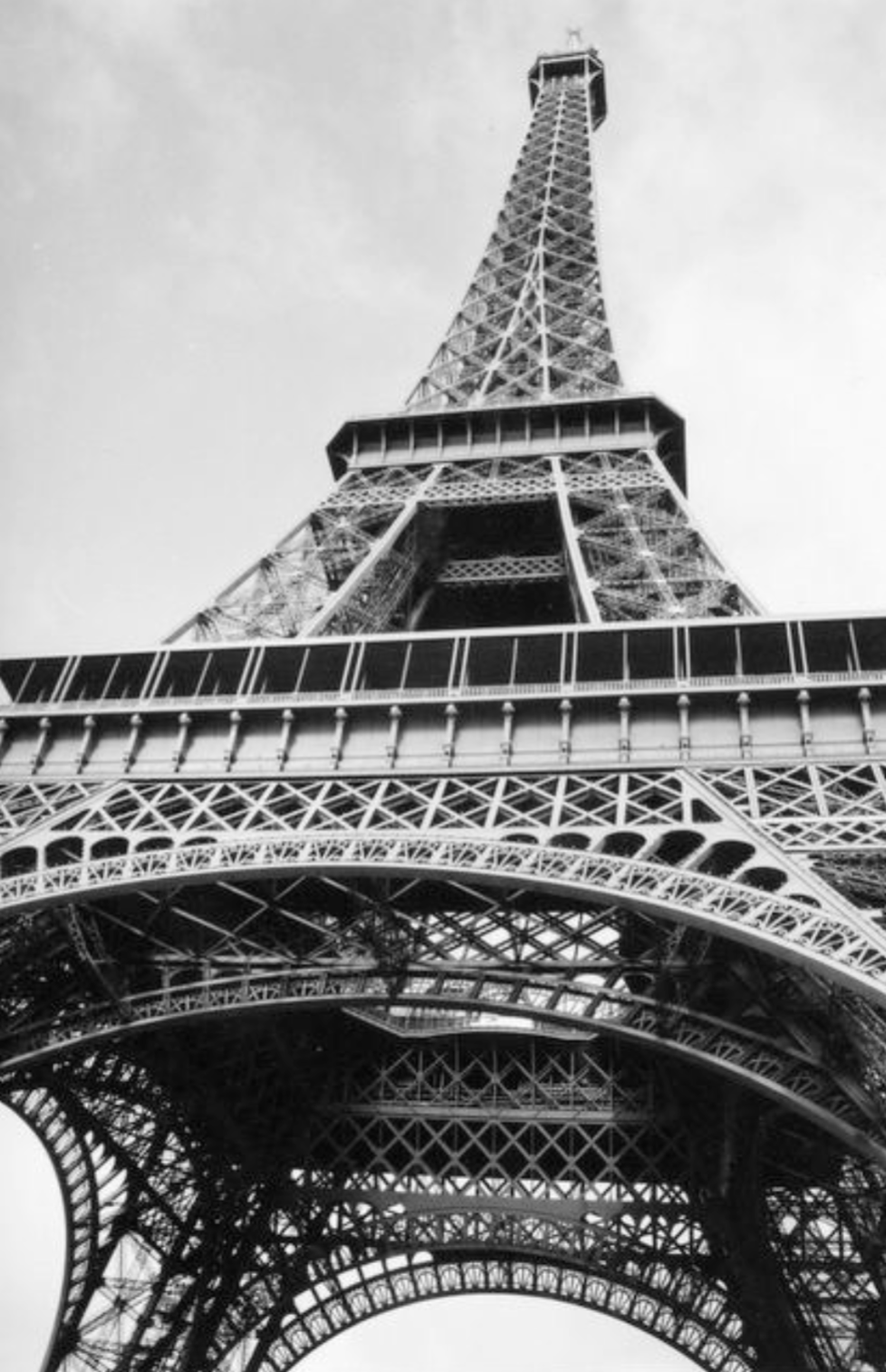
Gustave Eiffel (Eiffel Tower, Paris, 1887-89)
MOVEMENT: Industrial Architecture, built for the World’s Fair. Wrought iron open-frame.
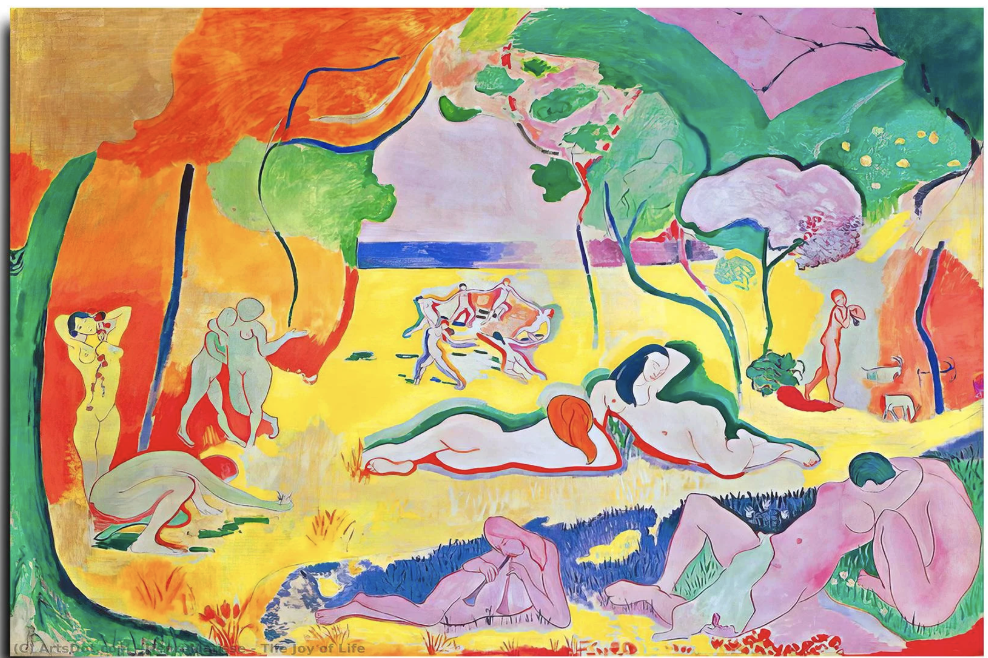
Henri Matisse (The Joy of Life, 1905-06)
MOVEMENT: Fauvism, Female nudes in a pastoral setting - classical subject subverted by radical colour.
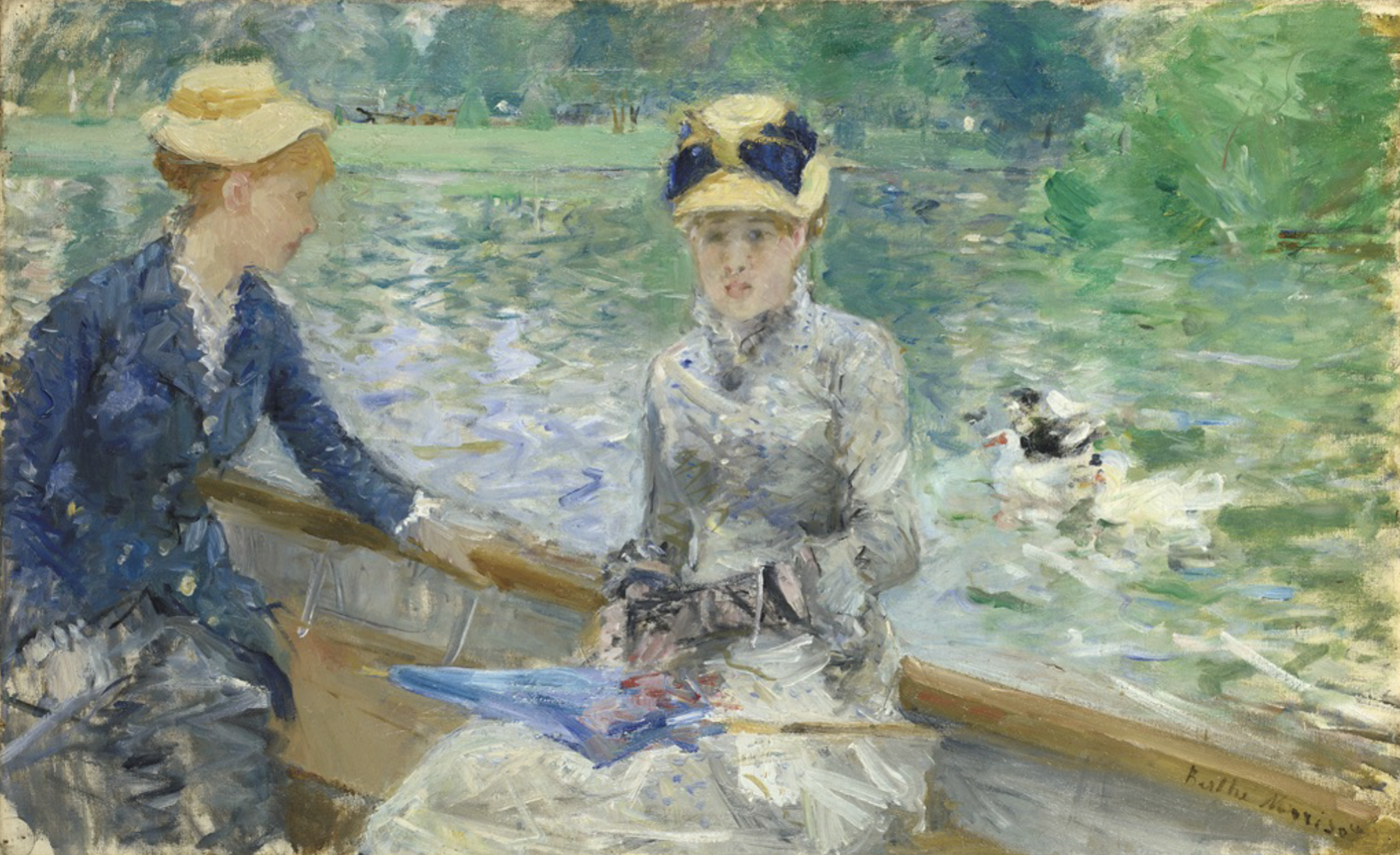
Berthe Morisot (Summer’s Day, 1879)
MOVEMENT: Impressionism, Plein air, loose brushwork; bourgeois leisure on the water.
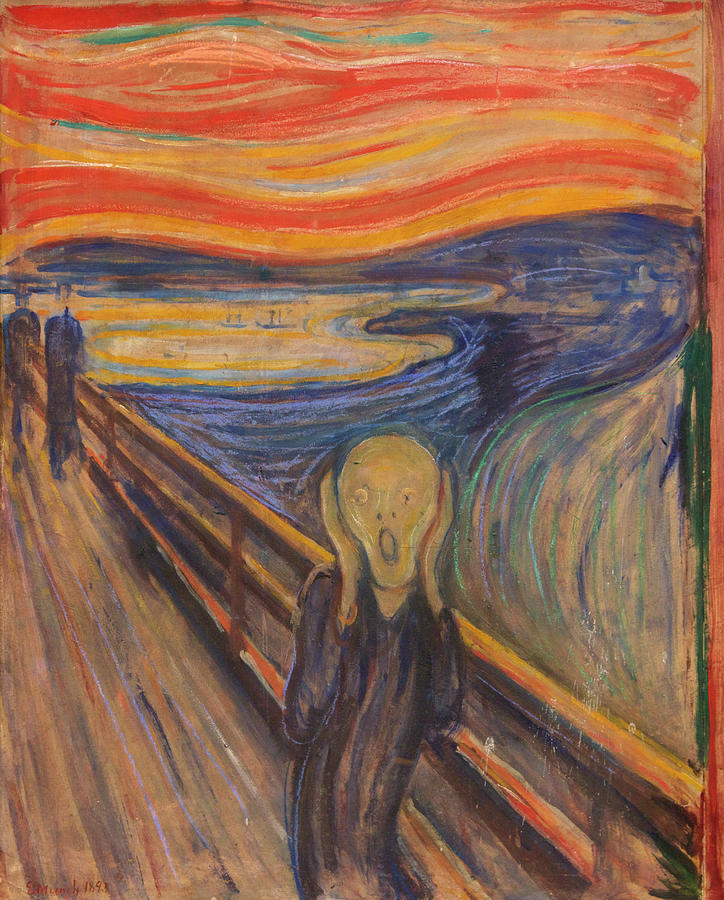
Edvard Munch (The Scream, 1910)
MOVEMENT: Expressionism, Tempera on board; multiple versions. Based on a real personal experience. Swirling landscape amplifies universal anxiety and dread.
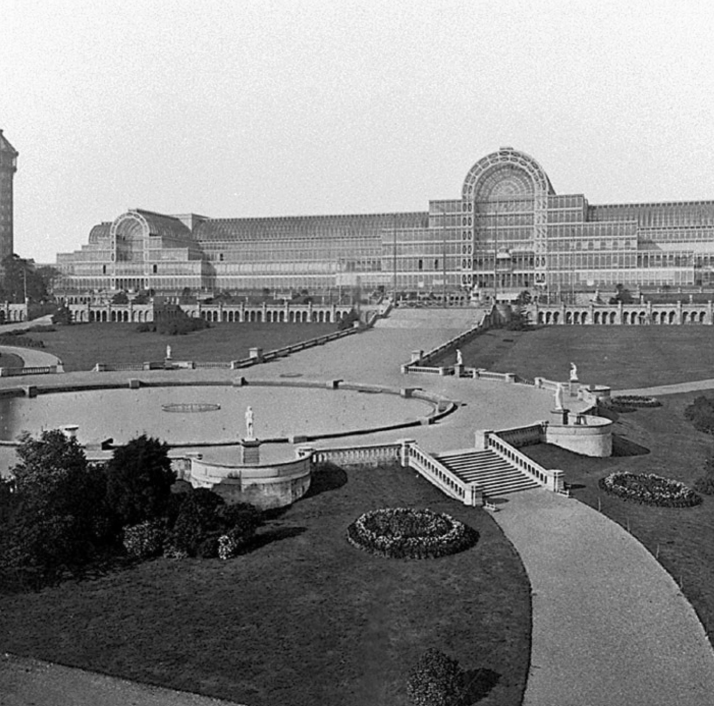
Joseph Paxton (Crystal Palace, London, 1850-51)
MOVEMENT: Industrial Architecture, Built for London’s World’s Fair. Cast iron and glass. Later destroyed by fire.
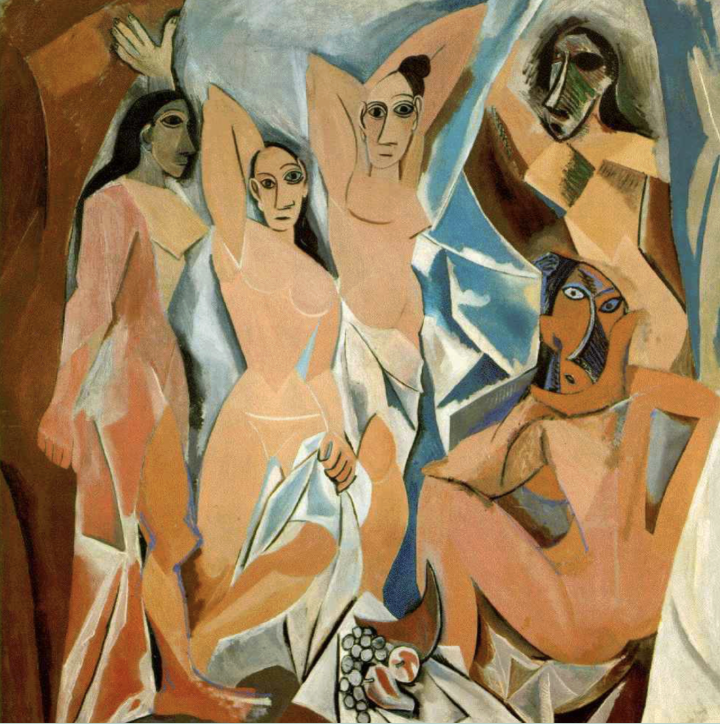
Pablo Picasso (Les Demoiselles d’Avignon, 1907)
MOVEMENT: Proto-Cubism, Large scale, Primitivism/African masks, right two more angular. Shows simultaneous views.
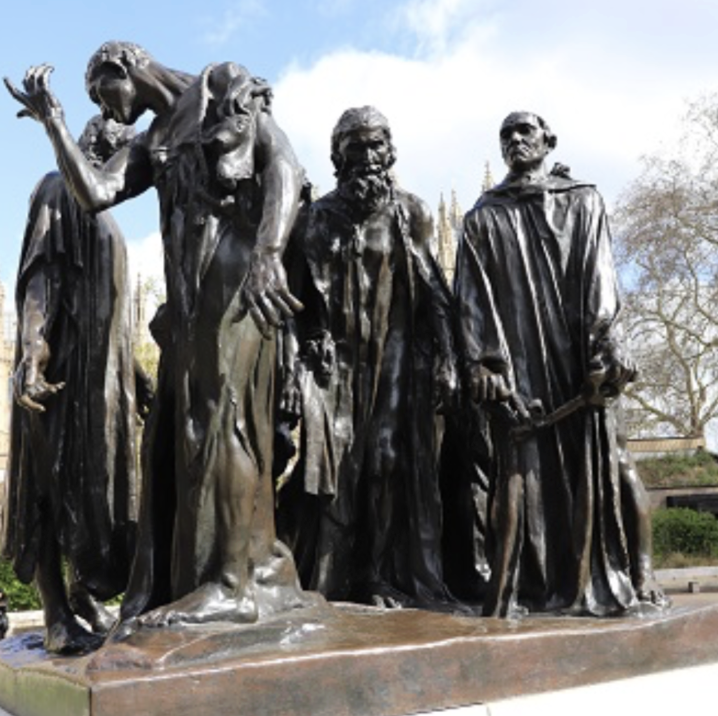
August Rodin (The burghers of Calais, 1884-86)
MOVEMENT: Post-impressionism, anti-heroic monument, anguish. Not triumph. Figures placed at ground level (controversial). Pressed fabric into clay.
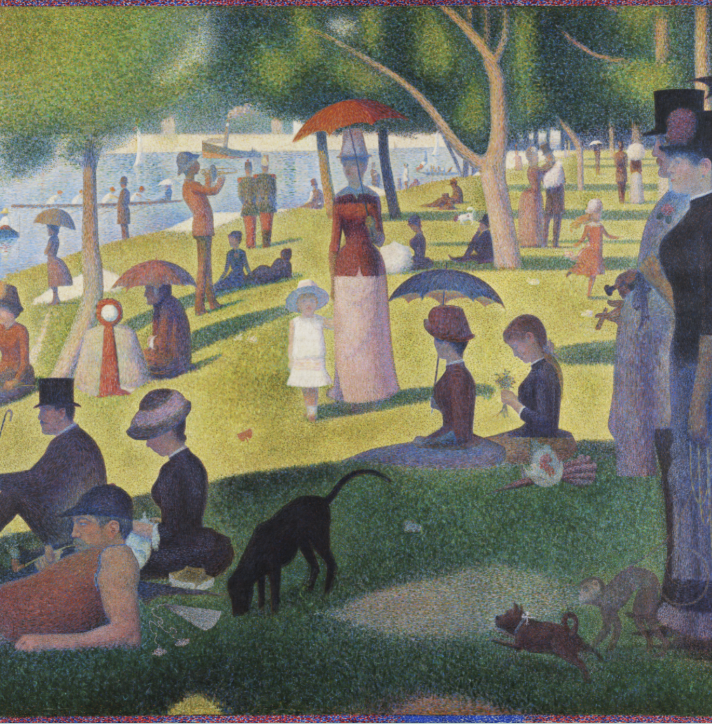
Georges Seurat (A Sunday Afternoon on the Island of La Grande Jatte, 1884-86)
MOVEMENT: Neo-Impressionism, Pointillism/Divisionism - tiny dots of complementary colour. Chromoluminarism: scientific colour theory. Monumental scale; bourgeois leisure.
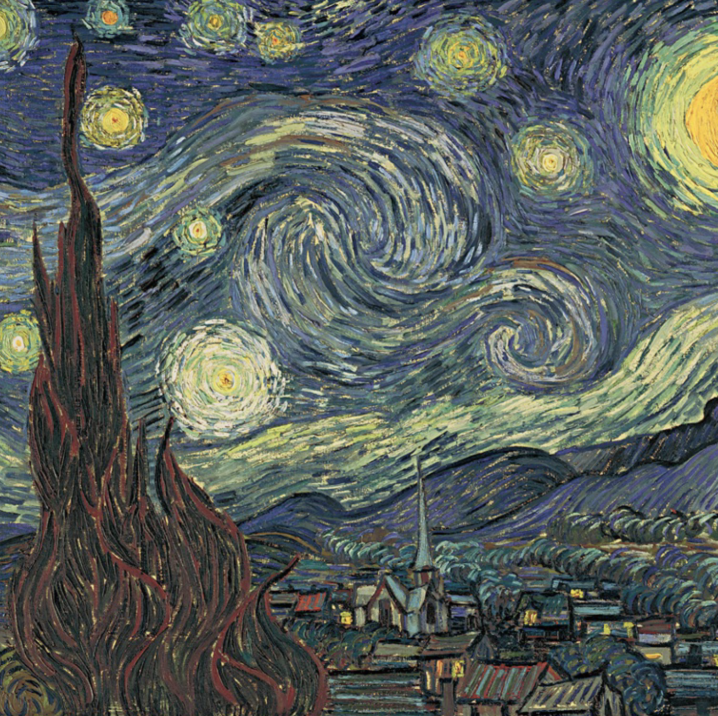
Vincent Van Gogh (The Starry Night, 1889)
MOVEMENT: Post-Impressionism, Impasto - thick, expressive paint application. The swirling sky conveys emotional intensity—art created for personal expression.

