Parasitology Midterm 2 Review
 Call Kai
 Learn
Learn Practice Test
 Spaced Repetition
 Match
Match Flashcards
 Knowt Play
1/27

There's no tags or description
Looks like no tags are added yet.
Name | Mastery | Learn | Test | Matching | Spaced | Call with Kai |
|---|
No analytics yet
Send a link to your students to track their progress
28 Terms
Ingested eggs source of infection
Taenia solium
Hymenolepis nana
Echinococcus granulosis
Echinococcus multilocular
Vegetables source of infection
Fasciolopsis buski
Fasciola hepatica
Gastrodiscoides hominis
Skin penetration source of infection
Schistosoma mansoni
Schistosoma haematobium
Schistosoma intercalatum
Schistosoma japonicum
Schistosoma mekongi
Fish source of infection
Diphyllobothrium latum
Spirometra sp. (sparganosis)
Clonorchis sinensis
Opisthrochis viverrini
Heterophyes heterophyes
Echinostoma sp.
Nanophyetes salminocola
Crustacean source of infection
Paragonimus westermani (freshwater crabs and crayfish)
Pork source of infection
Taenia solium
Paratenic host
Spirometra sp. (sparganosis)
Excretory system
Cestodes – flame cell
Trematodes – flame cell
Diseases
Katayama fever – Schistosoma japonicum
Swimmer’s Itch - Ornithobilharzia, Austrobilharzia, Dendrobilharzia
Anthelminthics
Praziquantel
Platyhelminthes except Fasciola
Mode of action
Praziquantel
effects permeability of worms to calcium causing paralysis due to tonic muscle contractions
Cestodes and Larval stages
Cestodes Stage
Taenia solium
Taenia saginata
Taenia asiatica
Echinococcus granulosis
Echinococcus multilocularis
Hymenolepis nana
Hymenolepis diminuta
Dipylidium caninum
Larval Stage
Cysticercus
Cysticercus
Cysticercus
Cystic hydatid
Alveolar hydatid
Cysticercoid
Cysticercoid
Trematodes
Fasciola hepatic
Liver (tissue migration)
Fasciolopsis buski
Small intestine
Clonorchis sinensis
Liver
Dicrocoelium dendriticum
Liver
Opisthorchis viverrini
Liver
Gastrodiscoides hominis
Large intestine
Echinostoma sp.
Small intestine
Heterophyes heterophyes
Small intestine
Paragonimus westermani
Lung (tissue migration)
Schistosomes
Schistosoma mansoni
Inferior mesenteric vein
Schistosoma haematobium
Inferior mesenteric to visceral plexus
Schistosoma japonicum
Superior mesenteric vein
Migrations
Fasciola hepatic - penetrates small intestine → Glisson’s capsule (liver) → biliary ducts
Paragonimus westermani - penetrates small intestine → abdominal cavity → penetrate diaphragm → pleural cavity → penetrate into lungs and airways
Schistosoma – penetrates skin → Venous/lymphatics → Right heart → lungs → left heart → liver ( pair) → mesenteric veins
Laboratory
Sheather’s or ZnSO4 floatation
Concentration (no good for Schistosoma)
Ether/ethyl acetate sedimentation
Concentration
Kato-Katz quantitative egg count
Worm burden estimate
Stoll’s dilution quantitative egg count
Worm burden estimate
Primary lesions
Romana’s sign
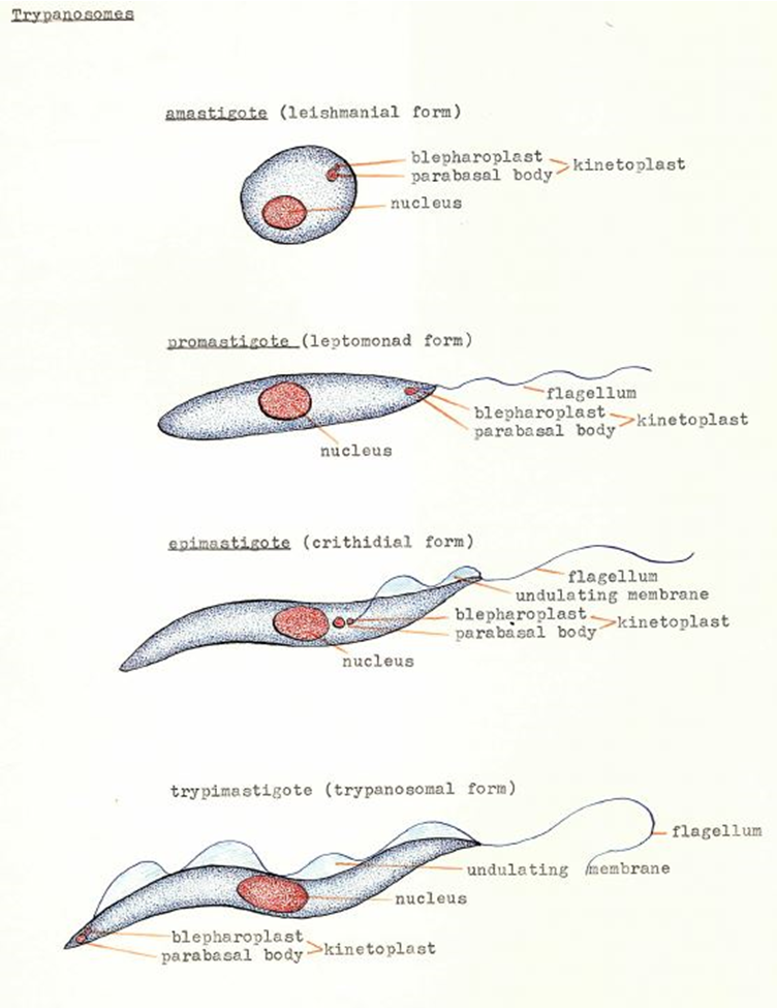
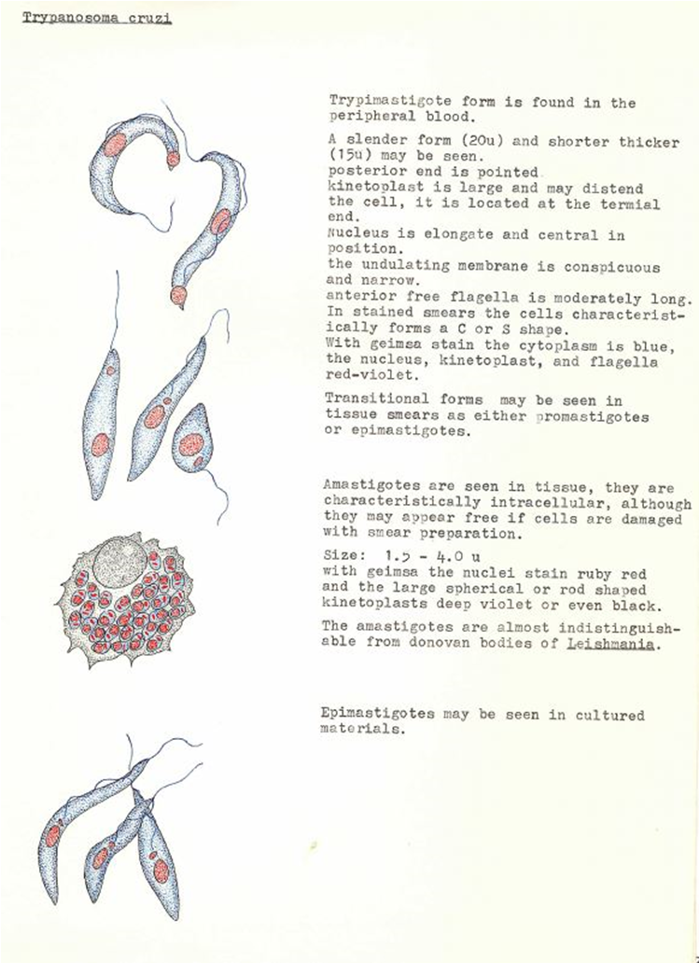
Trypanosoma cruzi
Chagoma
Trypanosoma cruzi
Winterbottom’s sign
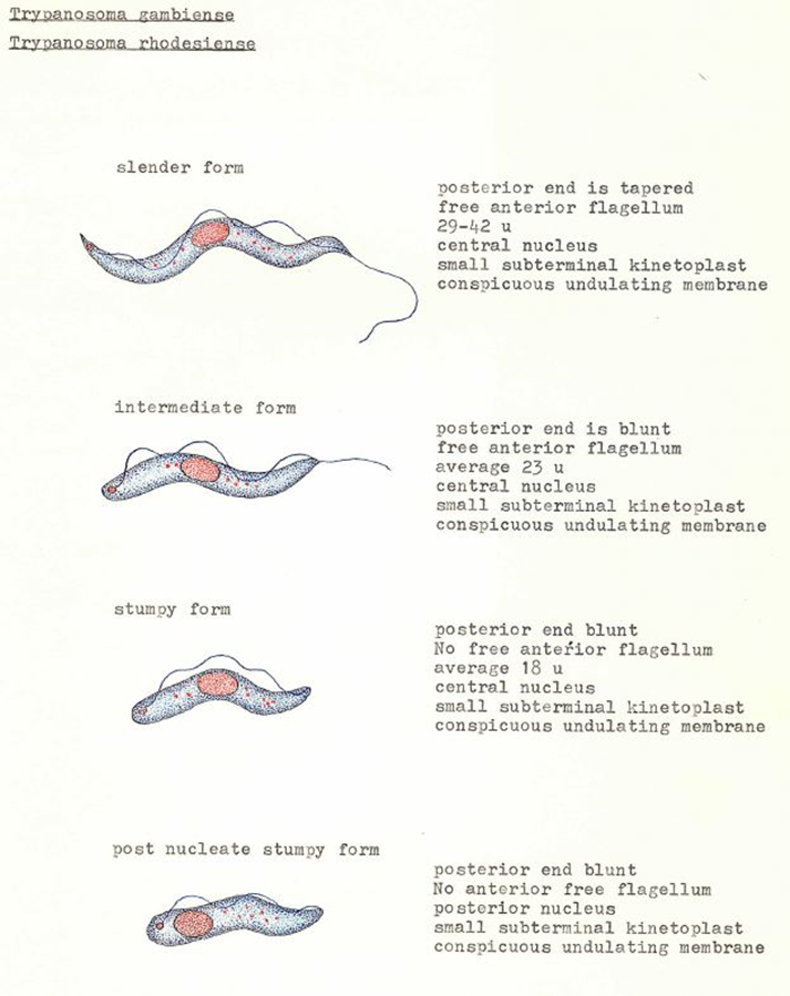
Trypanosoma brucei gambiense
Trypanosomal chancre
Trypanosoma brucei
Malaria clinical and P. falciparum sequestration
Malaria clinical
The classical (but rarely observed) malaria attack lasts 6-10 hours. It consists of:
a cold stage (sensation of cold, shivering)
a hot stage (fever, headaches, vomiting; seizures in young children)
and finally a sweating stage (sweats, return to normal temperature, tiredness).
Hepatosplenomegaly
Severe forms
Black water fever
Cerebral malaria
Severe anemia
P. falciparum sequestration
Sequestration, the adherence of infected erythrocytes containing late developmental stages of the parasite (trophozoites and schizonts) to the endothelium of capillaries and venules
Proteins on RBC Surface interact with endothelial surface to effect adhesion
Most of these proteins are of parasite origin (PHEMP1, KAHRP)
Disappearance of plasmodia from blood stream
Pathogenesis related to microvascular blockage
Vectors
Reduviid bug (Reduviidae)
Sand fly (Phlebotomus, Lutzomyia)
Mosquito (Anopheles)
Hard tick (Ixodes)
Tsetse fly (Glossina)
Trypanosoma cruzi, T. rangeli
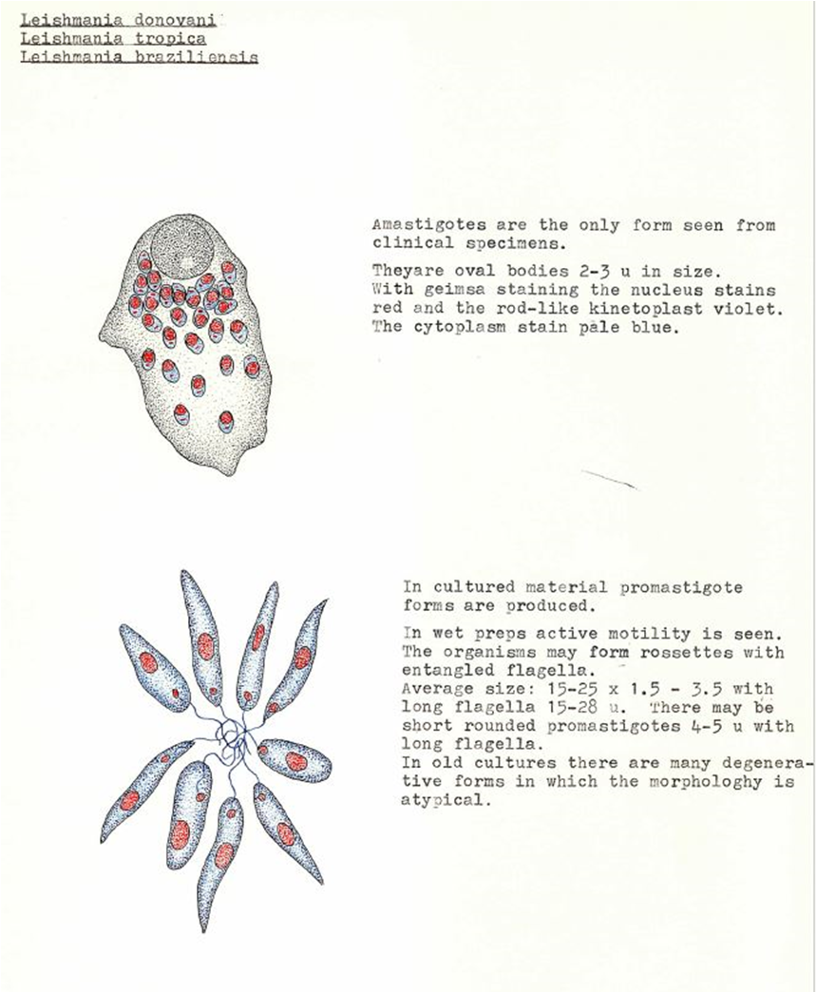
Leishmania donovani, L. major, L. tropica
Plasmodium species
Babesia species
Trypanosoma brucei
African sleeping sickness
West African sleeping sickness
Trypanosoma brucei gambiense
West and Central Africa
Rivers and streams
Chronic – years
Winterbottom’s sign
Encephalitis lethargica
Test – lymph node, CSR
East African sleeping sickness
Trypanosoma brucei rhodesiense
East Africa
Savanah
Subacute – months
Trypanosomal chancre
Pericarditis
Test – blood, pericardial fluid
Malaria
Hemoglobin S
Africa, Mediterranean, Middle East, India
Hemoglobin C
West Africa
Hemoglobin E
South East Asia
Thalassemia
Africa, Mediterranean, Middle East, Asia
G6PD deficiency
Mediterranean, Middle East, China
Duffy negative
Africa
Southeast Asian ovalocytosis
Malaysia, New Guinea
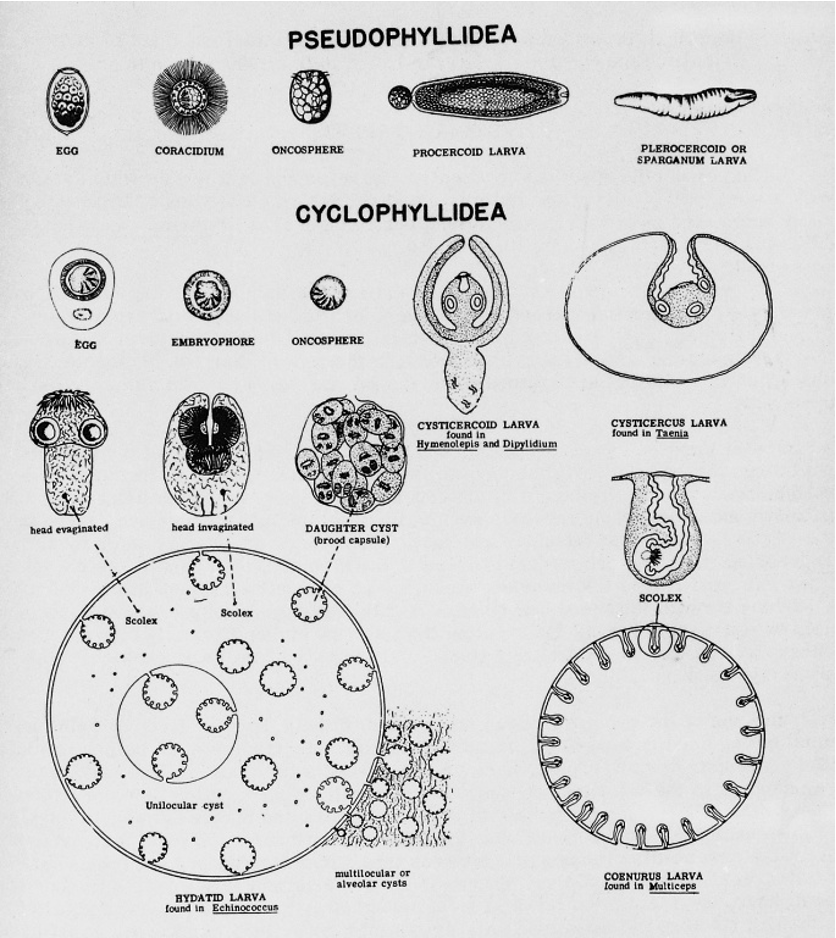
larvae
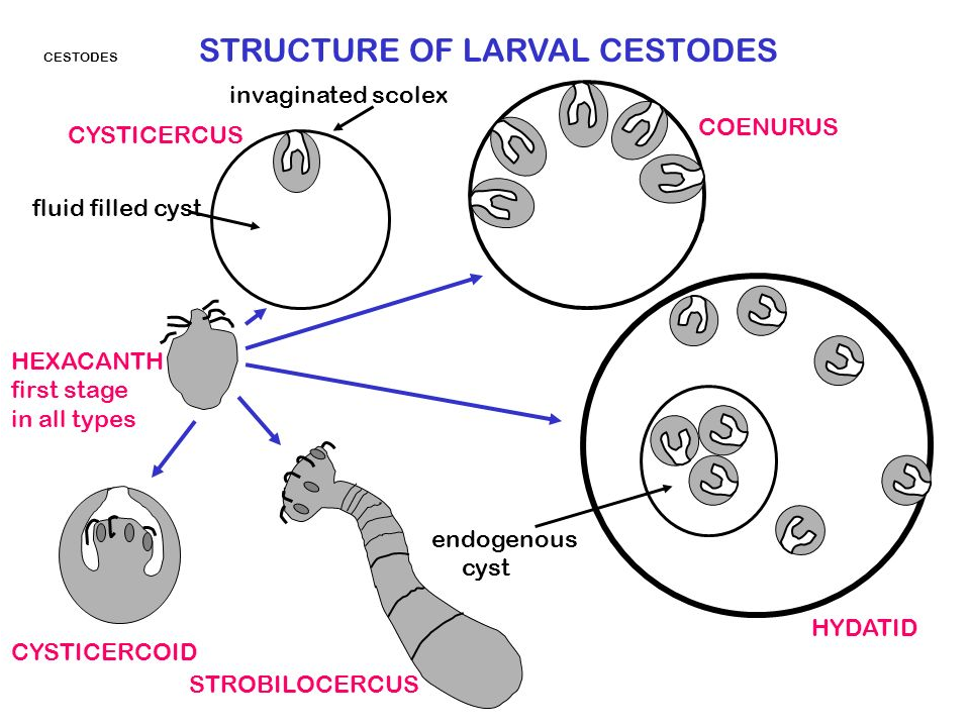
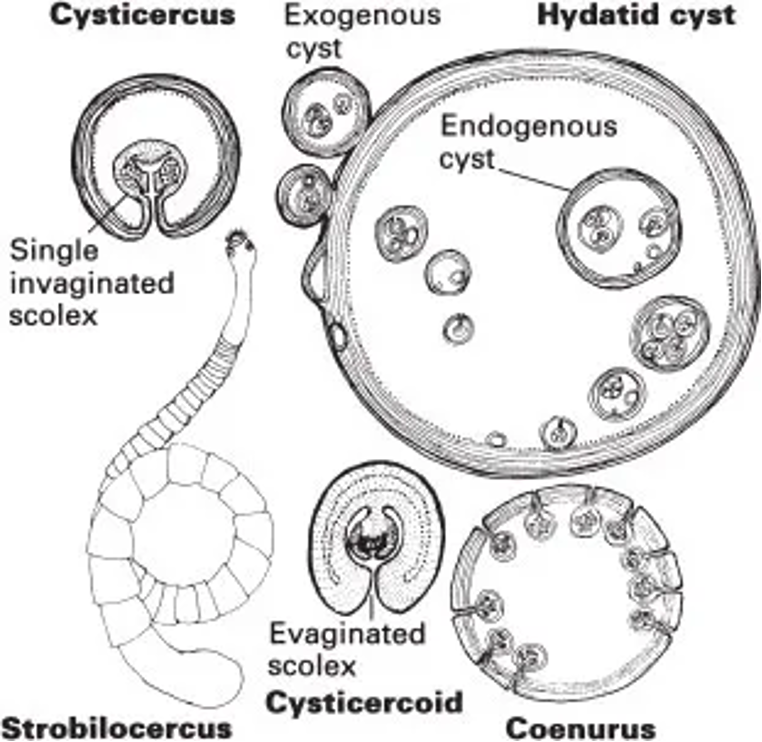
Larvae
Cysticercus
Cysticercoid
'Hydatid
Coenurus
Procercoid
Plerocercoid
Stages in life cycle
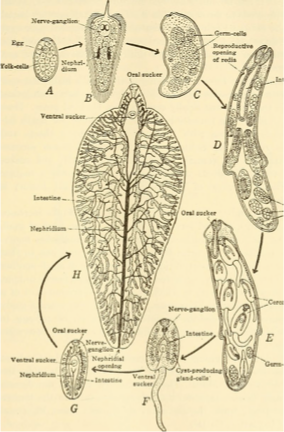
Egg
Miracidia
Sporocyst
Daughter sporocyst
Redia
Mother redia
Daughter redia
Cercaria
Metacyst
Schistosomula (schistosomes only)
Adult
Malaria Antigen detection
Histidine-rich protein II (HRP-II)
P. falciparum
Present for weeks/months after treatment
Aldolase
All species
Clears quickly with treatment
parasite Lactate dehydrogenase (pLDH)
All species
Low level parasitemia (<100 parasites/µl)
microscopists can diagnose infections with parasitemia as low as 5-10 parasites/µl
Good sensitivity & specificity
Lateral flow technology
5-20 minutes
5 Parasitic Diseases Targeted CDC
Chaga’s disease – Trypanosoma cruzi (hemaflagellate)
Cysticercosis – Taenia solium (cestode)
Toxocariasis – Toxocara canis (nematode)
Toxoplasmosis – Toxoplasma gondii (coccidian protozoan)
Trichomoniasis – Trichomonas vaginalis (flagellate protozoan)

