glutamate receptors
 Studied by 0 people
 Call Kai
 Learn
Learn Practice Test
 Spaced Repetition
 Match
Match Flashcards
 Knowt Play
1/69

Earn XP
Description and Tags
Name | Mastery | Learn | Test | Matching | Spaced | Call with Kai |
|---|
No analytics yet
Send a link to your students to track their progress
70 Terms
true or false: glutamate receptors are the most abundant neurotransmitter receptors in the brain
true
other types of neurotransmitters in the brain that lead to EXCITATORY effects (and therefore cause depolarisation)
acetylcholine
catecholamine (noradrenaline, dopamine)
serotonin
GABA
what receptor(s) does acetylcholine activate
ionotropic nicotinic receptors → depolarisation
metabotropic muscarinic receptors
difference between ionotropic and metabotropic receptors
ionotropic - fast-acting ligand-gated ion channels that open immediately when a neurotransmitter binds, causing rapid ion flow and changes in membrane potential
metabotropic - indirect, slower, G-protein coupled receptors (GPCRs) that trigger long-lasting intracellular cascades, leading to more prolonged effects
how does acetylcholine binding to metabotropic muscarinic receptor lead to depolarisation
because voltage gated K+ channels are inhibited
what receptor does serotonin activate
ionotropic 5HT3 receptors
why can dopamine and noradrenaline have both excitatory and inhibitory effects
because it depends on their intracellular signalling pathway
how can nitric oxide (NO) lead to excitatory effects
activates presynaptic cGMP signalling
what are glutamate receptors classified as
ionotropic glutamate receptors ae ligand-gated ion channels which means binding of glutamate causes opening of channel pore to allow ion influx
whereas metabotropic glutamate receptors are GPCR where binding of glutamate actives G-proteins and intracellular signalling pathways
what can ionotropic glutamate receptors be further classified as
AMPA
NMDA
kainate receptors
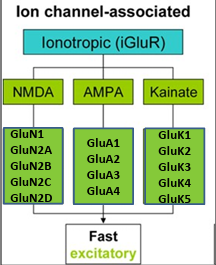
how are AMPA, NMDA, kainate receptors distinguished
because they show different cation permeability and sensitivity to agonist and antagonist
true or false: NMDA receptors and soma AMPA receptors mediate influx of Ca2+ which causes further depolarization
true
true or false: AMPA and NMDA are mainly presynaptic receptors whilst kainate are only postsynpatic
false: AMPA and NMDA receptors are predominantly postsynaptic receptors while KAINATE receptors are both postsynaptic and presynaptic receptors

where are kainate receptors found (post/pre)
presynaptic and postsynaptic
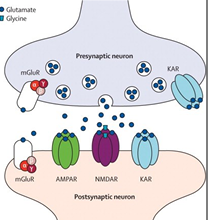
AMPA receptors
next round of flashcards based on AMPA only
what is AMPA receptors responsible for
fast excitatory synaptic transmission in CNS
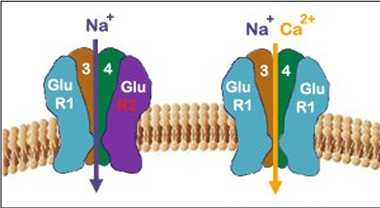
what are AMPA receptors formed as
formed as tetramers of subunits GluA1-4 which are encoded by separate gene
each subunit has large extracellular N-terminus and large intracellular C-terminus and 4 TM domains
how many sites does AMPA receptors have where glutamate can bind
4 sites
role of N-terminal domain
site formed for glutamate to bind is made of N-terminal and extracellular loop
role of C-terminal
intracellular trafficking and synaptic clusturing
how can AMPA should rapid densensitisation
because these receptors open and close very quickly
characteristic difference between AMPA made of GluA1,3,4 subunits vs GluA2 subunit
GluA1,3,4 subunits which have higher permeability to Ca2+ than AMPA receptors which contain GluA2 subunit
this is because of RNA editing of GluA2 subunit mRNA
what does drug topiramate do
anti-epileptic drug that inhibits AMPA receptors
NMDA receptors
next few flashcards based on NMDA receptors only
how are NMDA formed
formed as tetramers composed of two GluN1 subunits, and two GluN2A, GluN2B, GluN2C or GluN2D subunits
all submit are products of separate genes
true or false: each subunit has a large extracellular N-terminus and a large intracellular C terminus and four transmembrane domains
true
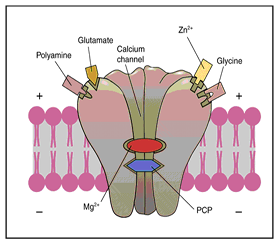
what is required for activation of NMDA receptors
binding of both glutamate and co-agonist glycine
why is binding of both glutamate and co-agonist glycine required for activation of NMDA
because their binding is allosterically coupled
recognition site for glycine is found on the GluN1 subunit
site for glutamate is located on the GluN2 subunit
what is the voltage-dependent block
NMDA receptors are blocked by Mg2+ at resting potential
which ions are NMDA selective for
Na+, K+ and Ca2+
true or false: changes in NMDA channel function are associated with initiation and spread of seizures in epileptic patients
true
what is drug felbamate
anti-epileptic drug which blocks NMDA receptors
how does a larger EPSP form
AMPA receptors usually co-exist at the same synapse with NMDA receptors and they synergise in their excitatory activity. This means that activation of AMPA receptors occurs initially leading to a small EPSP, which then activates NMDA receptors by removing the Mg2+ ions from the NMDA channel
kainate receptors
next few flashcards are on kainate receptors
what agonist selectively activates kainate receptors
kainate (kainic acid)
how are kainate receptors distinct from other glutamate receptors
are a separate receptor type that is selectively activated by kainate
what subunits make up kainate receptors
GluK1–3 and GluK4–5 subunits
what kind of assemblies can GluK1–3 subunits form
functional heteromeric and homomeric assemblies
what is the glutamate affinity of receptors made only from GluK1–3 subunits
they have low affinity for glutamate
what happens when GluK1–3 subunits assemble with GluK5 subunits
they show full receptor activity
dscribe the structure of a kainate receptor subunit
each subunit has a large extracellular N-terminus, a large intracellular C-terminus, and four transmembrane domains.
what ions are kainate receptor channels permeable to
Na⁺, K⁺, and some subtypes to Ca²⁺
where can kainate receptors exert their actions
both pre and postsynaptically
how is the distribution of kainate receptors in the brain described
limited distribution
metabotropic glutamate receptors
where are metabotropic glutamate receptors found
widely expressed in the brain
how do metabotropic receptors transmit signals
through G-protein signalling and indirectly modulate function of enzymes and channels involved in excitation
true or false: in the intracellular domain, metabotropic receptors have the binding site for glutamate
false - in the extracellular domain (outside the cell)
true or false: metabotropic glutamate receptors are responsible for a fast transmission
false - slow transmission (seconds to minutes) because of the GPCR mechanism which involves many steps
what are the three groups of metabotropic glutamate receptors (mGluRs)
group I ((mGlu1, mGlu5)
group II (mGlu2, mGlu3)
group III (mGlu4, mGlu6, mGlu7, mGlu8)
there are 3 main groups of metabotropic receptors, which group(s) lead to excitatory and inhibitory response
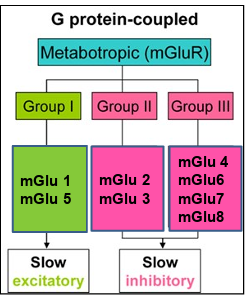
which receptors belong to group I
mGlu1 and mGlu5
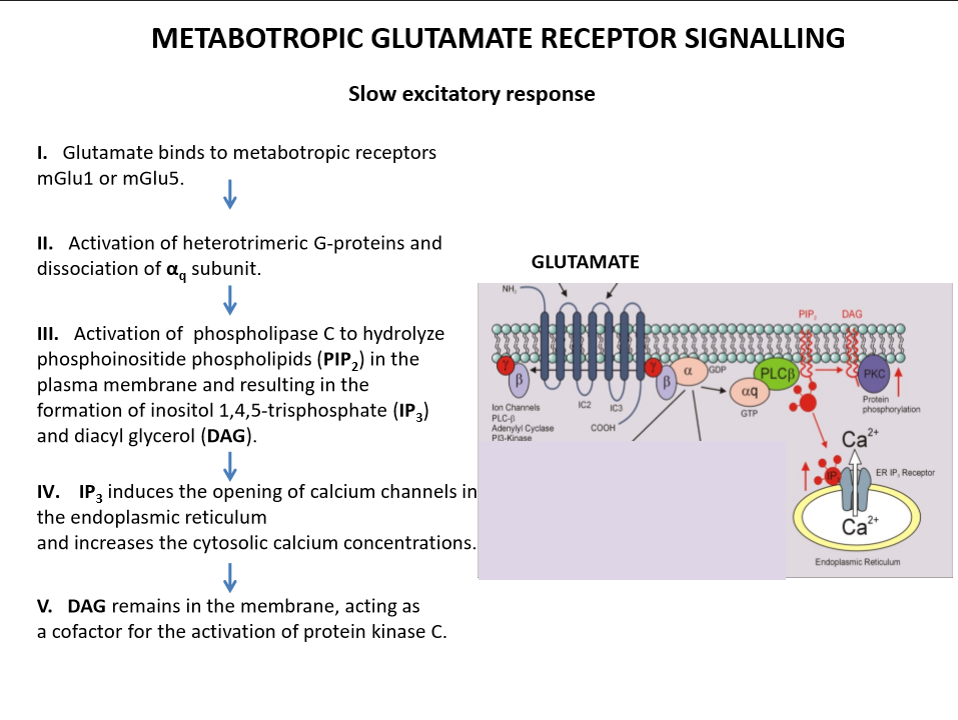
what type of G-protein do Group I mGluRs activate
heterotrimeric Gq/11 proteins
what enzyme do Group I mGluRs regulate
phospholipase C (PLC)
what secondary messengers are produced by Group I mGluR activation
diacylglycerol (DAG) and inositol triphosphate (IP₃)
how do Group I mGluRs affect intracellular calcium
they increase intracellular calcium signaling
are Group I mGluRs excitatory or inhibitory
excitatory - they increase neuronal activity
which receptors belong to Group II mGluRs
mGlu2 and mGlu3
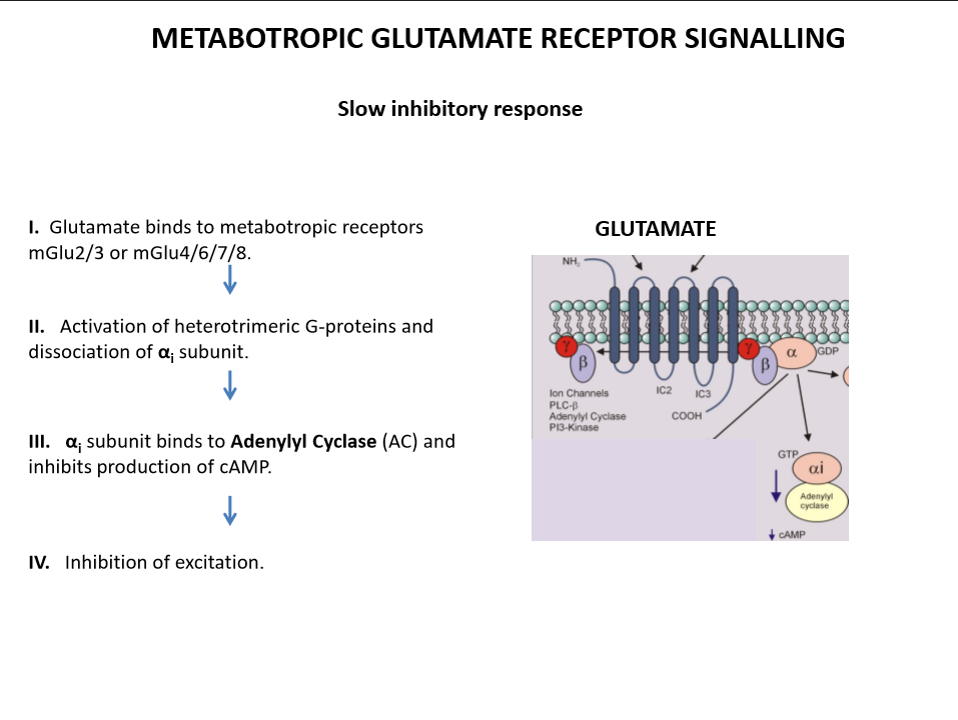
what type of G-protein do Group II mGluRs activate
heterotrimeric Gi/o proteins
what enzyme’s activity is inhibited by Group II mGluRs
adenylyl cyclase
what second messenger is decreased by Group II mGluR activation
cAMP
are Group II mGluRs excitatory or inhibitory
inhibitory - they reduce neuronal activity
which receptors belong to Group III mGluRs
mGlu4, mGlu6, mGlu7, and mGlu8
what type of G-protein do Group III mGluRs activate
heterotrimeric Gi/o proteins
what effect do Group III mGluRs have on adenylyl cyclase and cAMP
they inhibit adenylyl cyclase and decrease cAMP production
are Group III mGluRs excitatory or inhibitory
inhibitory - reduce neuronal activity
what happens when mGluRs are localized presynaptically
they act as presynaptic autoreceptors
what is the effect of presynaptic mGluR activation
inhibition of glutamate release
summary of signalling cascade for group I (excitatory)
summary of signalling cascade for group II and group III (inhibitory)
 Note
Note  Flashcards (27)