ANSC 311 - Midterm 1 - Lecture 4-5
 Studied by 0 people
 Call Kai
 Learn
Learn Practice Test
 Spaced Repetition
 Match
Match Flashcards
 Knowt Play
1/50

There's no tags or description
Looks like no tags are added yet.
Name | Mastery | Learn | Test | Matching | Spaced | Call with Kai |
|---|
No analytics yet
Send a link to your students to track their progress
51 Terms
Oropharyngeal phase
Phase of Swallowing
Bolus pushed back by tongue acting on pressure receptors
Tongue stops return to mouth
Uvula blocks nose
Glottis and epiglottis blocks access to lungs
Swallowing centre (in the medulla) coordinates and inhibits respiratory centre
Can’t breath once starting swallowing process
Pharyngoesophageal sphincter opens
Top of esophagus relaxes and opens
Oesophageal phase
Phase of Swallowing
Peristaltic wave (5-9s)
Directional action
Skeletal muscle (involuntary in this case)
Oesophagogastric/cardiac sphincter opens
Top of stomach opens
Peristalsis
Directional Movement
Waves of contraction
Gradually works its way down, contraction and relaxation of muscle
Longitudinal muscles and circular muscle - alternate between contraction and relaxation
Rapid propulsion
Programmed by enteric nervous system
Occurs in stomach and somewhat in small intestine
Fundus
Gastric Motility in ______
Receptive relaxation (makes room)
In a fasted state, stomach is small, so nitric oxide and VIP induces stomach to relax and make room for food to enter
NO (nitric oxide) and VIP (vasoactive intestinal polypeptide) involved in relaxation
Induced by ACh
Corpus
Gastric Motility in ______
Mixing vat for saliva, food, and gastric secretions
Antrum
Gastric Motility in ______
Propulsion of food through the pyloric sphincter to the duodenum
Peristalsis begins working against closed sphincter
Eventually get signal that duodenum can take food and pyloric sphincter open
Size discrimination
Controlled by
Distension
Parasympathetic
Stomach stretch
Parasympathetic
Gastrin
Factors that increase gastric emptying (3)
Chemo, osmo, mechanoreceptors
Sympathetic
CCK, gastrin inhibitory peptide, secretin
Factors that decrease gastric emptying (3 - 7)
Segmentation
Non-directional movement
Most common form of motility
Contraction of circular muscle
Not propagated in one direction
Alternating contractions
Results in mixing
Frequency decreases distally
Duodenum 12/min
Ileum 9/min
Colon 2/h
Haustration
Segmentation in the colon
Gastro-ileal reflex
Response of Motility Regulation
Stimulates segmentation in ileum
Inhibits ileo-caecal sphincter (opens)
Sphincter between small and large intestine
Even though not directional, sphincter is open, so stuff moves in
Gastro-colic reflex
Response of Motility Regulation
Mass movements in colon - defecation
Tonic contraction
Sustained contraction of muscle
Divide GIT into functional segments
Examples
Esophageal sphincter
Pyloric sphincter
Ileocecal sphincter
Interstitial cells of Cajal (ICC)
Pacemakers in circular and longitudinal muscle layers in special nerves
Set an electrical rhythm in intestinal tract
Different based on part of intestine
Create a pulse - not strong enough to cause muscle contraction
Need additional stimuli, acetylcholine, to come in and cause muscle contraction
Allows it to surpass threshold and cause an action potential
Acetylcholine
Regulator of Basic Electrical Rhythm of GIT
Parasympathetic
Increases the resting basal membrane potential, and stimulate action potentials and contraction
Norepinephrine
Regulator of Basic Electrical Rhythm of GIT
Sympathetic
Decreases the resting basal membrane potential, and prevent generation of action potentials and contraction
Increases threshold that must be met to cause AP
Segmentation reflex
Small intestine motility - Fed State
Peristaltic activity
Migrating Myoelectric Complex (MMC)
Small intestine motility - Fasting State
Medulla
Vomiting center in the brain is located in the ______
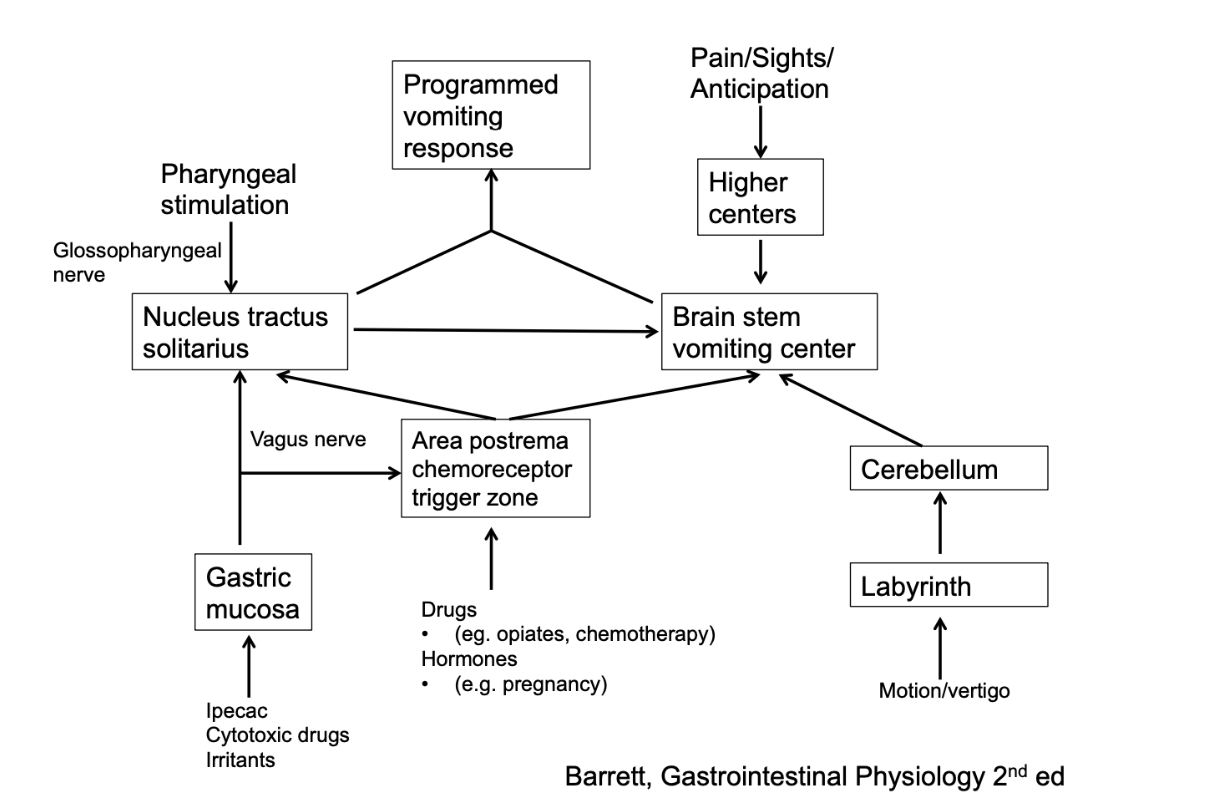
Pharyngeal stimulation
Gastric irritation (ipecac, cytotoxins, etc.)
Chemoreceptor (hormones, drugs)
Motion sickness
Pain/sights/anticipation
Causes of vomiting that activate vomiting center of medulla (5)
Myenteric plexus
Part of Enteric Nervous System
Between circ. and long. smooth muscle
Between muscle layers
Extensive, long interneurons
Activated by sympathetic and parasympathetic NS
Parasympathetic
Sympathetic
Submucosal plexus
Part of Enteric Nervous System
Interneurons minor
Only parasympathetic activation
norepinephrine
Under sympathetic control postganglionic neurons release ________ to inhibit digestion
acetylcholine
Under parasympathetic control postganglionic neurons release ________ to promote digestion
Ileus
Drugs used during surgery can impact motility of GIT and lead to a blockage
Start having extra motility above to push it through
Starts to stretch
Only feel pain associated with it after GIT tries to manage it on its own
If blocked too long leading to distension then sympathetic reflex enters CNS resulting in pain
Endocrine
Type of Control of GI Function
Released into general circulation
Specificity is a property of the target tissues
Specific receptors are present
Examples (gut hormones are peptides)
Gastrin
Secretin
Cholecystokinin (CCK)
Motilin (impacts motility)
Paracrine
Type of Control of GI Function
Released from endocrine cells and diffuse through extracellular space to their target tissue
Somatostatin (D cells) inhibit gastrin release (G cells)
Autocrine
Type of Control of GI Function
A released substance regulates the cell’s own function
Neurocrine
Type of Control of GI Function
Sensory cells secrete neurotransmitters
Gastrin
Peptide Gut Hormone
Produced in stomach and duodenum primarily
Peptides, AA
Stimulates:
Gastric secretion
Mucosal growth
GIP
Peptide Gut Hormone
Active in stomach and small intestine
Stimulus = Glucose, AA, FA
Inhibits:
Inhibits gastric secretion
Also known as glucose-dependent insulinotrophic polypeptide
Main role is stimulation of insulin production (incretin)
CCK
Peptide Gut Hormone
Not produced in stomach, but throughout small intestine
Fatty acids, AA
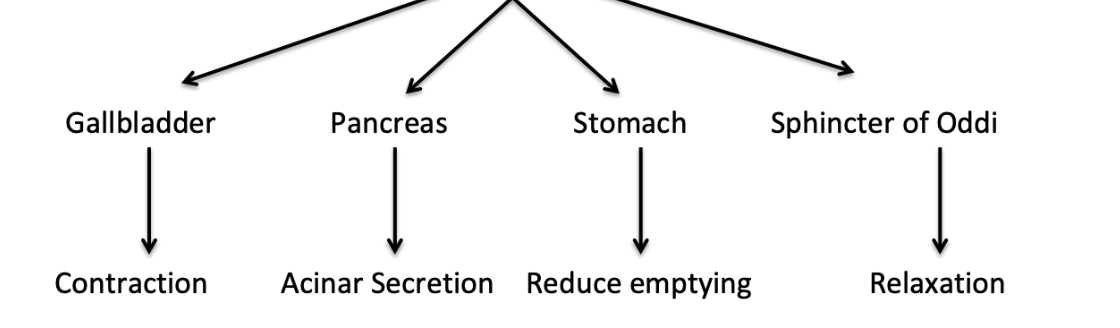
Induces bile secretion (causes contraction of gallbladder)
Acts on acinar cells to secrete digestive enzymes
Matches nutrient delivery to digestive capacity
Inhibits stomach from sending more food down into small intestine - keep pyloric sphincter closed
Induces bile secretion (causes contraction of gallbladder)
Acts on acinar cells to secrete digestive enzymes
Regulates sphincter of Oddi
Stimulates:
Pancreatic enzyme secretion
Gallbladder contraction
Secretin
Peptide Gut Hormone
Responds to acid
Active throughout small intestine
Acts on duct cells of pancreas to release more base
Stimulates:
Pancreatic HCO3 secretion
Hydrophilic
________ Hormones
Signaling Cells:
Hormone stored in intracellular vesicles
Hormones released by exocytosis
Target Cells:
Attach to trans-membrane cells
Amplify signals via second messengers
Things such as G-coupled receptors
cAMP, Ca2+, IP3
Activate existing enzymes
Rapid biological effects
Hydrophobic
________ Hormones
Signaling Cells:
Hormone synthesized on demand
Hormones released by diffusion
Target Cells:
Diffuse and attach to intracellular receptors
A hormone-receptor complex binds to target gene
mRNA transcription is altered
Slow, but more sustained biological effects
Glucagon-like peptide 1
Peptide Gut Hormone
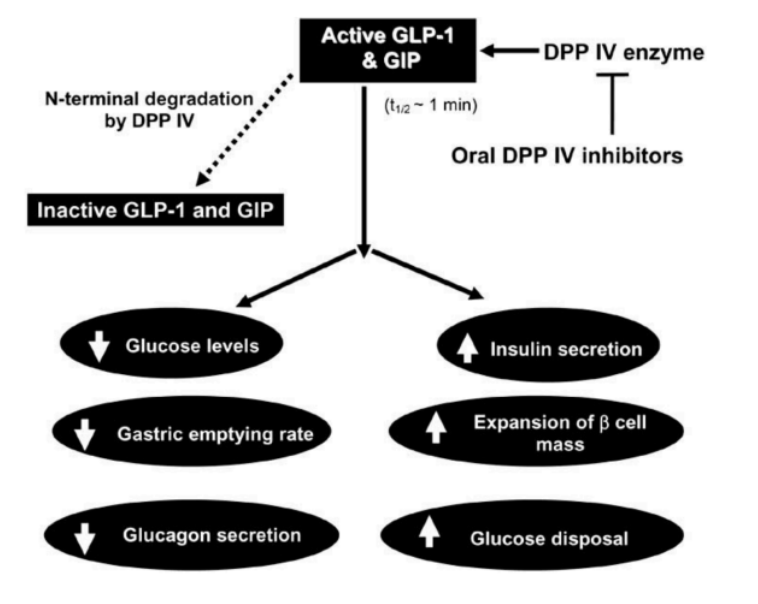
Produced by L-cells in the intestinal ileum and colon in response to nutrients and short chain fatty acids (made by microbes)
Enhances insulin secretion
Inhibits gastric emptying and motility (ileal brake)
DPP IV (expressed in endothelium) degrades/inactivates
2 minute half-life
Glucagon-like peptide 2
Peptide Gut Hormone
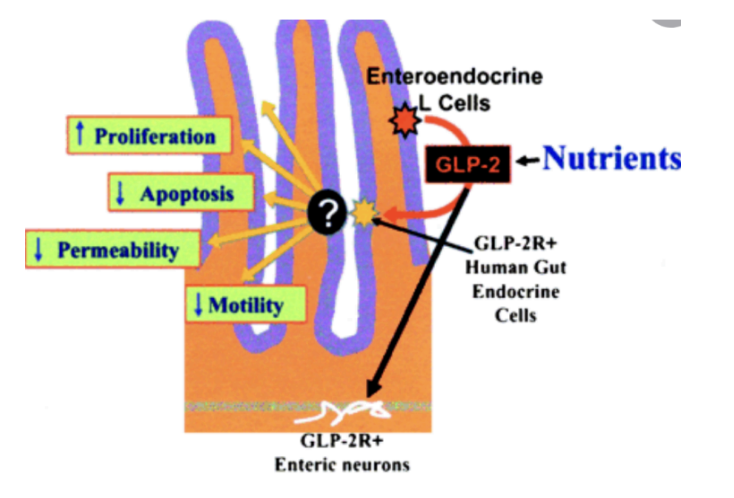
Acts more locally
Produced by L-cells in the intestinal ileum and colon in response to nutrients and short-chain fatty acids
Matches nutrients to intestinal replacement
Improves intestinal integrity
Increased permeability of cells
Inhibits loss of cells (apoptosis)
Decreases permeability (acts on tight junction proteins)
Decreased motility
Important for growth of the entire gut
Ghrelin
Hunger hormone
Produced by cells of the fundus of the stomach and epsilon cells of the pancreas
Stretch inhibits secretion
Increases hunger, gastric secretion, and GIT motility
Positively regulates AgRP/NPY neurons
stretch, CCK, nutrient receptors in liver, PYY, GLP-1
GIT Factors that regulate Satiety
Stimulate vagus nerve
leptin, insulin
Non-GIT Factors that regulate Satiety
Leptin
Peptide hormone produced and secreted by adipocytes
Acts on the hypothalamus (arcuate nucleus) to reduce hunger
Acts on fat reserves:
Inhibits feeding
Inhibits fat synthesis
Stimulates beta-oxidation of fatty acids
Stimulates sympathetic nervous system
Increase blood pressure
Increase heart rate
Thermogenesis, via effects on adipose
POMC/CART neurons
Neurons of the Arcuate Nucleus
Drive anorexic signal
Positively regulated by insulin and leptin
Reduce consumption
AgRP/NPY neurons
Neurons of the Arcuate Nucleus
Drive orexic response
Negatively regulated by insulin and leptin
Positively regulated by ghrelin
Increase consumption
NPY
Neurotransmitter involved in homeostatic regulation of food intake
short neuropeptide isolated from the hypothalamus and resembling peptide YY produced by the digestive tract
AgRP (agouti-related protein)
Neurotransmitter involved in homeostatic regulation of food intake
Sequence similarity with Agouti signaling peptide, a peptide, a hormone that controls coat pigmentation in Augoutis (rodents). Acts as an antagonist of the melanocortin-3 and -4 receptor (blocks action of α-MSH)
Get agouti pigmentation and improper regulation of feed intake
Insulin
A rise in blood sugar level after a meal stimulates the pancreas to secrete _____
In addition to its other functions, insulin suppresses appetite by acting on the brain
PYY
Hormone ____ secreted by the small intestine after meals
Acts as an appetite suppressant that counters the appetite stimulation of ghrelin
Leptin
Produced by adipose (fat) tissue
Suppresses appetite as its level increases
When body fat decreases, ____ levels fall, and appetite increases
Ghrelin
Secreted by the stomach wall
One of the signals that triggers feelings of hunger as mealtimes approach
In dieters who lose weight, ____ levels increase which may be one reason its so hard to stay on a diet
 Note
Note  Flashcards (26)