10.6 Long-Run Supply Curves
 Call Kai
 Learn
Learn Practice Test
 Spaced Repetition
 Match
Match Flashcards
 Knowt Play
1/16

There's no tags or description
Looks like no tags are added yet.
Name | Mastery | Learn | Test | Matching | Spaced | Call with Kai |
|---|
No analytics yet
Send a link to your students to track their progress
17 Terms
What defines a constant‑cost industry?
Entry or exit does not change resource prices or firms’ ATC curves.
What happens when demand increases? (constant-cost industry)
Price rises temporarily → firms enter → supply increases → price returns to original minimum ATC.
What happens when demand decreases? (constant-cost industry)
Price falls temporarily → firms exit → supply decreases → price returns to original minimum ATC.
What happens to long‑run output?
It changes (90k, 100k, 110k), but price stays $50.
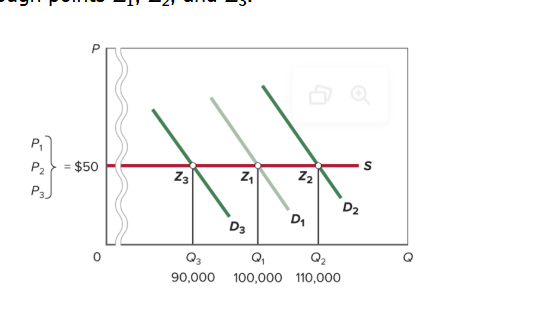
Shape of the long‑run supply curve?
Horizontal (perfectly elastic).
What defines an increasing‑cost industry?
Entry raises input prices → firms’ ATC curves shift upward.
Why do costs rise when the industry expands?
Specialized inputs become more expensive as more firms demand them.
What happens when demand increases? (increasing-cost industry)
Firms enter → supply increases → ATC rises → new long‑run price is higher than before.
What happens when demand decreases? (increasing-cost industry)
Firms exit → input prices fall → ATC falls → new long‑run price is lower than before.
Example from the text?
90k at $45 → 100k at $50 → 110k at $55.
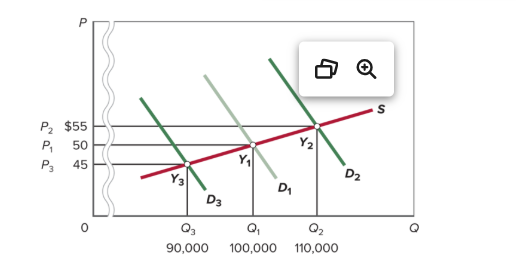
Shape of the long‑run supply curve?
Upward sloping.
What defines a decreasing‑cost industry?
Entry lowers input prices → firms’ ATC curves shift downward.
Why do costs fall when the industry expands?
Input suppliers gain economies of scale → component prices drop.
What happens when demand increases? (decreasing-cost industry)
Firms enter → supply increases → ATC falls → new long‑run price is LOWER than before.
What happens when demand decreases? (decreasing-cost industry)
Firms exit → suppliers lose economies of scale → input prices rise → ATC rises → new long‑run price is HIGHER than before.
Example from the text?
100k at $50 → 110k at $45 → 90k at $55.
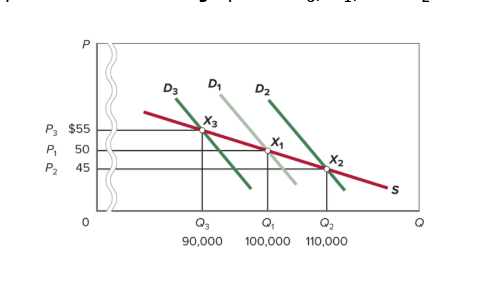
Shape of the long‑run supply curve?
Downward sloping.
Explore top notes

