chem231 - ch.10 - radicals & alkyl halides

0.0(0)
Studied by 0 people
call kaiCall Kai
learnLearn
examPractice Test
spaced repetitionSpaced Repetition
heart puzzleMatch
flashcardsFlashcards
GameKnowt Play
Card Sorting

1/20

encourage image

There's no tags or description

Looks like no tags are added yet.

Last updated 9:49 PM on 3/30/26
Name
Mastery
Learn
Test
Matching
Spaced
Call with Kai

No analytics yet

Send a link to your students to track their progress

21 Terms

1
New cards

radical

a reactive intermediate w/ a single unpaired e-

2
New cards

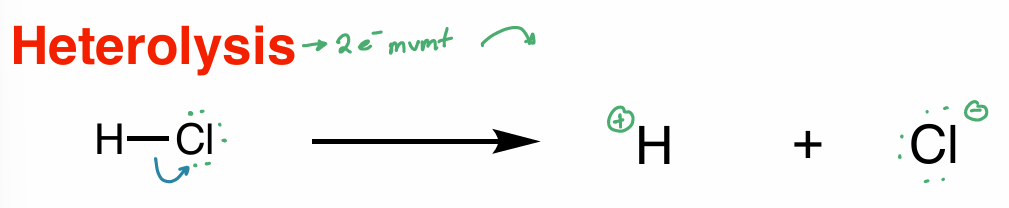
heterolysis

2 e- movement

<p>2 e<sup>-</sup> movement </p>
3
New cards

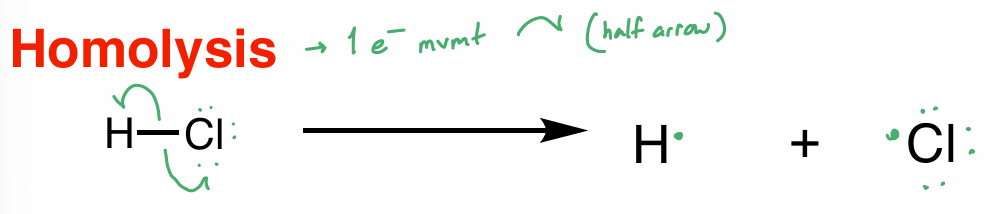
homolysis

1 e- movement

  • half arrow

<p>1 e<sup>-</sup> movement</p><ul><li><p>half arrow</p></li></ul><p></p>
4
New cards

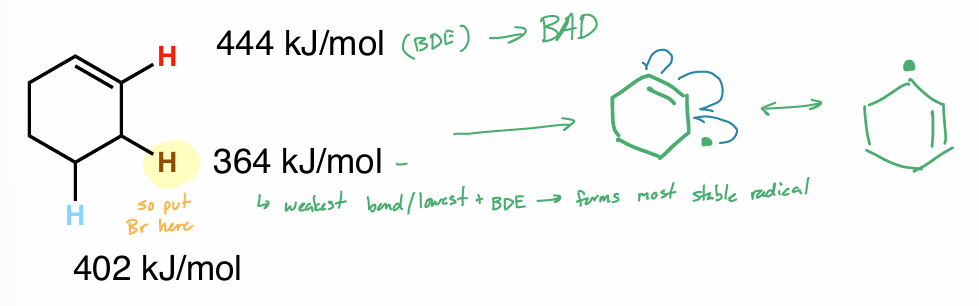
radical stability: hybridization

R = C

  • want 3°

  • weakest/lowest BDE → most stable/fastest forming radical
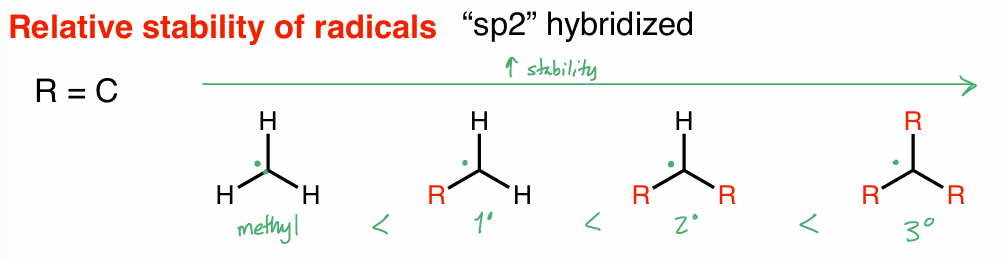
<p>R = C</p><ul><li><p>want 3°</p></li><li><p>weakest/lowest BDE → most stable/fastest forming radical </p></li></ul><p></p>
5
New cards

radical stability: resonance

more resonance stabilized → more stable

  • e- coming together to form double bond
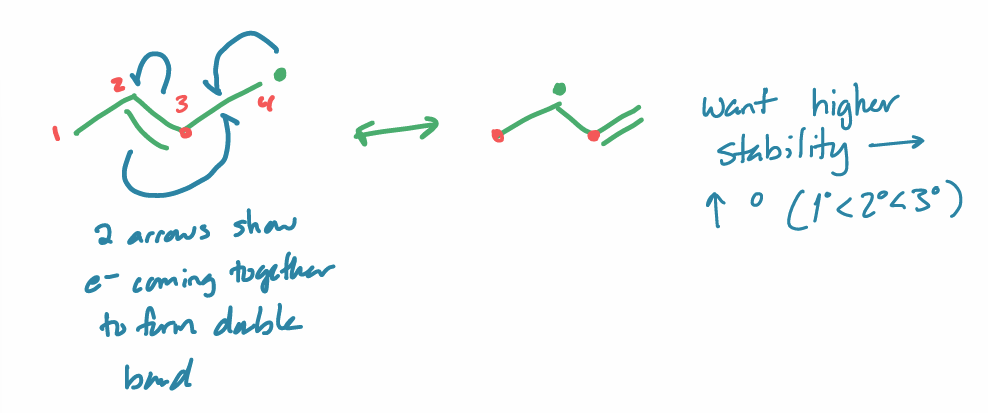
<p>more resonance stabilized → more stable</p><ul><li><p>e<sup>-</sup> coming together to form double bond </p></li></ul><p></p>
6
New cards

radical stability example

knowt flashcard image
7
New cards

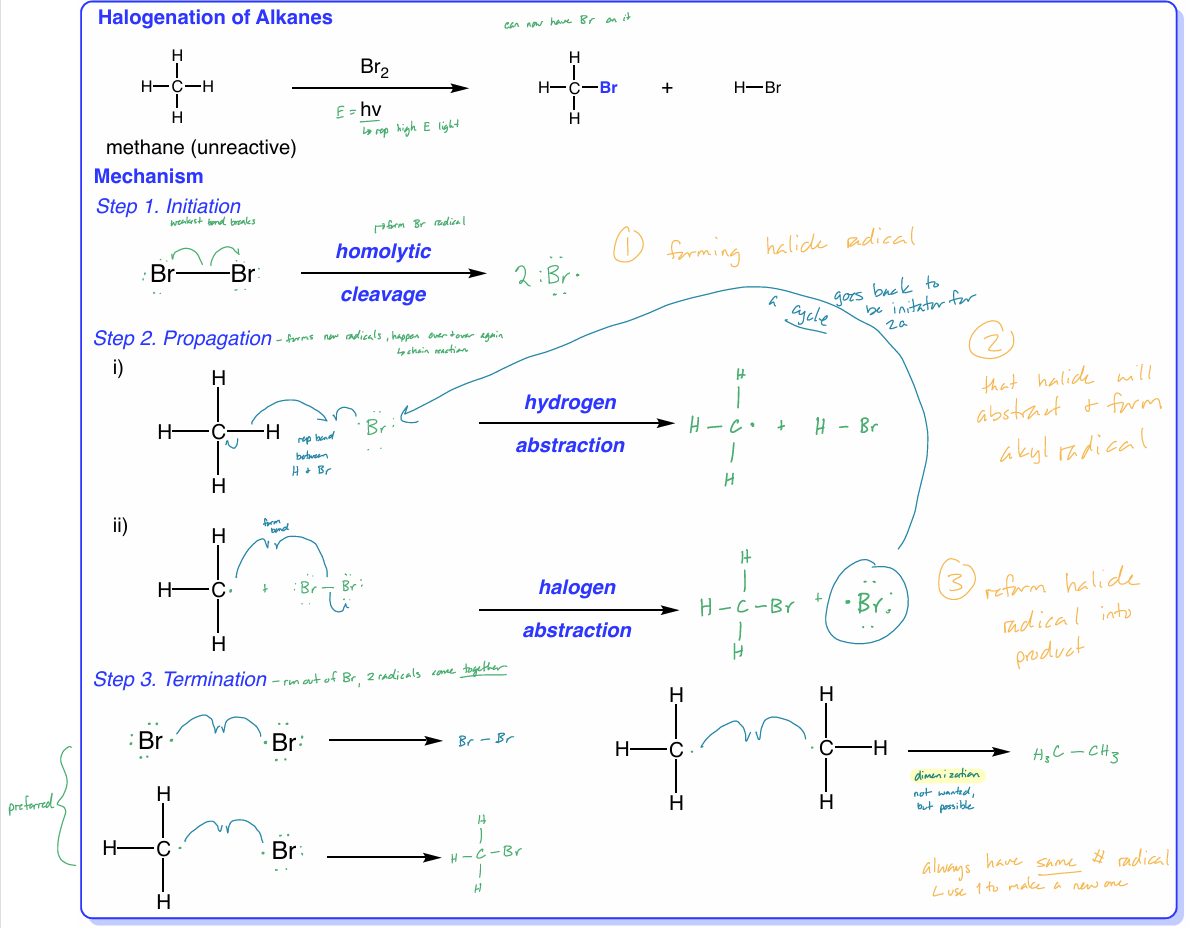
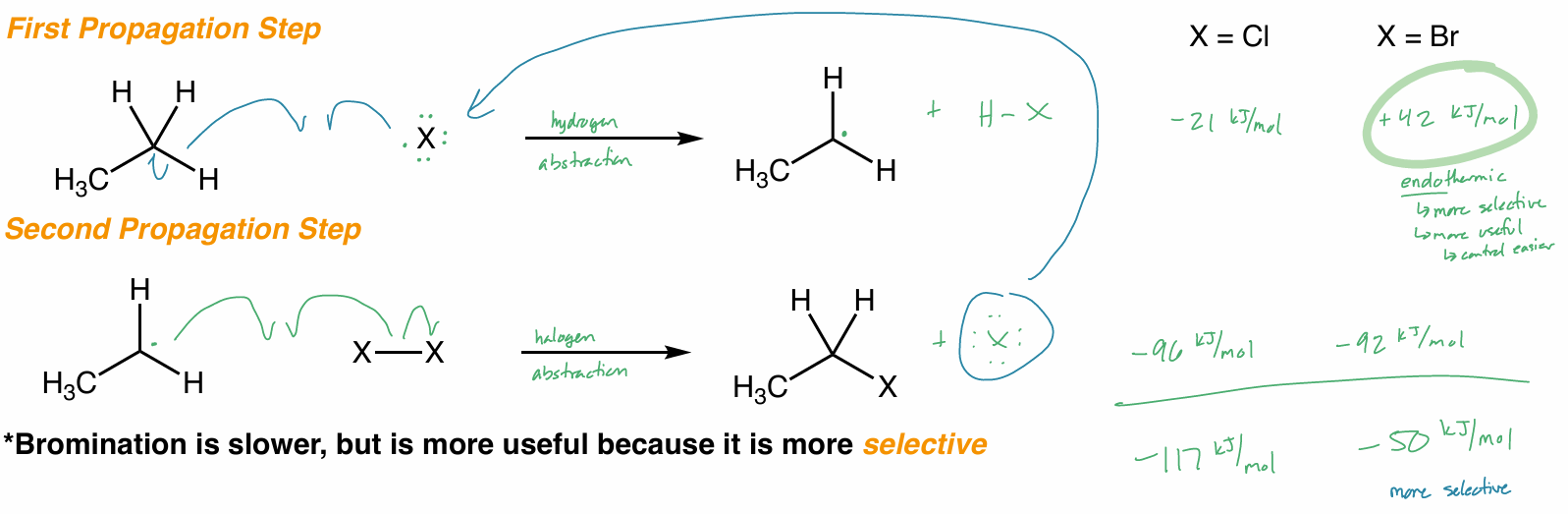
alkane halogenation

alkanes react w/ halogen (Cl2 or Br2), + heat/light (hv), H atom of alkane is replaced by halogen atom to form alkyl halide product

  • initiation → form halide radical

  • propagation → that halide will abstract & form alkyl radical

  • termination → reform halide radical into product

    • always have same # of radicals

<p><span>alkanes react w/ halogen (Cl</span><sub>2</sub><span> or Br</span><sub>2</sub><span>), + heat/light (hv), H atom of alkane is replaced by halogen atom to form alkyl halide product </span></p><ul><li><p><strong>initiation </strong>→ form halide radical </p></li><li><p><strong>propagation </strong>→ that halide will abstract &amp; form alkyl radical </p></li><li><p><strong>termination </strong>→ reform halide radical into product </p><ul><li><p>always have <strong>same</strong> # of radicals</p></li></ul></li></ul><p></p>
8
New cards

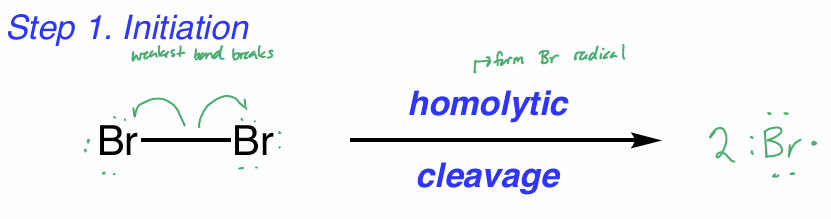
halogenation: initiation

  • weakest bond breaks

  • homolytic cleavage to form Br radical

<ul><li><p>weakest bond breaks </p></li><li><p>homolytic cleavage to form Br radical </p></li></ul><p></p>
9
New cards

halogenation: propagation

forms new radicals

  • hydrogen abstraction

    • Br radical makes bond w/ 1 e- from H bond

    • other H e- goes to C

  • halogen abstraction

    • 1 e- from Br—Br form bond w/ newly made carbon radical

    • other e- from Br—Br goes to Br → new Br radical

      • Br radical can be used as reactant in hydrogen abstraction

  • happens over & over again (chain reaction)

  • the product of the previous step is used as the reactant in the next step
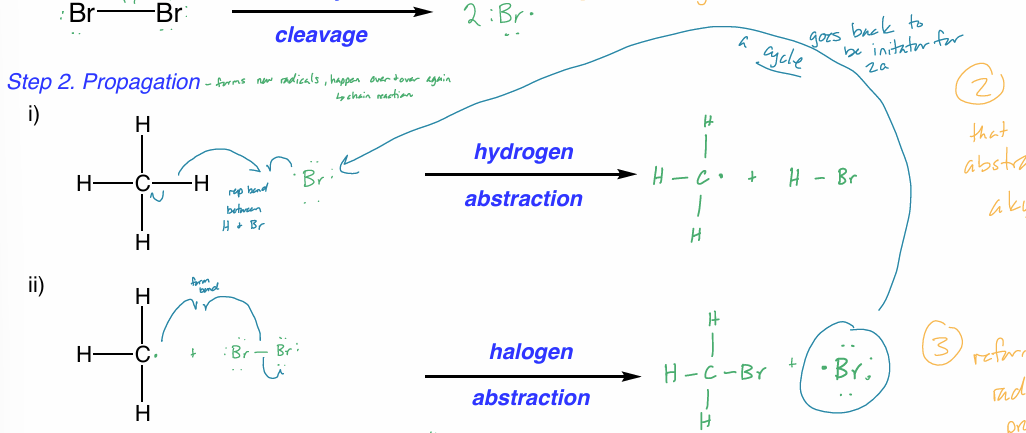
<p>forms new radicals</p><ul><li><p><strong>hydrogen abstraction </strong></p><ul><li><p>Br radical makes bond w/ 1 e<sup>-</sup> from H bond</p></li><li><p>other H e<sup>-</sup> goes to C </p></li></ul></li><li><p><strong>halogen abstraction </strong></p><ul><li><p>1 e<sup>-</sup> from Br—Br form bond w/ newly made carbon radical </p></li><li><p>other e<sup>-</sup> from Br—Br goes to Br → new Br radical </p><ul><li><p>Br radical can be used as reactant in hydrogen abstraction </p></li></ul></li></ul></li></ul><ul><li><p>happens over &amp; over again (chain reaction)</p></li></ul><ul><li><p>the product of the previous step is used as the reactant in the next step </p></li></ul><p></p>
10
New cards

halogenation: termination

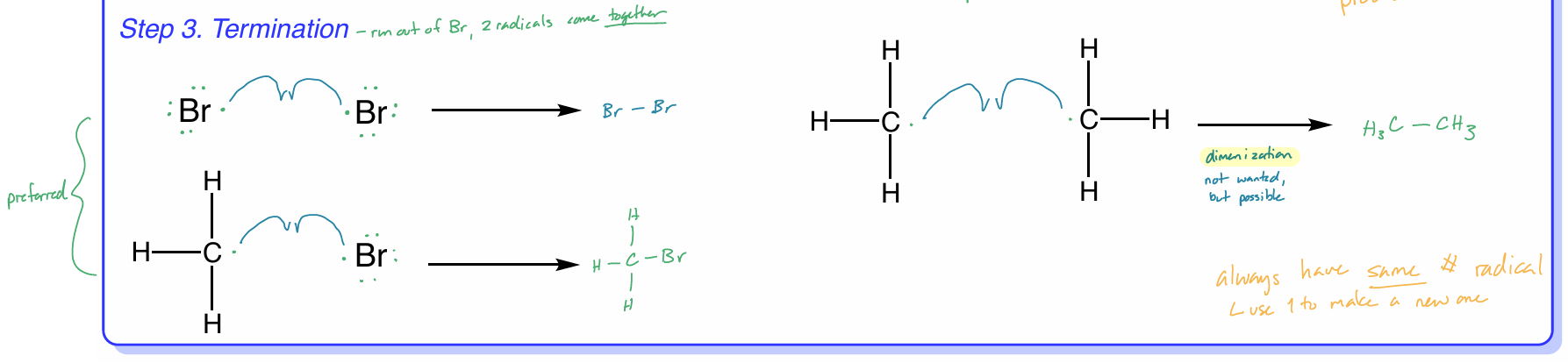
when you run out of Br, the 2 radicals come together

  • 3 options

    • 2 Br radical e- come together & form Br—Br bond

    • H3C radical + Br radical come together → H3CBr

      • these 2 preferred

    • 2 H3C radicals come together → H3C—CH3

      • dimerization - not wanted, but possible
<p>when you run out of Br, the 2 radicals come <strong>together</strong> </p><ul><li><p>3 options </p><ul><li><p>2 Br radical e<sup>-</sup> come together &amp; form Br—Br bond </p></li><li><p>H<sub>3</sub>C radical + Br radical come together → H<sub>3</sub>CBr</p><ul><li><p>these 2 preferred </p></li></ul></li><li><p>2 H<sub>3</sub>C radicals come together → H<sub>3</sub>C—CH<sub>3</sub></p><ul><li><p><strong>dimerization </strong>- not wanted, but possible </p></li></ul></li></ul></li></ul><p></p>
11
New cards

radical indicators

  • peroxides - oxygen—oxygen bond is weak

    • radical forms w/ heat

  • hv (light) - light E can break X—X bond → radicals

<ul><li><p><strong>peroxides</strong> - oxygen—oxygen bond is weak</p><ul><li><p>radical forms w/ <u>heat</u></p></li></ul></li><li><p><strong>hv</strong> (light) - light E can break X—X bond → radicals </p></li></ul><p></p>
12
New cards

radical thermodynamics

  • only Cl2 & Br2

    • Br2 is slower, but more selective → more useful

    • both exothermic

  • F2 too explosive

  • I2 too slow, NR

<ul><li><p>only Cl<sub>2</sub> &amp; Br<sub>2</sub></p><ul><li><p>Br<sub>2</sub> is slower, but more selective → more useful </p></li><li><p>both exothermic </p></li></ul></li><li><p>F<sub>2</sub> too explosive</p></li><li><p>I<sub>2</sub> too slow, NR</p></li></ul><p></p>
13
New cards

halogenation selectivity

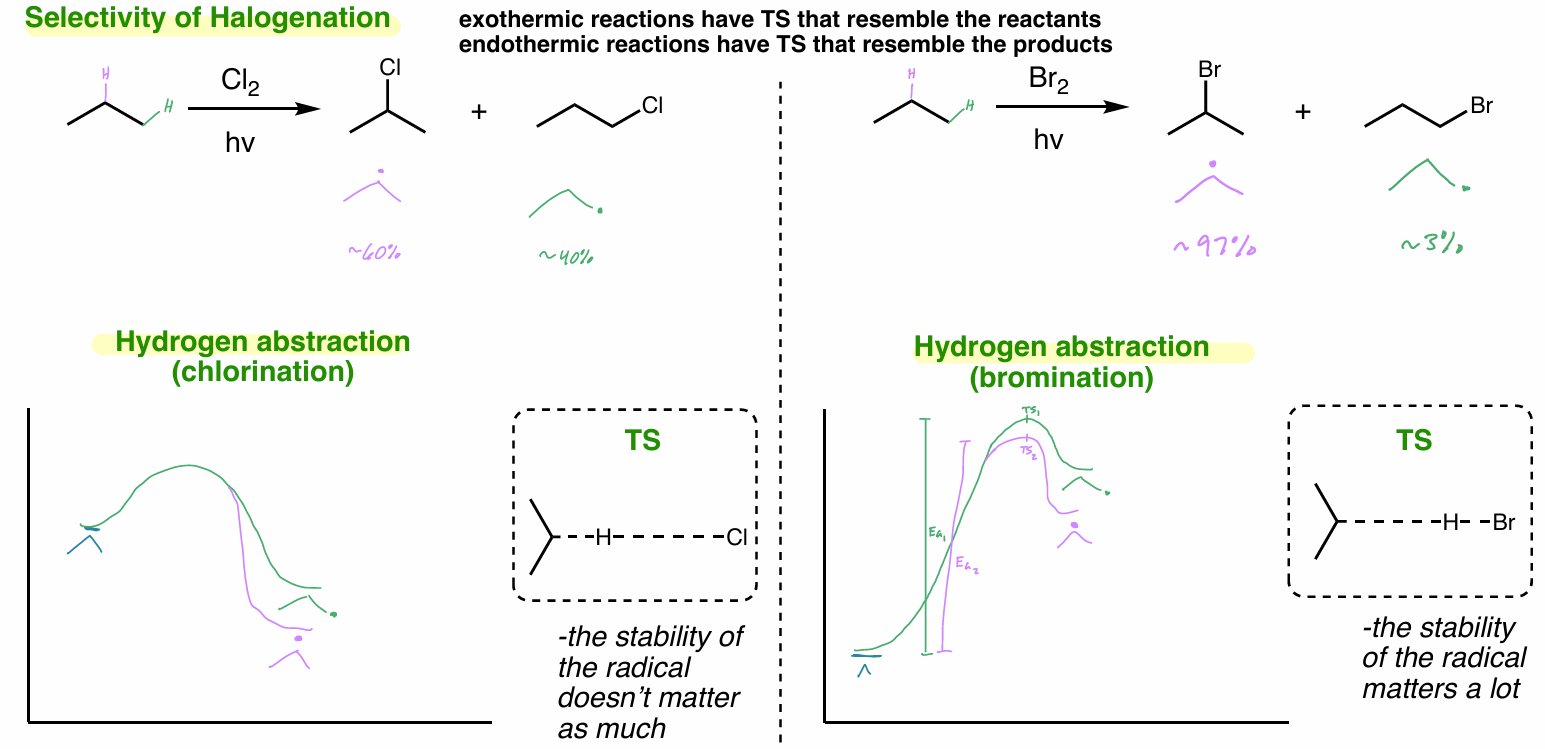
  • exothermic reactions → TS resemble reactants

  • endothermic reactions → TS resemble products

    • don’t get good selectivity for better radical b/c exothermic
<ul><li><p><strong>exo</strong>thermic reactions → TS resemble <strong>reactants </strong></p></li><li><p><strong>endo</strong>thermic reactions → TS resemble <strong>products</strong></p><ul><li><p>don’t get good selectivity for better radical b/c exothermic </p></li></ul></li></ul><p></p>
14
New cards

racemic

solid lines in skeletal

  • represent both dash & wedge (50:50)

  • implied w/ lines

    • must write if dash/wedge present

15
New cards

allylic bromination

best C—H bond to be abstracted

  • ↑ stable radical → ↓ bond + ↑ resonance stabilized

    • don’t put e- on double bond (DB)

<p>best C—H bond to be abstracted</p><ul><li><p>↑ stable radical → ↓ bond + ↑ resonance stabilized </p><ul><li><p>don’t put e<sup>-</sup> on double bond (DB)</p></li></ul></li></ul><p></p>
16
New cards

N-bromosuccinimide (NBS)

if molecule has double bond you do not want to react w/ Br2, use NBS + hv to do radical halogenation

  • generates small amt of Br2

    • small [Br2]

<p>if molecule has double bond you do <strong>not</strong> want to react w/ Br<sub>2</sub>, use NBS + hv to do radical halogenation </p><ul><li><p>generates small amt of Br<sub>2</sub> </p><ul><li><p>small [Br<sub>2</sub>]</p></li></ul></li></ul><p></p>
17
New cards

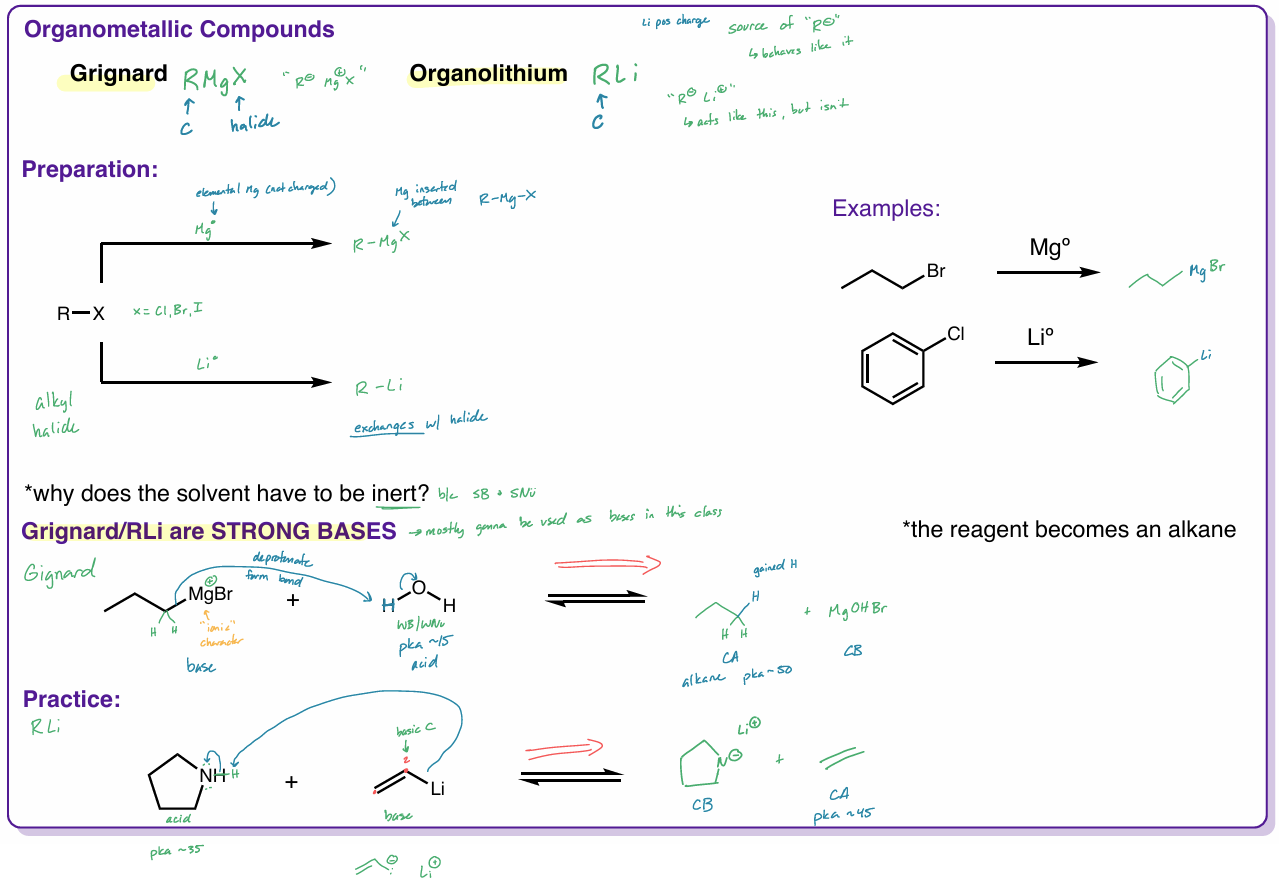
organometallic compounds

  • grignard - RMgX

  • organolithium - RLi

    • R = C

  • solvent has to be inert → b/c SB + SNu

    • are strong bases

  • reagents becomes an alkane

<ul><li><p><strong>grignard</strong> -<span style="color: red;"> R</span>MgX</p></li><li><p><strong>organolithium </strong>- <span style="color: red;">R</span>Li</p><ul><li><p>R = C</p></li></ul></li><li><p>solvent has to be <strong><u>inert</u> </strong>→ b/c SB + SNu</p><ul><li><p>are <strong>strong bases</strong></p></li></ul></li><li><p>reagents becomes an alkane </p></li></ul><p></p>
18
New cards

elemental form

represented by “ ° “ next to element

  • not charged

19
New cards

grignard

RMgX

  • Mg is “inserted” between R—X

  • X = halide

    • “ R- Mg+X “

<p><span style="color: red;">R</span>MgX</p><ul><li><p>Mg is “inserted” between R—X </p></li><li><p>X = halide </p><ul><li><p>“ R<sup>-</sup> Mg<sup>+</sup>X “ </p></li></ul></li></ul><p></p>
20
New cards

organolithium

RLi

  • “ R- Li+

    • acts like this, but isn’t

  • Li exchanges w/ halide

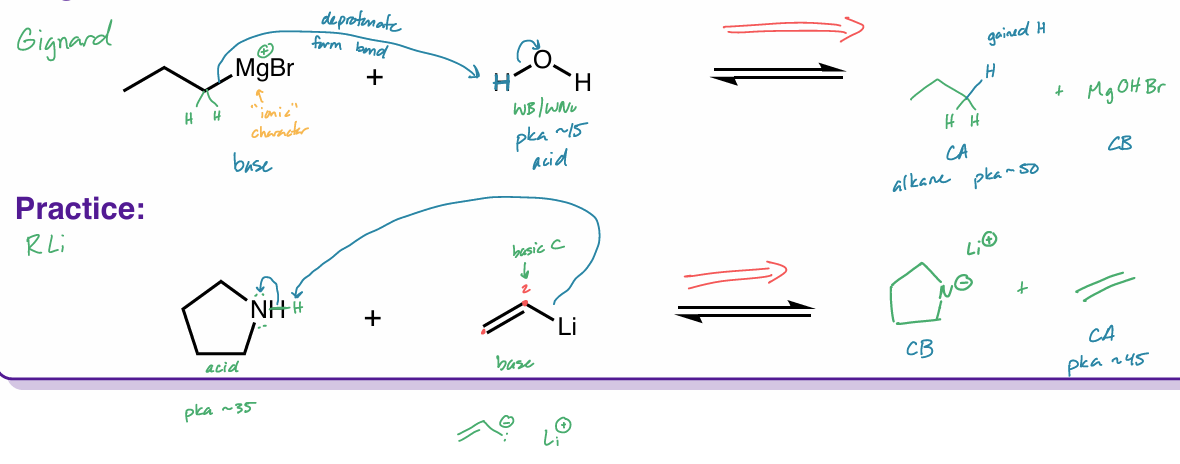
21
New cards

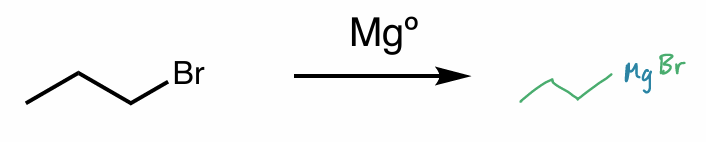
organometallic compound examples

knowt flashcard image

Explore top notes

note
Coastal systems and processes
Updated 1183d ago
0.0(0)
note
ECON2105 Chap. 3
Updated 1164d ago
0.0(0)
note
Public Health 1250-present
Updated 631d ago
0.0(0)
note
Class Review Flashcards (terms)
Updated 354d ago
0.0(0)
note
Chapter 12: Meiosis Notes
Updated 1212d ago
0.0(0)
note
Cervical Facet Syndrome
Updated 1151d ago
0.0(0)
note
Coastal systems and processes
Updated 1183d ago
0.0(0)
note
ECON2105 Chap. 3
Updated 1164d ago
0.0(0)
note
Public Health 1250-present
Updated 631d ago
0.0(0)
note
Class Review Flashcards (terms)
Updated 354d ago
0.0(0)
note
Chapter 12: Meiosis Notes
Updated 1212d ago
0.0(0)
note
Cervical Facet Syndrome
Updated 1151d ago
0.0(0)

Explore top flashcards

flashcards
RA- Heeter
50
Updated 854d ago
0.0(0)
flashcards
Period 7b Vocab - APUSH
58
Updated 1155d ago
0.0(0)
flashcards
Mod 13: Mixtures and Solutions
31
Updated 1105d ago
0.0(0)
flashcards
IB Bio More Second Year Ecology
30
Updated 1078d ago
0.0(0)
flashcards
chem summer assignementn
88
Updated 595d ago
0.0(0)
flashcards
TWA Unit 6.5
73
Updated 119d ago
0.0(0)
flashcards
GI03 - Gastric Function
111
Updated 37d ago
0.0(0)
flashcards
History Vocab - Unit 7
32
Updated 450d ago
0.0(0)
flashcards
RA- Heeter
50
Updated 854d ago
0.0(0)
flashcards
Period 7b Vocab - APUSH
58
Updated 1155d ago
0.0(0)
flashcards
Mod 13: Mixtures and Solutions
31
Updated 1105d ago
0.0(0)
flashcards
IB Bio More Second Year Ecology
30
Updated 1078d ago
0.0(0)
flashcards
chem summer assignementn
88
Updated 595d ago
0.0(0)
flashcards
TWA Unit 6.5
73
Updated 119d ago
0.0(0)
flashcards
GI03 - Gastric Function
111
Updated 37d ago
0.0(0)
flashcards
History Vocab - Unit 7
32
Updated 450d ago
0.0(0)