Colony Morphology and Growth Patterns of Bacteria
 Studied by 0 people
 Call Kai
 Learn
Learn Practice Test
 Spaced Repetition
 Match
Match Flashcards
 Knowt Play
1/31

There's no tags or description
Looks like no tags are added yet.
Name | Mastery | Learn | Test | Matching | Spaced | Call with Kai |
|---|
No analytics yet
Send a link to your students to track their progress
32 Terms
size
___ is simply a measurement of the colony's dimensions--the diameter if circular or length and width if shaped otherwise
round; irregular; punctiform
shape may be described as ___ (circular), ___, or ___ (tiny, pinpoint)
entire; undulate; lobate; filamentous; rhizoid
the margin may be ___ (smooth, with no irregularities), ___ (wavy), ___ (lobed), ___ (unbranched strands), or ___ (branched like roots)
smooth; rough; wrinkled; shiny; dull
the surface may be ___, ___, ___ (rugose), ___, or ___
moist; mucoid; butyrous; dry
the texture may be ___, ___ (sticky), ___ (buttery), or ___
flat; raised; convex; pulvinate; umbonate
elevations include ___, ___, ___, ___ (Very convex), and ___ (raised in the center)
color; opaque; translucent
other useful features include ___ and optical properties such as ___ (you can't see through it) and ___ (light passes through)
incubation time and temperature
two factors affecting growth irrespective of nutrients in media: ___ ___ and ___
waste; stress
some organisms are slow growing and need more time to produce colonies. however, excessive growth time, especially in an incubator can lead to a loss of nutrients and a buildup of ___ in the media. this can lead to dramatic changes in the organisms on the plate. some may change shape due to ___, others may create new project-like filaments in an effort to search for nutrients beyond the reach of their colony. overall, excessive growth time is damaging to the organism and often results in detrimental changes to colony shape and bacteria survivability
swarming
Genus Proteus has a characteristic movement on solid media. this movement is known as ___
filiform
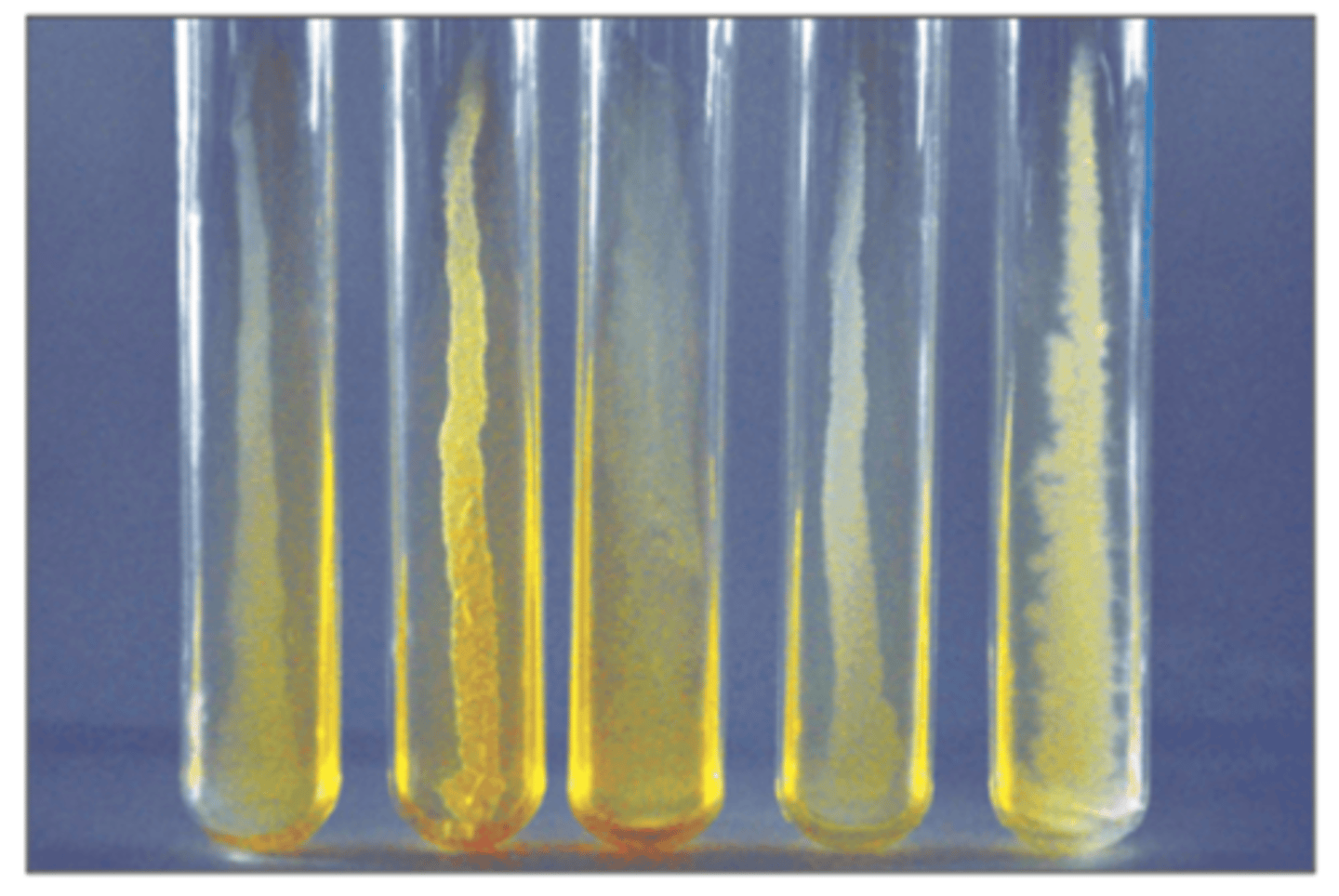
growth patterns on slants:
-many organisms you will see in this class produce ___ growth (dense and opaque with a smooth edge), but you will see differences in other features.
friable; opaque; translucent; smooth; lobed
growth on slants can vary in texture (e.g., moist or ___ [dry, crusty]), optical properties (e.g. ___, ___), and margin (e.g. ___, ___ spreading/effuse, filamentous, rhizoid), or ___ [spiny])
pellicle; sediment; uniform fine turbidity; flocculent
microorganisms cultivated in broth display a variety of growth characteristics. some organismsfloat on top of the medium and produce a type of surface membrane called a ___. others sink to the bottom as ___. some bacteria produce ___ ___ ___, and others appear to clump in what is called ___ growth. others show pigmentation or form a ring at the surface
round
shape?

irregular
shape?
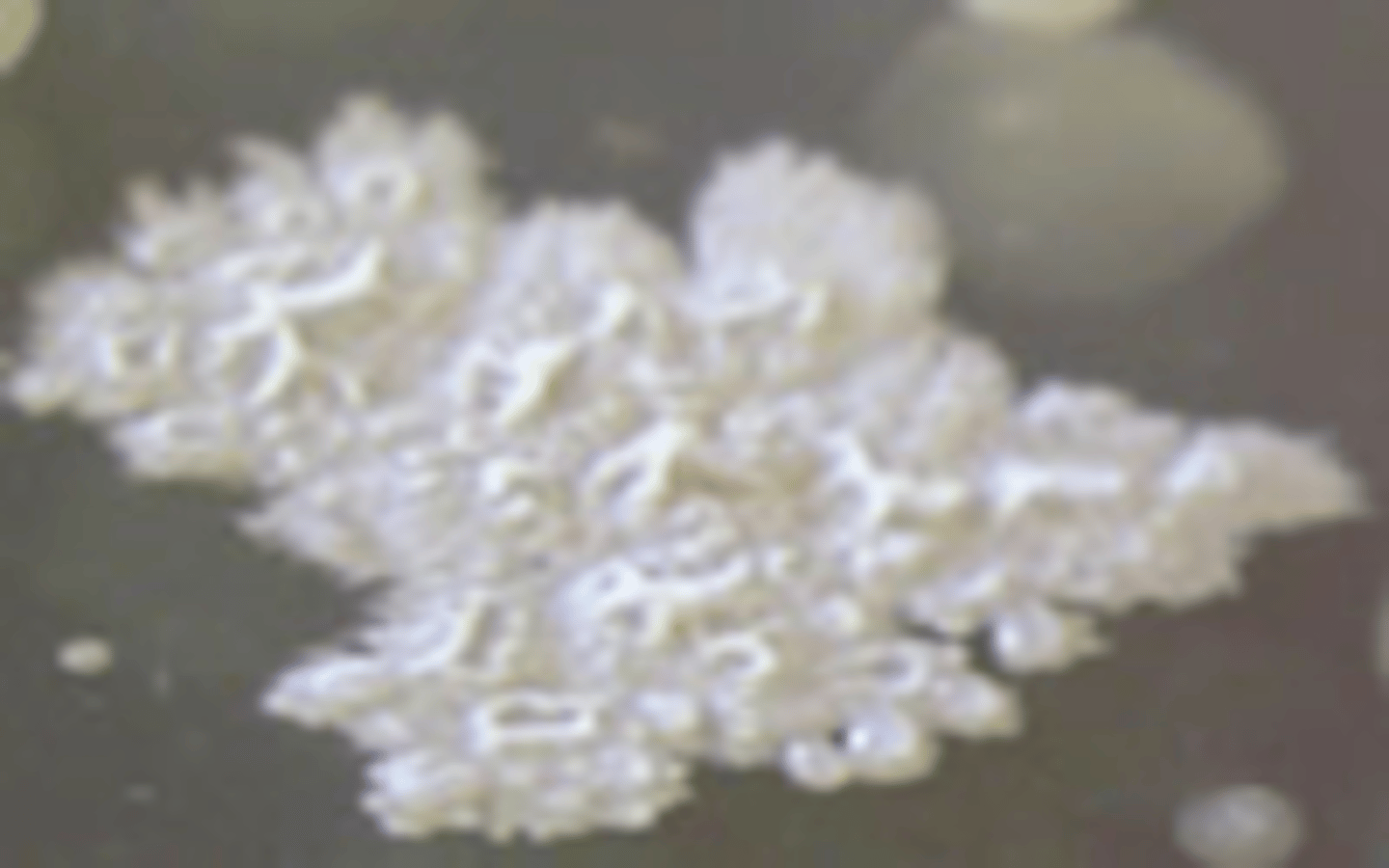
punctiform
shape?
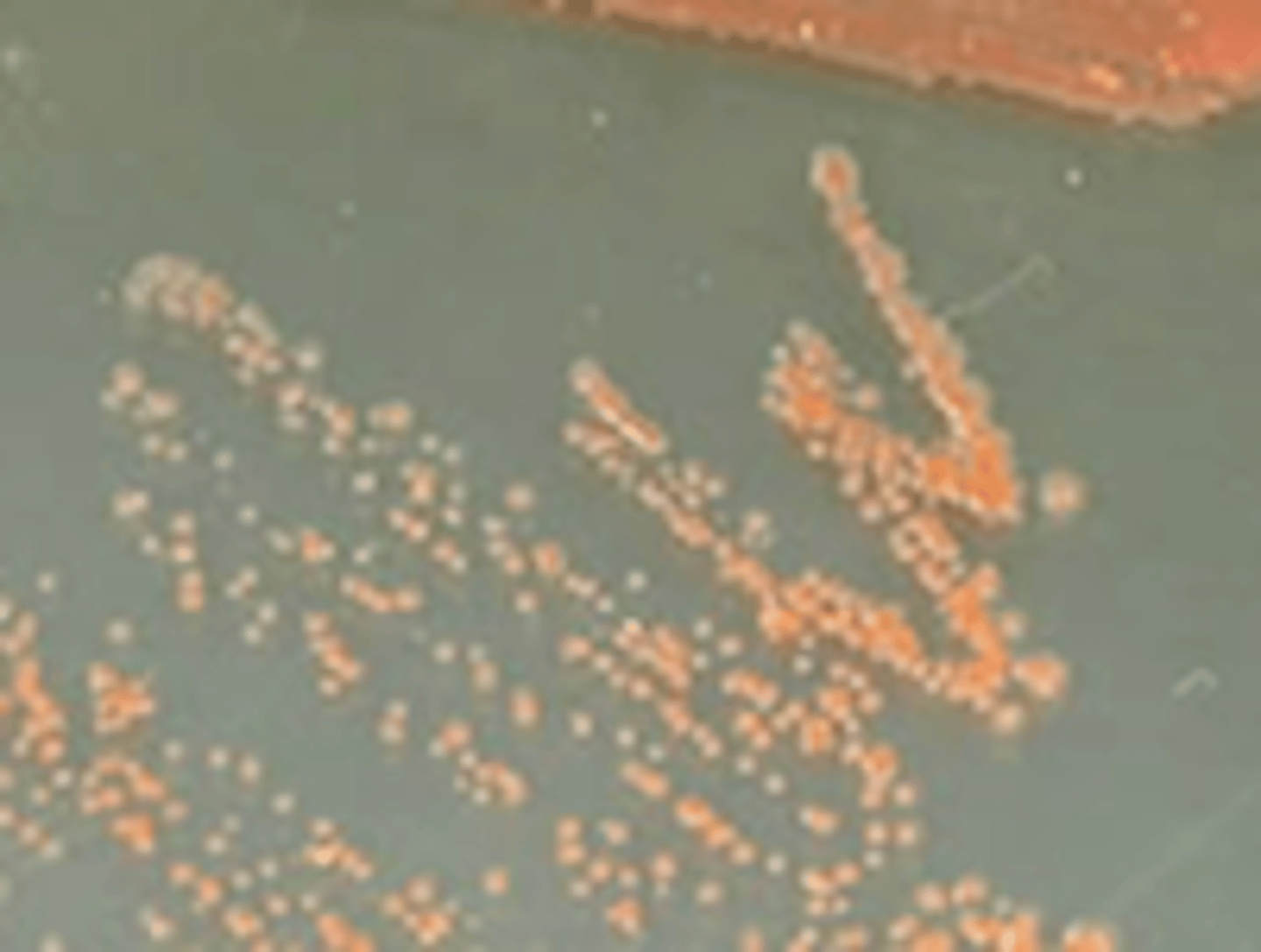
filamentous
shape?
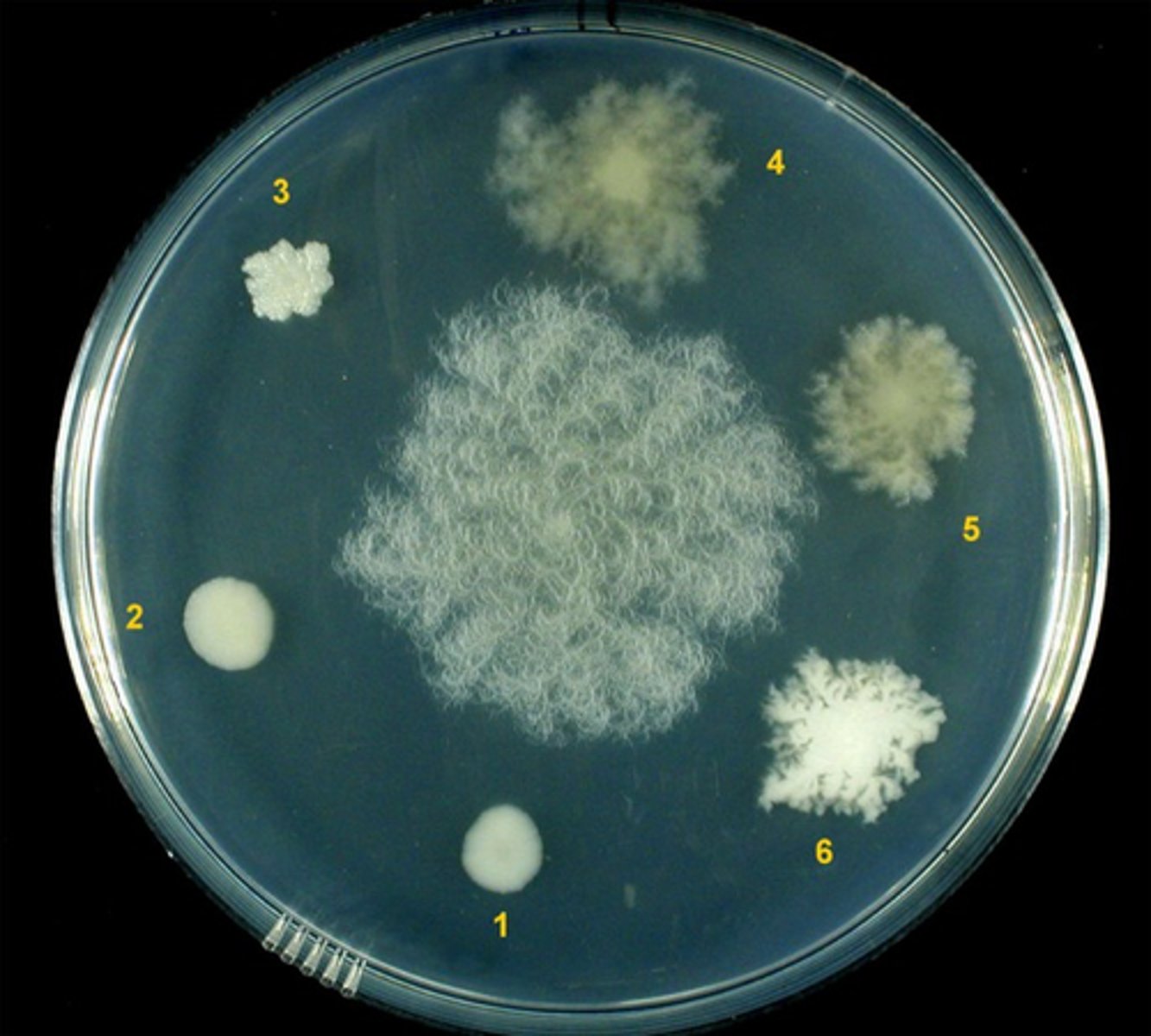
rhizoid
shape?
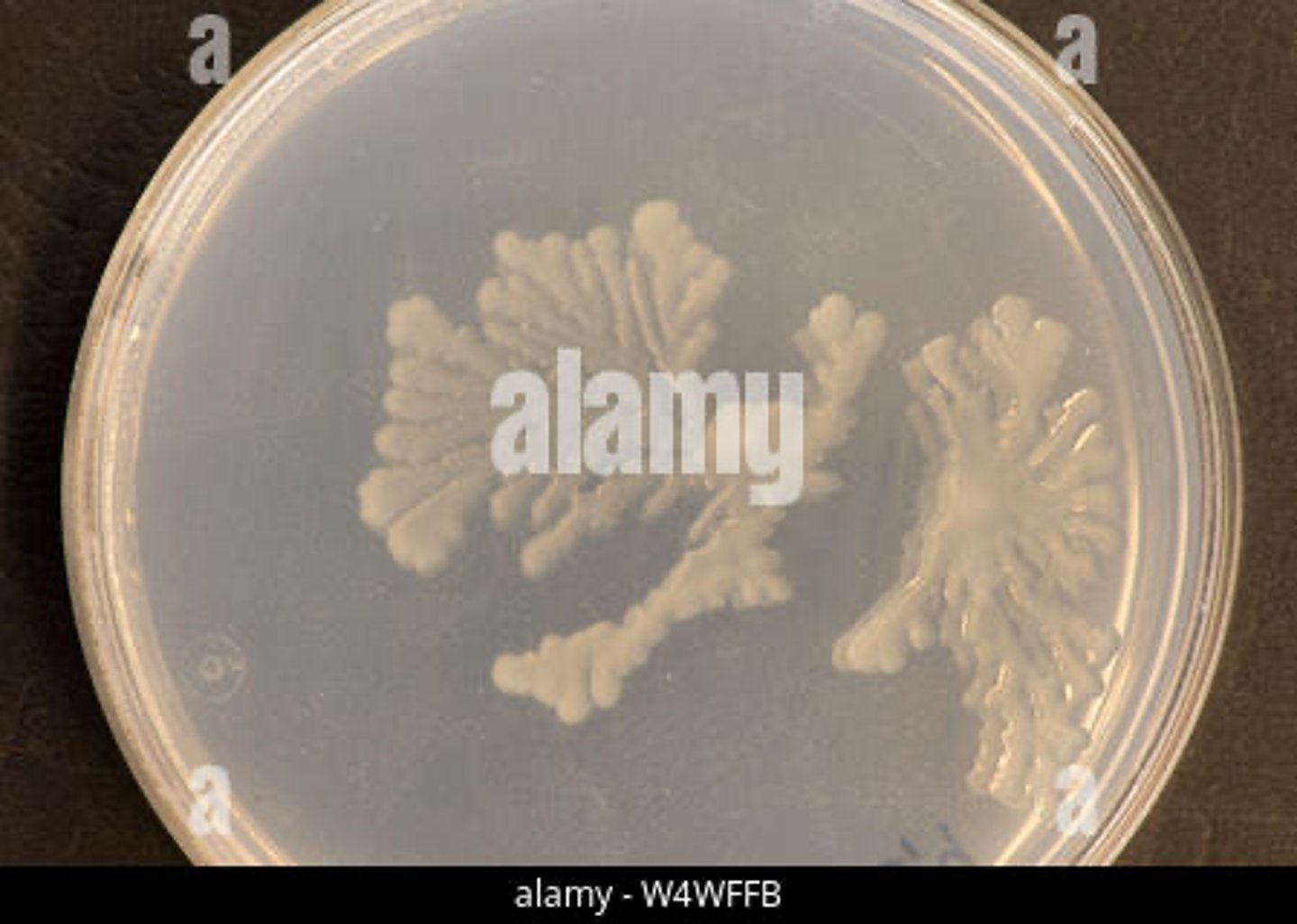
entire (smooth)
margin?

undulate (wavy)
margin?
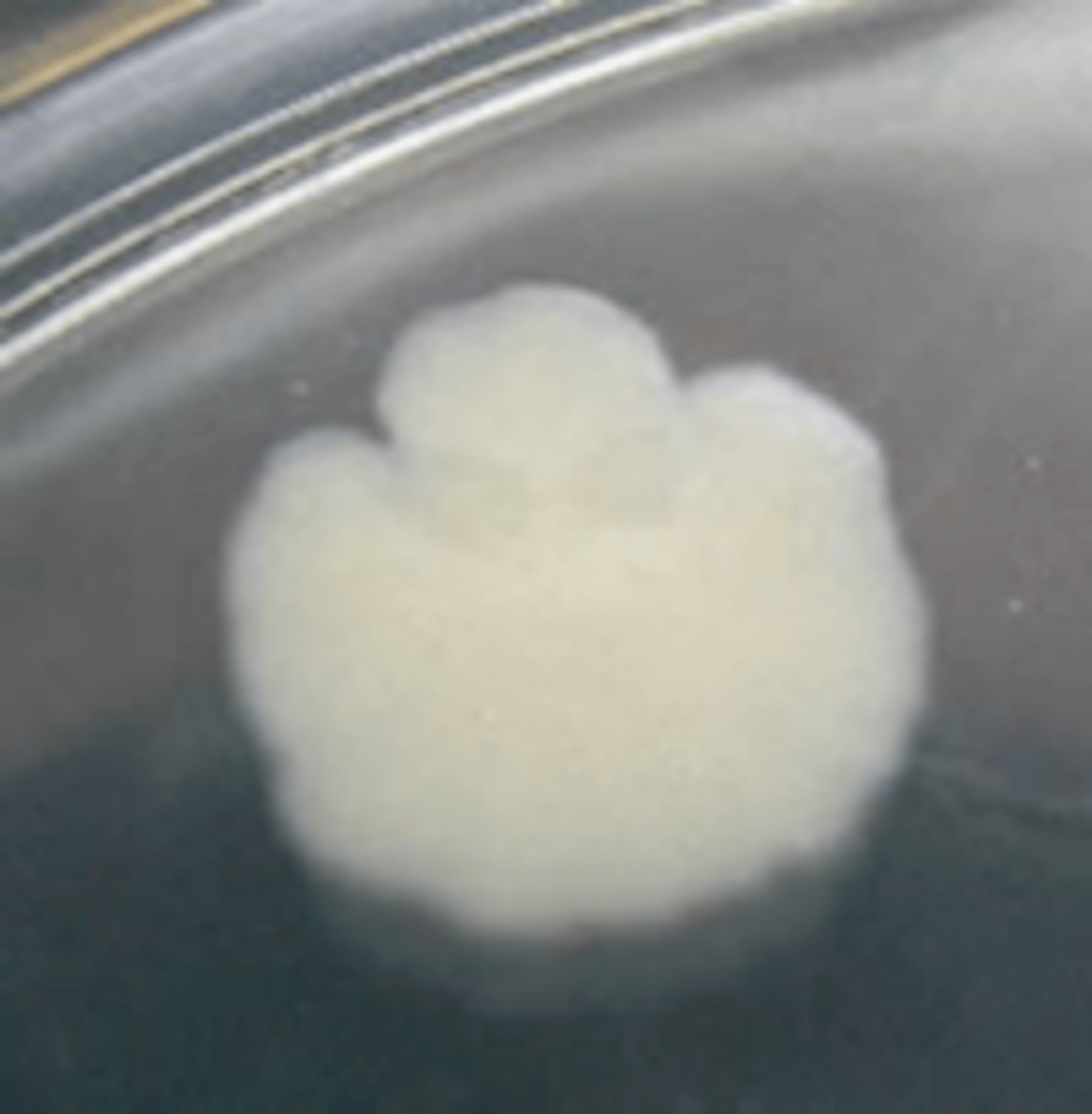
lobate
margin?
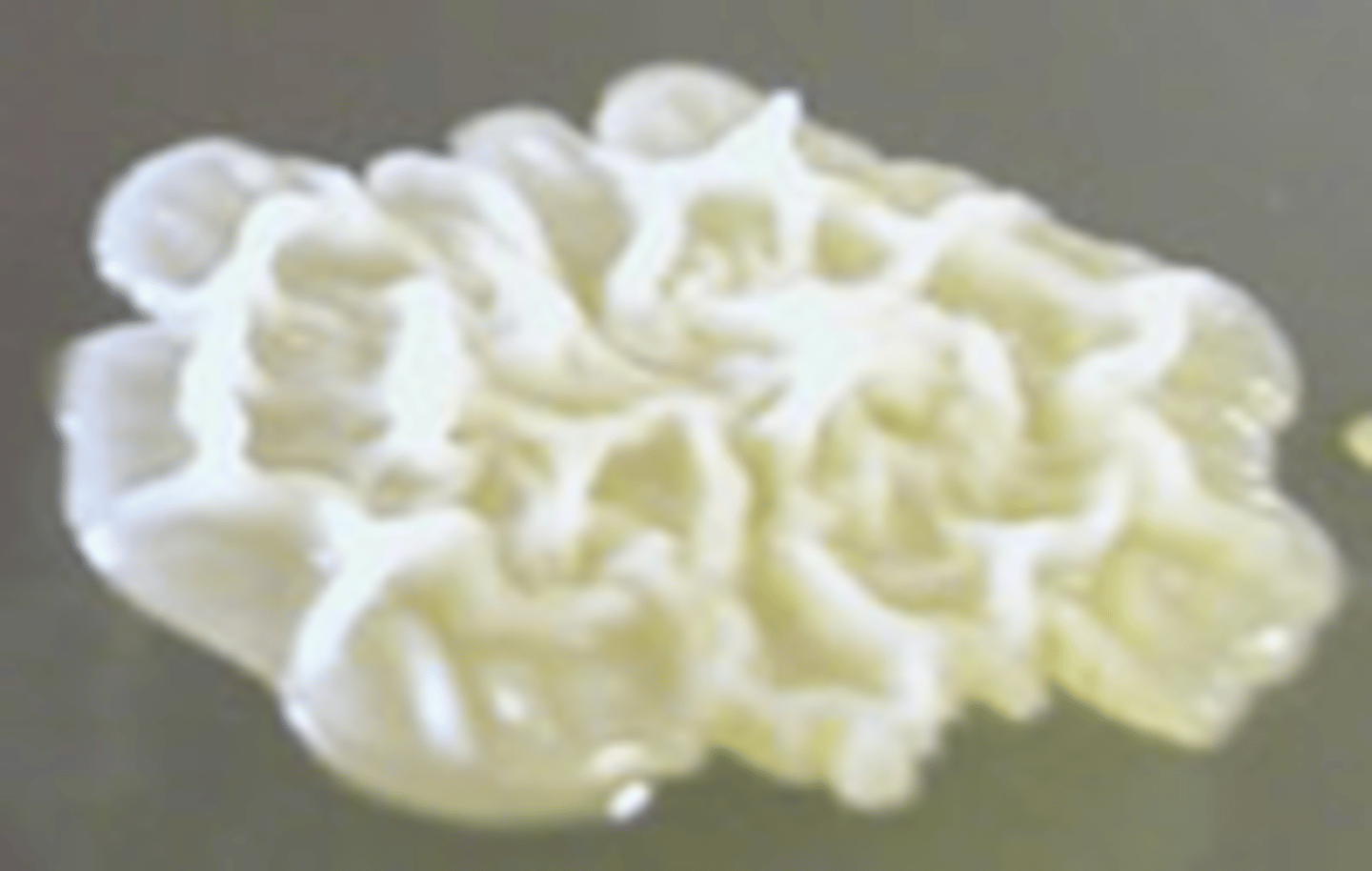
filamentous
margin?
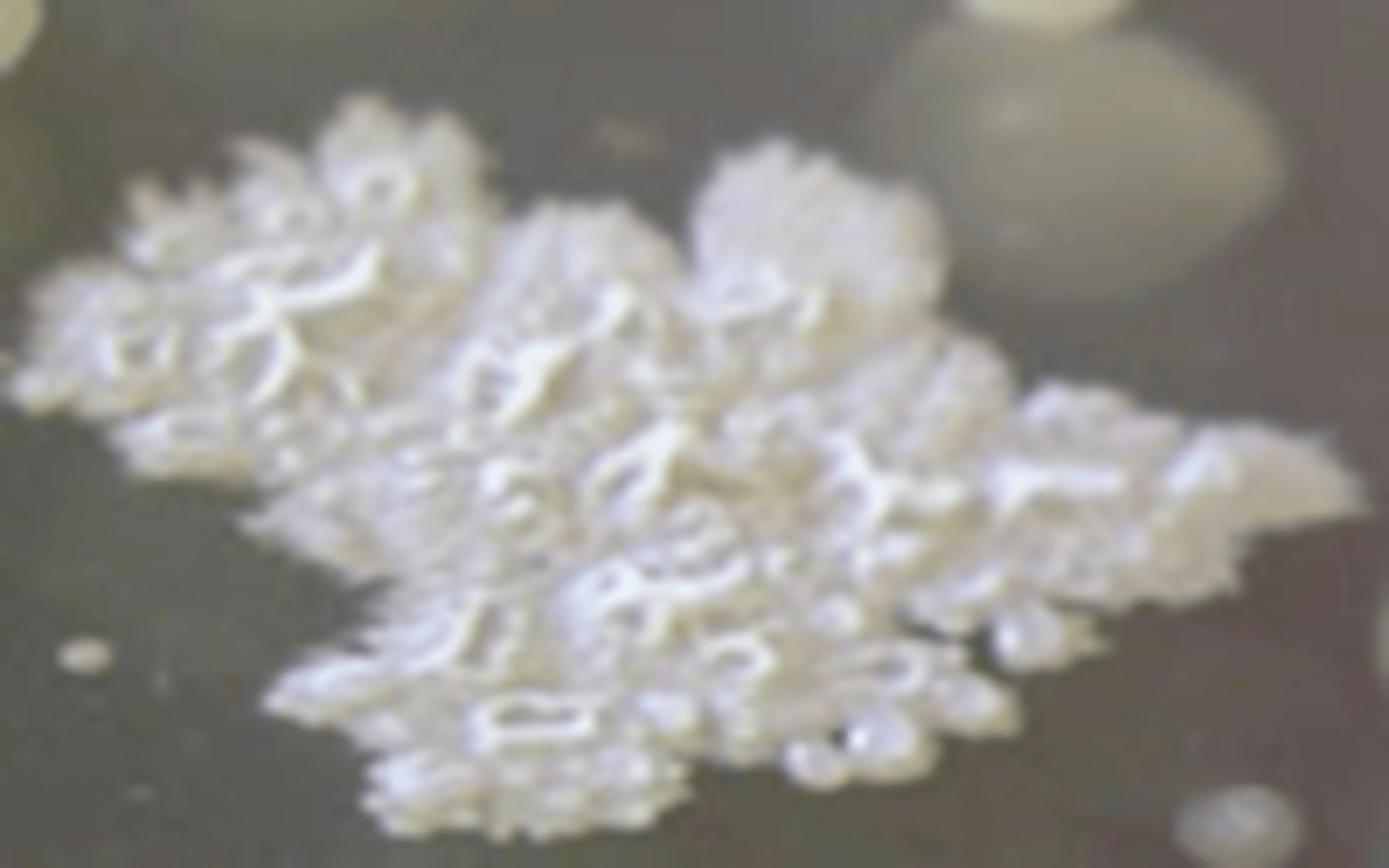
convex
elevation?
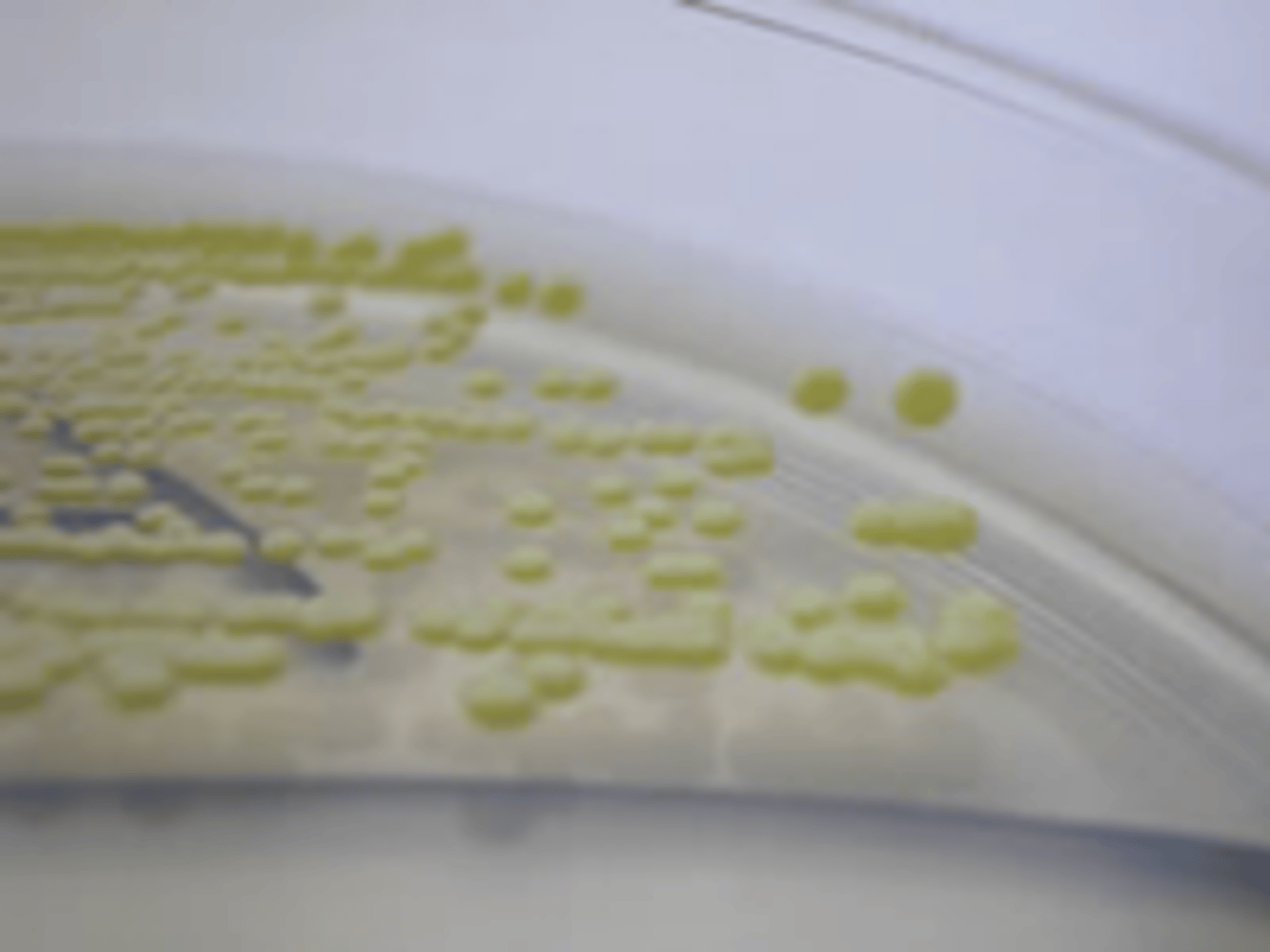
umbonate
elevation?
filiform (straight) and translucent
1st one
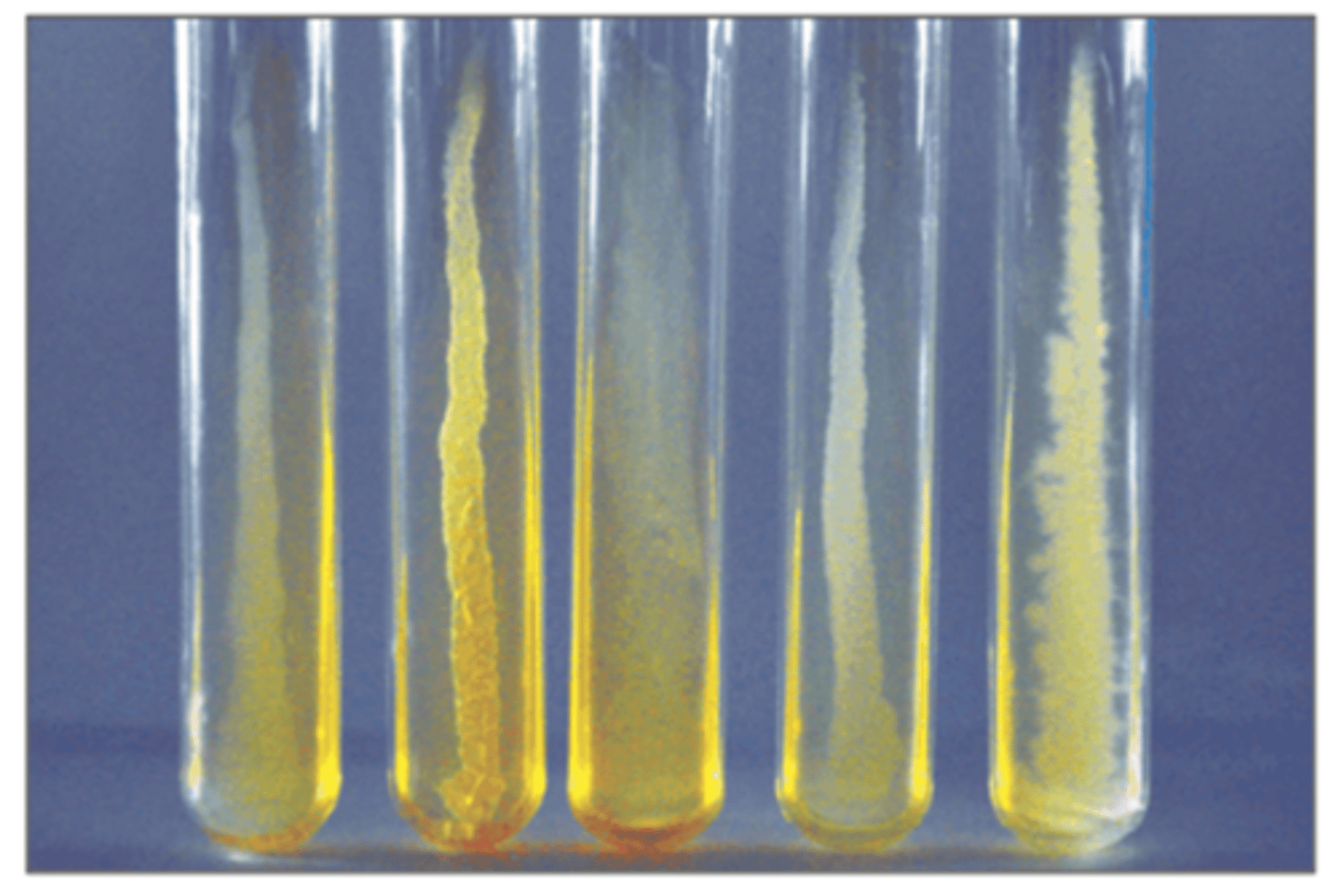
friable and opaque
2nd one
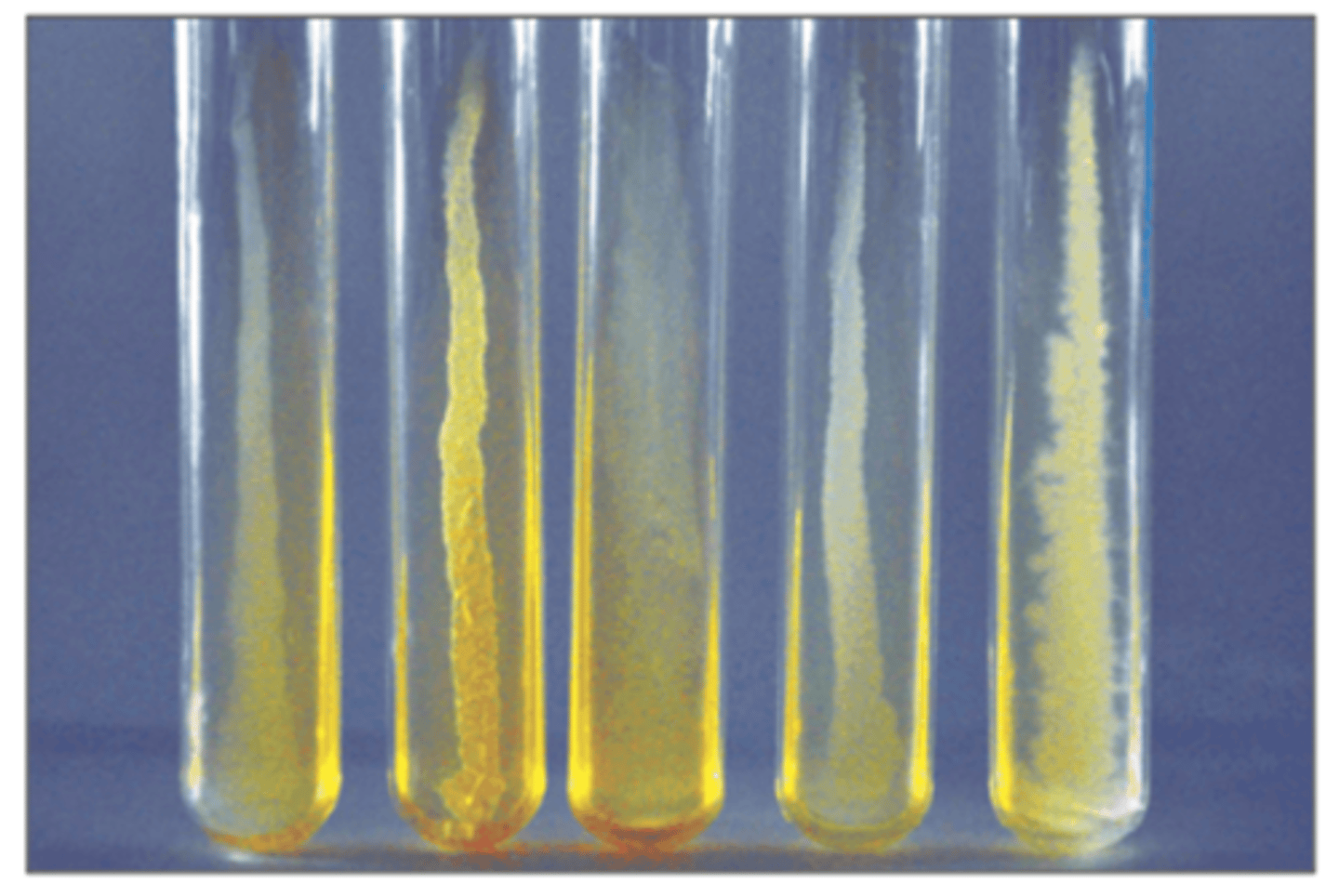
effuse and translucent
3rd one
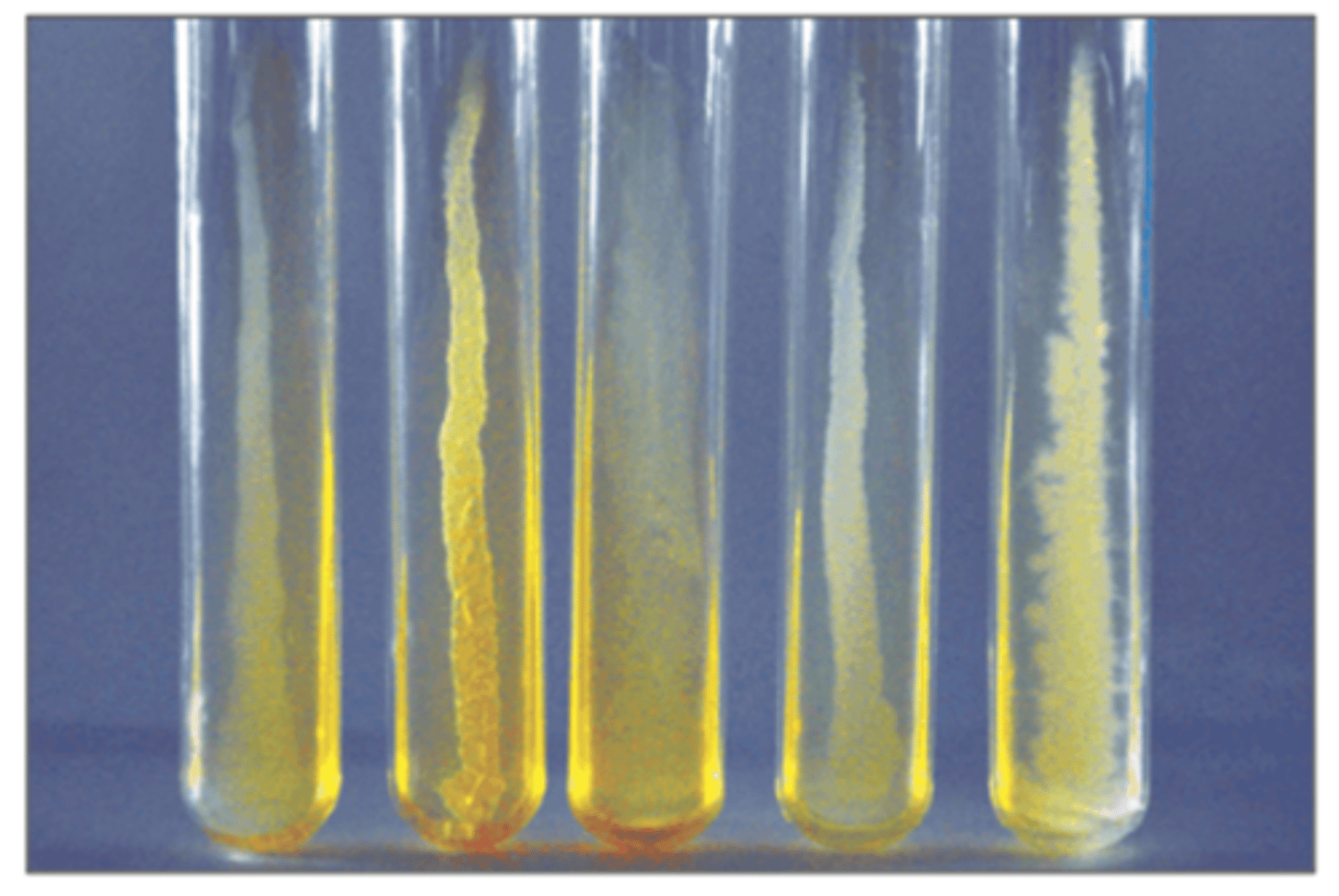
echinulate and opaque
4th one
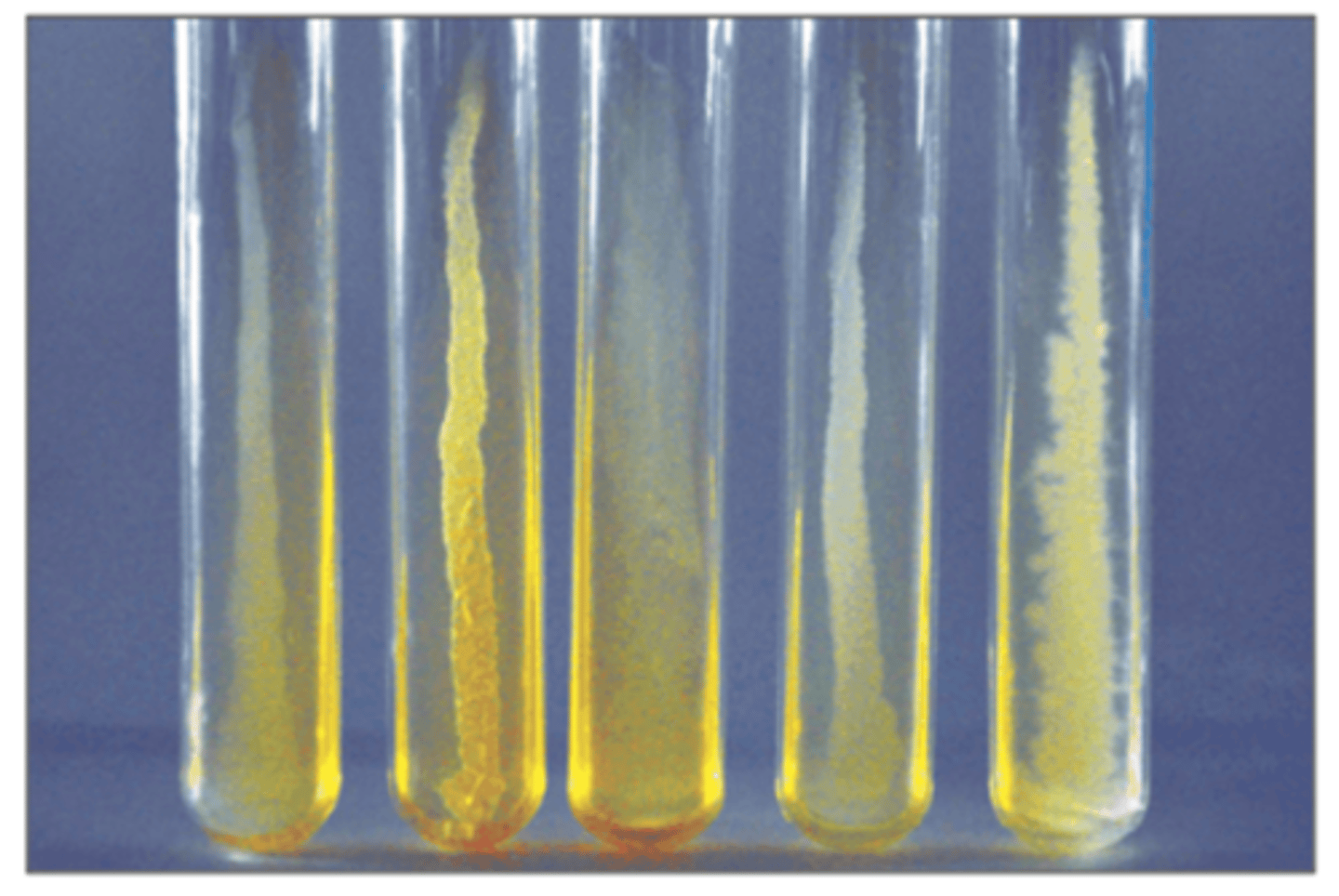
rhizoid and opaque
5th one
uniform fine turbidity
1st one

flocculent growth
2nd one

pellicle and sediment
3rd one

 Note
Note  Flashcards (64)