Media
 View linked note
 Call Kai
 Learn
Learn Practice Test
 Spaced Repetition
 Match
Match Flashcards
 Knowt Play
1/8

There's no tags or description
Looks like no tags are added yet.
Name | Mastery | Learn | Test | Matching | Spaced | Call with Kai | Chat |
|---|
No analytics yet
Send a link to your students to track their progress
9 Terms
Stories or images that depict certain groups or events, shaped by what is included or excluded. (how someone was portrayed and via to codes/conventions)
Fundamental elements like colours and camera angles that create meaning in media.
Technical Codes - Specific media techniques, such as lighting and editing, that contribute to meaning.
Symbolic Codes - Real-life symbols, for example, a red rose representing romance.
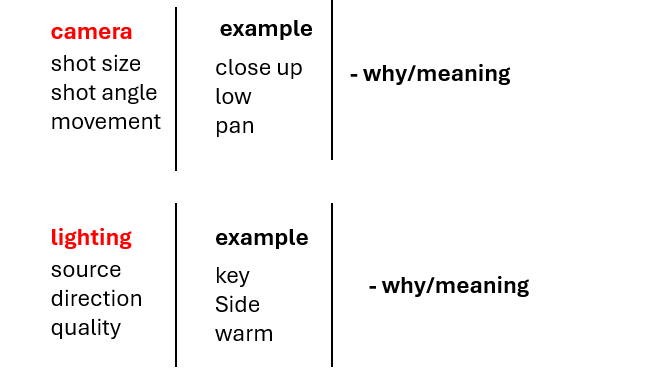
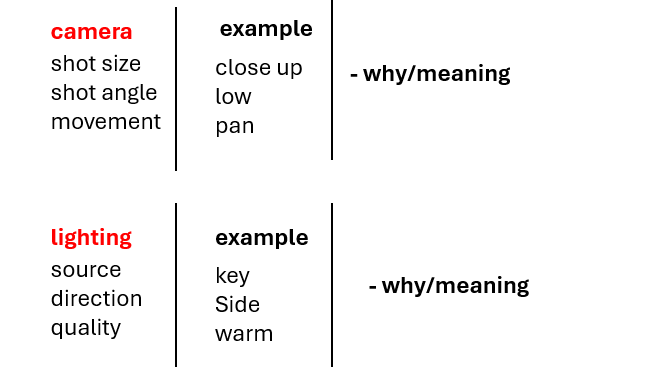
Conventions
Media conventions are the expected rules or common practices that guide how media is created.
Narrative Conventions - These refer to typical story structures that include a beginning, middle, and end. (Structure,character construction, setting)
Form Conventions - These are the standard ways media is presented, such as featuring titles at the beginning and credits at the end.
Genre Conventions - These are the typical features of a specific media genre, like the use of eerie music in horror films. (use of tropes, characters, settings or themes)
The group of people who watch, listen to, or read media.
Reception - How and where the audience consumes media affects their understanding.
Engagement - The emotional or intellectual connection the audience forms with the media.
Response - The audience's interpretation and meaning-making regarding the media.
The specific group for whom the media was originally created.
Contemporary viewers who may interpret the media differently due to societal changes.
Implicit Reading - This is the exploration of deeper, hidden meanings in the media.
Explicit Reading - This focuses on the obvious, surface-level meaning of the media.
This refers to the time frame in which the media was produced, influencing its themes and portrayal, such as differing depictions of family life from the 1960s to the 2000s.
Both shows are sitcoms that use humour to depict families.
Codes - They employ humorous music and character behaviours to evoke laughter.
Representations within the texts - Both portray families and utilize stereotypes for easy recognition.
Conventions of TV sitcoms - Sitcoms typically feature humour, recurring characters, and resolutions by the episode's end.