Metabolism & Enzymes Review
 Call Kai
 Learn
Learn Practice Test
 Spaced Repetition
 Match
Match Flashcards
 Knowt Play
1/21

Name | Mastery | Learn | Test | Matching | Spaced | Call with Kai | Chat |
|---|
No analytics yet
Send a link to your students to track their progress
22 Terms
Energy
All work involves some form of energy transformation.
Potential energy = stored energy, which is the capacity to do work.
Kinetic energy = energy being transformed (e.g., doing work).
All cells must gain energy from their surroundings to do work; energy is lost as heat.
First law of thermodynamics
The total energy of any system is constant; energy can be absorbed or released, but cannot be created or destroyed.
Energy is absorbed from the surroundings (endergonic change).
Energy is released into the surroundings (exergonic change).
Second law of thermodynamic
The entropy in the universe is constantly increasing.
Entropy = random, disordered energy that is unable to do work (e.g., randomness)
Chemical reactions proceed to create more entropy.
In living things, thermal energy is the energy of randomly moving molecules.
Heat is the most disorganized form of energy.
→ If the energy is constant, but the entropy is constantly INCREASING, then the energy available for work is DECREASING.
→ All living organisms must absorb potential energy to avoid becoming full of entropy and stay alive.
Metabolism
Metabolism is all of the chemical reactions in a living organism that allow life processes such as growth, movement, repair, reproduction, and response.
Exothermic reaction: Energy is released into the surroundings.
Endothermic reaction: Energy is absorbed from the surroundings.
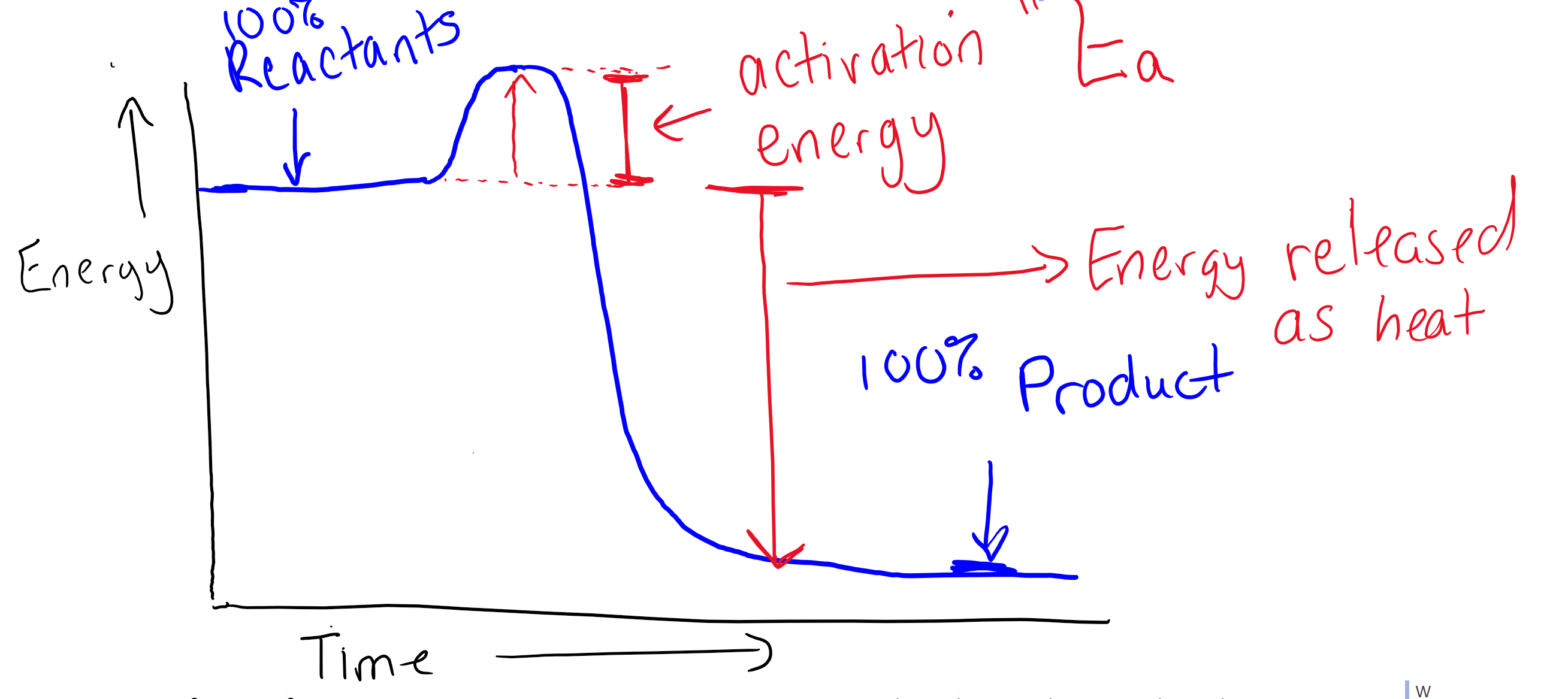
Exothermic reaction
Reactants have more chemical energy (stored in chemical bonds) than products.
Combustion of methane: CH4 + 2O2 → CO2 + 2H2O + energy
Cellular respiration: C6H12O6 + 6O2 → 6CO2 + 6H2O.
Exothermic reactions proceed spontaneously because the energy released is more than the activation energy.
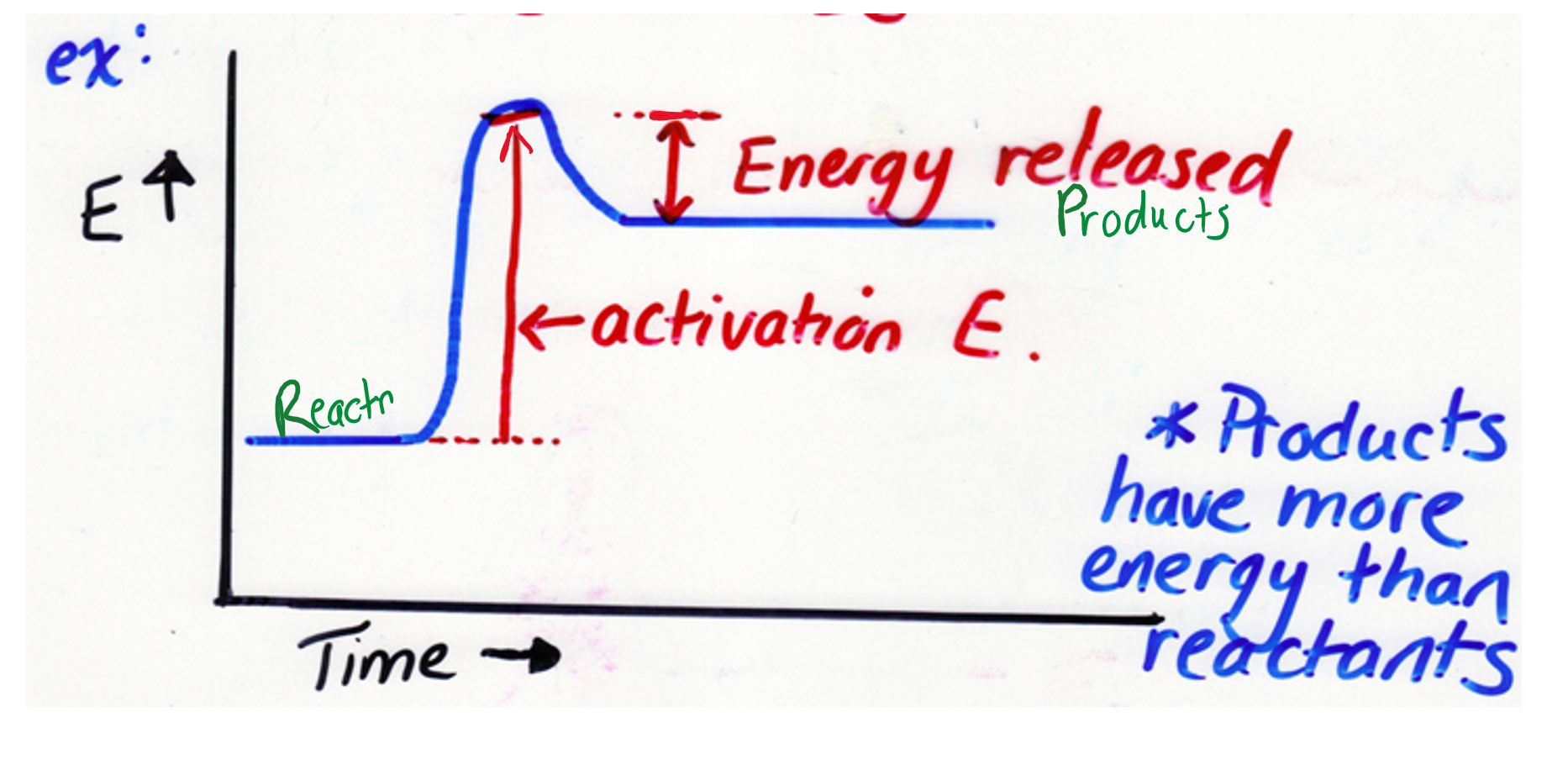
Endothermic reaction
Products have more energy than reactants.
Photosynthesis: 6CO2 + 6H2O + energy → C6H12O6 + 6O2
Endothermic reactions proceed non-spontaneously because the energy released is lower than the activation energy.
Activation energy
The minimum energy needed to break the chemical bonds in the reactant molecules, before forming new bonds within the product molecules.
Kinetic molecular theory
More movement and energy lead to more molecular collisions and more reactions.
→ Increases the metabolism.Body temperature must be kept at 37℃ minimum to ensure the proper functioning of enzymes and metabolic rates.
People with low metabolism often feel cold (e.g., people with anorexia).
Too much energy can cause the cell membranes to melt and the proteins to denature.
→ Solution: enzyme
Enzyme
An enzyme is a protein catalyst that increases the metabolic rate by lowering the activation energy.
Each enzyme has 1 or more regions called active sites, where the substrate (reactant molecule) binds in a specific way.
“Lock and key” binding: Dependent on the matching of the shape of the active site and the shape of the substrate.
→ Intermediate enzyme-substrate complex forms, and then decomposes to release the products and a free catalyst (enzyme).
The enzyme lowers the activation energy, which allows the substrates to collide more often and in an ideal orientation, and therefore, increases the metabolic processes.
Cofactors
Inorganic ions that bind to the enzyme and assist the substrate in binding to the enzyme.
→ Ex: K+, Ca2+, Fe2+, Zn2+An enzyme will not work without its cofactors (if they have any).
Cofactors usually alter the shape of the active sites.
Coenzymes
Molecular organic cofactors, which are derived from vitamins.
Nutritional deficiencies lead to non-functioning enzymes, and alter the metabolism.
Both coenzyme and cofactor cannot function as an enzyme or substrate.
Cannot be used up (like substrate)
Cannot catalyze the reaction on their own (like catalyst)
Lock and Key Model (1890)
An enzyme is a molecular lock that will fit only a particular-shaped molecular key (substrate).

Induced Fit Model (today)
Before the reaction, the active site of the enzyme is not exactly complementary to the substrate.
When the substrate combines with the enzyme, the active site may induce a conformational change in the enzyme, which results in an optimum fit between the substrate and the enzyme.
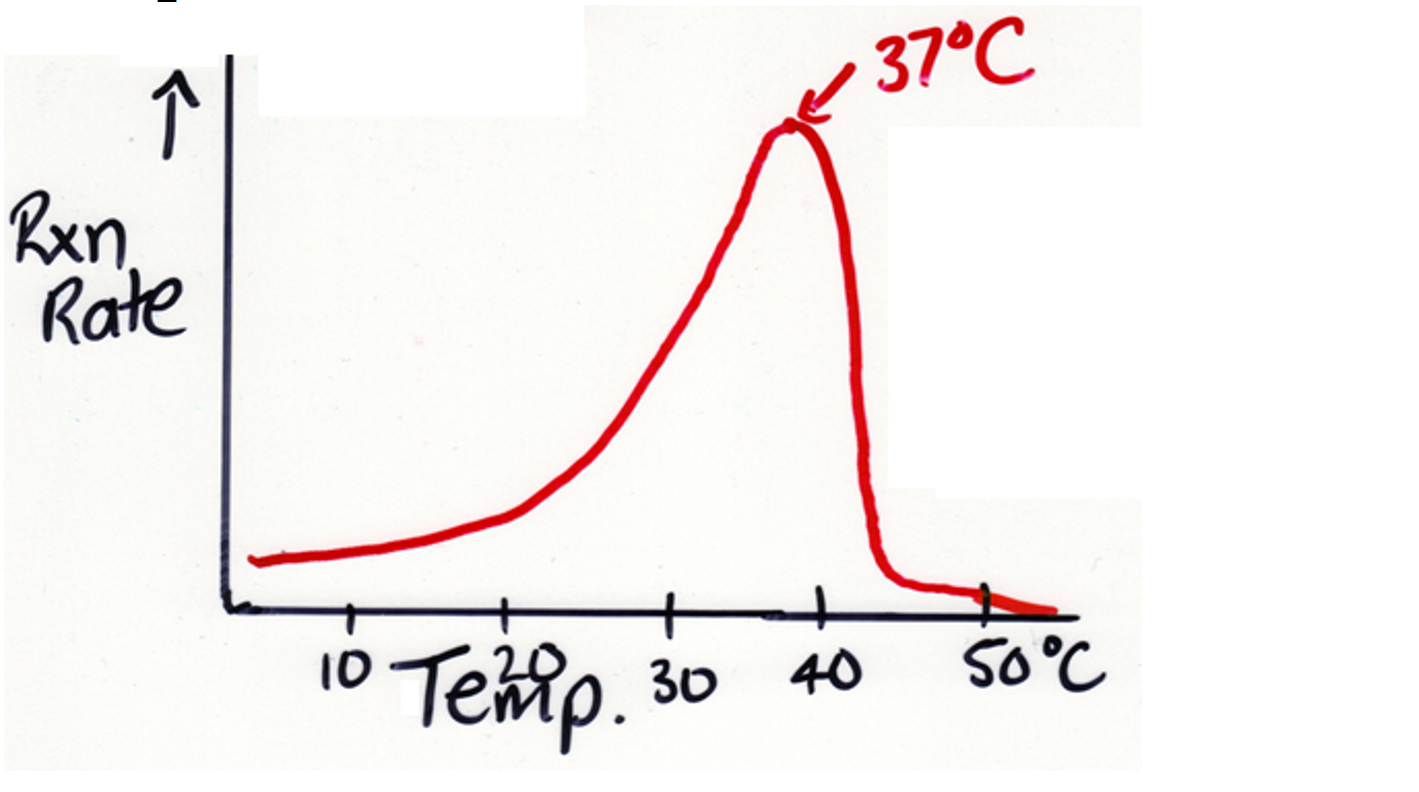
TEMPERATURE affects the enzymatic activity
As the temperature increases, the molecules will move faster and therefore, are more likely to collide and react.
If the temperature increases too high, the enzyme will become denatured, which changes the shape of its active site.
→ Body temperature must be kept constant.
The denaturation of enzymes can be permanent (aka coagulation) or temporary.
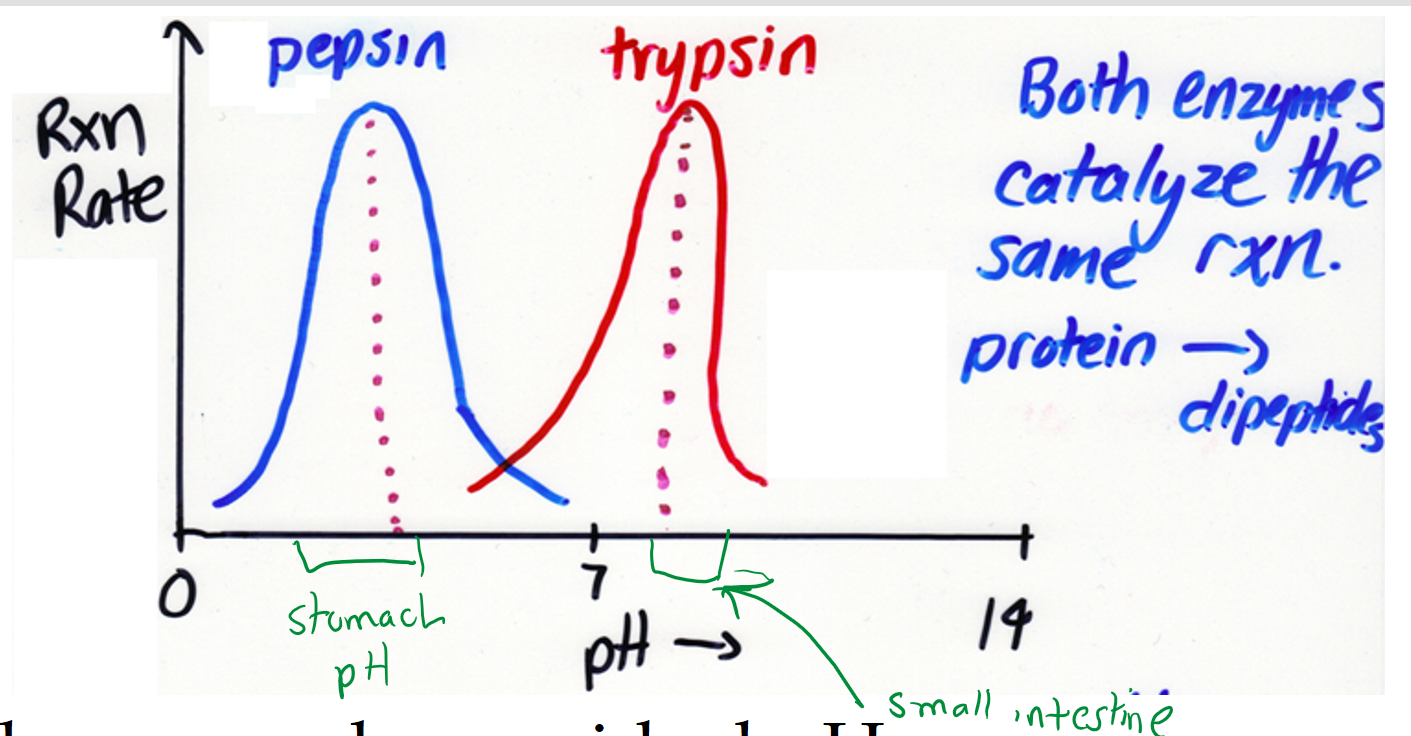
pH affects the enzymatic activity
Each enzyme has an ideal pH. Outside of the ideal pH, the active site will denature.
→ Ex: Pepsin in the stomach and trypsin in the small intestine both catalyze the same reaction but have different ideal pHs.Pepsin has a lower pH (~3.5), while trypsin has a higher one (~9).
If the pH changes, the electrical charge attraction, including disruption of H-bonds, changes.
→ The active site changes.
CONCENTRATION affects the enzymatic activity
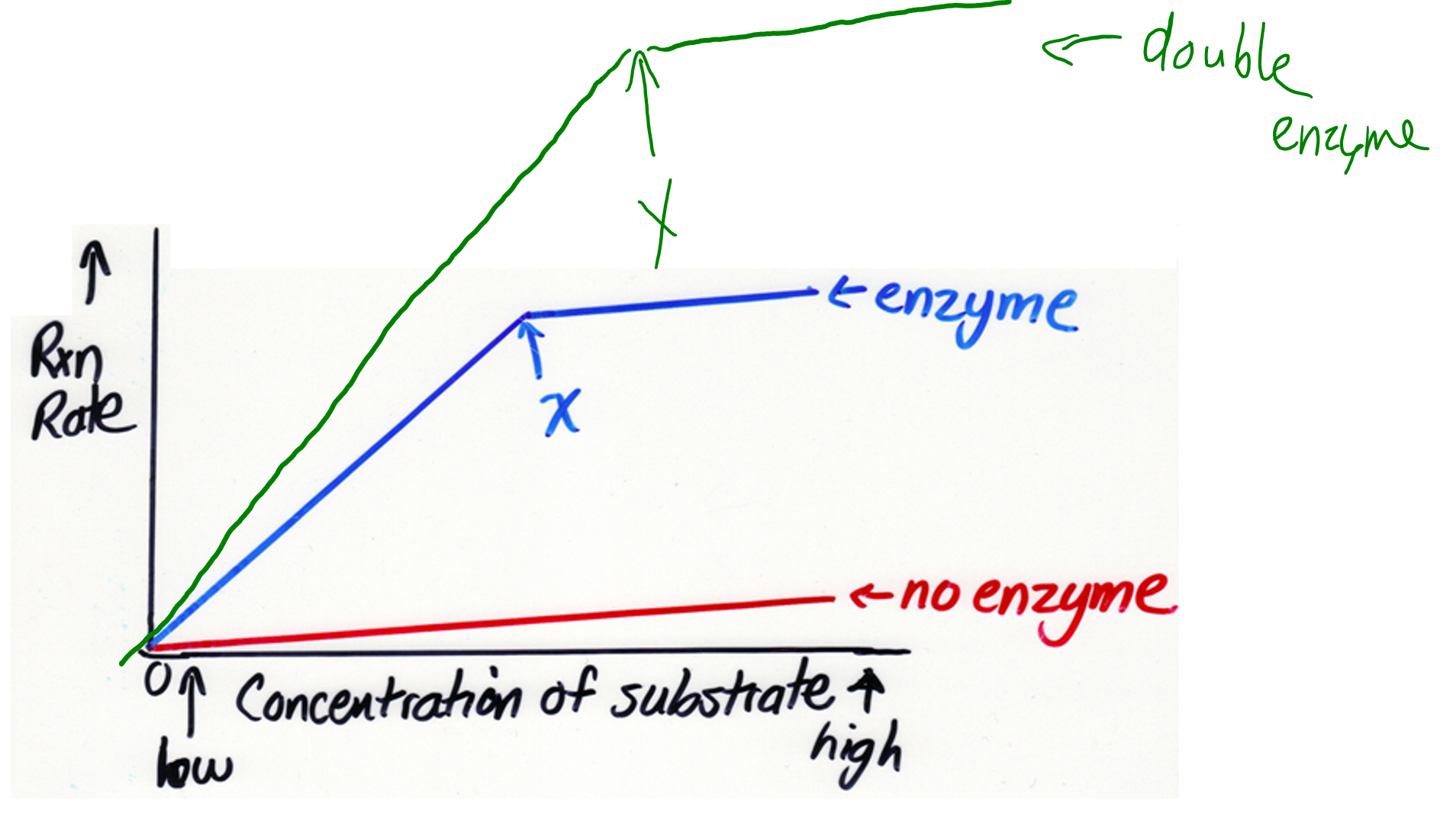
As the concentrations of the substrate and/or the enzyme increase, the reaction rate will increases due to more collisions between these two.
At point X, all the active sites of the enzyme are fully engaged.
→ The enzyme is saturated, and the reaction rate is limited despite the addition of substrate.
Inhibitor
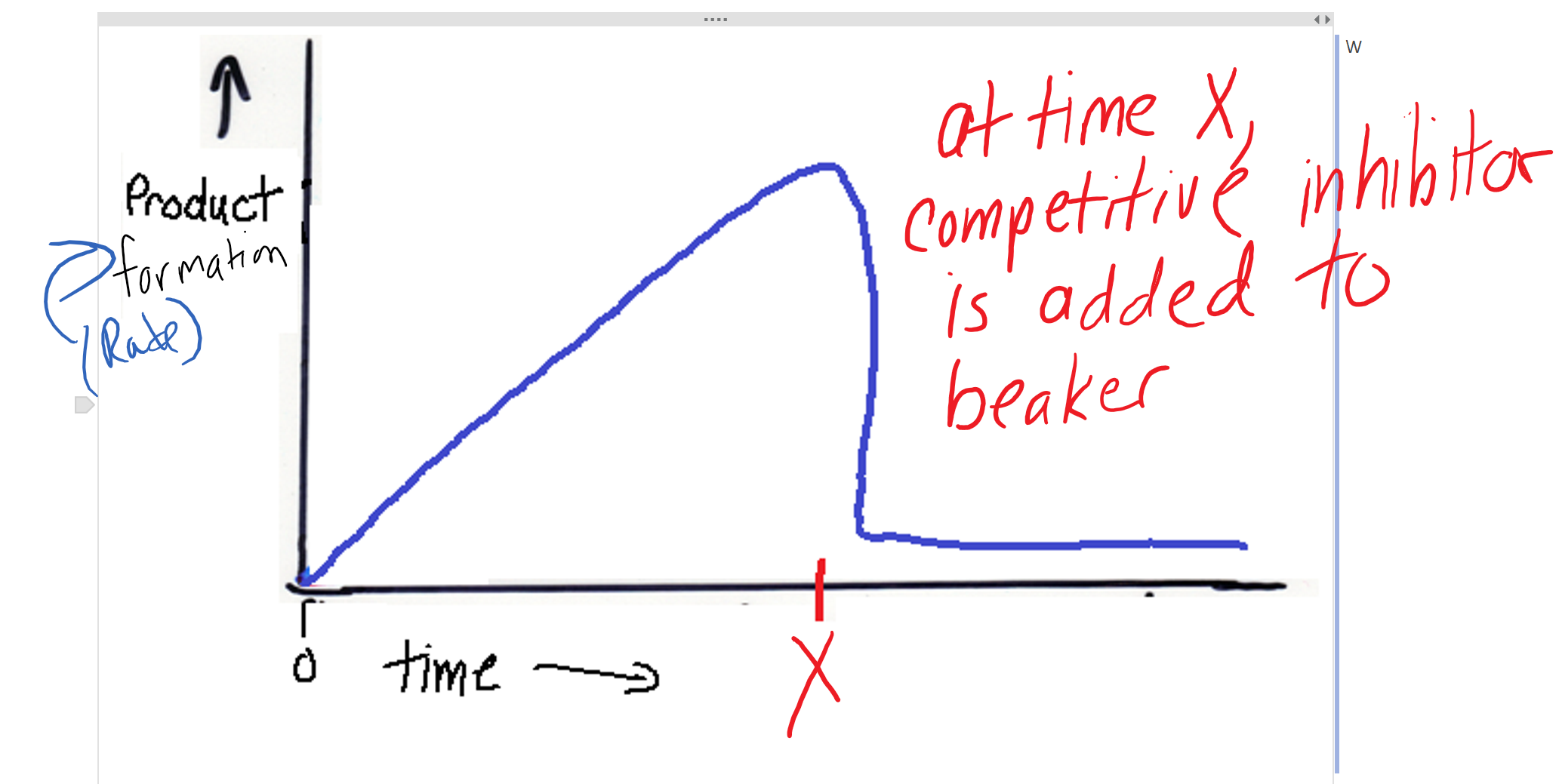
A substance which prevents the formation of the enzyme-substrate complex.
Competitive inhibitor
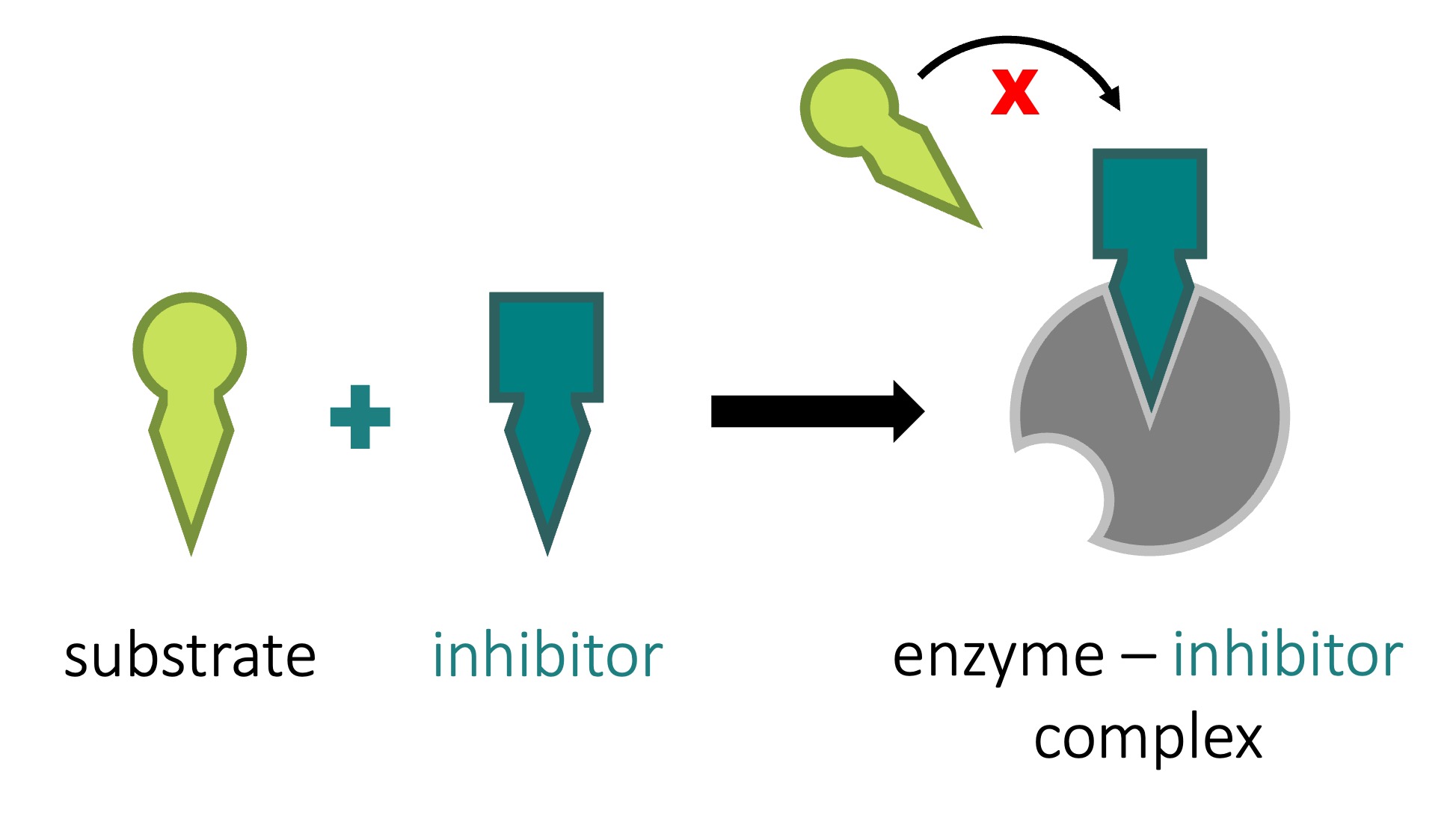
Competitive inhibitor compete with the substrate for the active sites, which lowers the number of enzyme-substrate complexes forming.
→ Decrease the reaction rate.Competitive inhibitor can form permanent or temporary bonds (reversible).
Non-competitive inhibitor
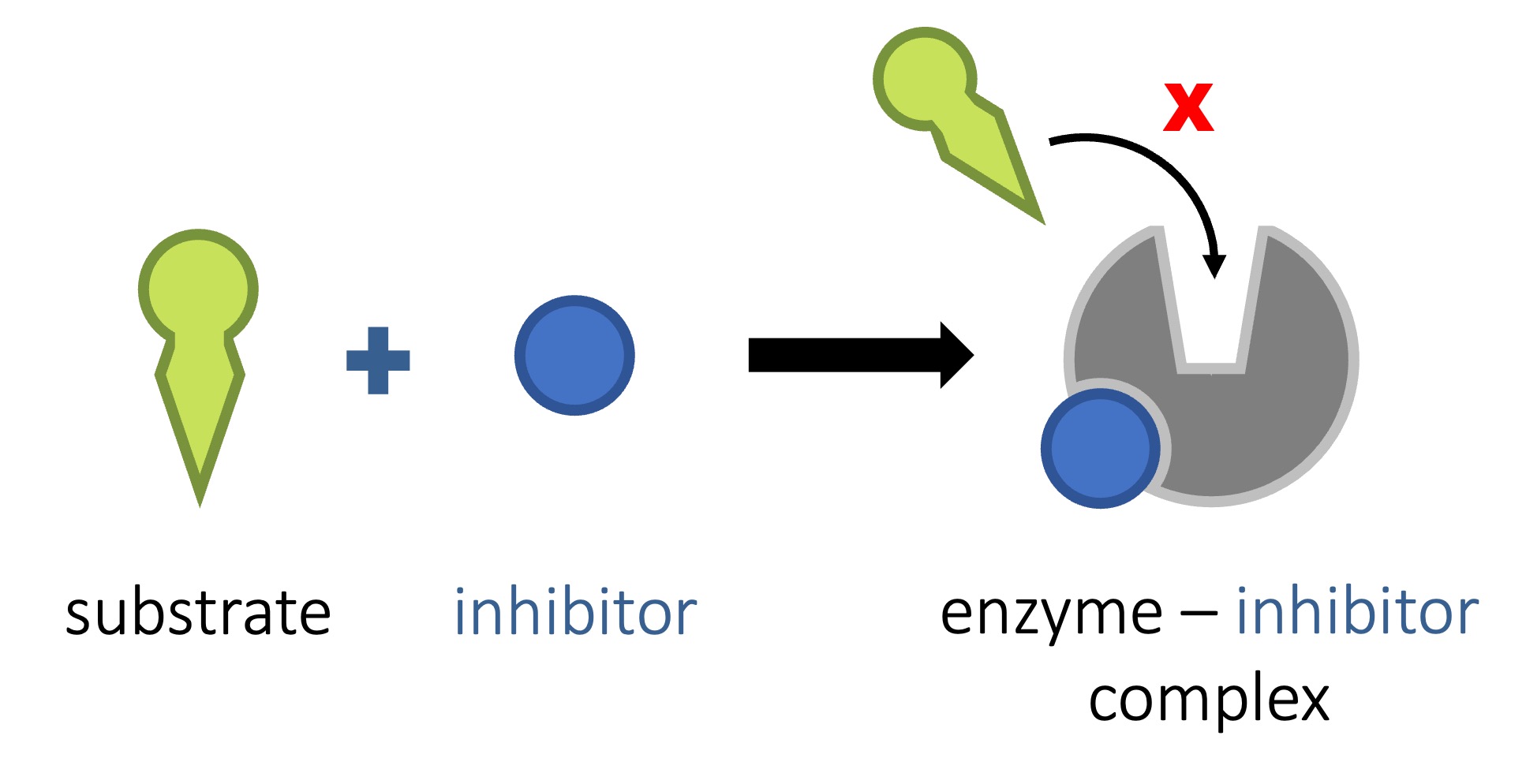
Non-competitive inhibitor binds to the other site on the enzyme, called the allosteric site, which causes the active site to change its shape.
→ Enzyme becomes non-functional, and the substrate cannot bind to form the enzyme-substrate complex, decreasing the overall reaction rate.Many heavy metal ions are reactive and can act as non-competitive inhibitors (e.g., Hg, Pb).
Cyanide ion (CN-) inhibits the enzyme catalyzing ATP synthesis.
Non-competitive inhibition can be reversible (temporary) or irreversible (permanent).
Naming enzymes
Enzymes’ names are closely linked to their substrate, and end with “-ase”.
Maltase acts on maltose
Helicase acts on the DNA helix
DNA polymerase acts on DNA polymer
Lactase acts on lactose
Sucrase acts on sucrose
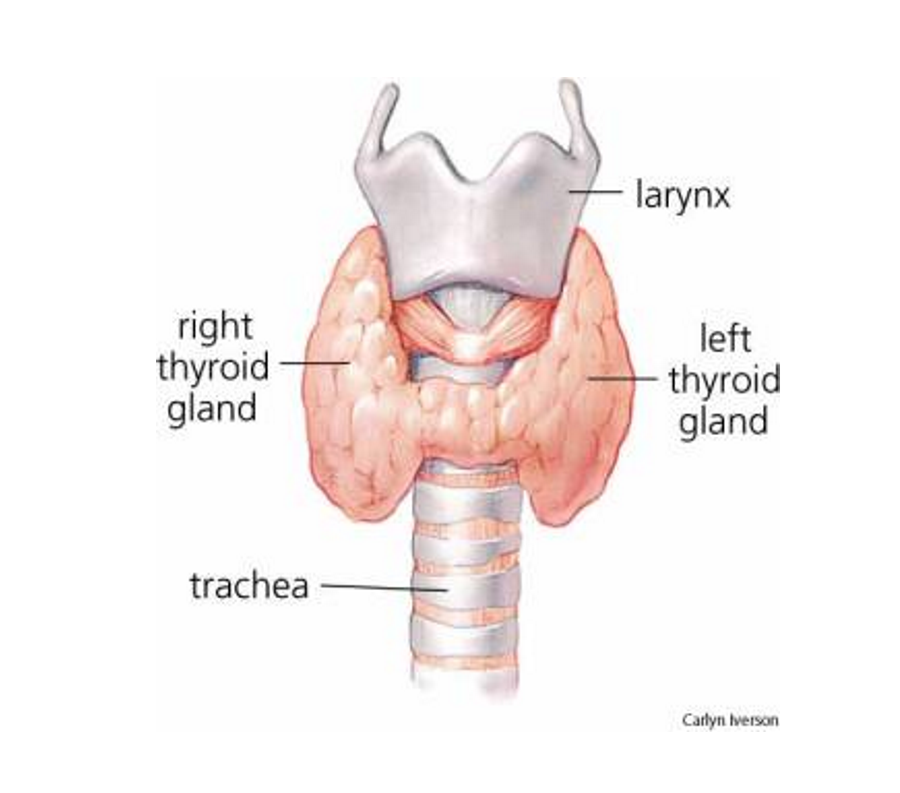
Thyroxin
Hormone from the thyroid gland can cause the body’s tissue to increase the transport of O2 into the cells.
→ This increases the ATP synthesis and the metabolic reaction rate.
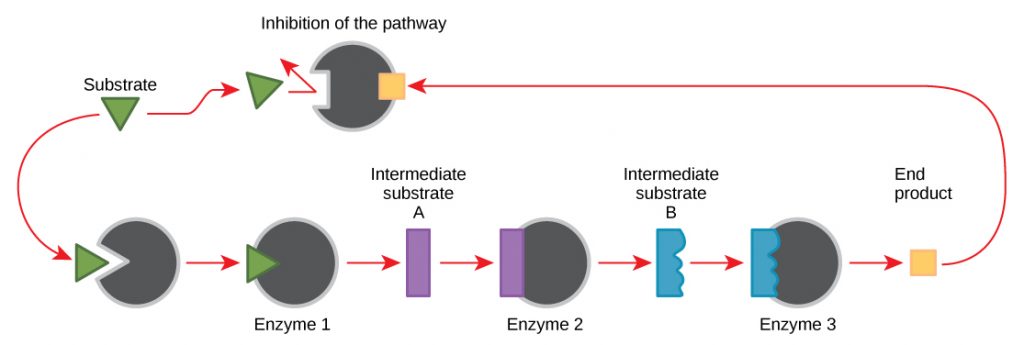
Feedback inhibition
Feedback inhibition is a regulatory process in which the final product of a metabolic pathway inhibits an enzyme that acts early in the pathway.
A series of enzyme reactions produces a final product (like A → B → C → D → E).
When too much E (the end product) builds up, it binds to an allosteric site (a regulatory site, not the active site) on the first enzyme in the pathway.
This changes the enzyme’s shape, slowing or stopping its activity.
When the level of E drops again, the enzyme is no longer inhibited — the pathway restarts.