antipredator strategies and warning coloration
 Call Kai
 Learn
Learn Practice Test
 Spaced Repetition
 Match
Match Flashcards
 Knowt Play
1/10

Earn XP
Description and Tags
lecture exam 2
Name | Mastery | Learn | Test | Matching | Spaced | Call with Kai |
|---|
No analytics yet
Send a link to your students to track their progress
11 Terms
Predator Escape
Detection and Avoidance
– Vigilance (e.g. lots of lizards)
– Burrow or refuge escape
– Immobility – run and stop
– Active at times when predators are inactive
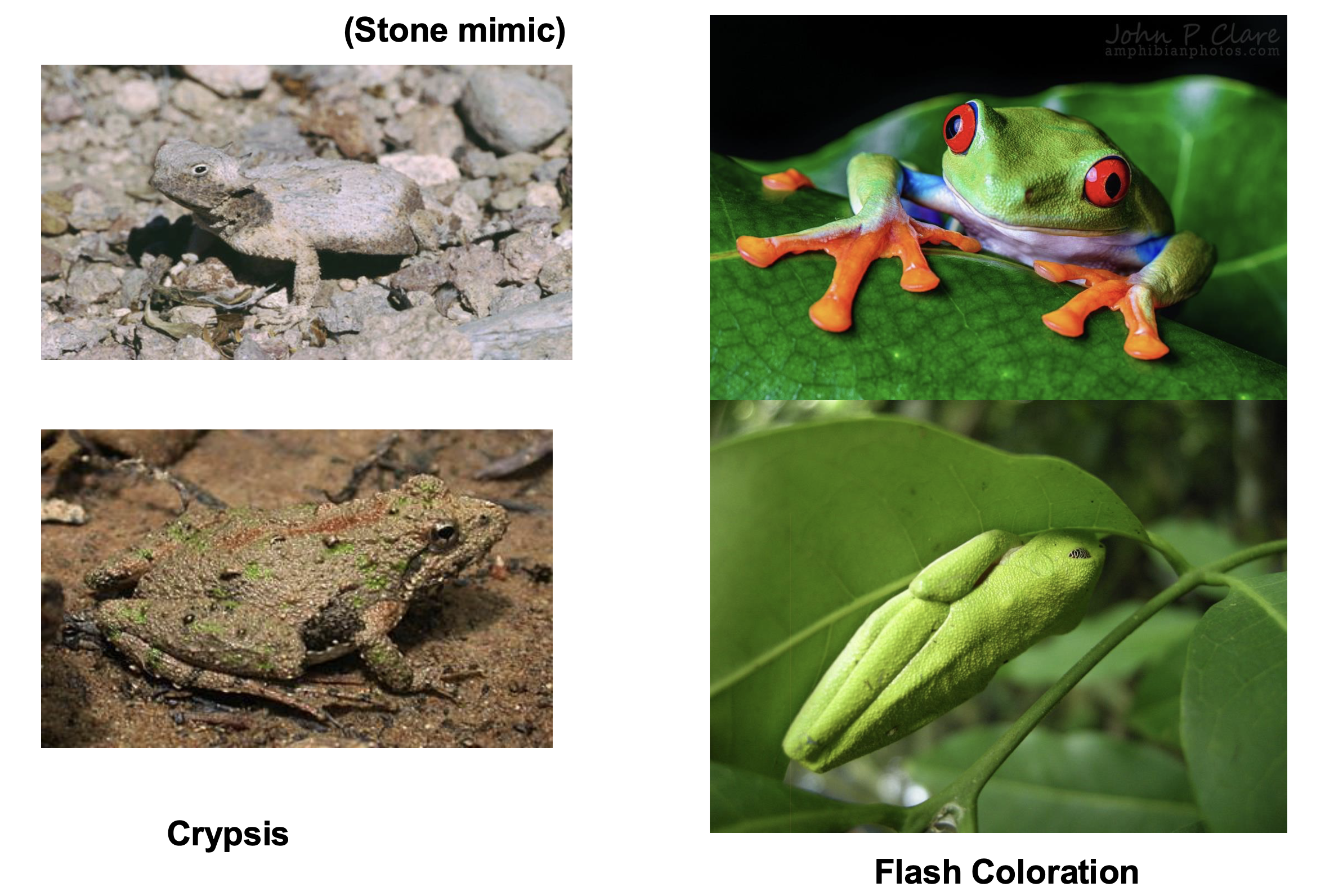
Detection and Avoidance: Coloration
Crypsis: background matching (camouflage)
• Many herps brown, gray, rusty, green, etc…
• Blotches and lines may help
• Lack of movement, flattening also helps
Startle reactions / flash coloration
• Inguinal color patches of hylids
• Movement of a banded animal (blurs unicolor in motion;
converts to bands when stopped
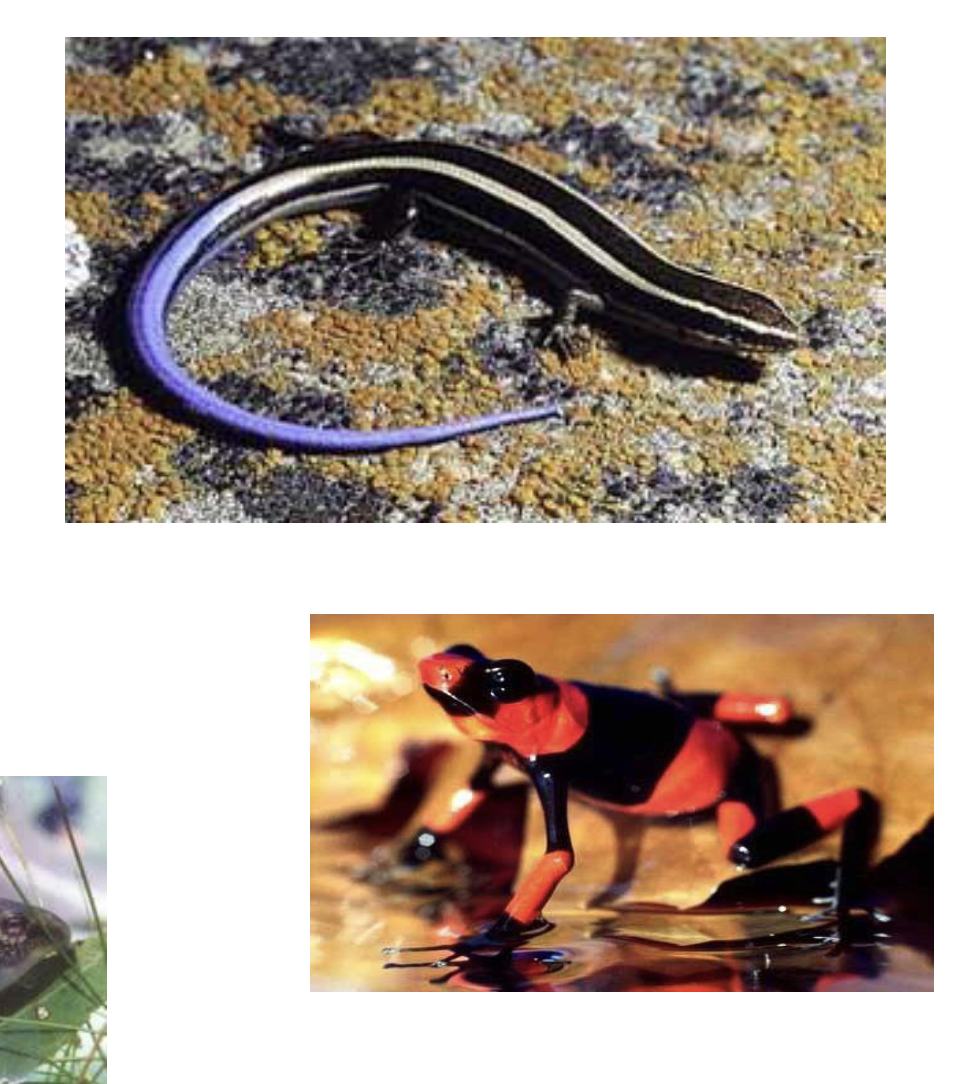
Predator Escape: Coloration
– Misdirection of attack site (Tadpole tails, Blue skink tails, Juvenile Agkistrodon tails)
– Disruptive coloration
– Aposematic coloration (Salamandridae, Dendrobatidae, Unken response, Coral snakes)
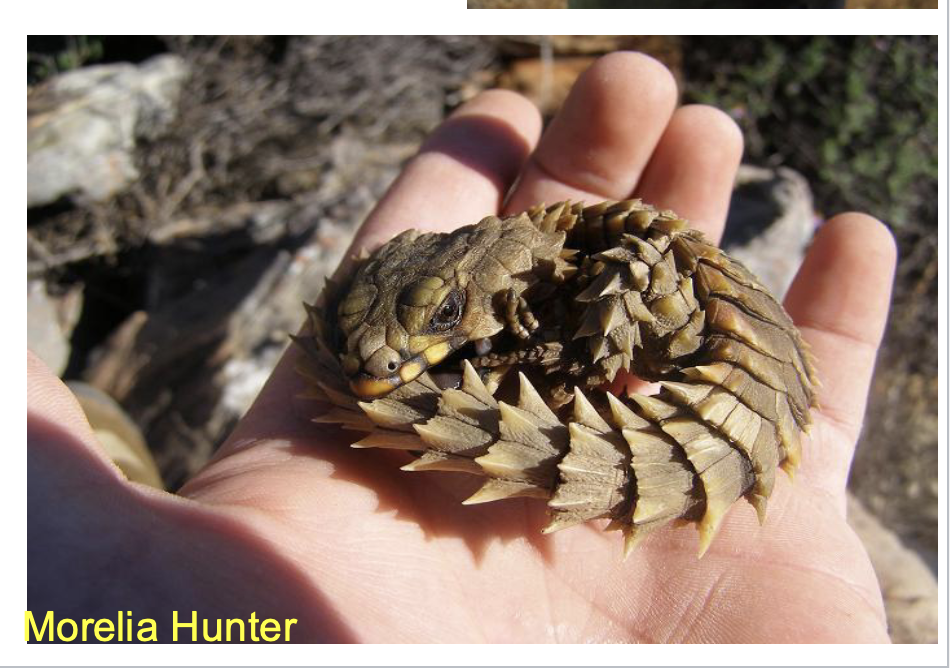
Physical deterrence
• Biting and striking (Lizards and snakes, Sirens)
• Skin modifications (spines, horns, Turtle shells, Crocodilian “armor”, Spiky tails)
• Death feigning
• Blood squirting in Phrynosoma
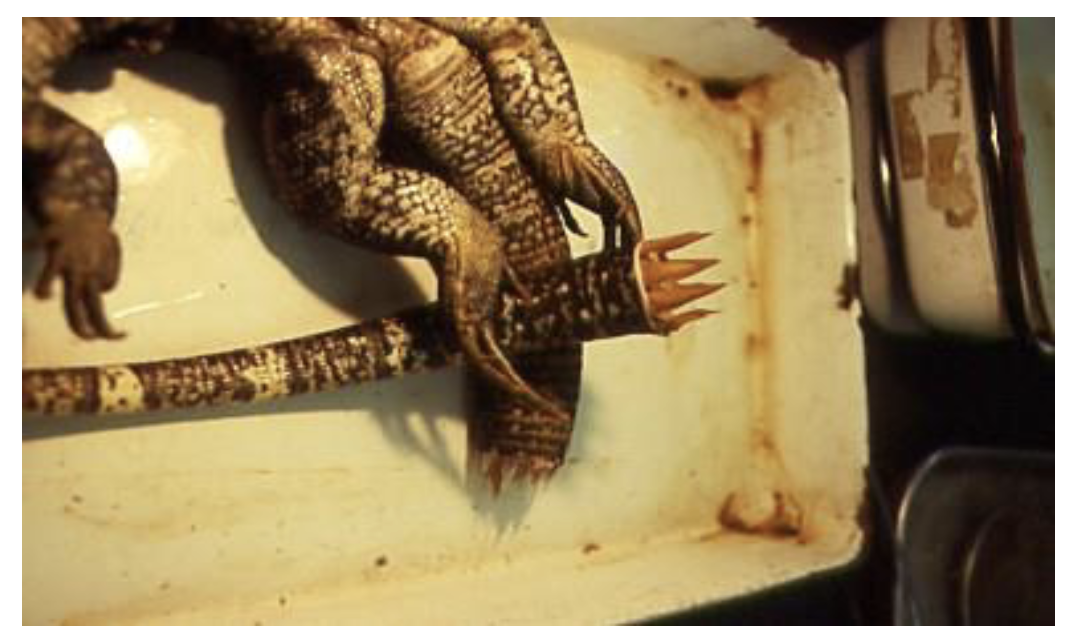
Tail Autotomy
Lizards, Salamanders, some snakes
often brightly colored tails that twitch
fracture planes
tail can regenerate
Skin may “autotomize” in some species
Chemical Defense
• Poison glands of amphibians (Paratoid glands in toads, tail in some plethodontids, Newt toxins)
• Snake venoms
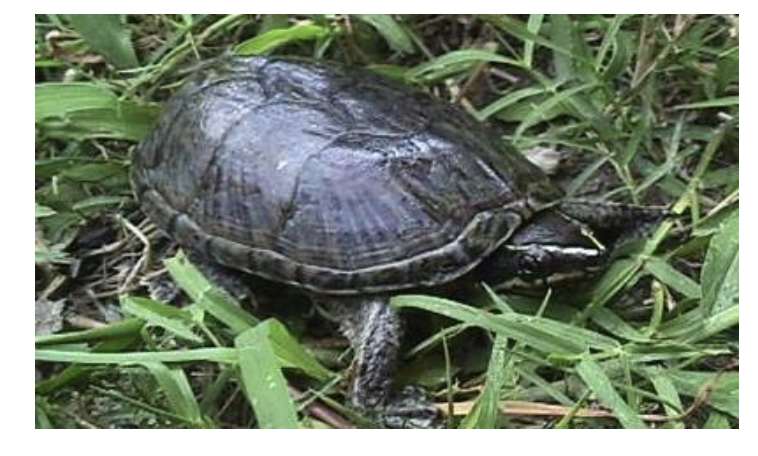
• Kinosternidae: stink!
• Snake musk from cloacal scent glands
Batesian Mimicry
palatable species (mimic) evolves to resemble unpalatable/dangerous species (model)
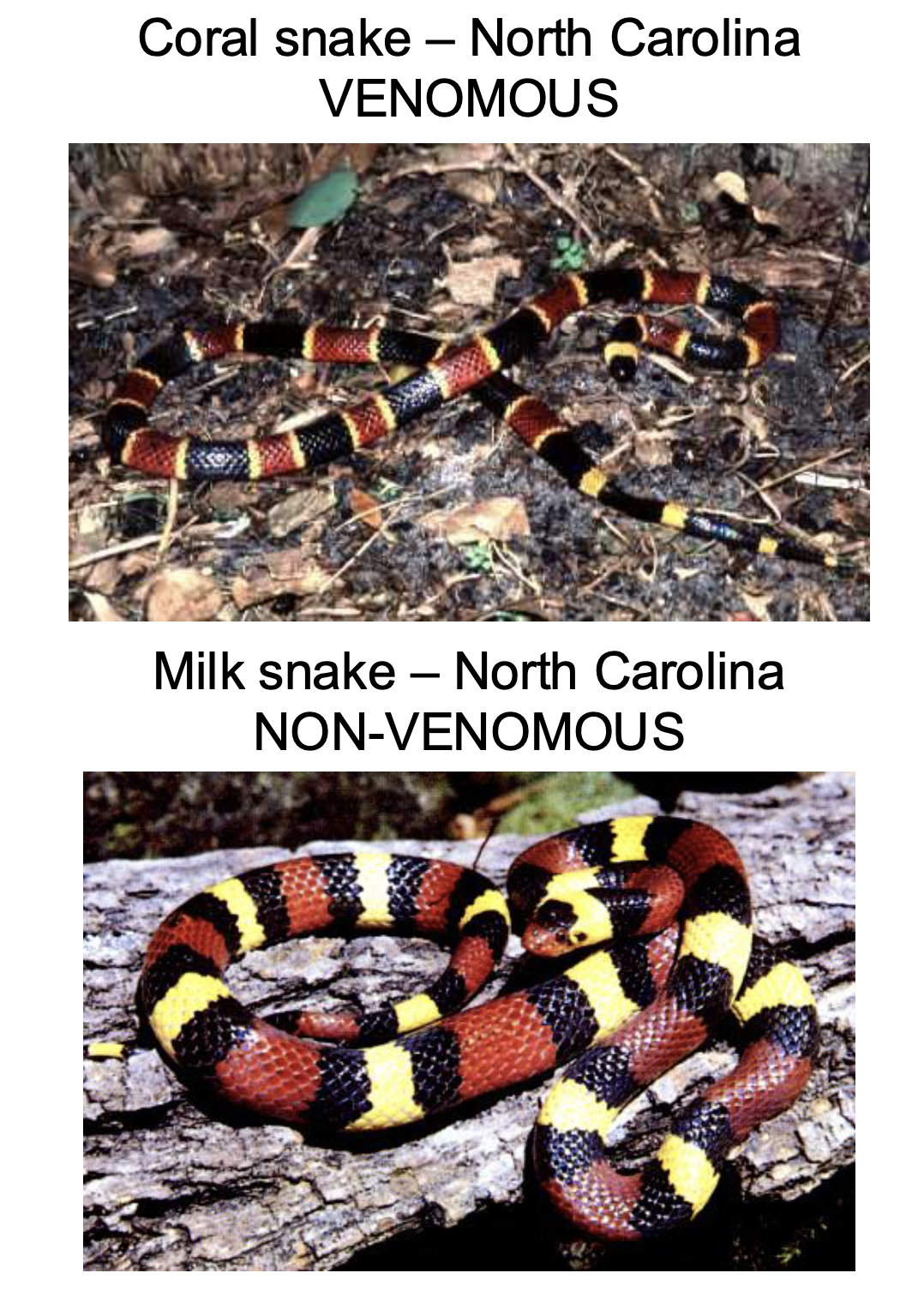
Elapidae mimicry
example of batesian mimicry
Best example of a coral-snake mimic is harmless milk snake
milk snakes outside of coral snake range are not brightly colored
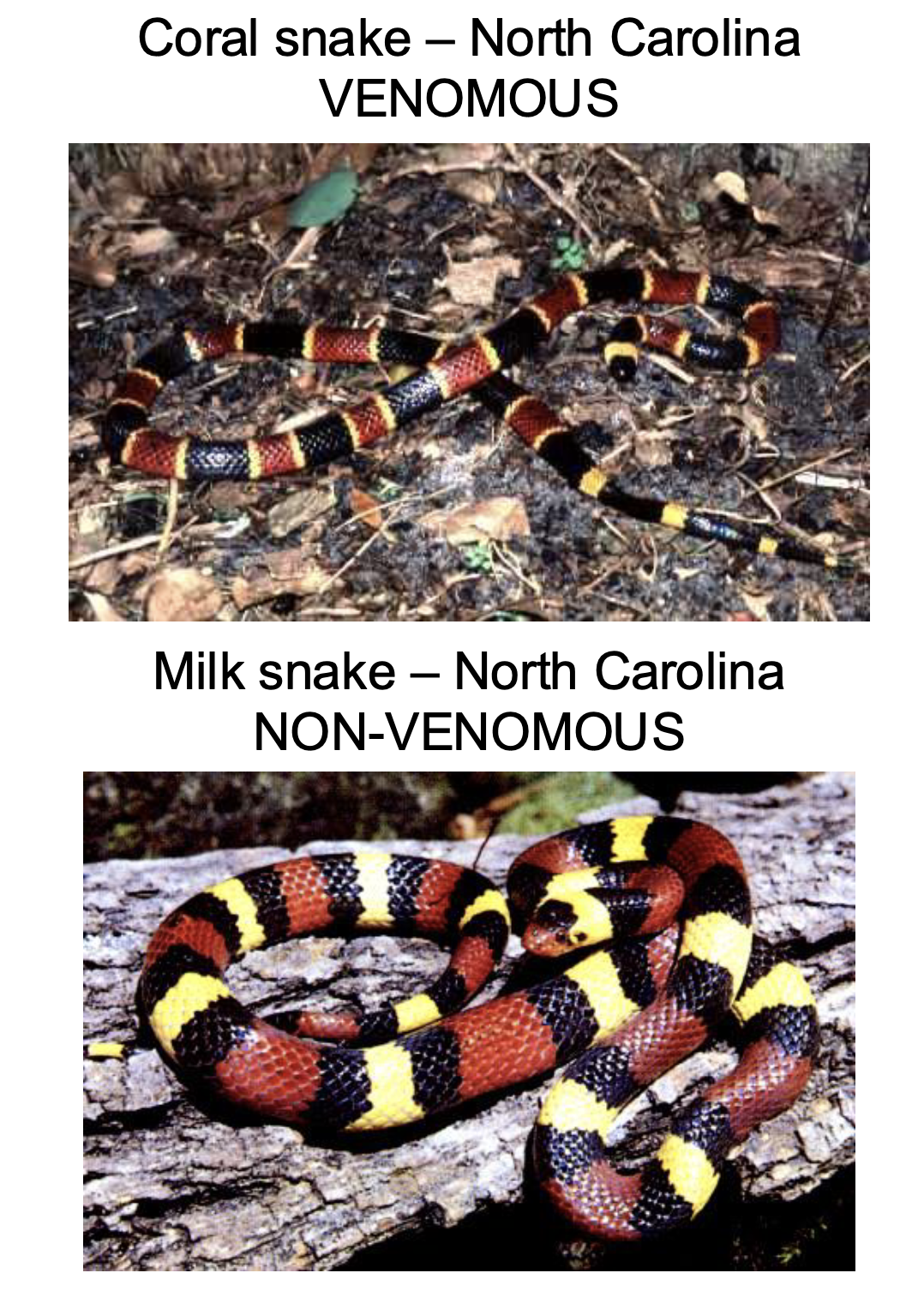
Mullerian mimicry
unpalatable/dangerous species evolves to resemble another unpalatable species
predator-prey coevolutionary arms race
Western Newts (Taricha) have been used in classic study of co-evolution of predator and prey and of “geographic mosaic theory of coevolution”
Geographic mosaic theory: Basic Idea
Strength of co-evolution varies geographically; such that there are “hotspots” and “coldspots”
Rough skinned newt (Taricha)
Has deadly venom called tetrodotoxin (TTX) in some populations
One adult newt can drop 25,000 white mice
Garter snake
Only predator species that eats newt, found through US
Resistance to TTX in some populations where sympatric with newts
Snakes that eat newts cannot move for 30 minutes to 7 hours (have to “detox”)
Co-evolution of newts and snakes
Study by Brodies tested garter snake resistance in 40 populations
Found resistance is high where newt is present and toxic
Resistance is low where newt is absent or non-toxic (British Columbia)
Some obvious coldspots also
Geographic mosaic theory
Strength of co-evolution varies geographically; such that there are “hotspots” and “coldspots”
ex. Rough skinned newt and garter snakes

