BIOMI 2900 Lecture 22
 Call Kai
 Learn
Learn Practice Test
 Spaced Repetition
 Match
Match Flashcards
 Knowt Play
1/40

There's no tags or description
Looks like no tags are added yet.
Name | Mastery | Learn | Test | Matching | Spaced | Call with Kai |
|---|
No analytics yet
Send a link to your students to track their progress
41 Terms
What are the 4 Requirements for Life?
• Free Energy • Water • Carbon • Nutrients
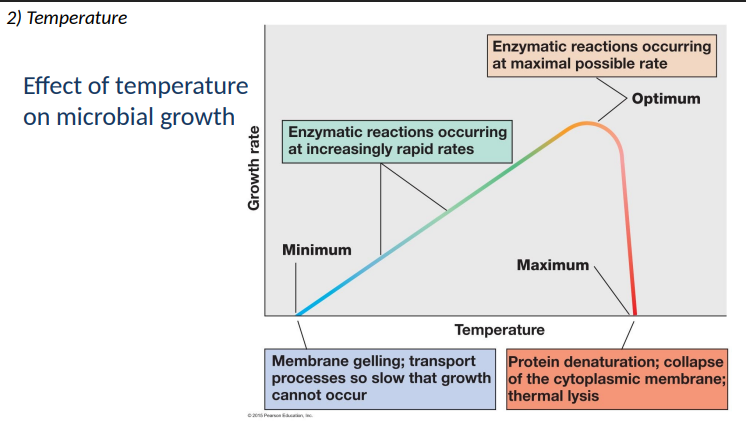
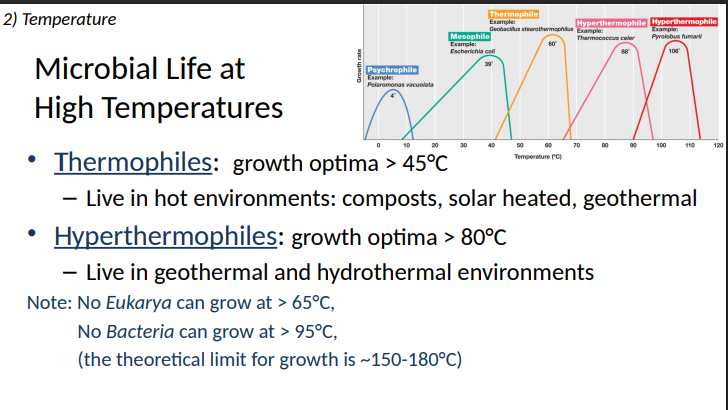
Effect of temperature on microbial growth
Temperature
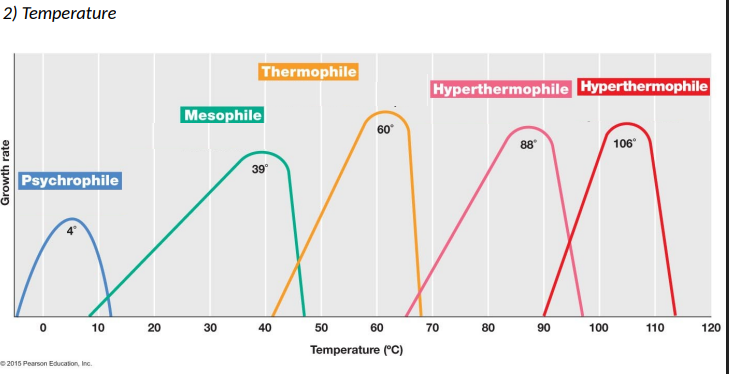
Mesophiles are organisms that have midrange temperature optima; found in what 3 things?
Microbes associated with warm-blooded animals
Terrestrial and aquatic environments
Temperate and tropical latitudes
Extremophiles are organisms that require?
very hot or very cold conditions
Psychrophiles: Growth optima <?
20°C
Inhabit permanently cold environments
Psychrophiles can have Life possible as long as there is?
liquid water (observed to -12°C)
Psychrotolerant: Growth optima >? but can grow at?
> 20°C, but can grow at 0°C
- More common than true psychrophiles
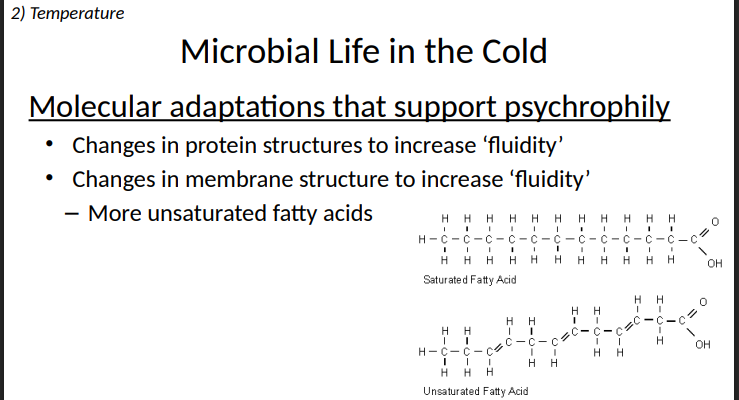
Microbial Life in the Cold: Molecular adaptations that support psychrophily; What are two changes to increase FLUIDITY
Changes in protein structures to increase ‘fluidity’
Changes in membrane structure to increase ‘fluidity’
More unsaturated fatty acids
Thermophiles: growth optima >? Where do they live?
> 45°C
Live in hot environments: composts, solar heated, geothermal
Hyperthermophiles: growth optima >? Where do they live?
> 80°C
Live in geothermal and hydrothermal environments
Note: No Eukarya can grow at >?
> 65°C
No Bacteria can grow at >?
95°C,
The theoretical limit for growth is ~
50-180°C
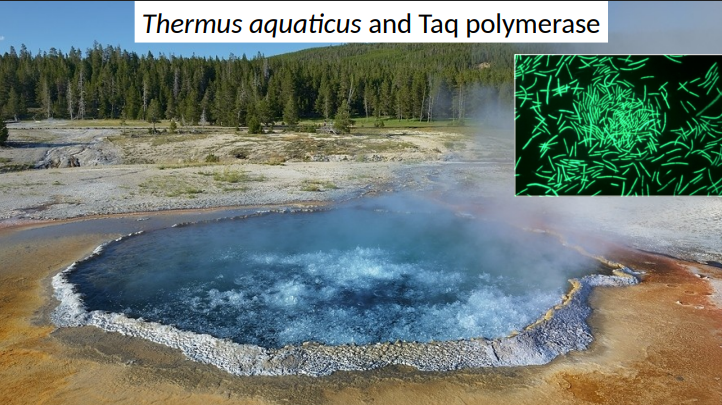
Thermus aquaticus and Taq polymerase
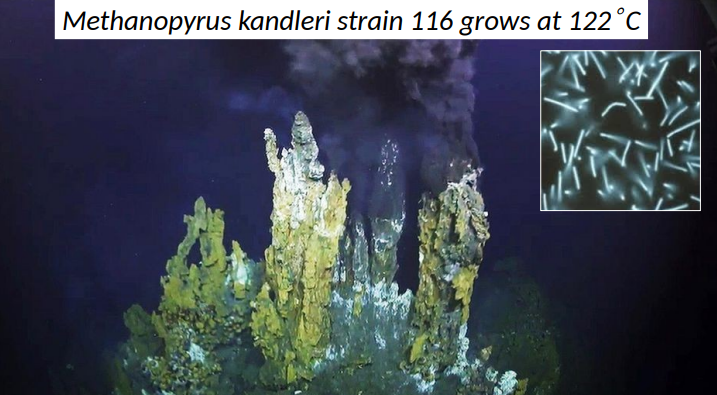
Methanopyrus kandleri strain 116 grows at 122 C
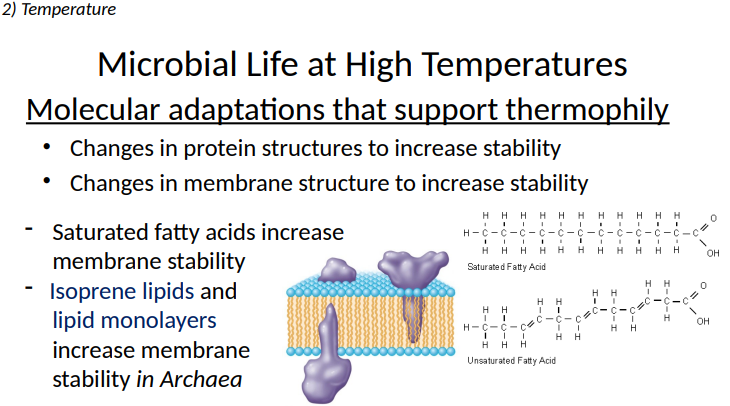
Saturated fatty acids increase membrane?
membrane stability
Isoprene lipids and lipid monolayers increase membrane stability in?
Archaea
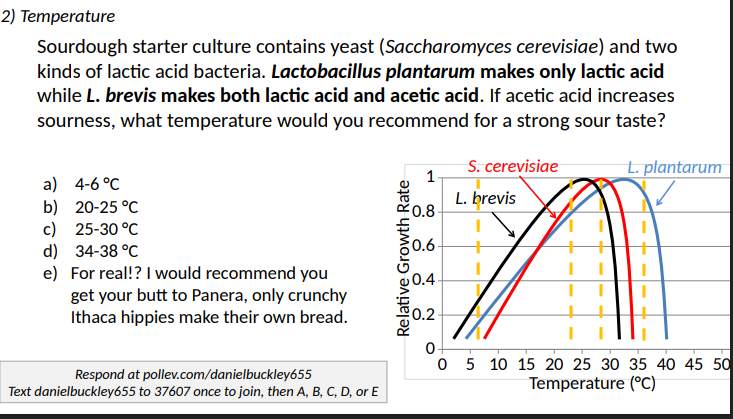
Sourdough starter culture contains yeast (Saccharomyces cerevisiae) and two kinds of lactic acid bacteria. Lactobacillus plantarum makes only lactic acid while L. brevis makes both lactic acid and acetic acid. If acetic acid increases sourness, what temperature would you recommend for a strong sour taste?
a) 4-6 °C
b) 20-25 °
C c) 25-30 °C
d) 34-38 °C
Effect of pH on Growth; What is the pH equation?
pH = -log [H + ]
![<p>pH = -log [H + ]</p>](https://assets.knowt.com/user-attachments/18f6e98c-1634-48f0-bf9d-5075cdfbfc5b.png)
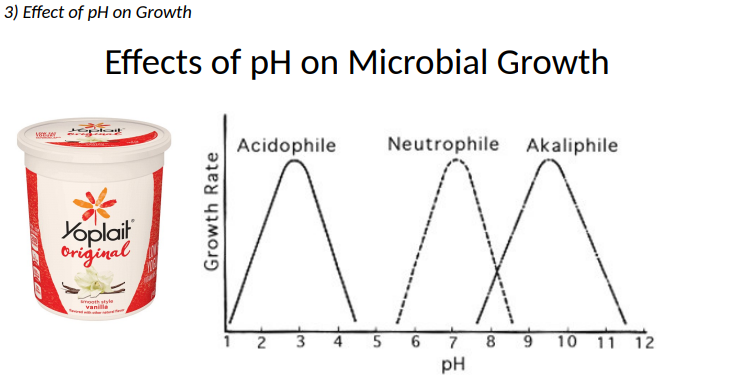
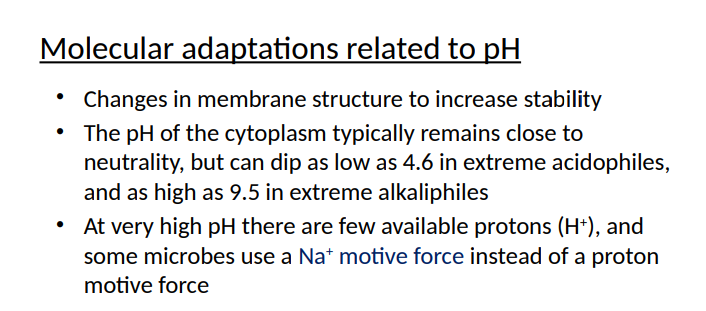
Effects of pH on Microbial Growth: Molecular adaptations related to pH: Changes in what to increase stability?
membrane structure
Molecular adaptations related to pH: The pH of the cytoplasm typically remains close to neutrality, but can dip as low as ___ in extreme acidophiles, and as high as ___ in extreme alkaliphiles
4.6
9.5
Molecular adaptations related to pH: At very high pH there are few available protons (H+ ), and some microbes use a?
Na+ motive force instead of a proton motive force
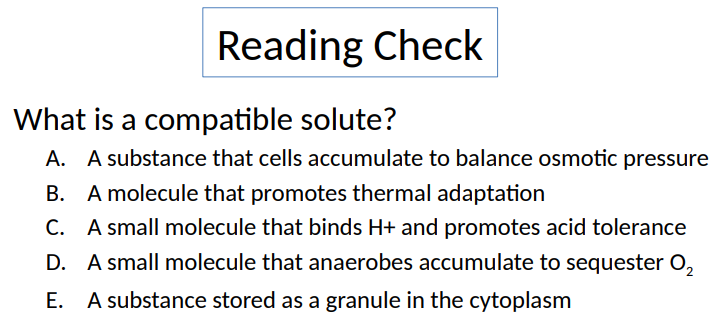
What is a compatible solute?
A. A substance that cells accumulate to balance osmotic pressure
B. A molecule that promotes thermal adaptation
C. A small molecule that binds H+ and promotes acid tolerance
D. A small molecule that anaerobes accumulate to sequester O2
E. A substance stored as a granule in the cytoplasm
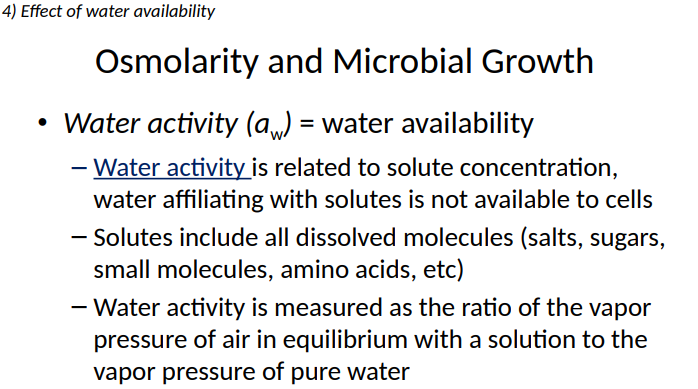
Osmolarity and Microbial Growth What is water activity (aw) related to?
solute concentration, water affiliating with solutes is not available to cells
Solutes include all dissolved?
molecules (salts, sugars, small molecules, amino acids, etc)
Water activity is measured as the ratio of the vapor pressure of?
air in equilibrium with a solution to the vapor pressure of pure water
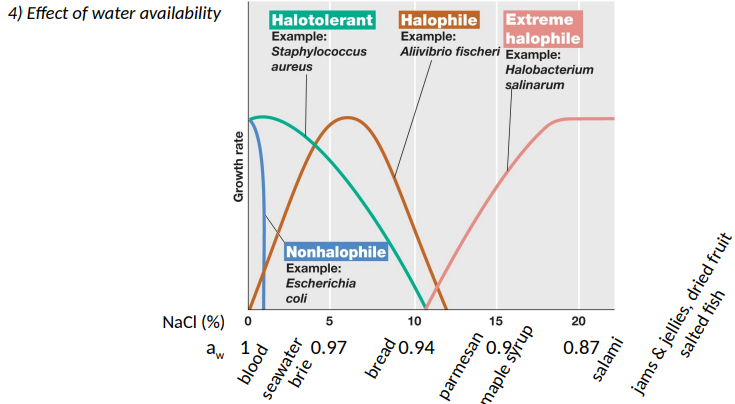
Effect of water availability
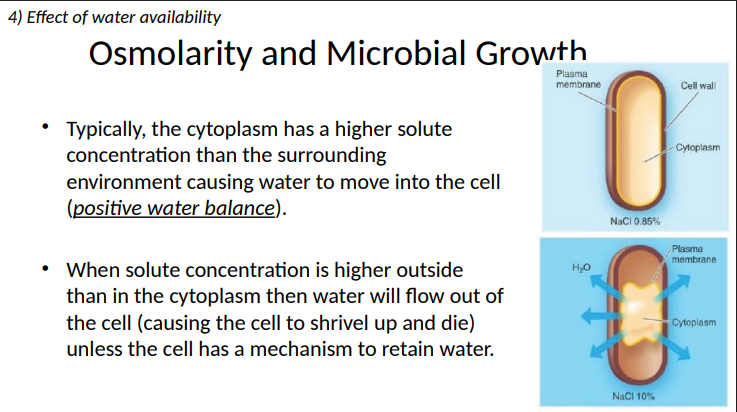
Osmolarity and Microbial Growth: Typically, the cytoplasm has a ____ solute concentration than the surrounding environment causing water to move into the cell
higher
positive water balance
Osmolarity and Microbial Growth: When solute concentration is higher outside than in the cytoplasm then?
water will flow out of the cell (causing the cell to shrivel up and die) unless the cell has a mechanism to retain water.
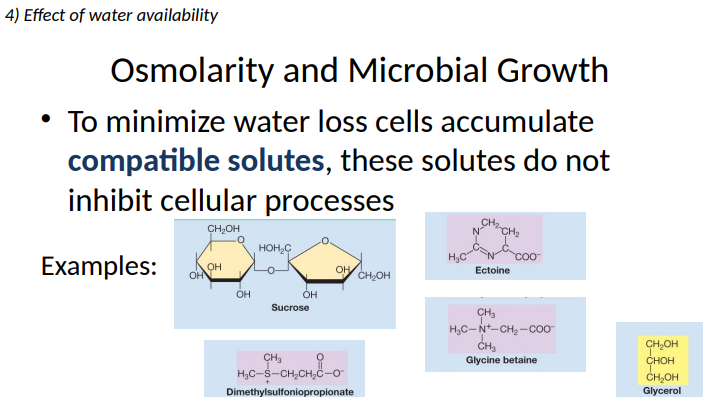
Osmolarity and Microbial Growth: To minimize water loss cells accumulate?
compatible solutes, these solutes do not inhibit cellular processes
Molecular oxygen (O2 ) and Microbial Growth: Aerobes require?
O2 to grow (typically air, 20% O2 )
Molecular oxygen (O2 ) and Microbial Growth: Microaerophiles: grow only at?
low O2 (often 0.5 – 5%)
Molecular oxygen (O2 ) and Microbial Growth Facultative organisms: can live with or without?
O2
Molecular oxygen (O2 ) and Microbial Growth Aerotolerant anaerobes: can tolerate O2 and grow in its presence even though they?
cannot use it
Molecular oxygen (O2 ) and Microbial Growth: Obligate anaerobes: killed by exposure to?
O2
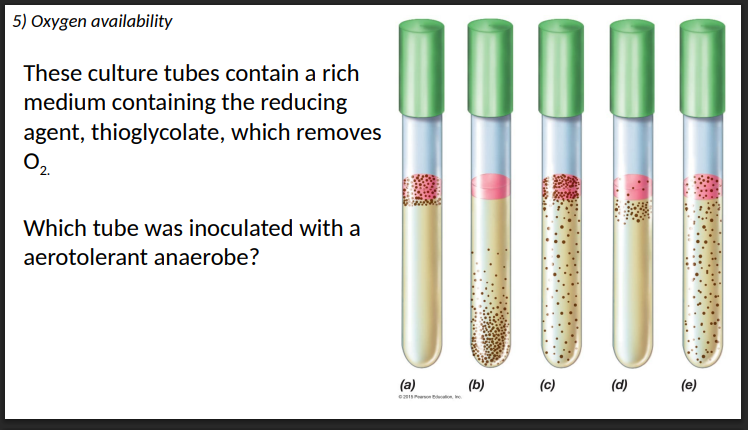
Oxygen availability: These culture tubes contain a rich medium containing the reducing agent, thioglycolate, which removes O2. Which tube was inoculated with a aerotolerant anaerobe?
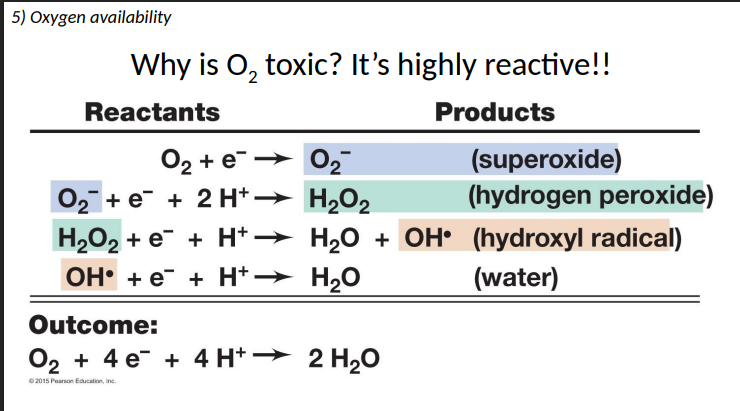
Why is O2 toxic? It’s highly reactive!!
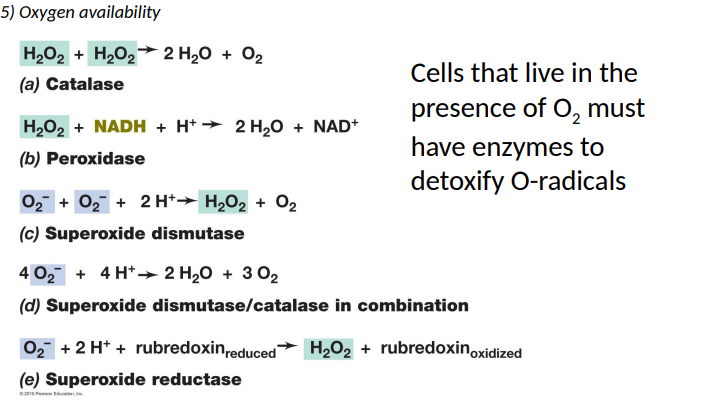
Cells that live in the presence of O2 must have enzymes to?
detoxify O-radicals
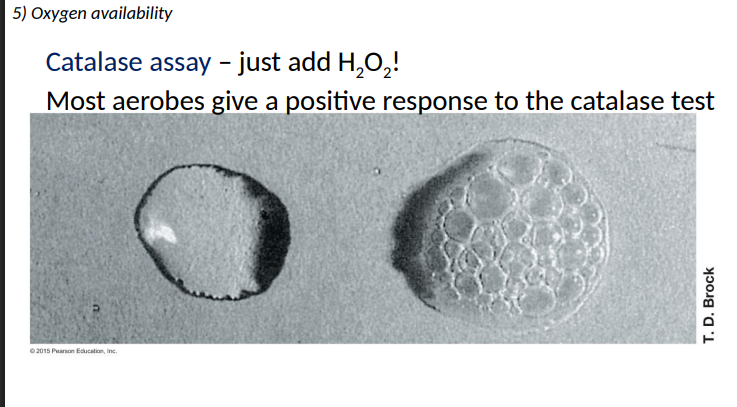
Catalase assay – just add H2O2 ! Most aerobes give a positive response to the catalase test
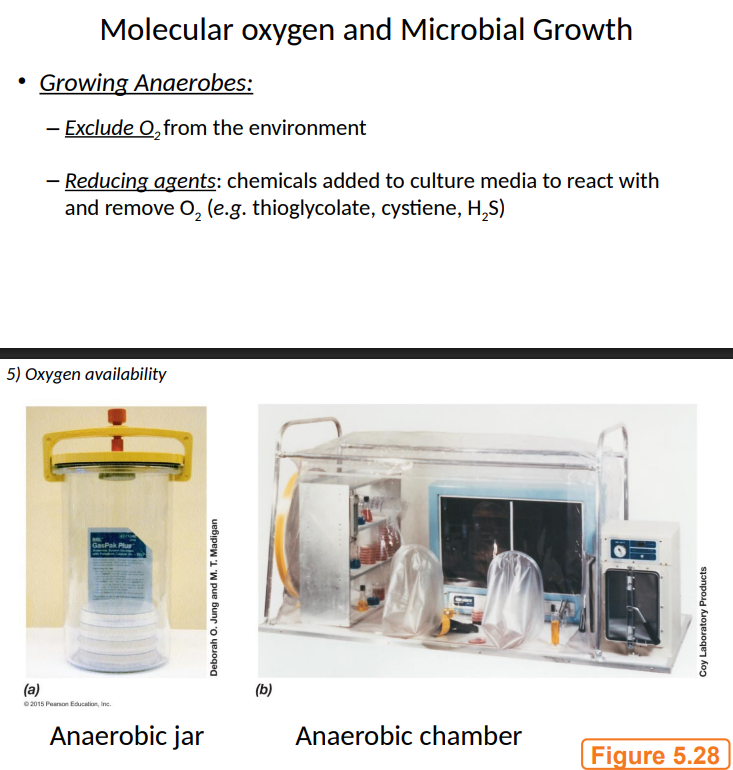
Molecular oxygen and Microbial Growth; Growing Anaerobes: – Exclude ___ from the environment
O2
Growing Anaerobes: – Exclude O2 from the environment – Reducing agents: chemicals added to culture media to react with and remove?
O2 (e.g. thioglycolate, cystiene, H2 S)